

Solitaire vs Other Rings: Key Terms Demystified
Why a Solitaire Engagement Ring Remains a Classic Choice

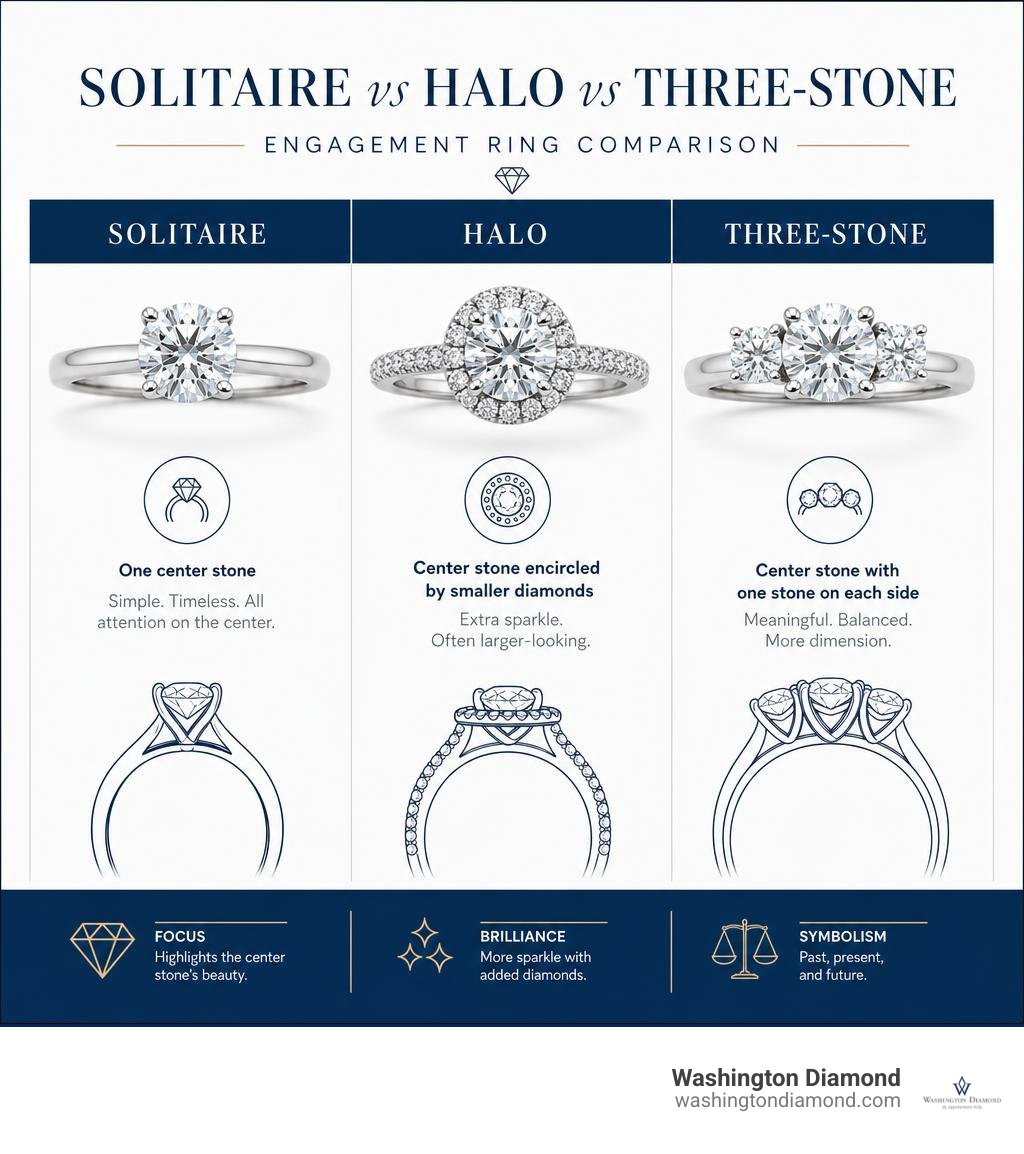
A solitaire engagement ring features one center gemstone, usually a diamond, set on a simple band with no surrounding halo or side stones. Its clean design puts all attention on the center stone, making it a timeless choice for people who value elegance, versatility, and an easy-to-wear look.
| Ring style | Main design feature | Overall look |
|---|---|---|
| Solitaire | One center stone and a plain or lightly detailed band | Clean and classic |
| Halo | Center stone encircled by smaller diamonds | Brighter and often larger-looking |
| Three-stone | Center stone with one stone on each side | Symbolic and more detailed |
Solitaire rings remain one of the best-known engagement ring styles. They are often chosen because they work with nearly every diamond shape, metal color, and wedding-band style. A round brilliant is the most common center stone, but oval, princess, cushion, and emerald cuts can give a solitaire a very different personality.
The simple setting also makes comparison easier: buyers can focus on the gemstone's cut, color, clarity, carat weight, and how the ring fits daily life. In the sections ahead, we will make the key terms and setting differences clear, so you can decide whether a solitaire, halo, three-stone, or another design best fits the moment.
I am Tom Daube, a jewelry designer and diamond specialist with deep experience in GIA-certified diamonds, diamond recutting, custom jewelry, and timeless solitaire engagement ring designs. I help clients compare stone quality and setting details with clear, practical guidance.
What Is a Solitaire Engagement Ring and How Does It Compare to Other Settings?
When we talk about a solitaire engagement ring, the concept is delightfully straightforward: it is a ring designed around a single center gemstone. The word "solitaire" originates from the Latin word solitarius, meaning alone or solitary. In jewelry, that means zero side diamonds, zero halo frames, and zero complex accent arrays taking attention away from the primary stone.
Accounting for approximately 25% of all engagement ring sales in the United States and preferred by over 40% of brides-to-be, the solitaire setting holds the crown as the most searched engagement ring style online. Nearly 70% of solitaire engagement rings feature a diamond as the central jewel, though alternative gemstones like moissanite and sapphire have gained significant traction for couples seeking custom flair or distinct color profiles.
The beauty of the minimalist band lies in its structural purity. While the band itself can be thin, wide, flat, or rounded, the setting mechanism holding the stone typically falls into one of two classic design choices:
- Prong Setting: This traditional method uses small metal claws (typically four or six) to hold the gem securely at its corners or around its perimeter. Prongs elevate the center stone, permitting light to enter from all angles to create maximum sparkle and brilliance.
- Bezel Setting: A modern, sleek choice where a continuous metal collar surrounds the edge of the center stone. It offers superior protection against daily bumps, making it an ideal candidate for individuals with highly active hands.
To explore all the foundational setting styles, take a look at our comprehensive Engagement Ring Settings 101 guide or browse our signature Solitaire Diamond Ring collections.
Pros and Cons of a Solitaire Engagement Ring Setting
Every ring style presents unique trade-offs. Weighing these characteristics helps ensure you choose a design that seamlessly integrates into your everyday life.
Pros of a Solitaire Ring:
- Timeless Appeal: Solitaires never go out of style. A solitaire purchased today in 2026 will look just as sophisticated decades from now.
- Center Stone Prominence: Without accent diamonds competing for attention, every bit of beauty in your chosen gem takes center stage.
- Effortless Cleaning and Maintenance: Fewer nooks, crannies, and accent prongs mean dirt has fewer places to hide, making regular care quick and painless.
- Versatile Stacking: Because the band remains uncluttered, pairing a solitaire engagement ring with virtually any style of wedding band—from simple metal bands to detailed eternity rings—is simple and comfortable.
Cons of a Solitaire Ring:
- Snagging Risk: High-set prong configurations can occasionally snag on knit sweaters, winter gloves, or hair.
- Exposed Gemstone Vulnerability: Because there are no surrounding accent stones or halos to buffer impact, the center stone takes the full force of accidental knocks.
- Unforgiving Quality Exposure: In a solitaire, you cannot hide a lower-grade diamond behind micro-pave accents; the stone's cut, clarity, and color are completely visible.
If you are torn between various options, check out our Engagement Ring Comparison Help resource to see how different settings align with your daily routine.
Comparing Solitaire to Halo, Three-Stone, and Cathedral Settings
Understanding setting vocabulary simplifies the selection process. Let's examine how the solitaire holds its own against three other highly popular architectural frameworks:
- Halo Settings: A halo ring features a perimeter of tiny diamonds encircling the center stone. This creates an optical illusion that makes the center diamond appear noticeably larger—often making a 1.0-carat gem look like a 1.5-carat stone from a distance. However, halos present a busier visual profile than the understated elegance of a solitaire.
- Three-Stone Settings: Symbolizing a couple's past, present, and future, three-stone rings feature a central stone flanked by two secondary gems. While stunningly symbolic, three-stone rings naturally spread visual weight across the finger rather than concentrating focus on one central jewel.
- Cathedral Settings: Rather than being a distinct category, a cathedral setting is an architectural style that can be integrated into a solitaire, halo, or three-stone ring. It uses sloped metal arches rising from the shank to support the center head. This structural arch elevates the diamond high above the finger, adding dramatic grace and structural support.
To explore how cathedral architecture enhances solitaire rings, explore our 1 Carat Cathedral Setting Guide, examine the extra safety of a 6 Prong Cathedral Setting, or browse the classic lines of a Cathedral Engagement Setting.
| Feature / Setting | Solitaire Setting | Halo Setting | Three-Stone Setting |
|---|---|---|---|
| Visual Focus | 100% on Center Stone | Blended Center & Border | Distributed Across 3 Gems |
| Perceived Stone Size | True to Carat Weight | Appears Larger | Appears Wider Across Finger |
| Maintenance Need | Low | High (Many Small Prongs) | Medium |
| Wedding Band Flexibility | Exceptional | Requires Curved/Custom Band | Requires Flush Fit Planning |
| Overall Vibe | Minimalist & Iconic | Vintage & High-Sparkle | Romantic & Symbolic |
Popular Gemstone Cuts and Shapes for Solitaire Rings
Because a solitaire engagement ring places uninterrupted focus on the center gemstone, selecting the diamond shape and cut is the single most important design choice you will make.
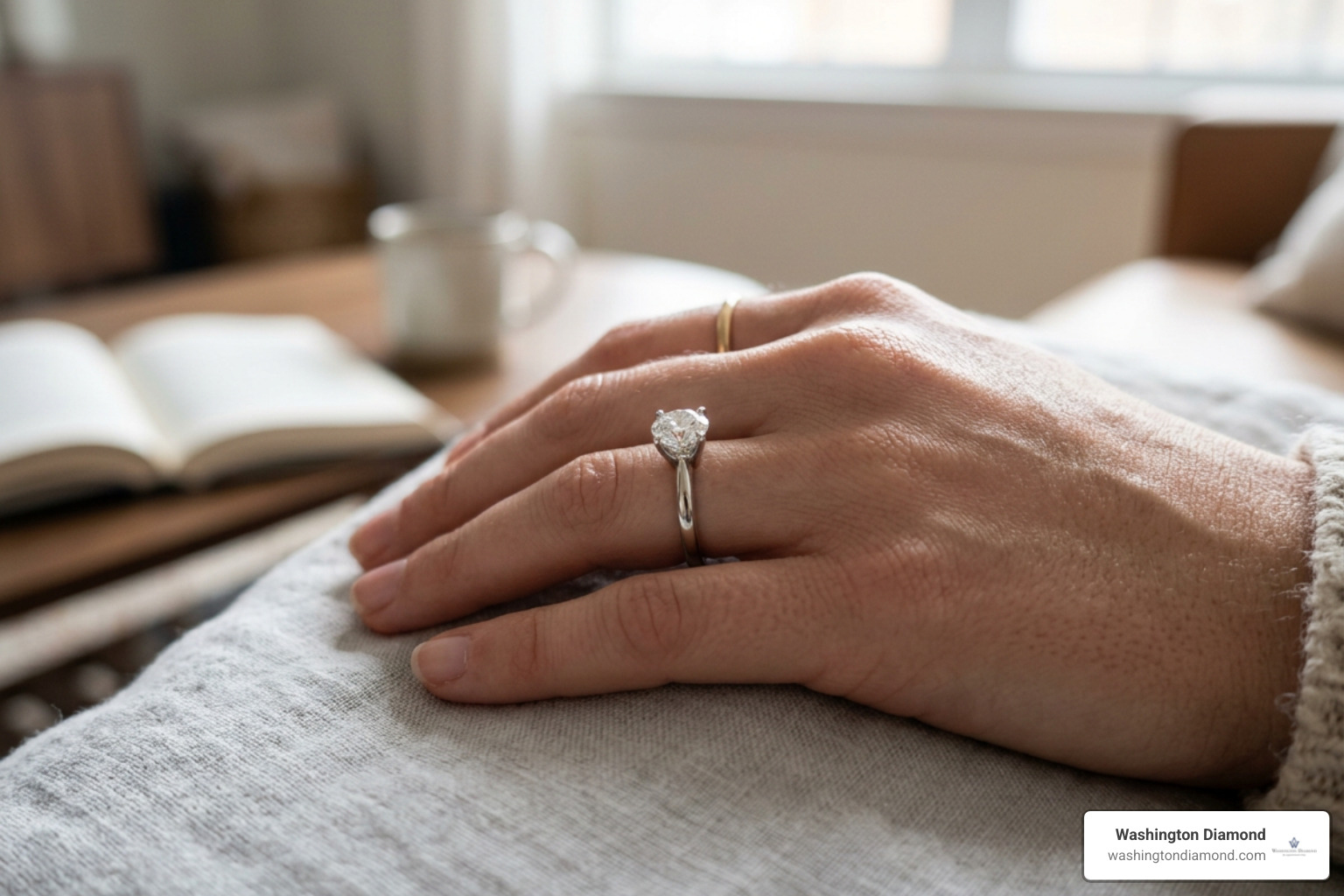
- Round Brilliant Cut: The undisputed champion of diamond shapes, round brilliant cuts are featured in over 60% of all solitaire engagement rings. Engineered with 58 precise facets designed to maximize light reflection, a round brilliant offers unrivaled sparkle, fire, and scintillation. Dive deep into its specs in our 1 Carat Round Diamond Complete Guide.
- Oval Cut: Oval diamonds have experienced massive popularity due to their elongated silhouette, which creates a slenderizing effect on the finger. An oval cut provides a larger surface area (surface footprint) than a round diamond of equal carat weight. See our pricing breakdowns in our 1 Carat Oval Diamond Price Guide.
- Princess Cut: For lovers of geometric symmetry and crisp lines, the square princess cut provides brilliant light reflection paired with sharp, modern corners. Read all about square proportions in our 1 Carat Square Diamond Ring guide.
- Cushion Cut: Combining a square cut with soft, rounded corners, the cushion cut offers a vintage feel reminiscent of antique candlelight romance.
- Emerald Cut: An elegant step-cut diamond featuring long, rectangular facets that create a subtle "hall-of-mirrors" effect. Emerald cuts emphasize clarity and structural sophistication over intense sparkle.
Choosing the Ideal Solitaire Engagement Ring Cut for Your Style
Matching your diamond shape to your personal aesthetic and day-to-day lifestyle ensures long-term comfort and satisfaction.
- For Active Lifestyles: If you work with your hands, practice sports, or work in healthcare, stones with rounded edges (like round or cushion cuts) set in low-profile or bezel settings minimize snagging risks. Sharp points on princess or pear cuts require protective V-shaped prongs to prevent chipping.
- For High vs. Low Settings: High settings lift the gemstone up to let light flood in, ideal for classic glamour. Low-profile settings keep the gemstone close to the finger, ideal for effortless daily wear.
Find your match with our guides on The Perfect Diamond Shape for Every Personality and Which Engagement Ring Rocks Your World.
Selecting Metals, Sizing, and Maximizing Stone Quality (The 4 Cs)
Selecting the precious metal band shapes the ring's overall tone and dictates its long-term durability.
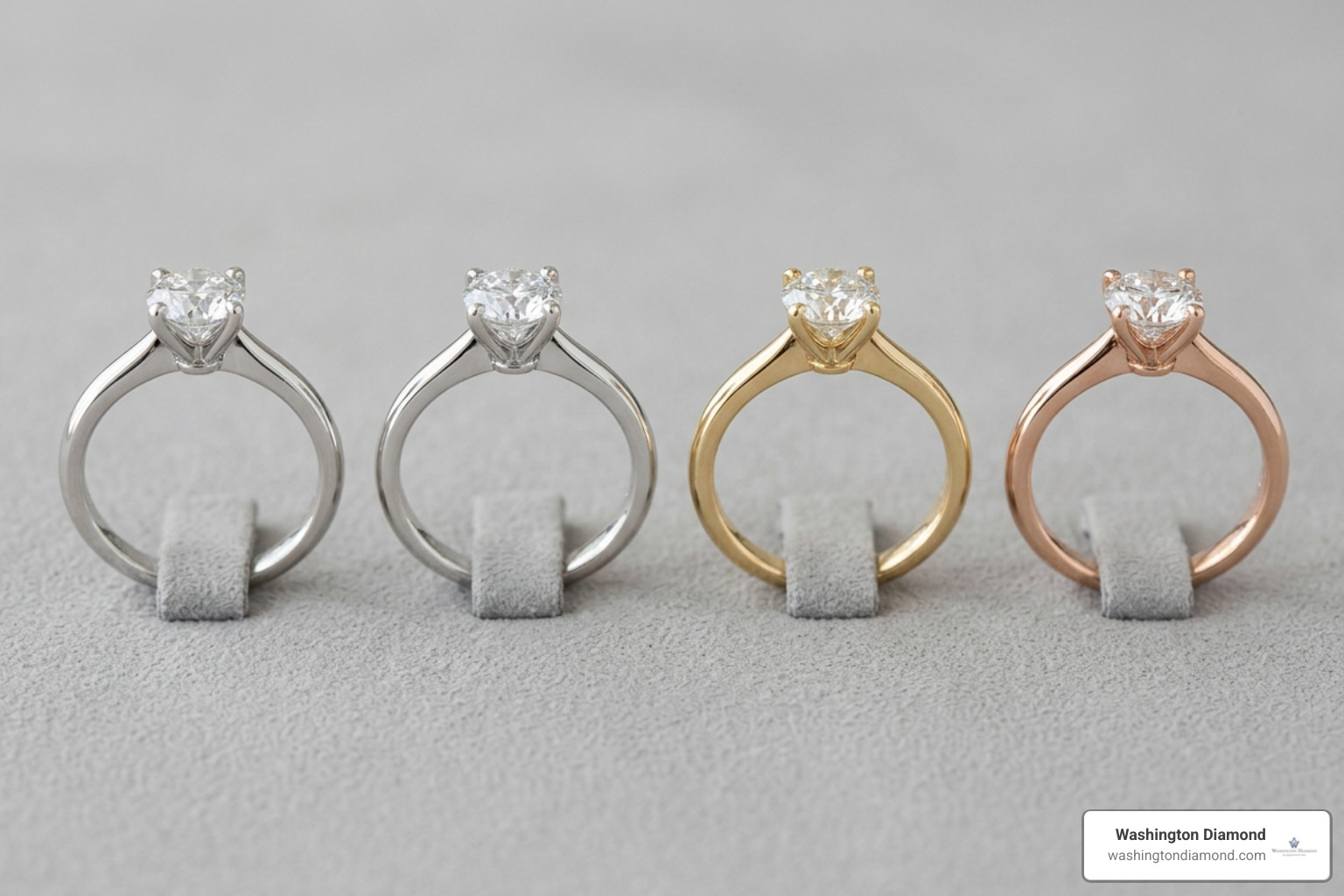
- Platinum: Naturally white, dense, and hypoallergenic. Platinum does not wear away over time; instead, it develops a soft patina finish that many cherish. Its strength makes it the ultimate guard for valuable center diamonds.
- White Gold (14k or 18k): Delivers a cool silver hue at a budget-friendly price point compared to platinum. It is alloyed for strength and plated with rhodium, which requires occasional re-plating over time to maintain bright brilliance. Explore options in our White Gold Engagement Rings Guide.
- Yellow Gold: Warm, rich, and traditional. Yellow gold offers contrast against white diamonds and complements warmer skin tones effortlessly.
- Rose Gold: Infused with copper to produce a blush shade, rose gold provides romantic vintage flair.
The Visual Illusion of Band Width and Sizing
A subtle trick when buying a solitaire engagement ring is adjusting the band width. A thin, delicate band (1.5mm to 1.8mm) creates a narrow baseline that makes a center diamond appear significantly larger by contrast. Conversely, a wider band (2.5mm and up) provides bold modern presence and structural support for larger diamonds.
Evaluating Quality via the 4 Cs
When buying a solitaire, there are no accent stones to hide imperfections. You will want to master the 4 Cs:

- Cut: The single most critical C. An Excellent or Ideal cut maximizes sparkle, making even diamonds with slight color or clarity inclusions appear brilliant and eye-clean.
- Color: Graded on a scale from D (Colorless) to Z (Light Yellow). Grades G through J offer fantastic value because they appear icy white to the naked eye when set in jewelry.
- Clarity: Measures natural inclusions. Grades VS1, VS2, and SI1 generally offer "eye-clean" beauty without paying premium prices for Flawless stones.
- Carat Weight: The measure of physical weight, not visual size.
Always insist on independent lab verification, such as from the Gemological Institute of America. You can learn more through our Loose Diamonds Complete Guide and review grading certifications in our GIA Certified Diamonds Price Guide.
Understanding Costs, Pricing Factors, and Common Buyer Mistakes
In 2026, the average price of a solitaire engagement ring ranges between $5,000 and $6,000. However, overall investment varies widely based on center stone selection (natural vs. lab-grown), metal band choice, and diamond quality.
Understanding how costs accumulate helps prevent common buyer traps:
- The Carat Weight Trap: Buying exactly at full carat marks (like 1.00 ct or 2.00 ct) incurs a price premium. Purchasing a 0.90 ct or 1.90 ct diamond saves substantial funds while offering a virtually identical visual appearance.
- Sacrificing Cut for Carat: Falling into the trap of buying a larger carat diamond with a poor cut results in a dull stone. Always prioritize cut grade over raw size!
- Ignoring Price Per Carat Math: Diamond pricing scales exponentially, not linearly. Review our detailed How to Calculate Diamond Price Per Carat breakdown to avoid overpaying.
For budget planning and insider secrets, explore our comprehensive Engagement Ring Prices Guide 2026, our master Diamond Ring Complete Guide 2026, and our top tips on Affordable Bling Top Tips for Best Value Engagement Rings.
Care, Maintenance, and Daily Wear Best Practices
Keeping your solitaire ring in pristine condition requires minimal effort when done consistently.
At-Home Cleaning Routine
- Soak: Submerge your ring in warm water mixed with a few drops of mild dish soap for 20 minutes.
- Gentle Scrub: Use a soft-bristled toothbrush to gently clean behind the center setting where skin oils and lotions gather.
- Rinse & Dry: Rinse under lukewarm running water (with the drain plugged!) and dry with a lint-free microfiber cloth.
Check out our full guides on Engagement Ring Cleaning Guide, Best Way to Clean Diamonds, Diamond Cleaning Care Guide, and Ultimate Engagement Ring Care Guide for professional care insights.
Professional Maintenance Checklist
- Annual Inspection: Have a professional jeweler inspect your prongs twice a year to ensure the center stone remains safe.
- Ultrasonic Cleaning: Professional ultrasonic baths use sound waves to remove deep dirt. (Note: Ensure stones with high inclusions are checked by a specialist prior to ultrasonic cleaning).
Frequently Asked Questions About Solitaire Engagement Rings
What defines a solitaire engagement ring compared to other styles?
A solitaire engagement ring features a single center gemstone set on a plain or simple metal band without accent diamonds or surrounding halos. Its main defining feature is an uncluttered design that highlights the central jewel.
Does a solitaire setting make the center stone look larger?
Yes! A solitaire setting on a slim band focuses 100% of the viewer's attention on the center gem without visual distractions. Because there are no side stones competing for visual weight, the diamond stands out clearly.
How much should I spend on a solitaire engagement ring in 2026?
The national average cost for a solitaire ring in 2026 falls between $5,000 and $6,000. However, prices vary widely depending on whether you choose natural or lab-grown diamonds, metal selection, and specific 4 Cs grades.
Conclusion
The enduring legacy of the solitaire engagement ring rests in its perfect blend of simplicity, versatility, and elegance. By highlighting a single central diamond, this classic design celebrates pure craftsmanship without trend-dependent clutter.
At Washington Diamond, we believe choosing an engagement ring should be an unforgettable, stress-free milestone. Located in Northern Virginia, our private, appointment-only studio offers undivided personal attention and expert guidance tailored entirely to your personal story and budget.
Ready to find or design your ideal ring? Explore our signature Solitaire Diamond Ring selection, plan a custom design through our Custom Engagement Rings Ultimate Guide, prepare your engagement story with The Essential Guide for a Perfect Proposal, or schedule a private consultation with Your Guide to Unforgettable Diamond Rings in Washington DC. Schedule your private appointment with us today!
Have a question about your jewelry?
We've been helping clients with diamonds, custom design, repairs, appraisals, and more since 1969. Book a private appointment at our Falls Church studio.
Book an AppointmentTrusted since 1969 · Falls Church, VA · 703-536-3600
From the blog
View all


