

Engagement Ring Settings 101
What is a Ring Setting and Why Does It Matter?
Engagement ring settings are the metal frameworks that hold your diamond or gemstone securely in place. While the diamond often steals the spotlight, the setting is what makes the ring work—both functionally and aesthetically.
Quick Answer: What You Need to Know About Engagement Ring Settings
- Definition: The metal structure that secures the center stone and defines the ring's style
- Key Functions: Security, diamond protection, light performance, and personal expression
- Popular Types: Solitaire, halo, prong, bezel, channel, pavé, cathedral, and three-stone
- What to Consider: Your lifestyle, diamond shape, metal preference, and budget
- Security vs. Sparkle: Some settings maximize brilliance while others prioritize protection
The setting does more than just hold the diamond. It affects its brilliance by controlling light, shapes the ring's aesthetic—from classic to modern—and reflects your personality and lifestyle.
Understanding Ring Anatomy
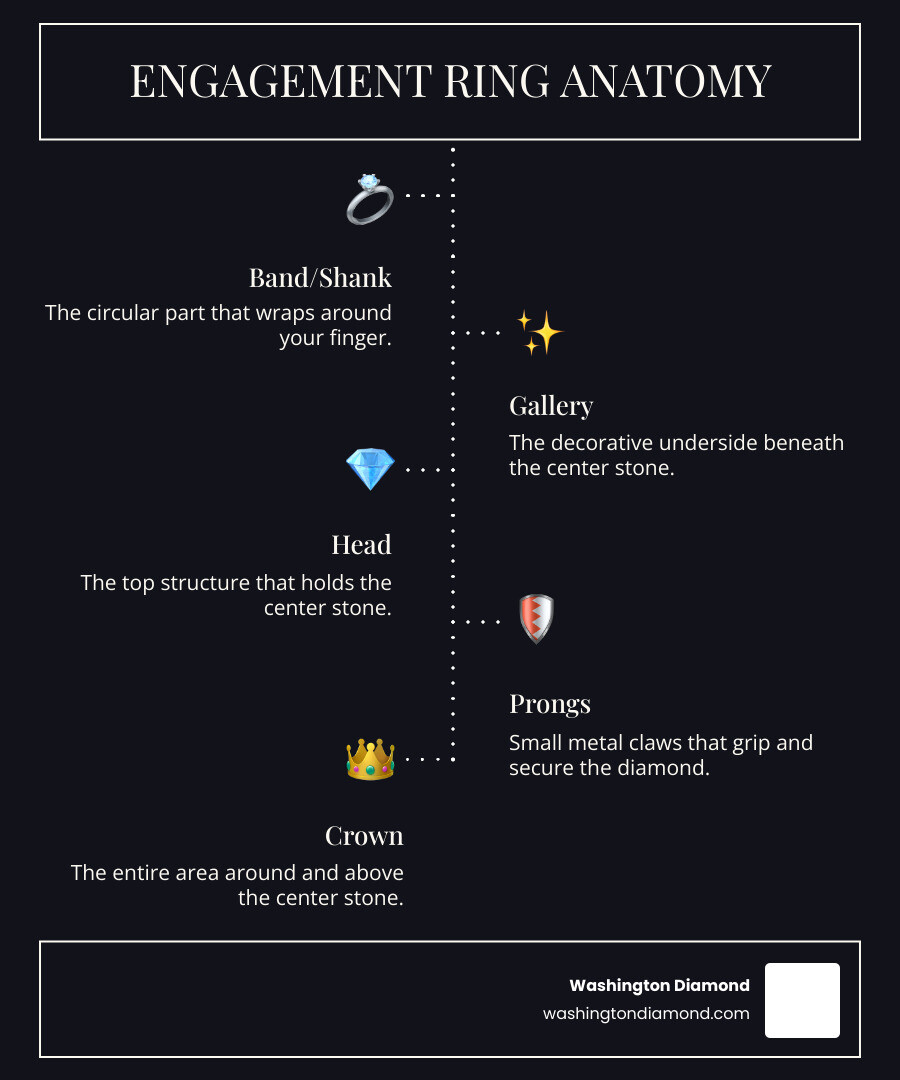
To understand setting styles, it helps to know the basic parts of a ring:
- Band/Shank: The circular part that wraps around your finger
- Gallery: The decorative underside beneath the center stone
- Head: The top structure that holds the center stone
- Prongs: The small metal claws that grip the diamond
- Crown: The entire area around and above the center stone
These components create the ring's security and style. In the late 19th century, an iconic six-prong setting lifted the diamond high above the band—a design still influential today.
The right setting transforms a beautiful diamond into a meaningful symbol of your unique love story. It's a decision worth getting right.
Engagement ring settings further reading:
- The Art of Two: Unpacking Toi et Moi Ring Settings
- The Modern Twist: A Look at Bezel and Oval Toi et Moi Rings
The Most Popular Engagement Ring Settings
When it comes to choosing an engagement ring, the sheer variety of settings can be both exciting and a little overwhelming. Each style offers a distinct aesthetic and comes with its own set of advantages and considerations regarding durability, security, and how it showcases the center stone. Let's explore the most popular engagement ring settings that captivate hearts and stand the test of time.
| Setting Style | Security | Sparkle | Aesthetic |
|---|---|---|---|
| Solitaire | Good | High | Classic, Neat |
| Halo | Good | Very High | Dazzling, Improves Size |
| Prong | Good | Very High | Classic, Brilliant |
| Bezel | Excellent | Moderate | Modern, Sleek |
| Channel | Excellent | Moderate | Contemporary, Continuous |
| Pavé | Moderate | High | Glamorous, Textured |
| Cathedral | Good | High | Lifted, Architectural |
| Three-Stone | Good | High | Symbolic, Balanced |
Solitaire: The Quintessential Classic
The solitaire setting is the epitome of classic elegance, showcasing a single, stunning diamond as the undisputed star. Popularized by a classic six-prong style, solitaire rings highlight the beauty of a diamond without distraction. This timeless choice focuses all attention on the brilliance and fire of the center stone.
- Characteristics: A single diamond or gemstone is held by prongs, which are small metal claws that secure the stone. It features a clean, uncluttered design.
- Pros: It maximizes the diamond's visibility and light return for exceptional brilliance. Solitaires are easy to clean and pair seamlessly with almost any wedding band. Their versatility means they complement any diamond shape beautifully. In fact, nearly half of rings crafted in early 2023 were solitaire or trilogy designs, showing their enduring appeal.
- Cons: If set high, the prongs can snag on clothing or hair. Without accent stones, the ring's sparkle relies solely on the center diamond.
Halo: A Circle of Brilliance

The halo setting features a dazzling center stone surrounded by a luminous circle of smaller diamonds. This design creates a breathtaking frame, amplifying the sparkle and visual impact of the main gem.
- Characteristics: A ring of smaller, often pavé-set, diamonds encircles the center stone. The round halo or oval cut halo are timeless choices. Halo settings can also come in various designs like double halo or hidden halo.
- Pros: The diamond halo maximizes the visual impact of the center stone, making it appear significantly larger than its actual carat weight. It also adds an incredible amount of sparkle and provides a protective border for the center stone's girdle, safeguarding it from chips.
- Cons: The small pavé stones in the halo can occasionally become loose or fall out, requiring maintenance. It's a very distinct style that might not appeal to those who prefer a more minimalist look.
Prong & Basket: Maximum Light, Classic Style
Prong settings are arguably the most well-known and classic solitaire engagement ring settings. They use slender metal claws to hold the diamond securely, allowing maximum light exposure.
- Prong Setting: These settings feature slim metal arms that securely cradle the diamond at its girdle, lifting the stone high above the band. This design allows light to enter and exit the diamond from all angles, resulting in maximum brilliance, fire, and sparkle. Common variations include 4-prong and 6-prong settings; a 6-prong offers slightly more security and a rounder appearance, while a 4-prong allows more of the diamond to be visible. Traditional prong placement is often at the 2, 4, 8, and 10 o'clock locations, while a "compass setting" places prongs at 12, 3, 6, and 9 o'clock for a subtly unexpected look. Well-engineered six-prong designs are crafted to virtually disappear, allowing the diamond to appear to float and capture light beautifully.
- Basket Setting: A type of prong setting where horizontal bands wrap around the vertical prongs, creating a "basket" beneath the stone. This structure provides increased security and durability due to its reinforcement. The basket setting offers excellent security for the stone as it almost nestles within the basket, making the entire design look more ornate and considered, while still allowing enough light to enter the stone for optimal light performance.
- Pros: Both prong and basket settings maximize light exposure for the diamond, enhancing its brilliance. They offer a classic and timeless aesthetic. Basket settings, in particular, provide superior security compared to simple prong settings and often sit lower on the finger, reducing snagging.
- Cons: Higher-set prong rings can snag on clothing or hair. Prongs may wear down over time and require periodic inspection and re-tipping by a jeweler to maintain security.
Bezel: Modern, Sleek, and Secure
For those who prioritize security and a sleek, modern aesthetic, the bezel setting is an excellent choice. It's a design that has a classic appeal and is common for both men and women.
- Characteristics: Instead of prongs, a thin metal rim completely encircles the diamond, holding it firmly in place. This can be a "full bezel," where the metal completely surrounds the stone, or a "partial bezel," which covers only parts of the stone's perimeter.
- Pros: This is one of the most secure engagement ring settings available, offering superior protection against chipping and scratching. The metal rim prevents snags, making it ideal for active lifestyles or hands-on occupations. It also provides a contemporary, clean look that can make the diamond appear slightly larger due to the surrounding metal. The bezel's sturdy construction helps prevent chips, cracks, and other damage that can occur with more delicate settings.
- Cons: The metal rim covers a portion of the diamond, which can reduce the amount of light entering the stone from the sides, potentially diminishing some sparkle compared to a prong setting. It can also be more challenging to clean thoroughly beneath the stone.
Channel & Pavé: A Band of Sparkle
These two engagement ring settings are often used for accent stones along the band, adding continuous sparkle and sophistication.
-
Channel Setting: In a channel setting, diamonds are set flush within two parallel walls of metal inside the band, creating a smooth, continuous line of sparkle. The diamonds are held securely by tension between the metal walls, with no prongs extending above the surface.
- Pros: Extremely durable and snag-free, as the stones are protected by the surrounding metal. It offers a sleek, modern aesthetic and a seamless flow of light through the diamonds.
- Cons: Resizing a channel-set ring can be difficult and costly, as it may disrupt the alignment of the stones. It can also be challenging to clean beneath the diamonds.
-
Pavé Setting: Derived from the French word for "pavement," the pavé setting features small diamonds set closely together on the band, creating a surface that appears "paved" with sparkle. Each small diamond is held by tiny metal beads or prongs.
- Pros: Adds immense sparkle and makes the band appear entirely covered in diamonds. It improves the overall brilliance of the ring and can make the center stone appear larger by extending the area of sparkle.
- Cons: While beautiful, pavé settings can be more delicate than channel or bezel settings. The small accent stones can occasionally become loose, and resizing can be complex due to the intricate setting.
Cathedral: Neat and Architectural
The cathedral setting adds a majestic and neat flair to an engagement ring, reminiscent of the grand arches found in Gothic architecture.
- Characteristics: The shank of the ring curves gracefully upwards, forming arches that meet and lift the center stone above the band. This design creates a distinctive profile and adds significant height. Cathedral settings can also allow for additional hidden details in the crown of the ring.
- Pros: It adds height and elegance, making the center stone appear more prominent and regal. The lifted setting allows light to enter the diamond from all angles, enhancing its brilliance. It's perfect for those who prefer a traditional style with a high setting and provides a sophisticated, sculpted look.
- Cons: Due to its higher profile, a cathedral setting can be more prone to snagging on clothing or other objects. The intricate arches can also make it slightly harder to clean thoroughly compared to simpler designs.
Three-Stone: A Story of Past, Present, and Future
The three-stone setting is a popular and deeply meaningful choice, featuring a prominent center stone flanked by two smaller diamonds or gemstones.
- Characteristics: A larger central diamond is accompanied by a stone on either side, creating a balanced and neat composition.
- Symbolism: One of the main advantages of the three-stone setting is its powerful symbolism, representing the past, present, and future of a couple's journey together.
- Pros: It offers significant sparkle and visual presence due to the multiple stones. This setting allows for creative combinations, such as using different shapes or colored gemstones for the side stones, adding a unique touch.
- Cons: With more stones, there are more prongs or settings to maintain and clean. It can sometimes be challenging to find a wedding band that sits flush against a three-stone ring, depending on its profile.
Unique and Modern Engagement Ring Settings
While classic styles hold timeless appeal, many couples seek engagement ring settings that reflect a more distinct or contemporary aesthetic. These unique settings offer creative ways to showcase gemstones and express individuality.
Toi et Moi: A Romantic Duet
The Toi et Moi setting, French for "You and Me," is a deeply romantic and symbolic choice, featuring two main stones nestled side-by-side.
- Meaning: This setting beautifully symbolizes two souls coming together, representing the union of two individuals.
- History: Made popular in the late 18th century during the French Empire period, the Toi et Moi setting has remained a favorite among couples and celebrities alike who desire a distinctive and meaningful ring.
- Aesthetic: It’s inherently unique and allows for incredible personalization, often featuring two different diamond shapes or even a diamond paired with a colored gemstone. This creates a visually striking and emotionally resonant piece of jewelry.
- To learn more about this captivating style, explore The Art of Two: Unpacking Toi et Moi Ring Settings.
East-West: A Contemporary Orientation
The East-West setting offers a modern twist on classic elongated diamond shapes by orienting the stone horizontally across the finger rather than vertically.
- Characteristics: This style takes traditional shapes like emerald, oval, marquise, or pear and places them with their longest dimension parallel to the band.
- Effect: The ninety-degree rotation of the center stone creates a unique personality and often gives the stone the illusion of appearing larger. It provides a distinctive and modern aesthetic without straying too far from traditional silhouettes, making it a refreshing departure from conventional designs. This orientation can also offer a lower profile, which some find more comfortable for daily wear.
Vintage-Inspired: Charm from a Bygone Era
For those enchanted by history and intricate craftsmanship, vintage-inspired engagement ring settings evoke the romance and artistry of past eras.
- Styles: These rings draw inspiration from periods like Art Deco, Victorian, and Edwardian, each with its unique characteristics. Art Deco rings, for instance, are known for their geometric patterns and bold symmetry, while Edwardian designs often feature delicate filigree and intricate lacework.
- Details: Key elements include milgrain detailing, which is a metalwork technique that creates delicate, lacy patterns of tiny beads along the edges of the metal. Filigree, engraving, and unique diamond arrangements (like cluster settings, where a group of small stones creates the appearance of a larger one) are also common.
- To dig deeper into this charming aesthetic, read about Art Deco Rings: Vintage Charm for Your Modern Love Story.
- A less common but highly secure setting that often aligns with a minimalist or vintage aesthetic is the flush setting. In a flush setting, the diamond is recessed into the band, with the metal pressed around its girdle. This creates a smooth surface where only the top of the diamond is visible. While very secure, flush settings do offer less sparkle than other styles because light entry is restricted.
How to Choose the Perfect Setting for Your Ring
Choosing the perfect engagement ring setting is a deeply personal decision, influenced by a blend of practical considerations and aesthetic preferences. It's about finding a setting that not only complements the diamond but also aligns with the wearer's lifestyle, personal style, and budget.
Matching a Setting to Your Lifestyle
Your daily activities play a crucial role in determining the ideal ring setting. A beautiful ring should be worn and enjoyed without constant worry.
- Active Lifestyles: For those with hands-on jobs, active hobbies, or who simply prefer a worry-free ring, durability and security are paramount. Low-profile and sturdy settings are highly recommended. Think bezel settings, which fully encase the stone, or basket settings, which offer excellent protection. Channel and flush settings are also fantastic choices as they keep diamonds protected within the metal. These styles minimize snagging and reduce the risk of damage to the diamond.
- Sedentary Lifestyles: If the wearer has a more office-based or low-impact lifestyle, there's more freedom to explore higher-profile and more delicate settings. Cathedral settings, with their liftd elegance, or intricate pavé and delicate prong settings can be considered without as much concern for daily wear and tear.
- Durability vs. Brilliance: This is a key trade-off to consider. Settings that prioritize security (like bezel or flush) often cover more of the diamond, which can slightly reduce its sparkle by limiting light entry. Conversely, settings designed for maximum brilliance (like prong settings) expose more of the diamond, potentially making them more vulnerable to impact. It's about finding the right balance for your unique needs.
How to choose the right engagement ring settings for your diamond and metal
The interplay between your chosen diamond's shape and the ring's metal is crucial for creating a harmonious and stunning piece.
-
Diamond Shape: The shape of your center diamond significantly influences which engagement ring settings will best highlight its beauty and offer adequate protection.
- Pointed Shapes (Princess, Pear, Marquise): These shapes often benefit from V-prongs, which are specifically designed to protect their vulnerable corners from chipping. Bezel or partial bezel settings also offer excellent protection for these shapes.
- Round Brilliant: Being the most popular diamond shape, round brilliants are incredibly versatile and look stunning in almost any setting, from classic solitaires to dazzling halos.
- Elongated Shapes (Oval, Emerald, Radiant): These shapes can be beautifully showcased in a variety of settings. The East-West orientation, as discussed, provides a modern twist.
- We understand that every personality has a perfect diamond shape. Explore The Perfect Diamond Shape for Every Personality to find your ideal match.
- It's worth noting that the most popular diamond shapes—such as round, princess, and cushion—are available in the most setting styles, but even less common shapes like heart, pear, and marquise come in a range of settings that can match any wearer's style.
-
Metal Choice: The metal you select for your setting impacts not only the ring's appearance but also its durability and maintenance.
- Platinum: An exceptionally durable and dense metal that is naturally white and hypoallergenic. Its color won't fade over time. Platinum is typically 95% pure and retains its weight even when scratched, unlike gold which can flake away.
- Yellow Gold: A classic and warm choice, often favored for vintage-inspired designs or to complement diamonds with a warmer hue. Typically available in 14k or 18k.
- White Gold: A popular alternative to platinum, white gold is created by alloying yellow gold with white metals and then plating it with rhodium for a bright, silvery finish. This plating requires reapplication every few years to maintain its luster. For insights into this metal, consider White Gold Wonders: How to Create Your Own Bespoke Masterpiece.
- Rose Gold: A romantic and trendy choice, rose gold gets its distinctive pinkish hue from a copper alloy. It's durable and complements various skin tones.
- Metal Properties: All diamonds pair beautifully with all metals. The choice often comes down to personal preference for color, durability, and maintenance. Consider the wearer's existing jewelry collection for seamless coordination.
Personalizing Your Ring: Customization and Budget
Your engagement ring is a symbol of a unique love story, and its setting can be as individual as your relationship.
- Budget: Your budget is a practical consideration that will guide your choices. Simpler engagement ring settings, like a classic solitaire, are generally more affordable as they use less metal and fewer accent stones. More intricate designs, such as elaborate halos, pavé bands, or custom settings, will naturally increase the overall cost due to additional materials and labor. However, the thoughtfulness behind your choice is often what's most appreciated, not just the price tag.
- Customization: Creating a one-of-a-kind ring is a wonderful way to express your unique bond. Customization allows you to bring your vision to life, whether it's a fully formulated design or inspired by existing rings.
- Personalization: Beyond a fully custom design, there are many ways to personalize your chosen setting. This could include adding a hidden halo for a subtle sparkle, mixing different metal colors, or incorporating symbolic gemstones. Engraving the inside of the band with a special date, message, or initials is another popular and intimate way to personalize your ring. For inspiration, explore 130 Wedding Band Engraving Ideas. The craftsmanship that goes into creating such a personal piece is truly an art. Find more about How Is An Engagement Ring Made?.
Frequently Asked Questions about Engagement Ring Settings
We understand you might have more questions as you steer the exciting world of engagement rings. Here are some common inquiries we receive about engagement ring settings:
What is the most popular engagement ring setting?
While trends can shift, classic styles consistently remain at the top. Amongst our customers in Northern Virginia, we see the greatest interest in solitaire and trilogy (three-stone) setting styles. Almost 47% of the engagement rings crafted in the first half of 2023 were a trilogy or solitaire design, underscoring their enduring appeal. The timeless elegance of the solitaire and the rich symbolism of the three-stone continue to capture hearts. Additionally, the halo setting is a highly popular choice for those seeking maximum sparkle and visual impact, with the round halo or oval cut halo being particularly timeless options.
Can you change the setting on an engagement ring?
Yes, absolutely! While you cannot literally "change" the existing metalwork of a setting into a different style, a skilled jeweler can reset your diamond or gemstone into an entirely new setting. This is a fantastic option if you want to update a ring's style, perhaps to match a new wedding band, or to improve its security for a more active lifestyle. It's a wonderful way to breathe new life into a cherished diamond. We're experts in helping our clients reset their precious stones into a setting that truly reflects their evolving style. This tradition of adapting jewelry through time is part of a rich history, as explored in Custom Jewelry Through the Ages.
How should I clean and maintain my ring setting?
Proper cleaning and maintenance are vital to ensure your engagement ring retains its sparkle and, most importantly, keeps your diamond secure. For regular upkeep, we recommend gentle home cleaning with mild soap (like dish soap) and warm water, using a soft toothbrush or brush to carefully remove dirt and oils. Rinse thoroughly and dry with a lint-free cloth.
For long-term security and to prevent stone loss, an annual professional inspection is crucial. We recommend having your engagement ring cleaned and inspected every year, or sooner if it undergoes any trauma like a knock or snag. During this inspection, a jeweler will check for loose prongs, worn metal, or any other issues that could compromise the integrity of the setting and the security of your diamond, helping to extend the life of your cherished jewelry.
Conclusion: Find the Setting That Tells Your Love Story
Choosing an engagement ring setting is an exciting journey, one that balances aesthetic appeal, practical considerations, and personal meaning. We’ve explored the most popular settings, from the timeless solitaire to the dazzling halo, the secure bezel to the symbolic three-stone. We've also digd into unique options like the romantic Toi et Moi and the modern East-West, along with the charm of vintage-inspired designs.
The perfect setting frames your diamond and your unique story. It should reflect the wearer's personality, complement their lifestyle, and stand as a beautiful testament to your love. At Washington Diamond, we understand the significance of this choice. Our experts provide a personalized, private consultation, offering undivided attention and a memorable, unhurried experience to help you find the perfect ring in Northern Virginia.
We invite you to explore our gallery and find the possibilities. Let us help you find the engagement ring settings that truly speak to your heart and begin your journey together.
Explore our gallery to see which engagement ring rocks your world and begin your journey!
Have a question about your jewelry?
We've been helping clients with diamonds, custom design, repairs, appraisals, and more since 1969. Book a private appointment at our Falls Church studio.
Book an AppointmentTrusted since 1969 · Falls Church, VA · 703-536-3600
From the blog
View all


