

Art Deco Rings: Vintage Charm for Your Modern Love Story
The Allure of a Bygone Era
Art deco engagement rings are characterized by bold geometric designs, symmetrical patterns, and striking contrasts between diamonds and colored gemstones like sapphires, emeralds, and rubies. These rings originated in the 1920s-1930s and feature distinctive elements including platinum or white gold settings, step-cut diamonds (Asscher, Emerald, Baguette), intricate milgrain detailing, and architectural motifs inspired by the Jazz Age.
Key Features of Art Deco Engagement Rings:
- Geometric Patterns - Sharp lines, zig-zag patterns, and angular shapes
- Symmetry - Balanced, mirror-image designs
- Metal Choices - Platinum, white gold, or two-tone combinations
- Diamond Cuts - Emerald, Asscher, Baguette, Old European
- Accent Stones - Sapphires, emeralds, rubies, or black onyx
- Details - Milgrain edging, filigree work, step-cut designs
There's something magnetic about Art Deco engagement rings. They capture the glamour of the Roaring Twenties—a time when jazz music filled the air, architecture reached for the sky, and design acceptd bold, modern aesthetics. Born from post-World War I optimism and the 1925 Paris Exposition, these rings rejected the delicate, flowing curves of Art Nouveau in favor of sleek, streamlined geometry.
What makes these rings so appealing today? They blend vintage sophistication with modern sensibilities. The architectural influence creates statement pieces that feel both timeless and contemporary. Whether you choose an authentic vintage treasure with its own history or a modern interpretation with pristine craftsmanship, an Art Deco ring tells a story of bold romance and enduring style.
What Defines the Unmistakable Style of Art Deco Engagement Rings?
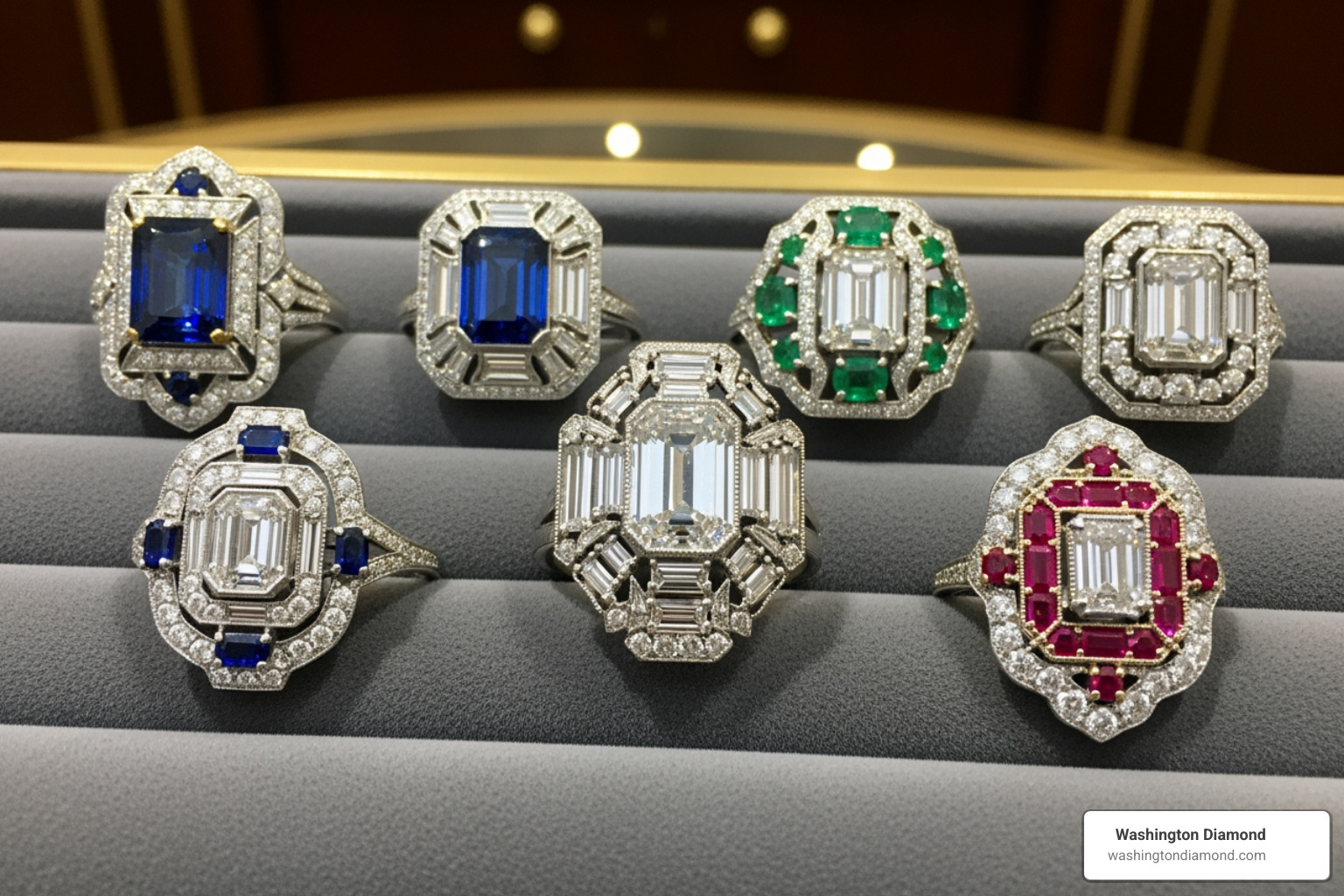
There's no mistaking an Art Deco engagement ring. Emerging between 1920 and 1935, these pieces from the Jazz Age announce their presence with bold confidence. Rejecting the soft curves of earlier styles, Art Deco celebrated the structure, order, and machine-age precision of a new era.
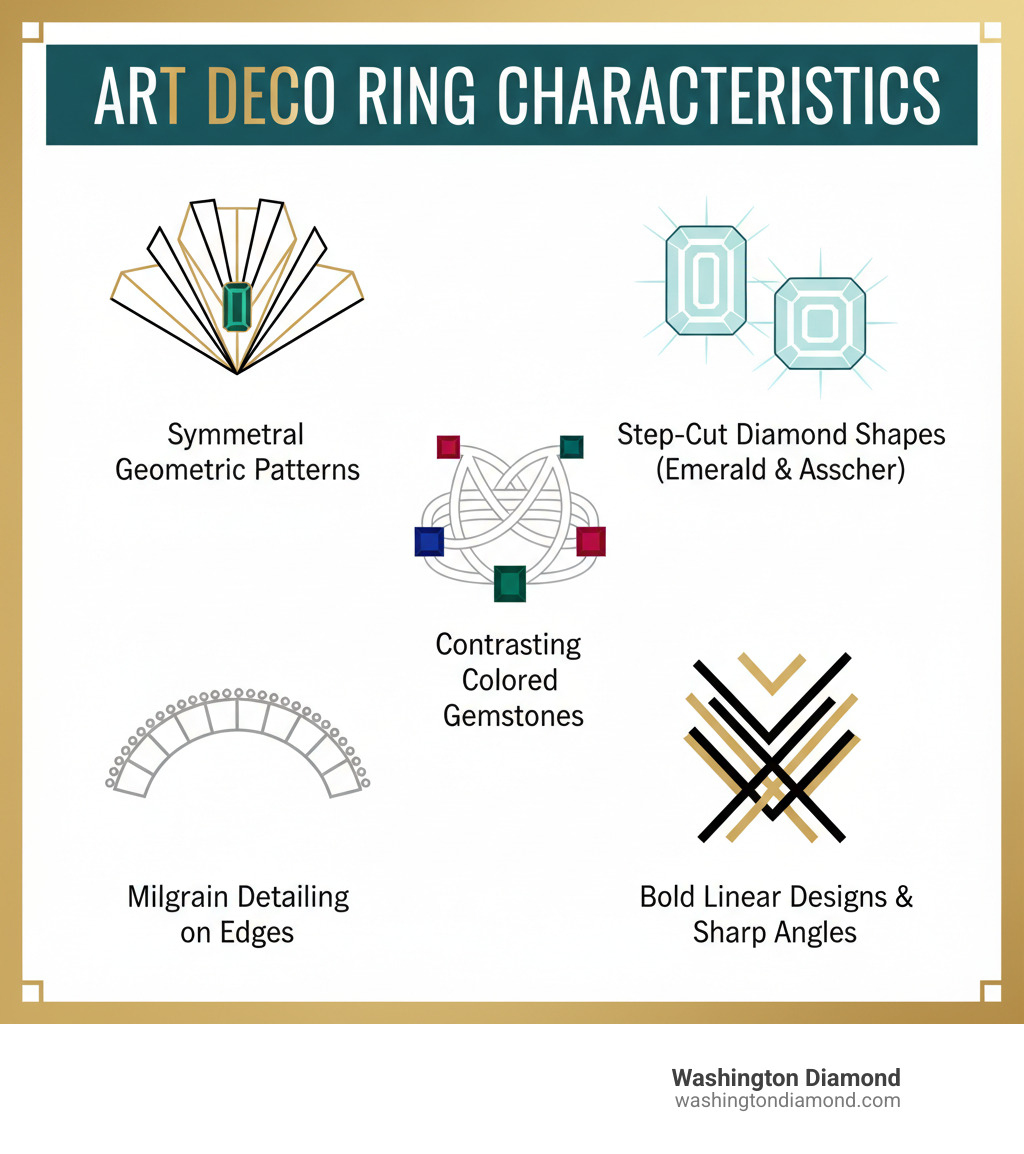
The most striking feature is the use of geometric patterns. Sharp corners, straight lines, and angular shapes dominate, mirroring the era's iconic skyscrapers. Every line feels intentional, creating pieces that look engineered rather than simply crafted. Symmetry is equally important, with designs mirroring themselves with mathematical precision to create a perfect, streamlined balance.
The style also plays with contrasting shapes within a single piece. A large emerald-cut diamond might sit between smaller baguettes, or a center stone could be surrounded by a halo of square-cut diamonds. Zig-zag patterns and sunburst motifs add energy, reflecting the era's fascination with speed and technology.
Key Characteristics and Motifs
Certain techniques and details appear repeatedly in Art Deco engagement rings, helping you recognize authentic pieces and appreciate their craftsmanship.
- Filigree & Milgrain: Art Deco filigree uses thin metal threads to create intricate, lace-like patterns that follow sharp, geometric rules. Milgrain, a tiny beaded edge, outlines these design elements, adding texture and a distinctive vintage finish.
- Step-Cut Designs & Settings: Step-cut designs like the Asscher and Emerald cuts capture the architectural spirit with parallel facets that create a "hall of mirrors" effect, emphasizing clarity over sparkle. Bezel settings, where a metal rim encircles the stone, improve the clean, streamlined look. Pavé accents—small diamonds set closely together—create continuous surfaces of sparkle, often highlighting geometric patterns.
- Halos & Motifs: Art Deco halos often used square or baguette-cut diamonds to maintain the geometric theme. The era's motifs tell stories: Egyptian revival designs, inspired by the discovery of Tutankhamun's tomb in 1922, brought scarabs and lotus blossoms into jewelry. Geometric fans, chevrons, and sunbursts symbolized optimism and progress.
If you're curious about how different diamond shapes complement various personalities and styles, our guide on The Perfect Diamond Shape for Every Personality explores this topic in depth.
Popular Gemstones and Diamond Cuts in Art Deco Engagement Rings

The gemstones and diamond cuts in Art Deco engagement rings are just as distinctive as their designs, embracing bold color and contrast.
While diamonds were popular, the era celebrated colored gemstones. Vibrant sapphires, emeralds, and rubies often took center stage, creating dramatic contrast against white metals. Black onyx also made striking appearances, offering a sophisticated, mysterious elegance.
The diamond cuts tell their own story:
- Asscher Cut: A square shape with cropped corners and step-cut facets, its "hall of mirrors" effect aligned perfectly with geometric principles.
- Emerald Cut: A rectangular step-cut that emphasizes a diamond's clarity and clean lines.
- Old European Cut: Found in many authentic vintage rings, these round diamonds have a smaller table and larger facets, giving them a softer, romantic sparkle.
- Baguette Cut: These long, rectangular step-cut stones were the go-to for accents, framing center stones or creating linear patterns.
- Trillion Cut: This triangular shape appeared as unique side stones, fitting the era's love for bold, angular designs.
Metals of the Era
The metals used in Art Deco engagement rings reflected the period's technology and aesthetic preferences.
Platinum was the supreme choice. Its strength allowed for intricate, delicate settings that could securely hold many stones, while its natural white luster complemented diamonds and colored gems. Its durability ensured these elaborate designs could withstand daily wear.
White gold emerged as a popular, more accessible alternative with a similar silvery appearance. Yellow gold was used less frequently, but often appeared in two-tone combinations, such as a yellow gold band supporting a platinum top setting, adding another layer of design sophistication.
The History Behind the Design: From Art Nouveau to Art Deco
To truly appreciate Art Deco engagement rings, we need to understand the world that created them. These rings were born from a dramatic shift in society, culture, and artistic vision.
After World War I, a wave of optimism fueled a desire to accept everything new and modern. People wanted to leave the trauma of war behind and celebrate life, progress, and possibility. This energy found its perfect expression in the Art Deco movement.
The style officially got its name from the 1925 Paris Exposition Internationale des Arts Décoratifs et Industriels Modernes. This world's fair was a bold declaration that the decorative arts had entered a new era, showcasing sleek, geometric designs that celebrated the Machine Age.
But what made Art Deco truly was how completely it broke from what came before.
Consider Art Nouveau, which dominated the late 19th and early 20th centuries. Its designs featured flowing, nature-inspired curves—twisting vines, delicate flowers, and ethereal figures. Art Nouveau was about organic beauty and handcrafted artistry, a rebellion against the industrial world.
The Edwardian era carried similar romantic sensibilities, showcasing delicate, lacy designs in platinum. These pieces featured garland-style settings with soft curves and floral motifs, evoking aristocratic grace and refined femininity.
Then along came Art Deco—and everything changed.
Art Deco's bold, industrial aesthetic rejected those soft curves entirely. Where Art Nouveau flowed, Art Deco stood like a skyscraper. Where Edwardian jewelry whispered, Art Deco announced itself with confidence. Sharp angles, strong symmetry, and geometric precision replaced gentle curves, organic asymmetry, and natural forms.
This wasn't just a change in design preference—it reflected a fundamental shift in how people saw the world. Society was moving from rural to urban, from handmade to machine-made, from the pastoral Belle Époque to the electric Jazz Age. Women were cutting their hair short, raising hemlines, and demanding independence. Architecture was reaching for the sky with bold new forms.
Art Deco engagement rings captured all of this—the optimism, the modernity, the confidence. They were rings for a new kind of romance, one that was bold, equal, and unafraid to make a statement. That's why they still resonate so powerfully with us today.
Choosing Your Perfect Piece: Vintage vs. Modern
When you're ready to find your Art Deco engagement ring, you'll face a wonderful decision: should you choose an authentic vintage treasure from the 1920s and 30s, or a modern piece inspired by that iconic era? Both paths have their own magic, and the right choice really depends on what matters most to you.
| Feature | Authentic Vintage Art Deco Rings | Modern Art Deco-Inspired Rings |
|---|---|---|
| Character/History | One-of-a-kind, rich with history and unique story; Lost craftsmanship. | Pristine, new; Captures aesthetic without historical wear. |
| Condition | May show signs of wear; Potential for repairs (prongs, cleaning). | Brand new, flawless condition. |
| Diamond Sparkle | Often Old European or Old Mine cuts, softer sparkle, unique charm. | Modern brilliant cuts, maximum sparkle; Lab-grown options. |
| Customization | Limited to existing design; Resizing can be challenging for some. | Highly customizable (metal, stones, shape); Perfect fit guaranteed. |
| Cost | Can be rare and collectible, varying prices; Scarcity adds value. | Often more affordable than rare vintage; Pricing varies by materials. |
Authentic Vintage Art Deco Rings
There's a deep romance in wearing a ring with its own story. An authentic vintage Art Deco engagement ring is a piece of history from the Roaring Twenties.
Each vintage ring is one-of-a-kind, showcasing extraordinary, often lost, craftsmanship. Intricate filigree and milgrain were created by hand using techniques that are rare today.
However, a ring that's nearly 100 years old requires consideration. It may have potential for repairs, like reinforcing worn prongs. The diamonds, typically Old European or Old Mine cuts, offer a softer, romantic glow rather than the intense fire of modern cuts. This gentler sparkle, along with a potentially warmer diamond color, is part of their vintage charm.
Sourcing from trusted jewelers is critical. Experts can verify a ring's age, materials, and authenticity. We help clients understand their purchase and offer appraisal services to document the value and history of these treasures.
Modern Interpretations of Art Deco Engagement Rings
If you love the Art Deco style but prefer a new ring, modern interpretations are an excellent choice.
A new ring means pristine condition and the spectacular modern diamond brilliance from contemporary cutting methods engineered for maximum sparkle.
The biggest advantage is customization. You can design your dream ring, choosing the metal, center stone, and every accent detail. Our expertise in custom jewelry allows us to create a piece that fits your finger and lifestyle perfectly, bringing your vision to life with precision.
Modern rings also offer lab-grown diamond availability, an ethical and often budget-friendly option without compromising beauty. These chemically identical diamonds provide peace of mind through transparent, ethical sourcing.
To learn about the skill involved, read our article on how an engagement ring is made.
A Buyer's Guide: How to Identify and Care for Your Ring
Knowing how to identify quality and care for your Art Deco engagement ring will protect your investment for generations.
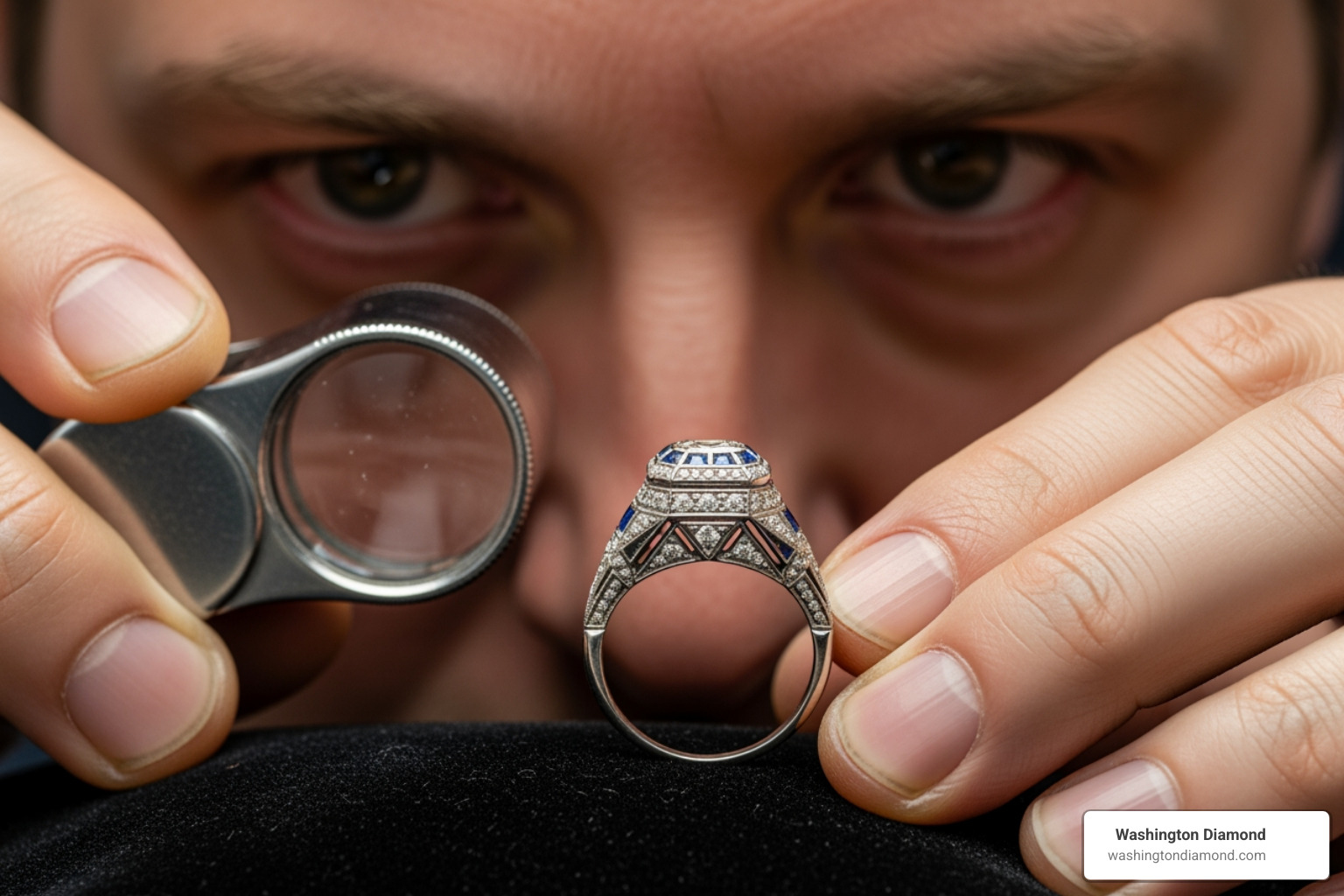
When considering a vintage piece, identifying authenticity is key.
- Maker's Marks: Look for hallmarks inside the band that indicate origin and metal content, though they may be faint or absent on genuine antiques.
- Craftsmanship Quality: Examine the details. Authentic pieces feature intricate filigree and precise milgrain beading.
- Symmetry Check: True Art Deco designs are perfectly balanced and symmetrical. Asymmetry can be a red flag.
- Signs of Age vs. Poor Quality: Genuine antiques have subtle, charming imperfections from being handcrafted. Be wary of machine-like perfection or crude detailing, which can indicate a reproduction.
- Signs of Repair: Look for solder marks or replaced prongs. Professional repairs are common and not a dealbreaker, but they should be disclosed as they can affect value.
When it comes to buying considerations, first set a budget. Prices for Art Deco rings vary widely based on age, rarity, gemstone quality, and condition. Ask questions: What is the ring's origin? Are there any repairs? What are the diamond's 4Cs? Are the colored gems natural or treated? A reputable jeweler will provide detailed answers. For significant vintage pieces, our appraisal services can verify age and quality, providing peace of mind and a comprehensive understanding of your purchase.
Properly caring for your ring ensures it remains stunning.
- Gentle Cleaning: At home, use a soft toothbrush, mild dish soap, and warm water. Gently scrub, rinse, and pat dry with a soft cloth.
- Avoid Harsh Chemicals: Household cleaners, chlorine, and even some lotions can damage softer gemstones (like emeralds) and metal settings.
- Remove When Necessary: Take your ring off during activities like gardening, intense workouts, or cleaning to prevent impact or chemical exposure.
- Professional Inspections: Schedule an annual check-up with a trusted jeweler. We can check for loose stones, examine prongs for wear, and perform a professional cleaning, addressing small issues before they become major problems.
Frequently Asked Questions about Art Deco Rings
Are vintage engagement rings a sustainable choice?
Yes, choosing a vintage Art Deco engagement ring is an environmentally responsible choice. You are repurposing existing materials, which helps reduce demand for new mining and its associated environmental impact. By extending the life of a beautiful object, you give a piece of history a new chapter in your love story. It's a sustainable way to celebrate your commitment.
What makes an engagement ring "Art Deco"?
A ring is considered "Art Deco" due to a combination of features from the 1920-1935 period:
- Bold geometric patterns: Sharp lines, strong angles, and symmetrical designs inspired by architecture.
- Platinum or white gold: These were the preferred metals, creating a bright backdrop.
- Specific diamond cuts: Asscher or Emerald cuts were popular for their clean, step-cut facets.
- Contrasting colored gemstones: Sapphires, emeralds, rubies, or onyx were used to create dramatic visual contrast.
- Detailed craftsmanship: Intricate milgrain and filigree were used to create structured, linear patterns.
When these elements combine in a ring from that era, it's an authentic Art Deco piece.
Can Art Deco rings be resized?
Yes, in many cases, an Art Deco engagement ring can be resized, but it depends on the ring's design. Simple bands are usually straightforward to resize. However, rings with intricate patterns or stones that wrap around the entire band present a challenge, as resizing can disrupt the design.
Consultation with an expert jeweler is essential. We can examine the ring to determine if resizing is feasible without compromising its integrity or beauty. If resizing isn't a safe option, custom recreations are an excellent alternative. We can craft a new ring inspired by the original design, ensuring it captures the style you love with a perfect fit.
Find Your Timeless Treasure
There's a reason Art Deco engagement rings continue to captivate us nearly a century after they first impressd the world. These rings aren't just beautiful—they're bold statements of individuality, craftsmanship, and timeless elegance. They bridge the glamorous past with our modern sensibilities, offering something truly special: a piece of jewelry that tells a story before you even add your own chapter to it.
When you choose an Art Deco engagement ring, you're choosing more than sparkle and geometry. You're selecting a symbol of a bold love story—one that values artistry, history, and the courage to stand out. Whether it's the intricate milgrain detailing, the striking contrast of sapphires against platinum, or the architectural precision of an Asscher-cut diamond, every element speaks to a distinctive aesthetic that never goes out of style.
At Washington Diamond, we believe finding your perfect ring should feel as special as the moment you'll use it to propose. That's why we've created a private, appointment-only studio experience in Northern Virginia, where you receive our complete, undivided attention. No crowds, no pressure—just a comfortable, memorable conversation about what matters most to you.
Whether you're drawn to an authentic vintage piece with its own captivating history or you're dreaming of a custom-designed interpretation that captures the Art Deco spirit with modern precision, we're here to guide you. Our expert team will walk you through the nuances of craftsmanship, help you understand different gemstone options, and ensure every detail reflects your unique story. We'll answer your questions, address your concerns, and make sure you feel confident in your choice.
Your engagement ring is one of the most meaningful purchases you'll ever make, so it's important to be informed. Before making your final decision, we encourage you to empower yourself with knowledge. Our resource on how to Calculate the value of a diamond before you buy or sell can help you understand exactly what you're investing in.
We invite you to experience the Washington Diamond difference. Let's find the Art Deco engagement ring that speaks directly to your heart—and tells your love story with the same boldness and beauty that defined the Jazz Age itself.
Have a question about your jewelry?
We've been helping clients with diamonds, custom design, repairs, appraisals, and more since 1969. Book a private appointment at our Falls Church studio.
Book an AppointmentTrusted since 1969 · Falls Church, VA · 703-536-3600
From the blog
View all


