

The Ultimate Guide to Engagement Ring Prices in 2026
What Do Engagement Rings Actually Cost in 2026?

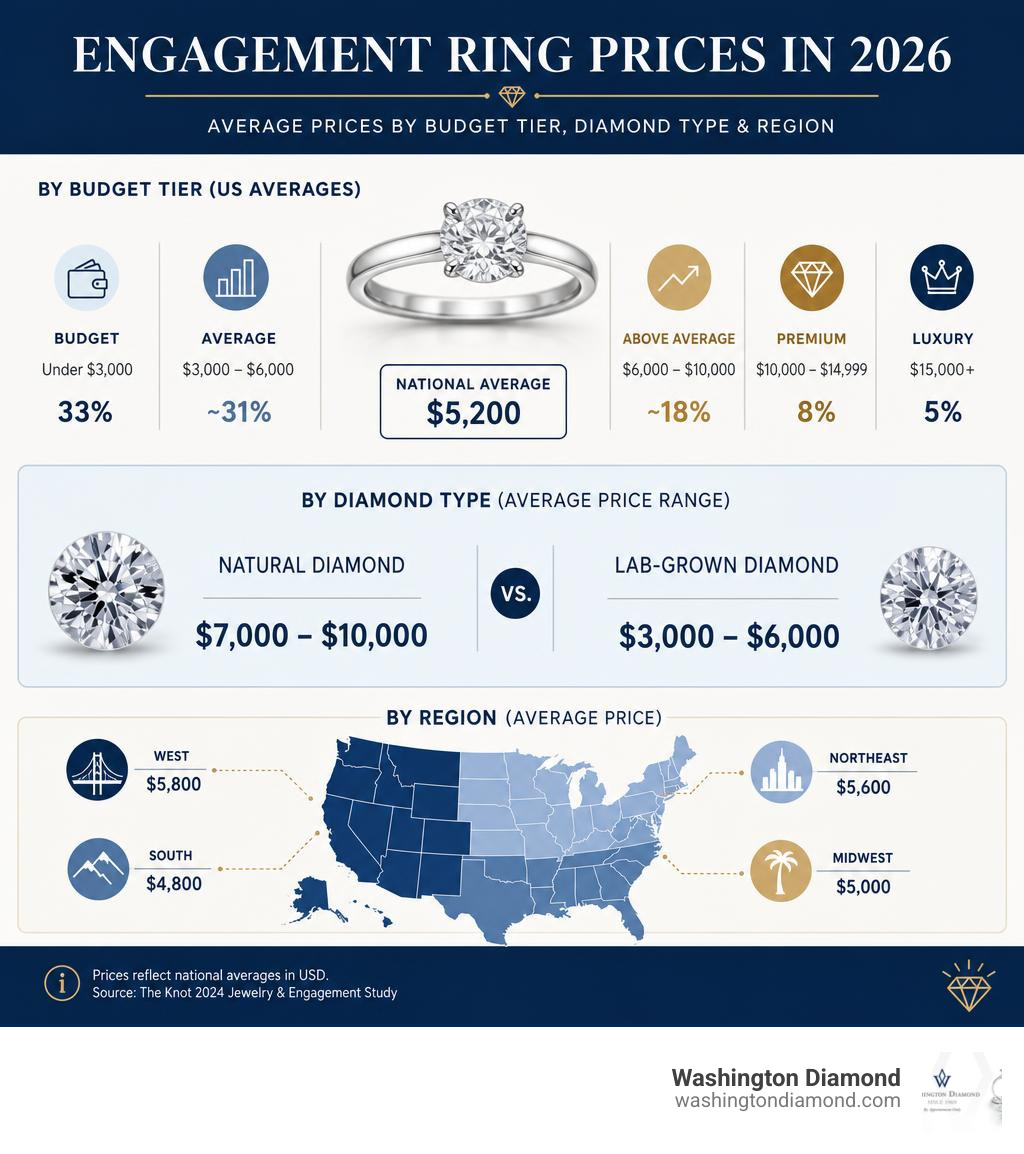
Engagement ring prices in the US typically range from under $1,000 to well over $15,000 — but most couples spend somewhere in the middle.
Here's a quick snapshot of what real couples are paying right now:
| Spending Level | Price Range | % of Couples |
|---|---|---|
| Budget | Under $3,000 | 33% |
| Average | $3,000 – $6,000 | ~31% |
| Above Average | $6,000 – $10,000 | ~18% |
| Premium | $10,000 – $14,999 | 8% |
| Luxury | $15,000+ | 5% |
The national average is $5,200, according to The Knot's 2024 Jewelry & Engagement Study. But that number hides a wide range — natural diamond rings average closer to $7,000–$10,000, while lab-grown options bring that figure down significantly.
There's no universal "right" amount to spend. The old "three months' salary" rule is a marketing invention from the 1930s, not a financial guideline. Your budget should reflect your situation — not a De Beers ad campaign.
This guide breaks down exactly what drives engagement ring costs, how to get the most for your money, and where prices actually stand in 2026 — including how rising gold prices and falling lab-grown diamond prices are reshaping the market.
I'm Tom Daube, a GIA-certified diamond expert and jewelry designer who has helped thousands of couples navigate engagement ring prices — consistently offering diamonds priced below listed wholesale. Whether you're just starting your research or ready to buy, I'll give you the honest numbers and practical guidance you need to make a confident decision.
Average Engagement Ring Cost in the US
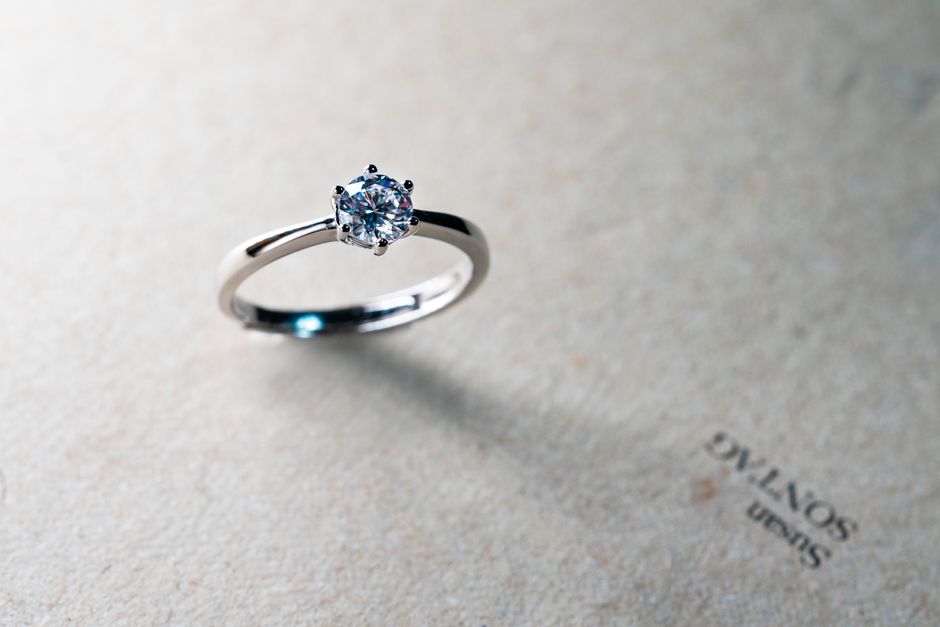
When researching engagement ring prices, the first question most people ask is: "What is everyone else spending?"
The answer depends heavily on who you ask and where they live. While The Average Engagement Ring Cost, According to Real Couples is reported at $5,200, other industry surveys show different benchmarks. For instance, WeddingWire.com places the average at $5,000, while Brides magazine reported an average of $7,829. Meanwhile, insurance industry data from The Average Engagement Ring Cost in 2025 | BriteCo indicates that the average appraised value of insured rings sits around $6,504.
Historically, national averages have experienced slight year-over-year fluctuations. The average cost was approximately $6,000 in 2021, $5,800 in 2022, and $5,500 in 2023, before settling near $5,200. This downward trend in the overall average is largely driven by the massive surge in lab-grown diamond adoption. Because lab-grown stones cost a fraction of the price of natural diamonds, they have made larger center stones accessible at much lower price points, pulling down the overall average spend even as the average physical size of the diamond has grown.
However, these national figures do not tell the whole story. The price of an engagement ring is highly dependent on regional economic factors, local retail markups, and regional trends.
Regional and State-by-State Cost Differences
Where you live has a surprisingly massive impact on how much you might expect to spend. Proposers in major metropolitan areas and coastal states typically spend significantly more than those in the Midwest or rural areas.
- The Mid-Atlantic Region: Couples in Mid-Atlantic states (including Virginia, Maryland, and the DC metro area) spend some of the highest amounts in the nation, averaging $6,900 on engagement rings.
- The Midwest: By contrast, Midwest states see a much lower average spend of $4,900.
-
State-by-State Variations:
- Washington State: Proposers here spend some of the highest averages in the country, with men spending an average of $10,109.
- California: Close behind, California buyers spend an average of $9,482 (with metro areas like Los Angeles and San Francisco paying 18% to 25% premiums due to high retail overhead).
- Maine: Proposers in Maine spend a much more modest average of $3,184.
- South Dakota: South Dakota features some of the lowest spending in the nation, with an average of $3,005.
- Virginia: In Virginia, the average spend sits at approximately $5,300. However, in the affluent Northern Virginia and DC suburbs, local averages lean much closer to the Mid-Atlantic average of $6,900, as couples seek premium custom designs and larger center stones.
Understanding the Key Factors That Determine Engagement Ring Prices
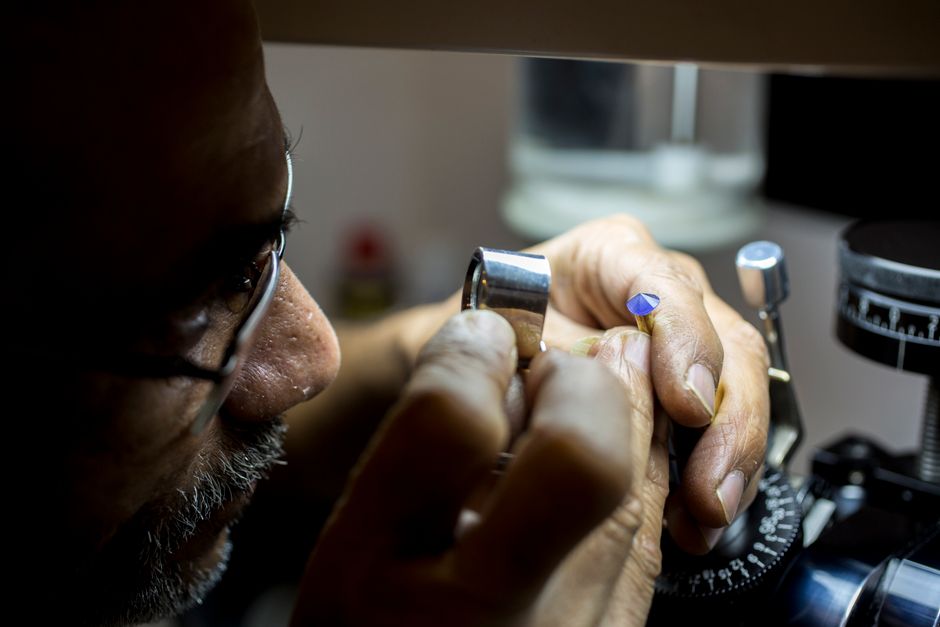
An engagement ring is essentially made of two primary components: the center stone and the metal setting. The final price tag is determined by how you balance these two elements, along with any design customizations.
To understand where your money goes, it helps to look at local crafting and design options. If you want a ring that is truly unique, choosing a custom route is often the best path. While some believe custom work is prohibitively expensive, working directly with a private studio can actually eliminate middleman markups. To understand how custom design affects your budget, read our Custom Design Engagement Ring Guide and our comprehensive Custom Engagement Rings Ultimate Guide.
How the 4 Cs Impact Engagement Ring Prices
The center diamond is almost always the most expensive part of the ring, often accounting for 70% to 85% of the total cost. The price of a natural diamond does not scale linearly; instead, it increases exponentially as you move up the scale of the "4 Cs": Cut, Color, Clarity, and Carat Weight.
Understanding how to calculate these values is essential for any smart buyer. You can learn the math behind it in our guide on How To Calculate Diamond Price Per Carat and How To Calculate Price Of A Diamond.
- Cut: This is the most crucial of the 4 Cs. A diamond's cut determines how it reflects light. An Excellent or Ideal cut will make a diamond look brilliant and fiery, and it can even make a slightly smaller or lower-color stone look beautiful. Excellent cuts command a 15% to 25% premium over Very Good grades, but this is the one area where you should never compromise.
- Color: GIA grades diamond color from D (completely colorless) to Z (noticeably yellow or brown). Colorless diamonds (D-F) carry a 20% to 40% price premium over near-colorless stones (G-J). For the best value, we recommend looking at G or H color stones; they look completely white to the naked eye when set in metal but cost significantly less.
- Clarity: This measures the internal and external imperfections (inclusions and blemishes) from Flawless (FL) down to Included (I3). While Flawless diamonds command massive premiums, stones graded VS2 or SI1 are typically "eye-clean" (meaning flaws cannot be seen without a jeweler's magnifying loupe) and offer outstanding value.
- Carat Weight: Carat is a measure of weight, not physical size. Diamond prices jump significantly at "magic numbers" or whole carat thresholds (such as 0.50, 1.00, 1.50, and 2.00 carats). For example, a 1.00-carat diamond can cost 40% to 60% more than a 0.90-carat diamond of identical quality, even though they look virtually indistinguishable on a finger.
To ensure you are paying a fair price, always look for a GIA (Gemological Institute of America) certification. You can check expected pricing tiers using our Gia Certified Diamonds Price Guide and reference our Diamond Carat Chart With Price.
How Metal Choice and Settings Affect Engagement Ring Prices
While the diamond takes up most of the budget, the metal setting is a major cost factor — and in 2026, it is more influential than ever.
An unprecedented surge in precious metal markets has sent gold prices climbing to $4,700 per ounce in May 2026, up from around $2,700 in early 2025. This 70%+ increase in raw gold costs has forced jewelry manufacturers to raise setting prices. A standard 14K gold setting that contains roughly 5 grams of gold now carries significantly higher raw material costs, leading to an average setting price increase of 40% to 50% across the industry over the last two years.
Here is how your choice of metal impacts the price:
- 14K Gold: Composed of 58.3% pure gold alloyed with stronger metals, 14K gold is the most durable option for daily wear and the most budget-friendly gold option. You can explore current pricing details in our guide on 14 Karat Gold Diamond Ring Price.
- 18K Gold: Containing 75% pure gold, 18K gold has a richer, yellower tone but is softer and costs 20% to 30% more than 14K gold.
- Platinum: Platinum is denser, rarer, and naturally hypoallergenic. While gold prices have surged, platinum settings remain a premium choice, typically adding $800 to $1,500 to the cost of a ring compared to 14K gold due to the difficulty of working with the metal and its sheer weight.
Lab-Grown vs. Natural Diamonds: Cost and Value Comparison
One of the biggest decisions couples face in 2026 is choosing between a natural diamond and a lab-grown diamond.
Optically, physically, and chemically, lab-grown diamonds are identical to natural diamonds. They are graded on the exact same 4 Cs scale by leading gemological institutes. However, because they are grown in a controlled laboratory environment using advanced technology, their supply is not limited by mining constraints, resulting in vastly different pricing structures.
Over the last five years, lab-grown diamond prices have dropped roughly 70%, including an 18% decline since 2024 alone. Today, lab-grown diamonds sell for 70% to 90% less than natural diamonds of identical specifications.
To explore this option in depth, read our Affordable Lab Grown Diamonds Complete Guide and view our live pricing benchmarks in our Lab Diamonds Price Chart.
While lab-grown diamonds offer incredible visual size for your money, they have a different long-term financial profile than natural diamonds:
- Value Retention: Natural diamonds retain a significant portion of their value over time, typically holding 40% to 60% of their retail value on the resale market. Because natural diamonds are a finite resource, their market remains stable.
- Resale Value of Lab-Grown: Because manufacturing technology continues to improve and production costs drop 10% to 15% annually, lab-grown diamonds have very little resale value (often retaining only 10% to 20% of their purchase price, or even near zero).
If you view your ring as a long-term financial asset or a family heirloom to be passed down, natural diamonds are the traditional choice. If you want to maximize the visual size of your center stone within a set budget, lab-grown is an incredibly attractive option.
| Feature | Natural Diamond Ring | Lab-Grown Diamond Ring |
|---|---|---|
| Average Cost (1.5 ct) | $8,500 – $14,000 | $2,500 – $4,500 |
| Chemical Composition | Pure Carbon (Crystalline) | Pure Carbon (Crystalline) |
| Resale Value Retention | Moderate to High (40% - 60%) | Minimal to None (10% - 20%) |
| Ethical & Environmental | Requires mining; strictly regulated | Created in labs; lower physical footprint |
Carat Weight Pricing for Natural and Lab-Grown Diamonds
To see the price differences in action, let's look at how natural and lab-grown prices compare across popular carat sizes in 2026.
- 1-Carat Diamonds: A high-quality natural 1-carat diamond (G color, VS2 clarity, Excellent cut) typically costs between $4,000 and $6,500 for the loose stone. A lab-grown diamond with the exact same specifications costs between $800 and $1,500. For a deep dive into 1-carat pricing and shapes, see our 1 Carat Oval Diamond Price Guide and our breakdown of the 1 Carat Man Made Diamond.
- 2-Carat Diamonds: Because natural diamond prices scale exponentially with size, a high-quality natural 2-carat diamond will cost between $15,000 and $22,000. In contrast, a 2-carat lab-grown diamond costs between $1,500 and $3,000. You can compare these dynamics in our guides: Decoding The Dollar Your Guide To 2 Carat Diamond Pricing and Average Cost Of A 2 Carat Lab Grown Diamond.
- Other Carat Sizes: If you are exploring larger or smaller stones, you can find detailed pricing breakdowns in our guides on 3 Carat Lab Grown Diamond Price and How Much For A 75 Carat Loose Diamond Your Ultimate Pricing Breakdown.
Smart Budgeting: How Much Should You Spend?
Setting an engagement ring budget is a deeply personal decision. The most important rule of thumb in 2026 is simple: spend what you can afford without taking on high-interest debt.
A healthy budgeting framework involves looking at your net monthly income, your fixed expenses, and your long-term savings goals. Rather than using arbitrary salary rules, many modern couples choose to spend approximately one month's gross income, or equivalent to two to four weeks of take-home pay.
To find a realistic baseline before you shop, we recommend calculating your target diamond value using Calculate The Value Of A Diamond Before You Buy Or Sell and utilizing The Diamond Value Calculator Your Secret Weapon For Smart Buying.
If you are looking for alternative ways to maximize your budget, consider these smart avenues:
- Pre-Owned or Vintage Rings: Pre-owned and antique engagement rings can often be purchased at up to 78% off retail prices. Vintage rings not only offer incredible historical character but also bypass the modern manufacturing markups associated with new gold and settings.
- The "Starter Ring" Approach: Some couples choose to buy a beautiful, modest ring or use a high-quality diamond alternative (like moissanite or a smaller lab-grown diamond) with the explicit plan to upgrade the center stone down the road when their financial situation allows.
Frequently Asked Questions About Engagement Ring Costs
Is $5,000 a good budget for an engagement ring?
Yes, $5,000 is an excellent and highly versatile budget. With $5,000, you have several fantastic options:
- The Lab-Grown Route: You can easily purchase a stunning, top-tier 1.5 to 2.0-carat lab-grown diamond (G color, VS2 clarity) set in a premium 14K gold or platinum setting.
- The Natural Route: If you prefer a natural diamond, a $5,000 budget can secure a beautiful, sparkling 0.70 to 0.80-carat round brilliant diamond in a classic solitaire setting.
Why are engagement rings more expensive in 2026?
While loose lab-grown diamond prices have continued to decline, the overall cost of physical ring settings has risen due to record-breaking precious metal prices. With gold trading at an all-time high of $4,700 per ounce in May 2026 (compared to $2,700 in early 2025), the cost of raw gold, labor, and jewelry manufacturing has pushed setting prices up by 40% to 50% across the industry.
How can I save money on an engagement ring without sacrificing quality?
You can save thousands of dollars by utilizing a few insider buying strategies:
- Buy Shy: Buy just under major carat weights. Choose a 0.90-carat diamond instead of a 1.00-carat stone, or a 1.40-carat diamond instead of a 1.50-carat stone. They look identical on a finger, but you will save 20% to 30% on the price.
- Prioritize Cut Over Clarity and Color: A diamond with an Excellent cut will sparkle brilliantly and mask slight color tints or minor inclusions. You can safely drop to a G or H color and a VS2 or SI1 clarity grade without anyone noticing a difference with the naked eye.
- Choose Elongated Shapes: Fancy shapes like oval, marquise, and pear cuts have a larger "surface area" than round diamonds, meaning they look larger on the hand than a round diamond of the exact same carat weight.
Conclusion
Navigating engagement ring prices can feel overwhelming, but you do not have to do it alone. At Washington Diamond, we do things differently.
We operate as a private, appointment-only studio in Northern Virginia, offering you undivided attention and a highly personalized, pressure-free experience. Because we do not have the massive overhead of traditional retail storefronts, we are proud to offer loose diamonds and custom settings priced below listed wholesale.
Whether you want to design a one-of-a-kind natural diamond masterpiece or explore the incredible value of lab-grown stones, we are here to help you get the absolute most out of your budget.
Ready to take the next step? Read our local Engagement Ring Stores Dc Guide 2026 or schedule your private, one-on-one consultation with us today to start designing a ring that perfectly fits your love story and your budget.
Have a question about your jewelry?
We've been helping clients with diamonds, custom design, repairs, appraisals, and more since 1969. Book a private appointment at our Falls Church studio.
Book an AppointmentTrusted since 1969 · Falls Church, VA · 703-536-3600
From the blog
View all


