

The Diamond Value Calculator: Your Secret Weapon for Smart Buying
Understanding Diamond Value: Why a Calculator Matters Before You Buy
A diamond values calculator is an online tool that estimates a diamond's price based on its characteristics—like carat, color, clarity, and cut—by comparing it against a database of current market prices.
What a Diamond Values Calculator Does:
- Provides instant price estimates for loose diamonds based on the 4 Cs.
- Compares your diamond to databases of thousands of certified diamonds.
- Uses real-time market data, similar to Zillow's Zestimate for real estate.
- Shows price ranges to set realistic expectations.
- Acts as a guideline, not a formal appraisal or guarantee.
If you're planning to buy an engagement ring or sell a diamond, you've likely wondered: What's it actually worth? The diamond market can feel opaque, with prices for seemingly identical stones varying by thousands of dollars. That's where a diamond value calculator helps. Think of it as doing your homework before a big financial decision, giving you a ballpark estimate before you buy or sell.
However, a calculator doesn't tell the whole story. It can't see if a diamond has brilliant sparkle or if an inclusion is cleverly hidden. It can't account for a jeweler's expertise or the trust you build during a consultation.
This guide will explain how these calculators work, what they measure, where they fall short, and how to use them as a smart starting point—not the final word—on your journey to finding the perfect diamond.
What is a Diamond Value Calculator and How Does It Work?
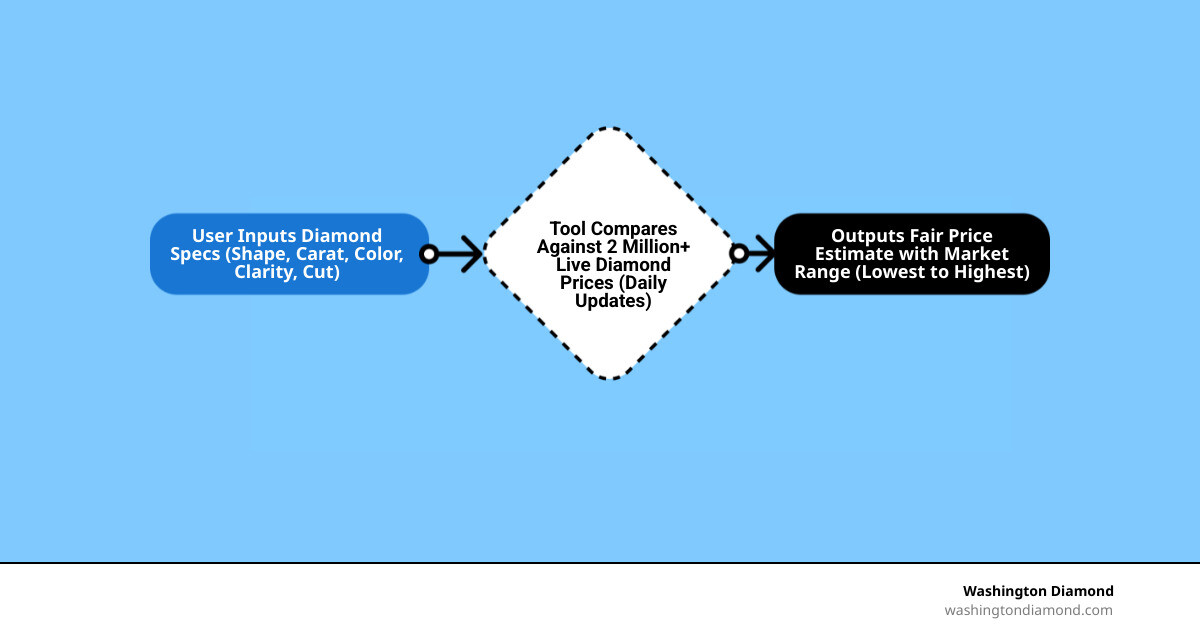
A diamond values calculator is like a "Zestimate" for diamonds. You enter a diamond's characteristics—carat, color, clarity, and cut—and the tool compares them against a massive database of real diamonds currently for sale to give you a price estimate.
Behind the scenes, these calculators use real-time market data from thousands of listings, with advanced systems leveraging machine learning algorithms to analyze millions of prices daily. The calculator essentially asks, "What are diamonds with these specs selling for right now?" and provides an average price based on the matches it finds.
It's crucial to remember that a diamond values calculator provides a guideline, not a formal appraisal. It works with average pricing, which means it can't capture what makes a specific diamond special or problematic. For example, two diamonds with identical grades can look very different in person. One might have an inclusion hidden under a prong, while another has a visible flaw in the center. The calculator sees them as the same, but an expert eye won't.
These tools are invaluable for research, helping you understand the market before you shop. They can help you spot a deal that's too good to be true or identify an inflated price. Just remember they are one piece of the puzzle, not the complete picture.
For more background on what these calculators are actually evaluating, check out our guide on loose diamonds.
The Core Four: How the 4 Cs Drive Diamond Value
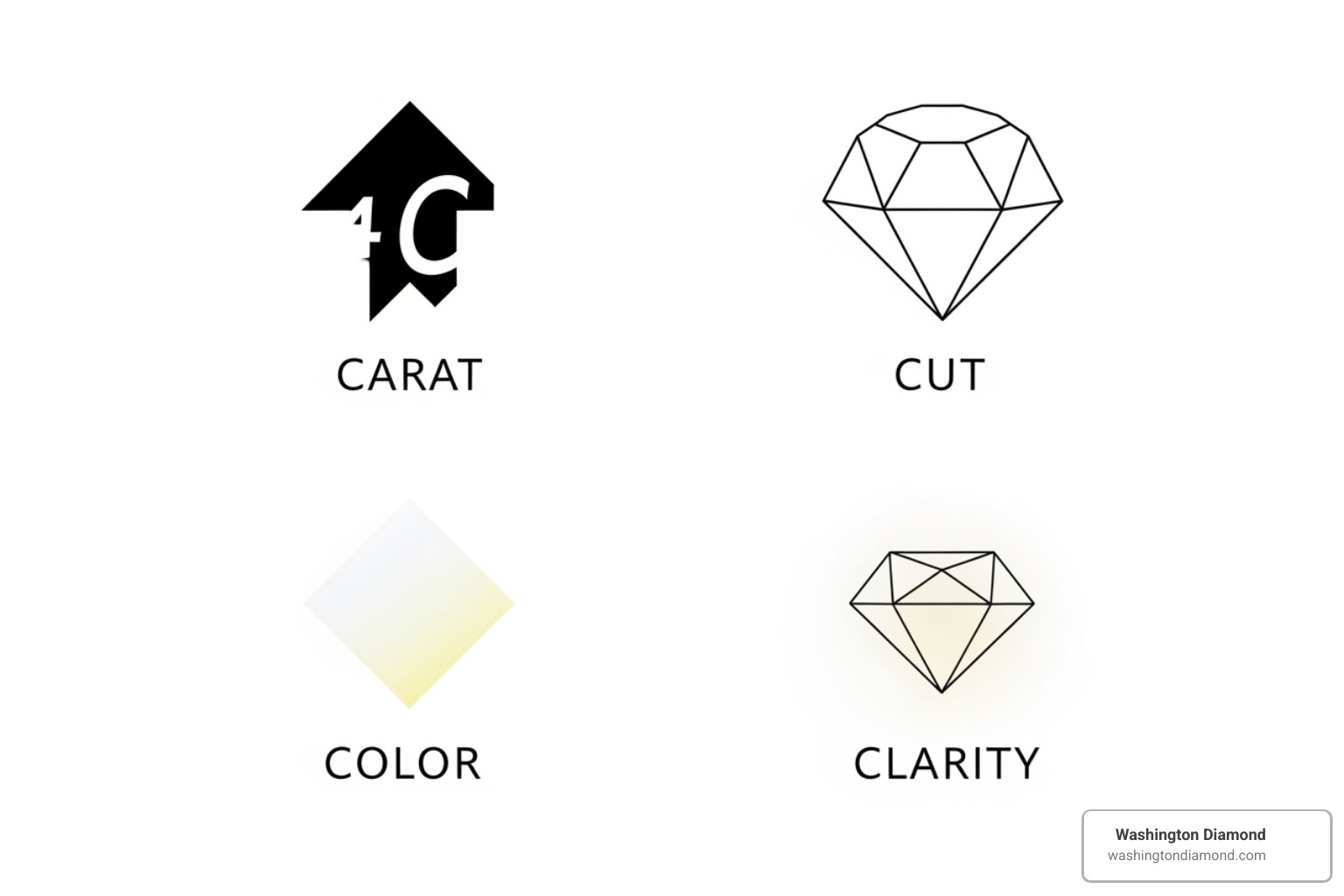
Every diamond values calculator is built on the 4 Cs, the universal grading system established by the Gemological Institute of America (GIA). These four factors are the DNA of a diamond, determining its beauty, rarity, and price.
If you're curious about the deeper meaning behind these precious stones, you might enjoy exploring The Legend and Symbolism of the Diamond.
Carat Weight: More Than Just Size
Carat is a measure of weight (one carat = 200 milligrams), not size. Because larger diamonds are exponentially rarer, their value increases dramatically. A 2-carat diamond can easily cost four times as much as a 1-carat diamond of similar quality. This is why jewelers use price per carat to compare value, a metric that highlights how much rarity drives price.
Color: The Pursuit of Colorlessness
For white diamonds, value lies in the absence of color. The GIA scale runs from D (colorless) to Z (light yellow/brown). D-F grades are the rarest and most expensive. Many people can't distinguish between a colorless D and a near-colorless G in a ring, but the price difference is significant. This rule is inverted for fancy colored diamonds, where intense, rare hues like pink or blue are prized.
Clarity: A Diamond's Unique Fingerprint
Clarity refers to a diamond's natural imperfections: internal inclusions and external blemishes. The GIA scale ranges from Flawless to Included. The secret for many buyers is finding an eye-clean diamond—one where inclusions aren't visible without magnification. An SI1 diamond can look identical to a much more expensive VVS2 to the naked eye, offering tremendous value.
Cut: The Key to Brilliance and Sparkle
Cut is the most critical factor for a diamond's beauty. A poor cut will make a diamond look dull, regardless of its color or clarity. Cut determines a diamond's brilliance (white light), fire (rainbow colors), and scintillation (sparkle). An Excellent cut grade ensures light performs beautifully, returning to your eye as dazzling sparkle. The difference between an Excellent and a Poor cut can affect value by up to 40%, making it the one C you should never compromise on.
Beyond the 4 Cs: The Nuances of Diamond Valuation
Two diamonds with identical 4 Cs can have different prices. That's because other factors influence value, and a good diamond values calculator accounts for them.
Diamond Shape: How Popularity and Proportions Affect Price
Round brilliant diamonds are the most popular and, therefore, the most expensive per carat because their cut is engineered to maximize sparkle. Fancy shapes like oval, princess, and emerald are priced based on market trends and demand. A calculator will always ask for the shape, as it's a primary driver of value. To explore which shape fits you, see our guide on The Perfect Diamond Shape for Every Personality.
Certification: Why a Grading Report Matters
A certification is a third-party verification of a diamond's quality. The GIA is the gold standard for its consistent and conservative grading. A diamond graded G color and SI1 clarity by a less stringent lab might only receive a K color and SI2 grade from GIA. Even though the first report looks better, the GIA-graded stone is often more valuable because the market trusts the grade. A reliable calculator will ask for the certifying lab.
Fluorescence, Polish, and Symmetry: The Finishing Touches
These details refine a diamond's value:
- Fluorescence: A glow under UV light. Strong fluorescence can make a diamond look milky, potentially decreasing its value by 10-20%. Most buyers prefer "None" or "Faint."
- Polish: The smoothness of the diamond's facets. An Excellent grade ensures light passes through cleanly for maximum brilliance.
- Symmetry: The precision and alignment of the facets. Excellent symmetry creates even, mesmerizing sparkle.
Market Forces: Natural vs. Lab-Grown and Economic Trends
The rise of lab-grown diamonds has changed the market. A modern diamond values calculator must distinguish between natural and lab-grown, as their values are fundamentally different.
| Feature | Natural Diamonds | Lab-Grown Diamonds |
|---|---|---|
| Price | Significantly higher | Significantly lower |
| Resale Value | Retains significant value | Little to no resale potential |
| Rarity | Finite supply, formed over billions of years | Abundant supply, manufactured in weeks |
Natural diamonds are rare and have historically held their value. Lab-grown diamonds are chemically identical but can be produced in abundance, which affects their long-term value. Both markets are subject to economic trends and supply shifts, which is why calculator estimates are dynamic. For more on this, learn What Does Ethically Sourced Actually Mean?.
Using a Diamond Values Calculator for Buying and Selling
A diamond values calculator is a powerful tool for both buyers and sellers, but how you use it depends on your goal.
For Buyers: How to Set a Budget and Understand Value
As a buyer, a diamond values calculator is your research assistant. It provides a retail price estimate that helps you set a realistic budget and avoid sticker shock. Use it to compare how changing the 4 Cs affects price. You might find that dropping one color grade saves enough to increase the carat weight, helping you find the perfect balance of beauty and budget.
Doing this homework allows you to walk into our private Northern Virginia studio with confidence. You'll be prepared to have a meaningful conversation about your priorities, making the experience of choosing a ring more enjoyable. For more inspiration, explore Which Engagement Ring Rocks Your World?.
For Sellers: Understanding Resale Value vs. Retail Price
If you're selling a diamond, a calculator provides a starting point, but understand that resale value is almost always lower than retail price. A common rule of thumb is that a diamond's resale value is about 50% of the lowest current retail price for a similar stone.
This isn't because your diamond has lost quality. When a business buys your diamond (a C2B sale), they must account for overhead and profit. The retail price you see online includes these margins. Also, don't confuse an insurance appraisal value—which is for replacement cost—with market value, which is what a buyer will actually pay. Use the calculator to find the retail estimate, then adjust your expectations for a resale offer.
Where to Find a Reliable Diamond Values Calculator
Look for calculators that use large, frequently updated databases and real-time market data. While these tools are excellent for research, they can't replace the personalized service of an expert. We encourage you to use these tools for initial research and then bring your questions to us. Our team at Washington Diamond provides custom valuations and insights that a digital tool can't. Start your journey on our page to Calculate the Value of a Diamond Before You Buy or Sell, then schedule a private appointment for our undivided attention.
Frequently Asked Questions about Diamond Valuation
Here are quick answers to some of the most common questions we hear from our clients in Northern Virginia.
Can a diamond values calculator determine the value of a full diamond ring?
No. A diamond values calculator is designed to estimate the value of a loose diamond only. It cannot account for the value of the ring's setting, which depends on the metal type (platinum, gold), craftsmanship, designer, and any additional side stones. A professional appraisal is needed for a full ring valuation. To learn more about the process, read How is an Engagement Ring Made?.
Why do two diamonds with the same specs have different prices?
This happens because of nuances that grading reports don't fully capture. Differences can come from:
- Subtle variations in cut quality that affect sparkle.
- The presence of fluorescence, which can impact price by 10-20%.
- The location and type of inclusions, even within the same clarity grade.
- The certifying lab (a GIA report carries a premium over less-strict labs).
- Different jewelers' business models and markups.
An expert can help you see and understand these differences. To maintain your diamond's sparkle, check out our Diamond Cleaning & Care Guide.
How accurate are the estimates from a diamond values calculator?
These calculators are quite accurate for providing a ballpark estimate based on market averages. They analyze huge, up-to-date databases of real diamond prices. However, their accuracy has limits. A calculator cannot physically see the diamond to assess its unique light performance or the nature of its inclusions. Its estimate is most reliable for common diamond sizes and grades where data is plentiful. For a definitive valuation, especially for insurance or selling, a professional appraisal is essential.
Conclusion: From Calculator to Confident Purchase
A diamond values calculator is an empowering first step, changing a complex market into something you can steer with confidence. It gives you data-driven estimates based on the 4 Cs, shape, certification, and other key factors, allowing you to set a realistic budget and understand the fundamentals of diamond pricing.
But a calculator is just the beginning of the story. Numbers on a screen can't capture the fire of a diamond catching the light or replicate the confidence that comes from expert, personalized guidance. A calculator can't help you see the subtle difference between two diamonds with your own eyes.
That's why we created Washington Diamond. Our private, appointment-only studio in Northern Virginia provides what no online tool can: our undivided attention and honest expertise. We invite you to see, hold, and compare diamonds in person, so you can truly understand their unique beauty and make an informed choice.
Use a diamond values calculator to do your homework. Then, bring your knowledge and your questions to us. Let us help you find a diamond that's not just a perfect calculation, but a perfect fit for your story.
Begin your journey by exploring our dedicated page: Calculate the Value of a Diamond Before You Buy or Sell, then schedule your private appointment. We'll help you turn your research into a confident, memorable purchase.
Have a question about your jewelry?
We've been helping clients with diamonds, custom design, repairs, appraisals, and more since 1969. Book a private appointment at our Falls Church studio.
Book an AppointmentTrusted since 1969 · Falls Church, VA · 703-536-3600
From the blog
View all


