

The Most Elegant 3 Stone Cathedral Rings for Your Proposal
Why the 3 Stone Cathedral Setting Is One of the Most Iconic Engagement Ring Designs

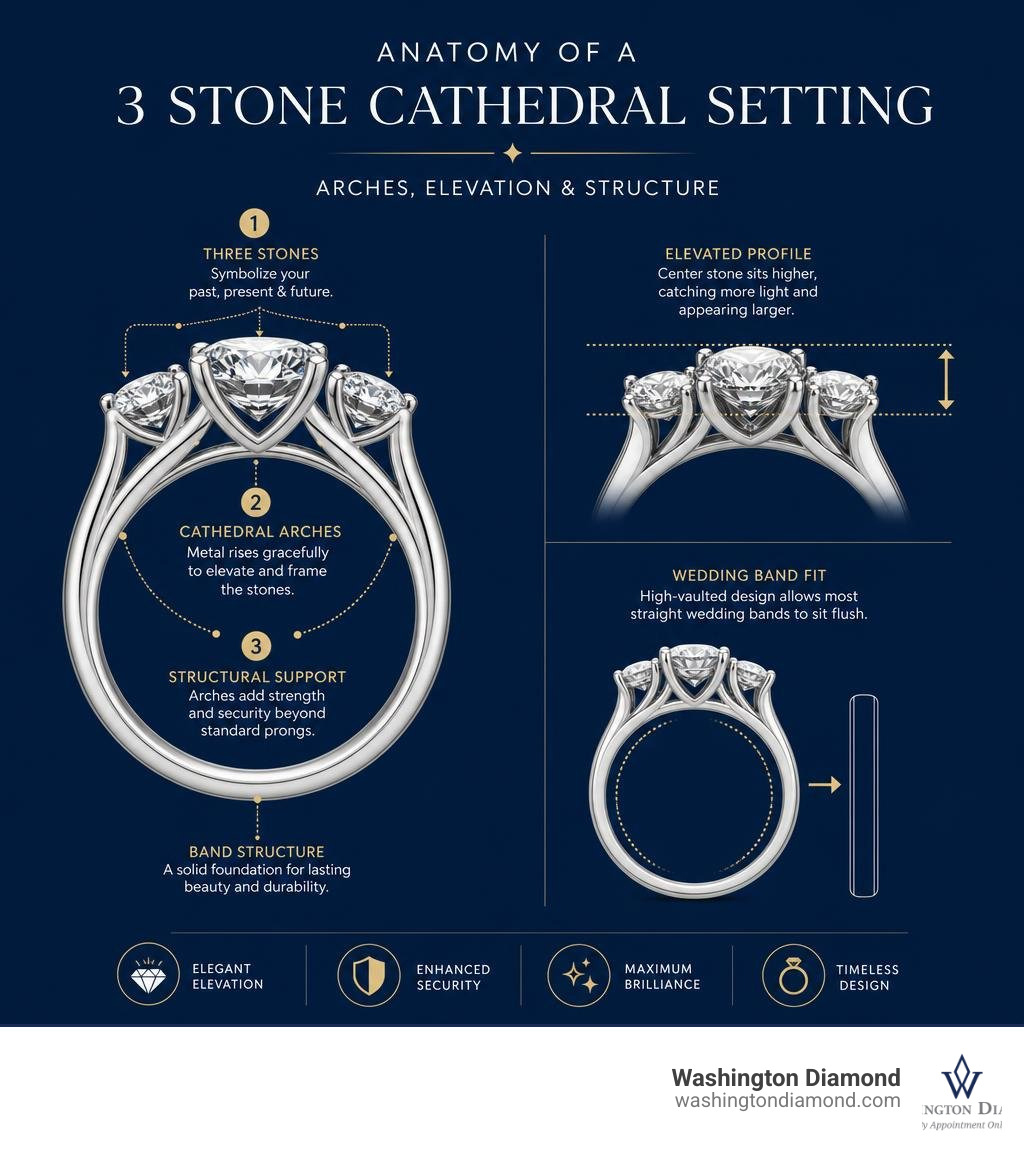
A 3 stone cathedral setting combines two of the most beloved ideas in fine jewelry: the timeless symbolism of three stones and the architectural elegance of cathedral-inspired metalwork. The result is a ring that feels both deeply meaningful and visually striking — from every angle.
Here's what makes a 3 stone cathedral setting stand out:
| Feature | What It Means for You |
|---|---|
| Three stones | Represent your past, present, and future together |
| Cathedral arches | Metal rises from the band to elevate and frame the stones |
| Elevated profile | Center stone sits higher, catching more light and appearing larger |
| Structural support | Arches add security beyond standard prong settings |
| Wedding band fit | High-vaulted design allows most straight bands to sit flush |
These rings work with a wide range of diamond shapes — round brilliant, oval, princess cut, emerald, and more — and can be customized with metals ranging from platinum to rose gold. Prices typically start around $865 for moissanite versions and range up to $112,200 for high-carat natural diamond configurations, depending on the stones and metalwork involved.
If you are comparing diamond options for a custom ring, the GIA diamond quality factors are a helpful independent reference for understanding how cut, color, clarity, and carat weight influence beauty and value.
I'm Tom Daube, a GIA-certified diamond and custom jewelry specialist with decades of experience helping clients find and design the perfect 3 stone cathedral setting for their most important moments. Let's walk through the best designs available — and what to look for when choosing yours.
3 stone cathedral setting further reading:
Understanding the 3 Stone Cathedral Setting and Its Architectural Appeal
To appreciate the allure of the 3 stone cathedral setting, it helps to look at its structural inspiration. Named after the soaring, vaulted arches of historic European cathedrals, this design uses sweeping slopes of precious metal (often called "shoulders") that rise from the band to meet the girdle of the center stone.
Unlike a classic peg setting, where the basket sits directly on top of a flat band, a cathedral setting integrates the mounting into the ring's overall silhouette. This creates a graceful, arched profile that acts as a physical frame for your chosen gems. When you combine this architectural style with a three-stone, or trilogy, layout, the upward-sloping shoulders frame not just the center stone, but the entire trio of diamonds, creating a continuous, balanced river of light across the finger.
From a physics standpoint, this design is a game-changer for light performance. By raising the diamonds above the band, the arches allow light to enter the stones from multiple angles, including the sides and bottom. This extra light exposure dramatically enhances the fire, brilliance, and overall sparkle of both the center diamond and its flanking side stones.
Furthermore, these arches offer excellent structural support. Rather than relying solely on a single point of contact at the base of a basket, the cathedral setting anchors the stones at multiple points along the band. This added stability makes it highly secure, protecting your precious stones from lateral knocks and daily wear.
To help you visualize how this setting differs from a standard prong setting, let's look at a side-by-side comparison:
| Design Element | Cathedral Setting | Classic Prong Setting (Non-Cathedral) |
|---|---|---|
| Side Profile | Vaulted metal arches rise up to meet the stones | Stones sit directly on a flat band with no supporting arches |
| Light Entry | High; light floods in from the sides, top, and bottom | Moderate; light enters primarily from the top |
| Security | Excellent; multiple anchor points protect the head | Standard; relies entirely on the strength of the prongs at the base |
| Height Perception | Accentuates height, making the center stone look larger | Flat profile; stone sits closer to the finger |
| Wedding Band Fit | High-vaulted arches easily accommodate flush-fitting bands | May require a curved or contoured wedding band to sit flush |
If you are just beginning your ring search, exploring our guide on Engagement Ring Settings 101 is an excellent way to understand these foundational differences. For a deeper dive into the physics and history of the arch itself, check out our dedicated article on the Cathedral Engagement Setting.
Top Design Variations for Three-Stone Cathedral Rings
One of the greatest benefits of the 3 stone cathedral setting is its incredible design versatility. Because the cathedral arches provide a sturdy, elevated foundation, they can support a vast array of diamond shapes, side-stone pairings, and custom metalwork.
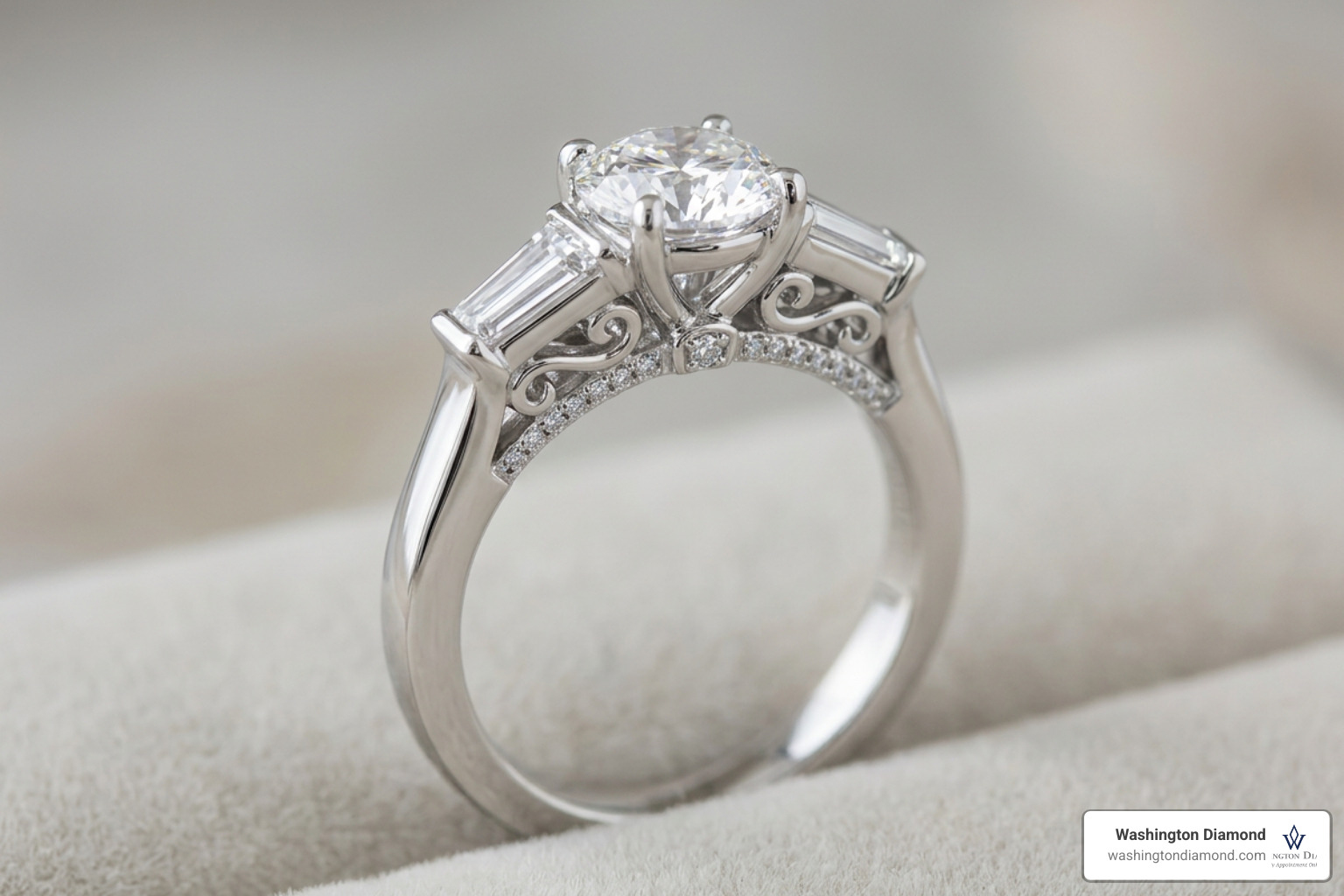
When selecting your ring, the metal you choose plays a massive role in its overall aesthetic.
- Platinum is a favorite for those seeking ultimate durability and a clean, modern look. Its natural white sheen emphasizes the icy brilliance of high-quality diamonds.
- Yellow Gold (18K or 14K) offers a classic, warm contrast that makes the white diamonds pop, softening the architectural lines of the arches.
- Rose Gold provides a romantic, vintage feel that looks exceptionally beautiful with unique side stones.
For a comprehensive breakdown of how these metals compare in terms of durability, color, and cost, refer to our Diamond Ring Complete Guide 2026.
The Classic Round Brilliant 3 Stone Cathedral Setting
There is a reason the classic round brilliant three-stone ring remains a favorite decade after decade. This design features a central round brilliant-cut diamond flanked by two smaller matching round diamonds. The absolute symmetry of three round stones creates a highly balanced aesthetic that looks stunning from every angle.
Symbolically, this trilogy design represents the past, present, and future of your relationship. When set in a high-vaulted cathedral mounting, the three round stones are lifted together, allowing them to capture light in unison and create a blinding display of fire.
If this timeless silhouette sounds like the perfect match, it remains one of the most sought-after designs for custom creations.
Fancy Shapes and Unique Side Stone Pairings
For those who want a ring with a more customized, personal feel, pairing fancy-shaped center diamonds with unique side stones is the way to go. The architectural support of the cathedral arches allows for incredibly creative geometric pairings.
Some of the most popular combinations include:
- The Oval Center with Pear Accents: A stunning, elongated choice where the teardrop shape of the pear diamonds flows seamlessly into the rising arches of the band, creating an elegant and flattering look on the finger.
- The Emerald Center with Baguettes: This pairing offers a vintage, Art Deco-inspired aesthetic. The step-cut facets of both the emerald and baguette diamonds create a sleek, hall-of-mirrors effect that looks highly sophisticated.
- The Cushion Center with Cadillac or Trapezoid Side Stones: A bold, modern look where the soft, rounded corners of the cushion cut contrast beautifully with the sharp, geometric angles of Cadillac or trapezoid side stones.
- The Princess Center with Round Accents: This combination offers a striking geometric contrast, pairing the sharp, clean lines of a princess-cut center stone with the soft brilliance of round side diamonds.
Pros, Cons, and Everyday Wearability
When choosing an engagement ring, it is vital to balance aesthetic beauty with your daily lifestyle. The 3 stone cathedral setting is a magnificent choice, but like any setting, it has its unique set of advantages and challenges.

The Pros:
- Enhanced Brilliance: By elevating the stones, it maximizes light performance, making your diamonds sparkle to their fullest potential.
- Perceived Size: The elevated profile acts as an optical pedestal, making the center stone appear larger and more prominent than it would in a low-profile setting.
- Superior Security: The arches provide extra structural support, shielding the precious center stone and side gems from accidental side impacts.
- Flush Stacking: Because the arches lift the head of the ring, most standard, straight wedding bands can slide right underneath, sitting perfectly flush against the engagement ring.
The Cons:
- Snagging Risk: Because the ring sits higher off the finger, it is more prone to catching on clothing, sweaters, or pockets.
- Cleaning Maintenance: The open space beneath the cathedral arches can easily trap dirt, lotion, and soap residue, requiring more frequent cleanings to maintain its brilliant sparkle.
- Lifestyle Considerations: If you have an extremely active lifestyle, work with your hands, or frequently wear tight gloves, a high-profile setting may require extra mindfulness during daily wear.
If you are torn between a high-profile cathedral and a low-profile basket setting, our Engagement Ring Comparison Help guide can help you weigh these practical factors against your personal lifestyle.
Customizing Your Dream Ring
Customizing a 3 stone cathedral setting allows you to create a completely unique piece of wearable art. Because the cathedral structure inherently creates open space beneath the stones, it serves as the perfect canvas for hidden, romantic details that are only visible from the side profile.
You can easily incorporate:
- Hidden Halos: A delicate collar of tiny pavé diamonds wrapped around the base of the center stone's prongs, adding a secret touch of sparkle.
- Surprise or Peek-a-boo Diamonds: Small accent gems tucked into the open space of the arches or the undercarriage of the basket.
- Pavé Bands: Adding brilliant pavé diamonds along the sloping cathedral shoulders to transition beautifully into the main setting.
To see how these custom details come to life, browse our Custom Design Engagement Ring Guide and our Custom Engagement Rings Ultimate Guide.
Designing a Custom 3 Stone Cathedral Setting
When designing a custom three-stone ring, the devil is in the details. One of the most important decisions is choosing your prong style. While standard round prongs are classic, claw prongs offer a sleek, modern look that pinches the corners of the diamond, making the metal blend seamlessly into the stone. You can also opt for a highly secure 6 Prong Cathedral Setting for round diamonds to ensure maximum protection.
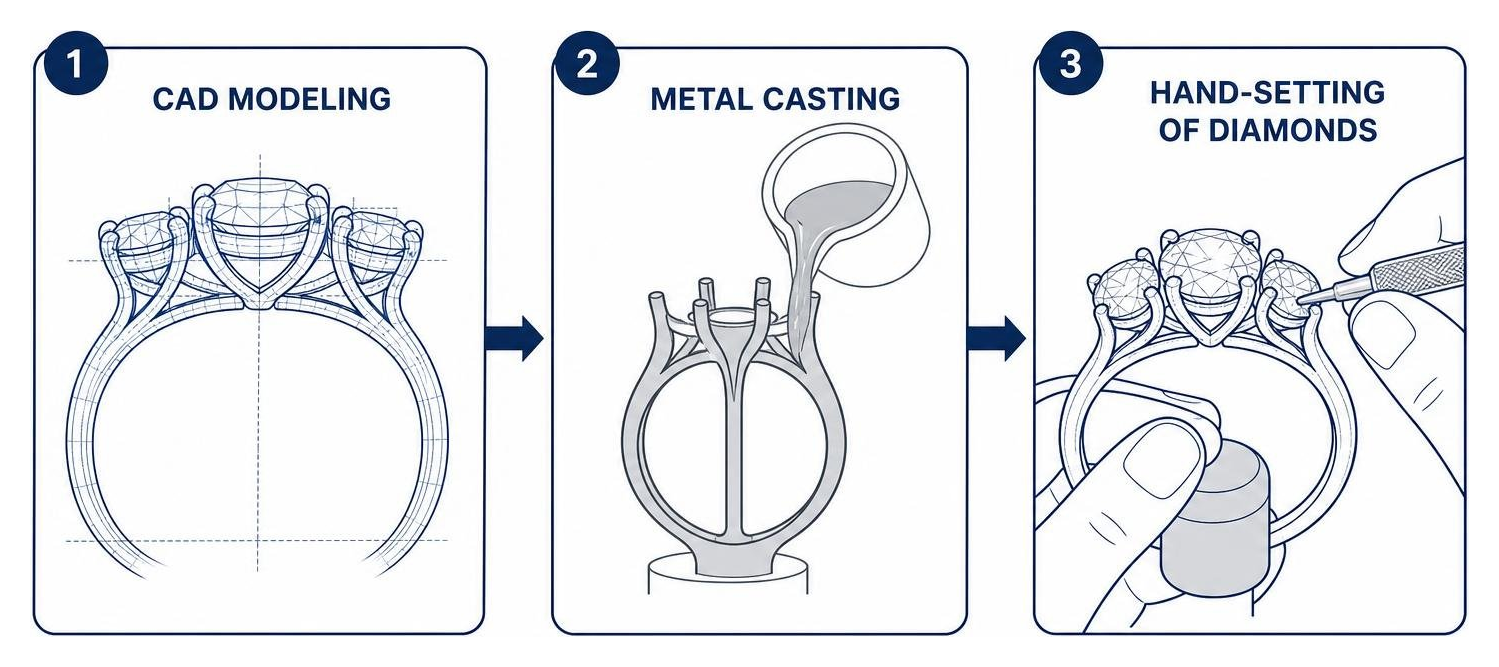
At Washington Diamond, we use advanced CAD (Computer-Aided Design) modeling to ensure your custom ring is perfectly balanced. This step is particularly crucial for a three-stone ring, as the proportional size ratio between the center stone and the side stones must be meticulously calculated. If the side stones are too large, they will overpower the center stone; if they are too small, the ring loses its cohesive, trilogy look.
If you are located in the Washington D.C. metro area, we invite you to explore our specialized local guides, including Custom Jewelry Northern Virginia and the Custom Jewelry Washington DC Guide, to learn more about our hands-on custom design process.
Frequently Asked Questions about Cathedral Settings
How does a cathedral setting affect the perceived size of the center stone?
A cathedral setting acts as an optical illusion for your finger. By physically lifting the center diamond above the band, it draws the eye upward and increases the stone's profile visibility. This added height makes the center diamond appear larger and more prominent than it would in a flatter, lower-profile setting, allowing you to maximize its visual impact without needing to purchase a higher carat weight.
Does a three-stone cathedral ring stack flush with a wedding band?
Yes! One of the biggest practical benefits of a cathedral setting is its "snuggle-fit" capability. Because the vaulted arches lift the main setting away from the band, they create a natural clearance underneath. This allows a traditional, straight wedding band to slide right next to the engagement ring and sit completely flush, eliminating the unsightly gap that often occurs with other setting styles.
What is the difference between a tapered and a standard cathedral setting?
A standard cathedral setting maintains a uniform band width all the way around, providing a classic, balanced, and structurally uniform look. A tapered cathedral setting, on the other hand, features a band that is wider at the base and narrows significantly as it slopes upward to meet the stones. This tapering draws the eye directly to the center diamond, making a modest center stone appear larger and creating a delicate, feminine frame.
Conclusion
The 3 stone cathedral setting is a masterclass in jewelry design, seamlessly blending deep romantic symbolism with structural strength and unparalleled brilliance. Whether you prefer the absolute symmetry of three round brilliant diamonds or the bold geometry of fancy-cut side stones, this setting elevates your love story to new, architectural heights.
At Washington Diamond, we believe that choosing an engagement ring should be just as memorable as the proposal itself. In our private, appointment-only studio in Northern Virginia, we offer you our undivided attention, guiding you through every step of the selection and custom design process in a relaxed, pressure-free environment.
Ready to discover the design that speaks to you? Take our interactive quiz, Which Engagement Ring Rocks Your World, or schedule a private consultation at our Northern Virginia studio today to start crafting your dream ring.
Have a question about your jewelry?
We've been helping clients with diamonds, custom design, repairs, appraisals, and more since 1969. Book a private appointment at our Falls Church studio.
Book an AppointmentTrusted since 1969 · Falls Church, VA · 703-536-3600
From the blog
View all


