

Channel Your Style with Timeless Inside Ring Diamond Bands
How to Choose a Diamond Inside a Ring Channel

To choose a diamond inside ring channel, look for evenly spaced stones, smooth metal edges, and a comfortable fit. The diamonds sit in a groove between two metal walls, which hold them in place without exposed prongs. That makes a channel-set band a practical choice for an engagement, wedding, or anniversary ring you plan to wear often. Ask a jeweler to check that each stone is secure, especially if the ring will see daily wear. If you are trying on pieces in person, ask the jeweler to show you how a diamond inside a ring channel is seated beneath the metal lip so you can confirm the setting feels flush and secure.
I'm Tom Daube, a jewelry designer with experience selecting GIA-certified diamonds and recutting stones. I'll help you decide whether a diamond inside ring channel suits your style and routine.
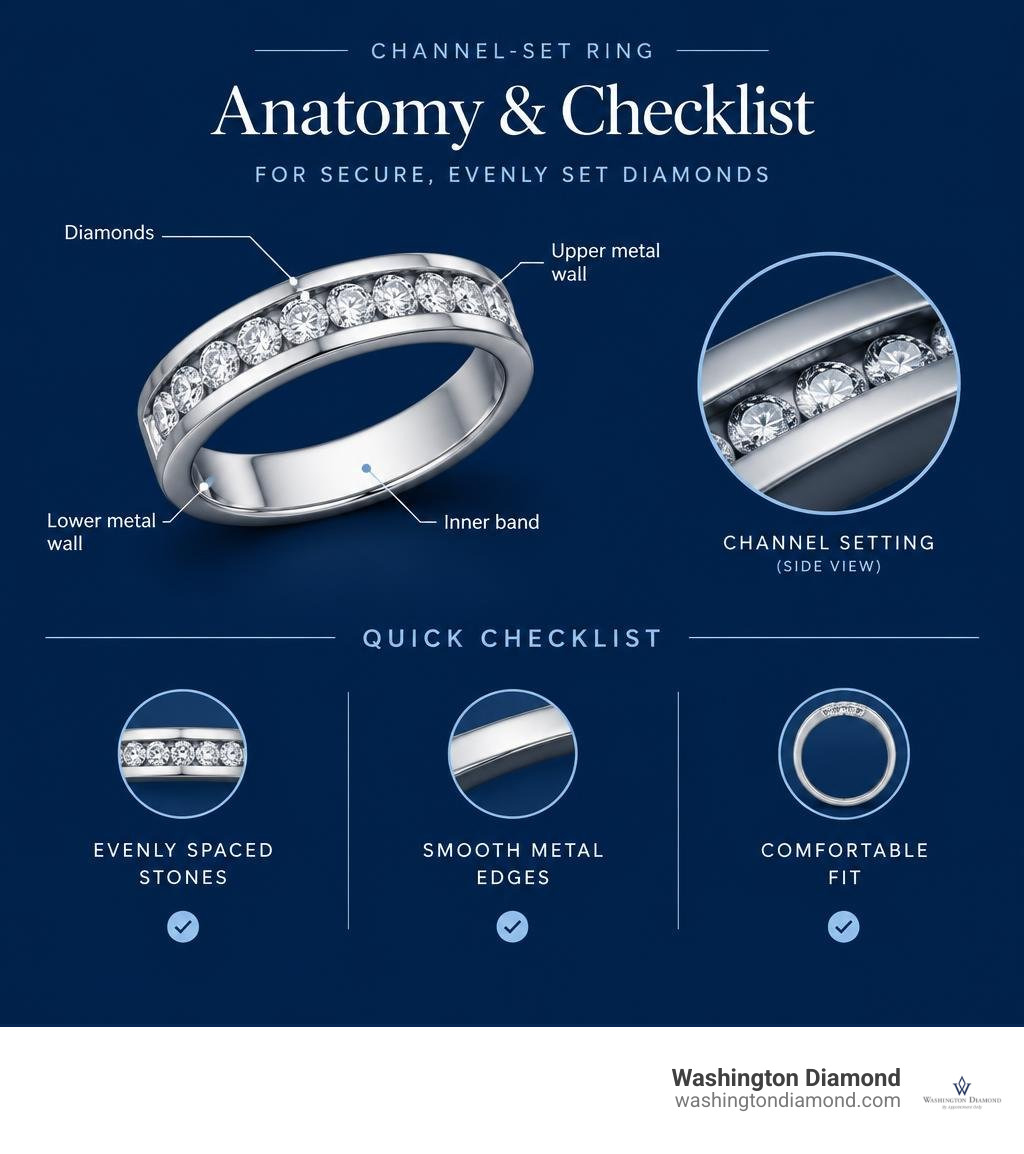
Diamond inside ring channel vocabulary:
What Is a Diamond Inside Ring Channel Setting?
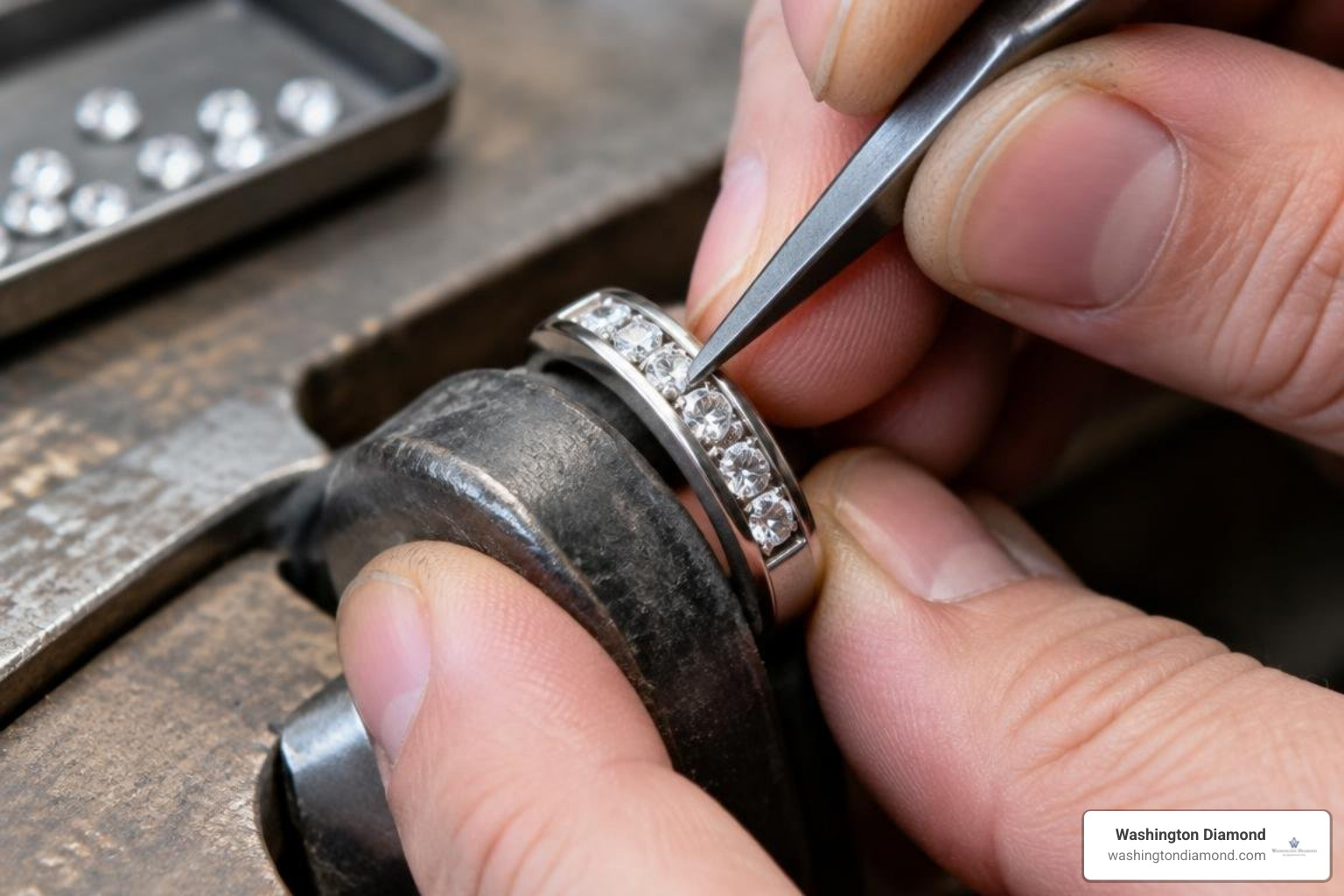
A diamond inside ring channel setting is a classic jewelry-making technique where gems are suspended seamlessly between two parallel tracks of precious metal. Unlike traditional prong settings that grip individual gems with tiny metal claws, a channel setting creates a dedicated recessed canal. The diamonds are nestled edge-to-edge within this track, producing a smooth, flush surface that feels completely flat against your fingers and clothing.
To create this secure design, a master jeweler cuts a precise inner groove—often called a seat—into the interior walls of the metal band. The diamonds are carefully slid or placed along this track, aligned so their girdles sit snugly within the carved notches. The jeweler then burnishes or presses the top edges of the metal walls inward over the edges of the stones. This mechanical tension locks the diamonds permanently in place without obscuring their table facets.
Many clients choose classic platinum channel mountings precisely because this continuous metal border shields the delicate edges of every diamond from accidental side knocks and surface friction. It's a setting style that seamlessly marries engineering strength with architectural beauty.
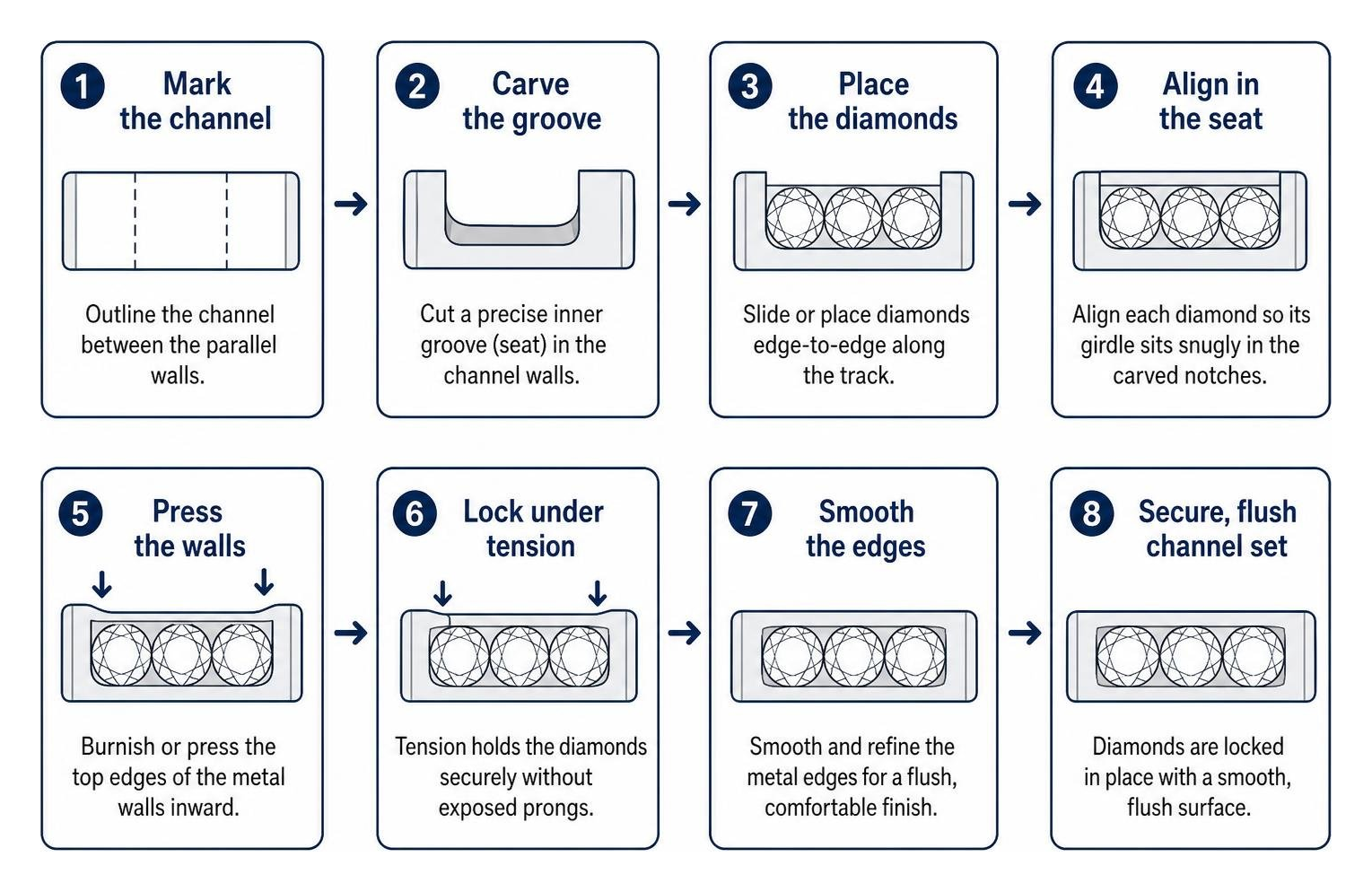
Anatomy of a Diamond Inside Ring Channel
Understanding the anatomy of a channel setting helps you appreciate the skill required to craft one:
- Parallel Walls: Solid barriers of precious metal that define the outer perimeter of the band and protect the side profiles of the stones.
- Internal Groove (Seat): A continuous recess precisely carved inside the walls where the diamond girdles rest.
- Girdle Suspension: The widest perimeter of each stone is held firmly by the metal lip above and the carved seat below.
- Under-Gallery (Drilled Holes): Small openings drilled beneath each stone to allow light entry and facilitate cleaning.
- No-Prong Alignment: Because there are no vertical prongs rising above the surface, the top perimeter remains entirely smooth.
Popular Diamond Shapes for Channel Settings
While round brilliant diamonds are the most traditional choice for a channel band, fancy geometric shapes offer breathtaking aesthetics:
- Round Brilliant Cuts: Round diamonds inside a channel create charming negative spaces along the inner metal edges, producing a distinctive, scalloped sparkle pattern.
- Princess Cuts: Square stones fit together with zero gaps, creating an uninterrupted ribbon of dazzling, modern fire.
- Baguette Cuts: Step-cut stones, such as those found in baguette cut diamond channel designs, offer an ultra-clean, Art Deco mirror-like shine with sleek geometric elegance.
Comparing Channel Bands to Alternative Settings
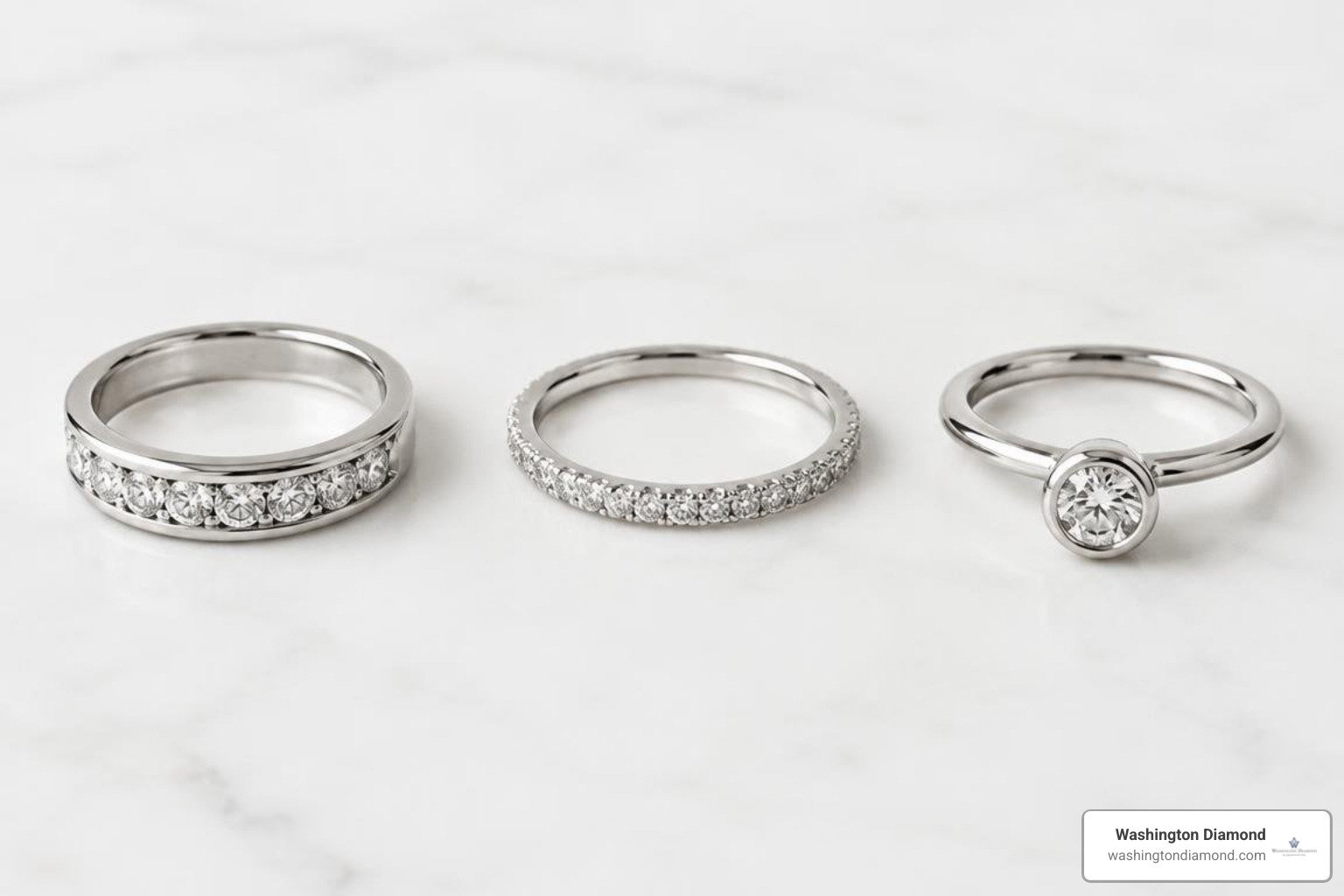
When selecting an everyday ring or a wedding band, comparing different setting architectures ensures you choose a design that matches your daily routine. Approximately 65% of consumers prefer ring channels with diamond accents for their engagement rings because they balance continuous sparkle with superior resilience.
Security, Durability, and Wearability Differences
If you lead an active lifestyle—working with your hands, frequenting the gym, or regularly wearing knitwear and medical gloves—prong-based designs like delicate pavé diamond settings require extra caution. Pavé uses tiny beads of metal that can snag on threads or loosen over time if subjected to direct impacts.
By contrast, a channel setting protects the perimeter of every gem inside solid metal rails. While protective bezel eternity bands wrap each diamond individually in its own metal collar, a channel setting holds an entire row together, creating a sleeker line with fewer metal interruptions between adjacent stones.
Setting Style Comparison: Channel, Pavé, and Bezel
| Feature | Channel Setting | Pavé Setting | Bezel Setting |
|---|---|---|---|
| Stone Security | Very High (protected by solid rails) | Moderate (held by micro-prongs) | Maximum (360° metal perimeter) |
| Snag Risk | Zero (smooth, flush surface) | Moderate to High (prongs can catch) | Zero (enclosed metal rim) |
| Sparkle & Light Exposure | High (focused through top tables) | Maximum (exposed stone sides) | Moderate (metal borders cover edges) |
| Cleaning Maintenance | Moderate (soak to clear back holes) | Easy (open structure) | Easy (fully sealed borders) |
| Resizing Feasibility | Moderate (if partial channel) | Difficult to Moderate | Difficult |
How to Select the Ideal Diamond Channel Ring
Selecting a channel-set ring involves matching your personal taste with practical considerations like metal durability, diamond quality, and proportions.
Metal Options for Channel Bands
The metal you choose provides both structural support and aesthetic contrast for the diamonds resting inside the channel:
- Platinum: The gold standard for channel settings. Its natural density holds stones with unmatched grip, and its hypoallergenic nature makes classic platinum diamond channel wedding bands a lifetime investment.
- 18k & 14k Yellow Gold: Provides a rich, warm backdrop that accentuates the icy white brilliance of near-colorless diamonds.
- 14k White Gold: Delivers a bright rhodium finish that blends seamlessly with the stones, often finished with vintage milgrain edge settings for antique flair.
Evaluating the Cost of a Diamond Inside Ring Channel
The average cost of a diamond inside ring channel setting typically ranges from $1,200 to $3,500 for the mounting and accent stones, depending on total carat weight, diamond clarity, and metal choice. In fact, ring channels with diamond inside settings have a 30% higher resale value than plain ring channels due to the inherent value of the accent stones and the skilled bench labor required to construct the metal tracks.
When commissioning custom diamond engagement rings, working with an experienced jeweler ensures the channel walls are thick enough to endure decades of daily wear without warping.
How to Clean and Maintain Your Channel-Set Ring
Because diamonds sit inside an enclosed metal groove, everyday lotions, oils, and soaps can slowly accumulate underneath the stones, dulling their natural fire over time.
Follow these simple steps for effective at-home jewelry cleaning techniques:
- Warm Soaking: Submerge your ring for 15 to 20 minutes in a small bowl of warm water mixed with a few drops of mild dish soap.
- Soft Brushing: Use a baby toothbrush with ultra-soft bristles to gently clean along the channel grooves and underneath the drilled holes in the ring's gallery.
- Thorough Rinsing: Rinse the ring under lukewarm running water (ensure the sink drain is securely covered!).
- Lint-Free Drying: Pat the ring dry with a micro-fiber cloth to restore brilliant, mirror-like sparkle.
- Annual Inspections: Bring your ring to our studio once a year. We'll check the channel walls for pressure integrity and verify that none of the stones have shifted.
Frequently Asked Questions About Channel-Set Rings
Can a ring with diamonds inside a channel be resized easily?
Partial-channel bands (where diamonds cover only the top half of the ring) can be resized by a skilled jeweler by adjusting the plain bottom shank. However, full eternity channel bands cannot be resized significantly without warping the channel track and popping stones loose.
Do channel settings reduce diamond brilliance?
While the metal walls enclose the sides of the diamonds, brilliant-cut diamonds gather and return almost all of their light through the top table facet. When crafted with open back-galleries to allow light penetration, channel settings sparkle brilliantly.
Are channel-set diamond rings ideal for daily wear?
Yes! They are widely regarded as one of the most durable and snag-resistant settings available, making them perfect for healthcare professionals, athletes, and anyone who uses their hands frequently.
Conclusion
A channel-set ring offers a harmonious blend of modern sophistication, structural integrity, and timeless luxury. Whether you are selecting a standalone wedding band or designing a bespoke engagement piece, channel settings protect your gemstones while maintaining a sleek, snag-free profile.
At Washington Diamond, we welcome you to our private, appointment-only studio in Northern Virginia for an intimate, one-on-one consultation tailored entirely to your vision. Ready to explore options or plan your custom piece? You can easily estimate custom ring pricing with the online diamond price calculator and schedule your personalized studio visit with our team today.
Have a question about your jewelry?
We've been helping clients with diamonds, custom design, repairs, appraisals, and more since 1969. Book a private appointment at our Falls Church studio.
Book an AppointmentTrusted since 1969 · Falls Church, VA · 703-536-3600
From the blog
View all


