

How to Clean Jewelry Safely in 5 Simple Steps
Why Jewelry Gets Dull and How Often to Maintain It
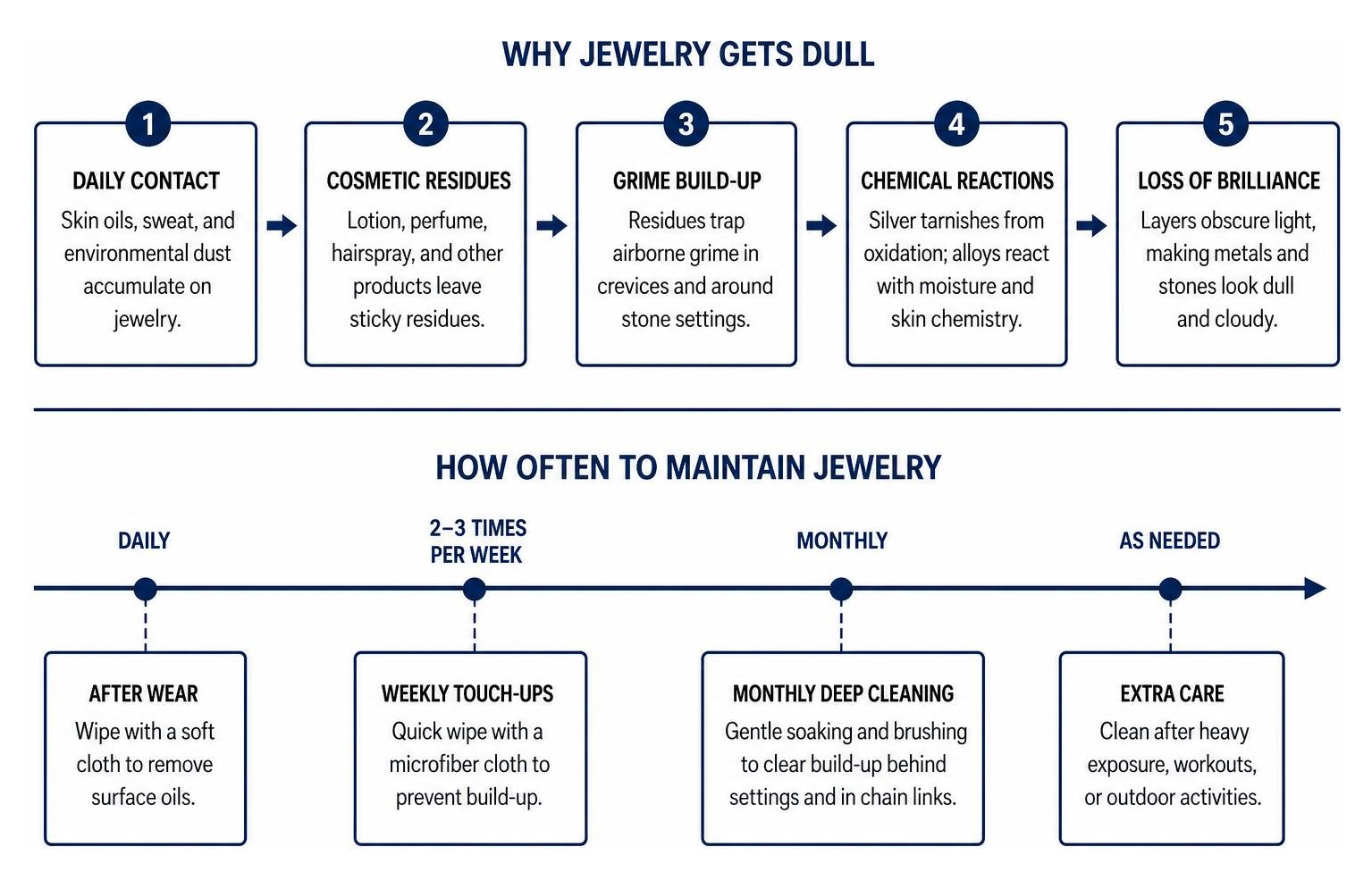
Understanding how to clean jewelry starts with knowing what dulls its natural brilliance in the first place. Every time you wear your favorite rings, necklaces, or bracelets, they come into direct contact with skin oils, sweat, and environmental dust. Daily cosmetic rituals—such as applying hand lotion, spraying perfume, or using hairspray—create microscopic sticky residues that trap airborne grime in intricate crevices. Over time, these layers obscure light, leaving fine diamonds and precious metals looking cloudy.
Air oxidation presents another challenge, particularly for sterling silver and certain base metals. Silver reacts chemically with oxygen and ambient humidity, producing a dark surface layer of tarnish. Meanwhile, lower-karat gold alloys contain secondary metals like copper or nickel that can react to moisture and skin chemistry over time. As discussed in reporting on how to care for and store your jewelry | AP News, taking proper care of your pieces preserves both their aesthetic beauty and their financial value, much like routine maintenance keeps a luxury vehicle running smoothly.
Establishing a regular schedule makes maintaining your collection simple and stress-free:
- Weekly Touch-ups: Give your daily-wear items—such as wedding bands, stud earrings, and favorite chains—a quick wipe with a soft microfiber cloth 2 to 3 times a week to remove surface oils before they harden.
- Monthly Deep Cleaning: Perform a gentle soaking and brushing once a month for fine jewelry worn daily to clear build-up behind stone settings and within chain links.
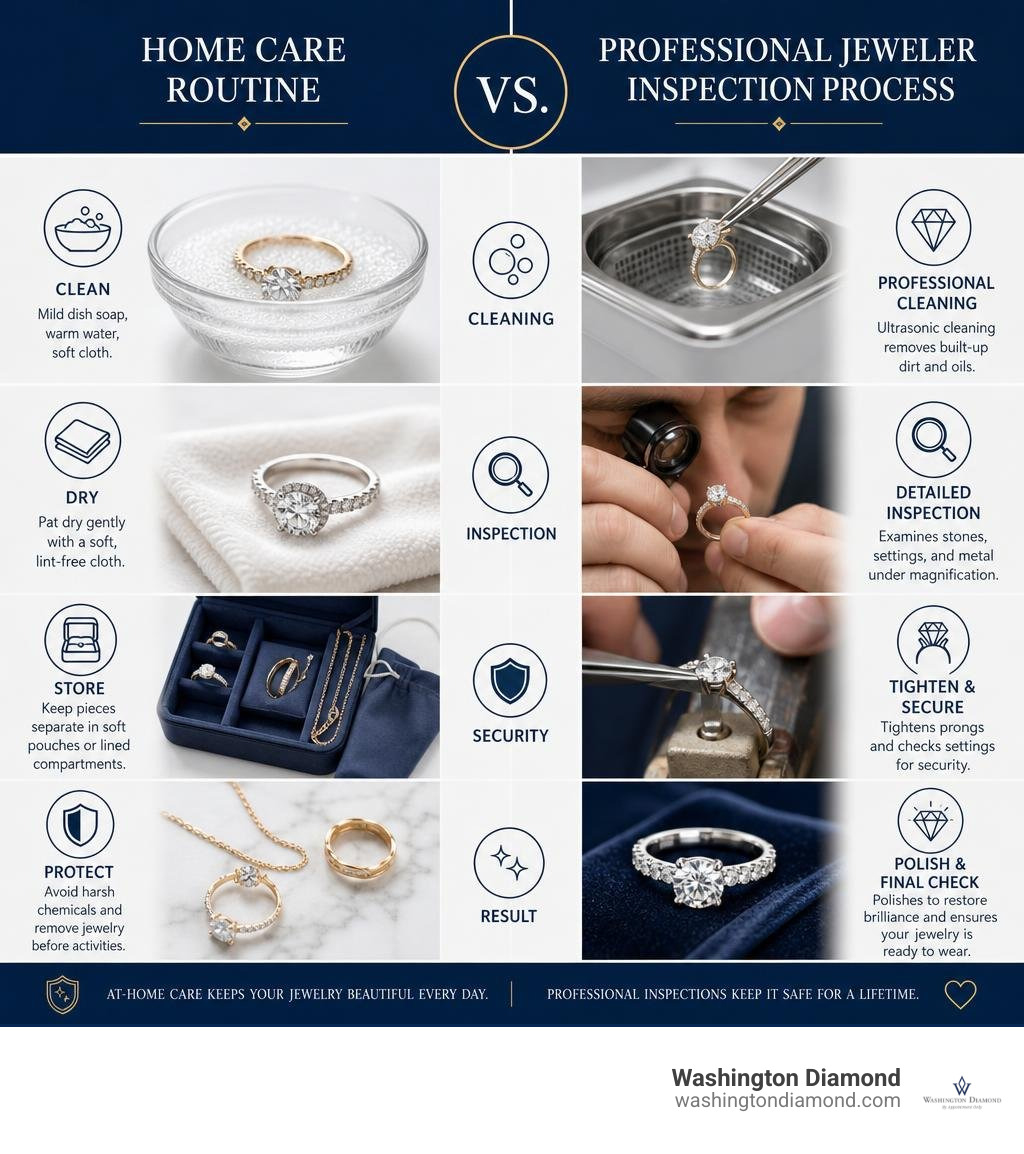
- Annual Check-ups: Bring valuable heirlooms, engagement rings, and intricate gemstone pieces in for a professional inspection annually to confirm prongs are secure and mountings remain stable.
For a broader look at building your routine, explore our guide on How to Clean Jewelry Even If You've Never Tried It Before.
The Universal 5-Step Method on How to Clean Jewelry
When deciding how to clean jewelry at home safely, simplicity is your best defense. You do not need expensive specialized equipment or chemical-heavy solutions. This universal 5-step process works brilliantly for solid precious metals, diamonds, and non-porous hard gemstones.
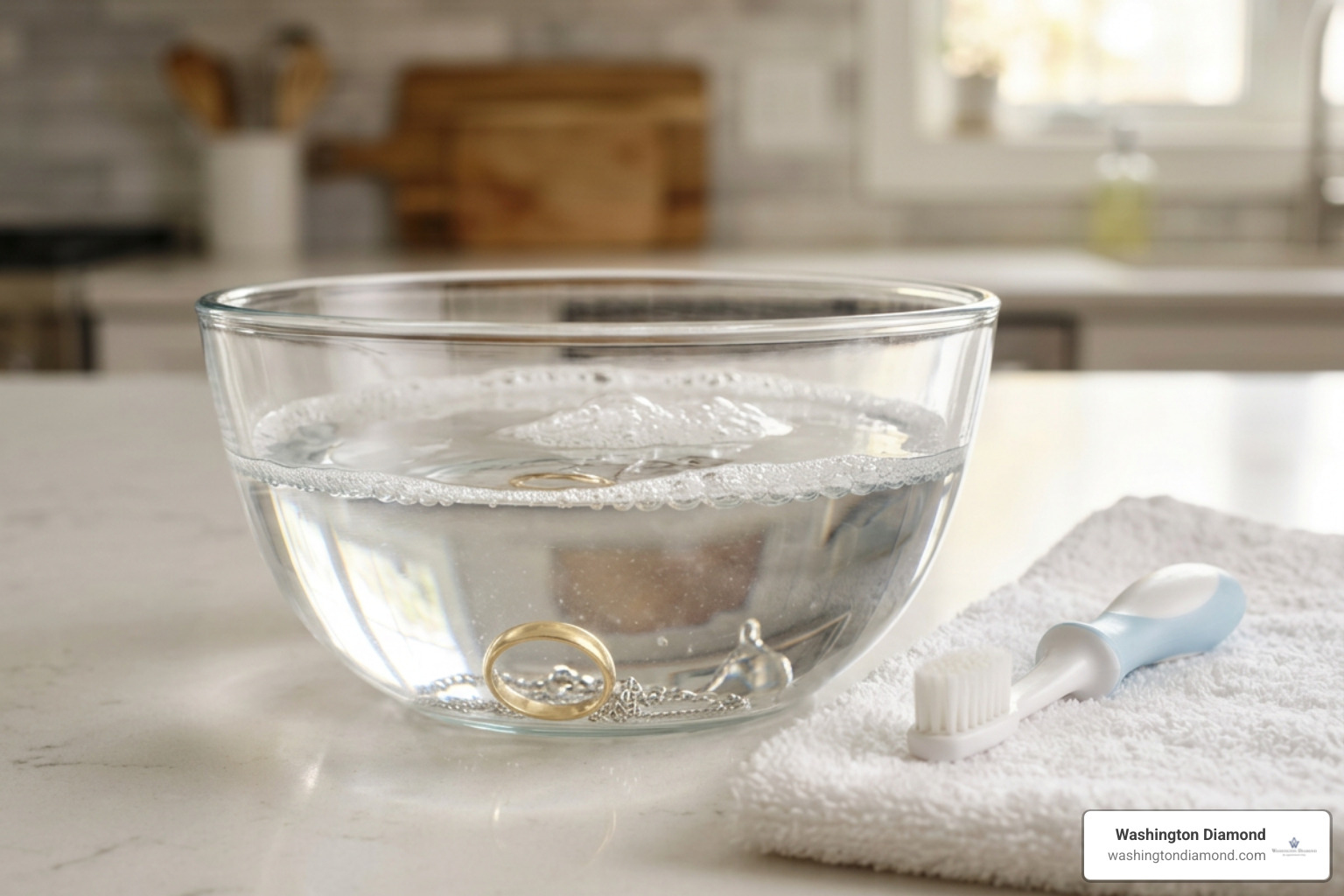
- Prepare a Gentle Soak: Fill a clean bowl with lukewarm water and add 2 to 3 drops of mild, fragrance-free dish soap. Swirl the solution gently until small bubbles form. Avoid hot water, which can stress thermal-sensitive gemstones.
- Soak Your Pieces: Place your items into the bath and let them rest for 10 to 20 minutes. This slow soak softens trapped lotion, soap residue, and accumulated grime without requiring harsh mechanical force.
- Brush Intricate Crevices: Remove one item at a time and clean behind settings, prongs, and underbezel mountings using an extra-soft baby toothbrush. The ultra-soft bristles flex easily into tight spots without scratching precious metal surfaces.
- Rinse with Clean Water: Dip the piece into a separate bowl of fresh, lukewarm water, or carefully rinse it under a running faucet. Always cover or plug your sink drain first to prevent accidental loss!
- Buff and Air-Dry: Gently pat the piece dry with a clean, lint-free microfiber cloth. Leave the jewelry to dry completely on a flat towel before storing it or putting it back on.
To discover more tailored tips on caring for fine diamond settings, read our guide to the Best Jewelry Cleaner for Diamonds.
Material-Specific Cleaning Protocols
Different metals, plating styles, and gem types require distinct techniques. Below is a quick reference table outlining safe solutions for common materials:
| Metal or Gemstone Type | Safe Household Cleaning Solution | Recommended Cleaning Tool | Methods to Absolutely Avoid |
|---|---|---|---|
| Solid Gold & Stainless Steel | Warm water + mild dish soap | Extra-soft baby toothbrush | Chlorine bleach, harsh abrasives, stiff brushes |
| Gold-Plated & PVD Coated | Warm water + mild dish soap | Lint-free microfiber cloth | Toothpaste, vinegar, vigorous scrubbing |
| Sterling Silver | 3:1 baking soda paste or silver cloth | Microfiber polishing cloth | Vinegar, paper towels, boiling water |
| Diamonds & Hard Gems | Warm water + mild dish soap | Soft-bristled toothbrush | Ultrasonic cleaners (if settings are loose) |
| Pearls & Porous Stones | Damp cloth (water only) | Ultra-soft microfiber cloth | Soaking, dish soap, alcohol, heat, chemicals |
| Costume / Fashion Jewelry | Damp soapy cloth (do not submerge) | Cotton swab / microfiber | Full submergence, steam cleaning, harsh solvents |
How to Clean Jewelry Made of Fine Gold and Stainless Steel
Solid gold and stainless steel are exceptionally durable, making them ideal for everyday wear. However, learning how to clean jewelry made from these metals requires recognizing their unique surface characteristics. Solid gold does not rust, but low-karat alloys can turn slightly dull over time when exposed to body chemistry.
For solid gold pieces, the warm soapy water bath described above works wonders. Scrub gently with a baby toothbrush and dry thoroughly with a microfiber towel. Be cautious with kitchen ingredients: while some sources suggest household acids, we recommend checking How to Clean Gold Jewelry with Vinegar to understand why acidic mixtures can harm delicate alloys.
Plated gold items—including modern Physical Vapor Deposition (PVD) vacuum-coated pieces, which can be significantly more durable than standard electroplating—require extra care. Because gold plating consists of a thin layer of gold bonded over a base metal, aggressive scrubbing can strip the outer coating. Never soak plated items for extended periods, and skip toothbrushes entirely; use only a soft, damp microfiber cloth to gently wipe away surface residue.
Stainless steel responds well to simple care. For heavy grease or dirt trapped in watch links, combine 2 tablespoons of baking soda with 1 teaspoon of warm water to create a smooth, non-abrasive paste. Apply it gently with a soft cloth, rinse thoroughly, and dry completely to prevent water spotting. Learn more with our article on Care Instructions for Stainless Steel Jewelry: A Lifetime of Shine.
Silver, Costume Pieces, and Vintage Items
Sterling silver tarnishes naturally as it reacts with air oxidation and ambient moisture. To restore luster, combine 3 parts baking soda with 1 part water to form a smooth paste. Apply a small amount to your silver piece using a microfiber cloth, rub gently along the metal's grain, rinse with cool water, and buff to a mirror shine. For ongoing care, a specialized silver polishing cloth embedded with tarnish inhibitors is the safest option.
Costume and fashion pieces require a completely different approach. Base metals are often joined using water-soluble adhesives, and rhinestones are frequently glued into place rather than set with prongs. Submerging costume jewelry in liquid can dissolve these glues and cause stones to fall out. Instead:
- Dampen a soft cloth with warm, soapy water (wringing out excess liquid).
- Gently wipe down surface metals.
- Detail hard-to-reach crevices using a barely damp cotton swab.
- Dry immediately with a fresh cloth.
Antique and vintage jewelry—especially Georgian or Victorian items featuring closed-back mountings or glass photo lockets—must never be submerged in liquid. Moisture trapped behind closed metal backs will ruin internal foil backings and vintage photographs. Restrict cleaning on vintage treasures to light dry buffing with a soft cloth. For broad practical advice on restoring older metals, check out How to Get Your Jewelry Looking Polished, Bright, and Brand-New.
Material-Specific Rules on How to Clean Jewelry with Gemstones and Pearls
When mastering how to clean jewelry set with stones, stone hardness and porosity determine your approach. Hard, non-porous gems like diamonds, sapphires, and rubies easily tolerate warm soapy water soaks. Diamonds in particular attract oil; soaking them releases trapped grease from under mountings. Brush lightly around metal prongs using a soft brush, as explained in our Engagement Ring Cleaning Guide.
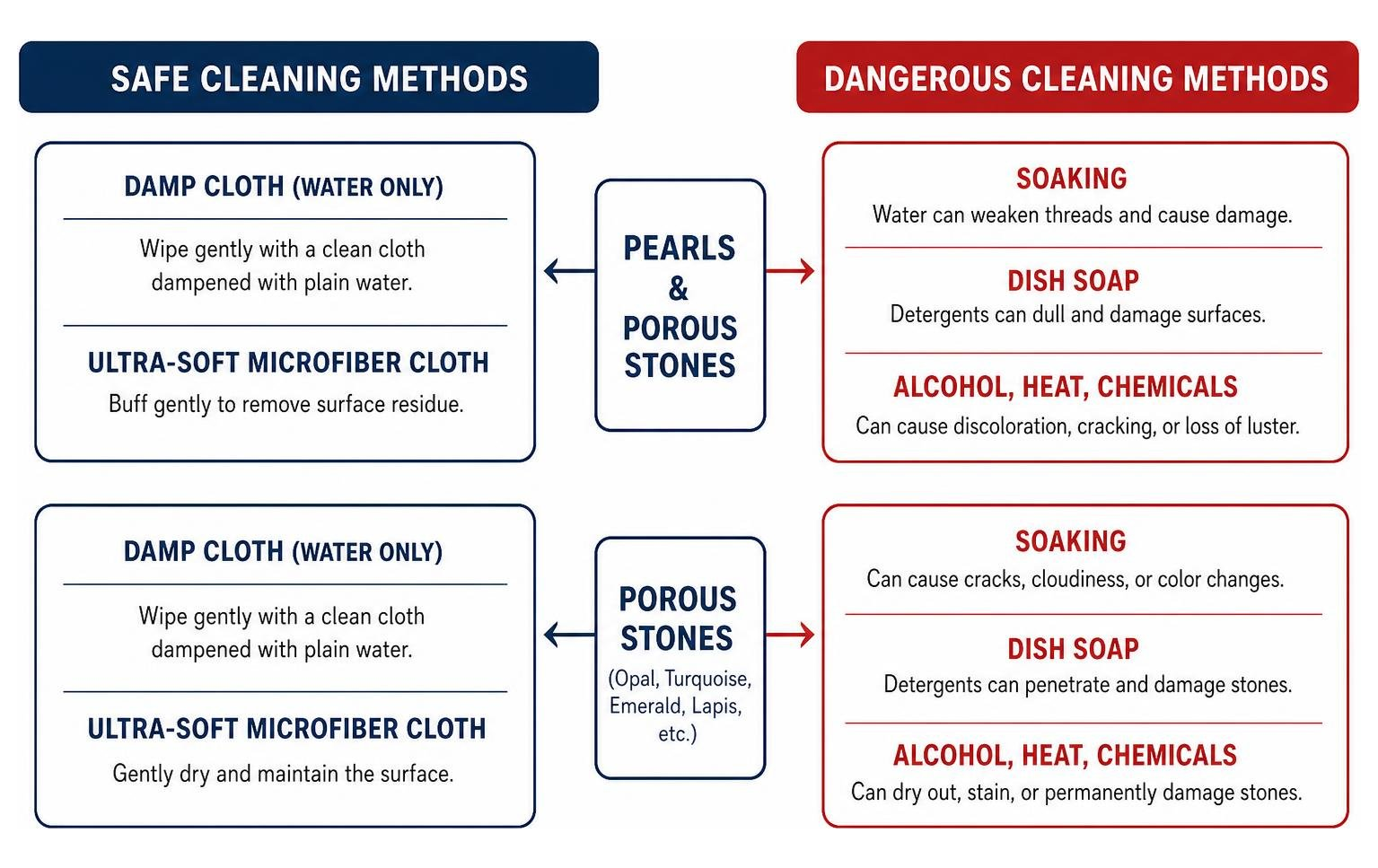
Conversely, organic gems (such as natural pearls and mother-of-pearl) and porous stones (like opals, turquoise, emeralds, and lapis lazuli) require delicate handling:
- Pearls: Never soak strung pearls in water. Liquid saturates silk threads, causing them to stretch, weaken, or harbor mold. Wipe pearls individually with a clean cloth dampened with plain lukewarm water (no dish soap). Lay pearl strands flat on a towel to dry completely for 24 hours so the thread retains its structural integrity.
- Porous Stones: Opals and emeralds contain delicate moisture levels or surface fractures that can absorb harsh cleaning liquids, leading to cloudiness or permanent cracking. Wipe these stones gently using a soft, dry cloth.
To preserve your fine collections, consult our expert article on The Art of Gemstone Jewelry Care.
Safe Household Supplies, Storage, and Common Mistakes
Understanding how to clean jewelry effectively also means knowing what not to use. Many online DIY cleaning trends rely on ingredients that can permanently strip, scratch, or discolor fine metals and precious gems.
Safe Household Items vs. Harmful Chemicals
The safest household tools are remarkably simple:
- Safe: Mild, dye-free dish soap, lukewarm water, extra-soft baby toothbrushes, microfiber cloths, and pure baking soda (strictly for unplated sterling silver or stainless steel).
- Dangerous: Chlorine bleach, ammonia, lemon juice, household vinegar, rubbing alcohol, and acetone. Chlorine breaks down precious metal alloys—particularly gold prongs—causing structural weakening, while acidic solutions strip gold plating and erode soft stones.
Common At-Home Cleaning Mistakes
- Using Toothpaste: Toothpaste contains harsh abrasives designed to scrub tooth enamel. On precious metals, it leaves micro-scratches that dull polished surfaces over time.
- Drying with Paper Towels: Paper towels are made from wood fibers that can scratch soft metals (like high-karat gold or silver) and leave lint under stone prongs. Always use microfiber or 100% cotton cloths.
- Cleaning Over Open Drains: A slipping ring can easily slide down an open drain pipe. Always place a bowl over your sink or insert a rubber stopper before rinsing.
- Vigorous Scrubbing: Scrubbing plated jewelry or delicate antique settings causes unnecessary wear. Let mild soaking do the heavy lifting instead of physical force.
How to Store Jewelry to Prevent Tarnish and Damage
Proper storage prevents damage between wearings. Keep your collection organized with these safe storage practices:
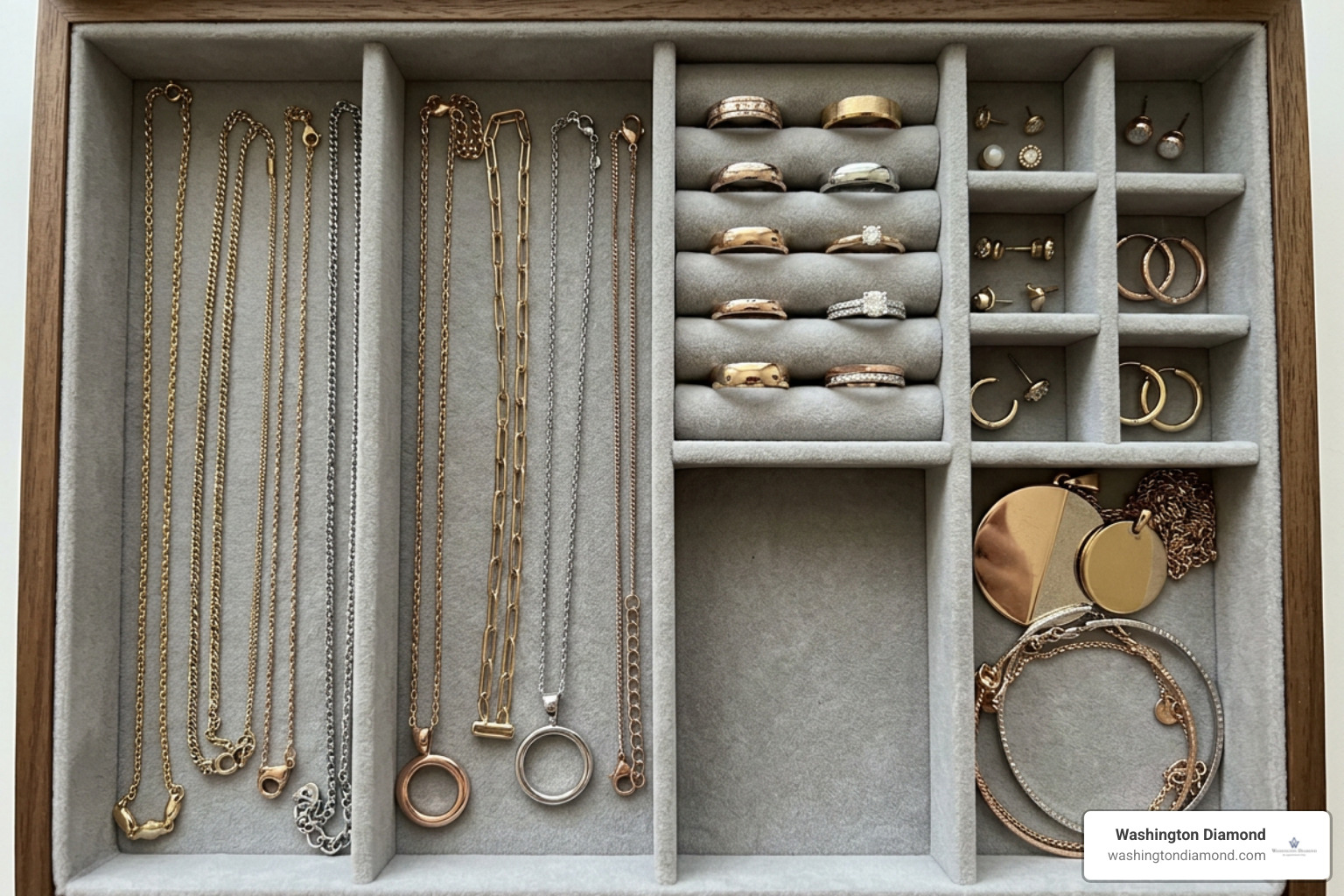
- Store pieces individually in fabric-lined compartments, velvet pouches, or anti-tarnish bags to prevent items from scratching each other.
- Keep fine jewelry away from direct sunlight, excess heat, and humid environments like bathroom counters.
- Fasten chain necklaces before storing them to prevent tangling.
- Follow the "last on, first off" rule: put your jewelry on after applying cosmetics, lotion, hairspray, and perfume, and remove it before bathing, sleeping, or swimming.
For further advice on avoiding DIY pitfalls, read How to Clean Your Jewelry, According to Jewelers | NBC Select and review our complete Ultimate Engagement Ring Care Guide.
Frequently Asked Questions About Cleaning Jewelry
Can you clean fine jewelry with household vinegar or lemon juice?
No, you should not clean fine jewelry with household vinegar or lemon juice. Both solutions are highly acidic and can etch the surfaces of delicate metals, erode gold plating, and permanently ruin porous gems like pearls, turquoise, or opals. Stick to warm water and mild dish soap for safe cleaning.
Is toothpaste safe for removing sterling silver tarnish at home?
No, toothpaste is not safe for fine silver. Its abrasive particles cause micro-scratches on polished metals, creating a dull finish over time. Instead, use a specialized silver polishing cloth or a smooth paste made from 3 parts baking soda to 1 part water.
When should you seek professional jewelry cleaning and inspection?
You should seek professional jewelry cleaning and inspection at least once a year. A professional jeweler inspects pieces under magnification to verify that diamond prongs are tight, channel settings are intact, and structural integrity is sound. You should also seek professional care for antique items with closed-back settings, complex heirloom restorations, or when gold replating is required.
Conclusion
Knowing how to clean jewelry properly ensures your cherished pieces remain bright, radiant, and secure for years to come. By adopting a gentle daily routine—wiping away skin oils, avoiding abrasive household chemicals, soaking items carefully in mild dish soap, and storing pieces in soft, anti-tarnish pouches—you preserve both their beauty and their emotional value.
At Washington Diamond, we craft fine custom pieces for life's most meaningful milestones. Our private, appointment-only studio in Northern Virginia offers undivided personal attention, helping you care for your fine diamond rings, fine wedding bands, and custom heirlooms. Whether you need a professional prong inspection or expert advice on preserving your collection, we are always here to help.
For more detailed care recommendations, explore our full Diamond Cleaning Care Guide or schedule a private consultation with our team today.
Have a question about your jewelry?
We've been helping clients with diamonds, custom design, repairs, appraisals, and more since 1969. Book a private appointment at our Falls Church studio.
Book an AppointmentTrusted since 1969 · Falls Church, VA · 703-536-3600
From the blog
View all


