

How to Clean Jewelry, Even if You've Never Tried it Before
Why Regular Jewelry Cleaning Matters for Your Most Precious Pieces
Jewelry cleaning keeps your most meaningful pieces beautiful and safe from damage. Whether you wear your engagement ring daily or only bring out your grandmother's pearls for special occasions, regular cleaning protects your investment and preserves the memories these pieces represent.
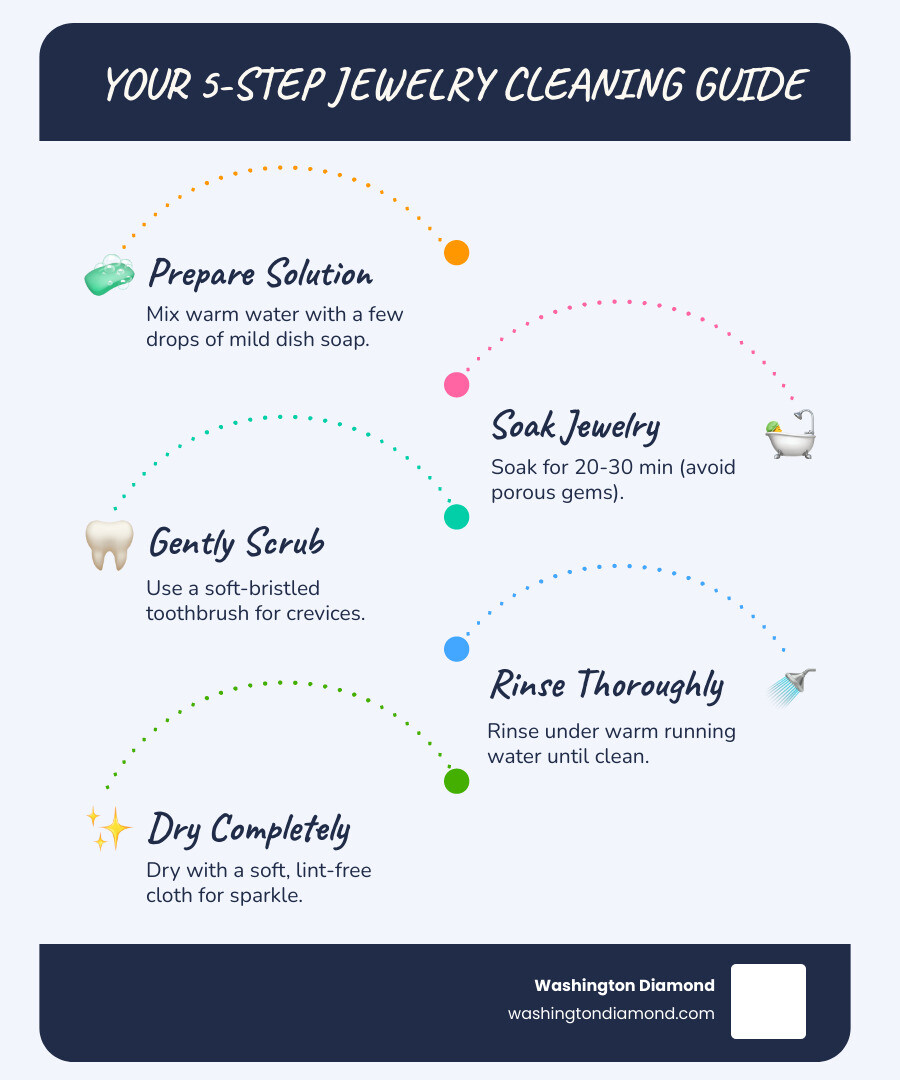
Quick Answer: How to Clean Most Jewelry
- Mix warm water with a few drops of mild dish soap
- Soak jewelry for 20-30 minutes (except pearls, opals, and porous stones)
- Gently scrub with a soft-bristled toothbrush
- Rinse thoroughly under warm water
- Dry completely with a soft, lint-free cloth
Note: Different materials require different care - always check your specific jewelry type before cleaning.
Your jewelry faces a daily assault from lotions, oils, perfumes, dirt, and even the natural oils from your skin. Over time, this buildup creates a cloudy film that dulls sparkle and can actually damage certain metals and stones. A ring worn every day can accumulate significant grime in just one week.
But cleaning jewelry isn't just about aesthetics. Regular maintenance helps you catch problems early - like loose prongs that could lead to a lost stone, or weakened clasps that might cause you to lose a treasured piece entirely. As jewelry experts recommend, pieces should be inspected at least once a year, especially those under warranty or with sentimental value.
The good news? Most jewelry cleaning can be done safely at home with items you already own. You don't need expensive products or complicated techniques to keep your pieces sparkling between professional cleanings.
The Fundamentals of Jewelry Care and Prevention
Maintaining the sparkle and integrity of your jewelry starts long before you even think about cleaning it. Prevention is key, and adopting a few simple habits can drastically reduce how often your pieces need a deep clean and extend their lifespan. We believe that caring for your jewelry is an act of love, ensuring those meaningful moments stay brilliant for years to come.
One of the easiest ways to protect your jewelry is to consider it the last thing you put on in the morning and the first thing you take off at night. This simple rule helps avoid contact with substances that can dull or damage your pieces. For example, thick lotions, food, cooking oils, and various chemicals can all leave a residue that builds up over time. Even everyday activities like cooking, cleaning, or washing dishes can expose your rings and other jewelry to harmful elements. We always recommend removing your rings and other jewelry during these times.
Certain chemicals are particularly detrimental. Chlorine, commonly found in swimming pools and some household cleaners, can have a negative effect on many metals, including gold and platinum, potentially causing discoloration or structural damage. Similarly, salt water from the ocean can also be corrosive.
Beyond household chores and chemicals, consider the physical stresses your jewelry might endure. We advise against wearing your precious pieces during activities that could cause damage, such as sports, hiking, intense exercise, or gardening. These activities can lead to scratches, dents, or even cause stones to come loose.
So, how often should you clean your jewelry? For pieces you wear daily, such as engagement rings or bracelets, a quick wipe down a few times a week is a great habit. A deeper clean every one to two weeks can keep them looking their best, with a comprehensive clean once a month. For jewelry worn only occasionally, cleaning every few months or as needed is sufficient. Consistent care is a key part of your General jewelry care tips routine.
Your At-Home Cleaning Toolkit
You might be surprised to learn that many of the best and easiest ways to clean common types of jewelry involve items you already have at home. Building a simple at-home jewelry cleaning toolkit means you’ll always be prepared to restore that sparkle.
Here's what we recommend:
- Mild Dish Soap: Opt for a gentle, pH-neutral formula. We've found that mild soaps work wonders without being too harsh on precious metals or delicate stones.
- Warm Water: Not too hot, not too cold. Lukewarm water is ideal for most cleaning tasks.
- Soft-Bristled Toothbrush: A clean, soft-bristled toothbrush (a baby toothbrush works perfectly due to its even softer bristles) is excellent for gently scrubbing away grime from intricate designs and crevices.
- Microfiber Cloth: Essential for drying and buffing. A lint-free microfiber cloth ensures your jewelry dries without water spots and achieves a brilliant shine.
- Polishing Cloths: Specifically designed for various metals, these cloths can remove light tarnish and bring out a beautiful luster. Using separate cloths for different metals can prevent cross-contamination.
Storing Your Jewelry to Prevent Tarnish and Damage
Proper storage is just as vital as regular cleaning in preventing damage and maintaining your jewelry's shine. Imagine your beautiful necklaces getting tangled, or your earrings scratching each other – it’s a heartbreaking sight!

Here are our best practices for storing your cherished pieces:
- Separate Compartments: The golden rule of jewelry storage is to keep pieces separate. This prevents scratching and tangling. Jewelry boxes with individual compartments, dividers, or even soft pouches are ideal.
- Fabric-Lined Box: A fabric-lined jewelry box provides a soft cushion for your pieces, protecting them from abrasions. If you're using an ordinary box, you can wrap individual pieces in soft tissue paper for added protection.
- Cool, Dry Place: Store your jewelry in a cool, dry environment, away from direct sunlight and extreme temperature changes. Humidity and heat can accelerate tarnishing and, in some cases, damage certain gemstones.
- Hanging Necklaces: For necklaces prone to knotting, consider organizers with hanger-like hooks. This keeps them untangled and prevents kinks in the chains.
- Storing Earrings Separately: To prevent earring posts from scratching other pieces, use organizers with clear pouches, placing one pair per pouch.
- Anti-Tarnish Solutions: For sterling silver and other metals prone to tarnishing, consider investing in anti-tarnish bags or strips. These specialized storage solutions help absorb airborne pollutants that cause tarnish, keeping your silver bright for longer.
A Material-by-Material Guide to Jewelry Cleaning
Different types of jewelry materials and gemstones react uniquely to various cleaning agents and methods. What works wonders for a diamond might harm a pearl. Understanding these differences is crucial for effective and safe jewelry cleaning. Let's explore the specifics for some of the most common materials.
Cleaning Gold, Platinum, and Stainless Steel
These durable metals are often the foundation of our most beloved pieces, but they still require proper care to maintain their luster.
- Mild Soap and Water Solution: For solid gold, platinum, and stainless steel, a simple solution of warm water and a few drops of mild dish soap is usually all you need. Soak your jewelry in this mixture for 20-40 minutes.
- Soft Toothbrush for Crevices: After soaking, use a soft-bristled toothbrush to gently scrub away any stubborn dirt or grime from crevices and intricate designs.
- Rinsing and Drying: Rinse the piece thoroughly under warm, running water to remove all soap residue. Then, dry it completely with a soft, lint-free microfiber cloth. Buffing gently with the cloth will improve its shine.
- Polishing Cloth for Shine: For an extra gleam, a dedicated polishing cloth designed for gold, silver, and platinum jewelry can work wonders, removing minor smudges and enhancing the metal's natural brilliance.
- Avoiding Chlorine: A critical "do not" for gold and platinum is exposure to chlorine. This chemical can cause discoloration and even structural damage over time, making your precious metals brittle. Always remove your jewelry before swimming in chlorinated pools or using household cleaners containing bleach.
For a deeper dive into stainless steel care, we have a dedicated guide: Your Guide to Cleaning Stainless Steel Jewelry.
Restoring Shine to Silver and Sterling Silver
Silver, particularly sterling silver, is beautiful but notorious for tarnishing. That dull, darkened appearance is often caused by exposure to air, moisture, and certain chemicals. But don't worry, restoring its shine is entirely possible!
- Tarnish Removal: For light tarnish, a silver polishing cloth is your best friend. Gently rub the affected areas until the shine returns. You can also find specialized silver polish or foam products that remove tarnish and leave a protective coating. For convenience, disposable silver polish wipes offer a quick solution.
- DIY Baking Soda Paste (with caution): A paste made from three parts baking soda and one part water can be effective for stubborn tarnish. Apply it gently with a soft cloth, then rinse and dry thoroughly. However, use caution, especially on sterling silver, as baking soda can be abrasive and potentially scratch the metal. Some experts, like Clare Ngai-Howard of Bonbonwhims, recommend a silver polishing cloth over baking soda for this reason.
- Ketchup Method for Tarnish: Believe it or not, ketchup can be a quirky solution for tarnished silver! The mild acidity helps break down tarnish. Place your silver jewelry in a small bowl of ketchup for a few minutes. Gently rub with a soft toothbrush, then wash well with water and dry completely.
- Baking Soda and Vinegar Soak: Another DIY method involves soaking silver jewelry in a mixture of half a cup of white vinegar and two tablespoons of baking soda for 2-3 hours. Afterward, rinse and dry thoroughly.
The Best Methods for Diamond and Hard Gemstone Jewelry Cleaning
Diamonds are renowned for their brilliance and durability, and hard gemstones like sapphires, rubies, and emeralds are equally stunning. Keeping them sparkling is relatively straightforward, but still requires attention to detail.
- Soap and Water Soak: For diamonds and most hard gemstones, a warm water and mild dish soap solution is your go-to. Soak your pieces for 20-40 minutes. This helps loosen dirt, oils, and other residues that dull their sparkle.
- Soft Brush Technique: After soaking, use a soft-bristled toothbrush to gently scrub around the stone, especially getting behind it and into any settings. This dislodges trapped grime. Rinse well under warm, running water and dry with a lint-free cloth.
- Windex and Hydrogen Peroxide Solution (with caution): For a powerful cleaning boost, some find success with a mixture of equal parts Windex and hydrogen peroxide. Soak your diamond or hard gemstone rings in this solution for 15-20 minutes, then gently scrub with a toothbrush, rinse, and dry. While effective, we advise using this method cautiously and ensuring your stones are securely set.
- Ultrasonic Cleaners (for hard stones only): Ultrasonic jewelry cleaners use high-frequency sound waves to create microscopic bubbles that dislodge dirt. They are wonderfully effective for diamonds and many hard gemstones, making them sparkle like new. These cleaners can be purchased for around $20 or less. However, it's crucial that the cleaner is chemical-free or uses only solutions specifically designed for jewelry, as harsh chemicals can discolor or damage your pieces. Also, ultrasonic cleaners are not suitable for all jewelry types, particularly delicate or porous stones (more on that below).
For comprehensive care on your most brilliant gems, check out our Diamond Cleaning & Care Guide.
Caring for Pearls, Opals, and Other Porous Gems
While diamonds might be a girl's best friend, some of nature's most beautiful gems are also the most delicate. Pearls, opals, turquoise, amber, and coral are all examples of porous or organic gemstones that require a much gentler approach to jewelry cleaning.
- Gentle Wiping: The safest and most frequent cleaning method for these gems is a gentle wipe. After every wear, simply wipe your pearls or opals with a soft, damp cloth. This removes skin oils, cosmetics, and perfumes that can accumulate.
- Soft, Damp Cloth: For a slightly deeper clean, use a soft, damp cloth with plain lukewarm water.
- Avoiding Soaking: Never soak pearls, opals, or other porous gems. They can absorb water, which can lead to discoloration, cracking, or weakening of their structure. Even water that is too warm can damage delicate pearls.
- No Harsh Chemicals: This is a critical rule. Avoid all harsh chemicals, alcohol-based cleaners, and even mild dish soap for these delicate gems. Alcohol can dry out their natural oils, and anything too acidic or abrasive can permanently scratch or damage them. This includes steering clear of ultrasonic cleaners, which are far too aggressive for these sensitive materials.
- No Ultrasonic Cleaners: Ultrasonic cleaners, while great for diamonds, can shatter or severely damage porous and organic gemstones. The vibrations can cause delicate structures to crack or layers to separate.
For more detailed guidance on protecting these unique treasures, explore The Art of Gemstone Jewelry Care.
Common Mistakes: What NOT to Do When Cleaning Jewelry
When it comes to jewelry cleaning, knowing what to avoid is just as important as knowing what to do. A well-intentioned but misguided cleaning attempt can cause irreversible damage to your precious pieces. We've seen it all, and we want to help you steer clear of these common pitfalls.
- Abrasive Cleaners: This is perhaps the most common mistake. Anything that can scratch metal or gemstones should be avoided. This includes scouring powders, abrasive sponges, and even some "natural" cleaners that contain fine grit.
- The Toothpaste Myth: We often hear about the "toothpaste hack" for cleaning jewelry. While toothpaste might remove some tarnish from metal, it is inherently abrasive. Using it on your jewelry can lead to tiny scratches on both metals and gemstones, dulling their shine over time. It's best to use products specifically designed for jewelry.
- Harsh Chemicals: Bleach, ammonia, and other strong household cleaners are a definite no-go for almost all jewelry. These chemicals can corrode metals, discolor certain alloys (like gold-plated items), and severely damage delicate or porous gemstones. Chlorine can have a very negative effect on many metals, including gold and platinum.
- Bleach and Chlorine Damage: As mentioned, chlorine is a particularly insidious chemical for jewelry. It can literally eat away at the metal structure of gold and platinum, making them brittle and prone to breaking. Always remove your jewelry before cleaning with bleach or swimming in chlorinated water.
- Soaking Delicate Pieces: While soaking is great for diamonds, it's detrimental for many other types of jewelry. Soaking fashion jewelry, for example, can dissolve the glue holding gems in place or damage plastic components. Pearls, opals, and other porous gems should never be soaked, as they can absorb water and crack or discolor. Even antique pieces with closed-back mountings or photos under glass should not be washed with water.
- Boiling Water Risks: While not explicitly mentioned in our research, it's important to note from expert knowledge that boiling water can cause thermal shock to certain gemstones, leading to cracks, especially if the stone has internal inclusions. It can also loosen settings, particularly if the jewelry uses heat-sensitive glues or older construction methods. Always stick to warm or lukewarm water.
Steering clear of these common mistakes will help ensure your jewelry remains beautiful and undamaged for generations.
When to Seek Professional Jewelry Cleaning and Repair
While at-home jewelry cleaning is excellent for day-to-day maintenance, there are times when professional intervention is not just recommended, but essential. Think of it as a spa day for your most cherished pieces, ensuring they receive the expert care they deserve.
- Deep Cleaning: Over time, even with regular at-home cleaning, grime can build up in hard-to-reach places or become deeply embedded. Professional jewelers use specialized equipment, like industrial-grade ultrasonic cleaners and steam cleaners, along with professional-strength solutions, to provide a thorough, deep clean that restores your jewelry to its original brilliance.
- Loose Stones: This is a critical reason to see a professional. Loose prongs or settings are often difficult for the wearer to identify until it's too late. A professional inspection can spot these issues early, preventing the heartbreak of a lost diamond or gemstone. We advise having your jewelry inspected every so often, especially if it's under warranty, to prevent stones from falling out.
- Damaged Prongs: Prongs are the small metal claws that hold your gemstones securely in place. They can wear down, bend, or break over time. A professional jeweler can re-tip, re-shape, or replace damaged prongs, ensuring your stones remain safe.
- Antique Jewelry: Heirloom pieces and antique jewelry often feature delicate settings, unique materials, or intricate designs that require specialized knowledge to clean and repair. If you're worried about damaging a particular piece—especially a sentimental family heirloom—seeking professional help is highly recommended.
- Valuable Heirlooms: For high-value or deeply sentimental pieces, the peace of mind that comes with professional care is invaluable. Jewelers have the expertise to assess the piece's condition, recommend appropriate cleaning and repair methods, and ensure its longevity.
- Annual Inspection: We recommend bringing your fine jewelry to a professional jeweler for cleaning and inspection at least once a year. This allows us to assess the overall condition of your pieces, check for wear and tear, and address any potential issues before they become major problems. Many jewelers, including us here in Northern Virginia, offer complimentary assessments and services like cleaning, polishing, and fit alterations.
If you're in Northern Virginia and need expert care for your precious items, our team is here to help. Find more about our services: Expert Jewelry Repair & Restoration Services in Northern Virginia.
Frequently Asked Questions about Jewelry Care
We often hear similar questions from our clients about everyday jewelry cleaning and care. Let's tackle some of the most common ones to help you keep your pieces in top condition.
How often should I clean my everyday jewelry?
For pieces you wear daily, like your engagement ring, wedding band, or favorite bracelets, we recommend a few levels of cleaning:
- Quick Wipe-Down: A quick wipe with a soft, lint-free cloth a few times a week will remove surface oils, lotions, and dust.
- Light Clean: Perform a light clean every 1-2 weeks using the warm water and mild dish soap method described earlier. This gets rid of the accumulated grime from daily wear.
- Deeper Clean: A more thorough cleaning, perhaps once a month, involves a longer soak and gentle scrubbing with a soft-bristled toothbrush to reach all the nooks and crannies.
- Occasional Wear Pieces: For jewelry you wear less frequently, cleaning every few months or as needed before or after an event is usually sufficient.
Cleaning after every wear is ideal, but consistent weekly or monthly care for daily pieces will make a significant difference.
Can I use an ultrasonic cleaner on all my jewelry?
While ultrasonic cleaners are fantastic tools, they are not suitable for all types of jewelry.
- Good For: They work wonders for hard stones like diamonds, sapphires, rubies, and gold or platinum settings. The vibrations effectively dislodge dirt and oils, restoring brilliant sparkle.
- Avoid For: You should never use an ultrasonic cleaner on porous gems like pearls, opals, emeralds, turquoise, amber, or coral. The intense vibrations can cause these delicate stones to crack, chip, or even shatter. Similarly, avoid them for jewelry with delicate settings, antique pieces, or items with glues (like some costume jewelry), as the vibrations can loosen stones or damage the adhesive. If a gemstone has significant inclusions or fractures, an ultrasonic cleaner could exacerbate these weaknesses.
When in doubt, stick to manual cleaning methods or consult a professional.
Is it safe to wear my rings when washing my hands or showering?
While it might seem harmless, we strongly advise against wearing your rings when washing your hands or showering. Here's why:
- Soap Scum Buildup: Soaps, shampoos, and conditioners can leave a dull film (soap scum) on your jewelry, especially around gemstones, dimming their sparkle. This buildup requires more frequent and intensive cleaning.
- Lotion and Product Residue: Hand lotions, body creams, and other beauty products can also create a sticky film on your rings, attracting dirt and making them look dull.
- Risk of Loss: Perhaps the most significant risk is losing your ring. Wet, soapy hands can make rings slippery, increasing the chance of them slipping off and potentially going down the drain. This is a common and heartbreaking scenario we've heard about too many times.
- Protecting Metal and Stones: While gold and platinum are durable, continuous exposure to harsh chemicals in some soaps, or even the friction from scrubbing, can contribute to wear over time. For more delicate stones, the chemicals can be even more damaging.
It's a simple habit to adopt: take off your rings before washing your hands, showering, or applying lotions.
Keep Your Cherished Pieces Sparkling for a Lifetime
As we've explored, jewelry cleaning is more than just a chore; it's an essential act of care that preserves the beauty, value, and sentimental meaning of your most cherished pieces. Whether it's a sparkling diamond engagement ring, a family heirloom, or a simple everyday accessory, each piece tells a story.
By understanding the unique needs of different metals and gemstones, adopting preventative measures, and knowing when to clean at home versus seeking professional help, you empower yourself to keep your jewelry looking as brilliant as the day you first wore it. Consistency is key – a little regular attention goes a long way in preventing damage and maintaining that coveted sparkle.
At Washington Diamond, we understand that every design is crafted to last a lifetime, and we're here to help you care for your favorite pieces and maintain their beauty for years to come. By following these guidelines, you're not just cleaning jewelry; you're preserving memories.
For even more expert tips and detailed guidance, we invite you to Explore our complete Diamond Cleaning & Care Guide for more expert tips.
Home cleaning is good. A professional inspection is better.
Regular cleaning keeps jewelry looking sharp, but it won't reveal a loose prong, a thinning setting, or a stone that's starting to shift. Those are the things that lead to lost diamonds. Bring your piece in for a professional cleaning and inspection, and we'll tell you honestly whether it needs work or is good for another year.
Schedule a Cleaning & InspectionOn-site repairs · Expert jewelers since 1969 · Falls Church, VA
From the blog
View all


