

Ring Rescue: Your Guide to Fixing a Warped Band
Why Your Ring Deserves Proper Care
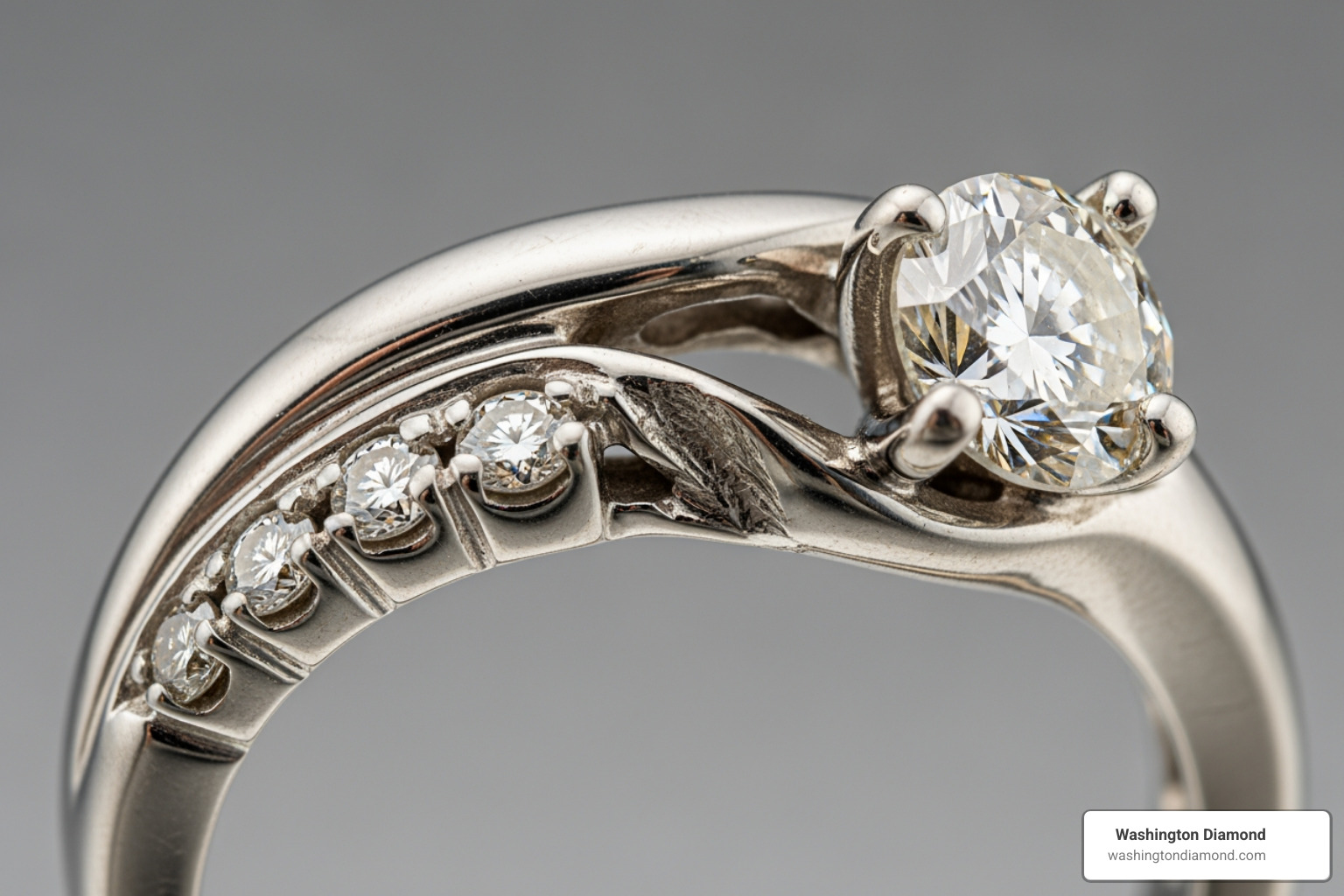
Bent ring repair is a common service that can restore your warped band to its original shape, whether through careful DIY methods for simple cases or professional jeweler intervention for valuable pieces.
Quick Guide to Bent Ring Repair:
- Assess the damage - Check for cracks, loose stones, or severe deformation
- DIY option - Plain bands in soft metals can often be fixed with a ring mandrel and rubber mallet ($5-15 in tools)
- Professional repair - Rings with gemstones, intricate settings, or high value should see a jeweler ($60-150 typical cost)
- Prevention - Remove rings during physical activity and store them properly
You reach for your favorite ring and notice it's no longer perfectly round—perhaps it's oval, or one section looks flattened. This happens more often than you'd think.
Rings bend from everyday life pressures, like grabbing a heavy bag or bumping your hand. The metal, warmed by your body, becomes more malleable and gradually loses its shape.
The good news? Most bent rings can be fixed. While simple bands can often be gently reshaped, complex pieces with gemstones require professional care. The metal type is also a factor: softer metals like gold and silver bend easily but are simpler to straighten, whereas harder metals like platinum resist bending but are more costly to repair.
Knowing when to fix a ring yourself versus when to see an expert is key to protecting your investment in these meaningful pieces.
Why Rings Bend and What to Look For
It's a common scenario: you slip on your favorite ring, and suddenly, it feels... off. It's not quite round anymore. A bent ring is a pretty common occurrence, and understanding why it happens is the first step toward getting it back in shape.
The primary culprits behind a warped band are usually a combination of everyday activities and the inherent properties of the metal itself.
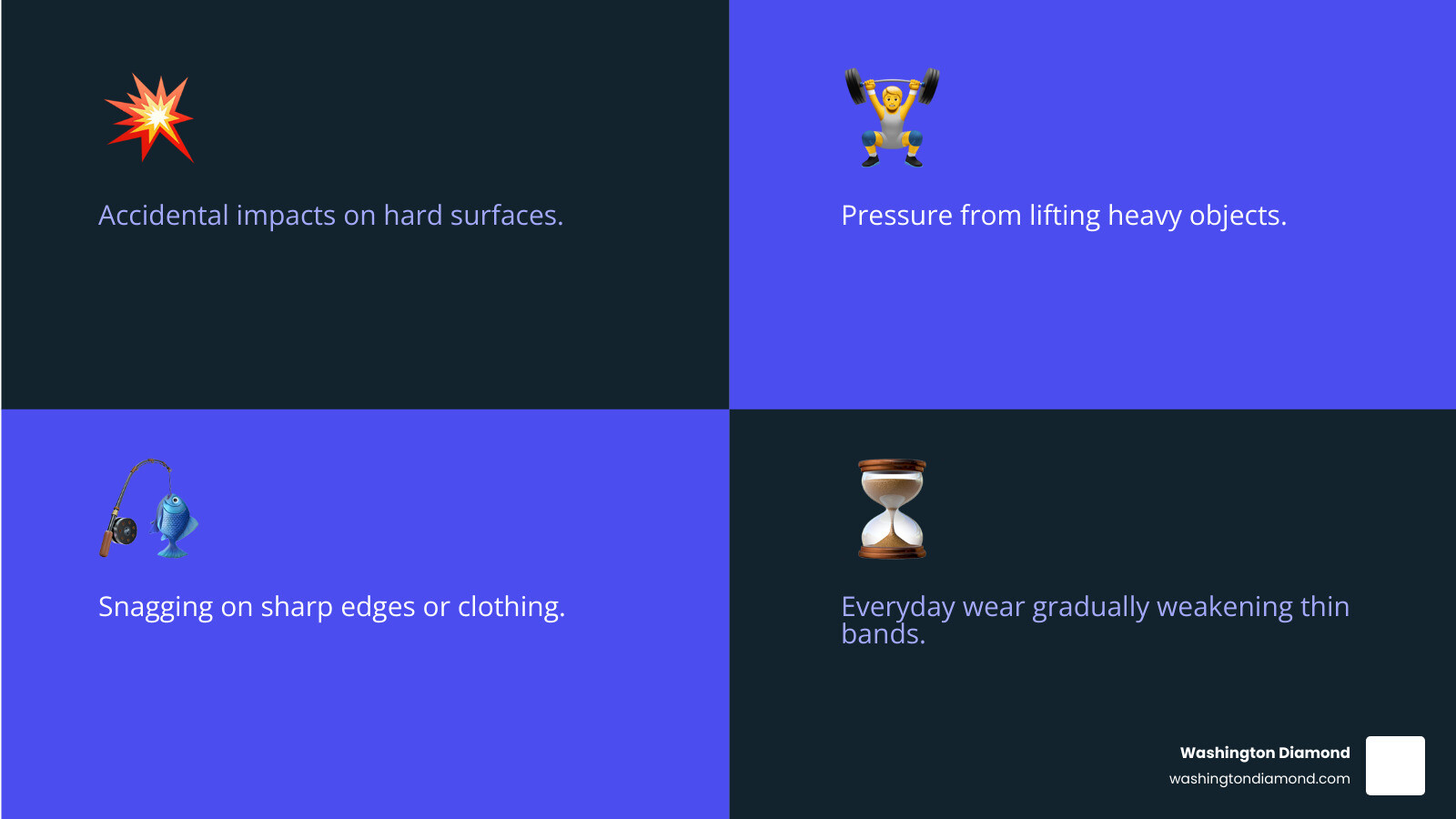
Common causes of a bent ring include:
- Daily wear and tear: Over time, constant friction against surfaces contributes to minor deformations.
- Accidental impact: A sharp knock against a hard surface like a countertop can instantly misshape your ring.
- Pressure from lifting or gripping: Activities like lifting heavy objects, working out, or even gripping a steering wheel can exert enough pressure to cause a bend.
- Snagging on sharp objects: Getting your ring caught on clothing or furniture can twist the band out of alignment.
- Metal malleability and body heat: Your body's warmth slightly increases the metal's malleability, making it more susceptible to bending under everyday pressures.
The way a ring bends can vary, and recognizing these common deformations helps you assess the damage:
- Oval shape: The most frequent type of bend, where the band becomes elongated due to consistent pressure from the sides.
- Wavy shank: Sections of the band develop a wave-like bend, often from uneven impacts or twisting forces.
- Flattened sections: A specific part of the band becomes flattened, usually indicating a direct impact.
Understanding these causes and types of bends helps us determine the best course of action for bent ring repair.
| Metal Type | Malleability/Bend Resistance | Ease of Reshaping (DIY) |
|---|---|---|
| Gold (e.g., 10k, 14k, 18k) | Fairly malleable | Easier |
| Silver | Fairly malleable | Easier |
| Copper | Fairly malleable | Easier |
| Brass | Fairly malleable | Easier |
| Nickel | Fairly malleable | Easier |
| Platinum | Resistant but can bend | Difficult |
| Titanium | Very difficult to reshape | Impossible |
| Tungsten | Very difficult to reshape | Impossible |
| Tungsten Carbide | Very difficult to reshape | Impossible |
Metal Hardness and Bend Resistance
The type of metal your ring is made from plays a huge role in how easily it bends and how straightforward its bent ring repair will be.
Softer metals like gold (especially higher karats), silver, and copper are known for their malleable properties. This makes them beautiful for intricate designs but also more prone to bending from daily wear. On the bright side, their malleability means they are generally easier to reshape back to their original form.
On the other end of the spectrum are harder metals such as platinum, titanium, and tungsten. These metals are celebrated for their exceptional durability and resistance to bending. You'd have to hit a platinum ring very hard to bend it. This inherent strength means they are far less likely to warp. However, if they do bend, their repair becomes significantly more challenging and often requires specialized tools beyond the scope of home repair. Platinum, while highly durable, can take twice as long and cost twice as much to fix compared to gold. Titanium and tungsten are so hard that reshaping them is often impossible without professional equipment.
For a deeper dive into how different materials stack up, you can explore concepts like the Mohs Hardness Scale, which helps in Understanding metal hardness. Choosing the right metal for your ring involves balancing aesthetic appeal with durability, especially if you lead an active lifestyle.
DIY Bent Ring Repair: A Cautious How-To Guide
"Can I fix my bent ring myself?" The answer is: sometimes, with extreme caution. Attempting bent ring repair at home can work for minor bends on plain, inexpensive bands, but it's crucial to understand the risks.
Disclaimer on risks: A careless hammer strike can irreversibly damage your ring. Bending metal back and forth weakens it, risking cracks or further deformation. A home repair can’t remove stubborn dents, and trying to force it will only make things worse.
When not to attempt DIY bent ring repair:
- Gemstone settings: Applying pressure can loosen, chip, or dislodge stones.
- Antique or vintage rings: These often have delicate construction unsuited for DIY methods.
- High-value heirlooms: The risk of irreparable damage far outweighs any potential savings. Always consult a professional for cherished items.
- Severe deformation: Deep kinks, cracks, or a severely flattened shape require professional tools.
- Rings made of hard metals: Titanium, tungsten, and even platinum are extremely difficult to reshape at home.
For these more complex cases, professional expertise is essential.
Tools for the Job
If you've determined your ring is a good candidate for a DIY fix (a plain, soft metal band with a minor bend), you'll need a couple of affordable, specialized tools.
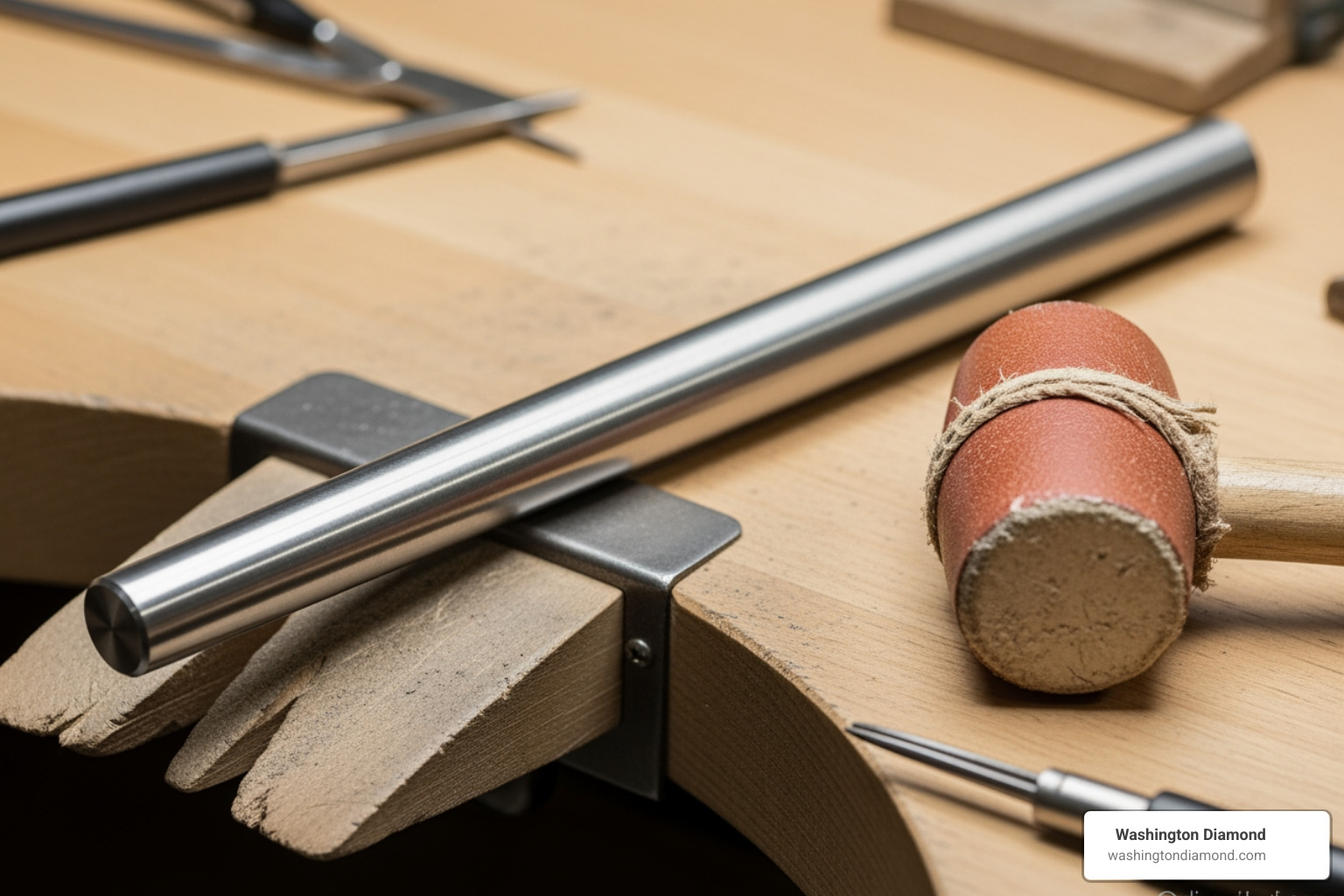
Jeweler's Mandrel: This is the key tool for bent ring repair. It's a tapered steel or wooden rod marked with ring sizes, allowing you to gently push the ring back into a round shape. A wooden one is often preferred to avoid scratching softer metals. Cost: $5 to $15.
Jewelry Mallet: You need a specialized mallet with a soft head (rawhide, rubber, or wood) that reshapes metal without leaving marks. Cost: Around $5.
With these two tools, costing roughly $5-$15, you're equipped for a basic bent ring repair.
Steps for a Simple Bent Ring Repair at Home
Once you have your tools, you can attempt a simple bent ring repair. Take your time and be gentle.
Here are the steps for straightening a bent ring:
- Prepare your workspace: Work on a stable, well-lit surface, securing the mandrel in a vise or against a sturdy edge.
- Place the ring on the mandrel: Slide the ring down the narrow end until it meets resistance.
- Use finger pressure first: For slight bends, you may be able to gently push and mold the ring against the mandrel.
- Tap lightly with the mallet: If finger pressure isn't enough, use your jewelry mallet for light, consistent taps on the bent areas. Avoid hard strikes.
- Rotate and check for roundness: Continuously rotate the ring, tapping as needed, and inspect your progress to ensure a uniform, circular shape.
- Repeat as necessary: Continue this process until the ring is as round as possible. Stubborn dents may not fully disappear.
- Remove the ring from the mandrel: Carefully slide the ring off once you're satisfied.
For a visual guide, you can See a video demonstration of this process.
Polishing after repair: After reshaping, you can gently smooth minor scuffs with a very fine emery cloth. Then, clean your ring with a simple mild soap and water solution and a soft brush, rinse thoroughly, and dry with a lint-free cloth.
When to See a Professional for Bent Ring Repair
While a DIY approach can work for minor bends, there's a clear line where professional intervention becomes essential. Knowing when to trust an expert for bent ring repair can save you from costly mistakes and ensure your cherished jewelry is restored safely.
Professional expertise and specialized tools: Professional jewelers possess experience and specialized tools—like microscopes, laser welders, and presses—that far exceed a home setup. They can accurately assess damage, identify hidden weaknesses, and perform repairs with a precision that DIY methods can't achieve.
Avoiding costly mistakes: Attempting a complex bent ring repair at home risks cracking the band, loosening gemstones, or weakening the metal. These mistakes can turn a simple repair into a much more expensive one. A jeweler can perform tasks like soldering a crack or securing loose prongs before you lose a precious stone.
The cost of professional bent ring repair is often more affordable than you might think. Reshaping a deformed ring typically costs around $60-$150. If the ring needs resoldering, the cost is usually between $60 and $120. Prong repair should not exceed $200.
For expert jewelry repair and restoration services in Northern Virginia, we offer meticulous care for your most precious pieces. You can learn more about our comprehensive services here: Expert Jewelry Repair & Restoration Services in Northern Virginia.
Signs You Need Professional Bent Ring Repair
How do you know when your ring needs more than a DIY fix? These red flags signal it's time to seek a professional for bent ring repair.
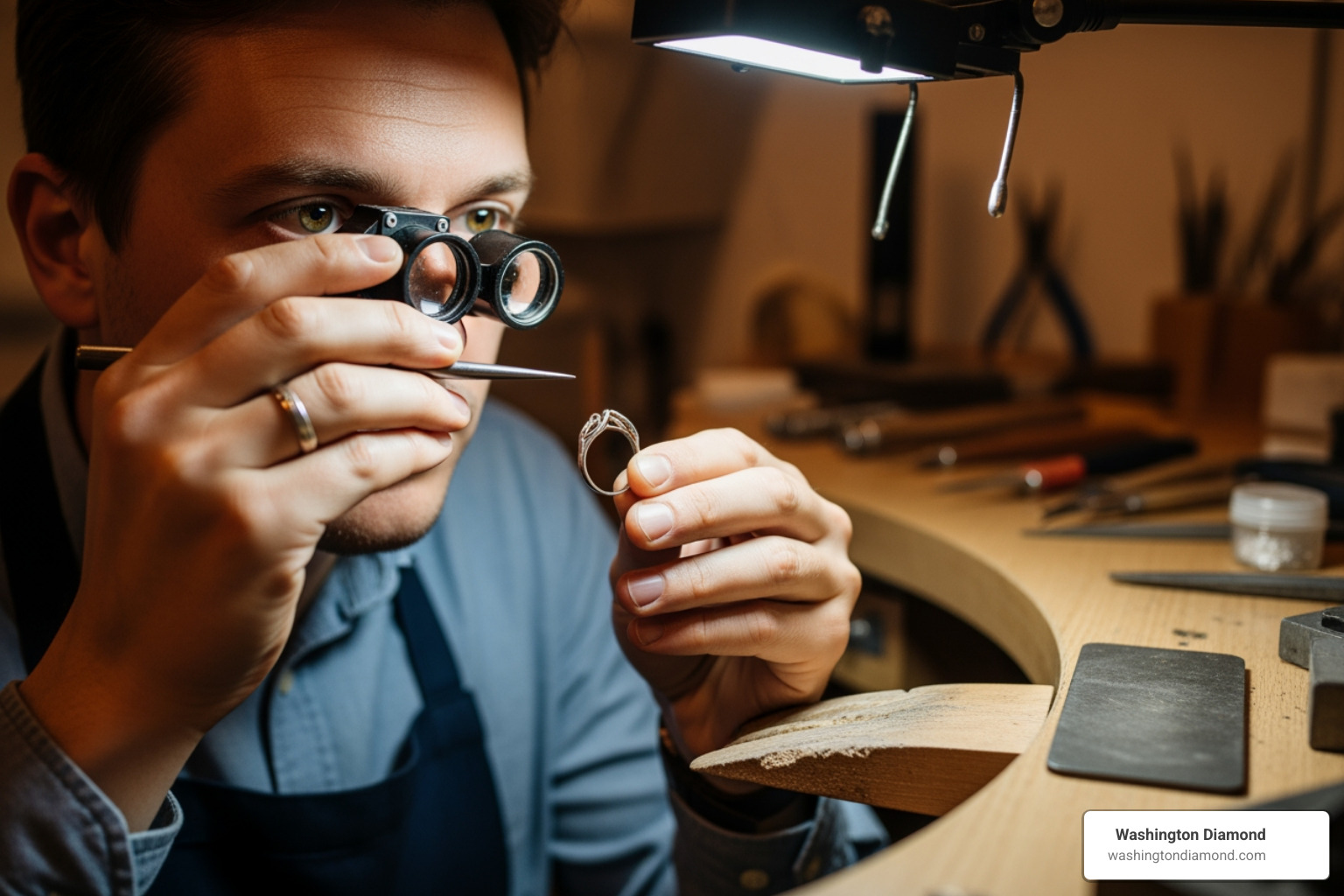
Here are the key indicators that your ring needs professional attention:
- Cracks in the band: Any fracture means the metal is stressed and could break. A jeweler must solder and reinforce it.
- Loose gemstones: If stones are wiggling or rattling, the setting is compromised. Bending it further could cause them to fall out.
- Bent prongs: The delicate metal claws holding your gemstones are at risk. Jewelers have specialized tools to safely reshape and strengthen them.
- Intricate designs, filigree, or pave settings: Elaborate designs are vulnerable to damage during home repair and require professional precision.
- Severe deformation: A severely flattened or twisted ring indicates significant stress on the metal that requires more than gentle tapping.
- High-value rings or family heirlooms: For pieces with immense sentimental or monetary value, the risk of a DIY fix is too high. Entrust them to a professional to ensure their longevity. For more on caring for such treasures, check out our guide on Passing Down the Sparkle: A Guide to Resizing Your Family Heirloom Ring.
When in doubt, always consult a professional. The peace of mind is invaluable.
Preventing a Bent Ring: Tips for Long-Lasting Jewelry
While bent ring repair is common, the best repair is no repair at all. By adopting a few proactive habits, you can significantly reduce the chances of your rings getting bent or damaged.
Remove rings during strenuous activities: This is the most crucial tip. Take off rings before weightlifting, gardening, playing sports, doing household chores like washing dishes, or moving furniture.
Proper storage: When not wearing your rings, store them in a lined jewelry box or a soft pouch. This prevents them from scratching against other items or getting knocked off a hard surface.
Ensure a proper fit: A ring that is too loose can snag more easily, while one that's too tight can be a problem if your finger swells. A properly fitted ring stays securely in place. If you're unsure about your size, professional resizing is a quick and effective solution. Find out more about how we can help with a proper fit in our comprehensive guide to DC Jewelry Services.
-
Choosing durable designs and metals: When selecting new jewelry, consider its durability.
- Heavier bands: Thicker bands, especially those with a "comfort fit" profile, are more resistant to bending than thin, delicate ones.
- Durable metals: As discussed, platinum, titanium, and tungsten are significantly more resistant to bending than gold or silver, offering greater peace of mind for active lifestyles.
By incorporating these simple habits into your routine, you can extend the life and beauty of your rings, ensuring they remain perfectly round for years to come.
Conclusion
A bent ring can be disheartening, but now you know how to approach bent ring repair. While a cautious DIY fix is possible for simple bands, the risks are high for valuable or intricate pieces. For rings with gemstones, cracks, or significant sentimental value, professional repair is the only safe option. An expert can restore your ring's integrity without risking further damage.
At Washington Diamond, we offer the specialized tools and meticulous care required to restore your treasured jewelry. Our team in Northern Virginia provides the undivided attention needed to ensure a flawless finish, preserving the meaningful moments your ring represents.
For peace of mind and a flawless finish, explore our Expert Jewelry Repair & Restoration Services in Northern Virginia. Let us help your ring continue its journey with you, perfectly round and sparkling bright.
Have a question about your jewelry?
We've been helping clients with diamonds, custom design, repairs, appraisals, and more since 1969. Book a private appointment at our Falls Church studio.
Book an AppointmentTrusted since 1969 · Falls Church, VA · 703-536-3600
From the blog
View all


