

Sparkle & Shine: Your Guide to Cleaning Stainless Steel Jewelry
Why Your Stainless Steel Jewelry Deserves the Right Care
How to clean stainless steel jewelry is simpler than you might think. Here's the quick answer:
3 Simple Methods to Clean Stainless Steel Jewelry:
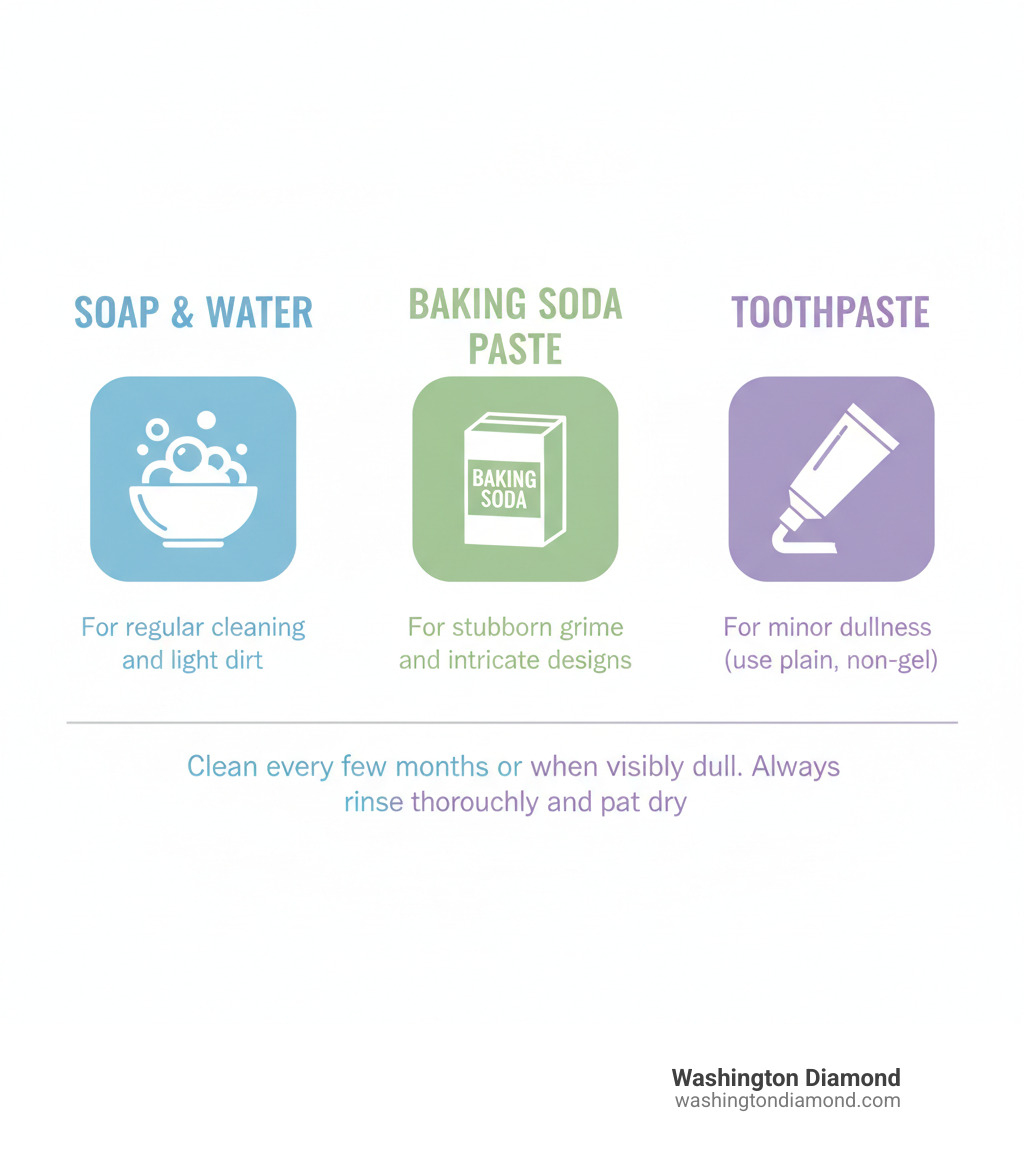
Soap and Water - Mix mild dish soap with warm water, soak for 5 minutes, gently scrub with a soft cloth or toothbrush, rinse thoroughly, and pat dry.
Baking Soda Paste - Mix 2 parts baking soda with 1 part water, apply with a soft toothbrush, scrub gently along the grain, rinse completely, and dry.
Toothpaste Polish - Use plain, non-gel, non-whitening toothpaste on a damp cloth, rub gently, rinse well, and dry (test first on a hidden spot).
Stainless steel jewelry has become incredibly popular, and for good reason. It's durable, affordable, and hypoallergenic - making it perfect for those with sensitive skin. The secret to its "stainless" quality lies in chromium, which creates a protective barrier against rust and tarnish.
But here's the thing: even though stainless steel resists corrosion better than most metals, it can still lose its shine over time. Daily wear means exposure to oils from your skin, lotions, perfumes, and environmental grime. The good news? You don't need expensive cleaners or professional services to restore that beautiful luster.
Whether you're caring for a meaningful anniversary gift or keeping your everyday pieces looking their best, regular cleaning takes just a few minutes. Most methods use items you already have at home - dish soap, baking soda, or even toothpaste.
Let's explore how to keep your stainless steel jewelry sparkling for years to come.
The Allure of Stainless Steel: More Than Just a Pretty Metal
There's something undeniably appealing about stainless steel jewelry. Maybe it's the sleek, modern aesthetic that pairs beautifully with everything from casual jeans to formal wear. Or perhaps it's the comfortable, lightweight feel that makes you forget you're even wearing it. Whatever draws you in, stainless steel has earned its place as a favorite in jewelry boxes everywhere.
But what exactly makes this metal so special? And why does it seem to stay shiny while other jewelry loses its luster?
At its heart, stainless steel is an alloy - a mixture of metals working together. The main ingredients are iron and carbon, but the real star of the show is chromium. This element makes up at least 10.5% of the mix and gives stainless steel its remarkable "stainless" quality.
Here's where it gets interesting: when chromium meets oxygen, it creates an invisible protective shield called a chromium oxide layer. This thin barrier is what makes stainless steel so incredibly resistant to corrosion. It's like having a built-in bodyguard for your jewelry.
Many quality stainless steel pieces are made from 316L surgical steel - a specific grade that contains carbon, high levels of chromium, and some nickel. If you have sensitive skin or nickel allergies, this surgical-grade steel (also called 316LVM) is your best friend. It's specifically designed to be non-reactive and hypoallergenic, which is why it's commonly used for body piercings and medical implants.
So why has stainless steel jewelry become such a hit? The reasons are pretty compelling.
Scratch resistance is a big one. Unlike softer metals that show every bump and scrape, stainless steel holds up beautifully to daily wear. Your favorite ring or bracelet keeps its shape and fine details, looking almost as good as the day you got it. Pieces with a brushed or satin finish are especially good at maintaining their luster over time.
Then there's affordability. You get the look and durability of fine jewelry without the precious metal price tag. This means you can experiment with trendy designs or build a collection without breaking the bank.
And let's not forget the hypoallergenic properties. For anyone who's ever dealt with itchy, irritated skin from jewelry, stainless steel (especially surgical grades) is a game-changer. It's gentle enough for everyday wear, even for people with sensitive skin.
Now for the question everyone asks: Does stainless steel tarnish or rust?
The honest answer is that stainless steel has high corrosion resistance - far better than most metals - but it's not completely invincible. That protective chromium oxide layer does an excellent job keeping rust and tarnish at bay. However, your jewelry faces a daily onslaught of challenges: oils from your skin, lotions, perfumes, and environmental pollutants.
Over time, these elements can cause your stainless steel to become dull from dirt and grime. It won't rust the way plain iron would, but it can lose that mirror-like shine. Minor scratches also accumulate and contribute to a less brilliant appearance.
The good news? This dullness is just surface-level buildup. With the right cleaning methods (which we'll cover next), you can restore the beauty of finished stainless steel jewelry and bring back that gorgeous gleam.
That's the real magic of stainless steel - it's remarkably low-maintenance. A little care goes a long way in keeping your pieces looking stunning for years to come. Whether you're wearing a simple chain or an intricate statement piece, knowing how to clean stainless steel jewelry properly means you'll always step out with confidence and shine.
How to Clean Stainless Steel Jewelry: 3 Simple At-Home Methods
The best part about caring for stainless steel? You don't need fancy cleaners or expensive equipment. Everything you need to keep your pieces sparkling is probably sitting in your kitchen or bathroom right now. Let's walk through three proven methods for how to clean stainless steel jewelry using simple household items.
Method 1: The Gentle Soap and Water Solution
This is your everyday cleaning method – perfect for regular maintenance and wiping away the light oils and dirt that naturally accumulate from daily wear. It's gentle enough to use frequently without worrying about damaging your jewelry.
What You'll Need:
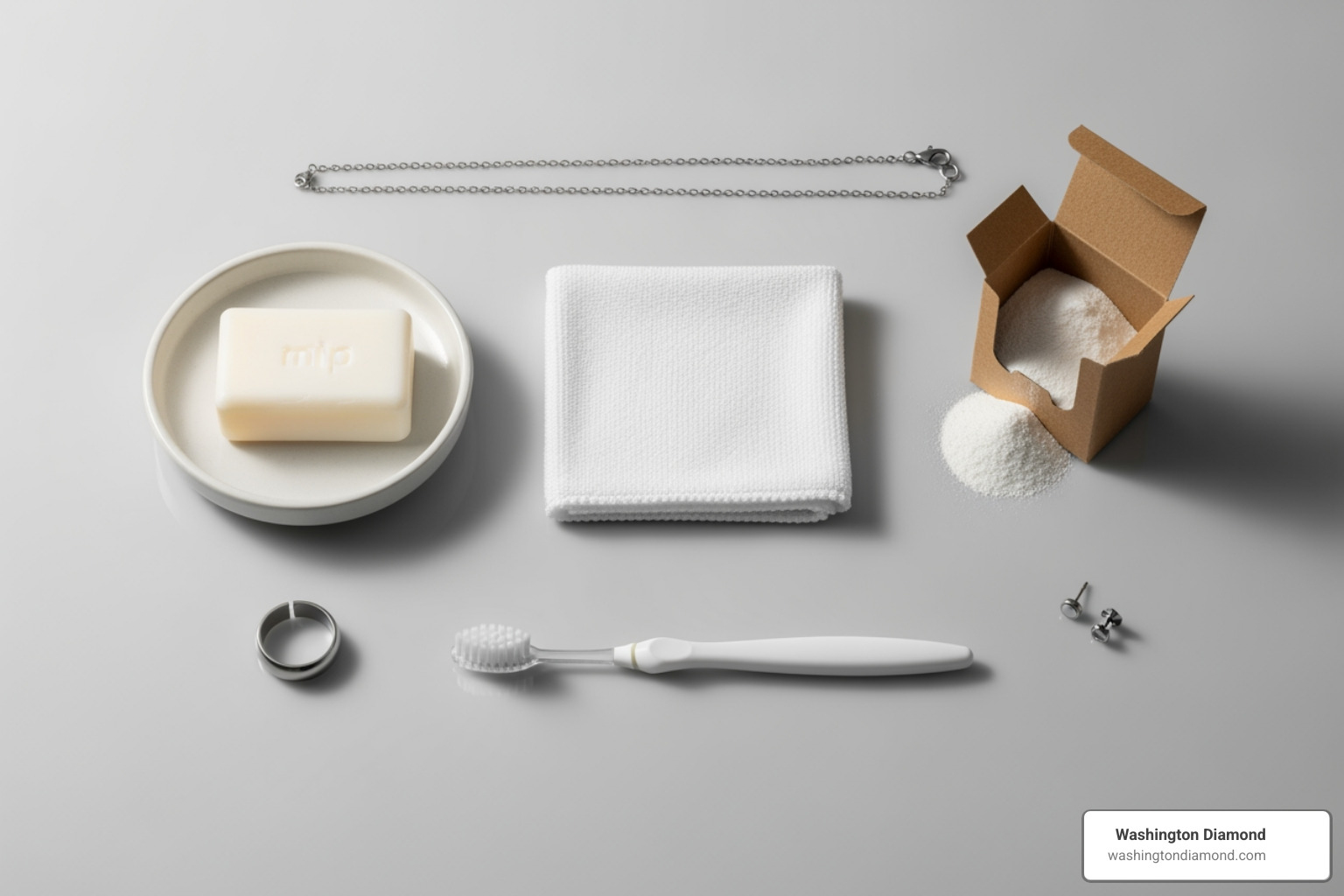
You probably have everything already. Grab some mild dish soap, warm water, two small bowls, a couple of soft, lint-free cloths (microfiber is perfect), and a soft-bristled toothbrush if your piece has intricate details or chains.
Here's How to Do It:
Start by filling one bowl with warm water and adding just 2-3 drops of mild dish soap. Give it a gentle stir to create some suds. Fill your second bowl with plain warm water – this is for rinsing later.
If your jewelry has visible dirt or grime, let it soak in the soapy water for about 5-10 minutes. This loosens everything up and makes cleaning easier. For pieces that just need a quick refresh, you can skip straight to cleaning.
Dip your soft cloth into the soapy water and gently rub your jewelry. Move along the grain of the metal rather than against it – this helps prevent tiny scratches. For chains, detailed engravings, or hard-to-reach spots, switch to your soft toothbrush. Use light pressure and let the soap do the work. If your piece has gemstones, be extra gentle around those areas.
Once you've cleaned every surface, it's time to rinse thoroughly. Dip your jewelry into the bowl of plain water or hold it under a gentle stream of lukewarm running water. Make sure you remove every trace of soap – leftover residue can leave streaks or make your jewelry look dull.
The final step is crucial: pat your jewelry completely dry with a clean, soft cloth. Don't leave it to air dry, as water spots can form and diminish that beautiful shine. A quick buff with your dry cloth will bring back the luster.
This method takes just a few minutes and costs practically nothing, making it ideal for keeping your stainless steel jewelry looking fresh between deeper cleans.
Method 2: Using a Baking Soda Paste for Tougher Grime
When regular soap and water aren't quite cutting it, it's time to bring out the baking soda. This method is your best friend for stubborn dirt, built-up grime, or those intricate designs where dirt loves to hide.
What You'll Need:
You'll need baking soda, water, a small mixing bowl, a soft-bristled toothbrush, and a soft cloth for drying.
Creating Your Cleaning Paste:
Mix 2 parts baking soda with 1 part water in your small bowl. If you're measuring, that's about 1 tablespoon of baking soda to 1/2 tablespoon of water. Stir until you get a thick, spreadable paste – it should look like toothpaste.
The Cleaning Process:
Dip your soft toothbrush into the paste and apply it to your jewelry. Work in gentle circular motions, always following the grain of the metal. The baking soda acts as a mild abrasive, so it lifts away grime without being harsh. Pay special attention to crevices, engravings, and any areas where you can see discoloration.
If your piece has gemstones, be careful around them. While baking soda is gentle compared to commercial cleaners, it can still be too abrasive for softer stones.
Rinsing is especially important with this method. Hold your jewelry under warm running water and make sure you've removed every bit of the paste. Sometimes paste gets stuck in detailed areas, so don't be afraid to use your toothbrush again under the running water to dislodge it.
Dry your jewelry thoroughly with a soft, lint-free cloth. Once it's completely dry, give it a good buff with a jewelry polishing cloth if you have one. You'll be amazed at how much brighter it looks.
Method 3: Polishing with Toothpaste (With Caution)
Here's a surprising trick that can work wonders for minor dullness: plain white toothpaste. But – and this is important – you need to be selective about which toothpaste you use and careful about how you apply it.
Choosing the Right Toothpaste:
This is where many people go wrong. You need plain, white, non-gel, non-whitening toothpaste. Skip anything with whitening agents, colored gels, or those little scrubbing beads. These ingredients are too abrasive and can scratch your jewelry. Look for the simplest, most basic toothpaste you can find.
How to Apply It Safely:
Before you clean your entire piece, test the toothpaste on an inconspicuous spot first. This is non-negotiable. Apply a tiny amount to a hidden area and see how it reacts. If everything looks good after rinsing and drying, you can proceed.
Dampen a soft cloth with warm water and add a small dab of toothpaste to it. Gently rub the cloth over your jewelry, moving with the grain of the metal. For detailed areas, you can use a soft toothbrush, but avoid any gemstones completely – toothpaste can be too harsh for many stones.
Rinse thoroughly under warm running water. Any toothpaste left behind will create a cloudy film, so take your time with this step. Pat everything dry with a clean, soft cloth and buff to restore the shine.
A Word of Caution:
While this method can be effective for a quick polish, it carries more risk than the soap and water or baking soda methods. The abrasive particles in toothpaste, even gentle ones, can potentially create micro-scratches over time. Use this method sparingly and only when your jewelry needs a little extra shine that gentler methods haven't achieved.
At Washington Diamond, we believe that caring for your jewelry should be rewarding, not stressful. These simple methods keep your stainless steel pieces looking beautiful between visits to our studio, where we're always happy to offer personalized care advice for all your treasured jewelry.
Maintaining That Lasting Luster: Polishing and Long-Term Care
You've put in the work to clean your stainless steel jewelry, and now it's gleaming beautifully. The next step? Making sure it stays that way. With the right polishing techniques and some thoughtful long-term care habits, you can keep your pieces looking showroom-fresh for years to come.
Are Ultrasonic Cleaners Safe for Your Jewelry?
If you've ever wondered about those ultrasonic cleaners you see in jewelry stores, you're not alone. These devices use high-frequency sound waves to create tiny bubbles in water that gently dislodge dirt from even the most intricate crevices. It's like giving your jewelry a deep-tissue massage, if you will.
For plain stainless steel jewelry without any gemstones or delicate components, ultrasonic cleaners are generally safe and quite effective. They're particularly handy when you're cleaning stainless steel jewelry with lots of intricate details, or when you want to clean several pieces at once. The vibrations reach places that even the softest toothbrush might miss.
However, here's where we need to pump the brakes a bit. If your stainless steel piece features gemstone settings, an ultrasonic cleaner might not be your best friend. Those intense vibrations that work so well on plain metal can actually loosen the settings that hold your stones in place. This is especially true for softer or more delicate gems like opals, pearls, or emeralds.
Before you pop any gemstone jewelry into an ultrasonic cleaner, take a moment to research whether your specific stones can handle it. When in doubt, stick with the gentle hand-cleaning methods we covered earlier, or reach out to a professional jeweler for guidance. It's always better to be cautious than to risk losing a precious stone.
Best Practices for Storage and Daily Wear
Think of your jewelry care routine like taking care of a good pair of leather shoes. A little daily mindfulness goes a long way toward keeping them in beautiful condition. The same principle applies to your stainless steel pieces.
When it comes to storage, your jewelry needs a safe home. A cool, dry place is ideal – somewhere away from direct sunlight and humidity. Even though stainless steel is impressively resistant to the elements, excessive moisture can still lead to water spots or mineral buildup over time. This is particularly important if you live in humid areas.
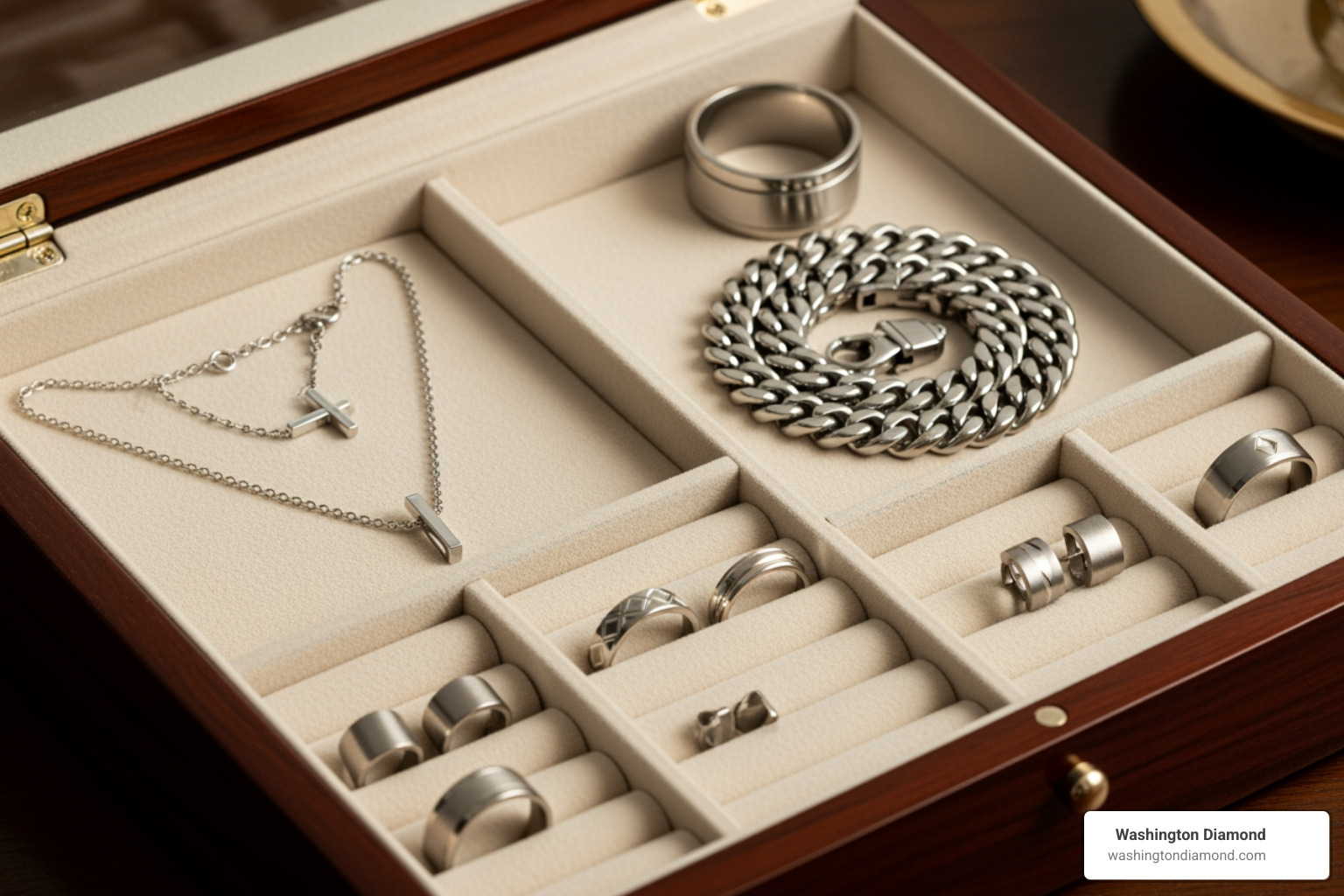
Consider giving each piece its own separate soft pouch or compartment in a fabric-lined jewelry box. This isn't just about being organized (though that's a nice bonus). Storing pieces separately prevents them from scratching each other. Even stainless steel can develop minor surface abrasions when it rubs against other jewelry, especially pieces made from harder metals or featuring sharp edges.
Now, let's talk about daily wear habits. There's a simple rule that jewelry lovers swear by: "last on, first off." Put your jewelry on after you've finished applying your lotions, perfumes, hairspray, and makeup. Then, take it off first before you do anything that might expose it to harsh conditions. Those fragrances and cosmetics might smell wonderful, but many contain alcohol or chemicals that can gradually dull your jewelry's finish.
While stainless steel laughs in the face of most corrosion, it's still smart to avoid contact with harsh chemicals. This means removing your pieces before swimming in chlorinated pools, cleaning with household chemicals, or even doing dishes with strong detergents. Chlorine, bleach, and ammonia can all cause issues with prolonged exposure. Think of it as giving your jewelry a little vacation while you handle the tough stuff.
One more tip: be mindful of how your jewelry interacts with itself. If you're wearing multiple rings or stacking bracelets, try to ensure they're not constantly rubbing against each other. That friction, over time, can create scratches that dull the shine you've worked so hard to maintain.
These habits might seem small, but they add up to make a real difference. By treating your stainless steel jewelry with a bit of care and respect, you're ensuring it remains a beautiful part of your collection for many years to come. And honestly? Once these practices become routine, they'll feel like second nature.
Frequently Asked Questions About Stainless Steel Jewelry
We get asked a lot about stainless steel jewelry – and honestly, it makes sense! When you're wearing something every day, you want to know it can keep up with your life. Let's tackle the most common questions we hear.
Can I wear stainless steel jewelry in the shower, pool, or ocean?
Here's the good news: stainless steel is remarkably water-resistant. Unlike silver, which can tarnish quickly when exposed to moisture, stainless steel holds up beautifully. Many people wear their stainless steel pieces in the shower without any issues, and the jewelry comes out looking just fine.
That said, there's a difference between "can you" and "should you" – especially when it comes to pools and ocean water. While stainless steel itself won't rust like other metals, chlorine from pools and salt from ocean water can be corrosive over time. These chemicals won't destroy your jewelry overnight, but repeated exposure can eventually dull the finish or leave behind mineral deposits that are tough to remove.
Our best practice? If you're heading for a swim – whether in a chlorinated pool or the ocean – it's worth taking a moment to remove your jewelry first. Think of it as giving your pieces a little vacation too! If your jewelry does get exposed to chlorine or salt water, don't worry. Just rinse it thoroughly with fresh water as soon as you can and dry it completely with a soft cloth. This simple step goes a long way in keeping your pieces pristine.
How often should I clean my stainless steel jewelry?
One of the things we love most about stainless steel is how low-maintenance it is compared to other metals. You're not constantly polishing and fussing over it, which makes it perfect for busy lives.
For everyday care, a quick wipe with a soft cloth after wearing your jewelry helps remove oils from your skin, traces of lotion, or any environmental dust. This takes seconds and prevents buildup that can dull the shine over time.
As for a deeper clean using the methods we've covered – like the soap and water solution or baking soda paste – every few months is usually plenty. Of course, if you wear a piece daily or notice it's starting to look dull or dirty, go ahead and give it a good cleaning sooner. Your eyes are the best guide here. When your jewelry looks like it needs some love, it probably does!
What should I absolutely avoid when cleaning my jewelry?
Stainless steel might be tough, but that doesn't mean you can throw just anything at it. There are certain cleaners and tools that can actually damage your jewelry, leaving scratches or discoloration that are difficult – or impossible – to reverse.
Harsh chemicals are at the top of the "never use" list. Bleach, chlorine, and ammonia might be great for cleaning your bathroom, but they're terrible for your jewelry. These powerful chemicals can break down the protective chromium oxide layer on stainless steel, leading to corrosion or discoloration over time.
Abrasive scrubbers like steel wool or scouring pads will absolutely scratch your jewelry. Even those green kitchen scrubbers are too rough. Always stick with soft cloths and soft-bristled toothbrushes – your jewelry's finish will thank you.
Here's an interesting one: silver polish. Even though stainless steel has that beautiful silvery shine, it's not actually silver. Using silver polish on stainless steel can cause staining or damage. They're two different metals that need different care.
Polishes containing wax might seem like they'd add shine, but they often leave behind a cloudy film that makes your jewelry look dull rather than brilliant. And if you're using the toothpaste method we mentioned earlier, make absolutely sure you're avoiding whitening toothpastes or those with silica particles – these are far too abrasive and will scratch the surface.
Finally, hydrogen peroxide sometimes gets recommended for jewelry cleaning, but it's not a friend to stainless steel. It can cause discoloration or damage the surface, so it's best to skip it entirely.
When you're learning how to clean stainless steel jewelry, knowing what not to do is just as important as knowing the right cleaning methods. By avoiding these common mistakes, you'll keep your pieces looking beautiful for years to come – and that's exactly what we want for you.
Conclusion: Keep Your Jewelry Shining for Years to Come
There you have it – everything you need to know about how to clean stainless steel jewelry and keep it looking absolutely stunning. We've covered a lot of ground together, from understanding what makes stainless steel so special to mastering three simple cleaning methods you can do right at home.
The beauty of stainless steel is that it's genuinely low-maintenance. It won't tarnish like silver or require the delicate handling of softer metals. With just a bit of mild soap and water every few months, or a baking soda paste when things get a little grimy, your pieces will maintain that gorgeous, modern shine you fell in love with. And the best part? You probably already have everything you need sitting in your kitchen cupboard.
The key to lasting beauty isn't complicated. Store your pieces in a cool, dry place, give them a quick wipe after wearing, and be mindful about when you put them on and take them off. These small habits make all the difference in preserving the sparkle and ensuring your jewelry stays beautiful for years – even decades – to come.
At Washington Diamond, we believe that every piece of jewelry tells a story, whether it's a meaningful gift or an everyday favorite that makes you feel confident. Our commitment to you extends beyond our private, appointment-only studio in Northern Virginia. We want to help you care for your treasures so they continue to be part of your life's most meaningful moments.
Your stainless steel jewelry is designed to last, and with the simple care tips we've shared, it absolutely will. So go ahead – give your favorite pieces a little refresh and watch them shine like new again.
Want to learn more about caring for other types of jewelry? Explore our Diamond Cleaning & Care Guide for more expert tips on keeping all your precious pieces in perfect condition.
Have a question about your jewelry?
We've been helping clients with diamonds, custom design, repairs, appraisals, and more since 1969. Book a private appointment at our Falls Church studio.
Book an AppointmentTrusted since 1969 · Falls Church, VA · 703-536-3600
From the blog
View all


