

Unveiling Brilliance: Your Guide to the Best Diamond Cleaners
Why Your Diamond Needs a Spa Day

The best jewelry cleaner for diamonds depends on your lifestyle and cleaning preferences, but here are the top-performing options:
| Cleaner Type | Best For |
|---|---|
| Ultrasonic Cleaners | Deep, professional-level cleaning at home |
| Liquid Soaking Solutions | Gentle weekly maintenance |
| Cleaning Pens & Wipes | Quick touch-ups and travel |
| DIY Soap & Water | Budget-friendly everyday cleaning |
Diamonds are the hardest material on earth, but they attract oil and dirt like a magnet. Many recently engaged people, for example, make it a top priority to keep their diamond in the cleanest condition at all times.
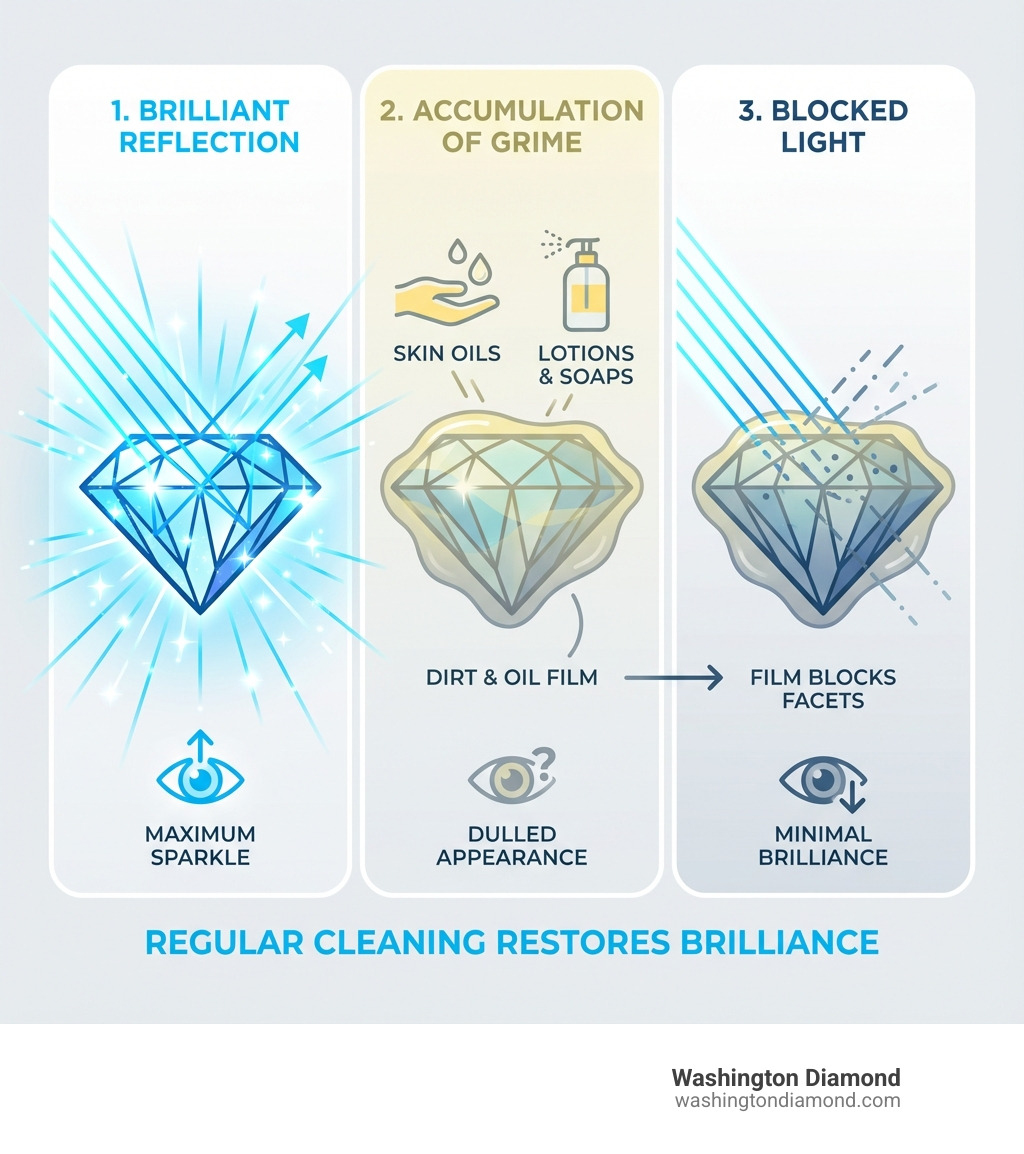
Daily exposure to lotions, soaps, hairspray, and natural skin oils creates a cloudy film that obscures your diamond's facets. The buildup doesn't damage the stone itself, but it hides the brilliance you fell in love with. Your diamond hasn't lost its sparkle—it's just buried under invisible grime.
Regular cleaning isn't just about aesthetics. It's also about maintenance. When you clean your jewelry, you have the chance to spot loose prongs, worn settings, or other potential problems before they become expensive disasters.
The good news? Restoring that showroom sparkle is simpler than you think. Whether you prefer a quick weekly soak, professional-grade ultrasonic cleaning, or a portable pen for on-the-go touch-ups, there's a solution that fits your routine.
Best jewelry cleaner for diamonds terms you need:
Decoding Diamond Cleaners: Soaks, Wipes, and Sound Waves
When it comes to bringing back that dazzling sparkle, the market offers a variety of solutions. Each type of best jewelry cleaner for diamonds has its own strengths, catering to different needs and lifestyles. Let's explore the main categories:
| Cleaner Type | Effectiveness | Convenience | Cost Range | Portability |
|---|---|---|---|---|
| Liquid Soaking Solutions | Excellent for daily grime & deeper cleans | Easy to use at home, requires soaking time | Low to Mid | Low |
| Ultrasonic Cleaners | Superior for deep cleaning crevices & intricate designs | Touch-free, but requires a dedicated machine | Mid to High | Low |
| Jewelry Wipes | Good for quick touch-ups & surface polishing | Highly convenient, very fast | Low | High |
| Cleaning Pens | Great for targeted cleaning & on-the-go sparkle | Very portable, precise application | Low | High |
| Foaming Cleaners | Good for general cleaning & larger surface areas | Simple application, often comes with a brush | Low to Mid | Mid |
Liquid Solutions
These are perhaps the most common type of jewelry cleaner. They involve submerging your diamond jewelry in a specialized liquid, often accompanied by a small basket or dipping tray.
- Effectiveness: They excel at dissolving oils, lotions, and general grime that dull your diamond's shine. Many are specifically optimized for diamonds and precious stones, promising to bring back their sparkle. Ammonia-free formulas are effective on diamonds, gold, platinum, and silver.
- Convenience: Generally very easy to use, requiring just a soak for 20-40 minutes, followed by a rinse and dry. Many kits come with a small brush and polishing cloth.
- Cost: Typically affordable, ranging from $8-$28 for a bottle, though comprehensive kits can be more expensive.
- Portability: Usually designed for at-home use, less portable due to liquid nature.
Ultrasonic Cleaners
These machines use high-frequency sound waves to create microscopic bubbles in a liquid solution (often just water or a gentle cleaner). These bubbles then "scrub" the jewelry, reaching into tiny crevices that brushes can't. Many models are available for home use.
- Effectiveness: Best for deep cleaning, especially for intricate settings or heavily soiled pieces. They offer a "touch-free, professional polish."
- Convenience: Very hands-off once the jewelry is in the machine.
- Cost: Mid-range, typically $40-$50 for a home unit.
- Portability: Low, as they are countertop appliances.
Jewelry Wipes
Designed for quick and easy cleaning, wipes are pre-moistened cloths that can remove light tarnish and restore shine.
- Effectiveness: Best for surface-level cleaning and quick touch-ups. Some wipes are also noted for quickly removing tarnish from gold.
- Convenience: Incredibly convenient and fast.
- Cost: Very affordable, around $10.
- Portability: High, perfect for travel or keeping in your bag.
Cleaning Pens
These portable, brush-tipped pens dispense a cleaning solution directly onto your jewelry. These pens are a prime example and are often hailed as the best jewelry cleaner for diamonds for travel.
- Effectiveness: Great for targeted cleaning, especially around the diamond itself, and for quick touch-ups on the go.
- Convenience: Super portable and easy to use anywhere.
- Cost: Affordable, typically $10-$16.
- Portability: Extremely high.
Foaming Cleaners
These cleaners come out as a foam, allowing for easy application and often a gentle cleaning action.
- Effectiveness: Good for general cleaning and covering larger surface areas. Some foams suggest a soak time as short as 30 seconds.
- Convenience: Easy to apply and often comes with a soft brush.
- Cost: Affordable, around $10-$24.
- Portability: Mid-range, usually in a bottle, but sometimes smaller formats exist.
Recommended Tools
Regardless of the cleaner you choose, a few basic tools are essential for effective diamond jewelry care:
- Soft-bristled brushes: A baby toothbrush is often recommended for its gentle yet effective bristles, perfect for scrubbing around prongs and intricate designs.
- Lint-free cloths: Microfiber cloths are ideal for drying and polishing without leaving behind fibers or scratching the metal. Avoid paper towels, which can scratch.
Our Top Picks for the Best Jewelry Cleaner for Diamonds
Based on our research and expert insights, here are our top recommendations for the best jewelry cleaner for diamonds, categorized by their primary use.
Best for a Deep, Professional-Level Clean: Ultrasonic Machines
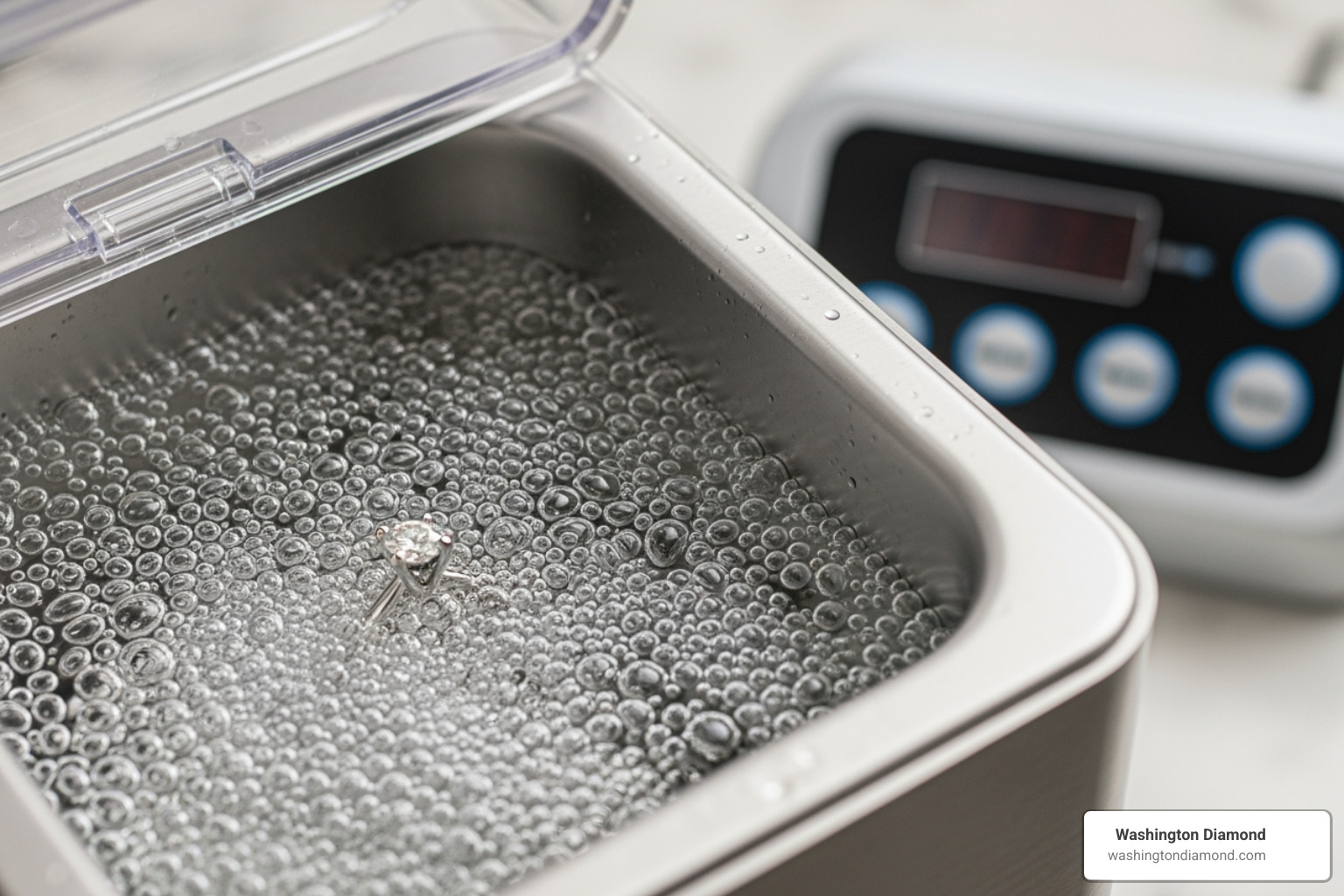
If you're looking to achieve that "just from the jeweler" sparkle at home, an ultrasonic cleaner is often the answer. These machines use high-frequency sound waves to create countless microscopic bubbles in water or a cleaning solution. These bubbles then implode, generating tiny jets of liquid that dislodge dirt and grime from every nook and cranny of your diamond jewelry. This process is incredibly effective for deep cleaning, especially for pieces with intricate settings that are hard to reach with a brush.
For natural, non-treated diamonds and durable settings, ultrasonic cleaners are considered a highly effective option. They can reach deep into crevices, removing stubborn buildup that dulls your diamond's brilliance. Many models offer a touch-free, professional polish and are often praised for their ability to restore shine without much effort. Some are also noted for their versatility, cleaning not just jewelry but also eyewear and retainers.
Important Caution: While powerful, ultrasonic cleaners must be used with care. The vigorous vibrations can potentially loosen stones, especially if they are already compromised or if the setting is delicate or antique. They are also not suitable for all gemstones; porous stones like opals, pearls, or turquoise, or diamonds with non-permanent treatments (like fracture filling), can be damaged by the process. Always consult your jeweler if you're unsure about using an ultrasonic cleaner on a specific piece. For the right pieces, however, they offer incredible value for money in terms of cleaning power.
Best for Gentle Weekly Maintenance: Non-Toxic Soaking Solutions
For regular upkeep and gentle cleaning that you can do weekly, non-toxic soaking solutions are the best jewelry cleaner for diamonds. These formulas are designed to be safe for frequent use, effectively removing the everyday buildup of oils, lotions, and soaps without harsh chemicals.
Look for options specifically designed for diamonds in gold or platinum settings. Many use plant-based, non-toxic cleaning solutions derived from ingredients like coconut and corn. These are gentle enough for weekly use, helping you maintain your diamond's sparkle with ease. Ammonia-free formulas are an excellent choice that cleans diamonds, gold, platinum, and silver effectively.
The soaking process is simple: just place your diamond jewelry in the solution for 20-40 minutes (some suggest 20-30 minutes, others up to an hour for very dirty pieces). This allows the gentle formula to break down and lift away daily grime. After soaking, a quick brush with a soft-bristled toothbrush to dislodge any remaining dirt, a thorough rinse, and a pat dry with a lint-free cloth will leave your diamonds gleaming. This method is safe for frequent use and helps prevent heavy buildup, keeping your diamonds looking their best between professional cleanings. For more insights into caring for various precious pieces, explore The Art of Gemstone Jewelry Care.
The Best Jewelry Cleaner for Diamonds On-the-Go: Cleaning Pens & Wipes
Life in Northern Virginia is busy, and sometimes you need a quick sparkle boost for your diamonds without a full cleaning ritual. This is where portable cleaning pens and wipes truly shine as the best jewelry cleaner for diamonds on-the-go. These convenient tools are perfect for quick touch-ups before an important meeting, a special evening out, or just to refresh your ring's brilliance while traveling.
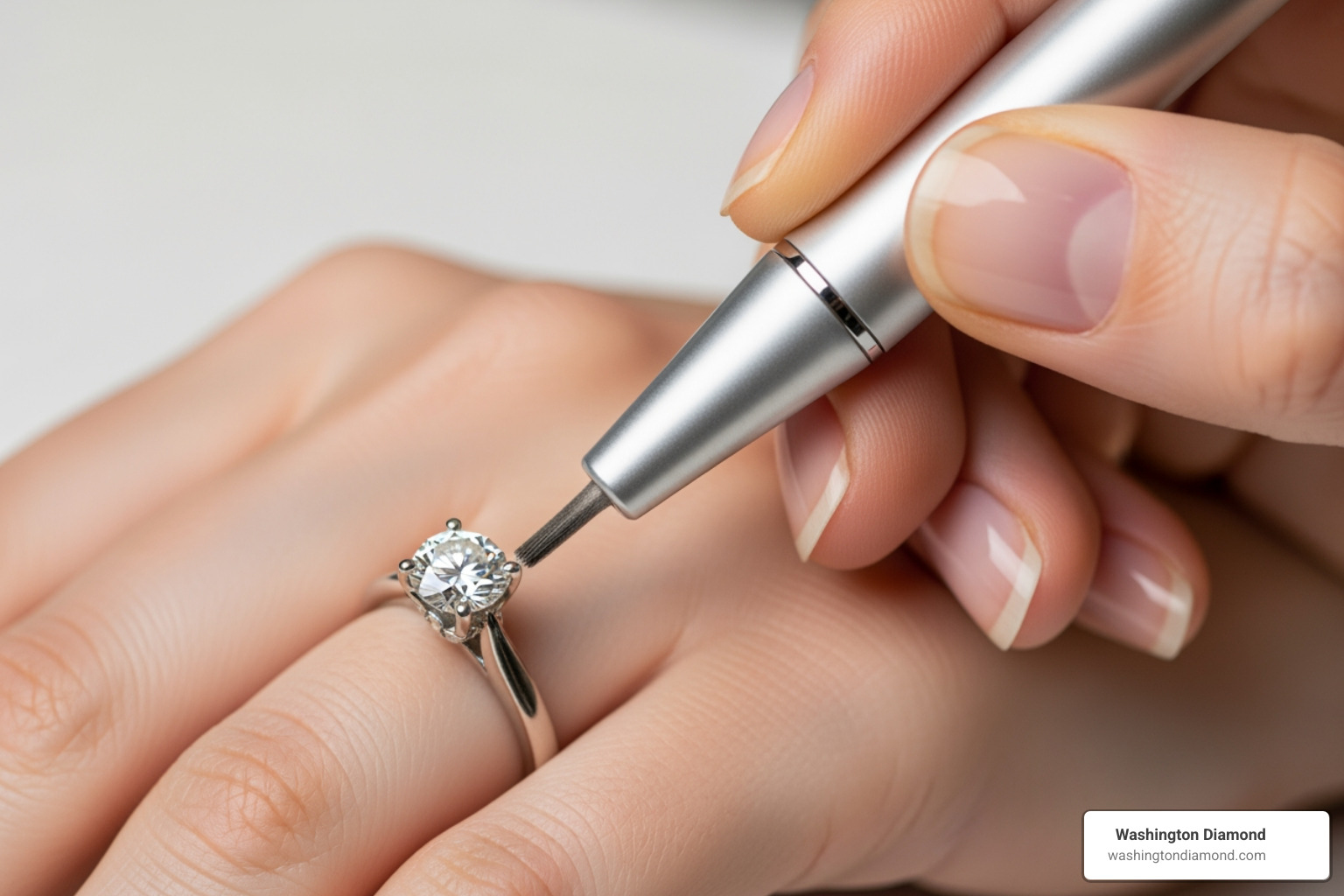
Brush-tipped pens are a standout in this category. They dispense a specialized cleaning solution that quickly removes surface-level dirt and oils, bringing back instant sparkle. Many users swear by them for keeping their engagement rings sparkling while on the road. They are compact, discreet, and incredibly easy to use. Just twist, brush, and admire the renewed brilliance!
Jewelry wipes offer similar grab-and-go convenience. These pre-moistened cloths are excellent for a fast polish and can remove light tarnish, making them ideal for a quick refresh of your diamond's setting or band. While they might not provide the deep clean of a soak or an ultrasonic, they are invaluable for maintaining a polished look throughout your day, no matter where your adventures take you.
The Science of Sparkle: Safe Ingredients and Practices
Understanding what makes your diamonds sparkle means understanding how light interacts with their facets. Any film or debris on the surface blocks this light, dulling their appearance. The right cleaning solution removes this film, allowing your diamond to shine. However, not all cleaning agents are created equal, and some can do more harm than good to your precious pieces.
Ingredients to Avoid
When choosing a best jewelry cleaner for diamonds, it's crucial to be aware of ingredients that can be detrimental to your jewelry, its setting, or any other gemstones it might contain:
- Harsh Chemicals: Bleach, chlorine, and acetone are definite no-gos. While a diamond itself is incredibly durable, these chemicals can corrode or discolor the metal settings (especially white gold's rhodium plating), or damage softer gemstones.
- Ammonia: This one is a bit nuanced. While some professional jewelers use ammonia-based solutions in controlled environments, it's generally best to avoid ammonia for at-home cleaning, particularly if your jewelry contains organic or porous gemstones. For natural, untreated diamonds in gold or platinum settings, a very mild, diluted ammonia solution might be acceptable, but err on the side of caution.
- Abrasives: Products like powdered cleaners, toothpaste, or harsh metal polishes should never be used on diamond jewelry. Toothpaste, for instance, contains abrasive particles that can scratch the metal of your setting and even dull the surface of your diamond over time, diminishing its brilliance.
Instead, look for cleaners that specify "gentle," "non-toxic," or "ammonia-free" on their labels, especially for regular use. For additional guidance, we often refer to Expert advice from the Natural Diamond Council which emphasizes careful cleaning practices to preserve your diamond's beauty.
What's Safe for Other Gems and Metals?
While diamonds can handle a lot, the other components of your jewelry might not be as resilient. It's essential to consider the properties of all materials in your piece.
-
Porous vs. Non-Porous Stones:
- Porous Gemstones: Opals, pearls, coral, and turquoise are particularly vulnerable. They can absorb chemicals, leading to discoloration, cracking, or loss of luster. These should never be exposed to harsh chemicals, ultrasonic cleaners, or even hot water. Gentle wiping with a damp, soft cloth is usually the safest approach.
- Hard, Non-Porous Stones: Beyond diamonds, other hard gemstones like sapphires, rubies, and garnets are generally quite robust and can withstand most standard jewelry cleaning solutions and methods, including mild soaks.
- For specific guidance on any gemstone, we recommend consulting GIA’s Gem Encyclopedia to understand its unique cleaning needs.
-
Metal Safety:
- Platinum: Known for its strength and durability, platinum is tarnish-resistant and can generally handle most cleaning solutions without issue.
- Gold: A softer metal, gold can scratch more easily. White gold is often rhodium-plated for its bright white finish; harsh chemicals can wear away this plating, requiring re-plating over time. Yellow and rose gold are generally more resilient to cleaners but should still be treated gently to avoid scratches.
- Silver: Sterling silver notoriously tarnishes. While some general jewelry cleaners might work, dedicated silver cleaners or polishing cloths are often the best jewelry cleaner for diamonds set in silver, helping to remove tarnish without damaging the diamonds. Some DIY methods like white vinegar and baking soda or even ketchup (for a very brief soak!) can remove tarnish from silver, but always rinse thoroughly and immediately.
The key takeaway is to always know what your jewelry is made of and choose your cleaning method accordingly. When in doubt, a simple, mild, non-toxic liquid soak is often the safest bet for mixed-material pieces.
The Classic DIY Method: Is Soap and Water Enough?
For many, the question isn't just about finding the best jewelry cleaner for diamonds to buy, but also what simple, at-home methods are safe and effective. The classic soap and water solution is a tried-and-true method that we often recommend for gentle, regular maintenance.
Here's our step-by-step guide for cleaning your diamond jewelry with soap and water:
- Prepare Your Solution: Fill a small bowl with warm (not hot) water. Add a few drops of mild dish soap – a gentle, unscented variety like Dawn is often recommended. Avoid antibacterial soaps or those with harsh detergents or moisturizers, as these can leave a film.
- Soak Your Jewelry: Place your diamond ring or other jewelry into the soapy water. Let it soak for about 20 to 40 minutes. This soaking time helps to loosen accumulated dirt, oils, and grime, making them easier to remove. For very dirty pieces, some experts suggest soaking for up to an hour.
- Gentle Scrubbing: After soaking, retrieve your jewelry from the bowl. Using a soft-bristled toothbrush (a baby toothbrush works wonderfully as it's extra soft), gently scrub the diamond and its setting. Pay extra attention to the back of the diamond, where oils and lotions tend to collect, and any intricate crevices in the setting.
- Rinse Thoroughly: Hold your jewelry under warm, running water to rinse away all soap residue and dislodged dirt. Crucial Tip: Always plug the sink drain or place a mesh strainer over it before rinsing! We've heard too many stories of precious pieces going down the drain.
- Dry and Polish: Gently pat your jewelry dry with a clean, lint-free or microfiber cloth. Avoid paper towels, which can scratch the metal and leave fibers behind. Once dry, you can use the same cloth to gently polish the metal, enhancing its shine.
Benefits of Professional Cleaners vs. DIY
While the soap and water method is excellent for regular at-home maintenance, it's important to understand its limitations compared to professional cleaning services:
- DIY Benefits: It's cost-effective, convenient for frequent use, and safe for most diamonds and their settings. It effectively removes daily grime and keeps your diamond looking bright.
- Professional Cleaner Benefits: A professional cleaning service, like those we offer here at Washington Diamond, uses specialized equipment (such as commercial-grade ultrasonic machines and steam cleaners) and solutions that can achieve a deeper, more thorough clean than possible at home. More importantly, when you bring your jewelry to us, we can inspect it for loose prongs, worn settings, or other damage that might not be visible to the untrained eye. This proactive maintenance can prevent costly repairs or even the loss of your precious diamond.
When to Use Each
We recommend incorporating both into your routine:
- Weekly/Monthly DIY: Use the gentle soap and water method weekly or monthly to keep your diamonds sparkling and prevent heavy buildup.
- Annual Professional Cleaning: Bring your diamond jewelry to us for a professional deep clean and inspection at least once a year, or twice a year for pieces worn daily like engagement rings. This ensures longevity and allows us to address any potential issues.
Frequently Asked Questions About Cleaning Diamond Jewelry
We understand that caring for your cherished diamond jewelry can bring up many questions. Here are some of the most common inquiries we receive about finding the best jewelry cleaner for diamonds and general diamond care.
How often should I clean my diamond jewelry?
The frequency of cleaning your diamond jewelry depends largely on how often you wear it and your lifestyle.
- Weekly Light Cleaning: For pieces worn daily, especially engagement rings, we recommend a light cleaning with a gentle liquid soak or the DIY soap and water method once a week. This helps to remove the everyday buildup from lotions, hand soaps, and natural skin oils before it becomes stubborn grime. As one expert suggests, "you should do on a weekly basis" to complete this essential task.
- Monthly Deep Cleaning: A more thorough at-home cleaning, perhaps involving a longer soak or careful brushing, can be done monthly for daily wear pieces.
- Professional Cleaning Schedule: We strongly advise bringing your diamond jewelry to us for a professional deep clean and inspection at least once a year. For engagement rings or other pieces worn continuously, a professional cleaning twice a year is ideal. This not only restores maximum sparkle but also allows our experts to check for any loose stones or damage to the setting. Some experts even suggest professional inspection three or four times a year for everyday diamond rings.
Factors like an active lifestyle, frequent use of hand creams, or exposure to harsh environments might necessitate more frequent cleaning. The goal is to prevent the dulling film from accumulating and hiding your diamond's natural brilliance.
What is the best jewelry cleaner for diamonds in delicate or antique settings?
Cleaning diamonds set in delicate or antique settings requires extra caution. These pieces often feature intricate designs, pave or halo settings with many small stones, or may have softer metals and more fragile prongs due to their age.
For these types of pieces, we generally recommend:
- Gentle Soaking Solutions: A mild, non-toxic liquid soak is usually the best jewelry cleaner for diamonds in delicate settings. Solutions that use plant-based ingredients are excellent choices. The gentle soaking action allows grime to loosen without putting stress on the setting.
- Soft-Bristled Brushing: After soaking, use an extra-soft bristled brush (like a baby toothbrush) to gently remove any remaining dirt. Be very careful around small stones or delicate filigree.
- Avoiding Ultrasonic Cleaners: While powerful, ultrasonic cleaners can be risky for delicate or antique settings. The vigorous vibrations can potentially loosen stones, especially if prongs are already worn or compromised. As one expert cautions, "the vigorous movement can cause stones to become loose and eventually fall out, especially in delicate or intricate settings."
- Professional Inspection is Key: For antique or vintage diamond rings, always consult a professional jeweler before attempting any cleaning. We can assess the integrity of the setting and recommend the safest approach. For example, some experts advise against polishing antique rings to preserve their original look, but confirm that even old mine-cut and European-cut stones can take a professional cleaning. Regular professional inspections are vital for these treasures to ensure the security of their stones and the preservation of their unique beauty.
Can the wrong cleaner damage my diamond or its setting?
Absolutely, using the wrong cleaner or improper cleaning techniques can indeed cause damage to your diamond jewelry, even though diamonds themselves are incredibly durable.
- Diamond Durability: While diamonds rate a perfect 10 on the Mohs scale of hardness and won't typically be scratched by cleaning solutions, their brilliance can be dulled by abrasive cleaners that leave micro-scratches on the surface. More importantly, if your diamond has a non-permanent treatment (like fracture filling), certain chemicals or heat from ultrasonic cleaners could affect it.
- Metal Damage: The metal of your setting is often more vulnerable than the diamond. Harsh chemicals like bleach, chlorine, or acetone can corrode gold, platinum, or silver, leading to discoloration, pitting, or weakening of the metal. White gold's rhodium plating is particularly susceptible to damage from harsh chemicals, which can cause it to wear away faster, revealing the yellowish gold beneath.
- Loosening Prongs: This is one of the most significant risks. Abrasive scrubbing, vigorous ultrasonic vibrations, or even accumulated dirt can weaken or loosen prongs over time. If a prong becomes loose, your diamond or other gemstones are at risk of falling out. As one expert notes, dirt and debris trapped under a diamond can cause the stone to fall out of its setting.
- Damage to Other Gemstones: As we discussed, porous gemstones (like opals and pearls) and those with inclusions are highly susceptible to damage from harsh chemicals, hot water, or ultrasonic vibrations.
This is why we emphasize the importance of using gentle, appropriate cleaning methods and products. Regular inspection, both at home and professionally, is crucial. If you notice any loose prongs, bends in the setting, or changes in the metal's appearance, bring your jewelry to us immediately. Proactive care ensures your diamond jewelry remains beautiful and secure for generations.
Conclusion: Keep Your Treasures Gleaming
Maintaining the breathtaking brilliance of your diamond jewelry doesn't have to be a daunting task. By understanding the different types of cleaners available—from the deep-cleaning power of ultrasonic machines to the gentle effectiveness of liquid soaks and the convenience of cleaning pens and wipes—you can confidently choose the best jewelry cleaner for diamonds to suit your needs.
The key to lasting sparkle lies in routine care. Gentle, regular at-home cleaning prevents the buildup of everyday grime, while avoiding harsh chemicals protects your precious metals and any accompanying gemstones. Most importantly, never underestimate the value of a professional cleaning and inspection. Our team at Washington Diamond is here to provide that expert care, ensuring your diamonds are not only dazzling but also secure for all of life's meaningful moments.
For a complete overview of maintaining your diamond's fire, explore our Diamond Cleaning & Care Guide. We're always here to help you keep your treasures gleaming.
Have a question about your jewelry?
We've been helping clients with diamonds, custom design, repairs, appraisals, and more since 1969. Book a private appointment at our Falls Church studio.
Book an AppointmentTrusted since 1969 · Falls Church, VA · 703-536-3600
From the blog
View all


