

Care Instructions for Stainless Steel Jewelry: A Lifetime of Shine
Why Stainless Steel Jewelry Care Matters for Your Special Pieces
Stainless steel jewelry care is surprisingly simple, requiring only basic cleaning to maintain its brilliant shine and durability. Here's what you need to know:
Quick Care Guide:
- Clean with mild soap and warm water using a soft cloth
- Store separately in soft pouches to prevent scratches
- Avoid harsh chemicals like bleach and chlorine
- Polish with a microfiber cloth to restore shine
- Frequency: Deep clean every 2-3 months; wipe down after wear
Proper care for your stainless steel pieces is essential, especially when they commemorate life's most meaningful moments. Stainless steel is an iron and chromium alloy prized for its durability and resistance to rust, making it perfect for everyday wear.
Why people choose stainless steel jewelry:
- Durability: Strong enough for daily activities.
- Hypoallergenic: Safe for sensitive skin.
- Affordability: A great alternative to precious metals.
- Low maintenance: Resists tarnish and corrosion.
- Modern aesthetic: A sleek, polished look.
While low-maintenance, it can dull from a buildup of skin oils and lotions. This is easily reversible with simple at-home cleaning. Following basic care practices will keep your jewelry beautiful for a lifetime.
Simple At-Home Cleaning Methods
Even the toughest stainless steel jewelry can lose its sparkle over time due to a buildup of lotions, skin oils, and dust. This film dulls the shine, but you can easily restore its brilliance at home.

We'll cover two methods: a gentle wash for regular maintenance and a deep-cleaning paste for stubborn grime, followed by polishing techniques.
The Gentle Soap and Water Method
For regular cleaning, warm water and mild dish soap are highly effective.
- Prepare: Mix a few drops of mild dish soap in a small bowl of warm water.
- Soak: Let your jewelry soak for 5 to 10 minutes to loosen buildup.
- Scrub: Use a soft-bristled toothbrush to gently clean the entire piece, paying attention to crevices and engravings.
- Rinse: Rinse the jewelry thoroughly under clean, warm running water to remove all soap residue, which can cause a cloudy film.
- Dry: Pat the piece completely dry with a lint-free microfiber cloth to prevent water spots.
The Deep-Cleaning Baking Soda Paste Method
For stubborn buildup, a baking soda paste can work wonders. It acts as a mild abrasive that is safe for pure stainless steel.
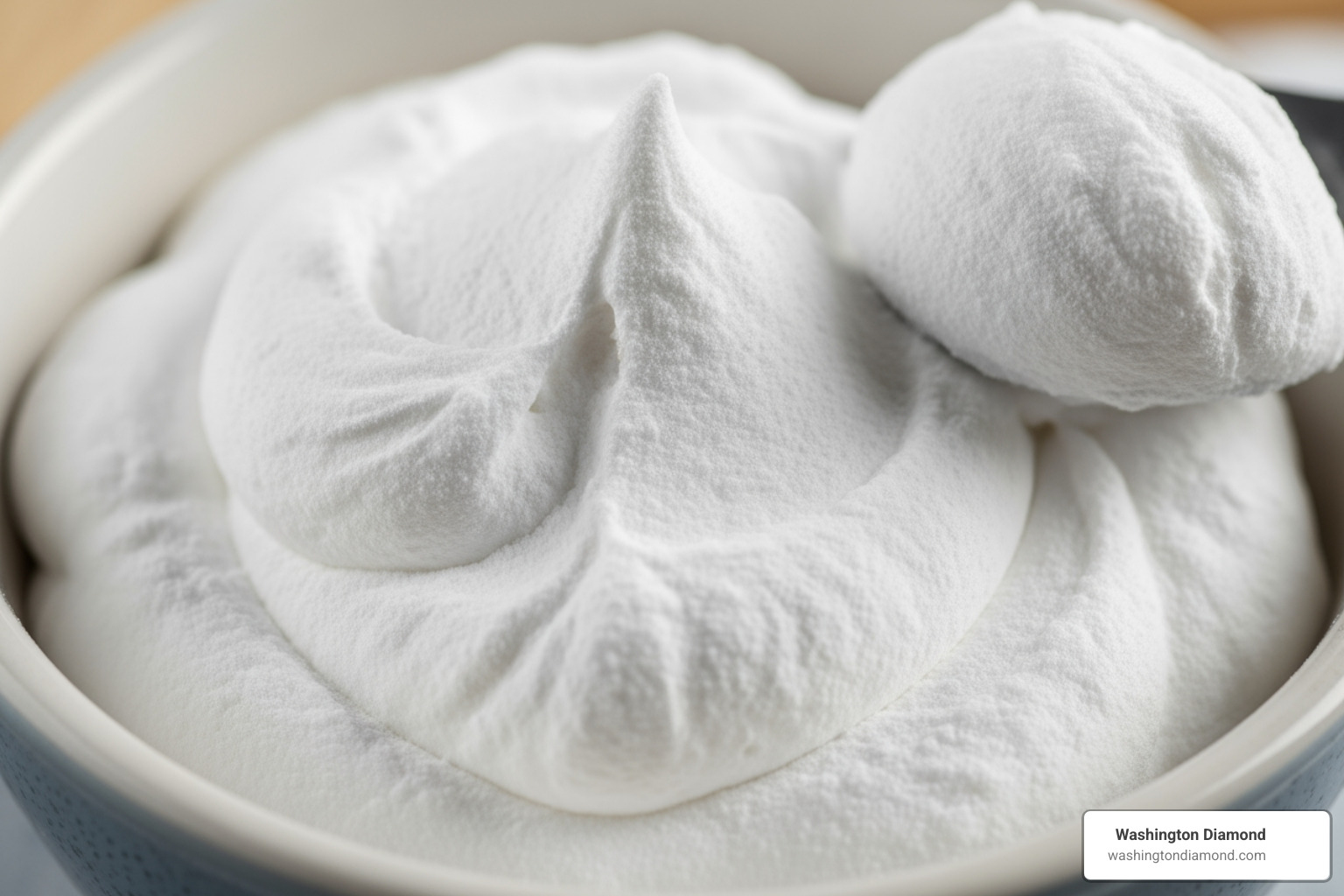
- Create Paste: Mix two parts baking soda with one part water to form a thick paste.
- Apply: Use a soft cloth or toothbrush to apply the paste. For brushed finishes, rub in the direction of the grain. For polished pieces, use small circular motions.
- Rinse: Rinse thoroughly under warm water to remove all paste residue.
- Dry: Pat the jewelry completely dry with a soft cloth.
Always test this method on a small, inconspicuous area first.
Restoring Luster: Polishing and Buffing
Polishing is what brings back the "wow" factor after cleaning. The dullness on stainless steel is just a surface layer of oils and dust that can be buffed away.
A clean microfiber cloth is the best tool for this. Once your jewelry is clean and dry, buff the surface using small circular motions (or in the direction of the grain for brushed finishes). You can also use a dedicated jewelry polishing cloth for an extra-dazzling finish. A quick buff between cleanings can also help maintain its brilliance.
Your Complete Guide to Stainless Steel Jewelry Care
A little preventative care goes a long way in keeping your stainless steel jewelry beautiful. Simple daily habits are more effective than infrequent deep cleanings and protect the pieces that mark your life's most meaningful moments.
For additional guidance, resources like How to Clean Stainless Steel Jewelry | Jewelers Mutual Group offer helpful insights.
Best Practices for Storing Your Jewelry
Improper storage is a common cause of scratches and tangles. The key is to keep pieces separate to prevent them from rubbing against each other.
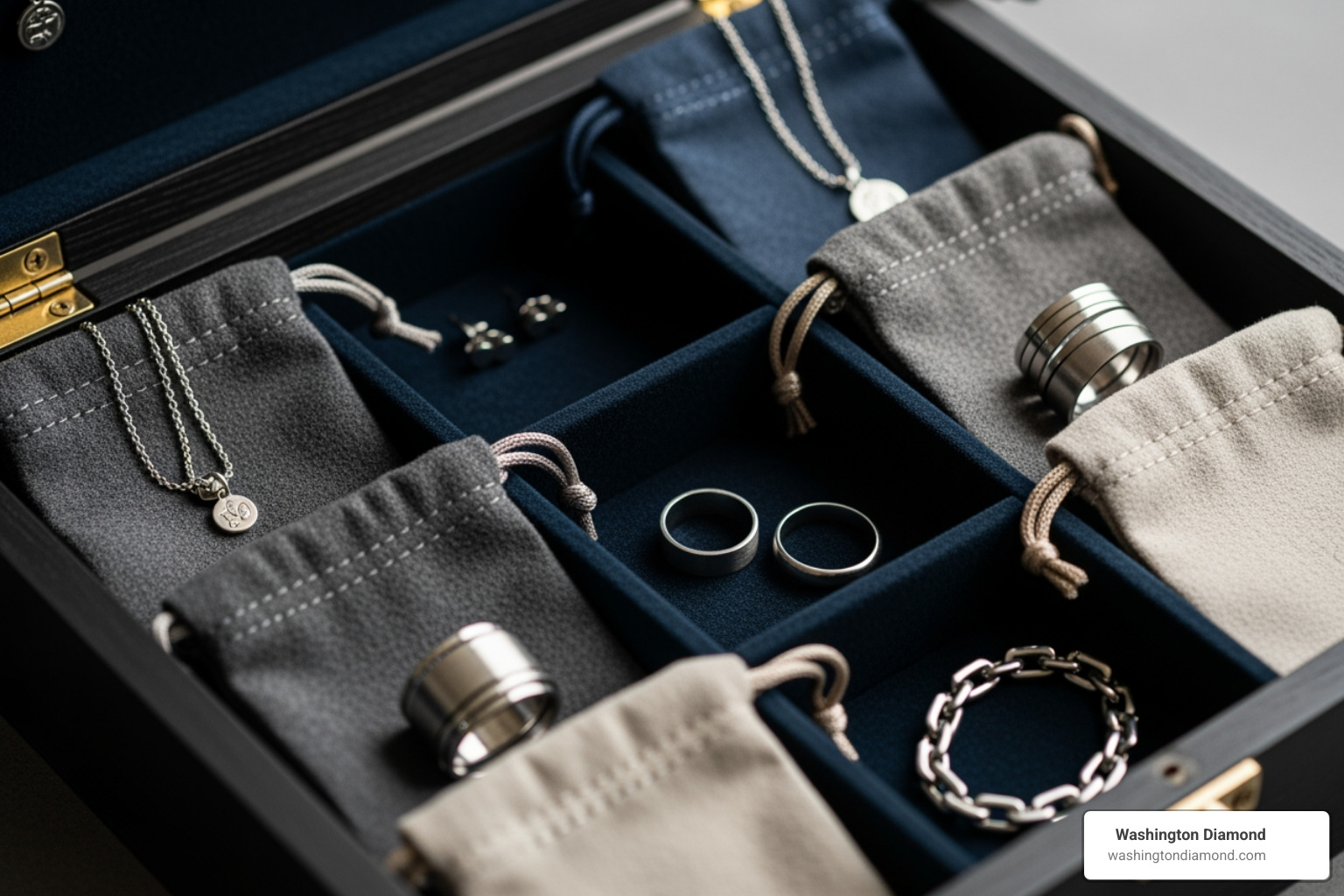
- Use Soft Pouches: Store each piece in its own soft cloth pouch.
- Use Lined Boxes: A jewelry box with individual, fabric-lined compartments is also an excellent choice.
- Choose a Dry Location: Store jewelry in a cool, dry place away from humidity, like a bedroom drawer instead of a bathroom counter.
How to Prevent Scratches and Damage
While stainless steel is durable, it's not indestructible. A few mindful habits can prevent damage.
- Follow the "Last On, First Off" Rule: Put jewelry on after applying lotions, perfumes, and hairspray. Take it off before your evening skincare routine.
- Remove for Manual Tasks: Take off rings and bracelets before gardening, cleaning, or washing dishes to avoid scratches and dents.
- Remove for Strenuous Activity: Remove jewelry before working out, playing sports, or sleeping to prevent snags, pulls, and impact damage.
What to Avoid: Chemicals and Abrasives
Stainless steel is resistant, but certain substances can still cause damage.
- Harsh Chemicals: Avoid prolonged contact with bleach and chlorine (from pools or cleaners). If exposed, rinse the jewelry with clean water afterward.
- Beauty Products: Hairspray and perfume contain alcohol and other chemicals that leave a dull, sticky residue. The "last on, first off" rule helps prevent this.
- Abrasive Materials: Never use steel wool, scouring pads, or even paper towels for cleaning, as they will scratch the metal. Always use a soft, lint-free microfiber cloth.
Special Considerations for Your Pieces
While general care guidelines work for most stainless steel, pieces with gemstones, engravings, or mixed materials require a gentler approach. Knowing when to clean at home and when to seek professional help is key to preserving your jewelry's value and beauty.
Advanced Stainless Steel Jewelry Care: Gemstones and Intricate Designs
When cleaning jewelry with delicate elements, adjust your method to protect them.
- Cleaning Around Settings: Avoid submerging pieces with gemstones, as soaking can weaken adhesives. Instead, use a soft toothbrush dipped in a mild soapy solution to gently clean the metal, avoiding the stones.
- Soft & Porous Gemstones: Stones like pearls, opals, and turquoise are vulnerable to scratches and can be damaged by liquids. Never soak them. Clean the metal parts carefully with a damp microfiber cloth, avoiding the stones. For more on this, see our guide on The Art of Gemstone Jewelry Care.
- Ultrasonic Cleaners: These devices can be great for intricate metalwork but can dislodge or damage gemstones. Research your specific gemstone's compatibility before using one, or opt for professional cleaning.
When to Seek Professional Cleaning or Repair
While home care is effective for routine maintenance, some situations require an expert. Our team in Northern Virginia is equipped to handle issues that go beyond simple cleaning.
Here's a quick guide on when to DIY versus when to see a professional:
| Issue | DIY Approach | Professional Care |
|---|---|---|
| Light surface dirt | Gentle soap and water cleaning | Not necessary |
| Dullness from buildup | Baking soda paste and buffing | Not necessary |
| Deep grime in intricate designs | Soft toothbrush cleaning | Consider professional for best results |
| Deep scratches you can feel | Not recommended | Professional polishing required |
| Loose stones or clasps | Do not attempt | Immediate professional repair needed |
| Damage to settings | Do not attempt | Professional assessment and repair |
For pieces with significant damage, loose clasps, or deep scratches, professional repair is essential. For more on diamond care, see our Diamond Cleaning & Care Guide.
Bringing your jewelry to a professional is a smart way to protect your investment.
Why Stainless Steel Jewelry Care Matters for Your Special Pieces
Stainless steel jewelry care is simple: keep pieces clean, dry, and away from harsh chemicals. Stainless steel is an iron and chromium alloy whose protective chromium layer resists rust and tarnish, making it ideal for everyday wear.
Choose stainless steel for durability, hypoallergenic comfort, affordability, low maintenance, and a modern, polished look. A brief wipe after wear and an occasional deep clean will keep your jewelry shining for years.
Simple At-Home Cleaning Methods
Everyday lotions and skin oils can leave a thin film. These quick routines restore shine using common items.
The Gentle Soap and Water Method
- Mix a few drops of mild dish soap in warm water.
- Soak 5–10 minutes, then brush gently with a soft toothbrush.
- Rinse thoroughly under warm running water; dry with a lint-free microfiber cloth.
The Deep-Cleaning Baking Soda Paste Method
- Mix 2 parts baking soda with 1 part water to a paste; test first on an inconspicuous spot.
- Apply with a soft cloth or toothbrush; follow the grain on brushed finishes or use light circles on polished pieces.
- Rinse well and dry completely.
Restoring Luster: Polishing and Buffing
Buff clean, dry jewelry with a microfiber cloth (small circles or with the grain). A jewelry polishing cloth can add extra sparkle.
Your Complete Guide to Stainless Steel Jewelry Care
Small daily habits protect your pieces and minimize the need for deep cleaning. For more detailed guidance, see: How to Clean Stainless Steel Jewelry | Jewelers Mutual Group.
Best Practices for Storing Your Jewelry
- Store pieces separately in soft pouches or fabric-lined compartments.
- Use original packaging when possible.
- Keep jewelry in a cool, dry place away from humidity.
How to Prevent Scratches and Damage
- Last on, first off: avoid contact with lotions, perfumes, and makeup.
- Remove jewelry for manual tasks, workouts, and sleep.
- Avoid impacts and snag-prone situations.
What to Avoid: Chemicals and Abrasives
- Keep away from bleach, chlorine, and industrial-strength cleaners; rinse if exposed.
- Hairspray and perfume leave residues that dull shine.
- Do not use steel wool, scouring pads, abrasive powders, or paper towels; use microfiber instead.
Special Considerations for Your Pieces
While general stainless steel jewelry care works for most items, pieces with gemstones or intricate details need extra care.
Advanced Stainless Steel Jewelry Care: Gemstones and Intricate Designs
- Avoid soaking gemstone pieces; moisture can weaken adhesives and harm porous stones.
- Spot-clean metal with a soft toothbrush dipped in mild soapy water, keeping stones as dry as possible.
- Pearls, opals, and turquoise are soft and porous; wipe metal only with a barely damp microfiber cloth. See: The Art of Gemstone Jewelry Care.
- Use ultrasonic cleaners with caution; they can loosen or damage gemstones.
When to Seek Professional Cleaning or Repair
- Deep scratches or finish restoration needed.
- Loose stones, clasps, or damaged settings.
- Stubborn grime in intricate designs that resists home cleaning.
- Significant damage, bent components, or missing parts.
For added guidance on diamond pieces, visit our Diamond Cleaning & Care Guide.
Why Stainless Steel Jewelry Care Matters for Your Special Pieces
Stainless steel jewelry care is easy and keeps meaningful pieces looking their best. Stainless steel is an iron and chromium alloy; at least 10.5% chromium creates a protective layer that resists rust and tarnish. Its durability, hypoallergenic comfort, affordability, and low maintenance make it perfect for everyday wear. Wipe down after wear and deep clean every few months to remove buildup from skin oils or lotions.
Simple At-Home Cleaning Methods
Clean routinely with soap and water; use a baking soda paste only for stubborn buildup; then buff.
The Gentle Soap and Water Method
Soak in warm, mildly soapy water for 5–10 minutes, brush gently, rinse thoroughly, and dry with microfiber.
The Deep-Cleaning Baking Soda Paste Method
Mix 2:1 baking soda to water, test first, apply gently (with the grain on brushed pieces), rinse well, dry.
Restoring Luster: Polishing and Buffing
Buff clean, dry pieces with a microfiber cloth; a jewelry polishing cloth can improve shine.
Your Complete Guide to Stainless Steel Jewelry Care
Daily mindfulness prevents most issues. See: How to Clean Stainless Steel Jewelry | Jewelers Mutual Group.
Best Practices for Storing Your Jewelry
- Separate pieces in soft pouches or lined compartments.
- Use original packaging when convenient.
- Store in a cool, dry place away from humidity and sunlight.
How to Prevent Scratches and Damage
- Last on, first off with cosmetics.
- Remove for chores, sports, and sleep.
- Avoid hard impacts and snags.
What to Avoid: Chemicals and Abrasives
- Keep away from bleach, chlorine, and harsh cleaners; rinse if exposed.
- Limit hairspray and perfume contact.
- Use microfiber, not abrasive pads or paper towels.
Special Considerations for Your Pieces
Delicate gemstones and intricate designs need gentler care.
Advanced Stainless Steel Jewelry Care: Gemstones and Intricate Designs
- Do not soak gemstone jewelry; spot-clean metal with mild soapy water and a soft brush.
- Keep moisture and chemicals away from pearls, opals, and turquoise. Learn more: The Art of Gemstone Jewelry Care.
- Ultrasonic cleaners can loosen stones; use only when compatible or seek professional help.
When to Seek Professional Cleaning or Repair
- Deep scratches, loose stones or clasps, damaged settings, or persistent grime in fine details.
For diamonds and fine pieces, see our Diamond Cleaning & Care Guide. Our Northern Virginia team is here when you need expert attention.
Simple At-Home Cleaning Methods
Keep it simple: soap-and-water cleaning handles routine buildup; a gentle baking soda paste can address stubborn spots on pure stainless steel; finish by buffing with a microfiber cloth.
Your Complete Guide to Stainless Steel Jewelry Care
Preventative care is easier than repair. Reference: How to Clean Stainless Steel Jewelry | Jewelers Mutual Group.
Best Practices for Storing Your Jewelry
- Store items separately in soft pouches or lined compartments.
- Avoid humid locations like bathrooms.
How to Prevent Scratches and Damage
- Last on, first off with cosmetics.
- Remove for manual tasks, workouts, and sleep.
What to Avoid: Chemicals and Abrasives
- Steer clear of bleach, chlorine, and industrial cleaners; rinse after exposure.
- Avoid abrasive tools and paper towels; use microfiber.
Special Considerations for Your Pieces
Not all stainless steel jewelry should be cleaned the same way.
Advanced Stainless Steel Jewelry Care: Gemstones and Intricate Designs
- Skip soaking gemstone pieces; spot-clean metal only.
- Keep pearls, opals, and turquoise away from liquids and abrasives. See: The Art of Gemstone Jewelry Care.
- Ultrasonic cleaners may loosen stones; when in doubt, go professional.
When to Seek Professional Cleaning or Repair
- Deep scratches, structural damage, loose components, or lost stones require expert service.
For diamonds and heirlooms, review our Diamond Cleaning & Care Guide.
Simple At-Home Cleaning Methods
For routine care, use mild soap and warm water, rinse thoroughly, and dry with microfiber. For stubborn buildup on pure stainless steel, try a 2:1 baking soda paste, applied gently and followed by a full rinse and dry. Finish by buffing to restore luster.
Your Complete Guide to Stainless Steel Jewelry Care
Proactive care keeps your pieces shining.
Best Practices for Storing Your Jewelry
- Separate storage prevents friction and tangles.
- Choose soft pouches or fabric-lined compartments in a cool, dry place.
How to Prevent Scratches and Damage
- Last on, first off with skincare and cosmetics.
- Remove for chores, athletics, and sleep.
What to Avoid: Chemicals and Abrasives
- Avoid bleach, chlorine, and harsh cleaners; rinse if exposed.
- Do not use steel wool, scouring pads, abrasive powders, or paper towels; microfiber only.
For deeper guidance, see: How to Clean Stainless Steel Jewelry | Jewelers Mutual Group.
Special Considerations for Your Pieces
General stainless steel jewelry care works for most items, but gemstone and intricate designs need extra caution.
Advanced Stainless Steel Jewelry Care: Gemstones and Intricate Designs
- Avoid soaking gemstone jewelry; gently clean only the metal with a soft brush and mild soapy water.
- Keep pearls, opals, and turquoise dry and away from chemicals. More tips: The Art of Gemstone Jewelry Care.
- Ultrasonic cleaners can dislodge stones; use only if confirmed safe or seek professional help.
When to Seek Professional Cleaning or Repair
- Deep or numerous scratches, loose stones or clasps, bent or broken components, or stubborn grime in fine details.
For diamond-specific advice, visit our Diamond Cleaning & Care Guide.
Have a question about your jewelry?
We've been helping clients with diamonds, custom design, repairs, appraisals, and more since 1969. Book a private appointment at our Falls Church studio.
Book an AppointmentTrusted since 1969 · Falls Church, VA · 703-536-3600
From the blog
View all


