

How to Wear a 10 Carat Ring Without Looking Ridiculous
How to Wear a 10 Carat Ring with Confidence

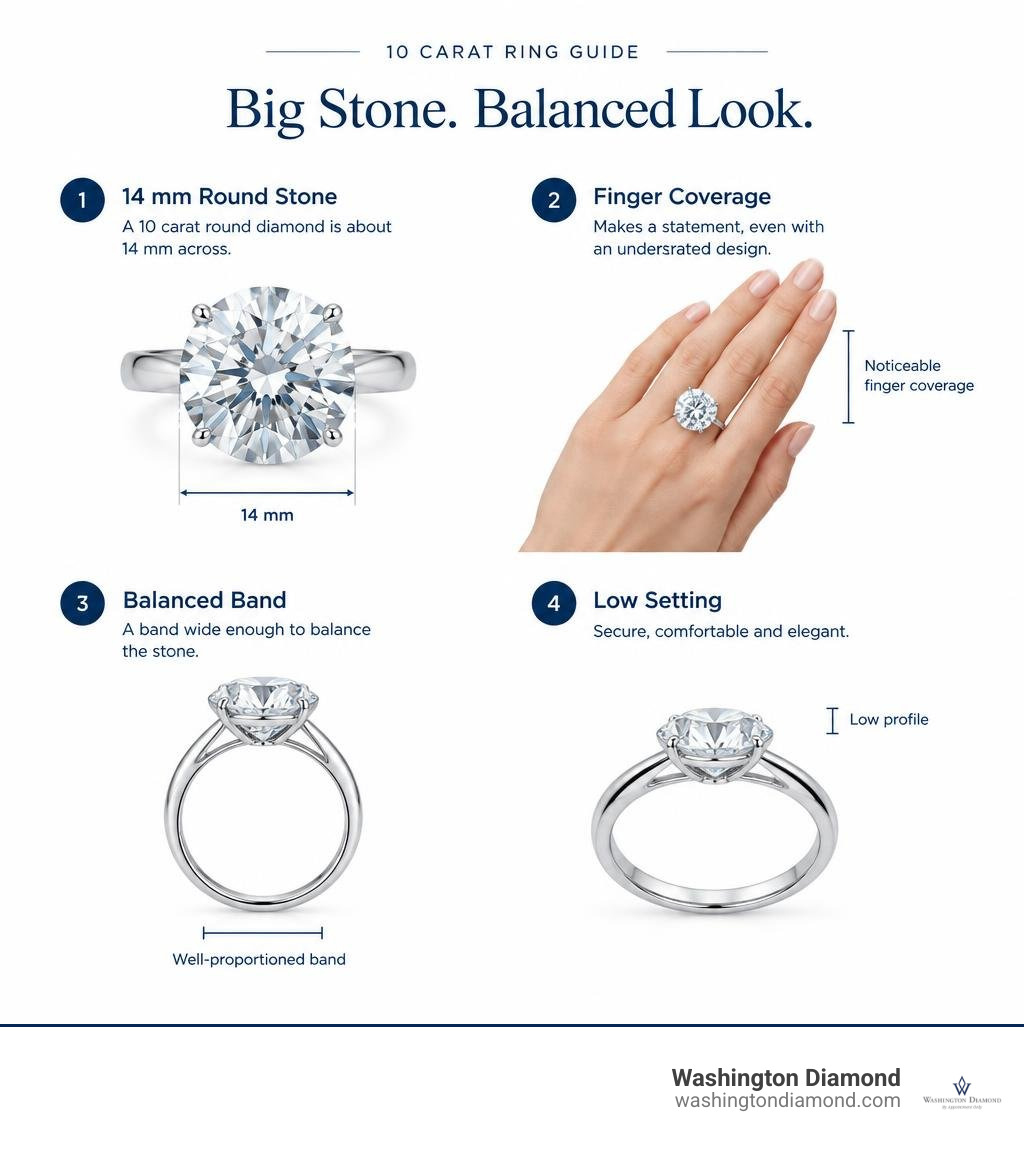
A 10 carat ring has a center stone that weighs 10 carats. To wear one without letting it overwhelm your look, choose a secure, low-profile setting and a band wide enough to balance the stone. Keep other jewelry simple. A round 10-carat diamond is about 14 mm across, so the ring will make a statement even with an understated design. Carat measures a stone's weight; karat measures gold purity.
I'm Tom Daube, and my experience in jewelry design and diamond recutting has shown me how much proportion matters in a 10 carat ring. Let's look at how stone shape, setting, and fit can make a large ring feel elegant and comfortable.
Discover more about 10 carat ring:
Understanding the Scale: What a 10 Carat Stone Really Looks Like
When most people envision a large gem, they picture something out of a period film or a royal treasury. In reality, a 10-carat stone is an exceptional piece of geological history. Representing less than 0.1% of diamond ring sales across the globe, it is a magnificent scale of luxury that demands thoughtful handling.
The first point to clarify is terminology: carat refers to mass, not pure physical dimensions. One carat equals exactly 200 milligrams (0.2 grams), which means a 10-carat gem weighs exactly 2 grams. Do not confuse this with "karat," which denotes gold purity (such as 14k or 18k).
A classic round cut diamond weighing 10 carats measures roughly 14.0 mm in diameter. Compare that to an average 1.0-carat round brilliant, which measures approximately 6.5 mm across. The surface area coverage increases drastically, spreading across a substantial portion of the average finger.
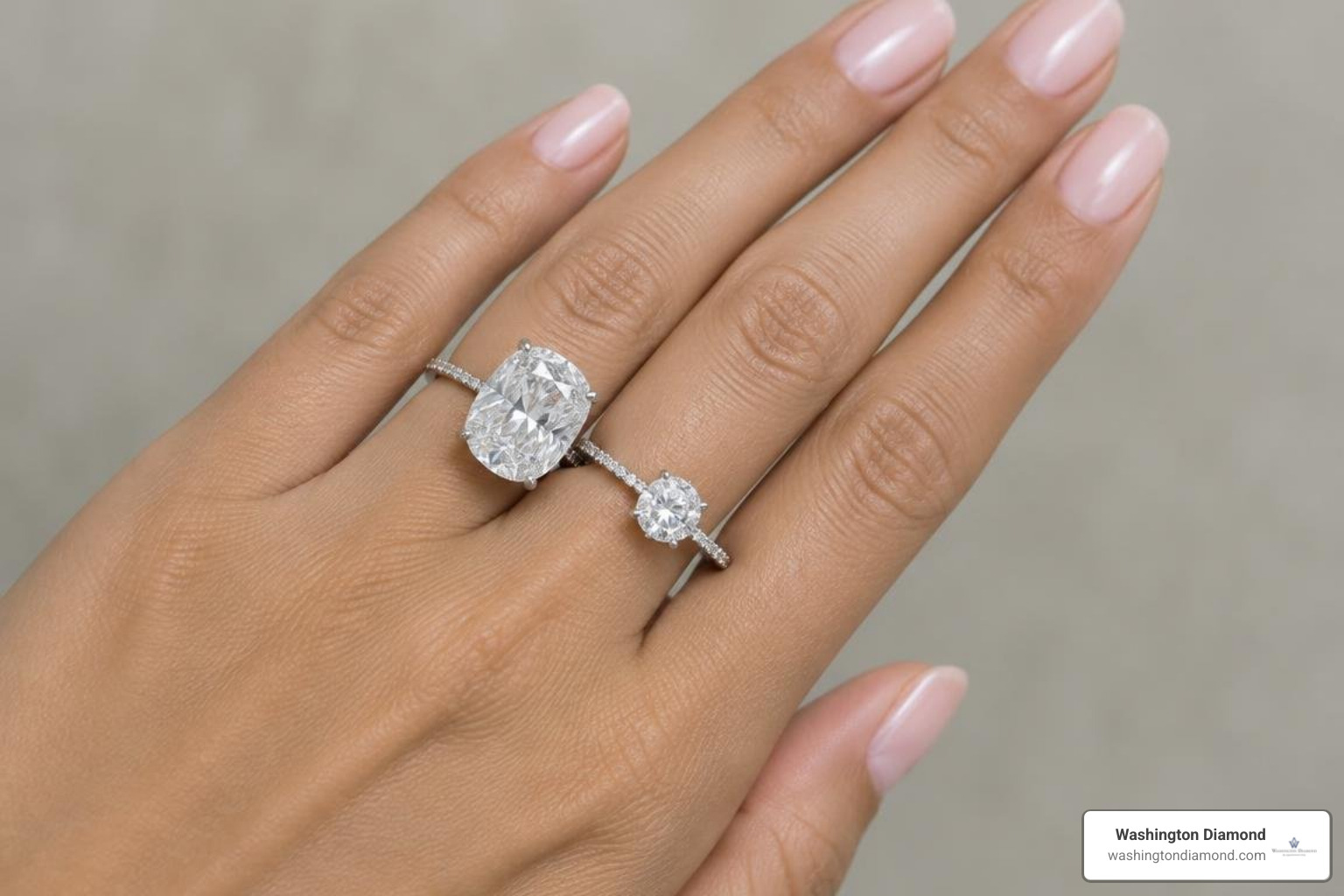
Because different gems possess varying chemical structures and specific gravities (densities), a 10-carat diamond will not share the exact same footprint as a 10-carat sapphire or emerald.
| Gemstone Type | Specific Gravity (Density) | Typical Face-Up Dimensions (10 Carat Round / Cushion) | Visual Volume Comparison to Diamond |
|---|---|---|---|
| Diamond | 3.52 | ~14.0 mm (Round) | Baseline reference |
| Sapphire | 4.00 | ~12.5 – 13.0 mm (Cushion/Round) | ~12% smaller footprint (heavier gem) |
| Ruby | 4.00 | ~12.5 – 13.0 mm (Cushion/Oval) | ~12% smaller footprint (heavier gem) |
| Emerald | 2.76 | ~15.0 – 15.5 mm (Emerald Cut) | ~15% larger footprint (lighter gem) |
Choosing the Right Cut for Your 10 Carat Ring
Selecting the ideal shape determines whether a large stone looks refined or visually jarring.
- Emerald Cut: Renowned for understated sophistication, the emerald cut's step-cut facets create a clean "hall of mirrors" effect rather than an overwhelming shimmer. Its elongated geometry lengthens the hand gracefully.
- Oval Cut: An elongated oval offers expansive surface coverage while softening angular lines, blending brilliant sparkle with sleek finger coverage.
- Cushion Cut: With soft, pillow-like corners, a cushion cut delivers romantic fire. Antique-style cushion cuts provide classic warmth that feels organic rather than showy.
- Pear & Marquise Shapes: These tapered shapes visually stretch the fingers, though they require careful balancing so the tips do not catch on fine fabrics.
Diamond vs Gemstone: Size and Cost Differences
Opting for an alternative precious stone alters both aesthetic impact and pricing. While a natural 10-carat diamond of notable quality can easily command six figures, exceptional colored stones provide an alluring avenue for personal expression.
Exploring gemstone education reveals how stones like unheated Ceylon sapphires or Colombian emeralds possess deep chromatic character. A rich, velvety blue sapphire of this magnitude exudes regal heritage rather than modern flashiness, offering dramatic visual interest with an air of classic discretion.
Designing and Balancing a 10 Carat Ring for Everyday Elegance
The difference between a piece that looks chic and one that appears costume-like lies entirely in the engineering. At our appointment-only private studio in Northern Virginia, we focus on structural balance to keep substantial gems sitting comfortably against the finger without twisting or protruding unnecessarily.

Achieving daily wearability starts with a customized low-profile mounting. Setting the culet (the bottom point of the diamond) as close to the ring band as possible prevents the stone from snagging and reduces top-heaviness. Investing in custom jewelry design ensures that the ring’s undercarriage, gallery wire, and shank width are built in exact proportion to the stone's weight and the wearer's hand anatomy.
Setting Styles That Prevent Over-the-Top Gaudiness
When styling a gem of this size, less is almost always more:
- Classic Solitaires: A minimalist band without micropavé keeps all focus on the beauty of the center stone, avoiding sensory overload.
- Tapered Baguettes: Flanking the center gem with two geometric side baguettes directs the eye inward, grounding the stone and blending it smoothly into the band.
- Split Shanks: Splitting the band as it reaches the center stone broadens the structural base, distributing weight evenly and keeping the gem centered on the finger.
- Delicate Bezels or Low-Set Prongs: A fine, hand-shaped bezel or a secure six-prong basket provides a tailored finish while protecting vulnerable girdle edges.
Reviewing engagement ring settings education can help you decide which mounting architecture best suits your routine and lifestyle.
Pairing with the Right Precious Metals
A substantial stone requires a strong foundation. Platinum is the gold standard for high-carat jewelry due to its density, natural hypoallergenic properties, and resistance to wear. It holds heavy prongs firmly in place without losing metal over time.
For warmth, 18k yellow gold or rose gold delivers a gorgeous contrast against high-color diamonds. Many collectors choose a hybrid setting: a rich gold band paired with platinum prongs to keep the diamond's color clear and pristine. Selecting mountings from curated precious metal jewelry collections guarantees enduring strength for lifetime wear.
Evaluating Quality, Pricing, and Rarity in Large Stones
Only about 1 in 1 million diamonds mined worldwide yields a polished 10-carat stone. Because of this geological rarity, pricing does not climb in a linear path—it jumps exponentially.
Using tools like a diamond price calculator illustrates how small variations in clarity or color can cause price swings of tens or even hundreds of thousands of dollars. An average natural 10-carat diamond ring typically ranges from $50,000 for commercial grades to well over $500,000 for top-tier specimens.
| Metric | Ideal Sweet Spot for Elegance & Value | High-End Investment Tier | Risk Zone for Large Gems |
|---|---|---|---|
| Color | G to H (Faces up bright white in platinum/gold) | D to F (Completely colorless) | J or lower (Body color shows clearly in large facets) |
| Clarity | VS1 to VS2 (100% eye-clean, no structural flaws) | VVS1 to Flawless (Museum purity) | SI1 or lower (Inclusions become easily visible to the naked eye) |
| Cut Quality | Triple Excellent (Maximizes light return) | Triple Excellent / Ideal | Good / Fair (Dull light return, creates a bulky look) |
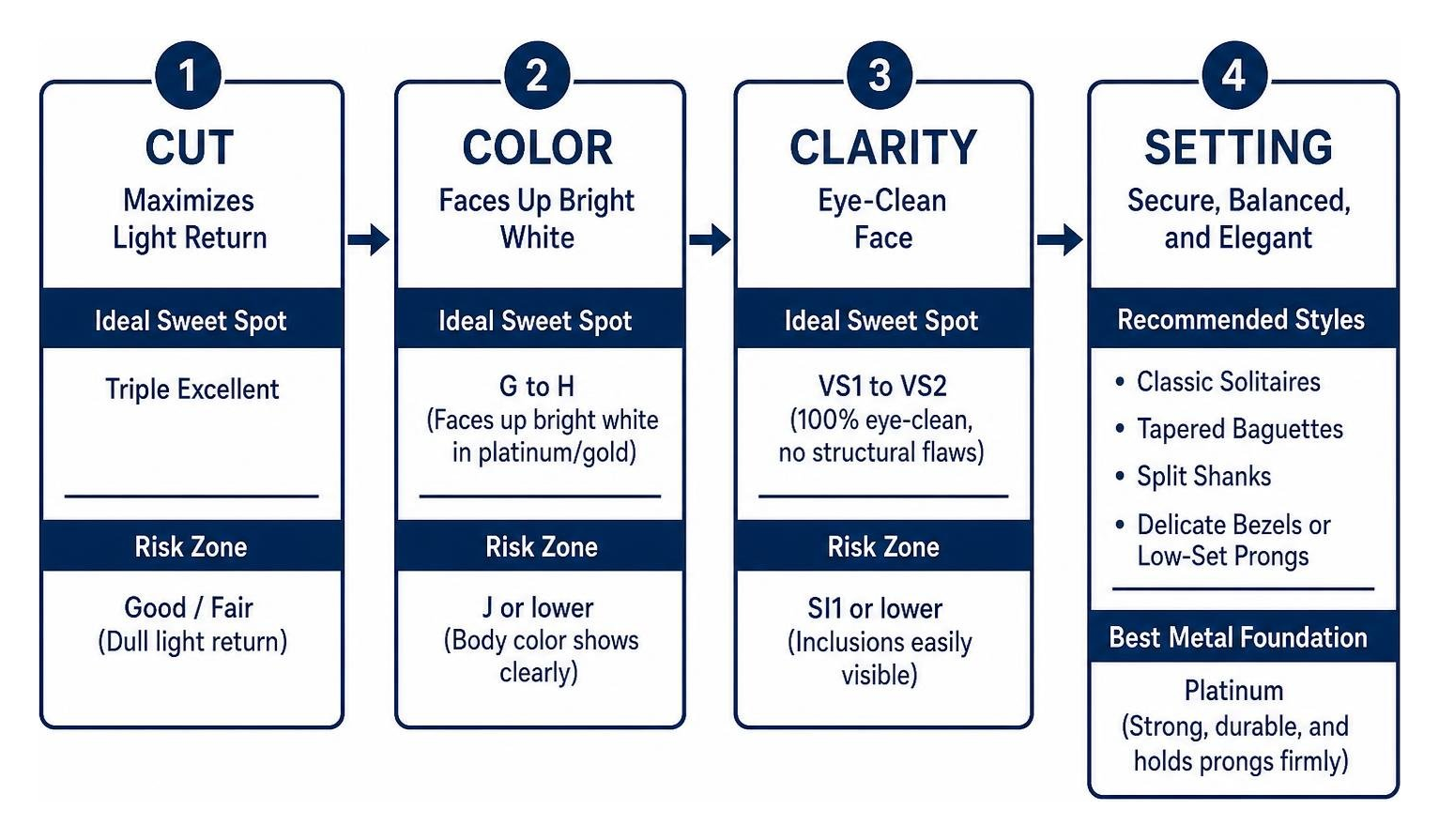
Essential 4Cs Criteria for a 10 Carat Ring
Because larger facet windows expose the stone's interior, flaws that would remain invisible in a 1-carat diamond become noticeable at 10 carats.
- Clarity Considerations: Avoid inclusions near the center table. A clean VS2 grade represents an exceptional balance of beauty and value, while step cuts (like emerald cuts) may demand VS1 or VVS2 clarity to guarantee an eye-clean face.
- Color Gradients: Larger gems concentrate body color. A G-color or H-color diamond will face up bright white when cut to precise proportions, offering elegance without the steep price tag of a D-color gem.
- Cut Execution: Never compromise on cut. An expertly cut diamond directs light back through the table, creating dazzling brightness rather than lifeless weight.
Certification, Sourcing, and Investment Value
When acquiring large stones, independent certification from trusted laboratories like the Gemological Institute of America (GIA) is non-negotiable. A laboratory grading dossier confirms the stone's natural origin, precise measurements, and grading authenticity. Furthermore, strict adherence to the Kimberley Process guarantees ethical, conflict-free sourcing. From an investment perspective, large natural diamonds have historically held appeal due to their rarity, though liquidity depends on cut desirability and condition.
Styling and Etiquette: How to Wear Statement Jewelry Gracefully
The secret to wearing prominent engagement rings without drawing unwelcome attention is effortless styling.
- Embrace Sartorial Restraint: Pair your ring with clean tailoring, crisp white button-downs, cashmere sweaters, or monochromatic evening silhouettes. Let the ring act as your single focal accessory.
- Avoid Over-Accessorizing: Skip chunky tennis bracelets or multi-layered necklaces on the same hand. A pair of understated stud earrings or a sleek watch provides plenty of balance.
- Wear It with Casual Confidence: A magnificent ring looks most modern when paired naturally with relaxed denim and quality loafers, rather than saved strictly for formal galas.
Frequently Asked Questions About 10 Carat Rings
Is a 10 carat diamond ring too heavy for daily wear?
A 10-carat diamond weighs only 2 grams, so the physical mass itself is not heavy. However, because of its elevated profile, it can spin on narrower fingers. To prevent spinning, we often incorporate internal sizing beads or a euro-shank (a slightly squared base) into the band to lock the ring in a comfortable, upright position.
How much does an average 10 carat ring cost in 2026?
In 2026, natural diamond rings of this carat weight generally start around $50,000 for lower color/clarity combinations and easily exceed $500,000 to $1,000,000+ for exceptional D–F color, Flawless–VVS diamonds. Gemstone alternatives, such as sapphires or emeralds, range anywhere from $20,000 to over $150,000 depending on color richness and origin.
How do I properly insure and protect a 10 carat ring?
You should pair your primary GIA grading report with a certified retail replacement appraisal. Add the ring as a scheduled personal property rider to your homeowners policy or use a specialized luxury jewelry insurer. Ensure regular prong checks every six months to keep the center stone completely secure.
Conclusion
Carrying a statement piece with understated grace comes down to proportion, craftsmanship, and balance. By choosing an intentional shape, a secure low-profile setting, and styling it with relaxed confidence, a significant gem becomes a seamless reflection of your personal taste. At Washington Diamond, our private studio offers personalized, undivided attention to help you create timeless, comfortable heirlooms tailored perfectly to you.
Have a question about your jewelry?
We've been helping clients with diamonds, custom design, repairs, appraisals, and more since 1969. Book a private appointment at our Falls Church studio.
Book an AppointmentTrusted since 1969 · Falls Church, VA · 703-536-3600
From the blog
View all


