

How to Clean Gold Jewelry with Vinegar (And Why You Probably Shouldn't)
The Truth About How to Clean Gold Jewelry with Vinegar

If you're looking for how to clean gold jewelry with vinegar, here's the quick answer:
You can use diluted white vinegar on solid gold (10K–18K) — but it comes with real risks, and safer options exist.
| Quick Facts | Details |
|---|---|
| Safe for solid gold? | Yes, with caution — short soak only |
| Safe for gold-plated or gold-filled? | No — acid strips the thin gold layer |
| Safe for pearls, opals, emeralds? | No — acid permanently damages them |
| Best vinegar to use | White distilled vinegar, diluted 1:1 with water |
| Max soak time | 10–20 minutes |
| Safer alternative | Mild dish soap + warm water |
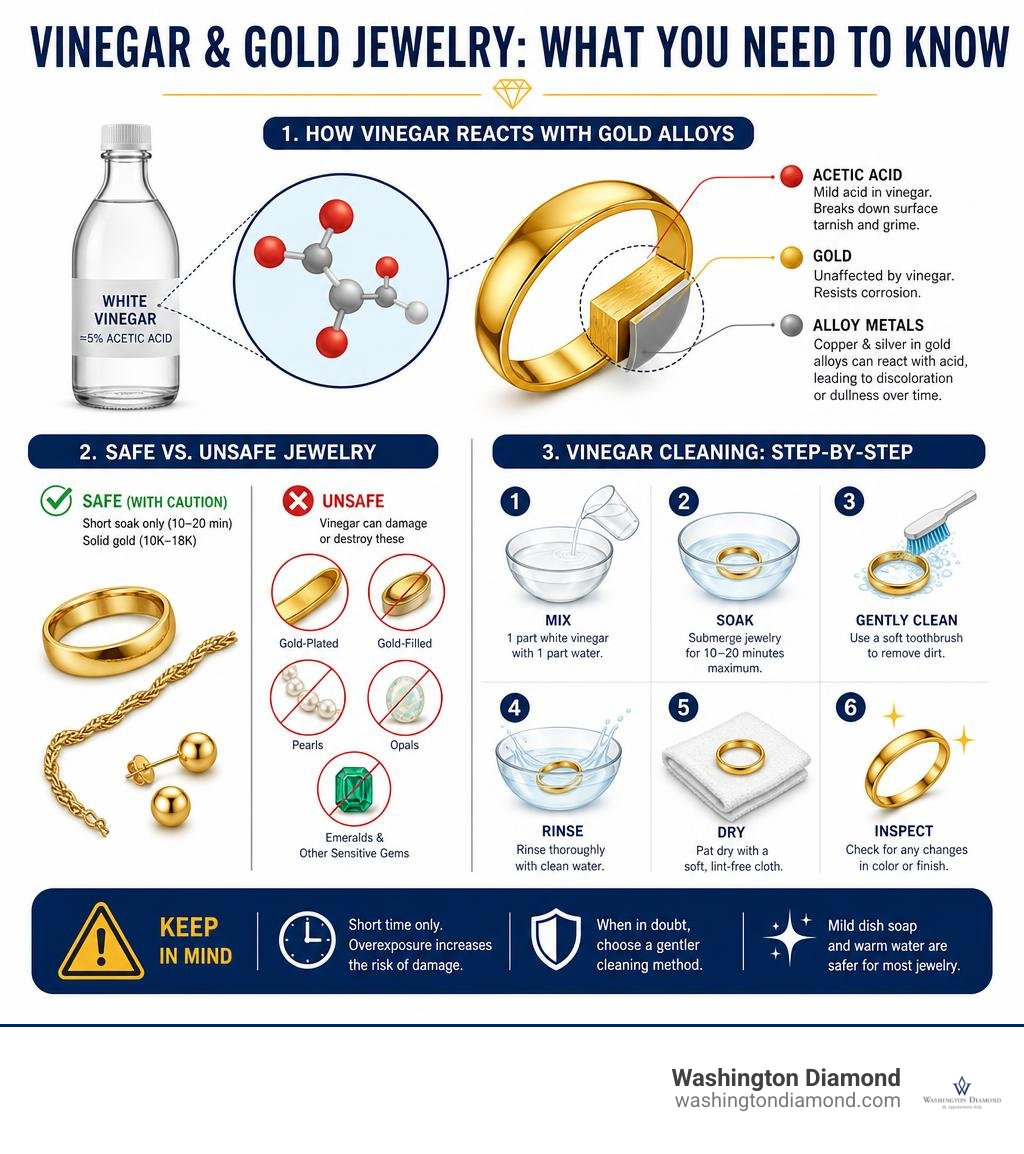
Vinegar is a mild acid — about 5% acetic acid — and that's exactly why it can remove tarnish and grime from gold. But that same acidity is also why it can damage the copper and silver alloys mixed into most gold jewelry, dull a polished finish, or destroy delicate gemstones beyond repair.
It's a popular DIY hack, but the risks are often undersold online.
I'm Tom Daube, a GIA-certified jewelry designer and one of the top-rated jewelers in the country, and I've seen what harsh DIY cleaning — including vinegar — can do to treasured gold pieces. Understanding how to clean gold jewelry with vinegar safely, and when to skip it entirely, is something I help clients navigate every day. Let's walk through exactly what you need to know.
Is It Safe to Clean Gold Jewelry with Vinegar?
To answer this question honestly, we have to look at the science of what happens when acid meets metal. At Washington Diamond, we always advise jewelry owners to prioritize safety over quick fixes. While vinegar is a staple of eco-friendly household cleaning, your fine jewelry is not a kitchen counter.
Household white vinegar typically contains about 5% acetic acid. This acid is highly effective at breaking down grease, hard water deposits, and mild tarnish. However, precious metals react to acids in very specific ways.
Pure gold (24-karat gold) is an inert noble metal. It does not oxidize, rust, or tarnish, and it is highly resistant to acids. If your jewelry were made of 100% pure 24K gold, vinegar wouldn't affect the metal itself. However, pure gold is incredibly soft—so soft that you could bend a pure gold ring with your bare hands.
To make jewelry durable enough for daily wear, gold must be alloyed (mixed) with other, stronger base metals. These alloy metals typically include:
- Copper (especially prominent in rose gold)
- Silver (common in yellow and white gold)
- Zinc and Nickel (used to strengthen and whiten the metal)
When your gold jewelry looks dull or darkens over time, it is not the gold that is tarnishing. Instead, it is those alloyed base metals reacting with oxygen, moisture, sweat, and cosmetics.
While vinegar's acetic acid will quickly strip away the tarnish on these alloy metals, it does so through chemical corrosion. If left in contact with the metal for too long, the acid will slowly eat away at the copper and silver alloys mixed into your solid gold. This microscopic erosion can cause your jewelry to look dull, develop tiny pits, and even weaken the delicate prongs holding your precious diamonds in place.
Before you attempt any chemical treatments at home, we highly recommend reading our guide on how to Remove Tarnish Jewelry to understand the nature of metal oxidation. For a deeper dive into the chemical reactions between household acids and jewelry, refer to the detailed safety breakdowns in Does Vinegar Clean Jewelry? Complete Safety Guide 2025 .
Why How to Clean Gold Jewelry with Vinegar is a Risky DIY Trend
The internet is full of articles praising vinegar as a "secret weapon" for restoring jewelry shine. While it can work on plain, solid gold pieces under strict supervision, treating vinegar as a universal jewelry cleaner is a dangerous game.
Here is why this DIY trend is particularly risky:
- Rhodium Plating Damage (White Gold): White gold is not naturally bright white; it has a slight yellowish tint. To achieve that mirror-like, icy finish, white gold is plated with a ultra-thin layer of rhodium (a precious metal from the platinum family). Acidic solutions like vinegar can wear down and strip this protective rhodium plating, leaving your ring looking yellow, patchy, and dull.
- Rose Gold Discoloration: Rose gold gets its beautiful pink hue from a high concentration of copper. Because copper is highly reactive to acids, exposing rose gold to vinegar can cause rapid discoloration or create a dark, uneven patina that is incredibly difficult to polish out.
- Micro-Scratching from Abrasive Mixes: Many online tutorials suggest mixing vinegar with baking soda or salt to create a scrubbing paste. This is a recipe for disaster. Baking soda is highly abrasive. Gold is a soft metal, and scrubbing it with an abrasive paste will leave thousands of microscopic scratches across the polished surface, permanently stealing its brilliant mirror finish.
While some DIY blogs, like the guide on How To Clean Gold Jewelry With Vinegar: Ultimate Shine - Tool Guider - Trending Tools , outline ways to use vinegar for heavily soiled solid gold, the margin for error is incredibly small. One missed timer or slightly too much acid can leave you with a costly repair bill.
Gemstones and Porous Materials Vulnerable to Acid
If you have a plain gold wedding band with no stones, the risks of vinegar are mostly limited to the metal. But if your gold jewelry features gemstones, using vinegar can result in immediate, irreversible ruin.
Many precious and semi-precious gemstones are highly sensitive to acids. They can be divided into two main risk categories:
1. Organic and Porous Materials
Gemstones like pearls, opals, turquoise, coral, and amber should never, under any circumstances, come into contact with vinegar.
- Pearls and Coral are made of calcium carbonate. Acid literally dissolves calcium carbonate. A vinegar bath will etch the surface of a pearl, stripping away its lustrous nacre and leaving it chalky, dull, and ruined.
- Opals and Turquoise are highly porous. They absorb liquids. The acidic vinegar will seep into the stone, causing internal structural damage, color changes, and permanent cloudiness.
2. Treated and Fractured Gemstones
Even hard gemstones like emeralds can be devastated by vinegar. Emeralds naturally contain tiny internal fractures (often called the "jardin"). To improve their clarity and stability, almost all emeralds are treated with natural oils or resins. Vinegar will strip these oils right out of the stone, leaving the emerald looking cloudy, brittle, and highly susceptible to cracking.
Before cleaning any gemstone jewelry, please take a moment to review The Art Of Gemstone Jewelry Care to ensure you are protecting your precious stones from chemical damage.
How to Clean Gold Jewelry with Vinegar: A Step-by-Step Guide
If you have evaluated the risks and are confident that your jewelry is made of solid yellow gold (10K, 14K, or 18K) without any gemstones, pearls, or delicate platings, you can proceed with extreme caution.
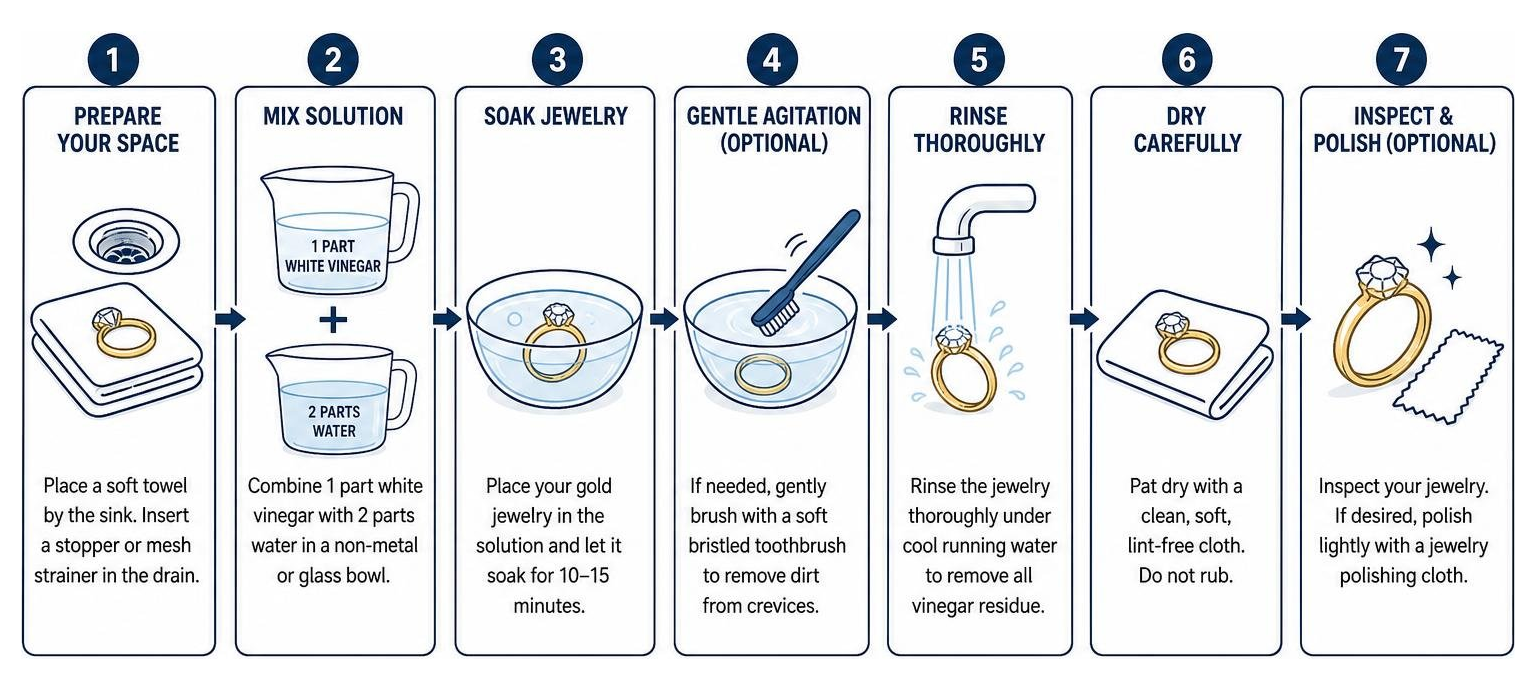
Before you begin, set up a safe, clean workspace. Lay down a soft, clean towel next to your sink. Crucial tip: Always insert a sink stopper or use a small mesh strainer over your drain before rinsing jewelry. We have heard too many heartbreaking stories of beautiful gold rings slipping down the garbage disposal during a rinse!
To minimize the acidic impact on your gold alloys, we recommend using a mild, diluted solution rather than straight vinegar. For those looking for a slightly stronger reaction for heavily tarnished plain metal, some DIY methods suggest combining vinegar with baking soda. However, we strongly advise against scrubbing with baking soda; if you use it, let the fizzing action do the work and keep physical contact to an absolute minimum.
Step-by-Step: How to Clean Gold Jewelry with Vinegar (If You Must)
Follow these steps precisely to clean plain solid gold jewelry while minimizing the risk of acid damage:
Step 1: Prepare the Diluted Solution
In a small glass or ceramic bowl, mix equal parts distilled white vinegar and warm water. Do not use boiling water, as sudden temperature shifts can cause thermal shock to metals and loosen settings.
Step 2: Soak with a Timer
Submerge your plain gold jewelry into the solution. Set a timer for 10 to 15 minutes. Do not walk away or leave the jewelry soaking overnight. Prolonged exposure to acetic acid will begin to break down the copper and silver alloys within the gold.
Step 3: Gentle Detail Brushing
If there is stubborn grime or lotion buildup in the crevices, use a brand-new, ultra-soft baby toothbrush. Dip the brush into the vinegar-water solution and brush the jewelry with incredibly light pressure. Do not scrub hard, as even soft bristles can leave micro-scratches on high-karat gold.
Step 4: Neutralize and Rinse
Remove the jewelry from the bowl and rinse it thoroughly under warm running water for at least one full minute. This step is critical to completely neutralize and wash away any remaining acidic residue. Follow this with a quick rinse under cold water, which helps preserve the freshly cleaned luster of the metal.
Step 5: Dry and Buff
Pat the jewelry dry with a clean, lint-free microfiber cloth. Once dry, use a specialized jewelry polishing cloth to gently buff the surface and restore its natural shine. Ensure the piece is 100% dry before storing it away, as lingering moisture can accelerate tarnish.
Safer Alternatives for Cleaning Gold Jewelry at Home
While it is possible to clean plain gold with vinegar, the safest choice for your highly valued or sentimental jewelry is to avoid acids altogether. You do not need harsh chemicals, exotic pantry mixtures, or expensive machinery to keep your jewelry sparkling like new.
If you want a fool-proof, risk-free way to maintain your jewelry at home, we recommend starting with our comprehensive guide on How To Clean Jewelry Even If Youve Never Tried It Before. For those looking to restore the fire and brilliance of their center stones safely, our guide on the Best Way To Clean Diamonds is an invaluable resource.
The Mild Soap and Warm Water Method
The absolute gold standard for safe home jewelry care is the mild dish soap and warm water method. It is the exact method we recommend to our clients in Northern Virginia for their weekly jewelry maintenance. It is gentle, highly effective at cutting through oils and daily grime, and completely safe for almost every metal and gemstone.
Here is how to do it:
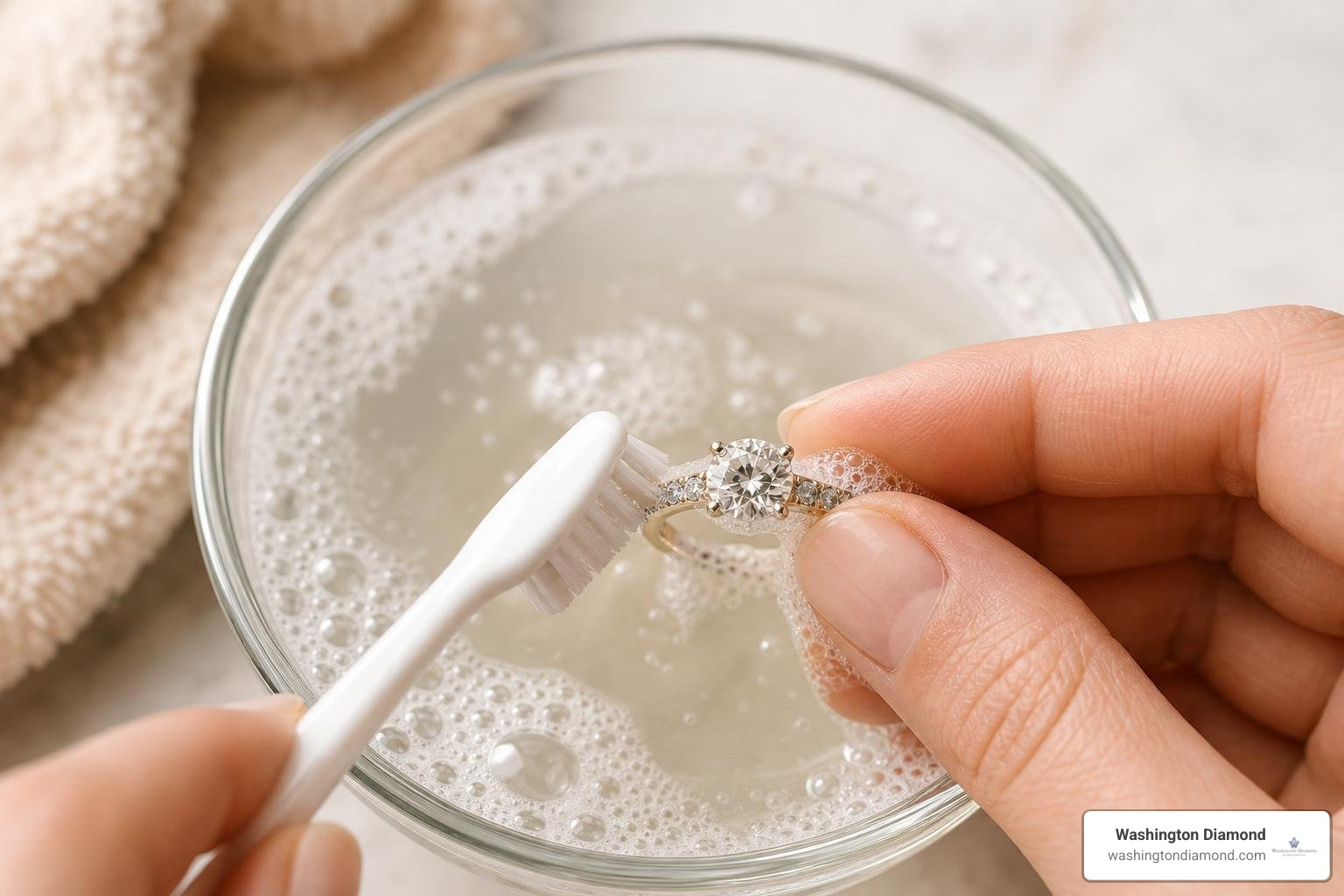
- Mix the Bath: Fill a small bowl with warm (not hot) water and add a few drops of a mild, lotion-free dish soap (original blue Dawn is the industry favorite). Stir gently to create a soapy bath.
- Soak: Place your gold jewelry, diamond rings, or gemstone pieces into the soapy water and let them soak for 15 to 20 minutes. This gives the soap time to break down body oils, lotion buildup, and everyday grime.
- Brush Gently: Use a soft-bristled baby toothbrush to gently brush around the prongs, basket, and under the stones where dirt loves to hide.
- Rinse: Rinse thoroughly under warm running water to remove all soap residue.
- Dry: Dry completely with a soft, lint-free microfiber cloth.
This simple routine is incredibly safe, even for delicate engagement rings. To learn more about keeping your most precious rings safe and beautiful, check out our Ultimate Engagement Ring Care Guide.
Professional Jewelry Cleaning and Polishing Cloths
For daily upkeep between deep cleans, a high-quality, double-sided jewelry polishing cloth is your best friend. The inner cloth is usually treated with professional polishing agents to safely remove light tarnish from gold, while the soft outer cloth is used to buff the metal to a high shine.
While home ultrasonic cleaners are widely available online, we advise using them with caution. The high-frequency sound waves can easily vibrate accent diamonds right out of their prongs if the setting is slightly worn or damaged.
The absolute safest way to clean and protect your precious jewelry is to have it professionally inspected and cleaned by an expert jeweler. At Washington Diamond, our private, appointment-only studio in Northern Virginia offers a personalized experience where we inspect your jewelry under professional magnification. We check for loose stones, worn prongs, and structural integrity before performing a safe, professional-grade steam and ultrasonic cleaning.
For a step-by-step breakdown of what professional care looks like, check out our Engagement Ring Cleaning Guide.
Frequently Asked Questions About Vinegar and Gold Jewelry
To help you separate internet myths from safe jewelry practices, we have answered some of the most common questions about using vinegar on gold.
Can I use apple cider vinegar to clean gold jewelry?
While some online guides, such as the article on Effective and Safe Methods to Clean Gold Jewelry Using Apple Cider Vinegar at Home - Smart.DHgate – Trusted Buying Guides for Global Shoppers , suggest using apple cider vinegar (ACV) as a milder-smelling alternative, we do not recommend it.
Apple cider vinegar is made from fermented apple juice, meaning it contains natural sugars, organic sediments, and impurities that white distilled vinegar does not. These organic residues can leave a sticky film on your gold jewelry, attracting more dirt and oil. If you absolutely must use vinegar, stick to plain, clear, white distilled vinegar.
Will vinegar damage gold-plated or gold-filled jewelry?
Yes, vinegar will absolutely damage gold-plated, gold-filled, or vermeil jewelry.
Gold plating is an incredibly thin layer of gold chemically bonded over a base metal like brass, copper, or silver. Because this gold layer is micro-thin, the acetic acid in vinegar will quickly penetrate the pores of the gold plating and attack the reactive base metal underneath. This causes the base metal to oxidize, bubbling up under the plating and causing the gold layer to flake off, peel, or discolor.
(Note: If you have brass or stainless steel jewelry that isn't gold-plated, you can read our specialized guides on Brass Jewelry Care and Care Instructions For Stainless Steel Jewelry A Lifetime Of Shine or Sparkle Shine Your Guide To Cleaning Stainless Steel Jewelry for safe cleaning instructions.)
How often should you clean gold jewelry with vinegar?
If you choose to use the vinegar method on plain solid gold, you should limit this deep clean to no more than once every few months.
Frequent exposure to even mild acids will slowly degrade the alloy metals within your gold over time, leading to premature wear and structural weakness. For weekly cleaning, always stick to the gentle, non-acidic soap and warm water method.
Conclusion

While the internet is full of quick DIY hacks, your fine gold jewelry is an investment meant to last for generations. Using vinegar to clean your jewelry might seem like an easy, budget-friendly option, but the chemical risks to your gold alloys, rhodium platings, and precious gemstones make it a gamble that is simply not worth taking.
When it comes to your most cherished pieces—like family heirlooms, wedding bands, and engagement rings—the safest and most rewarding path is professional care.
At Washington Diamond, we do things differently. We invite you to experience jewelry care in our private, appointment-only studio in Northern Virginia. Here, you will receive our undivided attention in a relaxed, personalized setting. We will thoroughly inspect your jewelry under magnification, check the security of every gemstone, and restore its original, breathtaking brilliance using safe, professional methods.
To learn more about keeping your diamonds and precious jewelry in pristine condition, read our comprehensive Diamond Cleaning Care Guide. When you are ready to give your jewelry the professional care it deserves, contact us to schedule your private appointment at Washington Diamond.
Have a question about your jewelry?
We've been helping clients with diamonds, custom design, repairs, appraisals, and more since 1969. Book a private appointment at our Falls Church studio.
Book an AppointmentTrusted since 1969 · Falls Church, VA · 703-536-3600
From the blog
View all


