

The Ultimate Brass Jewelry Care Guide
Why Brass Jewelry Care Makes the Difference Between a Piece That Lasts Decades and One That Doesn't

Good brass jewelry care is simpler than most people think — but skipping it can turn a beautiful piece dark, dull, or green within weeks.
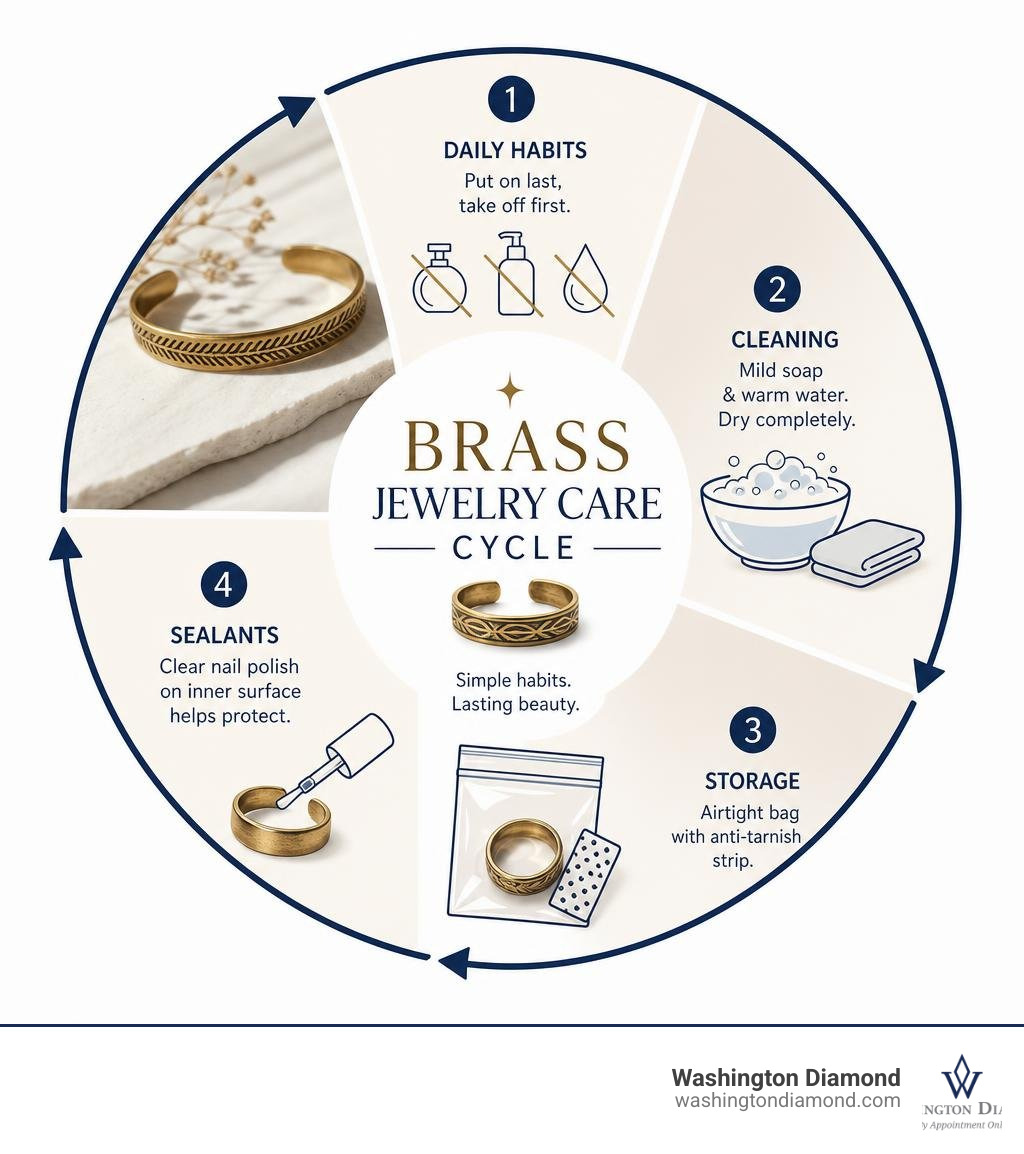
Here's a quick summary of what works:
| Care Step | What to Do |
|---|---|
| Daily wear | Put jewelry on last, take it off first |
| Cleaning | Mild dish soap and warm water; dry completely |
| Tarnish removal | Lemon juice + baking soda paste, or ketchup soak |
| Storage | Airtight ziplock bag with an anti-tarnish strip |
| Skin protection | Clear nail polish on the inner surface |
| Avoid | Water, perfume, lotion, sweat, and harsh chemicals |
Brass is one of the oldest jewelry materials in the world — dating back to around 3000 BCE in ancient Mesopotamia and Egypt. It's an alloy of copper and zinc that gives off a warm, golden glow at a fraction of the cost of solid gold. That's a big part of why it's had such a long run.
But that same copper content is also what makes brass reactive. Expose it to moisture, sweat, or chemicals, and tarnish follows fast.
The good news? With the right habits, brass jewelry can last for decades — and most of what you need is already in your kitchen or bathroom cabinet.
I'm Tom Daube, a GIA-certified jewelry expert and designer with decades of experience helping people find and care for meaningful pieces — including guidance on brass jewelry care for customers who want their jewelry to stay beautiful long after they leave the studio. In the sections below, I'll walk you through everything you need to know, from daily habits to deep cleaning.
Terms related to brass jewelry care:
Understanding Brass Jewelry and Why It Tarnishes
To care for brass, we first need to understand what it is. Unlike pure elemental metals, brass is a metal alloy. It is primarily composed of roughly 60% copper and 40% zinc, though these ratios can vary. A higher copper content yields a warmer, slightly rosier golden tone, while a higher zinc content lends extra strength but makes the metal slightly paler.

While this blend gives brass its signature vintage charm, durability, and affordability, it also makes it highly reactive to the world around it.
Tarnishing is not a sign of poor quality; it is a natural chemical process known as oxidation. When the copper and zinc in brass are exposed to oxygen, moisture, and acids, they react to form a thin, dark surface layer. This layer is called a patina. If brass is exposed to environmental sulfides or chlorine, the patina can turn deep brown or black. When exposed to heavy moisture and sulfur, it can develop a crusty, greenish layer known as verdigris (similar to how the Statue of Liberty turned green over time).
Many people notice that wearing brass jewelry can sometimes leave a green mark on their skin. This happens when the copper in the brass reacts with the natural acids and moisture in your sweat, creating harmless copper salts. This reaction depends heavily on your unique skin chemistry, the local humidity, and even the lotions you wear.
The Role of Material Composition in Brass Jewelry Care
Not all brass jewelry is created equal, and knowing exactly what your piece is made of dictates how you should clean and maintain it.
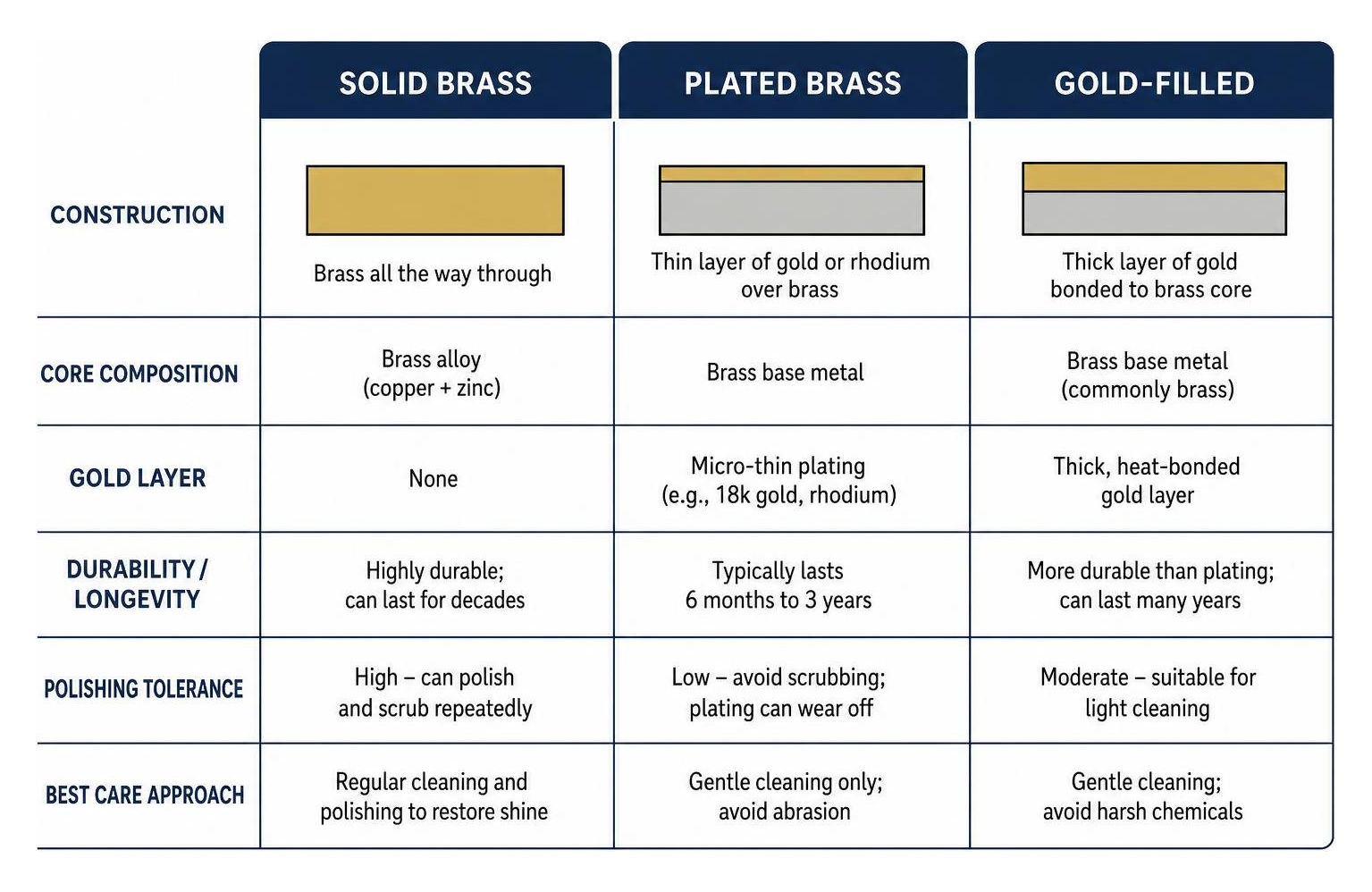
- Solid Brass: This is brass all the way through. It is highly durable and can last for decades. Because there is no outer layer to wear off, you can polish and scrub solid brass repeatedly to bring back its original golden luster.
- Plated Brass: This features a brass base metal coated with a micro-thin layer of another metal, such as 18k gold or rhodium. Plating typically lasts anywhere from 6 months to 3 years depending on how often it is worn. You must never scrub plated brass aggressively, as doing so will rub the thin plating right off, exposing the base metal underneath.
- Gold-Filled: This consists of a thick, heat-bonded layer of gold over a base metal (often brass). It is much more durable than gold plating and can withstand light cleaning, but still requires gentler care than solid brass.
| Material Type | Core Composition | Longevity | Polishing Tolerance |
|---|---|---|---|
| Solid Brass | 100% Copper-Zinc Alloy | Decades (with proper care) | High (can be polished repeatedly) |
| Plated Brass | Brass base with thin gold/rhodium coat | 6 months to 3 years | Extremely Low (polishing removes plating) |
| Gold-Filled | Brass base with thick bonded gold layer | 10 to 30 years | Moderate (avoid harsh abrasives) |
Understanding these differences is key to preventing accidental damage. For more details on protecting your collection, explore our guides on How to Care for Your Brass and Plated Jewelry and Caring for Brass Jewelry | minusOne Jewelry.
Daily Habits and Storage for Brass Jewelry Care
The easiest way to manage tarnish is to prevent it from forming in the first place. By adopting a few simple daily habits, you can keep your brass looking bright with minimal effort.
First, make yourself a "moisture ninja." Moisture is the ultimate arch-nemesis of brass. You should always remove your brass jewelry before showering, swimming, washing dishes, or working out.
Second, avoid chemical warfare. Always apply your perfume, hairspray, deodorant, sunscreen, and lotions before putting on your jewelry. Let these products dry completely on your skin first. The chemicals and alcohol in beauty products speed up the oxidation process dramatically.
Interestingly, wearing your solid brass jewelry regularly can actually help prevent tarnish. The natural oils from your skin rub against the metal as you move, acting as a gentle, continuous polish that delays oxidation. This is the same reason why frequently touched parts of outdoor brass statues remain bright and shiny while the rest of the statue turns dark.
When you take your jewelry off at night, give it a quick wipe with a clean microfiber cloth to remove any lingering sweat or skin oils.
Smart Storage Solutions
Where you leave your jewelry overnight makes a massive difference. Leaving your brass pieces on a vanity table or in a damp bathroom is a recipe for instant tarnishing.
To keep your brass sparkling:
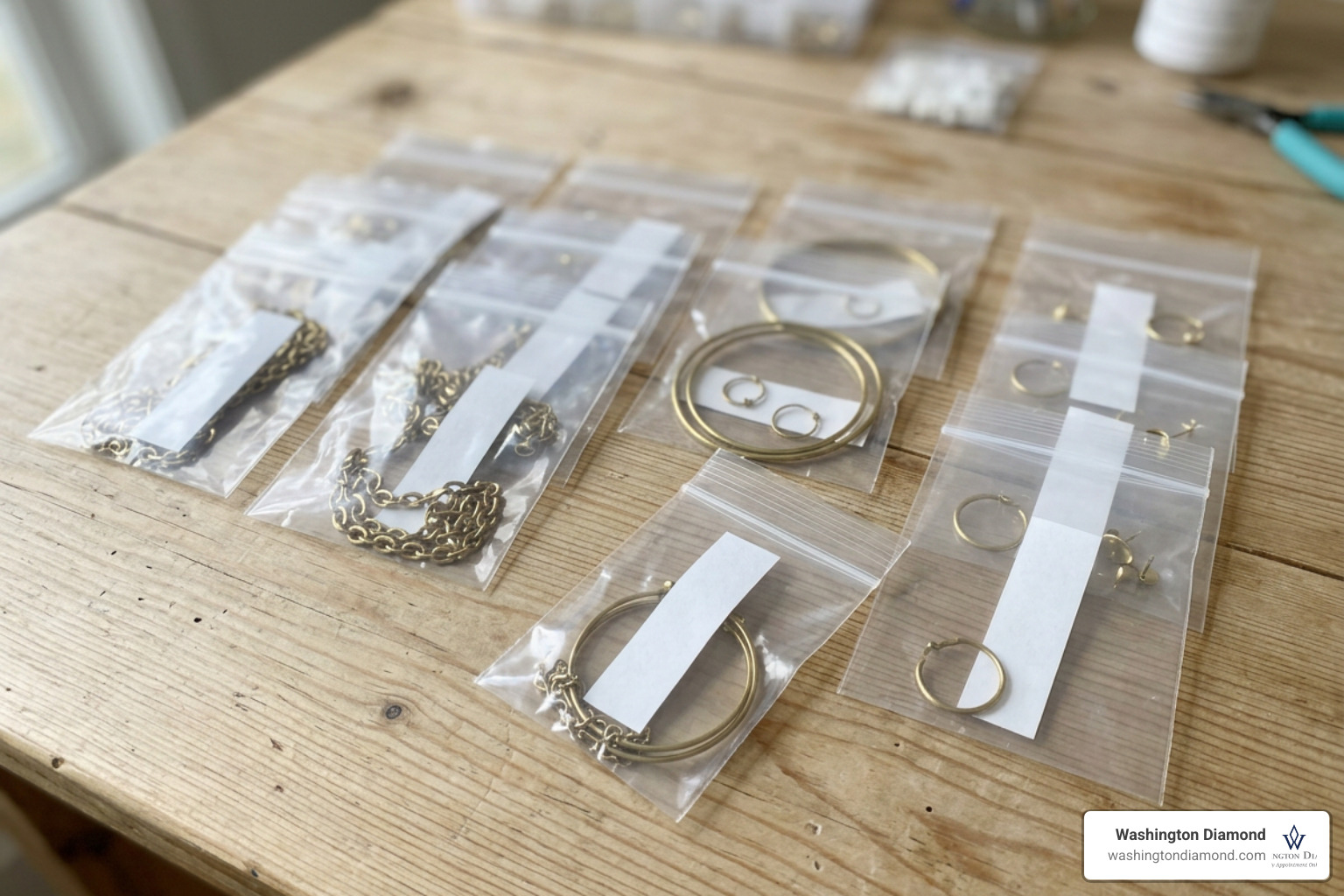
- Keep it dry and airtight: Store your brass jewelry in small, sealed plastic ziplock bags with the air squeezed out. This physically blocks oxygen and humidity from reaching the metal.
- Use anti-tarnish strips: Toss a small anti-tarnish paper strip into the storage bag. These strips absorb airborne pollutants and sulfides, preventing 80% to 90% of potential tarnishing.
- Add silica gel packets: Keep those little silica packets that come in shoeboxes and drop them into your jewelry box to draw out excess moisture.
- Keep pieces separate: Store your brass pieces individually. Brass is a relatively soft metal that can scratch easily if it rubs against harder jewelry.
For a deeper dive into removing tarnish when storage slips your mind, read our guide on how to Remove Tarnish Jewelry. You can also check out additional storage tips from How to Keep Brass Jewelry from Tarnishing – Grace Studio.
How to Clean Brass Jewelry Safely at Home
When your brass jewelry does begin to look dull, you don't need to take it to a professional. You can easily restore its warm, golden glow at home using gentle, everyday ingredients.
The safest and most gentle starting point for any piece of brass jewelry is a simple wash with mild dish soap and warm water.
- Mix a few drops of mild dish soap (like Dawn) in a bowl of lukewarm water.
- Let the jewelry soak for 5 to 10 minutes to loosen any dirt or surface oils.
- Gently wipe the piece with a soft, lint-free cloth or an extra-soft toothbrush.
- Rinse the jewelry thoroughly under clean running water to remove all soap residue.
- Dry the piece completely. Never let brass air-dry, as trapped water droplets will leave unsightly spots and trigger rapid tarnishing. Use a soft towel and blow-dry on a cool setting if the design is intricate.
For routine maintenance and light tarnish, a professional polishing cloth works wonders. Many jewelers recommend Sunshine Polishing Cloths or high-quality silver polishing cloths. These cloths are pre-treated with mild polishing compounds that remove light oxidation with a simple rub. You should only use these on solid brass; using them on plated brass will eventually wear away the plated layer.
Crucial Warning: If your brass jewelry features delicate gemstones, pearls, or special enamel coatings, do not submerge the piece in liquid cleaners or use acidic mixtures. Acids and soaps can dissolve the glues holding stones in place or damage porous gems like turquoise, opal, and pearls. Instead, use a dry, soft cloth to clean around the metal details.
For general cleaning advice, check out How to Clean Jewelry Even If You've Never Tried It Before and the helpful resource on How to Clean Brass Jewelry | Jewelers Mutual Group.
Safe DIY Methods for At-Home Brass Jewelry Care
If your solid brass jewelry has developed moderate to heavy tarnish, mild soapy water might not cut it. In these cases, you can use these highly effective, natural DIY kitchen remedies:
- The Ketchup Method (Best for Moderate Tarnish): Tomato ketchup contains natural acids that gently break down copper oxide. Coat your solid brass piece in a thin layer of ketchup and let it sit for 10 to 15 minutes. Rinse it thoroughly with warm water and dry it completely.
- Lemon Juice and Baking Soda Paste (Best for Deep Cleaning): Mix one tablespoon of baking soda with the juice of half a lemon to create a fizzy paste. Apply the paste to the tarnished brass using a soft-bristled toothbrush or your fingers. Rub gently in circular motions, rinse thoroughly, and dry.
- The Vinegar Soak: For stubborn tarnish on plain, solid brass pieces, soak the jewelry in a small bowl of white vinegar for 2 to 3 minutes. Do not leave it in any longer, as the acid can eventually dull the metal's surface. Rinse and dry immediately.
- Lemon and Salt: Cut a lemon in half, sprinkle a small amount of table salt onto the cut side, and gently rub it directly over the tarnished brass. The salt acts as a very mild abrasive while the lemon acid dissolves the tarnish. Rinse and buff dry.
- Non-Gel Toothpaste: Apply a small dab of plain, white, non-gel toothpaste to a soft cloth or toothbrush. Buff the brass gently, rinse well, and dry. Avoid whitening toothpastes, as they contain harsh abrasives that can scratch the metal.
For more specialized cleaning walkthroughs, read Tips for Cleaning Brass Jewelry or consult the How to Clean Brass Jewelry: A Practical Care Guide for Gothic Jewellery - Grizz Studio for handling rustic or dark-finished designs.
Advanced Protection: Sealants and Long-Term Maintenance
If you love the look of brass but hate the routine maintenance—or if your skin reacts instantly to copper—you can apply a protective barrier coating to seal the metal.
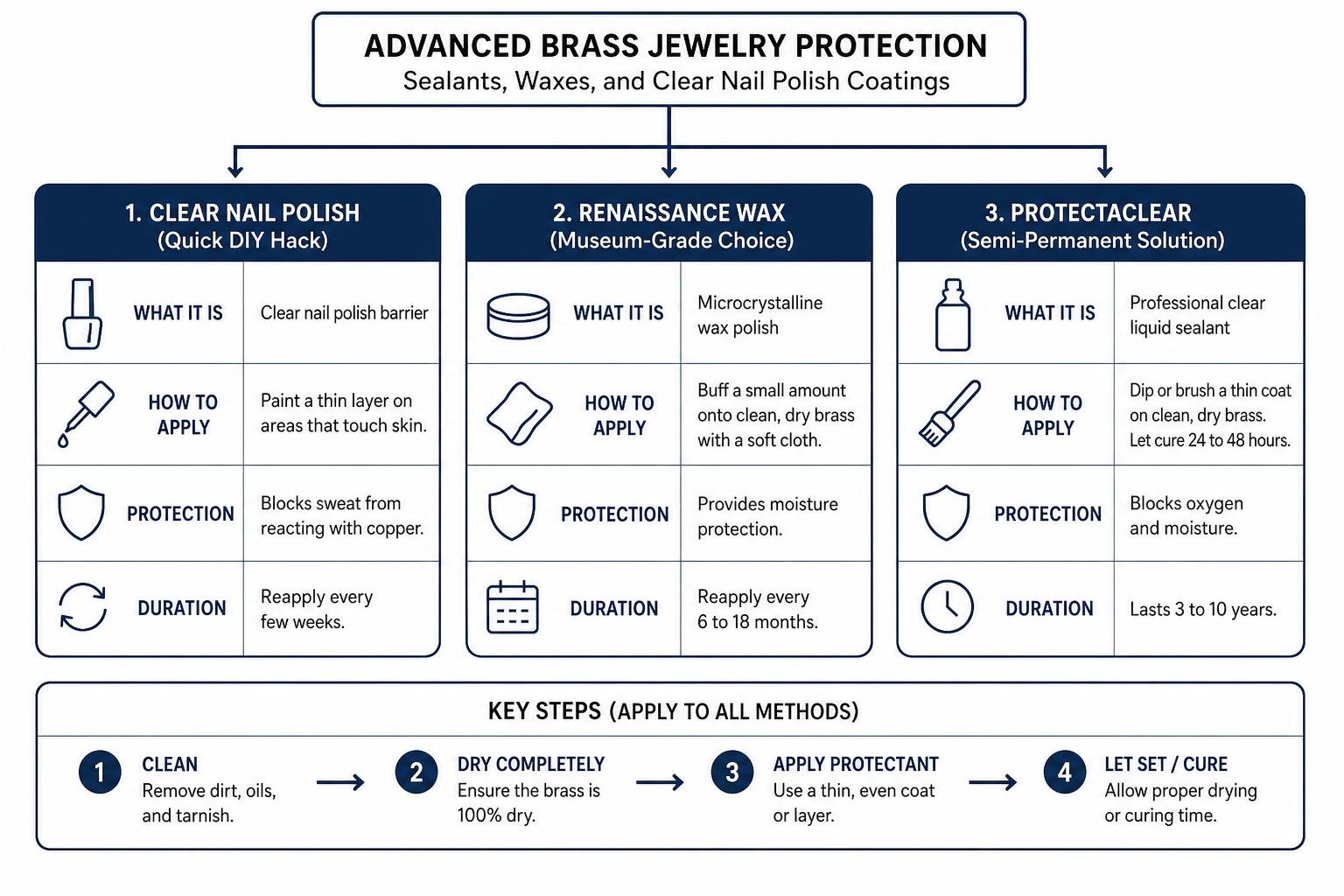
- Clear Nail Polish (The Quick DIY Hack): This is the easiest, most accessible way to prevent green skin. Simply paint a thin layer of clear nail polish onto the inside of brass rings or cuffs where the metal directly touches your skin. Let it dry completely before wearing. This creates a physical barrier that stops sweat from reacting with the copper. You will need to reapply this every few weeks as it wears off.
- Renaissance Wax (The Museum-Grade Choice): This microcrystalline wax polish is used by museums worldwide to protect historical armor and the Crown Jewels. It is incredibly gentle, non-greasy, and easy to apply. Simply buff a tiny amount onto the clean, dry brass surface with a soft cloth. It provides excellent moisture protection and needs to be reapplied every 6 to 18 months depending on wear.
- ProtectaClear (The Semi-Permanent Solution): This is a professional, skin-safe clear liquid sealant used by jewelry makers. It provides a tough, invisible barrier that blocks oxygen and moisture, preventing tarnish for 3 to 10 years. You apply it by dipping or brushing a thin coat onto completely clean, dry brass, then letting it cure for 24 to 48 hours.
To ensure your sealed or gemstone-embellished brass remains in pristine condition, take a look at our expert advice on The Art of Gemstone Jewelry Care and the comprehensive manufacturer's tips found in Endlessjewe Manufacturer - How to Maintain and Clean Brass Jewelry.
Frequently Asked Questions
Can you wear brass jewelry in the shower?
No, you should never wear brass jewelry in the shower. While water itself won't instantly ruin solid brass, the combination of moisture, steam, soaps, shampoos, and tap water chemicals (like chlorine) will cause the metal to tarnish rapidly. Furthermore, moisture trapped in small crevices or behind stone settings can lead to mold, corrosion, or green skin stains. If your brass jewelry does accidentally get wet, dry it thoroughly with a soft cloth immediately.
How do you keep brass jewelry from turning skin green?
The green mark on your skin is a harmless reaction between your skin's natural acids and the copper in brass. You can prevent this by keeping your skin dry, avoiding wearing brass on hot and sweaty days, and applying a protective barrier. Painting the inner surfaces of your rings or bracelets with clear nail polish or applying a professional sealant like ProtectaClear or Renaissance Wax will completely stop this reaction.
Is brass jewelry safe for sensitive skin and piercings?
Generally, brass is not considered a hypoallergenic metal. Because it is an alloy of copper and zinc, it can sometimes contain trace amounts of nickel, which is a common allergen. If you have highly sensitive skin or raw, unhealed piercings, you should avoid brass. For earrings, look for pieces designed with hypoallergenic posts made from sterling silver, gold-filled metal, or titanium, even if the main decorative dangle is made of brass.
For more details on managing sensitive metals, check out How to Care for and Maintain Your Brass Jewelry? – DG Jewelry.
Conclusion
With just a little bit of regular attention, your favorite brass jewelry pieces can remain a bright, beautiful, and glowing part of your collection for decades. By turning simple habits—like wiping down your jewelry after wear and storing it in airtight bags—into a quick daily routine, you can prevent tarnish before it even starts.
At Washington Diamond, we believe that every piece of jewelry you own deserves to shine its brightest. While we specialize in crafting custom, heirloom-quality diamond and precious metal designs at our private, appointment-only studio in Northern Virginia, we are passionate about helping our clients care for their entire jewelry collections.
Whether you are looking to restore a vintage family heirloom or searching for the perfect custom engagement ring, our team is here to provide the dedicated, one-on-one attention you deserve.
To learn more about keeping your most precious pieces sparkling for a lifetime, explore our ultimate Diamond Cleaning Care Guide, or schedule a private consultation with us at our Northern Virginia studio today!
Have a question about your jewelry?
We've been helping clients with diamonds, custom design, repairs, appraisals, and more since 1969. Book a private appointment at our Falls Church studio.
Book an AppointmentTrusted since 1969 · Falls Church, VA · 703-536-3600
From the blog
View all


