

The Ultimate Guide to 20 Carat Diamonds: Rarity and Price
What Makes a 20 Carat Diamond Worth Considering?

A 20 carat diamond is exceptionally rare, but size alone does not tell you whether it is a good choice. Start with an independent grading report. Then compare color, clarity, cut, and carat weight, along with the stone's origin and asking price. A colorless diamond and a blue diamond of similar size can have very different values.
For perspective, only one in 1,000 diamonds weighs more than one carat. Major auction sales show that exceptional gems can bring millions, but they do not set a price for every 20-carat stone.
I'm Tom Daube. My experience in diamond selection, jewelry design, and diamond recutting informs this guide to evaluating a 20 carat diamond with care.
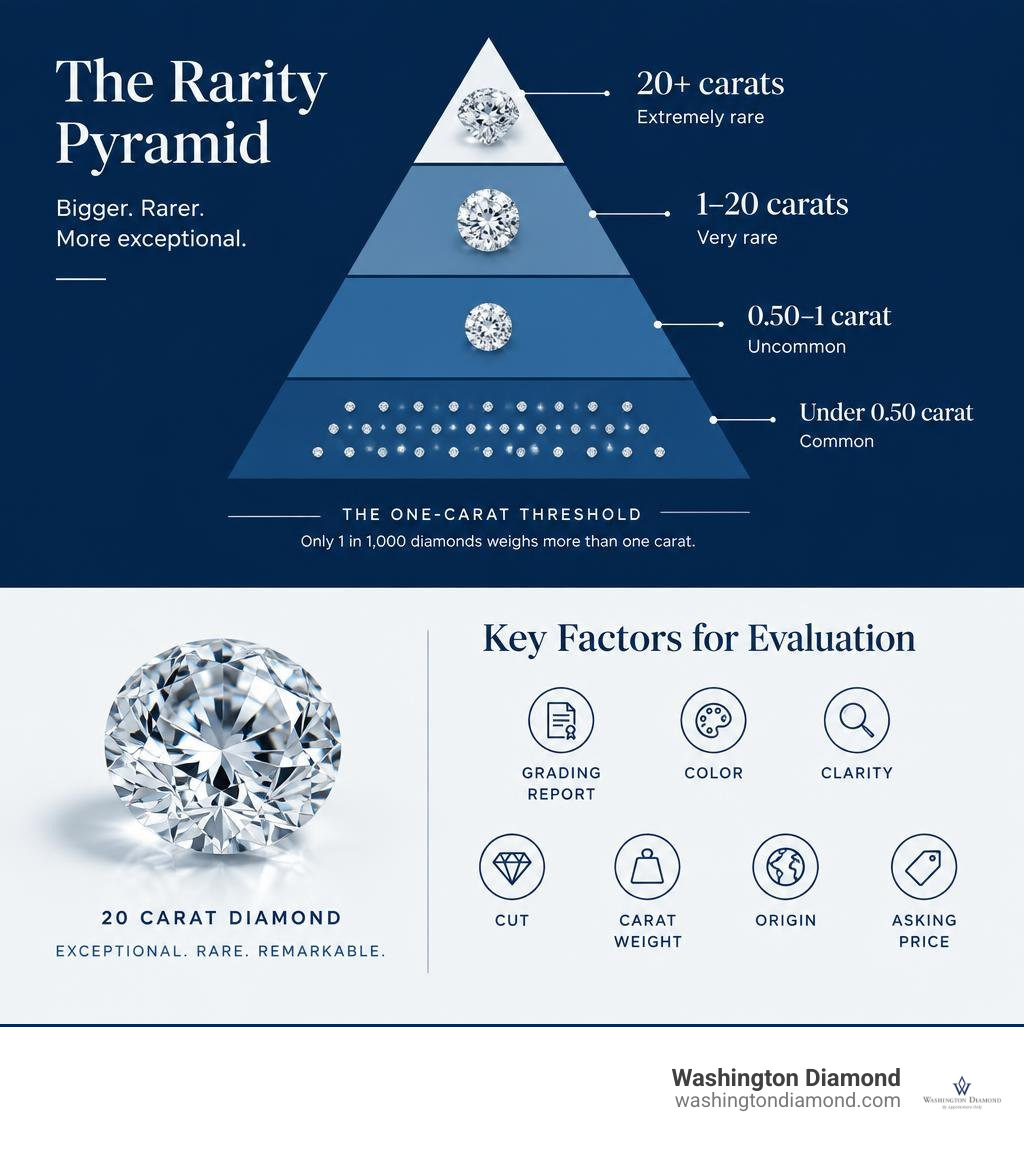
20 carat diamond glossary:
The Rarity and Geological Miracle of a 20-Carat Gemstone
To appreciate a gem of this magnitude, we have to look hundreds of miles beneath the Earth's crust. Natural diamonds crystallize in the mantle under extreme pressure and scorching temperatures exceeding 2,000 degrees Fahrenheit. Over billions of years, only a microscopic fraction of carbon atoms fuse into flawless lattices capable of producing monumental rough crystals. Volcanic magma pipes known as kimberlites then blast these crystals toward the surface at supersonic speeds.
Surviving this violent journey intact is a geological miracle. When rough diamonds are discovered, master polishers often sacrifice over 50% of the original rough stone simply to eliminate inclusions and maximize light refraction. To end up with a polished diamond weighing over 20 carats (which equals 4 full grams of pure crystalline carbon), the initial rough crystal often needs to weigh well over 45 to 50 carats.
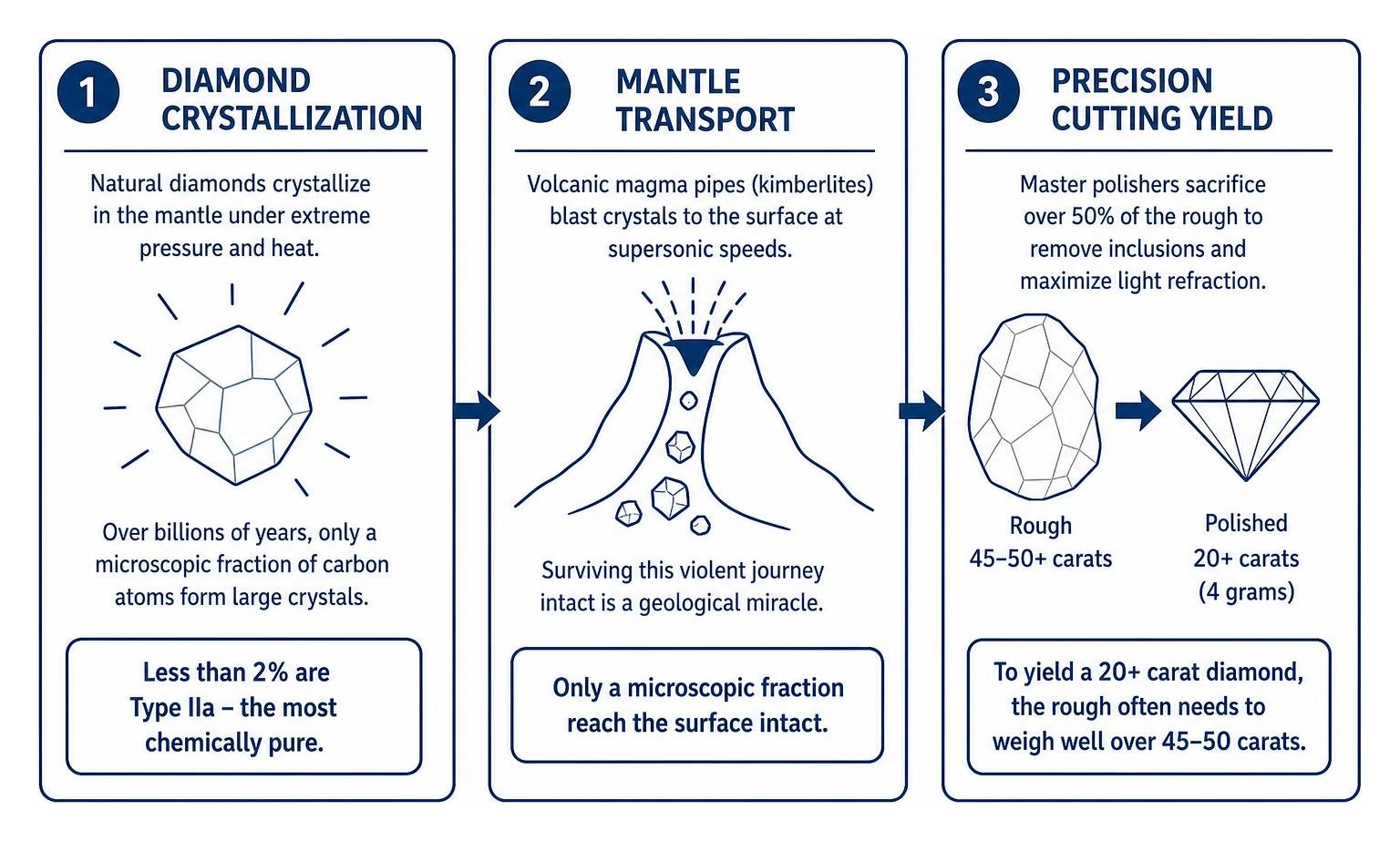
Beyond sheer mass, the internal chemical structure determines true perfection. Less than 2% of all natural diamonds achieve the coveted Type IIa classification. Type IIa diamonds have no measurable nitrogen or boron impurities in their crystal matrix, making them the most chemically pure diamonds known. This structural purity gives them an astonishing optical transparency often described as "pure pool water."
Geographically, leading mining nations produce vast amounts of rough material, but finds of this caliber remain astonishingly scarce. Botswana has long stood out on the global stage alongside major producers like Russia. In fact, Botswana overtook Russia as the world's leading diamond producer by value, with rough diamond mining serving as the backbone of its national economy (accounting for roughly 80% of its exports). Yet, even across millions of tons of processed ore, discovering a museum-quality rough crystal large enough to yield a top-tier 20-carat finished gem is a once-in-a-generation event. The world’s leading gemological benchmark, established by GIA 4Cs diamond grading standards, applies uniform, rigorous testing to confirm the authenticity and physical perfection of these ultra-rare stones.
Evaluating Quality in a 20 Carat Diamond: The 4Cs and Type IIa Purity
When assessing large gems, standard grading margins become magnified. An imperfection easily hidden in a half-carat ring becomes strikingly visible across an expansive 20-carat table facet.
- Carat Weight Precision: Gemological laboratories like the Gemological Institute of America (GIA) measure weight using high-precision digital micro-balances down to the fifth decimal place (0.00001 carat) before rounding to the hundredth.
- Color Grading: Diamonds are evaluated upside down in a controlled viewing booth against calibrated masterstones. Graders must achieve consensus. A D-color grade is the absolute pinnacle, signifying a completely colorless stone with zero yellow or brown tint.
- Clarity Standards: Flawless (FL) and Internally Flawless (IF) grades represent the peak of clarity, indicating zero inclusions visible under 10x magnification. In high-carat stones, natural graining or micro-inclusions directly influence transparency and structural beauty.
- Cut and Light Performance: For round brilliant diamonds, the cut grade evaluates brightness, fire, and scintillation. GIA’s cut engine relies on sophisticated metrics to confirm that facet angles align to bounce light directly back to the eye rather than leaking out through the pavilion.
While historic auctions frequently celebrate large natural stones, modern collectors exploring heirloom pieces also explore custom engagement ring creations designed around unique centerpiece stones.
Formation and Rarity of Fancy Blue Diamonds
While colorless Type IIa diamonds represent pure elemental carbon, fancy blue diamonds belong to an entirely separate geological category: Type IIb.
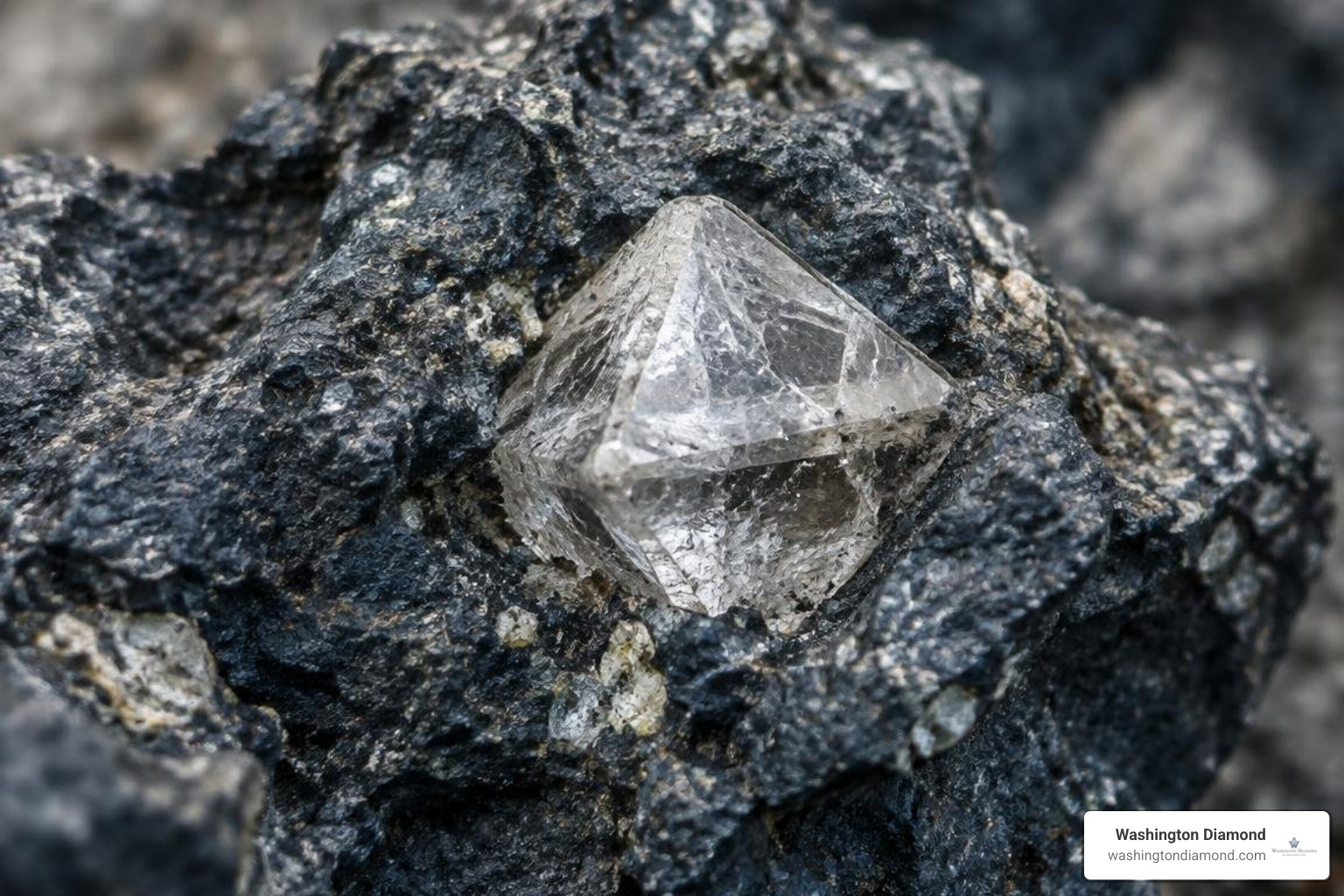
Natural blue diamonds obtain their mesmerizing celestial color from trace amounts of boron trapped within the crystal lattice during formation. Boron is typically concentrated in the Earth's oceanic crust. Scientists believe tectonic plate subduction carried oceanic crust down into the lower mantle (often deeper than 400 miles), where boron bonded with crystallizing carbon.
Fancy color diamonds represent only a tiny fraction of total diamond output, and blue stones are among the rarest of all. Unlike colorless diamonds graded on a D-to-Z scale, blue diamonds are graded based on hue, tone, and spectral saturation—ranging from Faint and Light Blue up to Fancy Deep and Fancy Vivid Blue. Legendary regions, such as the Premier (Cullinan) mine in South Africa and ancient alluvial deposits, have yielded historic blue gems, alongside monumental discoveries originating in southern Africa's rich mining basins.
What Determines the Market Value of a 20 Carat Diamond?
In high jewelry valuation, diamond pricing is not linear; it is exponential. A 20-carat diamond does not cost twenty times the price of a 1-carat diamond—it commands a per-carat price that increases exponentially due to extreme rarity.
Gem values also jump significantly at "magic numbers" (such as 5.00, 10.00, 15.00, and 20.00 carats). Crossing the 20-carat threshold places a gemstone into an elite bracket populated by international collectors, sovereign wealth portfolios, and museum acquisitions.
Beyond the physical 4Cs, market liquidity, auction house bidding wars, macroeconomic currency trends, and the prices of commodities like gold and oil influence fine jewelry trade dynamics.
| Diamond Category & Weight | GIA Color Grade | GIA Clarity Grade | Chemical / Type Classification | Relative Market Tier & Rarity Profile |
|---|---|---|---|---|
| 20.02-Carat Round Brilliant | D (Colorless) | Flawless (FL) | Type IIa (Nitrogen-free) | Apex Investment Tier; top 0.01% of all mined diamonds worldwide |
| 20.46-Carat Oval Brilliant | Fancy Deep / Vivid Blue | VVS2 (Very, Very Slightly Included) | Type IIb (Boron-bearing) | Historic Collector Tier; extraordinary rarity commanding multi-million auction values |
| 20.00-Carat Step Cut | G–H (Near Colorless) | VS1–VS2 (Very Slightly Included) | Type Ia | High-Jewelry Wearable Tier; exceptional presence with accessible per-carat value |
| 20.00-Carat Fancy Yellow | Fancy Intense / Vivid Yellow | VVS1–VS1 | Type Ib / Ia | Statement Collector Tier; high demand driven by rich, saturated warm brilliance |
Notable Examples: The Historic 20 Carat Diamond Discoveries
Auction records provide concrete reference points for how the international market values these magnificent gems:
- The Okavango Blue (20.46 Carats): Unveiled by the Okavango Diamond Company, this extraordinary oval brilliant is the largest blue diamond ever recovered in Botswana. Boasting an exceptional VVS2 clarity grade and classified with the highest polished color grades attainable for fancy blue diamonds, the stone was named in honor of the Okavango Delta, a UNESCO World Heritage site. Reviewing Botswana's historic Okavango Blue diamond unveil reveals how national pride and geological rarity combine at this scale.
- The Cullinan Dream (24.18 Carats): In 2016, this exceptional fancy intense blue diamond went under the hammer at a Christie’s auction in New York, selling for an astounding $25.4 million. It established an international auction benchmark, underscoring the fierce demand for saturated blue stones over 20 carats.
- The 20.02-Carat D-Flawless Type IIa: Highlighted in prestigious auction catalogs from major houses such as Christie’s, this unmounted round brilliant stone achieved the highest marks in all categories: D color, Flawless clarity, Triple Excellent cut, polish, and symmetry, and Type IIa chemical purity.
Whether marketed via public auctions or confidential private treaty transactions, stones with these credentials attract global collectors looking for portable physical wealth.
Colorless vs. Fancy Blue: Comparing World-Class 20-Carat Stones
Choosing between an apex colorless stone and a saturated fancy blue diamond comes down to visual character, personal style, and collection goals.
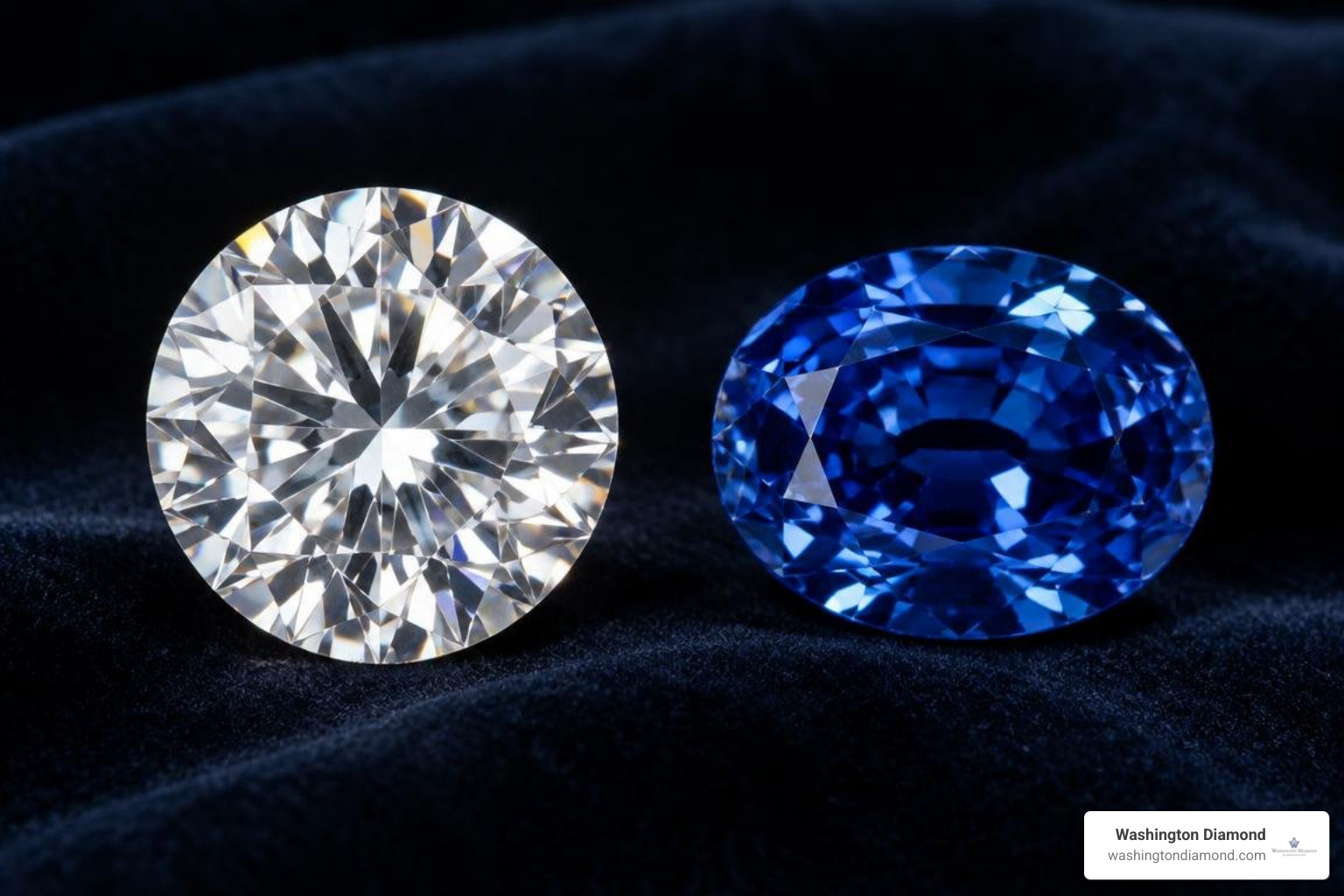
A 20-carat D-color Flawless diamond offers unparalleled white light dispersion and rainbow scintillation. Because a round brilliant cut maximizes light return, looking into a 20-carat D-Flawless stone creates a hypnotic hall-of-mirrors effect. The gem is crisp, architectural, and classic.
In contrast, a 20-carat fancy blue diamond offers a moody, velvety depth reminiscent of the deep ocean or twilight skies. Blue diamonds are frequently cut into fancy shapes—such as ovals, cushions, or radiant cuts—to concentrate and enrich their natural body color rather than diffusing it.
When creating bespoke settings for stones of this caliber, jewelry designers construct structural masterpieces. An exceptional center diamond can be set into custom mountings alongside complete engagement rings, paired with vivid sapphire accents, or balanced with bespoke sapphire details inspired by a something blue bridal collection.
Essential Buying and Investment Considerations for High-Carat Gems
Acquiring a significant high-carat diamond requires methodical verification. High-value gems should always be evaluated with standard best practices:
- Insist on Independent Laboratory Certification: Never purchase a high-carat stone based solely on a seller's verbal grading. The GIA report is the international benchmark for unbiased diamond examination. As detailed in the comprehensive GIA diamond buyers guide, a legitimate grading report documents the 4Cs, optical proportions, fluorescence, and chemical type classification.
- Verify Security Features: Authentic laboratory certificates feature security screens, microprinting, and embossed holograms. Always verify the certificate number directly online through official portals like GIA Report Check.
- Laser Inscription & Micro-Mapping: High-carat diamonds frequently feature their unique certificate number laser-inscribed directly onto the girdle. During an evaluation, a jeweler uses a gemological microscope to match the stone's internal inclusion map (plotting) directly against the laboratory report.
- Independent Appraisals and Specialized Insurance: Standard homeowner insurance policies rarely provide adequate coverage limits for fine high-carat jewels. Buyers should secure professional jewelry appraisals from credentialed gemologists to obtain specialized private insurance policies that protect against loss, damage, or theft.
At Washington Diamond, we guide clients through evaluating significant acquisitions with transparency. In our private, appointment-only studio in Northern Virginia, we provide dedicated, one-on-one attention so you can inspect fine loose gems and curated diamond jewelry in an unhurried, comfortable environment.
Frequently Asked Questions About 20 Carat Diamonds
How much does a 20 carat diamond typically cost?
The cost of a 20-carat diamond ranges widely based on color, clarity, cut quality, and geological classification. A high-clarity, near-colorless 20-carat diamond can range from several hundred thousand dollars to over a million dollars. However, when you enter the apex realm of D-Color, Flawless, Type IIa stones, prices climb into multi-million-dollar territory. Fancy colored diamonds—especially intense and vivid blue, pink, or red stones—regularly achieve record-breaking auction results exceeding $1 million to $2 million per carat, placing historic 20-carat colored diamonds well past the $20 million threshold.
How rare is a 20-carat natural diamond compared to 1-carat stones?
A 20-carat natural diamond is exceedingly rare. While only one in roughly 1,000 mined diamonds produces a polished gem weighing a single carat, recovering a rough crystal capable of yielding an eye-clean, well-proportioned 20-carat finished gem represents a one-in-a-million geological occurrence. The vast majority of diamond mines will operate for years without recovering a single high-quality rough crystal of that scale.
What setting best protects and showcases a 20 carat diamond?
A 20-carat diamond requires a substantial, structurally engineered setting. Platinum is the preferred metal due to its superior density, tensile strength, and neutral color, which will not cast warm reflections into an icy D-color stone. Multi-prong configurations (such as double-prongs or six-prong platinum heads) and reinforced under-galleries ensure the stone sits securely while allowing optimal light entry. To understand how precious metals interact with high-carat stones, explore our comprehensive metal education guide.
Conclusion
A 20-carat diamond is far more than a stunning piece of jewelry; it is a tangible piece of Earth’s geological history and an extraordinary heirloom asset. Whether you are drawn to the pristine, pool-like transparency of a Type IIa D-Flawless round brilliant or the captivating ocean depth of a Fancy Blue diamond, choosing a gem of this caliber demands expert guidance, rigorous verification, and exquisite design.
At Washington Diamond, we believe that life’s most meaningful milestones deserve undivided attention and unmatched expertise. We invite you to schedule a private, appointment-only consultation at our Northern Virginia studio. Our personalized approach ensures you can explore the world’s finest gemstones with complete confidence. Schedule your appointment today with Washington Diamond to begin designing your own custom masterpiece.
Have a question about your jewelry?
We've been helping clients with diamonds, custom design, repairs, appraisals, and more since 1969. Book a private appointment at our Falls Church studio.
Book an AppointmentTrusted since 1969 · Falls Church, VA · 703-536-3600
From the blog
View all


