

Pave Perfection: Everything You Need to Know About This Popular Setting
Why Pavé Engagement Settings Capture Hearts and Light
A Pavé engagement setting features tiny diamonds set closely together along the band, creating a continuous, glittering surface that looks as if it's been "paved" with diamonds. This popular style originated in 18th-century France and remains a favorite for couples who want maximum sparkle and a timeless, neat look.

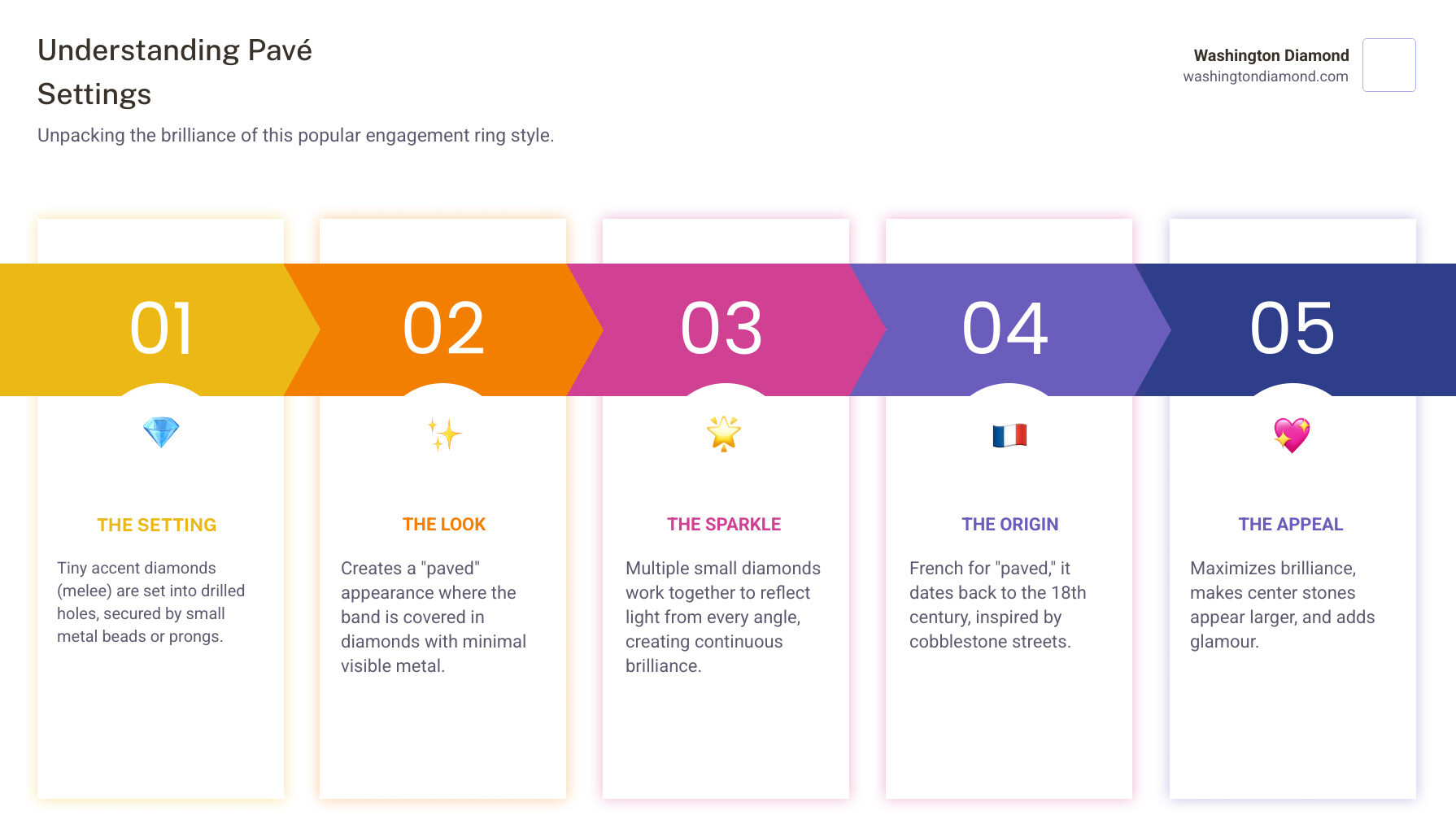
Quick Answer: Understanding Pavé Settings
- What it is: Small accent diamonds (called melee) are set into tiny holes drilled in the metal band, secured by small beads or prongs of metal
- The look: Creates a "paved" appearance where the band appears covered in diamonds with minimal visible metal
- The sparkle: Multiple small diamonds work together to reflect light from every angle
- The origin: French for "paved," dating back to the 1700s when cobblestone streets inspired the design
- The appeal: Maximizes brilliance, makes center stones appear larger, and adds glamour without the cost of a larger center diamond
When you're searching for the perfect engagement ring, you might feel overwhelmed by all the different setting styles. Pavé (pronounced "puh-vey") stands out because it transforms the entire band into a source of sparkle, not just the center stone.
The technique involves placing accent stones so close together that they create what jewelers call "collaborative sparkle"—each tiny diamond catches and reflects light, working with its neighbors to create continuous brilliance. These accent stones typically range from 0.01 to 0.20 carats each, but together they create a dramatic effect.
Whether you're drawn to the delicate appearance of petite-pavé or the vintage charm of bright-cut channel settings, pavé offers something special: a ring that doesn't just sit on the finger but truly glows with light from every angle.
Pave engagement setting terms you need:
What is a Pave Setting and How Is It Made?
The term "pavé" is a delightful nod to history, originating from the French word for "paved." It’s pronounced "puh-vey," and its roots stretch back to the 18th century, a time when cobblestone streets were the norm. Just as these ancient roads were "paved" with many small stones, a Pave engagement setting is "paved" with numerous tiny diamonds, creating a continuous, glittering surface. This historical connection lends a timeless elegance to the style, which has captivated hearts for centuries.
So, how do we transform a simple metal band into a sparkling river of diamonds? The process of creating a Pave engagement setting is a testament to precision and artistry. Traditionally, it begins with a skilled jeweler carefully drilling small holes into the metal band where each tiny diamond will reside. Once the holes are prepared, the accent stones are carefully placed into their individual settings.
The magic truly happens next, as the jeweler then pushes and raises tiny beads or prongs of metal from the band around each gem. These miniature metal anchors secure the diamonds firmly in place, ensuring they remain dazzlingly visible. The goal is to minimize the appearance of the metal itself, allowing the diamonds to take center stage and create that coveted "paved" look. Many of these intricate settings are designed with the aid of computer-aided design (CAD) technology, which allows for incredible precision and uniformity in the placement of these tiny prongs. This blend of traditional craftsmanship and cutting-edge technology ensures that each Pave engagement setting is a masterpiece of sparkle and security.
This intricate process is a fascinating part of how your ring comes to life. If you're curious about the broader journey of an engagement ring from concept to creation, you might enjoy learning More info on how rings are made.
The Tiny Gems That Create the Sparkle
The unsung heroes of the Pave engagement setting are the "melee" diamonds, also known as accent stones. These aren't just any small diamonds; they are specifically chosen for their ability to contribute to the overall brilliance of the ring. Accent stones typically fall within a specific carat size range, generally between 0.01 and 0.20 carats. However, the term "melee" can refer to even tinier diamonds, with some ranging down to a minuscule 0.001 carat.
While a single melee diamond might not command attention on its own, their power lies in their numbers and their "collaborative sparkle." When these tiny gems are set closely together, they work as a team, each catching and reflecting light, creating a dazzling collective effect that's far greater than the sum of its parts. It's like a tiny, glittering mosaic that transforms the entire band into a radiant display. This strategic use of small diamonds allows us to maximize the sparkle and achieve that "diamond-dusted" appearance that makes pavé so desirable. To understand more about these small but mighty diamonds and The impact of melee diamonds, the Gemological Institute of America (GIA) offers excellent insights.
The Spectrum of Sparkle: Types of Pave Settings
Not all pavé is created equal! Just like there are many ways to pave a road, there are several distinct styles of Pave engagement setting, each offering a unique aesthetic and level of security. Understanding these differences can help you choose the perfect look for your ring, balancing visual appeal with practicality. From barely-there metal to more robust settings, the spectrum of pavé offers a dazzling array of choices.
Micro-Pave
Imagine a band so densely covered in diamonds that the metal almost disappears beneath a blanket of sparkle. That's the magic of micro-pavé. This style uses extremely small diamonds, often set in multiple rows, to create a continuous and ethereal "diamond-dusted" look. The prongs holding these tiny gems are almost invisible to the naked eye, allowing the diamonds to truly dominate. Micro-pavé is favored for its intense sparkle and delicate appearance, making the ring seem as though it's simply shimmering with light.
Petite-Pave
Petite-pavé is a close cousin to micro-pavé, but with a subtle difference. While still featuring small diamonds, the prongs used in petite-pavé are slightly larger than those in micro-pavé, yet still much smaller than traditional pavé settings. This allows for a bit more metal visibility, but also potentially offers a touch more security for the diamonds. The overall effect is still wonderfully delicate, allowing the brilliance of each diamond to shine through with minimal obstruction. It's a fantastic choice for those who appreciate a fine balance between diamond visibility and setting integrity.
French Pave (Scalloped or V-Cut)
French pavé, often referred to as scalloped or V-cut pavé, is celebrated for its exceptional sparkle. In this technique, the jeweler carves V-shaped grooves into the metal beneath each diamond. These V-cuts expose more of the diamond's sides, allowing light to enter and exit from more angles. The result is a highly brilliant and fiery look, as the diamonds are less obscured by metal. From the side, a French pavé band often has a beautiful scalloped edge, adding to its vintage charm and maximizing the diamonds' light performance.
U-Cut Pave
Similar to French pavé in its aim to maximize light, U-cut pavé features U-shaped grooves in the band that cradle each diamond. When viewed from the side, you can see the distinctive U-shaped cutouts, which not only allow more light to reach the diamonds but also contribute to the ring's unique aesthetic. This style often presents a more modern and architectural feel compared to the softer scalloping of French pavé, offering a clean and sophisticated way to showcase the brilliance of the accent stones. The U-shape of the beads holding the stones can also become a subtle design element in itself.
Bright-Cut (Channel) Pave
If durability and a smooth, vintage feel are high on your list, bright-cut pavé (sometimes called channel pavé) might be your perfect match. In this style, diamonds are set within a groove or channel between two walls of metal. The metal on either side protects the diamonds, making this one of the most secure pavé options. The diamonds are often set flush with the metal, creating a smooth surface that’s less prone to snagging. While it might offer a slightly different sparkle profile than other pavé styles due to the protective metal walls, it still creates a stunning line of continuous brilliance with a distinctive, often vintage-inspired aesthetic. This method is particularly robust, making it a great choice for active individuals or those seeking extra peace of mind.
Weighing the Brilliance: Pros, Cons, and Durability
Choosing an engagement ring is a deeply personal decision, and understanding the nuances of a Pave engagement setting is key to making an informed choice. While the dazzling appeal of pavé is undeniable, it's also important to consider the practical aspects, such as durability, how it fits your lifestyle, and its maintenance needs. We want your ring to not only look spectacular but also to stand the test of time, accompanying you through all of life's meaningful moments. For a broader understanding of how different settings stack up, check out A complete guide to ring settings.
Advantages of a Pave Engagement Setting
The allure of a Pave engagement setting is multifaceted, offering numerous benefits that make it a perennial favorite:
- Maximizes Sparkle: This is arguably the biggest draw. By incorporating numerous small diamonds, pavé settings create an incredible amount of brilliance. Each tiny stone acts like a miniature mirror, reflecting light from every angle and creating a radiant glow that truly sets the ring apart. Pavé accents give more traditional solitaires an extra "oomph," maximizing sparkle and reflecting even more light off the glittering center stone.
- Improves the Center Stone: The continuous line of sparkle created by pavé diamonds draws the eye inward, making the center diamond appear larger and more prominent than it might in a simpler setting. It creates an illusion of a grander, more luxurious piece. It can even help downplay a slightly lower clarity rating of the main diamond, as the surrounding sparkle distracts from minor imperfections.
- Design Versatility: Pavé settings are incredibly adaptable. They can be applied to the band, around the center stone as a halo, or even along the prongs themselves. This versatility allows for a wide range of designs, from delicate and understated to bold and dramatic, ensuring that your ring reflects your unique style.
- Added Carat Weight for Less Cost: While pavé settings do add to the total carat weight of the ring, the cost of many small diamonds is generally less than the cost of a single, larger diamond of comparable total weight. This means you can achieve a significantly more dazzling look with a higher total carat weight without the exponential price jump associated with increasing the size of a single center stone.
Disadvantages of a Pave Engagement Setting
While the sparkle is undeniable, it's equally important to be aware of the potential drawbacks of a Pave engagement setting:
- Higher Maintenance: The intricate nature of pavé settings, with many tiny diamonds and delicate prongs, means they can require more maintenance than simpler designs. The small crevices between the diamonds can collect dirt, lotions, and oils more easily, dulling their sparkle.
- Cleaning Challenges: Because of the numerous tiny settings, cleaning a pavé ring thoroughly at home can be a bit more involved. While warm water and a soft brush work wonders, professional cleaning is often recommended more frequently to maintain its pristine brilliance.
- Risk of Losing Small Stones: The tiny prongs that secure pavé diamonds are delicate. While expertly set diamonds are quite secure, everyday wear and tear, accidental bumps, or impacts can potentially loosen a prong, leading to a small diamond becoming dislodged. This is why regular inspections by a jeweler are highly recommended.
- Resizing Difficulties: If a ring has pavé diamonds extending all the way around the band (known as an eternity band), resizing becomes extremely challenging, if not impossible, without compromising the integrity of the setting or the spacing of the diamonds. For this reason, we often recommend opting for partial pavé bands, where the diamonds stop about halfway or three-quarters of the way around the band, allowing for future resizing if needed.
Your Guide to the Perfect Pave Engagement Setting
Choosing the perfect Pave engagement setting is an exciting journey. It's about finding that ideal balance between the breathtaking aesthetics you envision and the practical considerations that ensure your ring will be cherished for a lifetime. With our guidance, you can steer the options with confidence, creating a ring that truly sparkles for you.
Best Diamond Shapes and Metals
One of the great beauties of a Pave engagement setting is its incredible versatility; it truly complements almost any diamond shape. Whether you're drawn to the classic brilliance of a round, the elongated elegance of an oval, or the soft corners of a cushion cut, pavé will improve its beauty. The surrounding sparkle of the accent stones will naturally draw attention to your chosen center diamond, making it appear even more magnificent. Beyond these popular choices, pavé also beautifully frames princess, emerald, pear, marquise, and even heart-shaped diamonds, allowing your unique personality to shine through. To explore how different cuts can reflect your individual style, check out Find the perfect diamond shape for you.
When it comes to metal types, the choice often comes down to personal preference, but each metal offers distinct advantages for a Pave engagement setting:
- Platinum: Renowned for its durability and natural white luster, platinum is an excellent choice for pavé. Its strength helps to secure the tiny diamonds, and its white hue allows the brilliance of the diamonds to stand out without any color interference. It's also hypoallergenic, making it ideal for sensitive skin.
- White Gold: A popular and more affordable alternative to platinum, white gold offers a similar aesthetic. It's typically rhodium-plated to achieve its bright white finish, which will need re-plating every few years to maintain its luster.
- Yellow Gold: For those who appreciate classic warmth, yellow gold provides a beautiful contrast to the white sparkle of diamonds. The golden hue can create a rich, luxurious look, especially when paired with a vintage-inspired pavé design.
- Rose Gold: This romantic and trendy metal offers a unique, blush-toned backdrop for pavé diamonds. Rose gold creates a soft, warm glow that improves the sparkle of the diamonds, making it a distinctive and charming choice.
Cost of Pave Settings
When budgeting for your dream ring, understanding the cost implications of a Pave engagement setting is essential. Generally, a pavé ring can be slightly more expensive than a classic solitaire setting. Research indicates that the price difference can start around $300 more for some pavé styles compared to a solitaire, primarily due to the additional diamonds and the intricate labor involved in setting them.
Several factors influence the overall cost:
- Number and Size of Melee Diamonds: More diamonds, or larger accent stones, will naturally increase the price.
- Metal Choice: As discussed, platinum is typically more expensive than gold.
- Labor Intricacy: The detailed craftsmanship required to drill the holes, set each tiny diamond, and create the delicate prongs is a significant factor in the cost. Styles like micro-pavé, with their extremely small diamonds and minimal visible metal, demand exceptional skill and precision.
While a pavé ring might have a higher starting price than a solitaire, it also offers the advantage of increased total carat weight and maximized sparkle, often making the center stone appear larger, without the exponential cost of a much larger single diamond. For savvy shoppers, exploring Tips for best value engagement rings can be incredibly helpful. Additionally, considering Exploring lab-grown diamond options can provide an ethical and often more budget-friendly way to achieve the dazzling look you desire.
Care and Cleaning
A Pave engagement setting is designed to sparkle brilliantly, but to keep it looking its best, a little tender loving care is required. The numerous tiny diamonds and delicate settings mean that regular cleaning and occasional professional check-ups are key.
Here’s how to keep your pavé ring dazzling:
- At-Home Cleaning Solution: Prepare a bowl with warm water and a few drops of mild dish soap (avoid harsh chemicals like bleach or abrasive cleaners, which can damage metal or loosen stones).
- Soft Brush Technique: Gently submerge your ring in the solution. Using a very soft toothbrush (or a specialized jewelry brush), carefully brush around the diamonds and the intricate areas of the pavé setting. Pay attention to the underside of the ring, where dirt and oils tend to accumulate, dulling the diamonds' sparkle.
- Rinse Thoroughly: After brushing, rinse your ring under warm, running water to remove all soap residue. Ensure the drain is closed or covered to prevent accidental loss!
- Pat Dry: Gently pat your ring dry with a soft, lint-free cloth. Avoid air drying, as this can leave water spots.
- Professional Cleaning Frequency: We recommend bringing your pavé ring to us for professional cleaning and inspection at least once a year, or more frequently if you wear it daily or have an active lifestyle. Our jewelers can safely deep clean the ring and check for any loose stones or worn prongs, addressing potential issues before they become problems.
- Avoiding Harsh Chemicals and Ultrasonic Cleaners: While tempting, avoid using strong chemical cleaners or at-home ultrasonic cleaners on your pavé ring. The vibrations from ultrasonic cleaners can sometimes loosen the tiny pavé diamonds, and harsh chemicals can erode the metal or coatings. When in doubt, stick to the mild soap and water method.
By following these simple care steps, your Pave engagement setting will continue to radiate its spectacular sparkle for years to come.
Pave vs. Other Popular Settings
When you start on the journey of choosing an engagement ring, the setting you select profoundly impacts the ring's overall look, feel, and even how it fits into your daily life. Each setting style has its own unique character, and understanding how a Pave engagement setting compares to other popular choices like solitaire or halo can help you make a decision that perfectly aligns with your personal style and lifestyle. Your ring should be a reflection of you, and sometimes that means exploring beyond the conventional, perhaps even unique settings like the Toi et moi setting.
Comparison: Pave, Solitaire, and Halo Settings
To help you visualize the differences, here's a comparison of three beloved engagement ring settings:
| Feature | Pave Setting | Solitaire Setting P
The decision to choose an engagement ring is a deeply personal one, reflecting not just a commitment, but also the unique style of the person who will wear it. A Pave engagement setting, with its unparalleled brilliance and timeless appeal, has rightfully earned its place as one of the most beloved choices. We've seen how this captivating style, rooted in 18th-century France, transforms a simple band into a shimmering mix of light, thanks to the meticulous placement of tiny accent diamonds.
From the delicate "diamond-dusted" look of micro-pavé to the robust elegance of bright-cut pavé, the variety within this setting ensures there's a perfect match for every preference. We've explored how pavé maximizes sparkle, improves the perceived size of your center stone, and offers design versatility, all while being a more accessible way to achieve a high total carat weight. Of course, we also understand the practical considerations, from the need for careful cleaning to the nuances of resizing.
A Pave engagement setting offers a harmonious blend of exquisite beauty and enduring charm. It's a choice for those who desire a ring that not only catches every eye but also tells a story of elegance and brilliance. When you're ready to find that perfect ring, we invite you to experience the personalized service at Washington Diamond in Northern Virginia. Our private, appointment-only studio ensures you receive our undivided attention and expert guidance in finding a ring that truly sparkles for your meaningful moment. Let us help you find which engagement ring style rocks your world.
Have a question about your jewelry?
We've been helping clients with diamonds, custom design, repairs, appraisals, and more since 1969. Book a private appointment at our Falls Church studio.
Book an AppointmentTrusted since 1969 · Falls Church, VA · 703-536-3600
From the blog
View all


