

Put a Ring on It with These Stunning Solitaire Diamonds
The Classic Choice: Why Every Engagement Ring Search Leads Back to the Solitaire

Solitaire diamond ring styles remain the most searched and most purchased engagement ring style — and it's easy to see why.
Here's a quick look at what makes solitaire rings stand out:
| Feature | Detail |
|---|---|
| Style | Single center diamond, clean and minimal |
| Most popular shape | Round brilliant cut |
| Common settings | 4-prong, 6-prong, bezel |
| Metal options | Platinum, white gold, yellow gold, rose gold |
| Price range | ~$400 to $112,000+ depending on diamond and brand |
| Diamond types | Natural or lab-grown |
| Best for | Timeless, elegant engagement rings that never go out of style |
A solitaire ring does one thing beautifully: it puts a single diamond front and center. No distractions. Just the stone, the light, and what it means.
That simplicity is exactly what makes it so enduring. Whether you're drawn to a classic round brilliant or a sleek emerald cut, the solitaire setting lets the diamond speak for itself.
I'm Tom Daube, a jewelry designer and diamond expert ranked in the top 1% of jewelers in the country, with years of experience helping clients find the perfect solitaire diamond ring for their most meaningful moments. In the sections below, I'll walk you through everything you need to make a confident, informed choice.
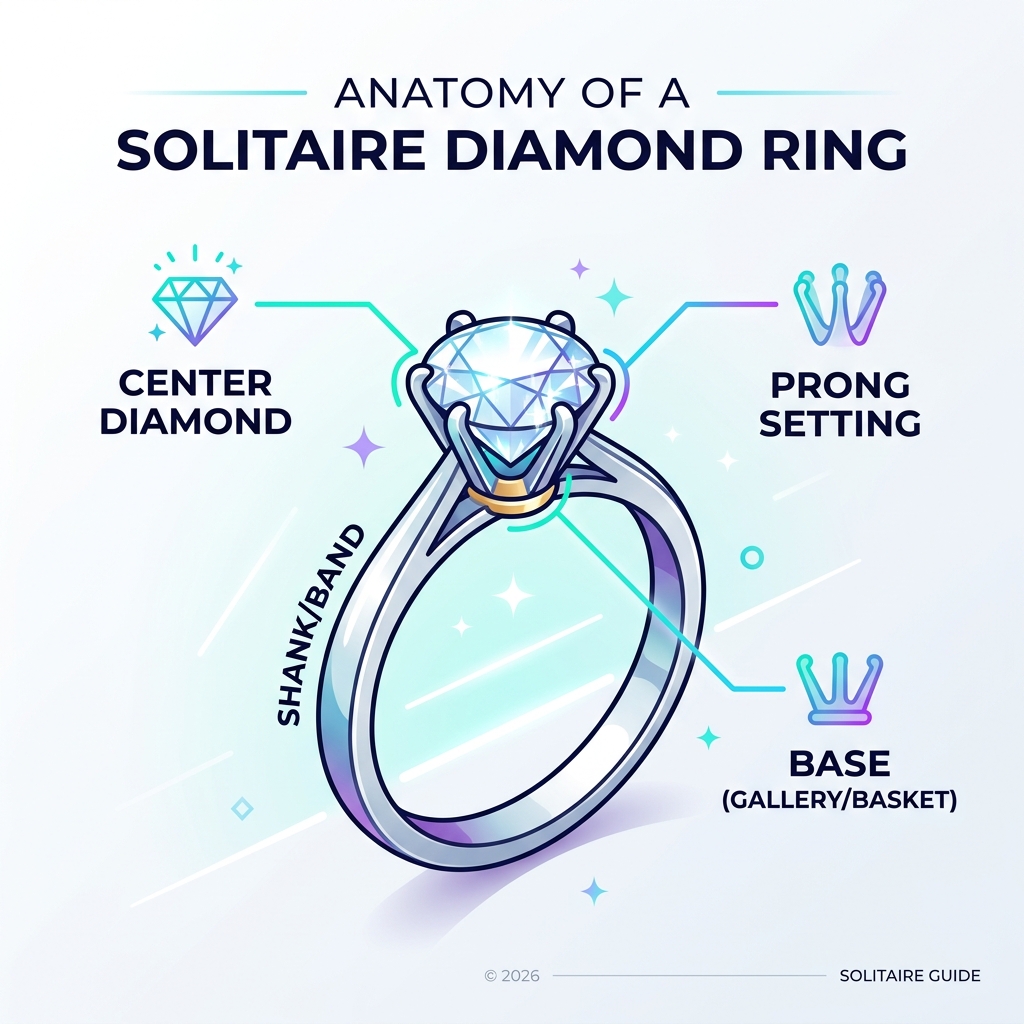
Solitaire diamond ring terms simplified:
- custom design consultation
- diamond pendant necklace
- fine jewelry
Why Choose a Solitaire Diamond Ring?
When we sit down with couples in our Northern Virginia studio, the question often arises: "Is a solitaire too simple?" Our answer is always a resounding "No." In fact, the simplicity of a solitaire diamond ring is its greatest strength.
The primary advantage of this style is its laser focus on the diamond. Without side stones or halos to distract the eye, the quality of your center stone takes center stage. This makes it a fantastic choice for those who have invested in a high-quality loose diamond.
Beyond aesthetics, solitaires are incredibly versatile. They pair seamlessly with almost any wedding band, from a simple metal hoop to a sparkling 3-row micro pave engagement ring. Because the setting uses less metal and fewer accent stones, it is often more cost-effective, allowing you to allocate more of your budget toward a larger or higher-quality center stone.
Furthermore, the solitaire is the definition of "heirloom quality." Trends in jewelry come and go—think of the heavy gold nuggets of the 80s or the ultra-chunky halos of the early 2000s—but a single diamond on a clean band has been the standard of elegance since the late 19th century. To learn more about how this compares to other styles, check out our engagement ring settings 101 guide.
Popular Diamond Shapes for Your Solitaire Diamond Ring
While the setting might be simple, the diamond shape you choose defines the ring's personality.
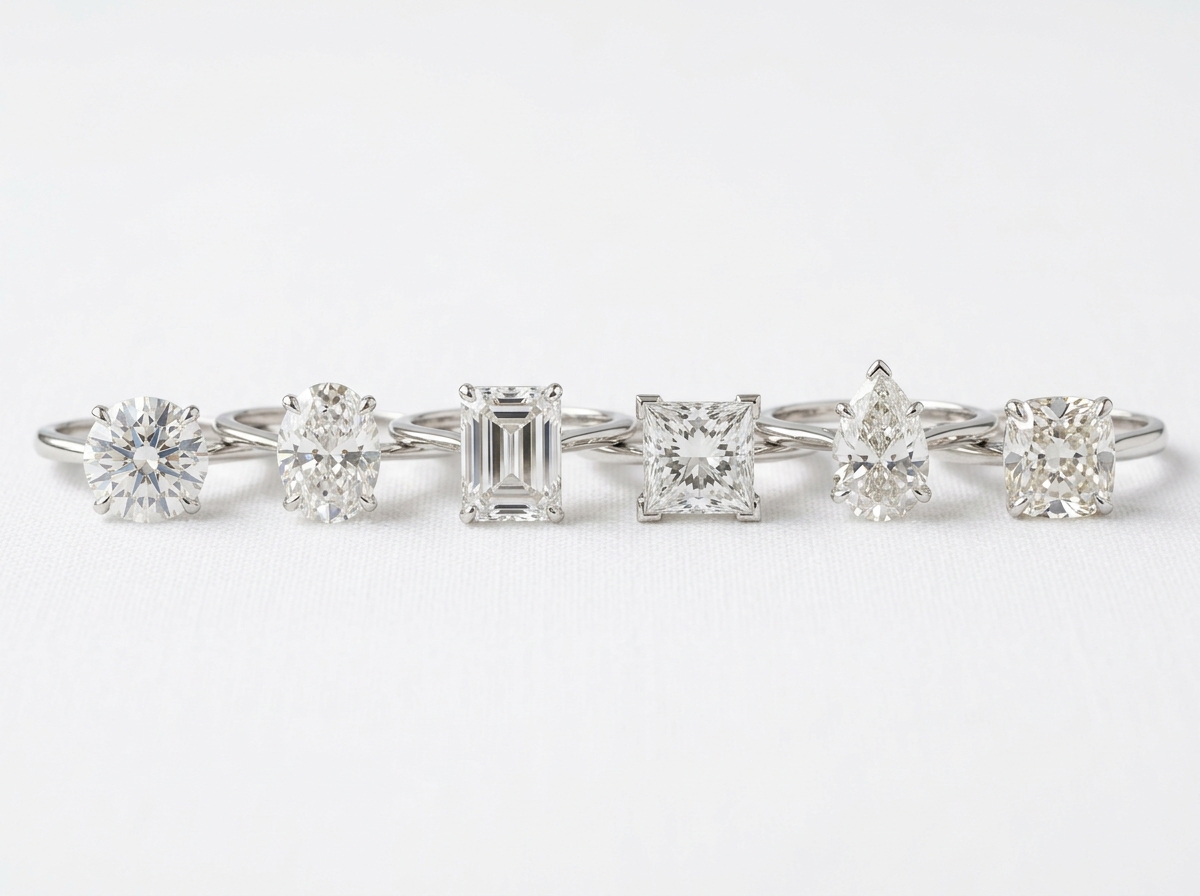
Round Brilliant
The undisputed king of the solitaire diamond ring. The round brilliant is prized for its 58 facets, designed specifically to maximize light return. It is the most traditional choice and offers the most "fire" and "brilliance." A timeless round cut solitaire diamond ring in 18ct white gold is a look that will truly never go out of fashion.
Oval Cut
For those who want the brilliance of a round diamond but with a modern twist, the oval is a stellar choice. Its elongated shape creates an illusion of greater size and can make the wearer’s fingers appear longer and more slender. Dive deeper into this shape with our ultimate guide to oval diamonds.
Emerald Cut
The emerald cut offers a "hall of mirrors" effect rather than the "sparkle" of a brilliant cut. It features long, linear facets that highlight the diamond's clarity. It’s sophisticated, vintage-inspired, and incredibly elegant. We’ve put together a complete guide to emerald cuts for those interested in this architectural style.
Princess, Pear, and More
- Princess Cut: A square shape with sharp corners, offering a modern, geometric look.
- Pear Shape: A "teardrop" that combines the best of the round and marquise shapes.
- Cushion Cut: A "pillow" shape with rounded corners, popular for its romantic, vintage feel.
- Radiant Cut: Combines the silhouette of an emerald cut with the brilliance of a round diamond.
Finding the Right Solitaire Diamond Ring Shape
Choosing the right shape is a balance between finger flattery and personal style. If you have shorter fingers, elongated shapes like the oval, pear, or marquise can add length. If you prioritize maximum sparkle, the round brilliant or radiant cut should be at the top of your list.
Every personality has a match; you can explore the perfect diamond shape for every personality to see which one resonates with you. When looking at loose diamonds, symmetry and light performance are key, especially in a solitaire where there are no other stones to hide imperfections.
Essential Settings and Metal Choices
The "mounting" is the framework that holds your diamond. In a solitaire diamond ring, the mounting is just as important as the stone because it determines the ring's profile and security.
| Setting Type | Pros | Cons |
|---|---|---|
| 4-Prong | Shows more of the diamond; makes the stone look square-ish. | Slightly less secure than 6 prongs. |
| 6-Prong | Extremely secure; maintains the round silhouette of the stone. | Covers more of the diamond's surface. |
| Bezel | Most secure; protects the diamond's edges; modern look. | Can make the diamond appear slightly smaller. |
Prong vs. Bezel
Most solitaires feature prongs—tiny metal claws that lift the diamond up to let light enter from all angles. A 6-prong setting is often referred to as the "Tiffany style," offering maximum security. Conversely, a bezel setting surrounds the diamond with a thin rim of metal. This is perfect for active individuals who worry about snagging their ring on clothing.
Metal Choices
The metal you choose significantly impacts the ring's "vibe":
- Platinum: The gold standard for durability. It’s naturally white and won't fade over time.
- 18K White Gold: Offers a similar look to platinum but requires occasional rhodium plating to maintain its bright white finish.
- Yellow Gold: Provides a warm, traditional contrast that makes a high-quality diamond pop.
- Rose Gold: A trendy, romantic choice that complements many skin tones.
For those who want a bit of extra flair without losing the solitaire feel, a pave engagement setting guide can show you how tiny diamonds on the band can enhance the center stone.
Customizing Your Solitaire Diamond Ring Mounting
Customization doesn't have to mean a complex design. Sometimes, it’s about the subtle details.
- Band Width: A dainty 1.5mm band makes the diamond look massive, while a 3mm "cigar band" feels substantial and modern.
- Cathedral Style: The metal shanks curve upward to support the diamond, giving the ring a grand, architectural profile.
- Hidden Halos: A tiny circle of diamonds sits just beneath the center stone, visible only from the side.
- Knife-Edge: The band comes to a slight point, reflecting light in a way that makes the metal look even thinner.
If you are looking for something truly unique, our custom design engagement ring guide explains how we can build a ring from the ground up, including custom emerald cut engagement rings.
Understanding Diamond Quality and Sourcing
In a solitaire diamond ring, there is nowhere for a low-quality diamond to hide. This is why understanding the 4Cs#Gemological_characteristics)-Cut, Color, Clarity, and Carat-is non-negotiable.
- Cut: This is the most important "C." A "Triple Excellent" cut grade ensures the diamond reflects the maximum amount of light.
- Color: For a white gold or platinum solitaire, we recommend G-J grades for the best value. In yellow gold, you can often go lower (K-L) as the metal's warmth masks the diamond's tint.
- Clarity: Look for "eye-clean" stones. You don't need a Flawless diamond; an SI1 or VS2 often looks identical to the naked eye.
- Carat: This is the weight of the stone. Two diamonds of the same carat weight can look different sizes depending on how they are cut.
For a deeper dive into these factors, read our guide on beyond the 4Cs.
Natural vs. Lab-Grown
The choice between natural and lab-grown diamonds is a personal one.
- Natural Diamonds: Formed over billions of years, these are rare and treasured for their unique origin. For pricing help, see our GIA certified diamonds price guide.
- Lab-Grown Diamonds: These are chemically and physically identical to natural diamonds but are created in a lab. They are significantly more affordable, often allowing you to get a 2 or 3-carat stone for the price of a 1-carat natural stone. Check out our certified lab diamonds guide for more details.
Regardless of your choice, ensure your stone is certified by a reputable lab like GIA or IGI to help verify its quality and sourcing.
Frequently Asked Questions about Solitaire Rings
How do I style a solitaire with a wedding band?
The beauty of the solitaire diamond ring is that it is a "blank canvas." You can pair it with a simple metal band for a classic look or a 3-row micro pave engagement ring style wedding band for extra sparkle. Curved or "shadow" bands are designed to fit snugly against the solitaire setting, eliminating any gap between the two rings.
What is the best way to maintain a solitaire ring?
Because the diamond is held by prongs, you should have it professionally inspected at least once a year. At Washington Diamond, we check for loose prongs and give the ring a professional ultrasonic cleaning. At home, you can keep your ring sparkling with mild dish soap, warm water, and a very soft toothbrush.
How do I determine the right carat weight?
There is no "right" answer, but consider the wearer's hand size. A 1-carat diamond looks much larger on a size 4 finger than on a size 9. Also, consider the "face-up" area; some shapes, like the marquise or pear, look larger than a round diamond of the same weight. If you're considering an emerald cut, our 1-carat custom emerald cut guide offers great visual comparisons.
Conclusion
The journey to finding the perfect solitaire diamond ring should be as special as the proposal itself. While many retailers offer a "one-size-fits-all" experience, we believe in something more personal.
At Washington Diamond, we operate a private, appointment-only studio in Northern Virginia. When you walk through our doors, you aren't just another customer at a counter; you are our only priority. We provide the expert guidance and undivided attention necessary to navigate the 4Cs, metal choices, and custom settings.
Whether you are looking for a timeless round cut solitaire or want to explore lab grown engagement rings, we are here to help you create a piece that tells your unique love story.
Ready to find the one? Start your custom jewelry journey with us today and experience the difference that expert, personalized service makes.
Have a question about your jewelry?
We've been helping clients with diamonds, custom design, repairs, appraisals, and more since 1969. Book a private appointment at our Falls Church studio.
Book an AppointmentTrusted since 1969 · Falls Church, VA · 703-536-3600
From the blog
View all


