

Beyond the 4Cs: How to Choose Your Perfect Certified Loose Diamond
The Foundation of a Confident Purchase
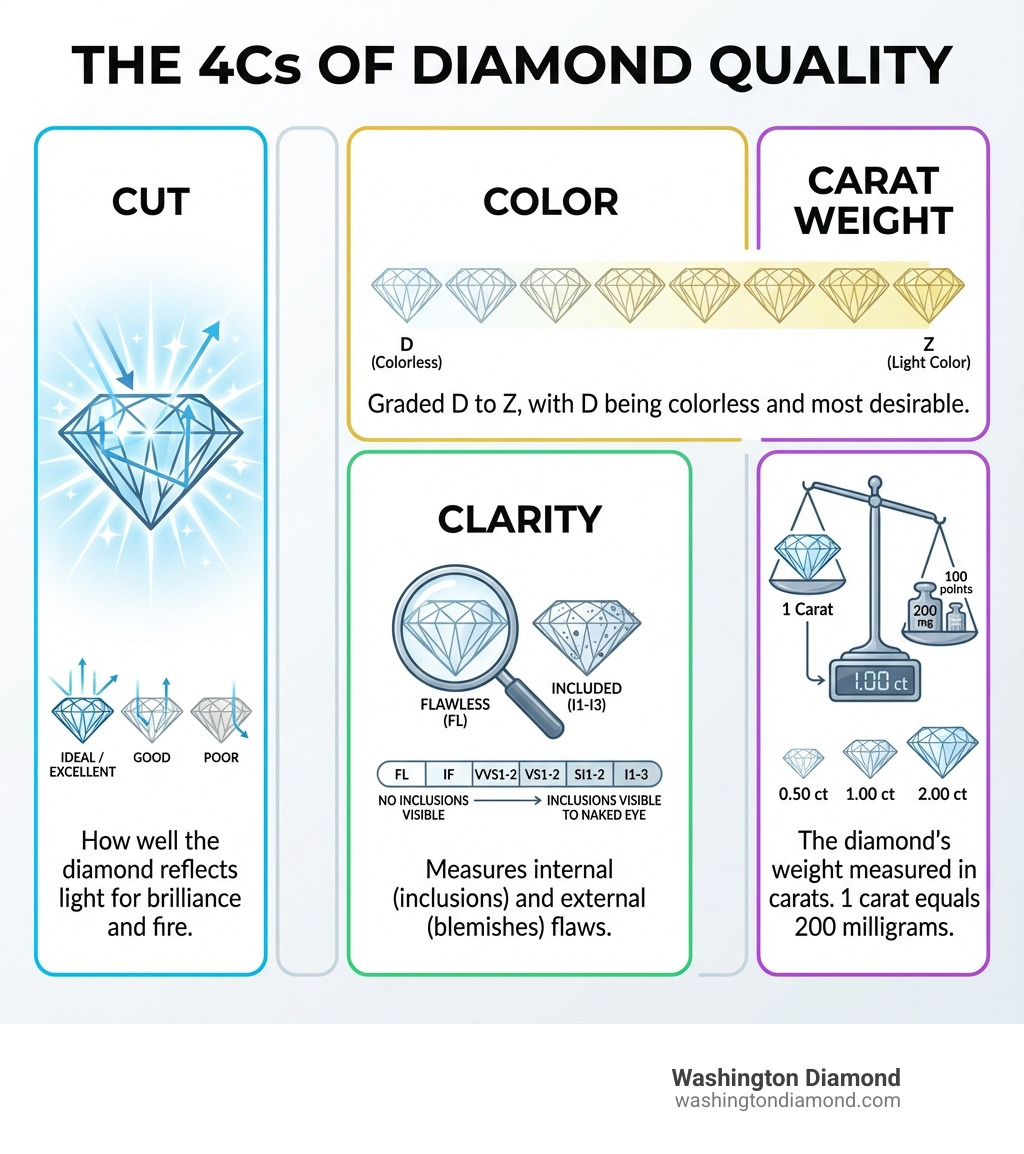
Certified loose diamonds come with an independent grading report from a laboratory like GIA that verifies their quality characteristics—the 4Cs of Cut, Color, Clarity, and Carat Weight. This unbiased assessment gives you confidence that what you're paying for matches what you're getting.
Quick Guide to Certified Loose Diamonds:
- What it is: A loose diamond with a laboratory grading report (usually GIA)
- Why it matters: Provides an independent, unbiased assessment of quality
- What you get: Verification of the 4Cs, plus details on polish, symmetry, fluorescence, and proportions
- Key benefit: Protection against overpaying and confidence in your purchase
- Where to buy: Reputable jewelers who specialize in hand-selected, certified stones
When you're planning an engagement or celebrating a milestone anniversary, the last thing you need is uncertainty about whether you're making the right choice. A certified loose diamond removes that doubt.
The Gemological Institute of America (GIA) created the 4Cs grading system and remains the benchmark for assessing diamond quality. Their certificates provide the transparency you need to make an informed decision—knowing exactly what you're buying and how it compares to the market.
Unlike buying a pre-set diamond ring where you're locked into someone else's choice, choosing a certified loose diamond lets you customize every detail. You can balance quality, size, and budget to find the perfect stone, then select a setting that reflects your personal story.
The research is clear: GIA-certified diamonds consistently hold their value better than non-certified stones because buyers trust the independent verification. This matters not just for resale, but for insurance appraisals and your peace of mind.
Decoding the Diamond Dossier: Why GIA Certification is the Gold Standard
When we talk about certified loose diamonds, one name consistently rises above the rest: the Gemological Institute of America, or GIA. Why is GIA certification considered the gold standard for diamonds? It's simple, really. The GIA created the very 4Cs grading system that the entire industry uses today. This means they literally wrote the book on how to assess diamond quality.
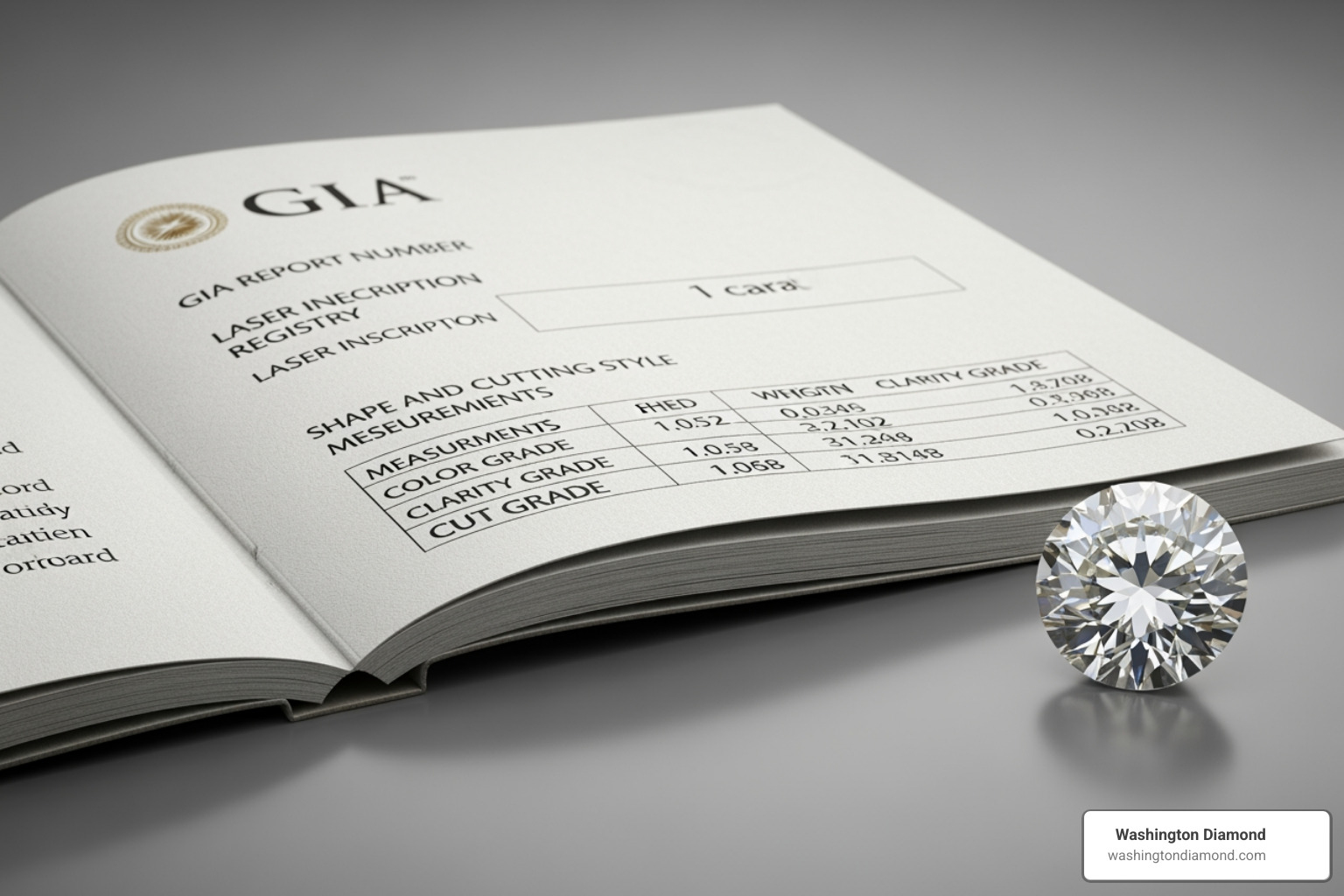
Their reputation isn't just built on history; it's maintained by rigorous scientific standards and unwavering objectivity. GIA grading standards are considered the strictest and most consistent among leading labs, making their certificate the undeniable benchmark for diamond quality. When you hold a GIA report, you're holding an assessment that is globally recognized for its scientific rigor and unbiased nature. We often say that a GIA certificate is different from other diamond grading reports precisely because of this commitment to consistency and impartiality. While other labs exist, GIA's strictness means less room for discrepancies in quality and, ultimately, value.
Beyond the 4Cs, a GIA certificate digs into other crucial characteristics that impact a diamond's beauty and integrity. It details the diamond's polish (the smoothness of its surface), symmetry (the precision of its facet arrangement), fluorescence (how it reacts to ultraviolet light), and proportions (the dimensions and angles that affect its sparkle). Many GIA-certified diamonds also feature a laser inscription on their girdle, a tiny, unique number that matches the one on its report, offering an extra layer of security and verification.
What Information is on a GIA Certificate?
A GIA diamond certificate is a comprehensive document, a diamond's autobiography, if you will. It provides a detailed, objective assessment of your stone's unique characteristics. Here's a breakdown of the key information you'll find:
- GIA Report Number: A unique identification number for your diamond, often laser-inscribed on the diamond's girdle.
- Date: The date the diamond was analyzed.
- Shape and Cutting Style: Identifies the diamond's shape (e.g., Round Brilliant, Princess, Emerald) and facet arrangement.
- Measurements: Precise dimensions of the diamond in millimeters.
- Carat Weight: The diamond's weight, measured to the hundredth of a carat.
- Color Grade: Assessed on the GIA D-Z color scale.
- Clarity Grade: Assessed on the GIA Flawless-I3 clarity scale.
- Cut Grade (for Round Brilliants): An overall assessment of how well the diamond's facets interact with light, ranging from Excellent to Poor. (GIA only assigns a cut grade for standard round brilliant diamonds).
- Finish (Polish and Symmetry): Grades for the quality of the diamond's surface finish and the precision of its facet alignment.
- Fluorescence: Describes the diamond's reaction to long-wave ultraviolet light, ranging from None to Very Strong.
- Clarity Plot: A diagram showing the approximate location, type, and size of inclusions and blemishes within the diamond. It's like a fingerprint for your stone!
- Proportions Diagram: A graphic representation of the diamond's facet angles, table size, and depth percentage, which all influence its light performance.
- Security Features: GIA reports include various security features, such as holograms, microprint lines, and QR codes, to prevent counterfeiting.
This wealth of information ensures that when you choose a certified loose diamond, you have a complete picture of its quality, leaving no room for doubt.
How GIA's Color and Clarity Scales Work
Understanding the GIA's color and clarity scales is fundamental to making an informed decision about your certified loose diamond. These scales provide a universal language for describing two of the most critical 4Cs.
GIA Color Grading Scale:
The GIA color scale measures the absence of color in a diamond, ranging from D (colorless) to Z (light yellow or brown). The less color a diamond has, the higher its grade and, generally, its value.
- D-F (Colorless): These diamonds are truly colorless, often described as icy white. They are the rarest and most valuable.
- G-J (Near Colorless): Diamonds in this range appear colorless to the untrained eye, especially when mounted. They offer excellent value, as their slight tint is usually imperceptible.
- K-M (Faint): These diamonds have a faint yellow tint that is usually noticeable.
- N-R (Very Light): A more obvious light yellow or brown tint.
- S-Z (Light): These diamonds have a distinct yellow or brown color, moving towards "fancy" color territory if the color intensifies.
For a beautiful diamond that still offers great value, we often guide our clients toward the G-J range. In a well-chosen setting, these diamonds can look just as stunning as their colorless counterparts without the premium price tag.
GIA Clarity Grading Scale:
The GIA clarity scale assesses the presence of inclusions (internal characteristics) and blemishes (external characteristics) under 10x magnification. Just like a diamond's color, its clarity is a key factor in its overall appearance and value.
- FL (Flawless): No inclusions or blemishes visible under 10x magnification. These are incredibly rare.
- IF (Internally Flawless): No inclusions visible under 10x magnification, only minor blemishes. Also extremely rare.
- VVS1-VVS2 (Very, Very Slightly Included): Inclusions are extremely difficult to see under 10x magnification, even for a skilled grader.
- VS1-VS2 (Very Slightly Included): Inclusions are difficult to see under 10x magnification. They are typically minor and do not impact the diamond's beauty.
- SI1-SI2 (Slightly Included): Inclusions are noticeable under 10x magnification and may be visible to the naked eye, especially in the SI2 range. However, many SI1 and some SI2 diamonds can still be "eye-clean" (meaning no inclusions are visible without magnification). These often represent excellent value.
- I1-I3 (Included): Inclusions are obvious under 10x magnification and are usually visible to the naked eye. They can sometimes affect the diamond's durability or transparency.
Our goal is often to help you find an "eye-clean" diamond at the best possible value, which frequently means looking at diamonds in the VS and SI ranges. These diamonds often provide the perfect balance of beauty and budget, allowing you to maximize other factors like carat weight or cut.
The Value Proposition: The Benefits of Buying Certified Loose Diamonds
Choosing a certified loose diamond isn't just a smart move; it's an empowering one. It's about knowing exactly what you're investing in and having the peace of mind that comes with verifiable quality. The benefits extend far beyond simply owning a beautiful stone.
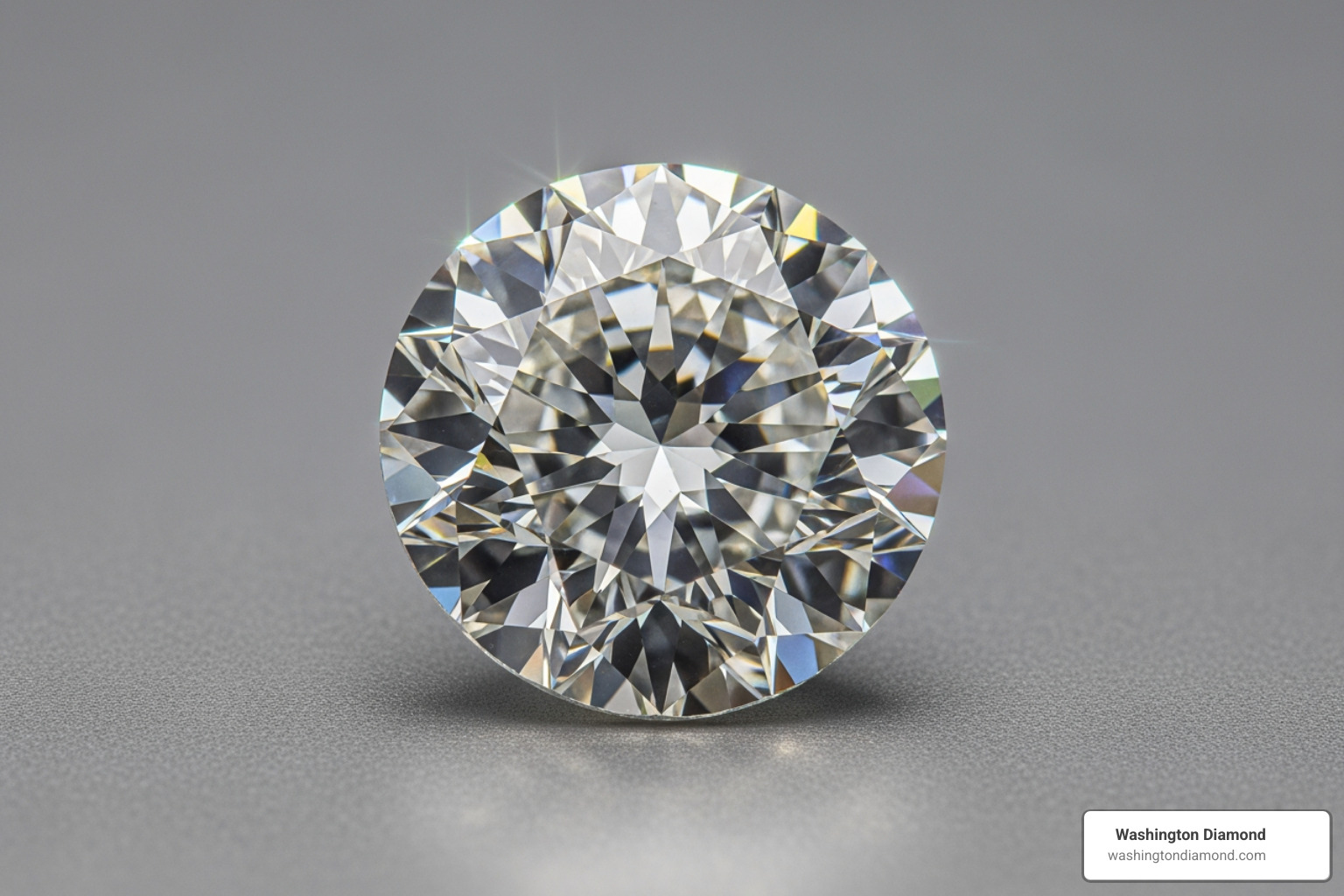
Firstly, there's the undeniable trust and credibility that comes with a GIA certificate. When we say a diamond has undergone a thorough evaluation by an independent laboratory, we mean it's been assessed without bias, providing an objective snapshot of its unique characteristics. This transparency is invaluable. You know you're getting an accurate assessment of the diamond's 4Cs, which means you're equipped to make an informed decision and avoid overpaying. We've seen countless times how this confidence translates into a more enjoyable and stress-free purchasing experience for our clients.
Beyond the initial purchase, GIA-certified diamonds offer significant advantages for the long term. They tend to hold their resale value better than non-certified stones. Why? Because the next buyer (should you ever decide to sell or upgrade) will also trust the GIA's assessment. This makes the diamond more marketable and ensures it retains more of its value over time.
For similar reasons, GIA-certified diamonds simplify insurance appraisals. An insurance company can easily verify the diamond's quality based on the certificate, ensuring accurate coverage in case of loss or damage. This quality assurance and transparency are paramount. You're not just buying a diamond; you're buying a documented piece of geological history with a verified pedigree.
Finally, while GIA itself doesn't certify ethical sourcing directly, many reputable jewelers (including us!) who deal in GIA-certified loose diamonds also commit to conflict-free sourcing. We believe that the journey of your diamond should be as beautiful as the diamond itself, ensuring it has been ethically obtained.
Can a GIA Certificate Guarantee a Diamond's Monetary Value?
This is a common and very important question, and the answer is nuanced: No, a GIA certification does not guarantee a diamond's monetary value. The GIA's role is to provide an objective assessment of a diamond's quality characteristics – its 4Cs, polish, symmetry, fluorescence, and proportions. They are gemologists, not appraisers.
Think of it this way: a GIA certificate is like a detailed report card for a student. It tells you how well they performed in various subjects, but it doesn't tell you what job they'll get or how much money they'll earn in the future.
The actual monetary value of a diamond, at any given time, is influenced by a dynamic interplay of factors outside the scope of a grading report:
- Market demand: Just like any commodity, if a particular quality or size of diamond is in high demand, its price will likely increase.
- Trends: Fashion and cultural trends can shift preferences for certain diamond shapes or characteristics, affecting their value.
- Rarity: Truly rare diamonds (exceptional color, clarity, or size) will naturally command higher prices.
- Craftsmanship: While the GIA grades the diamond itself, the quality of the setting and the overall artistry of a finished piece of jewelry can add significant value.
So, while the GIA certificate provides the essential foundation for understanding a diamond's inherent quality, it's the market that ultimately determines its price. However, having that objective assessment is absolutely vital because it allows us to compare diamonds accurately and understand what a fair market price should be based on its verified qualities. Without it, you'd be guessing!
For a deeper dive into understanding diamond pricing, we invite you to explore: Calculate the Value of a Diamond Before You Buy or Sell
Are GIA-Certified Diamonds More Valuable Than Non-Certified Diamonds?
Yes, unequivocally, GIA-certified diamonds tend to be more valuable than non-certified diamonds, and for very good reasons. This isn't just about a piece of paper; it's about the trust and transparency that paper represents.
Here's why:
- Buyer Confidence: A GIA certificate provides an accurate and independent assessment of the diamond's quality. This instills immense confidence in buyers, knowing exactly what they are purchasing. This confidence translates directly into higher perceived and actual value.
- Accurate Assessment: Without a GIA certificate, a diamond's quality is often based on the seller's word or a less stringent lab report. This introduces subjectivity and potential for misrepresentation. GIA's strict standards ensure you're getting what you pay for.
- Investment Protection: As we discussed, a GIA certificate doesn't guarantee monetary value, but it absolutely protects your investment. It ensures you're not overpaying for a diamond whose true quality is lower than advertised. It's a safeguard against financial disappointment.
- Marketability and Resale: When it comes time to sell or upgrade your diamond, a GIA certificate makes the process significantly easier and more favorable. Buyers in the secondary market overwhelmingly prefer certified diamonds because they can trust the grading. This improved marketability often leads to a better resale price.
- Insurance and Appraisal: For insurance purposes, a GIA certificate provides the objective data needed for an accurate appraisal, ensuring you have appropriate coverage for your valuable asset.
A GIA-certified diamond offers transparency and accountability that non-certified diamonds simply cannot. This verifiable quality makes them a more secure and, therefore, more valuable asset in the long run. It's not just about the diamond's inherent beauty; it's about the peace of mind and financial security that comes with knowing its exact characteristics, verified by the world's leading authority.
To learn more about the enduring appeal of these precious stones, find: The Legend and Symbolism of the Diamond
From Report to Ring: How to Choose Your Perfect Certified Loose Diamond
So, you've decided on a certified loose diamond – excellent choice! Now comes the exciting part: selecting the one that speaks to you. This process is all about balancing the 4Cs with your personal preferences and budget. It's a bit like being a diamond detective, using the GIA report as your magnifying glass.
When we help clients choose their perfect stone, we often start by balancing the 4Cs. While a perfect D Flawless diamond is a dream for many, it's often not necessary to achieve breathtaking beauty. We can guide you to find an "eye-clean" clarity (meaning no inclusions are visible without magnification) and a near-colorless grade that looks stunning once set. The cut quality, however, is one area where we rarely compromise, as it's the primary driver of a diamond's sparkle.
Your chosen diamond shape is also incredibly personal. Whether you adore the classic brilliance of a round, the neat lines of an emerald, or the romantic curves of a cushion, the shape sets the tone for your entire piece. Don't forget to consider how the shape might impact the perception of size or how it will look in your chosen setting.
Finally, we work closely with you on budgeting. The beauty of choosing a loose diamond is the flexibility it offers. You can prioritize carat weight, or perhaps a higher color grade, knowing that with clever choices in other areas, we can find a diamond that truly impresss without breaking the bank. It's about finding that sweet spot where quality, size, and value align perfectly for you.
We take pride in helping you steer this journey. We invite you to explore our exquisite collection and find the perfect stone for you. Shop Hand-Picked Certified Loose Diamonds
What to Look for in a Certified Loose Diamond
When you're sifting through the dazzling array of certified loose diamonds, armed with your GIA report, here's what we recommend focusing on to ensure you find a diamond that truly sparkles and brings you joy for years to come:
- Cut Grade (Excellent/Very Good): For round brilliant diamonds, the cut grade is paramount. It determines how well the diamond reflects light, creating its brilliance, fire, and sparkle. We strongly advise aiming for a GIA cut grade of "Excellent" or "Very Good." An "Excellent" cut reflects almost all light, offering optimal performance. A "Very Good" cut still displays high brightness and fire, with only minor compromises. For fancy shapes (like princess, emerald, or oval), GIA doesn't assign an overall cut grade, so we'll help you evaluate its proportions, symmetry, polish, and face-up appearance.
- Color Grade (G-J for Value): While D-F are truly colorless, diamonds in the G-J "Near Colorless" range offer exceptional value. To the naked eye, especially when set in white gold or platinum, these diamonds often appear colorless, allowing you to allocate more of your budget to cut or carat weight.
- Clarity Grade (VS2/SI1 for Value): For most buyers, an "eye-clean" diamond is the goal. We find that VS2 (Very Slightly Included) and SI1 (Slightly Included) clarity grades frequently offer the best balance of beauty and value. Inclusions in these grades are typically difficult or impossible to see without 10x magnification, meaning they won't detract from the diamond's beauty. We'll examine the clarity plot on the GIA report with you to ensure any inclusions are not centrally located or too prominent.
- Carat Weight vs. Budget: This is where personal preference and practicality meet. While a larger diamond is often desired, a smaller diamond with an excellent cut and good color/clarity will often appear more brilliant and lively than a larger, poorly cut stone. We'll help you balance carat weight with the other Cs to find the largest, most beautiful diamond within your budget.
The perfect diamond is one that you fall in love with. We're here to guide you through the technical details so you can focus on finding that special connection.
To find the perfect match for your style, check out: The Perfect Diamond Shape for Every Personality
Why Choose GIA Certified Loose Diamonds Over Others?
When starting on the journey to acquire a diamond, you'll encounter various grading reports from different laboratories. However, we consistently recommend choosing GIA-certified loose diamonds, and there are compelling reasons why this choice stands out:
- Avoiding Lenient Labs: Not all diamond grading laboratories are created equal. Some labs are known to be more lenient in their grading, which can result in a diamond receiving a higher grade than it would from the GIA. This means you could unknowingly pay for a higher quality diamond than you're actually receiving. GIA's reputation for strict and unbiased grading protects you from such discrepancies.
- Grading Consistency: The GIA's grading standards are globally recognized for their consistency. This means a GIA "Excellent" cut diamond or a "G" color diamond will meet the same exacting criteria whether it was graded last year or last week, and whether it was submitted in New York or Hong Kong. This consistency is crucial for fair comparison and accurate valuation.
- Global Standard: The GIA is the most respected and widely recognized gemological laboratory in the world. Its certificates are trusted by jewelers, appraisers, and consumers across the globe. This universal acceptance means that a GIA certificate is easily understood and accepted anywhere, which is a significant advantage if you ever need to appraise, insure, or potentially sell your diamond.
- Protecting Your Investment: Choosing a GIA-certified diamond is fundamentally about protecting your investment. The accuracy and integrity of the GIA report ensure that the diamond's quality is precisely documented. This transparency minimizes risk, prevents overpayment for misrepresented qualities, and improves the diamond's long-term value and marketability. It's a testament to the fact that you've made a secure and informed purchase.
While you might find diamonds with seemingly "better" grades from other labs at a lower price, this often comes at the cost of reliability and true value. With GIA, you're not just buying a diamond; you're buying assurance, transparency, and a globally recognized standard of quality.
For a deeper understanding of how diamond pricing truly works, we recommend reading: Beyond the Bling: What a Diamond Price Chart Really Tells You
Frequently Asked Questions about Certified Diamonds
We understand that buying a diamond can raise many questions, and we're here to provide clear, straightforward answers. Here are some of the most common inquiries we receive about certified loose diamonds:
How does a GIA certificate differ from an appraisal?
This is an excellent question that highlights a key distinction. A GIA certificate (or grading report) is a document that provides an objective, scientific assessment of a diamond's characteristics. It details the diamond's 4Cs (cut, color, clarity, carat weight), along with other attributes like polish, symmetry, and fluorescence. Crucially, a GIA certificate does not assign a monetary value to the diamond. Its purpose is to describe the stone itself.
An appraisal, on the other hand, is a document that assigns a monetary value to the diamond, typically for insurance purposes, resale, or estate planning. An appraiser will use the information from a GIA grading report as a foundation for their valuation, but they will also consider other factors such as current market conditions, retail markups, and the craftsmanship of any setting. So, while a GIA certificate tells you what your diamond is, an appraisal tells you what it's worth in a specific context.
Does fluorescence affect a diamond's quality?
Fluorescence refers to the visible light a diamond emits when exposed to ultraviolet (UV) radiation, which is present in natural daylight and some artificial lighting. The GIA report notes fluorescence levels, typically ranging from "None" to "Very Strong."
In most cases, fluorescence has no visible effect on a diamond's appearance. In fact, for some diamonds with a faint yellow tint (like those in the I, J, or K color grades), a "Strong Blue" fluorescence can actually make the diamond appear whiter or more colorless by neutralizing the yellow tint. It's like a natural whitener!
However, in very rare instances (less than 0.2% of gem-quality diamonds), "Strong" or "Very Strong" fluorescence can cause a diamond to appear milky, oily, or hazy, even in normal lighting conditions. These diamonds are often discounted. Unless the fluorescence is explicitly noted as having a negative impact on transparency, it's generally not something to be overly concerned about, and can even be a positive attribute for certain color grades. We'll always guide you on its impact for any specific stone.
Can a certified diamond get damaged?
Yes, absolutely. While diamonds are renowned as the hardest natural substance on Earth (ranking 10 on the Mohs scale of hardness), "hard" does not mean "indestructible." Hardness refers to a material's resistance to scratching. However, diamonds can still chip, fracture, or even break if struck with enough force in a specific direction, particularly along their cleavage planes or thin girdles.
A GIA certificate provides a comprehensive assessment of a diamond's inherent quality and characteristics, but it does not guarantee its indestructibility. It's a detailed report of the diamond's condition at the time of grading. Just like a beautiful, certified antique vase can still break if dropped, a certified diamond needs to be treated with care. If your certified diamond does unfortunately get damaged, we recommend consulting a trusted jeweler or gemologist for inspection. If it's insured, review your policy and contact your insurer immediately.
Your Perfect Diamond Awaits
Choosing a certified loose diamond is the smartest way to ensure you receive a beautiful, high-quality stone with verified characteristics. This knowledge empowers you to select a diamond with confidence, knowing its quality is backed by the world's foremost authority. At Washington Diamond, our experts provide a personalized, private consultation to help you interpret these details and find the perfect diamond that reflects your story and fits your budget. We believe that buying a diamond should be an experience as joyful and sparkling as the diamond itself.
Have a question about your jewelry?
We've been helping clients with diamonds, custom design, repairs, appraisals, and more since 1969. Book a private appointment at our Falls Church studio.
Book an AppointmentTrusted since 1969 · Falls Church, VA · 703-536-3600
From the blog
View all


