

The Complete Guide to Vintage Engagement Ring Options
Why Vintage Engagement Rings Are Having a Major Moment in 2026

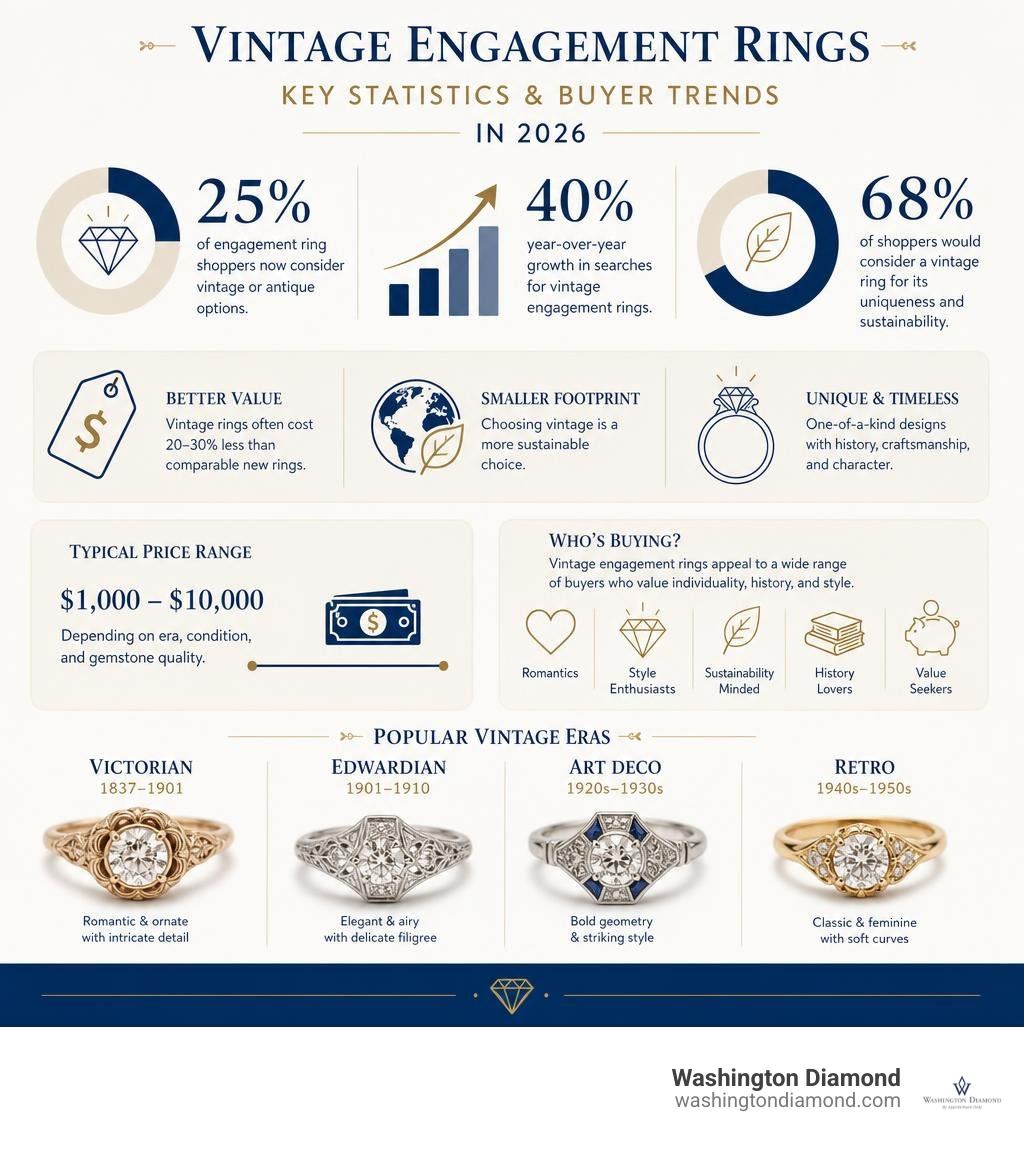
Vintage engagement rings combine history, craftsmanship, and meaning in a way that modern rings often can't match. Here's a quick overview of what makes them special:
- What they are: Rings made roughly 20–100 years ago, featuring hand-crafted details from eras like Art Deco, Edwardian, and Victorian
- Why people choose them: Unique designs, lower prices (often 20–30% less than comparable new rings), and a smaller environmental footprint
- Popular eras: Victorian (1837–1901), Edwardian (1901–1910), Art Deco (1920s–1930s), Retro (1940s–1950s)
- Typical price range: $1,000–$10,000 depending on era, condition, and gemstone quality
- Who's buying them: Around 25% of engagement ring shoppers now consider vintage or antique options — and searches for vintage rings have grown 40% year over year
Vintage rings aren't just a budget-friendly choice. They're a statement. Each one carries a story, a style, and a level of detail that mass-produced rings rarely replicate. It's no surprise that 68% of shoppers in a recent survey said they'd consider a vintage ring for its uniqueness and sustainability.
This guide walks you through everything — from identifying authentic pieces to caring for them, resizing them safely, and finding the right one for your budget.
I'm Tom Daube, a jewelry designer and GIA-certified diamond expert ranked in the top 1% of jewelers nationwide, with decades of experience helping couples find extraordinary vintage engagement rings that fit their story and their budget. Let's dig into everything you need to know to shop with confidence.
Understanding Vintage Engagement Rings: Definitions and Eras
When exploring older jewelry, the terminology can sometimes feel confusing. To navigate the market easily, it helps to understand how jewelers define the age of a piece:
- Vintage: A ring is officially classified as vintage if it was crafted between 20 and 100 years ago. In 2026, that means pieces created roughly between 1926 and 2006 fall into the vintage category.
- Antique: To earn the title of antique, a piece must be at least 100 years old (crafted prior to 1926).
- Retro: Referring specifically to jewelry produced during the late 1930s through the 1950s, Retro styles reflect the bold, geometric optimism of mid-century design.
- Estate: "Estate" simply means pre-owned. An estate ring can be two years old or two hundred years old.
Understanding these distinctions ensures you know exactly what you are purchasing when browsing antique jewelry engagement rings. Over the decades, ring architecture has evolved dramatically, shifting from hand-forged, intricate metalwork to sleek, computer-assisted designs.
Key Eras for Vintage Engagement Rings
Each design era brought its own artistic philosophy, technological advances, and romantic motifs. Understanding these eras helps you pinpoint which aesthetic resonates most with your personal style.

- Victorian Era (1837-1901): Named after Queen Victoria, this period embraced deep romance and nature-inspired motifs. Early Victorian designs highlighted floral patterns, hearts, and serpent motifs (symbolizing eternal love). Middle and late Victorian pieces featured bolder gold settings, halo arrangements, and rich gemstones like garnets and sapphires alongside diamonds.
- Edwardian Era (1901-1910): Known for light, feminine, and ethereal aesthetics, the Edwardian period celebrated the introduction of platinum in jewelry making. Artisans crafted delicate lace-like filigree, milgrain edging (tiny beadwork on metal borders), and bow or ribbon motifs.
- Art Deco Era (1920s-1930s): Perhaps the most celebrated period for vintage engagement rings, Art Deco design embraced bold geometric shapes, sharp angles, and architectural symmetry. Platinum and white gold dominated, often set with vibrant accent stones like onyx, rubies, and emeralds. If you love clean lines paired with intricate detailing, explore our broader guide to antique jewelry engagement rings.
- Retro Era (1930s-1950s): Influenced by Hollywood glamour and post-war optimism, Retro jewelry featured large, eye-catching cocktail designs. Sculptural rose gold and yellow gold settings, oversized synthetic rubies or aquamarines, and glamorous fan motifs define this vibrant era.
Gemstones and Diamond Cuts in Vintage Engagement Rings
Before modern laser technology revolutionized diamond cutting, master artisans shaped diamonds entirely by hand under candlelight. This produced unique cuts tailored to maximize sparkle in low light:
- Old Mine Cut: Popular in the 18th and 19th centuries, these cuts feature a squarish shape, a high crown, a small table, and an open culet (a flat facet at the bottom tip).
- Old European Cut: The direct predecessor to the modern round brilliant diamond, the Old European cut features a round outline, heavy crown, and larger facets that create soft, inner warmth rather than sharp brilliance.
- Step Cuts: Popularized during the Art Deco era, step cuts include emerald and baguette cuts, emphasizing clarity and geometric sophistication. Learn more in our Emerald Cut Diamond Complete Guide.
- Colored Gemstone Accents: Vintage rings frequently incorporated sapphires, rubies, and emeralds to create vivid color contrast against central diamonds.
To learn more about how diamond cutting evolved and what makes these historic cuts so intriguing, read about The Legend And Symbolism Of The Diamond.
Evaluating Value, Authenticity, and Condition
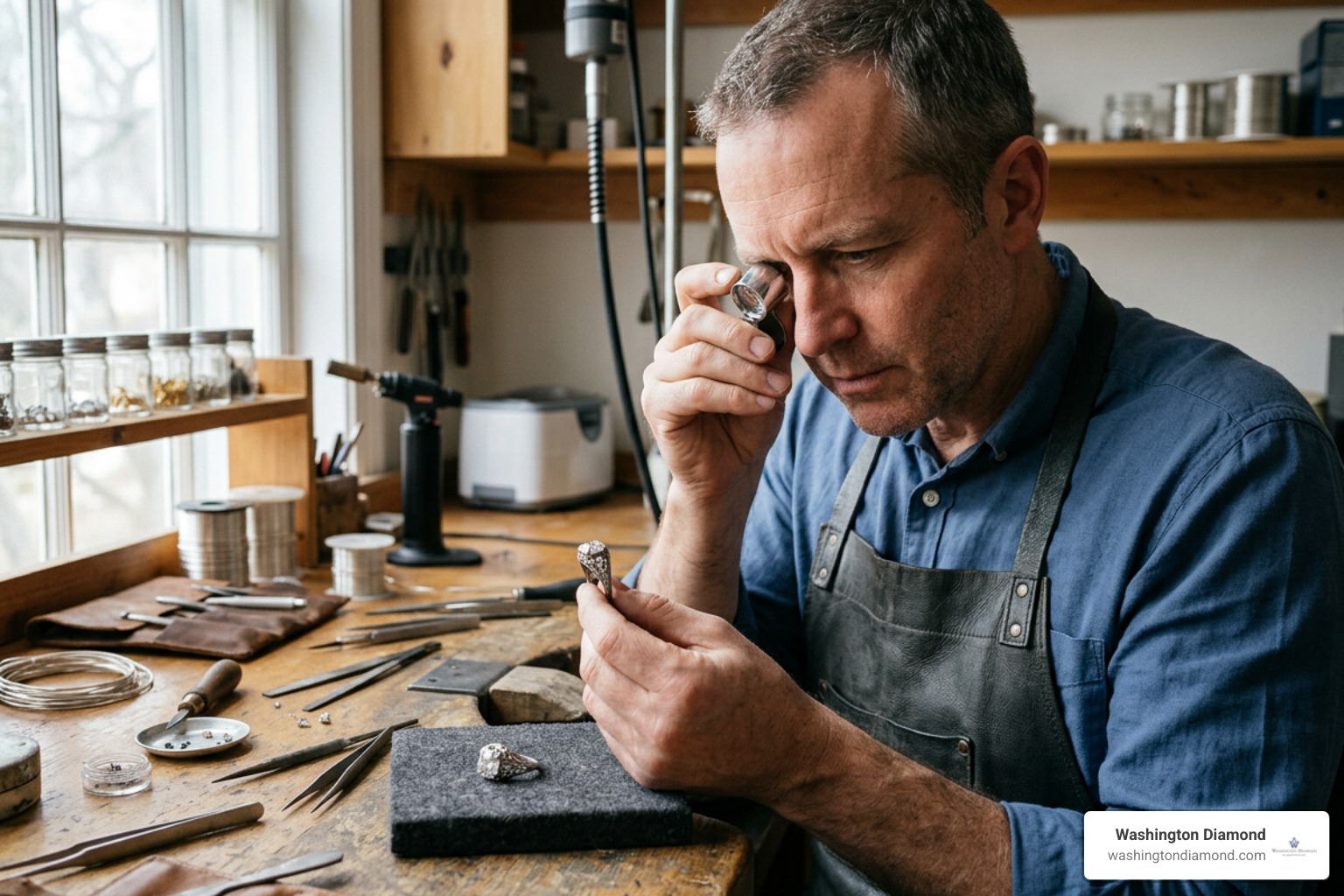
Buying an authentic vintage piece requires careful inspection to ensure you are getting real history and lasting quality rather than a modern reproduction or compromised structure.
When evaluating a vintage ring, keep these key factors in mind:
- Hallmark Verification and Maker Marks: Authentic vintage rings often contain stamped hallmarks inside the band indicating metal purity (e.g., 14K, 18K, PLAT) and, occasionally, the maker's signature or date stamp.
- Structural Integrity: Over decades of wear, precious metals gradually wear down. Check the shank (the bottom of the band) for excessive thinning, cracks, or signs of poor past repairs.
- Prong Wear: Ensure all prongs securing the center diamond or gemstone are sturdy. Flat or worn prongs can lead to lost stones.
- Appraisal and Certification: Ensure the center stone comes with an independent gemological evaluation or modern appraisal verifying authenticity, color, clarity, and stone weight.
To better understand pricing factors across both pre-owned and new jewelry, review our detailed Engagement Ring Prices Guide 2026.
Comparing Vintage and Modern Engagement Rings
| Feature / Characteristic | Vintage Engagement Rings | Modern Engagement Rings |
|---|---|---|
| Typical Cost relative to Quality | 20% to 30% lower than comparable new rings | Higher cost due to raw material and modern fabrication markup |
| Average Price Range | $1,000 – $10,000+ | $3,500 – $12,000+ |
| Craftsmanship Technique | Hand-engraved, filigree, hand-cut facets | CAD modeling, 3D printing, laser precision |
| Environmental Footprint | Extremely low (100% recycled pre-owned metal & gems) | Requires new mining unless explicitly recycled |
| Rarity and Uniqueness | One-of-a-kind historic availability | Reproducible mass production or custom work |
| Maintenance Needs | Requires gentle care and periodic prong checks | Highly durable for modern active lifestyles |
Pros and Cons: Vintage vs. Modern and Custom Rings
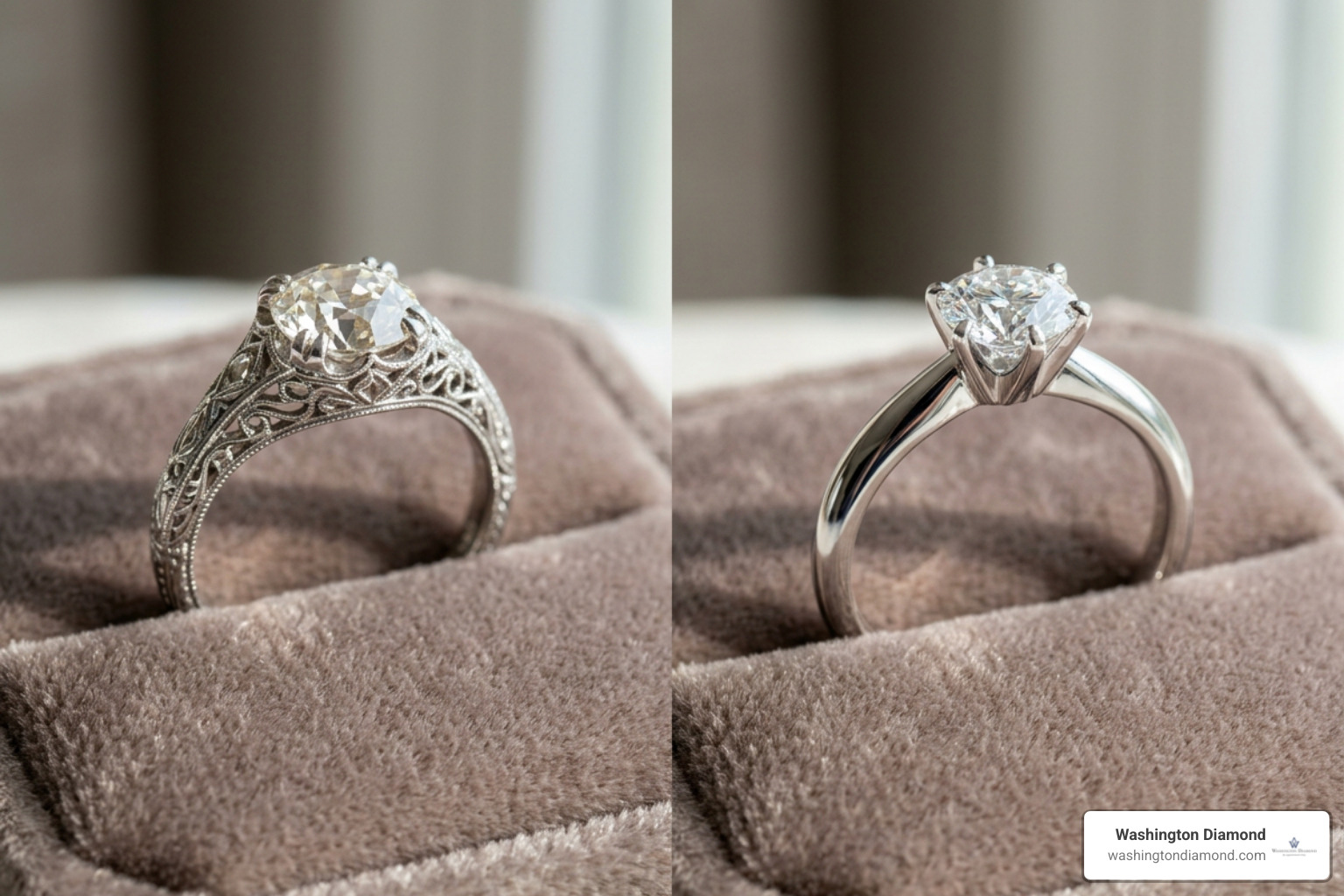
Choosing between a authentic vintage piece, a brand-new ring, or a custom reproduction comes down to your personal priorities and lifestyle.
Pros of Vintage Engagement Rings:
- Sustainable Luxury: Choosing an existing ring avoids new mining, dramatically reducing carbon emissions and environmental impact.
- Unmatched Uniqueness: You are almost guaranteed never to see another person wearing your exact same ring.
- Exceptional Value: Because you aren't paying for raw mining overhead, vintage engagement rings offer superior gemstone size and quality per dollar spent.
Cons of Vintage Engagement Rings:
- Fragility: Older delicate settings and filigree can be more sensitive to modern daily wear and tear.
- Sizing Tolerances: Intricate bands with continuous engraving or delicate side stones can be difficult or impossible to resize significantly.
If you love the aesthetic of a past era but want modern structural integrity, creating a inspired custom piece offers the best of both worlds. Explore your custom options in our Custom Engagement Rings Ultimate Guide and learn about setting structural differences in Engagement Ring Settings 101.
Where to Shop and How to Safely Resize Vintage Pieces
Finding authentic vintage engagement rings requires shopping with reliable, knowledgeable source channels:
- Specialized Estate Jewelers: Offers curated, verified historical pieces backed by professional gemologists.
- Estate Sales and Auctions: Provides opportunities for rare finds, though expert evaluation is recommended before purchasing.
- Online Marketplaces: Accessible options, but ensure the retailer offers comprehensive return policies and official appraisals.
When it comes to resizing, historical rings require specialized care. Traditional torch soldering can heat up nearby stones or destroy delicate filigree. Modern master jewelers use precision laser welding, which concentrates localized heat safely without harming adjacent antique work. If a ring needs to expand significantly, a skilled jeweler can perform a shank replacement—inserting matching metal into the bottom of the band to preserve structural balance.
Care and Maintenance Guidelines for Older Jewelry
Protecting an antique or vintage ring requires thoughtful daily maintenance:
- Avoid Ultrasonic Cleaners: Ultrasonic machines use high-frequency sound waves that can loosen stones in older pave or filigree mountings and shatter delicate gems like emeralds or opals.
- Use Gentle Hand Cleaning: Clean your ring at home using a warm water bath, mild liquid dish soap, and a soft-bristled toothbrush. Gently brush underneath the setting where oils accumulate.
- Prevent Chemical Exposure: Remove your ring before using household cleaning chemicals, swimming in chlorinated pools, or applying lotions and perfumes.
- Schedule Annual Inspections: Have your ring inspected once a year by a professional jeweler to verify that all prongs are tight and settings remain secure.
For broader care tips and long-term ring preservation techniques, check out our Diamond Ring Complete Guide 2026.
Frequently Asked Questions
How old does a ring need to be to be considered vintage?
A ring must be at least 20 years old to be considered vintage. Rings crafted 100 years ago or earlier are classified as antique. Pieces produced in recent decades (less than 20 years old) are categorized simply as pre-owned or modern estate jewelry.
Can older diamond rings be worn every day?
Yes, most vintage engagement rings can be worn daily with appropriate care. Rings made from platinum or karat gold featuring diamonds or sapphires are highly durable. However, extra care should be taken with delicate filigree settings or softer center gemstones like opals and pearls.
Why do older diamond cuts look different than modern cuts?
Older diamond cuts—such as Old Mine or Old European cuts—were cut by hand to sparkle under soft candlelight. They feature broader facets, higher crowns, and smaller tables, producing warm, inner reflections compared to the sharp, fiery sparkle produced by modern laser-cut diamonds.
Conclusion
A vintage engagement ring is more than a piece of fine jewelry; it is an enduring symbol of love, history, and individual style. Whether you are drawn to the romantic lace of Edwardian platinum or the bold geometric lines of Art Deco design, these rings offer unprecedented beauty and character.
At Washington Diamond, we believe finding the perfect ring should be an enjoyable, pressure-free experience. Located in Northern Virginia, our private, appointment-only studio gives you undivided, personalized attention as you explore incredible options tailored to your vision.
Ready to discover a piece that reflects your unique love story? Explore our guidance on antique jewelry engagement rings or schedule a private consultation with our team today.
Have a question about your jewelry?
We've been helping clients with diamonds, custom design, repairs, appraisals, and more since 1969. Book a private appointment at our Falls Church studio.
Book an AppointmentTrusted since 1969 · Falls Church, VA · 703-536-3600
From the blog
View all


