

Old-School Romance: Why Antique Jewelry Engagement Rings Are Making a Comeback
The Growing Love Affair With Antique Jewelry Engagement Rings

Antique jewelry engagement rings are having a major moment in 2026 — and it's easy to see why. More couples are choosing rings with real history, unique craftsmanship, and a story already built in.
Here's a quick overview of what makes antique engagement rings special:
| Feature | What to Know |
|---|---|
| Definition | Rings 100+ years old (made before 1926) |
| Popular Eras | Victorian, Edwardian, Art Deco |
| Common Cuts | Old mine cut, rose cut, old European cut |
| Top Metals | Yellow gold, rose gold, platinum |
| Key Benefit | Unique, sustainable, strong resale value |
| Where to Buy | Estate sales, reputable dealers, auctions |
The numbers tell a clear story. Nearly 35% of engagement ring buyers in 2023 considered or purchased a vintage or antique-style ring, according to a survey by The Knot. The global antique and vintage jewelry market — worth around $8.5 billion in 2022 — is on track to hit $12.3 billion by 2030.
These aren't just pretty old rings. They're pieces that hold their value, carry genuine history, and stand apart from anything you'd find in a chain store display case.
I'm Tom Daube, a GIA-certified jewelry expert and designer with decades of experience helping clients find and evaluate antique jewelry engagement rings that are both authentic and exceptional. I'll walk you through everything you need to know to shop with confidence.
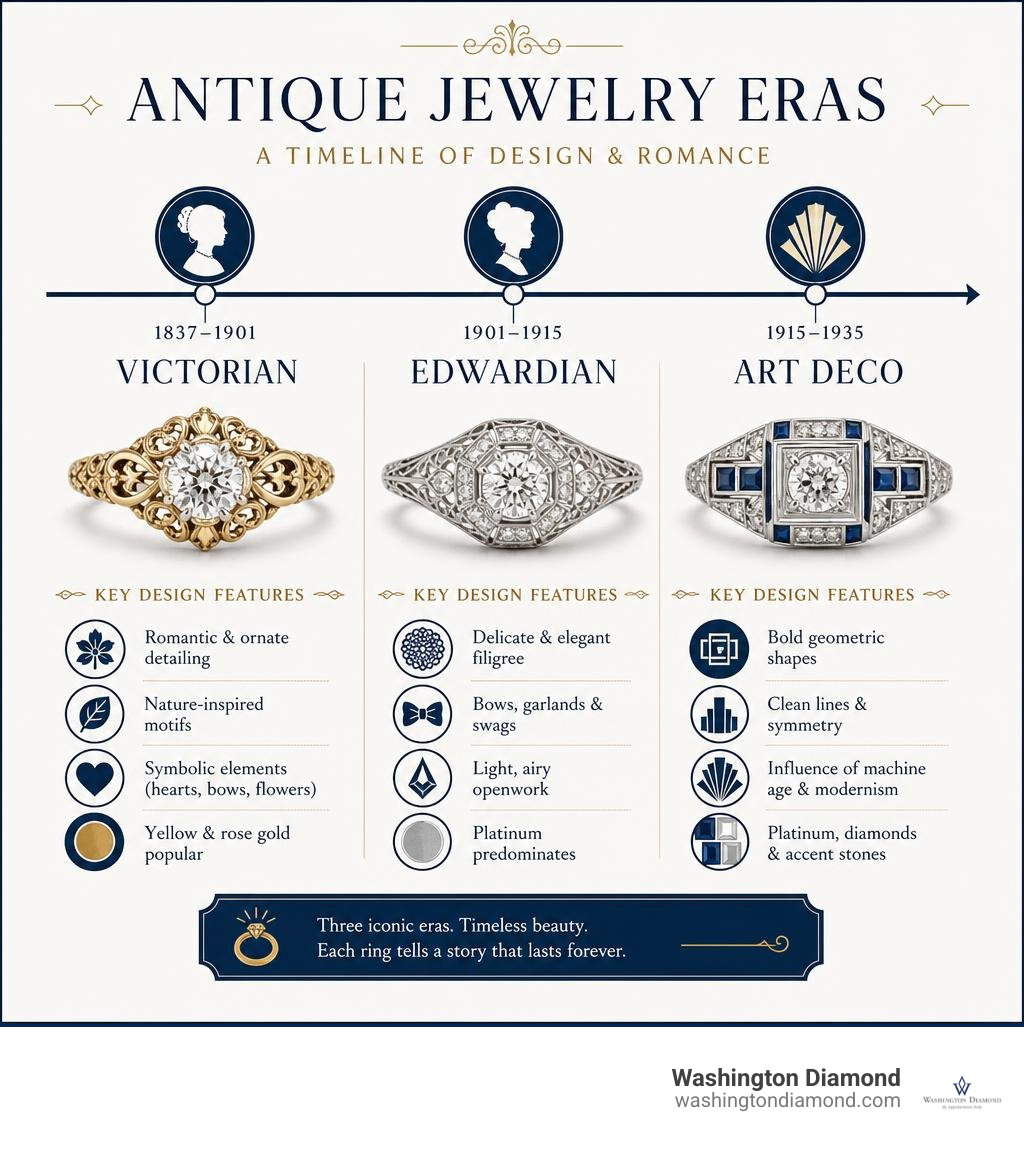
Defining the Era: Antique vs. Vintage vs. Retro
When you start shopping for a ring with a bit of history, you will quickly run into three terms that are often used interchangeably but actually mean very different things: antique, vintage, and retro.
To make a smart purchase, it helps to understand the strict definitions of these categories:
- Antique Engagement Rings: To be classified as a true antique, a piece of jewelry must be at least 100 years old. Since we are currently in July 2026, any genuine antique ring must have been crafted in or before 1926. This timeline covers the Georgian, Victorian, and Edwardian eras, as well as the very beginning of the Art Deco movement.
- Vintage Engagement Rings: A vintage ring is one that is at least 20 years old but less than 100 years old. This category spans from the late 1920s up through the early 2000s. It includes mid-century modern designs, retro styles, and even the bold yellow gold looks of the 1980s.
- Retro Style: "Retro" specifically refers to a design period from the late 1930s through the 1940s (roughly corresponding to World War II and its immediate aftermath). Jewelry from this era is known for its bold, sculptural yellow or rose gold, oversized gemstones, and patriotic or industrial-inspired motifs.
Each of these eras represents a unique chapter in design history. As societies evolved, so did the technology and materials available to jewelers. The rise of the industrial revolution, the discovery of massive diamond mines in South Africa, and the changing roles of women in society all directly influenced the rings couples chose to symbolize their love.
Why Choose Antique Jewelry Engagement Rings Over Modern Alternatives?
Why are so many modern couples looking backward when planning their futures? There are several compelling reasons why antique jewelry engagement rings have captured the hearts of modern proposal planners:
1. Unmatched Uniqueness
Modern rings are often mass-produced using computer-aided design (CAD) and high-volume casting machines. While this makes them precise, it also means thousands of people might wear the exact same ring. Antique rings, on the other hand, were hand-fabricated by master artisans. Every hand-carved setting, hand-applied milgrain bead, and hand-faceted diamond is completely unique. When you buy an antique, you are purchasing a one-of-a-kind work of art.
2. Superior Sustainability and Ethical Sourcing
If you are concerned about the environmental and ethical impact of modern mining, antique rings are the ultimate green choice. No new earth had to be mined, no new carbon was emitted, and no modern labor issues were involved in bringing an antique ring to your finger. It is the most beautiful form of recycling.
3. Exceptional Resale and Investment Value
Modern luxury items often lose a significant portion of their retail value the moment you leave the store. A 2022 report by Bain & Company highlighted this contrast, noting that the resale value of antique jewelry rings retains an average of 70-80% of its original purchase price. In comparison, modern mass-produced rings typically retain only 40-50% of their retail value. Because the supply of genuine antiques is finite, their rarity and value only grow over time.
4. Surprising Cost-Effectiveness
Because antique diamonds (such as old mine cuts and rose cuts) were faceted by hand and do not follow modern standardized grading scales, they can be highly cost-effective. These historic diamonds are often 10-20% less expensive per carat than modern round brilliant cuts of comparable size and quality. This allows you to get a larger, more character-rich stone for your budget.
5. Deep Symbolism
An antique ring is a physical survivor of history. It has already weathered decades—or even a century—of love, family transitions, and historical events. Wearing a piece with this level of permanence adds a beautiful layer of meaning to your commitment. To dive deeper into the historical meaning behind these precious stones, you can read about The Legend and Symbolism of the Diamond.
The Timeless Appeal of Antique Jewelry Engagement Rings
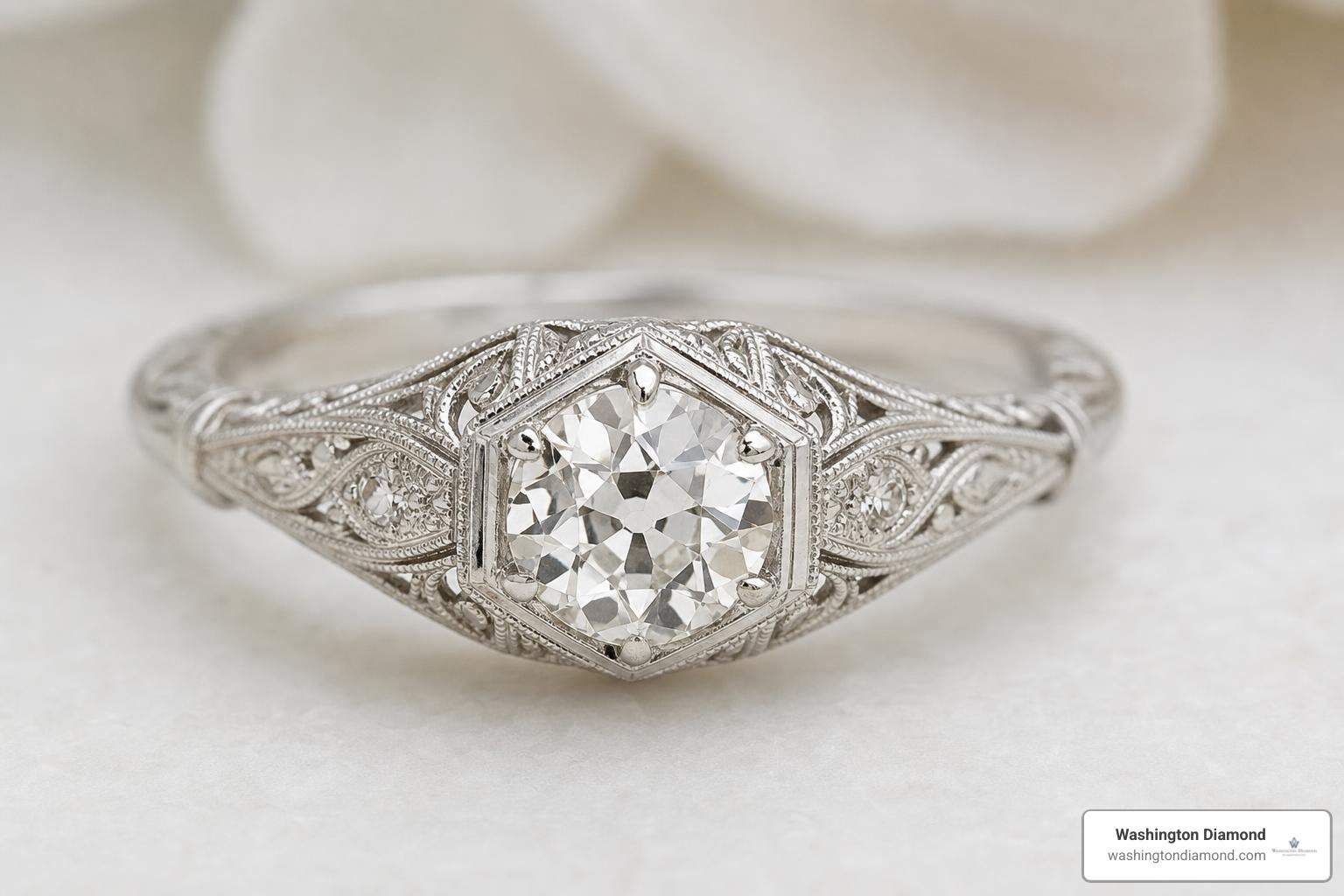
There is something undeniably romantic about the craftsmanship of yesteryear. Over 60% of the antique engagement rings sold today come from the Edwardian (1901–1910) or Art Deco (1920s–1930s) eras.
These periods marked a golden age of jewelry design, characterized by the widespread introduction of platinum. Because platinum is incredibly strong and does not tarnish, jewelers could push the limits of metalwork, creating delicate, lace-like filigree and tiny, beaded milgrain borders that are nearly impossible to replicate with modern casting techniques.
If you want to explore how these classic designs translate to modern love stories, take a look at our detailed exploration of Art Deco Rings: Vintage Charm for Your Modern Love Story.
Let’s take a closer look at the three most popular historical design eras for antique rings.
Victorian Era (1837–1901)
Named after the long reign of Queen Victoria, this era was deeply romantic and heavily influenced by the Queen’s personal life and tastes.
- Signature Metals: Warm yellow gold and rich rose gold were the standards. Silver-topped gold was also common because jewelers had not yet mastered the high melting point required to work with platinum.
- Key Motifs: Nature-inspired designs, including flowers, birds, and hearts. Serpent motifs became incredibly popular after Prince Albert proposed to Victoria with a snake ring featuring an emerald head (symbolizing eternal love).
- Gemstones: While diamonds were popular (especially after the discovery of South African mines in the late 1860s), Victorian rings frequently featured colored gemstones like rubies, sapphires, emeralds, opals, and pearls. Halo settings and cluster designs were highly favored.
Edwardian Era (1901–1910)
When King Edward VII took the British throne, the heavy, sentimental style of the Victorian era gave way to an airy, light, and aristocratic aesthetic.
- Signature Metals: This was the dawn of platinum dominance. The invention of the oxyacetylene torch allowed jewelers to work with this ultra-strong white metal for the first time.
- Key Motifs: Lace-like filigree, ribbons, bows, tassels, and garlands. The goal was to make the metal look as light and delicate as fabric or lace.
- Gemstones: Diamonds and pearls ruled this era. The look was monochromatic, elegant, and ethereal, perfectly matching the flowing silk and lace fashions of high society.
Art Deco Era (1920–1930s)
Following the dark years of World War I, the Art Deco era burst forth with a celebration of modernism, jazz, speed, and machine-age industrialization.
- Signature Metals: Platinum remained the metal of choice, though white gold (invented as a cheaper alternative to platinum) also rose to prominence.
- Key Motifs: Bold geometric patterns, sharp angles, repeating steps, and strict symmetry.
- Gemstones: Contrast was king. Jewelers paired diamonds with vibrant colored gemstones like sapphires, emeralds, and rubies. It was also common to use synthetic colored stones cut into custom geometric shapes (known as calibré cuts) to perfectly accent the central diamond.
Anatomy of an Antique Ring: Gemstones, Cuts, and Metals
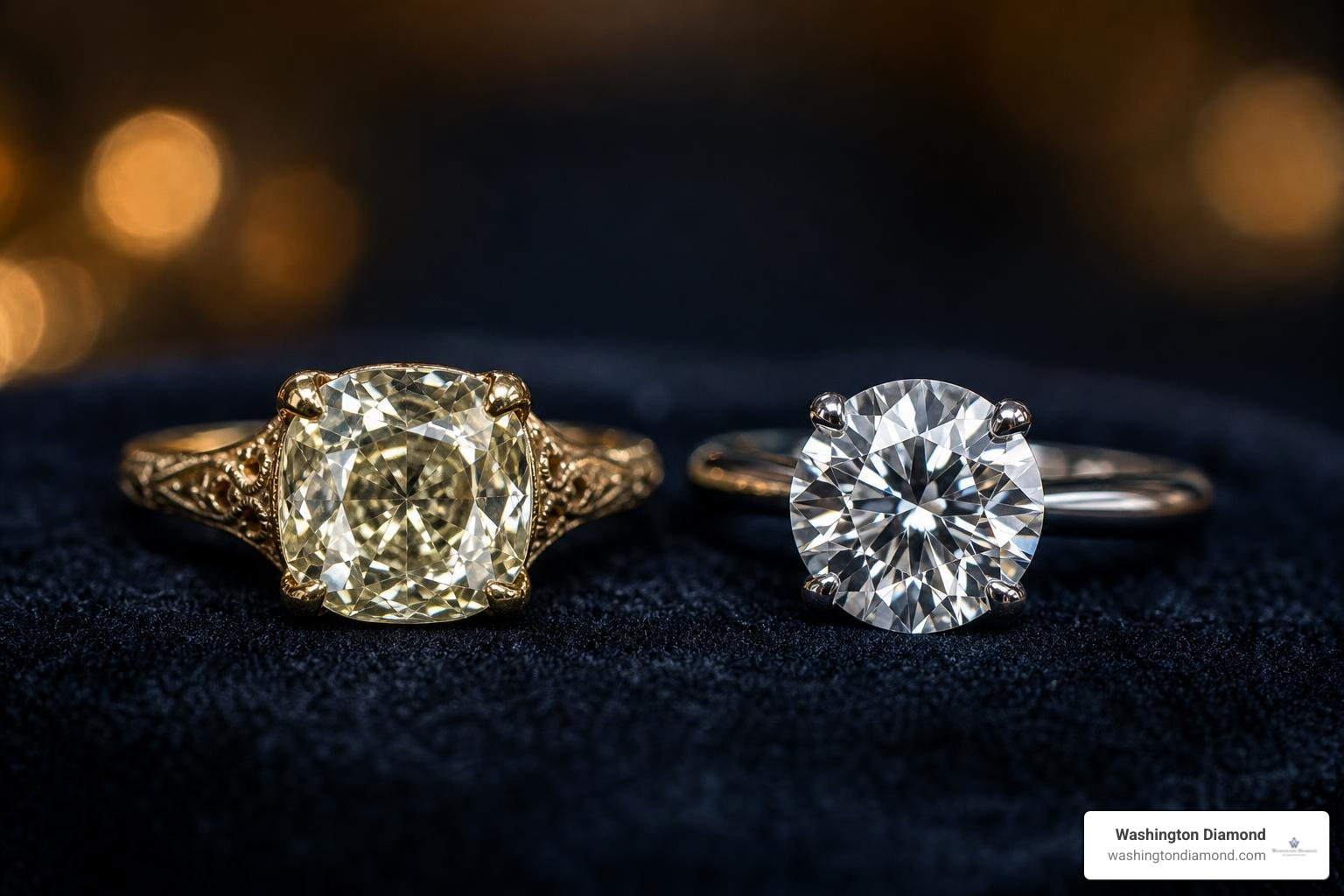
To truly appreciate an antique ring, you have to look closely at the diamond itself. Before the advent of modern computer-guided laser cutting, diamond cutters relied entirely on their eyes and the ambient light available to them—which, for a long time, was candlelight.
Because of this, antique diamonds were cut to maximize their fire and beauty under soft, warm lighting, rather than the bright, white-light sparkle of modern jewelry stores.
Here is a quick reference guide comparing traditional antique diamond cuts to the modern brilliant cuts we see today:
| Cut Type | Shape | Facet Style | Light Performance |
|---|---|---|---|
| Old Mine Cut | Cushion/Square | Hand-cut, chunky facets | Warm, romantic glow under candlelight |
| Rose Cut | Round/Oval (Flat base) | Triangular facets on dome | Subtle, glassy shimmer |
| Old European Cut | Round | Hand-cut, circular | Deep, fiery flashes |
| Modern Brilliant | Round | Machine-cut, precise | High white-light scintillation (brilliance) |
- Old Mine Cut: Dating back to the 1700s and remaining popular through the Victorian era, these diamonds have a square-ish shape with rounded corners, a high crown, a deep pavilion, and a large culet (the flat facet at the very bottom of the stone).
- Rose Cut: Popularized in the 1500s and used heavily in Victorian jewelry, the rose cut has a flat bottom and a dome-shaped top covered in triangular facets. It resembles an opening rosebud and has a subtle, glassy shimmer rather than intense sparkle.
- Old European Cut: The direct ancestor of the modern round brilliant cut, the Old European cut was dominant from the late 1800s through the 1930s. It features a round girdle, a small flat table on top, and heavy, chunky facets that throw off large, dramatic flashes of colored light (known as "fire").
If you want to dive deeper into the technical aspects of these historic cuts, you can consult the official GIA Guide on Antique Diamond Cuts.
Smart Buying Guide: Authenticity, Resizing, and Value
Buying an antique ring is a exciting journey, but it requires a bit of detective work to ensure you are getting a genuine piece of history.

To make sure your investment is safe, keep these three key verification steps in mind:
- Look for Hallmarks: Check the inside of the band for maker's marks, purity stamps (like "18K" or "PLAT"), or assay office stamps. These marks can tell you exactly when and where the ring was made.
- Examine Wear Patterns: Genuine antiques should show soft, natural wear. Sharp, perfectly crisp edges on a filigree ring can sometimes indicate a modern reproduction.
- Get an Independent Appraisal: Never buy an antique ring without a detailed appraisal from a certified gemologist who specializes in estate jewelry.
The Resizing Dilemma
One of the most important factors to consider when buying an antique ring is whether it can be safely resized. Unlike modern rings, which have thick, uniform bands, antique bands may be thin from decades of wear. Furthermore, heat from a jeweler's torch can sometimes damage fragile antique gemstones or melt delicate filigree work.
Before you buy, it is vital to consult with a master jeweler who has specific experience working with historic pieces. To learn more about how to navigate this delicate process, read our guides on From Antique to Resized: Your Ultimate Guide to DC Jewelry Services and Passing Down the Sparkle: A Guide to Resizing Your Family Heirloom Ring.
How to Care for and Maintain Antique Jewelry Engagement Rings
Once you own a piece of history, you become its custodian. To ensure your ring lasts for another hundred years, you must treat it with care:
- Clean Gently: Skip the harsh chemical cleaners and ultrasonic machines. Instead, use warm water, a drop of mild dish soap, and a very soft-bristled toothbrush to gently clean away dirt.
- Avoid Moisture for Foil-Backed Stones: Some Georgian and early Victorian rings feature foil-backed gemstones to enhance their color. If water gets behind the stone, it can ruin the foil permanently. Always check with a jeweler before submerging your ring.
- Schedule Regular Inspections: We recommend having your antique ring inspected by a professional jeweler at least once a year. They can check for thinning metal, worn prongs, or loose stones before they turn into a major problem.
Where to Buy Genuine Antique Rings
Finding the perfect antique ring requires knowing where to look. Excellent sources include:
- Reputable Antique and Estate Dealers: Working with a specialized dealer gives you access to curated, pre-vetted inventories and professional expertise.
- Estate Sales and Auctions: While these can yield incredible finds, they require a keen eye and a high level of comfort with buying pieces "as-is" without return policies.
- Custom Recreation: If you love the look of a specific historical era but want the peace of mind, durability, and perfect fit of a brand-new ring, custom recreation is a fantastic option. A skilled jeweler can take design elements from the Victorian, Edwardian, or Art Deco eras and build a brand-new ring from scratch. To see how custom jewelry has evolved over time, read Custom Jewelry Through the Ages.
Frequently Asked Questions about Antique Engagement Rings
Are antique engagement rings safe for everyday wear?
Yes, but they require mindfulness. Diamonds and platinum are highly durable, but delicate filigree, pearls, opals, and emeralds can be easily damaged by hard impacts or household chemicals. It is best to remove your antique ring before working out, gardening, or cleaning.
How do I know if an antique ring is authentic?
Look for signs of hand-craftsmanship, such as slight asymmetry in the metalwork or hand-cut facets on the diamond. A professional gemological appraisal is the most reliable way to verify the age, metal purity, and gemstone authenticity of a ring.
Are antique diamonds GIA certified?
While many antique diamonds were cut long before the Gemological Institute of America (GIA) was founded, they can absolutely be sent to the GIA today to receive an official grading report. Because GIA grading requires removing the stone from its setting, many buyers rely on detailed insurance appraisals instead to preserve the integrity of the original ring.
Conclusion
Antique jewelry engagement rings offer an incredible blend of old-school romance, unmatched craftsmanship, and sustainable luxury. Whether you fall in love with a romantic Victorian gold band, a delicate Edwardian platinum masterpiece, or a bold Art Deco geometric design, choosing an antique ring ensures your love story is represented by a truly one-of-a-kind piece of art.
At Washington Diamond, we believe that finding your dream ring should be as memorable as the proposal itself. Located in Northern Virginia, our private, appointment-only studio is designed to offer you our undivided attention. We guide you through the process of selecting, evaluating, or custom-creating the perfect historic ring in a relaxed, personalized environment.
Ready to start your journey? Schedule a private consultation with us today, or explore our guide on Art Deco Rings: Vintage Charm for Your Modern Love Story to find your perfect match.
Have a question about your jewelry?
We've been helping clients with diamonds, custom design, repairs, appraisals, and more since 1969. Book a private appointment at our Falls Church studio.
Book an AppointmentTrusted since 1969 · Falls Church, VA · 703-536-3600
From the blog
View all


