

Everything You Must Know Before Buying a 3ct Princess Cut Diamond
How to Compare a 3ct Princess Cut Diamond

A 3ct princess cut diamond has a square outline, bright sparkle, and a face-up size of roughly 7.5 to 8.0 mm per side. To compare stones, look beyond carat weight: check their measured size, light performance, visible inclusions, grading report, and total price. Pay close attention to the pointed corners, which need protection in the setting.
For a natural diamond with G-H color and VS1-VS2 clarity, $15,000 to $30,000 is a rough comparison range, not a guaranteed price. A princess cut can cost less than a round diamond of similar weight and grades, but a stone that looks lively to your eye is a better choice than one that looks good only on paper.
I'm Tom Daube, a jewelry designer with experience evaluating and recutting diamonds. I'll draw on that experience to help you compare a 3ct princess cut diamond with confidence.
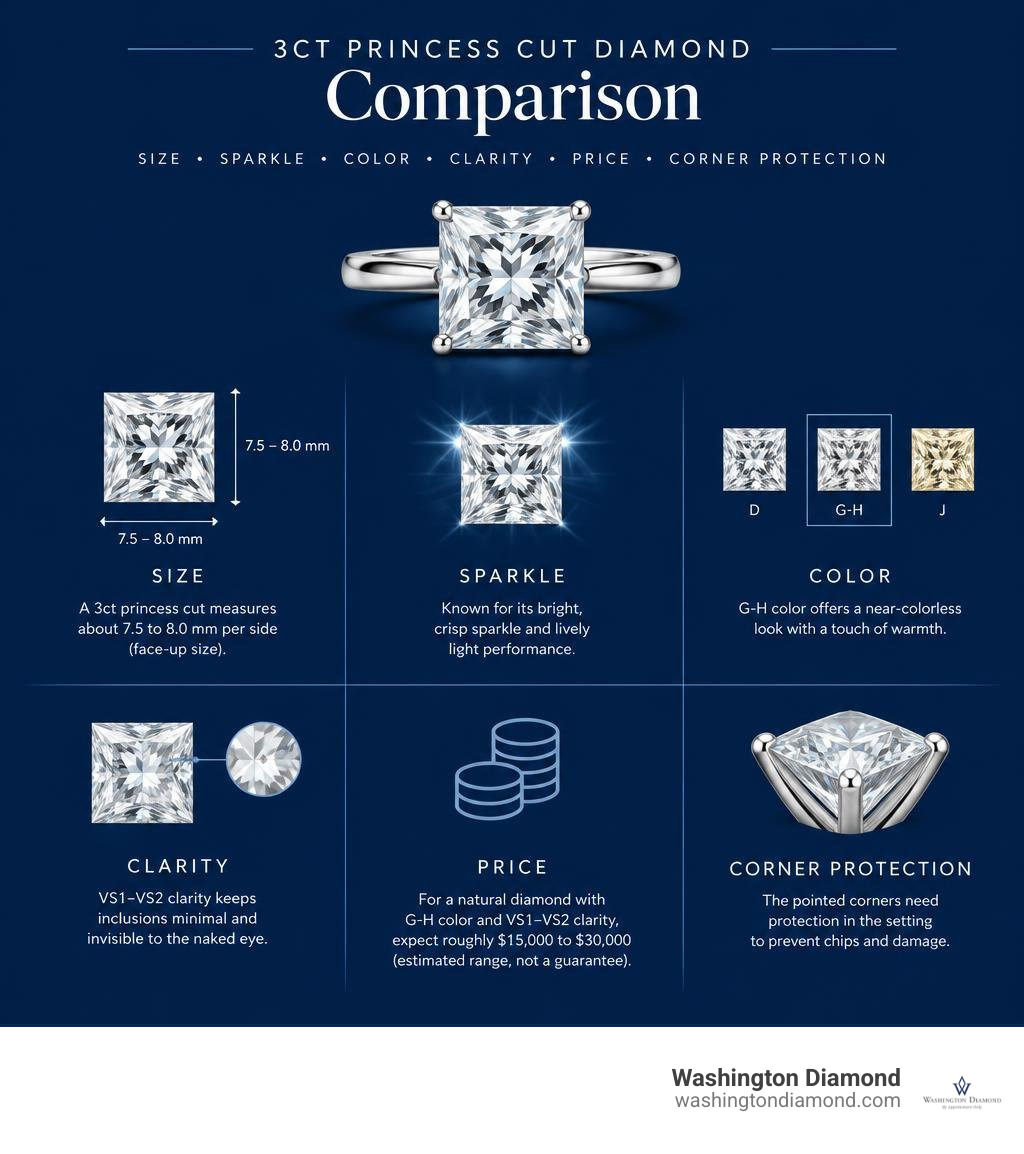
Simple 3ct princess cut diamond word guide:
Anatomy and Dimensions of a 3ct Princess Cut Diamond
The princess cut is classified as a square modified brilliant. Invented in the late 1970s, it blends the clean geometric lines of a classic square step cut with the brilliant-style faceting traditionally reserved for round stones. When viewed from above, it presents a sharp square outline with crisp right angles. In profile, it resembles an inverted pyramid with an open pavilion that channels incoming light back through the crown.
Unlike round diamonds, fancy shapes like the princess cut do not have a single standardized cut grade on traditional laboratory reports. Evaluating their proportions requires a closer look at the relationship between length, width, depth, and facet arrangement. For an in-depth breakdown of facet architecture, explore our expert princess cut diamonds guide for 2026.
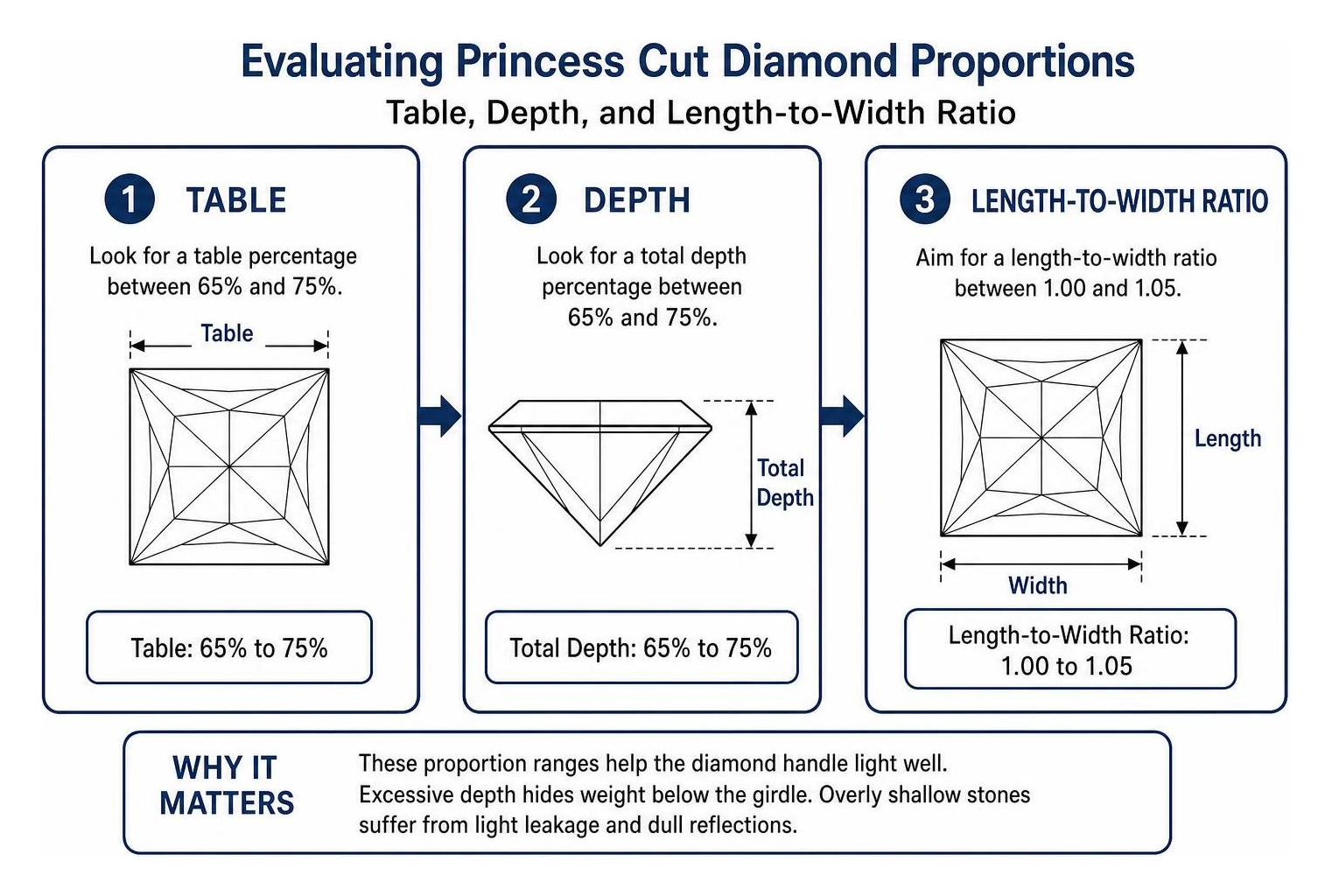
To achieve a true square appearance, aim for a length-to-width ratio between 1.00 and 1.05. A ratio above 1.05 begins to appear subtly rectangular to the naked eye. While slight variations in ratio can be intentional, maintaining strict square proportions ensures the even distribution of light return across all four quadrants.
Visual Size and Millimeter Dimensions
A well-proportioned 3-carat princess cut diamond typically measures between 7.5 mm and 8.0 mm on each side. Because diamond weight is distributed throughout a three-dimensional volume, two stones with the exact same 3.00-carat weight can display different face-up surface areas.
In terms of total surface spread, a 3-carat princess cut delivers an impressive face-up area of approximately 56 to 64 square millimeters. When mounted on an average finger, this provides dramatic presence and knuckle-to-knuckle coverage. Because the human eye perceives corner-to-corner diagonal distance as part of the overall silhouette, a square diamond often feels larger on the hand than its pure millimeter measurements suggest.
Evaluating the 4Cs for a 3ct Princess Cut Diamond
Selecting a 3-carat stone requires balancing cut, color, clarity, and carat weight to maximize beauty while keeping spending sensible. Our guide to natural diamonds provides a foundational overview of these dynamics, but certain nuances apply specifically to large square brilliants:
- Cut Quality: The cut determines how well the stone handles light. Look for a total depth percentage between 65% and 75% and a table percentage between 65% and 75%. Stones with excessive depth hide weight below the girdle where it cannot be seen, while overly shallow stones suffer from light leakage and dull reflections.
- Color Grading: Princess cuts show slightly more body color in their pointed corners than round brilliants do. In a 3-carat size, color becomes more noticeable due to the larger volume of crystal. The G-H color range represents the optimal sweet spot, appearing clean and icy white once set in platinum or white gold without the premium cost of D-F grades.
- Clarity Grading: The intense, splintery scintillation pattern of a princess cut naturally masks tiny internal flaws. Choosing a clarity grade of VS1 or VS2 offers complete eye-cleanliness at a substantial savings compared to VVS or Flawless grades. Always inspect the diamond plot to ensure that crystals or feathers are not located directly inside the fragile pointed corners.
Comparing the 3-Carat Princess Cut to Other Diamond Shapes
When diamond cutters plan a rough stone, the natural octahedral shape of diamond crystals naturally accommodates two pyramid-shaped princess cuts with minimal waste. Princess cut manufacturing achieves a rough yield of up to 80%, compared to only about 50% for round brilliant diamonds. This manufacturing efficiency translates directly into consumer savings.
The princess cut remains the second most popular diamond shape worldwide, making up roughly 20% to 25% of all engagement ring sales. It combines traditional brilliance with modern, architectural styling.
| Metric / Attribute | 3-Carat Princess Cut | 3-Carat Round Brilliant | 3-Carat Cushion Cut |
|---|---|---|---|
| Typical Dimensions | 7.5 – 8.0 mm square | 9.2 – 9.4 mm diameter | 8.0 – 8.5 mm |
| Face-Up Area | 56 – 64 mm² | ~66 – 69 mm² | 55 – 62 mm² |
| Yield from Rough | Up to 80% | ~45 – 50% | ~60 – 70% |
| Relative Price Efficiency | High (20-30% savings vs. Round) | Baseline (Highest cost per carat) | Moderate (15-25% savings vs. Round) |
| Faceting Style | Modified Square Brilliant | Standard Round Brilliant | Modified / Antique Brilliant |
| Scintillation Character | Geometric, linear, pinpoint fire | Balanced, radial contrast | Pillow-like, broader flash pattern |
Price Comparison and Value Per Carat
Because round diamonds require discarding a large portion of the rough crystal during polishing, they command the highest price per carat in the market. In contrast, a 3-carat princess cut delivers significant value optimization, often priced 20% to 35% lower than a round diamond of identical carat weight, color, and clarity.
For buyers navigating the average cost for an engagement ring, choosing a princess cut allows you to maximize carat weight without compromising overall visual quality. Tracking real diamond ring prices across the USA shows that this pricing advantage remains consistent across luxury markets.
Fire, Scintillation, and Brilliance Comparison
The optical engine of a princess cut relies on a series of chevron-shaped facets placed on the pavilion. Cutters typically use between two and four sets of chevrons depending on the weight of the stone:
- Two Chevrons: Produce larger, chunkier flashes of colored light (fire) with higher contrast.
- Three to Four Chevrons: Create a finer, crushed-ice pattern characterized by rapid, pinpoint scintillation.
While a round diamond delivers organized, radial light reflections, a princess cut offers a livelier, geometric sparkle that catches the eye across the entire flat table and corners.
Setting Styles and Security Considerations
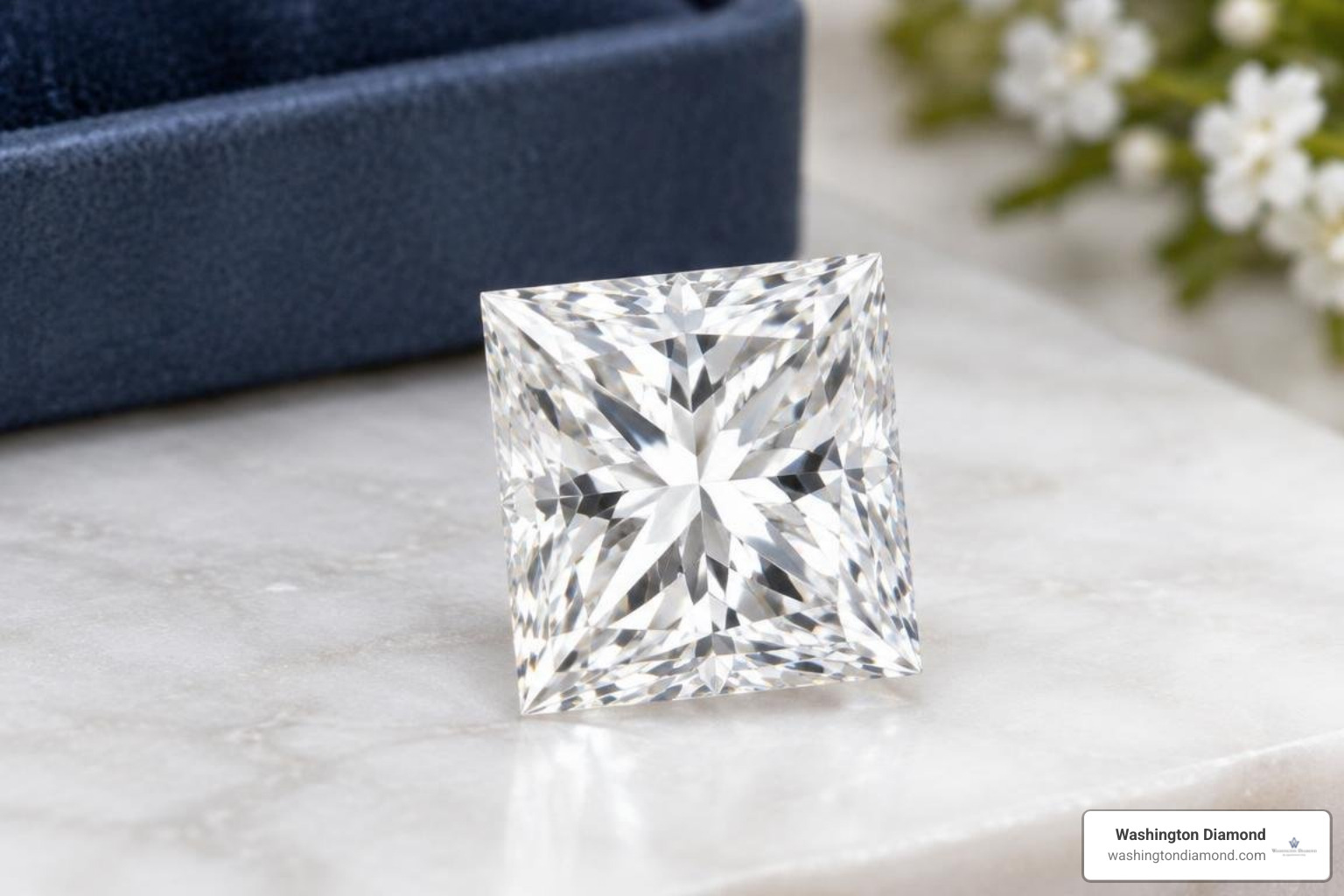
A 3-carat diamond represents a significant physical and emotional investment. Because of its large surface and distinct geometry, selecting the right mounting is as much about structural safety as it is about aesthetic style. Reviewing trending engagement ring styles helps identify settings that complement this square silhouette.
Protecting the Corners of a 3ct Princess Cut Diamond
The sharp corners of a princess cut correspond to natural cleavage planes in the diamond crystal lattice. Without adequate protection, these thin tips are susceptible to chipping if struck against hard surfaces during daily wear.
To ensure long-term durability, the setting must cover all four corners. V-prongs (also called chevron prongs) are the industry standard for square cuts. These prongs wrap entirely around the pointed edges, shielding them from side impacts while clamping the stone firmly in place. Alternatively, a complete bezel setting wraps a thin collar of metal around the entire perimeter, providing maximum security for active lifestyles.
Popular Ring Settings for Large Princess Cuts
Large center stones benefit from balanced, thoughtfully proportioned ring bands. Consider these popular designs featured in our comprehensive 3-carat princess cut ring guide:
- Solitaire Settings: Highlighting the clean geometry with classic solitaire engagement ring settings keeps the full focus on the center diamond. A cathedral shank adds architectural support to elevate the 3-carat stone gracefully.
- Three-Stone Mountings: Flanking the center diamond with tapered baguettes, trillion cuts, or trapezoids creates a stepped visual transition that accentuates the square center.
- Pavé and Hidden Halos: Adding delicate pavé diamonds along the band or a subtle halo beneath the center head adds extra sparkle without cluttering the primary square outline.
Certification, Pricing Factors, and Common Pitfalls
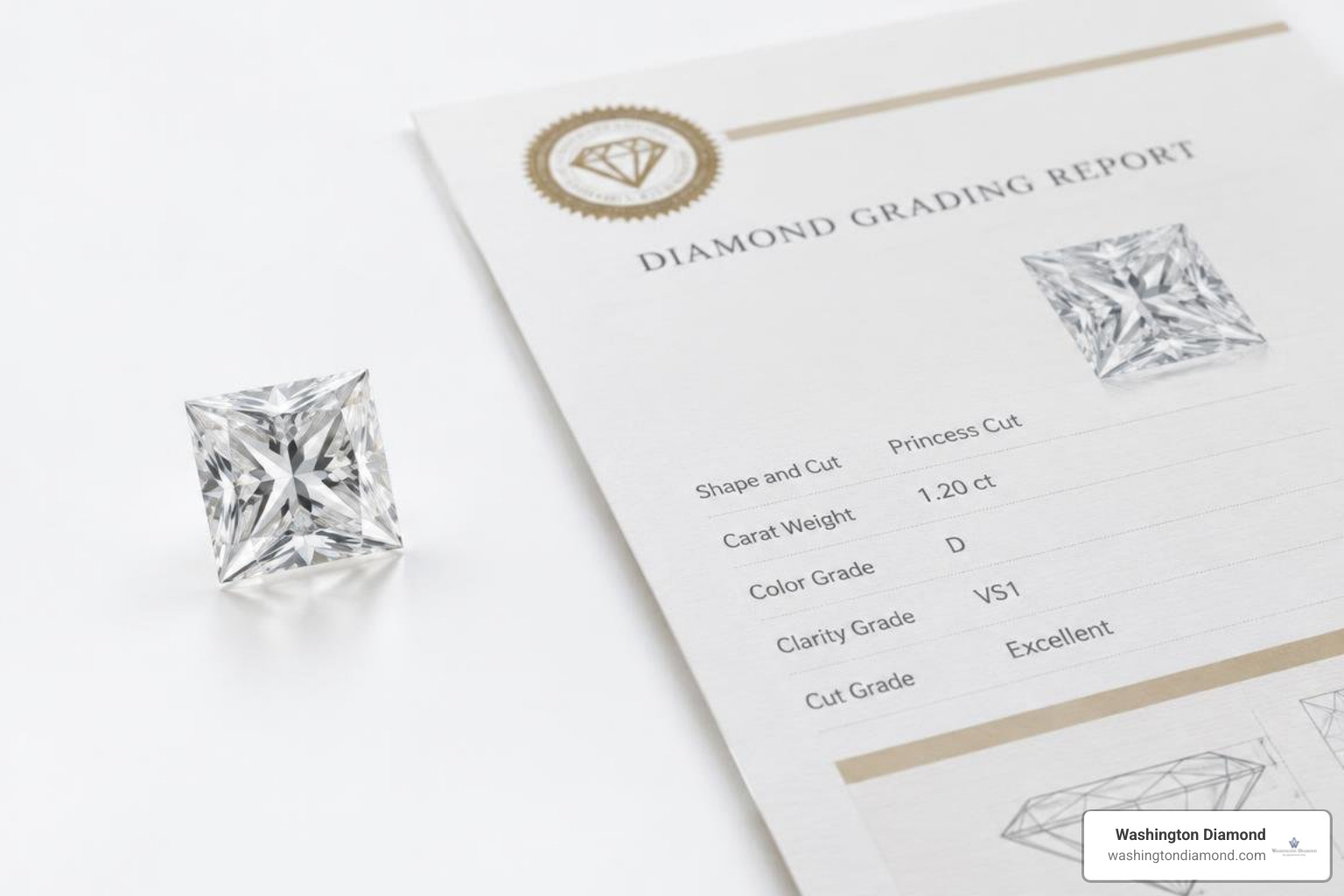
When shopping for an investment-grade diamond, an independent laboratory grading certificate is essential. Refer to our diamond jewellery buying guide for best practices when evaluating retail documentation.
Certification and Essential Cut Metrics
The Gemological Institute of America (GIA) is the gold standard for grading natural diamonds. Because GIA does not issue an overall cut grade for fancy shapes, buyers must evaluate the individual metrics on the report:
- Polish and Symmetry: Aim for "Excellent" or "Very Good" ratings. Symmetrical facet junctions ensure light travels evenly through the crystal.
- Girdle Thickness: Look for girdles rated from "Thin" to "Slightly Thick." Avoid "Extremely Thin" girdles (which increase chipping risk at the corners) and "Extremely Thick" girdles (which trap unneeded weight).
- Culet Size: The culet should be "None" or "Pointed" to ensure a crisp center focus without windowing.
Common Buying Mistakes to Avoid
Avoid these frequent pitfalls when evaluating 3ct stones:
- Inclusions Near the Tips: Never buy a stone with significant feathers, cavities, or dark crystals located directly at the corners. The mechanical pressure applied by setting prongs can cause those inclusions to expand into full cracks.
- Excessive Depth (The "Iceberg" Effect): Stones with depth percentages above 78% hide unnecessary carat weight beneath the setting, making a 3-carat diamond look closer to a 2.5-carat stone from above.
- Strong Fluorescence with Hazy Appearance: While medium blue fluorescence can sometimes make lower color grades look whiter, strong fluorescence paired with internal graining can cause the diamond to look milky or oily in direct sunlight.
Frequently Asked Questions
What are the ideal table and depth percentages for a 3-carat princess cut?
For optimal brightness and fire, look for a table percentage between 65% and 75% and a total depth percentage between 65% and 75%. Keeping these metrics within this balanced range prevents light leakage through the bottom of the pavilion while maintaining a generous face-up diameter.
Is a 3-carat princess cut diamond durable enough for daily wear?
Yes, diamond is the hardest mineral on Earth (scoring 10 on the Mohs scale), making it exceptionally durable for everyday wear. However, because the pointed corners are vulnerable to chipping along natural cleavage lines, the diamond must be mounted in a setting featuring protective V-prongs or a protective bezel.
What is the expected price range for a high-quality 3ct princess cut diamond?
A high-quality 3-carat natural princess cut diamond with G-H color and eye-clean VS1-VS2 clarity typically ranges from $15,000 to $30,000. Prices adjust upward for colorless grades (D-F) or flawless clarity ratings, and downward for stones with lower color or visible inclusions.
Conclusion
Choosing a 3-carat princess cut diamond allows you to pair bold visual scale with crisp, modern brilliance. By focusing on square length-to-width ratios, balanced table and depth proportions, eye-clean clarity, and corner-protecting settings, you can secure an extraordinary diamond that maintains its value and structural integrity for generations.
At Washington Diamond, we believe choosing a center stone should be as meaningful and stress-free as the moment it commemorates. In our private, appointment-only studio in Northern Virginia, we offer you our undivided attention, guiding you through hand-selected stones in a welcoming, relaxed environment.
To explore real-time market values and tailor your diamond search to your exact specifications, use our interactive diamond price calculator or schedule your private visit with us today.
Have a question about your jewelry?
We've been helping clients with diamonds, custom design, repairs, appraisals, and more since 1969. Book a private appointment at our Falls Church studio.
Book an AppointmentTrusted since 1969 · Falls Church, VA · 703-536-3600
From the blog
View all


