

Your Wallet's Best Friend: Decoding 1 Carat Oval Diamond Prices
What Does a 1 Carat Oval Diamond Actually Cost?
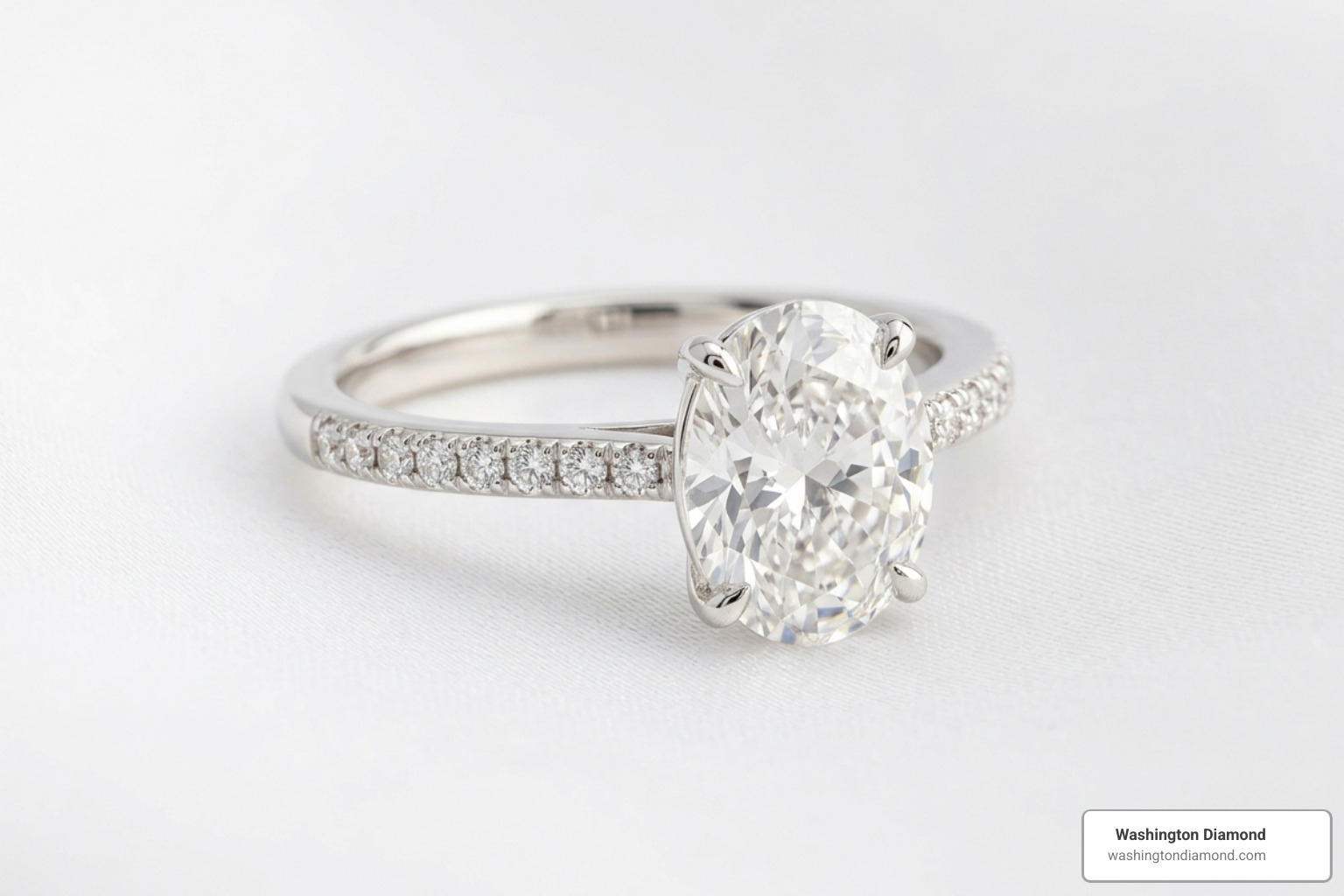
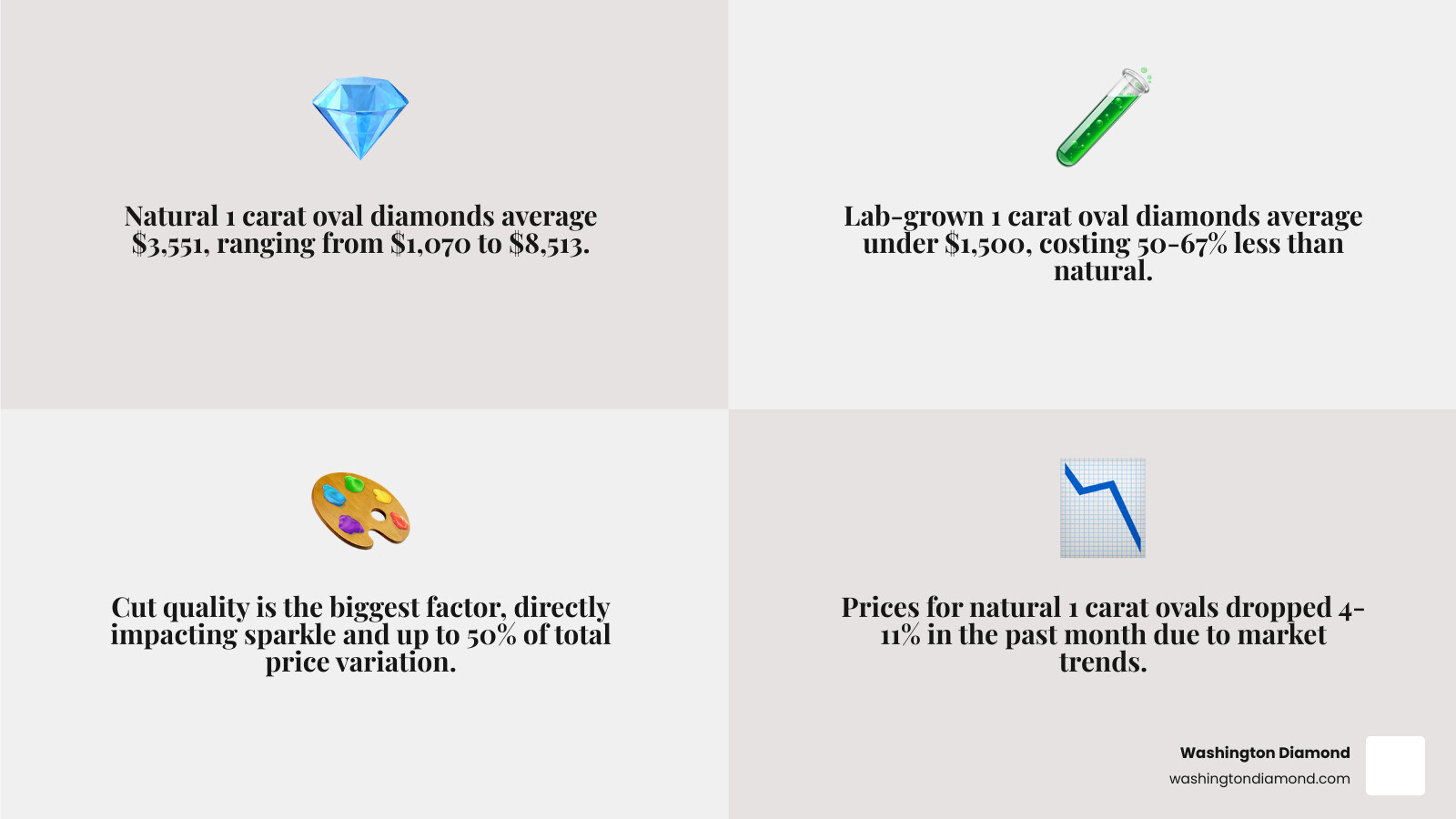
The 1 carat oval diamond price varies widely depending on whether you choose natural or lab-grown, and the quality grades you select. Here's a quick snapshot of current market prices (as of April 2026):
| Diamond Type | Price Range | Average Price |
|---|---|---|
| Natural 1 ct oval | $1,070 – $8,513 | ~$3,551 |
| Lab-grown 1 ct oval | $723 – $1,960 | Significantly lower |
Key price drivers at a glance:
- Natural vs. lab-grown — lab-grown diamonds can cost 50–67% less
- Color grade — D (colorless) costs significantly more than G–I (near-colorless)
- Clarity grade — VS2 and SI1 offer the best everyday value
- Cut quality — the single biggest factor affecting sparkle and price
- Length-to-width ratio and proportions — unique to oval cuts
So if budget is a priority, a lab-grown G/SI1 oval can start as low as $723. For a natural oval with strong quality grades, expect to spend $2,500–$4,500 for a solid deal.
Prices for 1 carat oval natural diamonds have recently dipped — down roughly 4–11% in the past month — making this a favorable window to buy.
I'm Tom Daube, a GIA-certified diamond specialist with decades of experience helping buyers navigate the 1 carat oval diamond price landscape and find exceptional stones, often below listed wholesale prices. Whether you're shopping for the first time or trading up, I'll help you cut through the noise and find real value.
1 carat oval diamond price terms explained:
Understanding the 1 Carat Oval Diamond Price in 2026
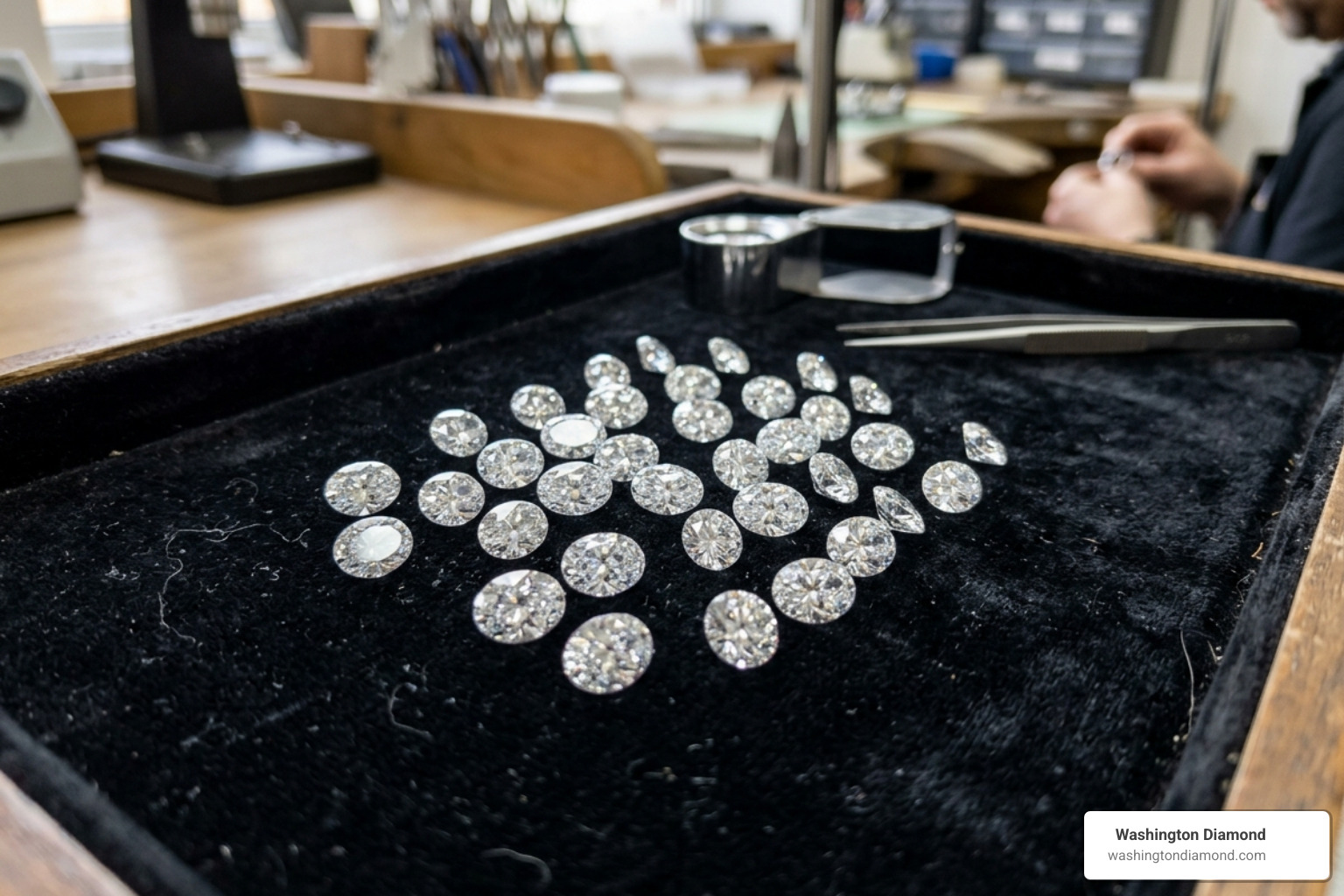
Navigating diamonds can feel like learning a new language, but at its heart, the 1 carat oval diamond price is governed by supply, demand, and the specific characteristics of the stone. As we move through April 2026, the market for 1 carat ovals remains one of the most active segments in the jewelry industry.
When we talk about "price," we aren't just looking at a single number. Instead, we look at the "price per carat." This is the standard methodology used by wholesalers and retailers alike. To get the total cost, you simply multiply the price per carat by the actual weight of the stone. For example, if a diamond is priced at $3,500 per carat and weighs exactly 1.00 carat, your cost is $3,500. If it’s a slightly larger 1.10-carat stone at the same rate, the price jumps to $3,850.
Understanding How to Calculate Price of a Diamond is the first step in becoming a savvy shopper. It allows you to compare stones of slightly different weights on an even playing field.
Current Market Trends for 1 Carat Oval Diamond Price
The diamond market is far from static. In the last month alone, we've seen a notable shift. According to recent data, natural 1 carat oval diamond prices have decreased by approximately 11.64%. This downward trend is a breath of fresh air for buyers, as it increases the purchasing power of your budget.
Currently, the inventory for 1 carat ovals is robust, with nearly 10,000 stones available across major global databases. This high inventory level, combined with the recent price dip, means that retailers are often more willing to offer "Best Value" selections to move stock. When you see a 1 carat oval priced near the median of $3,500, you are likely looking at a stone with a solid balance of color and clarity—typically in the G-H color and VS2-SI1 clarity range.
For more real-time data, resources like 1 Carat Oval Diamond Prices - StoneAlgo provide daily updates on how these indices are performing compared to historical averages.
Historical Context and Value Shifts
If we look back over the last decade, diamond values have been a rollercoaster. The 2008 financial crisis saw a significant dip, followed by a steady recovery. However, the most profound shift in recent years has been the massive influx of lab-grown diamonds.
Historically, natural oval diamonds held a certain "rarity premium." Because ovals are "fancy shapes," they often cost about 20% less than round brilliant diamonds of the same quality because they utilize more of the rough diamond crystal during the cutting process. However, as lab-grown technology perfected the oval shape, the price gap between natural and lab-grown has widened significantly.
Understanding The Shifting Sparkle: What Drives Diamond Values Through the Years helps put today's prices in perspective. We are currently in a "buyer's market" where transparency is higher than ever, and the options for consumers are more diverse than at any point in history.
Natural vs. Lab-Grown: Decoding the Price Gap
The most common question we hear in our Northern Virginia studio is: "What’s the catch with lab-grown diamonds?" The truth is, there is no catch—just a different origin story. Lab-grown diamonds are chemically, physically, and optically identical to natural diamonds. The only difference is that one was forged in the earth over billions of years, and the other was grown in a lab over several weeks.
| Feature | Natural 1ct Oval | Lab-Grown 1ct Oval |
|---|---|---|
| Starting Price | ~$1,070 (Lower Quality) | ~$723 |
| Average Price | ~$3,551 | ~$1,100 |
| Top Tier Price | $8,500+ | ~$1,960 |
| Composition | Pure Carbon | Pure Carbon |
| Certification | GIA / AGSL | IGI / GIA |
| Resale Value | ~50% of purchase price | Minimal |
As you can see, the 1 carat oval diamond price for a lab-grown stone is roughly 67% lower than its natural counterpart. This allows many couples to either save significantly or "buy up" in size, often opting for a 2-carat lab-grown stone for less than the cost of a 1-carat natural stone.
Why Lab-Grown Offers Significant Savings
The price discrepancy isn't because lab diamonds are "fake." It's because the supply chain is much shorter. Natural diamonds require massive mining operations, global transport, and several layers of middle-men. Lab-grown diamonds are manufactured in controlled environments using HPHT (High Pressure, High Temperature) or CVD (Chemical Vapor Deposition) processes.
Because the "rough" can be produced on demand, there is no scarcity to drive the price up. Furthermore, retail markups on lab-grown stones have stabilized, making them a high-value option for those who prioritize the look and size of the stone over its "earth-grown" origin. For a deeper dive into these differences, our Loose Diamonds Complete Guide breaks down the technicalities of both types.
Resale Value and Long-Term Investment
While lab-grown diamonds win on the initial price tag, natural diamonds still hold the crown for resale value. It is a hard truth of the industry: diamonds are generally not "investments" in the same way stocks or real estate are. Most jewelers will offer about 50% of the original price if you decide to sell a natural diamond back into the market.
However, lab-grown diamonds currently have very little to no resale value. Because the cost of producing them continues to drop, a lab diamond bought today may be worth significantly less in five years. If you view your diamond as a family heirloom that should retain some intrinsic value, natural is the way to go. If you view it as a beautiful piece of jewelry to be enjoyed now, lab-grown is an unbeatable value. You can Calculate the Value of a Diamond Before You Buy or Sell using our online tools to see how these values hold up over time.
Critical Factors Influencing Oval Diamond Costs
When shopping for an oval, you can't just look at the 1.00ct mark on the certificate. Ovals are "fancy shapes," meaning they don't have a standardized "Cut" grade from the GIA like round diamonds do. This makes the 1 carat oval diamond price highly sensitive to the visual appeal of the stone.
The most critical factor to watch for is the bow-tie effect. This is a dark shadow that stretches across the center of the diamond, resembling a man's bow tie. All ovals have some degree of a bow-tie due to their elongated shape, but a poorly cut stone will have a prominent, distracting black mark that kills the sparkle. A diamond with a minimal bow-tie will always command a higher price than one with a severe one.
How Cut Quality Impacts 1 Carat Oval Diamond Price
Because there is no "Excellent" or "Ideal" cut grade for ovals on a GIA report, we have to look at Polish and Symmetry. We always recommend "Excellent" for both. Symmetry is particularly vital for ovals; if the "shoulders" of the oval are uneven, the stone will look lopsided in a setting.
A stone with "Very Good" symmetry might be 10-15% cheaper than one with "Excellent" symmetry, but that saving comes at the cost of the stone's "crushed ice" look or light leakage. You can browse various cut qualities and their impact on price through our Diamond Search Tool to see these differences in real-time.
Proportions and Visual Carat Weight
One of the best "hacks" for the 1 carat oval diamond price is understanding "Visual Carat Weight." Because ovals are elongated, they often have a larger surface area than a round diamond of the same weight.
We look at the Length-to-Width (L/W) Ratio. A classic, elegant oval typically falls between 1.30 and 1.50.
- 1.30 ratio: A "chubbier" oval that looks more like a rounded rectangle.
- 1.50 ratio: A "slender" oval that makes the finger look longer and thinner.
If an oval is cut "shallow" (not too deep), it will have a larger "spread," meaning a 1.00-carat oval might look like a 1.10-carat stone from the top. However, if it's too shallow, it loses its sparkle. Finding that "sweet spot" in depth (usually 58-63%) and table (53-63%) is where the real value lies. For more on how proportions affect your wallet, see our Guide to Diamond Pricing.
Smart Buying: Best Value Combinations and Hidden Costs
To get the most bang for your buck, you need to know which of the 4Cs to compromise on. For a 1 carat oval diamond price that won't break the bank, we recommend the "Sweet Spot":
- Color: G, H, or I. Once set in a ring (especially yellow or rose gold), an I-color diamond looks perfectly white to the naked eye but costs significantly less than a D-color stone.
- Clarity: VS2 or SI1. As long as the diamond is "eye-clean" (meaning you can't see the inclusions without a magnifying glass), there is no reason to pay the premium for VVS1 or Flawless.
- Fluorescence: Medium Fluorescence can actually be your friend. In natural diamonds, it can make a slightly yellowish stone (like a J or K color) appear whiter in sunlight, and it often comes with a 5-15% discount.
Our GIA Certified Diamonds Price Guide provides a deeper breakdown of these value tiers.
Balancing Color and Clarity for Maximum Value
If you are choosing a platinum or white gold setting, stay in the G-H range to ensure the stone doesn't look tinted. If you are going with yellow gold, you can safely drop to an I or even a J color.
For clarity, ovals are excellent at hiding inclusions. Unlike emerald cuts, which are like windows, the brilliant faceting of an oval creates a lot of "scintillation" that masks tiny spots. Always ask for a "video" of the diamond to ensure it is eye-clean, as a Diamond Price Chart won't tell you where the inclusion is located.
Factoring in Settings and Certification
The 1 carat oval diamond price is just for the loose stone. Don't forget to budget for:
- The Setting: A simple solitaire might cost $800–$1,200, while a custom halo or intricate pavé setting can range from $2,500 to $5,000+.
- Certification: Never buy a diamond without a report from a reputable lab like the GIA (for natural) or IGI/GIA (for lab-grown). This is your "birth certificate" for the stone.
- Insurance: Usually costs 1-2% of the diamond's value per year.
For a full breakdown of the final assembly, check out our Oval Diamond Engagement Ring: Ultimate Guide.
Frequently Asked Questions
What is a fair price for a 1 carat oval diamond?
As of April 2026, a fair price for a high-quality natural 1 carat oval (G color, VS2 clarity, Excellent symmetry) is approximately $3,500 to $4,200. For a lab-grown diamond of the same quality, a fair price is between $900 and $1,200.
Why are oval diamonds cheaper than round cuts?
Oval diamonds are generally 15-25% cheaper than round diamonds. This is because the elongated shape of an oval allows diamond cutters to retain more of the original rough diamond weight. Round diamonds require cutting away more of the precious rough stone to achieve perfect symmetry, which increases the price per carat.
Does fluorescence affect the price of an oval diamond?
Yes. In the diamond trade, fluorescence is often seen as a "defect," even if it’s not visible to the eye. Natural diamonds with "Strong" or "Very Strong" fluorescence typically sell at a discount of 10-25%. However, "Medium" fluorescence is often invisible and can be a great way to save money on your 1 carat oval diamond price.
Conclusion
Finding the perfect diamond shouldn't feel like a transaction—it should feel like a milestone. At Washington Diamond, we’ve spent years refining a process that removes the stress of the "sales floor." Our private, appointment-only studio in Northern Virginia is designed to give you our undivided attention. We don’t just show you diamonds; we educate you on why one stone sparkles more than another, helping you find the absolute best 1 carat oval diamond price for your specific budget.
Whether you are looking for the timeless rarity of a natural stone or the incredible value of a lab-grown diamond, we are here to ensure your meaningful moment is backed by a diamond you love.
Ready to find your perfect match? Use The Diamond Value Calculator: Your Secret Weapon for Smart Buying to start your journey, or contact us today to schedule your private consultation.
Have a question about your jewelry?
We've been helping clients with diamonds, custom design, repairs, appraisals, and more since 1969. Book a private appointment at our Falls Church studio.
Book an AppointmentTrusted since 1969 · Falls Church, VA · 703-536-3600
From the blog
View all


