

In Depth Guide to Comparing Loose Diamonds
Why Loose Diamonds Deserve Your Careful Attention
Loose diamonds are unmounted, certified gemstones you can select before choosing a setting. They offer flexibility, transparency, and value over pre-set jewelry, letting you create a personal piece for life's most meaningful moments.
Quick Guide to Loose Diamonds:
- What they are: Certified, unmounted diamonds sold individually before being set into jewelry
- Key benefit: Complete control over both the diamond quality and the setting design
- Quality standards: Evaluated using the 4Cs (Cut, Color, Clarity, Carat Weight)
- Certification: Graded by independent labs like GIA, AGS, or IGI
- Price advantage: Often 25-40% less expensive than pre-set jewelry from traditional retailers
- Best for: Engagement rings, anniversary gifts, and custom jewelry projects
Buying a loose diamond is a significant purchase—a symbol of love, commitment, or celebration that lasts generations. However, the process can feel overwhelming without the right knowledge.
The global loose diamond market, valued at $39.8 billion in 2022, continues to grow as more people prefer selecting their diamond separately. This approach offers full transparency and ensures you get exactly what you want.
This guide covers everything from shape vs. cut and the 4Cs to certification and getting the best value. Whether you're considering a natural or lab-grown diamond, we'll help you make a confident choice.
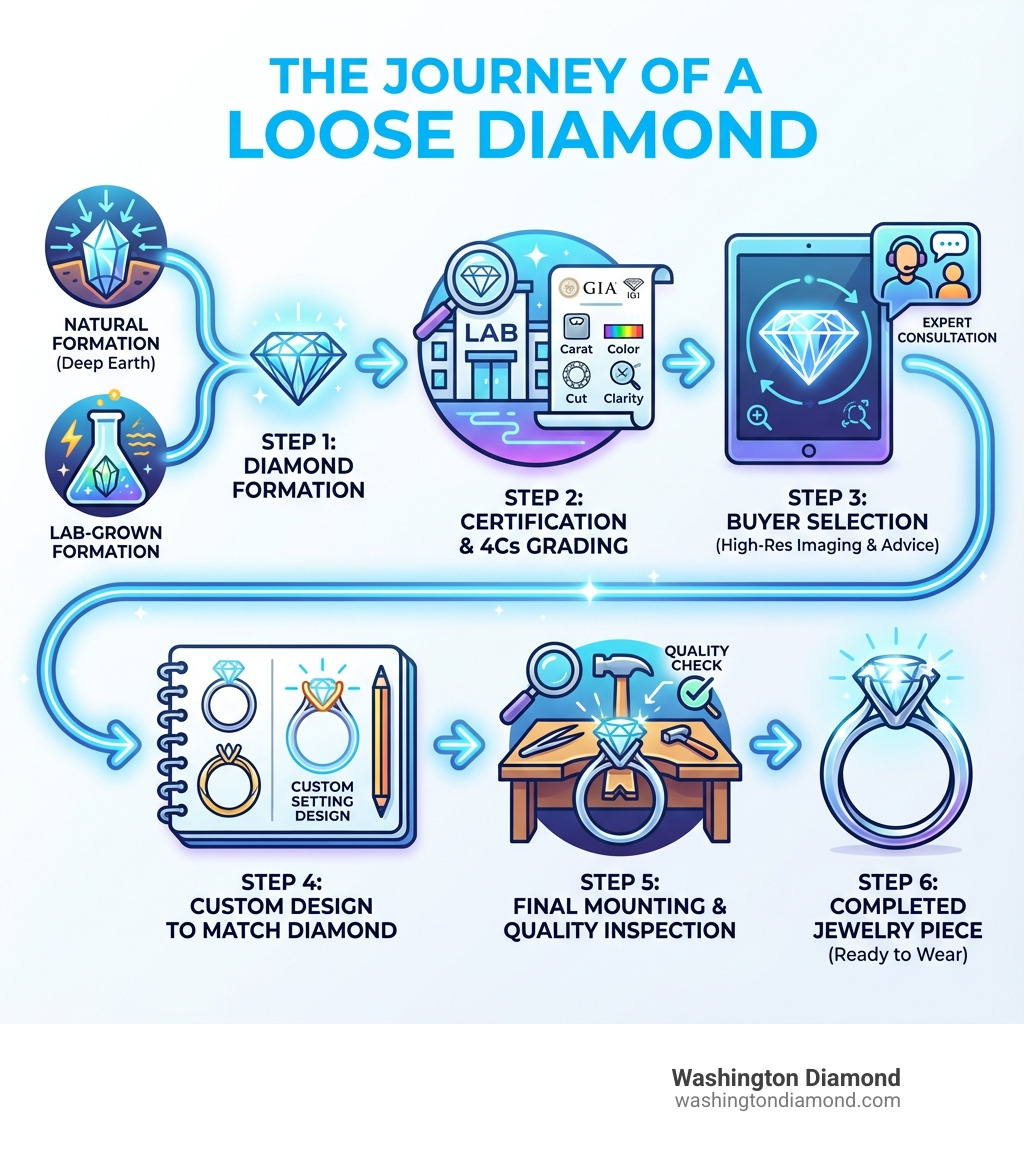
The journey from selecting a loose diamond to wearing a finished piece is simpler than you might think and more rewarding when you understand what makes each stone unique.
Understanding Diamond Fundamentals: Shape vs. Cut
Two terms often confused when discussing diamonds are shape and cut. Shape is the geometric outline of the stone (e.g., round, pear), while cut refers to the arrangement of facets that creates its sparkle.

Diamond shape is a matter of personal preference. Cut, however, is the most crucial of the 4Cs. It governs how well a diamond's facets interact with light, determining its brilliance (white light reflection), fire (spectral colors), and scintillation (sparkle).
Popular Diamond Shapes and Their Personalities
Choosing a diamond shape is a personal decision reflecting individual style. For those exploring loose diamonds, understanding these distinctions is key to finding the perfect match.
Here are the 10 modern diamond shapes:
- Round Brilliant: The classic choice, known for maximizing sparkle. It's the most brilliant and popular shape.
- Oval: A modern classic with an elongated shape that can make fingers appear longer. It shares the brilliant sparkle of a round.
- Princess: A contemporary square or rectangular shape with sharp lines and excellent sparkle.
- Cushion: A "pillow cut" with rounded corners and larger facets, offering a romantic, antique feel.
- Emerald: A sophisticated rectangular shape with step-cut facets that create a "hall-of-mirrors" effect, emphasizing clarity.
- Pear: A unique teardrop shape combining the brilliance of a round with the taper of a marquise.
- Radiant: A rectangular or square shape with trimmed corners, blending the elegance of an emerald cut with the brilliance of a round.
- Marquise: An elongated, boat-shaped diamond with pointed ends that maximizes carat weight, making the stone appear larger.
- Asscher: A square step-cut with large facets and a distinct X-pattern, similar to an emerald cut.
- Heart: The ultimate symbol of love, this romantic shape is a modified brilliant cut that requires great skill to create.
Each shape has its own charm, allowing you to find a loose diamond that speaks to your taste. To dive deeper into how these shapes can reflect a personality, explore our guide on The Perfect Diamond Shape for Every Personality.
Why Diamond Cut is King
While shape is about preference, cut is about performance. A diamond's cut quality dictates its sparkle. Even a diamond with perfect color and clarity will look dull if poorly cut. That's why "Cut is King!"
A well-cut diamond reflects light internally, dispersing it through the top as brilliance, fire, and scintillation. A poorly cut diamond leaks light from the bottom or sides, resulting in a lifeless look.
For round brilliant diamonds, GIA (Gemological Institute of America) grades cut on a scale from Excellent/Ideal to Poor. We always recommend prioritizing the best cut grade your budget allows. For maximum sparkle, a round diamond's depth percentage should ideally be between 54% and 66%. Exceptional cuts, like "Hearts and Arrows," display precise optical symmetry that maximizes light performance.
The 4Cs: Decoding the Quality of Loose Diamonds
The 4Cs – Cut, Color, Clarity, and Carat Weight – are the global standards for assessing a diamond's quality and value. Developed by the GIA, this system provides a consistent way to describe a diamond's characteristics. Understanding how to balance these elements is crucial for getting the best value when selecting loose diamonds. To comprehend the nuances of diamond pricing, it's worth exploring Beyond the Bling: What a Diamond Price Chart Really Tells You.
Carat Weight: More Than Just Size
Carat refers to a diamond's weight (one carat = 200 milligrams), not its size. The visual size of a diamond is also affected by its shape and cut; an elongated oval may appear larger than a round diamond of the same carat weight.
Price-per-carat increases significantly at key weight thresholds (e.g., 1.00 ct). A 1.00-carat diamond can cost much more than a 0.90-carat one, even with a minimal visual difference. While 1.00 carat is a popular choice, we encourage finding what feels right for you. If you're curious about pricing at higher carat weights, our guide on How Much for a 7.5 Carat Loose Diamond? Your Ultimate Pricing Breakdown offers detailed insights.
Color: The Absence of Hue
Diamond color refers to the absence of color, graded on the GIA scale from D (colorless) to Z (light yellow or brown). D-color diamonds are the rarest and most valuable.
- Colorless (D-F): Icy white with no detectable color.
- Near-Colorless (G-J): Appear colorless to the untrained eye, especially when mounted. They offer excellent value, and we often recommend the G-I range for the best balance of cost and beauty.
- Faint (K-M): A faint yellow tint is noticeable.
- Very Light (N-R) & Light (S-Z): A more obvious yellow or brown tint.
Your setting's metal also influences color perception. Yellow gold can make a near-colorless diamond (G-J) appear whiter, while platinum or white gold will highlight any yellow tint.
Clarity: A Diamond's Unique Fingerprint
Clarity refers to a diamond's internal characteristics (inclusions) and external ones (blemishes). These natural birthmarks make each diamond unique. The GIA clarity scale ranges from Flawless (FL) to Included (I3).
- Flawless (FL): No inclusions or blemishes visible under 10x magnification. Extremely rare.
- Internally Flawless (IF): No inclusions visible under 10x magnification.
- Very Very Slightly Included (VVS1, VVS2): Inclusions are extremely difficult to see under 10x magnification.
- Very Slightly Included (VS1, VS2): Inclusions are difficult to see under 10x magnification.
- Slightly Included (SI1, SI2): Inclusions are noticeable under 10x magnification. An "eye-clean" SI diamond, where inclusions aren't visible to the naked eye, offers excellent value.
- Included (I1, I2, I3): Inclusions are obvious under 10x magnification and may be visible to the naked eye, affecting brilliance.
Inclusions are internal features (crystals, feathers) from the diamond's formation. Blemishes are external marks (scratches, chips). The size, number, position, and visibility of these features determine the clarity grade and value. For a deeper understanding of how these natural features impact value, our blog offers insights into How inclusions and blemishes affect a diamond's clarity grade and overall value.
Diamond Fluorescence: The Hidden Glow
Fluorescence is a diamond's tendency to glow, usually blue, under ultraviolet (UV) light. It's caused by nitrogen atoms within the crystal structure.
In most cases, fluorescence has a negligible effect on a diamond's appearance. However, very strong fluorescence can sometimes make a diamond look hazy or oily, diminishing its brilliance and slightly lowering its value.
When considering loose diamonds, always view them in various lighting conditions to see if fluorescence impacts their visual appeal to your eye.
Natural vs. Lab-Grown and Fancy Colors
The world of loose diamonds offers choices beyond the traditional colorless natural stone, including the identical beauty of lab-grown diamonds and the allure of rare fancy colors.
Natural vs. Lab-Grown Loose Diamonds: What's the Difference?
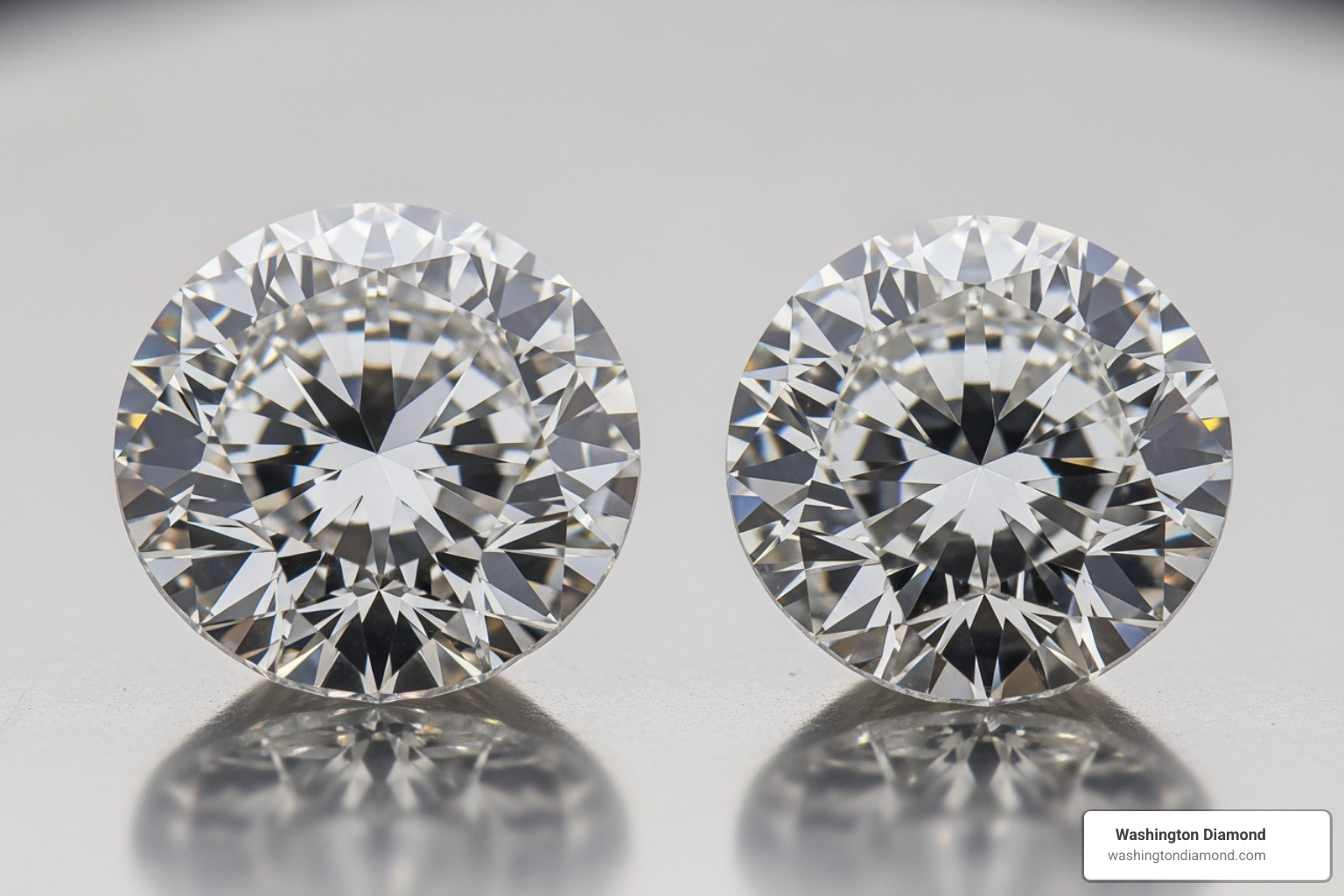
The key difference between natural and lab-grown diamonds is their origin. Natural diamonds formed over billions of years deep within the Earth, while lab-grown diamonds are created in a lab using technology that mimics those natural conditions.
Despite different origins, lab-grown diamonds are chemically and physically identical to natural ones. They have the same optical and physical properties, meaning they sparkle and endure just like their natural counterparts.
However, their value and price differ significantly. Lab-grown diamonds are typically more affordable than comparable natural diamonds, allowing buyers to get a larger or higher-quality stone for the same price.
Resale value is another key distinction. High-quality natural diamonds can retain or appreciate in value, especially rare fancy colors. The resale market for lab-grown diamonds is still developing, and they currently don't hold significant resale value. For those interested in exploring the pricing of lab-grown options, our guide on Top Picks: Where to Find the Best Price Lab-Grown Diamonds Online can be a helpful resource.
The Allure of Fancy Color Diamonds
Beyond the D-Z color scale lies fancy color diamonds. These rare beauties come in a spectrum of hues, from vibrant yellows and pinks to captivating blues and greens.
Fancy color diamonds form naturally due to impurities or structural anomalies. For example, nitrogen creates a yellow hue, while boron causes a rare blue color. Red and green diamonds are among the rarest.
Their rarity is a key factor in their high value. Unlike with colorless diamonds, the intensity and purity of the hue are paramount in fancy colors. Their scarcity means they often command a premium and can appreciate significantly, making them unique investment pieces.
The Smart Buyer's Guide to Purchasing
Navigating loose diamonds is an exciting journey with the right knowledge. Our goal is to empower you to make a confident, informed purchase.
The Importance of Diamond Certification
A diamond certificate, or grading report, is a diamond's official identity document. It's an independent assessment of the 4Cs and other quality factors from a reputable gemological lab. This report is crucial for verifying quality, ensuring transparency, and building trust.
The most respected grading labs include:
- Gemological Institute of America (GIA): The world's foremost authority in diamond grading, setting the industry benchmark.
- AGS (American Gem Society): Known for its stringent cut grading, especially for round brilliant diamonds.
- IGI (International Gemological Institute): A well-respected lab often used for grading both natural and lab-grown diamonds.
Without certification, you rely solely on a seller's word. A reputable certificate ensures the 4Cs are accurately verified, giving you confidence in the diamond's authenticity and value. It's a non-negotiable step in smart diamond buying.
Ethical Considerations: Sourcing Conflict-Free Diamonds
"Conflict diamonds" (or "blood diamonds") are mined in war zones and sold to finance conflict. Ensuring your diamond is ethically sourced is a critical consideration.
The Kimberley Process Certification Scheme (KPCS), established by the UN in 2003, is an international initiative to prevent conflict diamonds from entering the legitimate market.
As responsible jewelers, we provide only conflict-free diamonds. When purchasing loose diamonds, always ask for documentation confirming their ethical sourcing. Choosing a jeweler who complies with The Kimberley Process ensures your diamond was sourced responsibly. For a deeper understanding, we invite you to read What Does Ethically Sourced Actually Mean?.
Navigating the Purchase: Online Tools and Expert Guidance
Buying loose diamonds has evolved with online tools, but they work best when combined with expert guidance.
High-resolution imaging, like 360° HD views, allows you to examine a diamond in extreme detail from home. It's like having a virtual loupe.
However, technology has its limits. The guidance of a diamond expert or gemologist is irreplaceable. They help you understand the 4Cs, interpret grading reports, and compare diamonds to fit your needs and budget. Their unbiased advice ensures you find a diamond that resonates with you. Consulting a trusted gemologist jeweler, perhaps one affiliated with the American Gem Society, can transform your buying journey and help you avoid costly mistakes.
How to Get the Best Value for Your Money
Getting the "best value" means finding the diamond with the most visual appeal for your budget. Here's how:
- Balance the 4Cs: Strategically balance the Cs instead of maximizing each one. Prioritize an excellent cut, then compromise slightly on color or clarity for a larger stone that still looks fantastic to the naked eye.
- Prioritize Cut Grade: An exceptionally cut diamond will sparkle brilliantly, even with lower color or clarity grades.
- Choose an "Eye-Clean" Diamond: An SI1 or SI2 diamond that is "eye-clean" (inclusions not visible without magnification) offers significant savings without compromising visual beauty.
- Opt for Near-Colorless Grades (G, H, I): These diamonds appear colorless to the naked eye but are more accessible than D-F color grades.
With expert guidance, you can select a stunning loose diamond that fits your desires and budget. To help, consider using tools like The Diamond Value Calculator: Your Secret Weapon for Smart Buying.
After the Purchase: Diamond Cleaning and Care
Once you've found your perfect loose diamond, proper care is essential to maintain its brilliance, whether it's set or still loose. While durable, diamonds can get dirty or chipped without proper care.
Here are our best practices for cleaning and caring for your diamond jewelry:
- Regular Cleaning: For at-home cleaning, soak your jewelry in a bowl of warm water with a few drops of mild dish soap for about 15 minutes. Gently brush the diamond and setting with a soft-bristle toothbrush, paying attention to the underside. Rinse thoroughly under clean, running water (with the drain closed!) and pat dry with a soft, lint-free cloth.
- Professional Cleaning and Inspection: We recommend bringing your diamond jewelry for professional cleaning and inspection at least once a year. Our experts can safely clean your piece and check for loose prongs or damage.
- Proper Storage: Store diamond jewelry in its original box or a soft pouch, separate from other items. Diamonds are hard and can scratch other jewelry.
- Avoid Harsh Chemicals: Keep your diamond away from harsh chemicals like chlorine bleach and household cleaners, which can dull the metal setting.
For a comprehensive guide on keeping your precious pieces sparkling, check out our Diamond Cleaning & Care Guide.
Frequently Asked Questions about Loose Diamonds
Do loose diamonds appreciate in value?
Generally, most diamonds don't significantly appreciate in value and should be purchased for their beauty and personal meaning, not as an investment. Exceptions include very high-quality diamonds (D-F color, FL-VVS clarity) in large carat weights (3+ carats) and rare fancy-colored diamonds (blue, red, green), which can retain or increase their value.
It's also important to note that lab-grown diamonds currently do not hold significant value in the resale market. For a deeper dive into the resale market, our guide on Insights on how to sell a diamond offers valuable perspectives.
What are the current market trends for loose diamonds?
The loose diamond market is dynamic. Key trends include:
- Market Growth: The global market was valued at $39.8 billion in 2022 and is projected to reach $55.6 billion by 2030.
- Popular Shapes: Round and Oval shapes remain highly desirable, with pear and marquise shapes also gaining traction.
- Ethical Sourcing and Transparency: There is a growing emphasis on ethically sourced, conflict-free diamonds, with buyers seeking transparency in the supply chain, sometimes through technologies like blockchain.
- Lab-Grown Popularity: Interest in lab-grown diamonds is increasing due to their identical properties and more accessible price point.
How do I choose a setting for my loose diamond?
Choosing a setting for your loose diamond is where your personal style shines. The setting improves the diamond's beauty and protects it. Consider these factors:
- Complement the Diamond Shape: Some settings flatter certain shapes, like a solitaire for a round brilliant or a bezel for a pear shape.
- Protection: Prong settings maximize light exposure but require regular checks. Bezel settings offer superior protection with a modern look.
- Personal Style: Your setting should reflect your taste, whether vintage, modern, or minimalist. Common choices include solitaire, halo, and three-stone settings.
- Metal Choice: Platinum and white gold are durable and make diamonds appear whiter. Yellow gold offers a classic, warm look.
The process of crafting an engagement ring from a loose diamond is an art. For an inside look, explore How is an Engagement Ring Made?.
Conclusion
Choosing a loose diamond is a personal, rewarding experience that lets you craft jewelry reflecting your unique story. This guide has covered the essentials: from shape vs. cut and the 4Cs to certification, natural vs. lab-grown options, and smart, ethical purchasing.
The journey to finding your perfect diamond doesn't have to be overwhelming. With education, modern tools, and the guidance of a trusted gemologist, you can make a choice with absolute confidence.
At Washington Diamond, our private, appointment-only studio experience provides undivided attention and personalized guidance. We ensure a memorable journey as you select your loose diamond and design a cherished piece. We're here to help you find your perfect stone with confidence, making it a meaningful moment.
Ready to find the diamond that speaks to you? We invite you to Explore our collection of Loose Diamonds and begin your personalized journey with us.
Have a question about your jewelry?
We've been helping clients with diamonds, custom design, repairs, appraisals, and more since 1969. Book a private appointment at our Falls Church studio.
Book an AppointmentTrusted since 1969 · Falls Church, VA · 703-536-3600
From the blog
View all


