

Why White Gold Engagement Rings Are Stealing the Spotlight
Why White Gold Engagement Rings Belong on Your Shortlist

White gold engagement rings are one of the most popular choices for couples today — and for good reason. Here's a quick look at what makes them stand out:
| Feature | What to Know |
|---|---|
| Look | Bright, silvery-white finish that complements any diamond shape |
| Metal | Real gold alloyed with white metals, finished with rhodium plating |
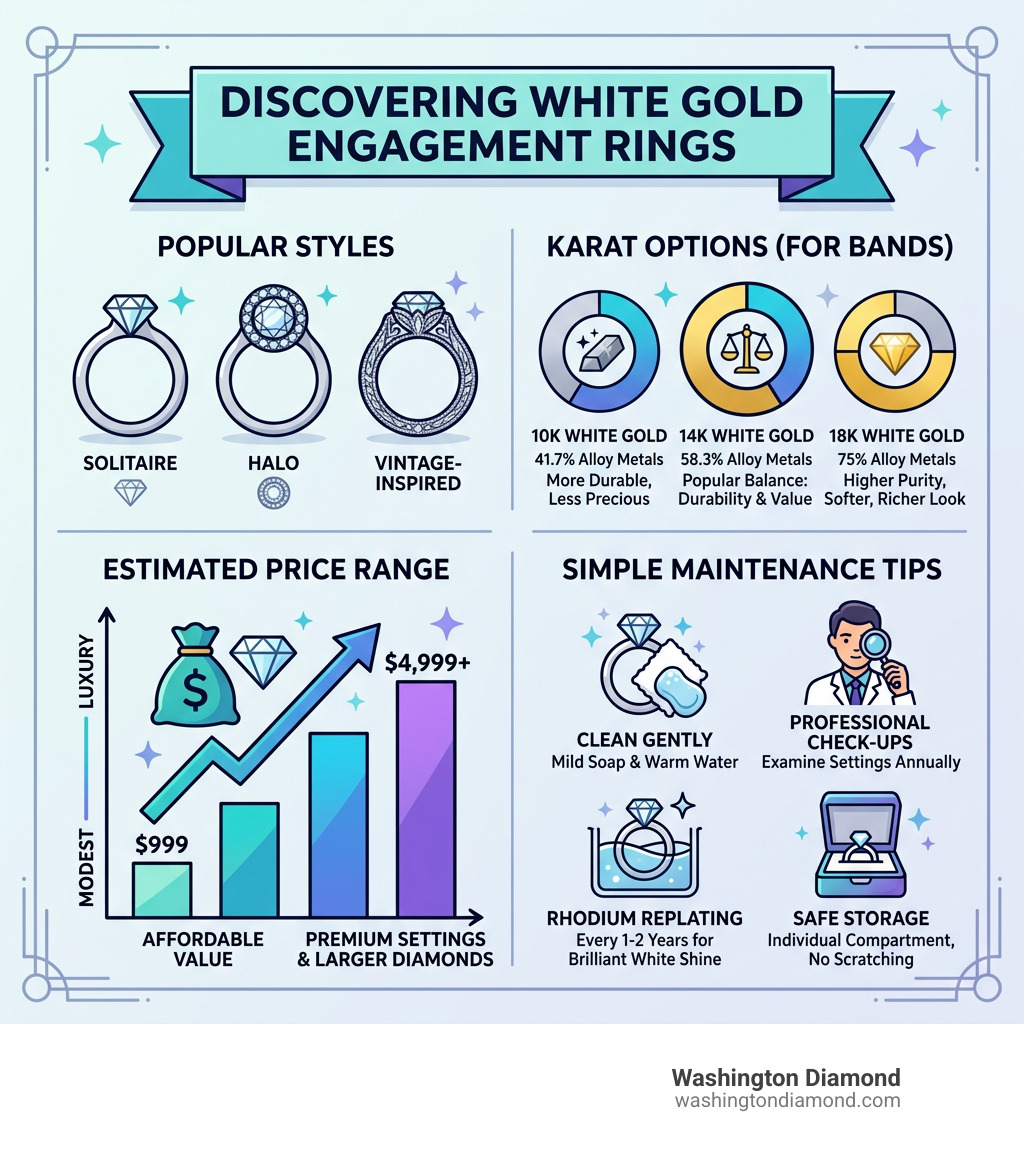
| Common karats | 10K, 14K, and 18K — 14K is the most popular for engagement rings |
| Price range | Roughly $999 to $4,999+ depending on diamond and setting |
| Best for | Modern, classic, and vintage styles alike |
| Maintenance | Requires rhodium replating every 1–2 years to maintain its shine |
| vs. Platinum | More affordable, but needs more upkeep |
White gold sits at a sweet spot — it has the cool, elegant look of platinum at a fraction of the cost. It pairs beautifully with diamonds of almost any shape, and it works across every ring style, from clean solitaires to intricate vintage designs.
That versatility is exactly why so many couples are drawn to it.
I'm Tom Daube, a jewelry designer and diamond expert ranked in the top 1% of jewelers in the country, with years of experience helping couples find the perfect white gold engagement rings for their most important moments. In the sections ahead, I'll walk you through everything you need to know — from styles and diamond pairings to care, cost, and current trends.
Common White gold engagement rings vocab:
What is White Gold and Why is it So Popular?
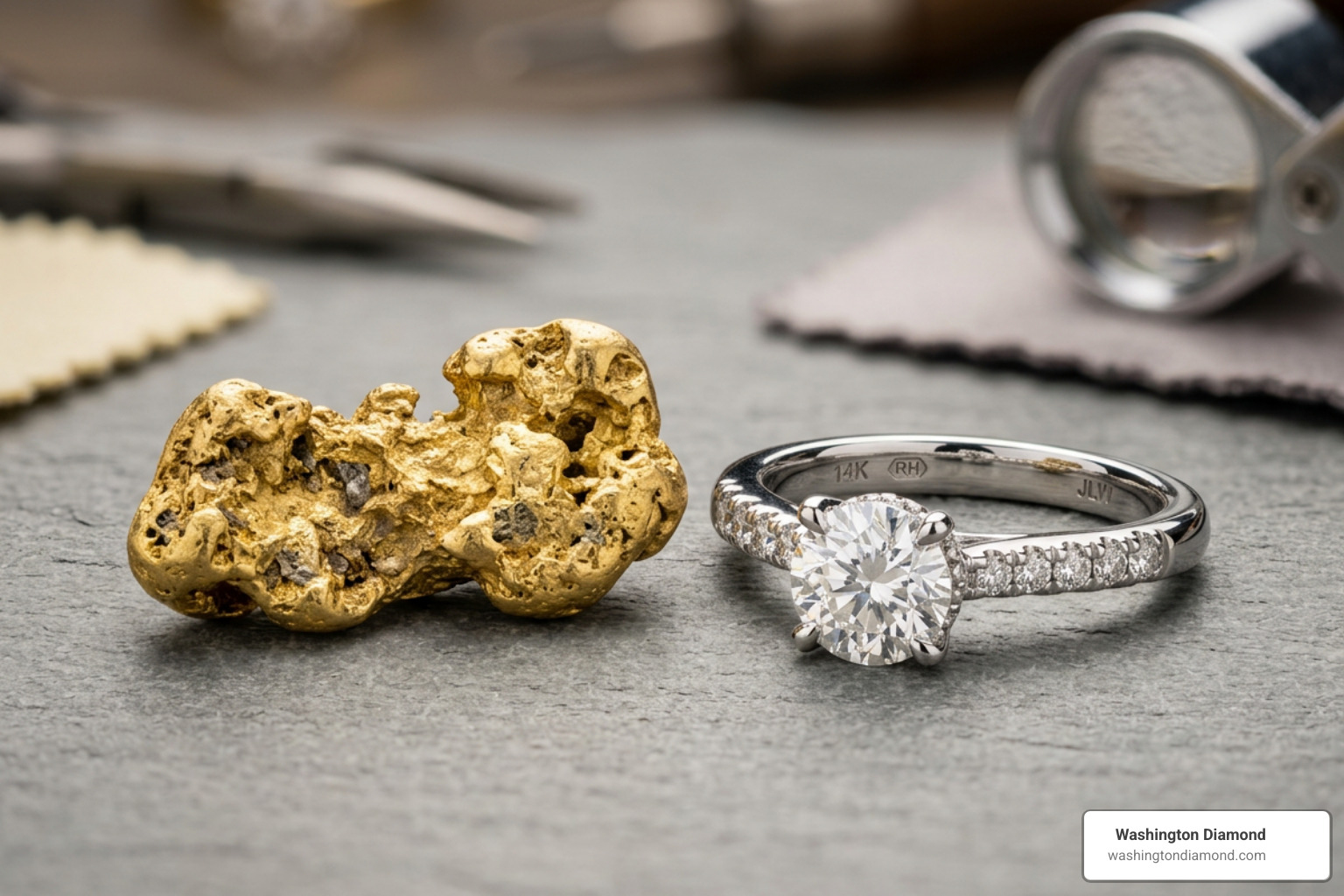
To understand the magic of white gold, we first have to look at what’s under the hood. Gold, in its natural state, is a deep, warm yellow. To create that crisp, icy look we love in white gold engagement rings, pure gold is blended with "white" metals like nickel, silver, or palladium. This mixture creates a durable alloy that serves as the perfect canvas for a diamond.
However, even after mixing, the metal often retains a slight yellowish tint. To achieve that brilliant, mirror-like sheen, the ring is finished with a thin layer of rhodium. Rhodium is a precious metal from the platinum family that provides a hard, protective surface and a stunning silvery-white glow. This process is a key part of the white-gold-wonders-how-to-create-your-own-bespoke-masterpiece journey.
Why do couples choose it? For starters, it offers a contemporary twist on traditional yellow gold. It feels modern and sophisticated, yet it carries the heritage of gold. Furthermore, the neutral tone of the metal acts like a spotlight for the center stone. Because the metal is white, it doesn't "bleed" yellow color into the diamond, allowing a high-color diamond to look its absolute brightest.
Comparing White Gold to Other Precious Metals
When you’re standing in our Northern Virginia studio, one of the first questions we often hear is: "How does white gold compare to platinum or yellow gold?" Choosing the right metal is just as important as choosing the right stone.
| Comparison Factor | White Gold | Platinum | Yellow Gold | Rose Gold |
|---|---|---|---|---|
| Durability | High (alloyed for strength) | Very High (dense) | Moderate | High (copper alloy) |
| Maintenance | Needs rhodium replating | Needs polishing | Standard cleaning | Standard cleaning |
| Color | Bright Silvery-White | Naturally Gray-White | Rich Warm Yellow | Romantic Pink/Copper |
| Cost | Budget-friendly | Premium price | Moderate | Moderate |
| Hypoallergenic | Can contain nickel | Yes | Usually yes | May contain copper |
Durability and Maintenance
White gold is incredibly durable because it is alloyed with strong metals. However, the rhodium plating will naturally wear down over time, revealing the slightly warmer gold underneath. Most of our clients find that a quick replating every year or two keeps their ring looking brand new. Platinum, while denser and heavier, doesn't change color, but it does develop a "patina" (tiny scratches) that some people love and others prefer to have polished away.
Cost-Effectiveness
One of the biggest draws of white gold engagement rings is the price point. You can often get the exact same look as a platinum ring while saving hundreds—or even thousands—of dollars. This allows you to potentially allocate more of your budget toward a higher-quality center stone.
14K vs. 18K White Gold
In the U.S., 14K and 18K are the gold standards.
- 14K White Gold: Contains about 58.3% pure gold. It is harder and more resistant to scratches, making it an excellent choice for those with active lifestyles.
- 18K White Gold: Contains 75% pure gold. It is slightly softer but has a more prestigious feel and is often preferred for high-end settings that require intricate metalwork.
Popular Styles of White Gold Engagement Rings
White gold is a shapeshifter; it looks just as good in a minimalist modern setting as it does in a detailed vintage piece. Here are the styles currently leading the way:
The Solitaire
The ultimate classic. A white gold solitaire puts the entire focus on the diamond. Whether it’s held by four or six prongs, the cool metal ensures the stone takes center stage. For those who want something truly iconic, the classic six-prong solitaire setting has defined this look for generations.
Pavé and Side Stones
If you love sparkle, a pave-engagement-setting-complete-guide will show you how tiny diamonds set into the band can create a "paved" look of light. White gold is the perfect partner for pavé because the metal disappears, leaving only the shimmer of the diamonds visible.
The Halo
A halo of smaller diamonds surrounding the center stone can make your diamond appear significantly larger. It’s a clever way to add visual impact and "oomph" to your ring without jumping up a full carat in center stone size.
Three-Stone and Vintage
A 14K White Gold Three-Stone Round Engagement Ring represents a couple's past, present, and future. For those who prefer a "story" in their jewelry, vintage-inspired styles with milgrain edges and filigree work look exceptionally sharp in white gold. You can learn more about these structural choices in our engagement-ring-settings-101 guide.
Choosing the Best Diamond Shapes for White Gold Engagement Rings
While every diamond looks great in white gold, certain diamond shapes really pop against the silvery background.
- Round Brilliant: The most popular choice, offering maximum fire and brilliance.
- Oval: A trendy choice that elongates the finger. Our oval-diamond-engagement-ring-ultimate-guide explains why this shape is currently a top seller.
- Emerald Cut: For those who love a sophisticated, "hall of mirrors" effect, the custom-emerald-cut-engagement-rings-guide highlights how the clean lines of an emerald cut pair perfectly with the sleek look of white gold.
Modern Trends in White Gold Engagement Rings
We are seeing some exciting shifts in what couples are looking for in our Northern Virginia studio.
- Hidden Halos: A "secret" circle of diamonds tucked under the center stone that can only be seen from the side profile.
- Twisted Shanks: Bands that intertwine like a vine, often featuring a mix of plain metal and pavé diamonds.
- Sustainable and Ethical Options: More couples are opting for lab-grown-diamond-engagement-rings-ethical-elegance-for-your-big-day. These offer the same physical and chemical properties as natural diamonds but often at a more accessible price point.
- Bespoke Creations: Using a custom-design-engagement-ring-guide to build a ring from the ground up ensures your piece is one-of-a-kind.
Essential Buyer’s Guide: Quality, Cost, and Care
Buying an engagement ring is a significant investment, both emotionally and financially. To make the best decision, you need to understand the 4Cs.
The 4Cs of Diamonds
- Cut: This is the most important "C." A well-cut diamond reflects light beautifully. In white gold, a high-quality cut is essential to prevent the stone from looking "flat" against the bright metal.
- Color: Diamonds are graded from D (colorless) to Z (light yellow). White gold is very unforgiving with low color grades; we generally recommend staying in the D-H range to ensure the stone looks icy white.
- Clarity: This measures the internal and external flaws (inclusions).
- Carat weight: The weight of the diamond. Two diamonds of the same carat weight can look very different in size depending on their cut and shape.
Price Factors
The cost of white gold engagement rings is influenced by several factors:
- The Diamond: Naturally, this is the largest portion of the cost. Lab-grown options can start as low as $900–$1,000 for the setting and stone, while high-end natural diamonds can reach $50,000 or more.
- The Setting: A simple solitaire setting might cost $1,000–$1,700, while an intricate pavé or designer setting can go higher.
- Karat: 18K white gold will be more expensive than 14K due to the higher gold content.
Care and Maintenance
To keep your ring sparkling, we recommend a professional cleaning every six months. At home, you can use warm water and mild dish soap with a soft toothbrush.
Don't forget about rhodium maintenance! Depending on your body chemistry and how often you wear the ring, you'll need to have it replated to maintain that "brand new" look. We also recommend checking the prongs regularly to ensure your diamond is secure.
Sizing and Logistics
Ensuring a proper fit is crucial. We always recommend getting sized professionally in a climate-controlled environment, as fingers swell in the heat. Most jewelers offer warranties that cover manufacturing defects, and financing options are often available to help you manage the purchase.
Frequently Asked Questions about White Gold
How often does white gold need to be replated?
Most people find they need to re-dip or replate their white gold engagement rings every 12 to 24 months. If you work with your hands or use harsh chemicals often, you might need it sooner. It’s a simple, inexpensive process that restores the original luster.
Is white gold more durable than platinum?
In terms of scratch resistance, 14K white gold is actually harder than platinum. However, platinum is more "viscous," meaning when it is scratched, the metal is just moved aside rather than lost. White gold is excellent for everyday wear, especially in 14K.
Can I use lab-grown diamonds in a white gold setting?
Absolutely! Lab-grown diamonds are a fantastic way to get a larger or higher-quality stone for your budget. They are real diamonds, and they look spectacular in white gold settings. You can explore more about this in our custom-jewelry section.
Conclusion
White gold engagement rings continue to steal the spotlight because they offer the perfect blend of luxury, durability, and value. Whether you are drawn to the timeless elegance of a solitaire or the intricate detail of a custom-designed piece, white gold provides a brilliant backdrop for your love story.
At Washington Diamond, we believe that choosing an engagement ring should be as memorable as the proposal itself. Our Northern Virginia studio offers a private, appointment-only experience where you receive our undivided attention. We don't just sell rings; we help you create heirlooms.
If you’re ready to start your journey, check out our custom-engagement-rings-ultimate-guide or browse our Diamond Editorial for more inspiration. We look forward to helping you find a ring that shines as brightly as your future together.
Have a question about your jewelry?
We've been helping clients with diamonds, custom design, repairs, appraisals, and more since 1969. Book a private appointment at our Falls Church studio.
Book an AppointmentTrusted since 1969 · Falls Church, VA · 703-536-3600
From the blog
View all


