

How to Buy a 1 Carat Round Diamond Without Going Broke
What You Need to Know Before Buying a 1 Carat Round Diamond
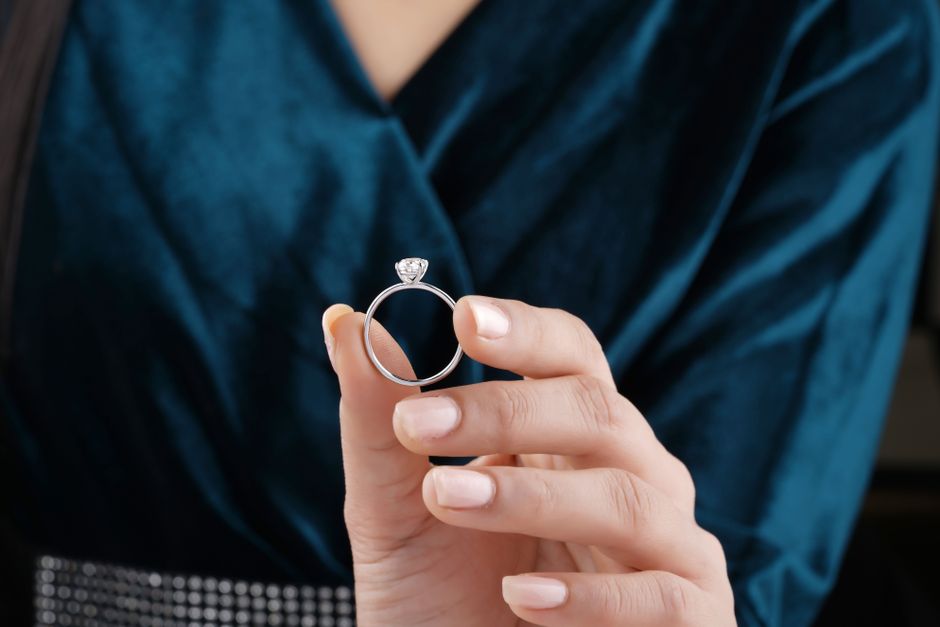
A 1 carat round diamond is one of the most popular choices for engagement rings in the United States — and for good reason. But prices vary enormously depending on quality, and it's easy to overpay without the right guidance.
Quick answers at a glance:
| Question | Answer |
|---|---|
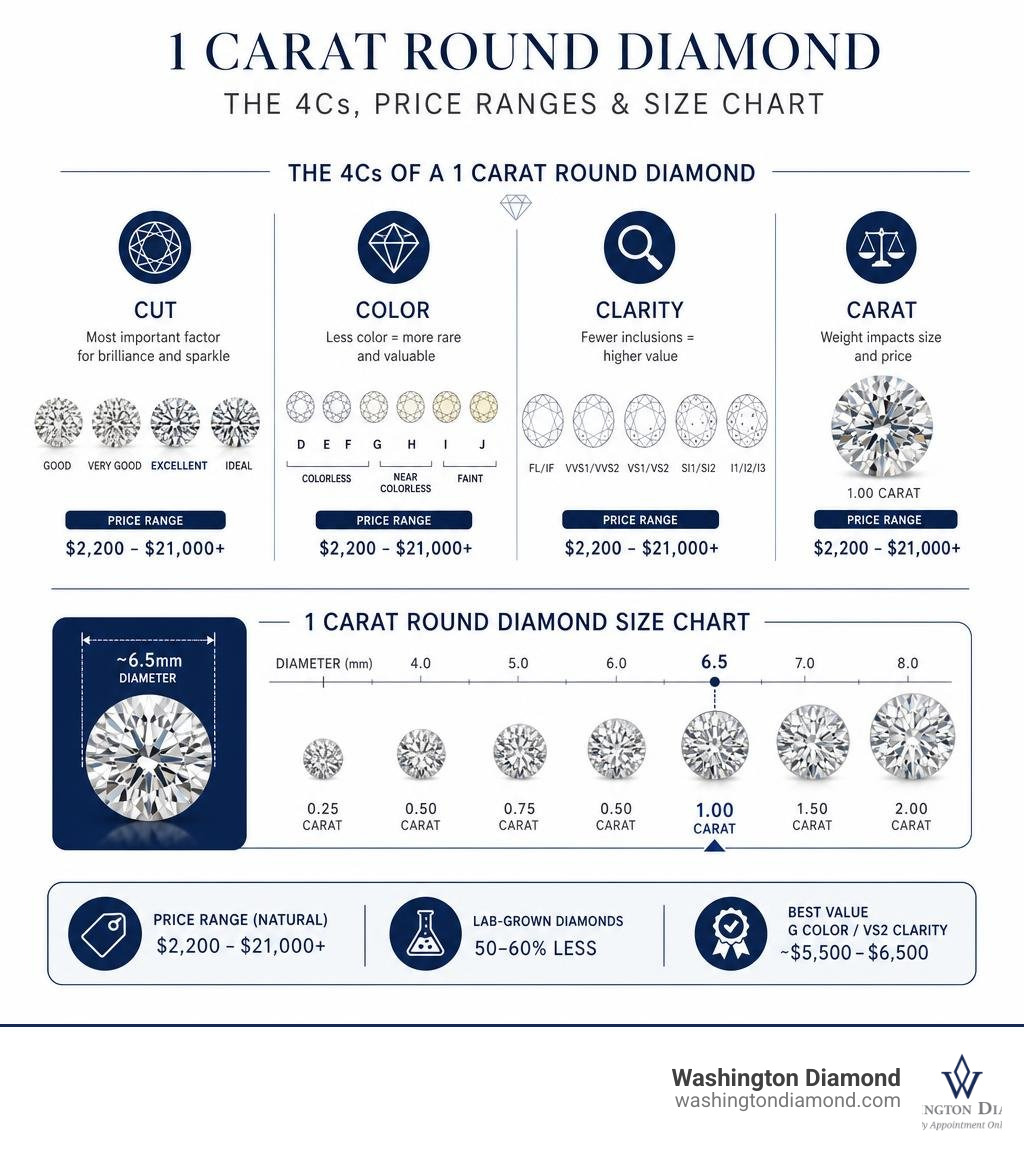
| How big is a 1 carat round diamond? | ~6.5mm diameter |
| What does it cost? | ~$2,200 to $21,000 (natural); ~50–60% less for lab-grown |
| Best value quality? | G color / VS2 clarity (~$5,500–$6,500) |
| Is it big enough for an engagement ring? | Yes — it's above the U.S. average of 0.9 carats |
| Most important factor? | Cut quality — it drives brilliance and sparkle |
The U.S. average engagement ring sits at 0.9 carats, so a 1 carat diamond already stands out. It's a size that looks impressive on the finger without pushing into the territory where costs spiral out of control. The challenge isn't finding a 1 carat round diamond — it's finding the right one at the right price.
I'm Tom Daube, a GIA-certified diamond expert and jewelry designer who has helped thousands of clients find exceptional 1 carat round diamonds at prices consistently below listed wholesale. In this guide, I'll walk you through everything you need to know to shop smart.
Understanding the Value of a 1 Carat Round Diamond
The 1 carat round diamond is the undisputed king of the bridal jewelry world. Its popularity stems from its incredible visual impact and symmetrical shape, which is engineered to maximize light return. When a round diamond is cut correctly, it reflects almost all the light that enters it, creating that signature fire and brilliance that other shapes struggle to match.
However, many buyers confuse "carat" with physical size. Carat is strictly a measure of weight, not dimensions. One carat equals exactly 200 milligrams. How that weight is distributed makes a massive difference in how large the stone actually looks. If a diamond is cut too deep, much of its weight will be hidden in its pavilion (the bottom portion), making it look smaller from the top. Conversely, if it is cut too shallow, it might look wide but will leak light, leaving you with a dull, lifeless stone.
To understand how carat weight, cut, and physical dimensions interact, check out our Loose Diamonds Complete Guide to learn how to select a stone that balances weight and visual beauty perfectly.
How Big is a 1 Carat Round Diamond in Millimeters?
When looking down at a well-cut 1 carat round diamond set in a ring, you are seeing its face-up size. A properly proportioned round brilliant diamond of this weight should have an average diameter of 6.4 to 6.5 millimeters.
To put this into perspective, here is how a round diamond's millimeter size changes as the carat weight increases:
- 0.50 carat: ~5.0 mm
- 0.75 carat: ~5.75 mm
- 1.00 carat: ~6.5 mm
- 1.50 carat: ~7.3 mm
- 2.00 carat: ~8.0 mm
As you can see, the relationship between weight and diameter is not linear. Doubling the carat weight from 1 to 2 carats only increases the physical diameter by about 23% (from 6.5mm to 8.0mm), but it more than triples the price. This is why the 1 carat mark is such a popular sweet spot for couples in Northern Virginia. It offers a substantial, highly visible presence on the finger without the exponential price jump of larger stones. For a deeper look at how millimeter dimensions translate to cost across different weights, explore our Diamond Carat Chart with Price.
Round Brilliant vs. Fancy Diamond Shapes
The round brilliant cut is specifically designed with 58 facets to reflect the maximum amount of light. Because of this unparalleled light performance, it is the most forgiving shape when it comes to hiding color tints and minor inclusions.
However, because round diamonds are in high demand and require cutting away up to 60% of the rough diamond crystal during manufacturing, they carry a premium price tag. Fancy shapes—such as ovals, cushions, pears, and emerald cuts—are often more budget-friendly per carat.
If you are looking to maximize the visual "face-up" size of your stone, shapes like the oval or marquise can appear larger than a round diamond of the exact same weight because of their elongated outlines. If you are debating between a round and an elongated silhouette, our 1 Carat Oval Diamond Price Guide provides an excellent point of comparison.
The shape you choose should reflect your partner's personal style. To find out which cut aligns best with their aesthetic, take a look at our guide on The Perfect Diamond Shape for Every Personality.
Decoding the 4Cs to Maximize Your Budget
When shopping for a 1 carat round diamond, understanding the 4Cs—Cut, Color, Clarity, and Carat Weight—is your best defense against overspending. The key is knowing which factors to prioritize and which ones you can compromise on without affecting the diamond's beauty to the naked eye.
- Cut: This is the most crucial of the 4Cs. A diamond with perfect color and clarity will still look dull and dark if it is poorly cut. For a round diamond, always insist on an Excellent (GIA) or Ideal (IGI) cut grade. An excellent cut ensures maximum sparkle, which can actually make the stone look larger and mask a lower color grade.
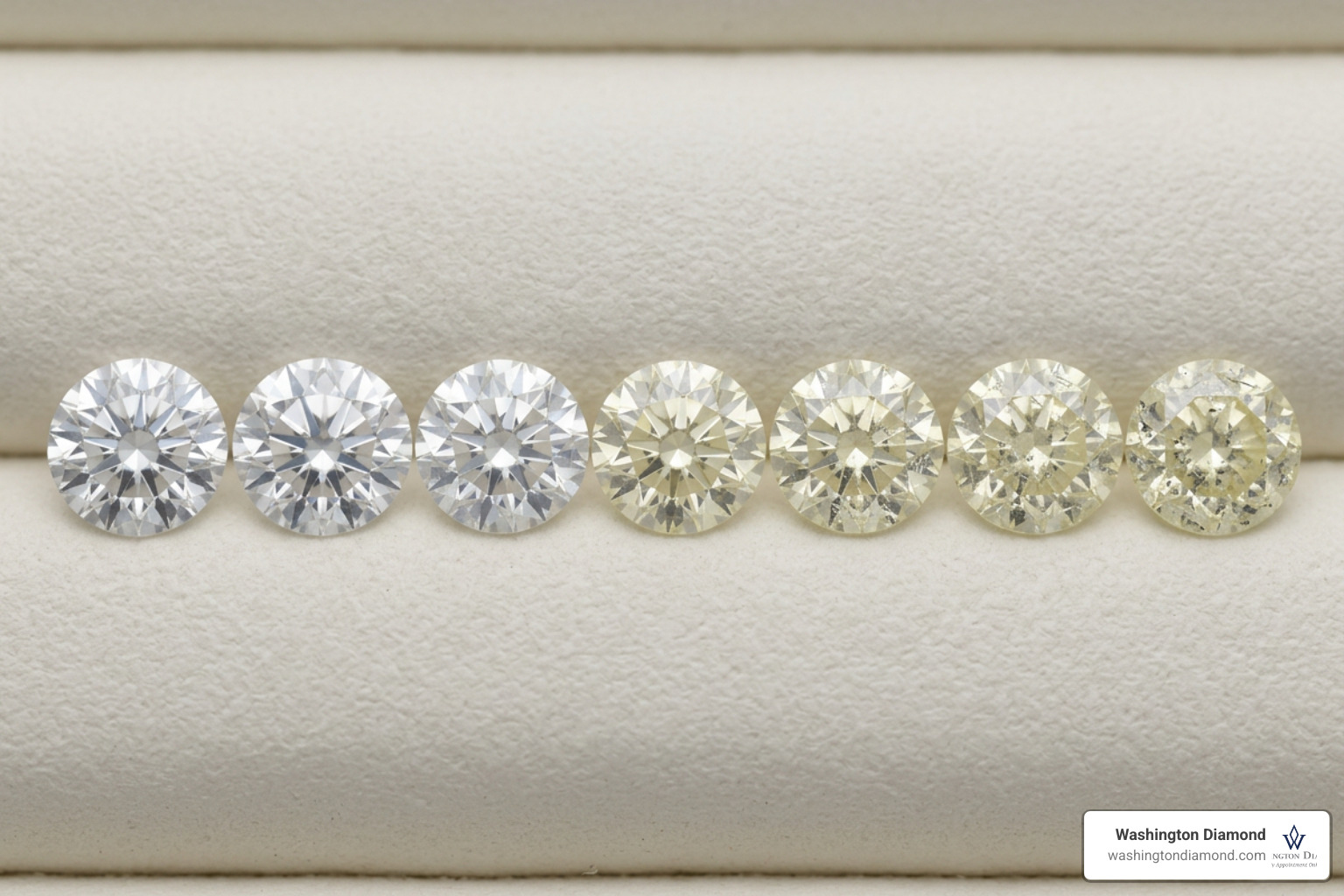
- Color: GIA grades diamond color on a scale from D (completely colorless) to Z (noticeable light yellow or brown). While D-color diamonds command a massive premium, you do not need a colorless stone for it to look icy white in a ring.
- Clarity: This measures the internal and external imperfections (inclusions and blemishes). The scale runs from Flawless (FL) down to Included (I3). Most inclusions are invisible to the naked eye until you get down to the SI (Slightly Included) or I (Included) ranges.
- Carat Weight: Diamond pricing is calculated per carat, and the price per carat jumps significantly at whole numbers like 1.00ct. To understand how these calculations work behind the scenes, read our article on How to Calculate Diamond Price Per Carat.
Smart Strategies to Save on a 1 Carat Round Diamond
Buying a diamond does not mean you have to pay top-dollar for features you cannot see. Here are the best insider strategies to get the absolute most value out of your budget:
- "Buy Shy": Instead of buying a flat 1.00-carat stone, look for diamonds in the 0.90 to 0.97-carat range. Because they sit just under the popular 1 carat threshold, they can cost significantly less while being visually indistinguishable from a 1.00-carat stone once set in a ring.
- Target the "Sweet Spot" (G/VS2): Ask any experienced gemologist, and they will tell you that a G color, VS2 clarity round diamond is the ultimate value sweet spot. At this grade, the diamond looks completely white to the eye and is guaranteed to be eye-clean, but it costs a fraction of a colorless, flawless stone. A natural round G/VS2 typically runs between $5,500 and $6,500.
- Drop to an Eye-Clean SI1: If you want to stretch your budget even further, look for an SI1 clarity diamond. Many SI1 diamonds are completely "eye-clean," meaning their inclusions cannot be seen without a jeweler's loupe.
- Embrace Medium Fluorescence: In colorless diamonds (D-F), strong fluorescence can sometimes cause a hazy appearance. However, in near-colorless diamonds (G-J), a medium blue fluorescence can actually make the diamond look whiter by countering faint yellow undertones, allowing you to buy a lower color grade at a discount.
When you are ready to compare these options in person with expert guidance, visiting a reputable local jeweler is key. At Washington Diamond, we specialize in helping you navigate these micro-grades in a relaxed, pressure-free environment so you never pay for quality characteristics you cannot see.
Natural vs. Lab-Grown Diamonds
As we navigate the market in June 2026, one of the biggest choices buyers face is whether to purchase a natural, mined diamond or a lab-grown one. Both are physically, chemically, and optically identical, but their pricing and market dynamics are vastly different.
| Feature | Natural (Mined) Diamond | Lab-Grown (Man-Made) Diamond |
|---|---|---|
| Composition | Pure carbon crystal (formed over billions of years) | Pure carbon crystal (grown in a high-tech lab) |
| 1ct Price Range | ~$2,000 to $20,000+ (depending on 4Cs) | ~$1,000 to $2,500+ (including setting) |
| Savings | Baseline standard | 50% to 60% less than natural |
| Resale Value | Retains a portion of market value | Extremely minimal resale value |
| Sourcing | Mined from the earth | Created via HPHT or CVD technology |
Because lab-grown diamonds are produced in controlled environments, their supply is not limited by geological rarity. This has made them incredibly affordable. If you are working with a strict budget but want a larger or higher-quality center stone, a lab-grown diamond is an excellent option.
However, if long-term rarity and heirloom value are important to you, a natural diamond remains the traditional choice. To explore this topic in greater detail and decide which path is right for you, read our comprehensive 1 Carat Man-Made Diamond Guide.
Frequently Asked Questions About 1 Carat Diamonds
Is a 1 carat diamond a good size for an engagement ring?
Yes, a 1 carat diamond is an exceptional size for an engagement ring. Because the average engagement ring diamond in the United States is around 0.9 carats, a full 1 carat stone is actually slightly larger than average. It offers a classic, timeless look that is highly visible on the finger without being ostentatious. It is comfortable for daily wear and pairs beautifully with almost any setting style.
If you want to explore how a 1 carat center stone can be integrated into a bespoke design, we would love to help you create something unique at Washington Diamond Custom Engagement Rings.
What diamond certifications should I look for?
You should never buy a 1 carat round diamond without a grading report from an independent, reputable gemological laboratory.
- GIA (Gemological Institute of America): This is the gold standard of the diamond industry. Their grading criteria are the strictest and most consistent, ensuring that you are getting exactly what you pay for.
- IGI (International Gemological Institute): While they grade natural diamonds, they are particularly dominant and highly trusted in the lab-grown diamond market.
An independent certificate ensures that your diamond's cut, color, clarity, and carat weight have been verified by a third-party expert. It also helps confirm important details about the stone before you buy.
Which ring settings make a 1 carat diamond look larger?
The right setting can make your 1 carat round diamond appear significantly larger and more brilliant:
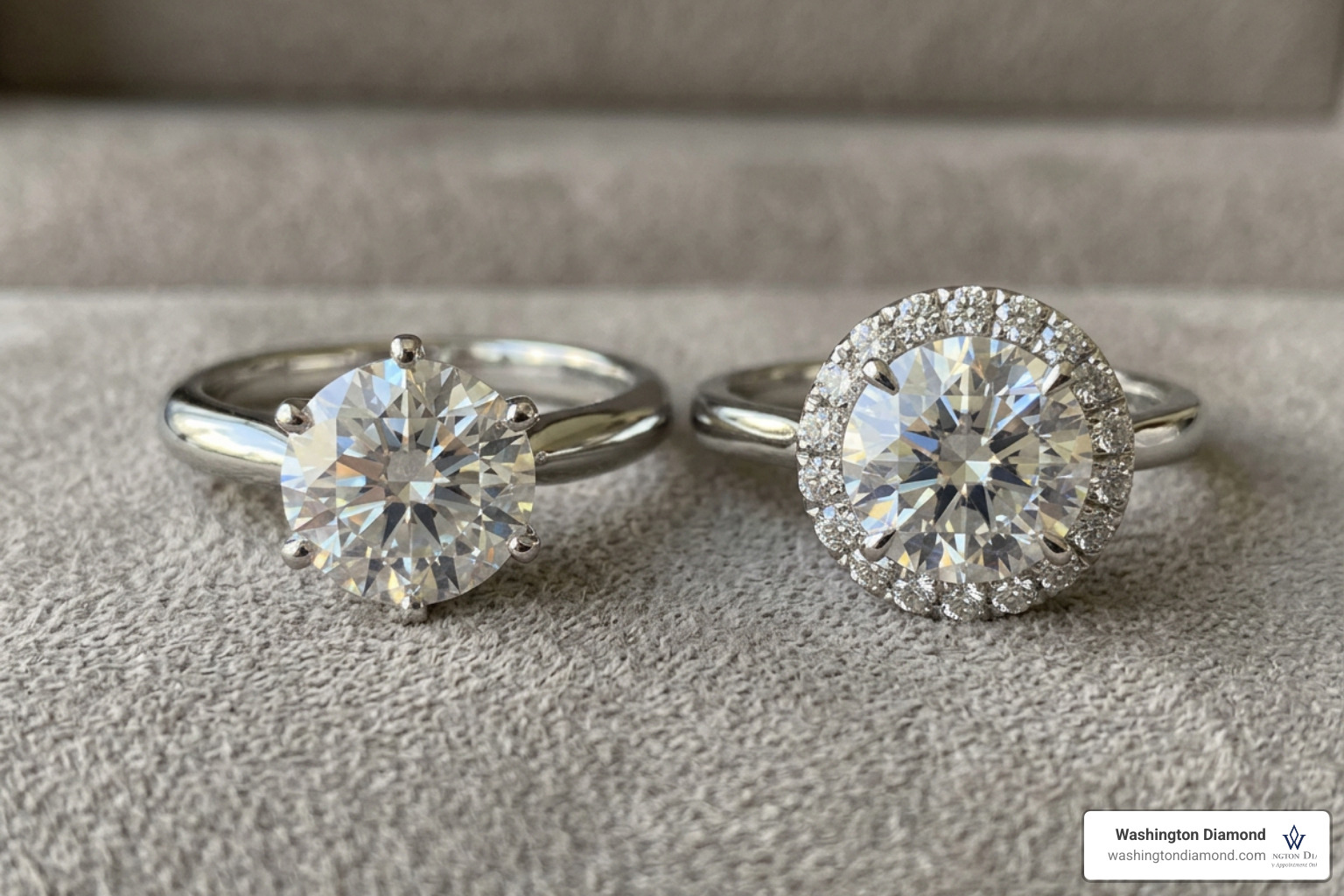
- The Halo Setting: Surrounding your 1 carat center stone with a "halo" of small accent diamonds can make the center stone look up to a half-carat larger. From a distance, the border of sparkle blends seamlessly with the center stone.
- Slender Bands: Placing your diamond on a thin, delicate band, such as a pave band, creates a visual contrast that makes the center stone pop.
- The Solitaire Setting: A classic four-prong or six-prong solitaire lifts the diamond off the finger, allowing maximum light to enter from the sides and increasing its overall brilliance.
Conclusion
Buying a 1 carat round diamond is an exciting milestone, but it doesn't require draining your savings. By focusing your budget on cut quality, targeting the G/VS2 value sweet spot, and considering clever tactics like "buying shy," you can find a breathtaking diamond that fits your budget perfectly.
At Washington Diamond, we do things differently. We don't believe in high-pressure sales tactics or overwhelming retail showrooms. Instead, we welcome you into our private, appointment-only studio in Northern Virginia, where you receive our undivided attention. We will sit down with you, educate you on the nuances of diamond grading, and help you compare natural and lab-grown options side-by-side to design the perfect custom ring for your love story.
Ready to take the next step? Schedule a private consultation at our Tysons Corner showroom today, and let us help you find the perfect diamond without going broke.
Have a question about your jewelry?
We've been helping clients with diamonds, custom design, repairs, appraisals, and more since 1969. Book a private appointment at our Falls Church studio.
Book an AppointmentTrusted since 1969 · Falls Church, VA · 703-536-3600
From the blog
View all


