

How to Spot a Real Diamond Pendant Necklace Without Losing Your Spark
Why a Real Diamond Pendant Necklace Is Worth Getting Right

A real diamond pendant necklace is one of the most personal jewelry purchases you can make — and one of the easiest to get wrong without the right information.
Here is a quick overview of what makes a diamond pendant truly authentic and worth your investment:
- Real diamonds are graded by four factors: Cut, Color, Clarity, and Carat weight
- Authentic settings use precious metals like 18k gold, white gold, rose gold, or platinum
- Certification matters — look for a GIA certificate to confirm a diamond's quality
- Simulants like moissanite and cubic zirconia look similar but are not real diamonds
- Price range varies widely based on carat size, cut quality, and metal choice
- Popular styles in 2026 include solitaire, pear-shaped, baguette, and duo-stone designs
Over 79,000 people searched for diamond pendant ideas on Pinterest in just the last four days alone — so you are far from the only one trying to navigate the options. The challenge is cutting through the visual noise to find something that will actually hold its beauty, its value, and its meaning for years to come.
I'm Tom Daube, a GIA-certified diamond specialist and jewelry designer with decades of experience helping clients find exceptional diamonds — including the perfect real diamond pendant necklace — almost always at prices below listed wholesale. The rest of this guide will walk you through everything you need to know, from spotting a genuine stone to choosing the right style for your life.
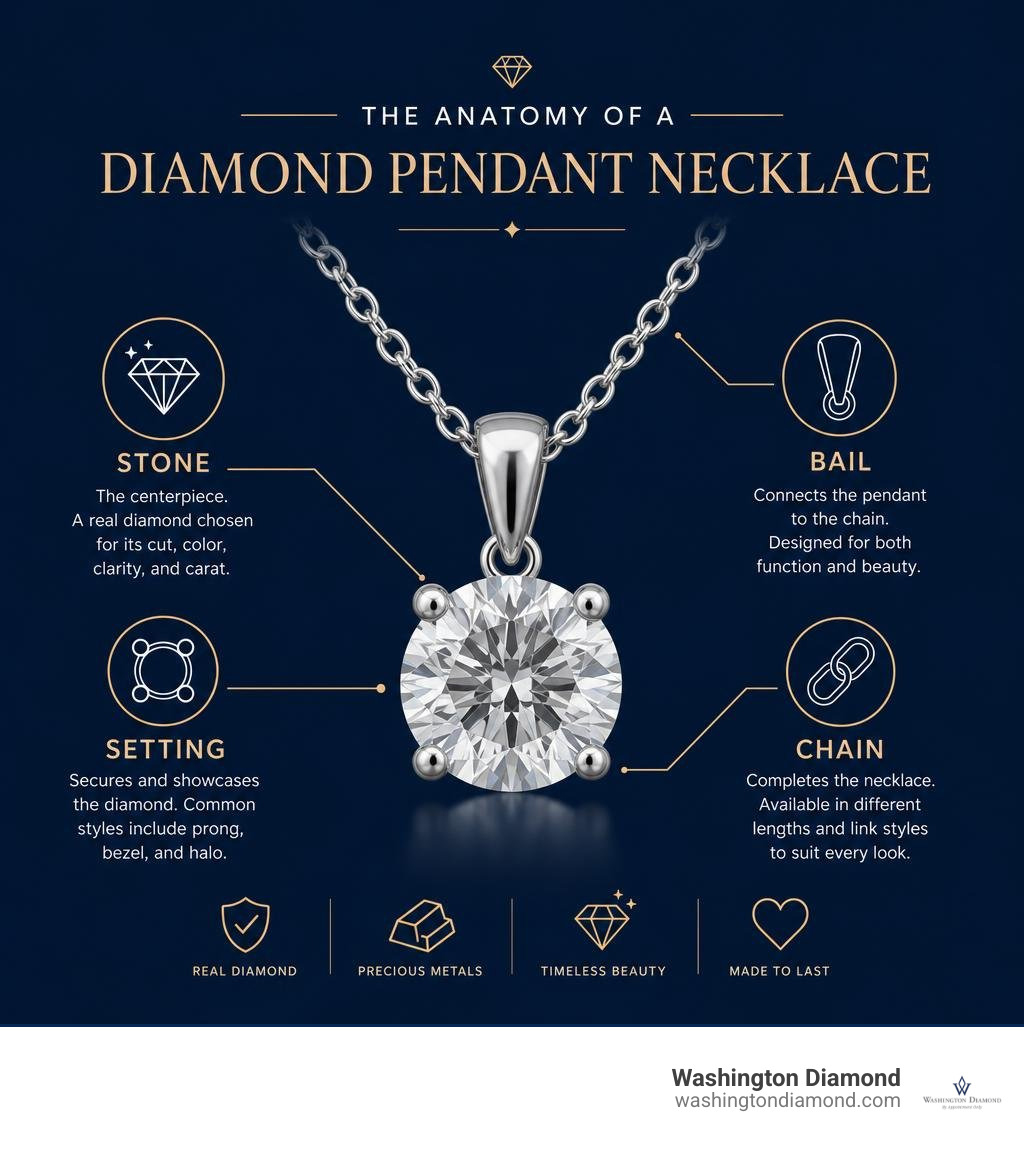
What Defines an Authentic Real Diamond Pendant Necklace?
When we talk about an authentic real diamond pendant necklace, we are referring to a piece of jewelry crafted with genuine, carbon-crystallized diamonds set into durable, precious metals. Unlike fashion jewelry that relies on brass or gold plating, heirloom-quality necklaces are built to last lifetimes.
At Washington Diamond, we believe that understanding the anatomy of your diamond pendant necklace is key to appreciating its value. A genuine piece consists of three distinct parts: the diamond itself, the metal setting (such as the basket, bezel, or prongs), and the chain. For a pendant to hold its value, every component must be high-quality. Choosing a weak chain or a cheap alloy setting can put your precious stone at risk of falling off and getting lost.
The 4 Cs of a Real Diamond Pendant Necklace
To truly understand the quality and value of a diamond, gemologists rely on the "4 Cs." This universal grading system ensures you know exactly what you are purchasing.
- Cut: This is the most crucial factor. The cut determines how light bounces around inside the stone and reflects back to your eyes. A poorly cut diamond will look dull and lifeless, while an excellently cut diamond will dance with fire and brilliance.
- Color: Graded on a scale from D (completely colorless) to Z (light yellow or brown). For a stunning solitaire, we generally recommend staying in the colorless (D-F) or near-colorless (G-H) range to ensure a bright, clean look against your skin.
- Clarity: This measures the internal flaws (inclusions) and surface blemishes (blemishes). While flawless diamonds are incredibly rare, choosing an "eye-clean" diamond (where flaws cannot be seen without magnification) offers the best value. To find the right balance, check out our loose diamonds complete guide.
- Carat Weight: This measures the physical weight of the diamond, not its size. Because larger diamonds are rarer, the price climbs exponentially as the carat weight increases.
For more details on how these factors influence the market value of your stone, you can refer to our gia certified diamonds price guide.
Natural vs. Lab-Grown Diamonds
A common question we hear in our Northern Virginia showroom is whether lab-grown diamonds are "real." The short answer is yes. Lab-grown diamonds share the exact same chemical composition, physical properties, and optical brilliance as natural diamonds.
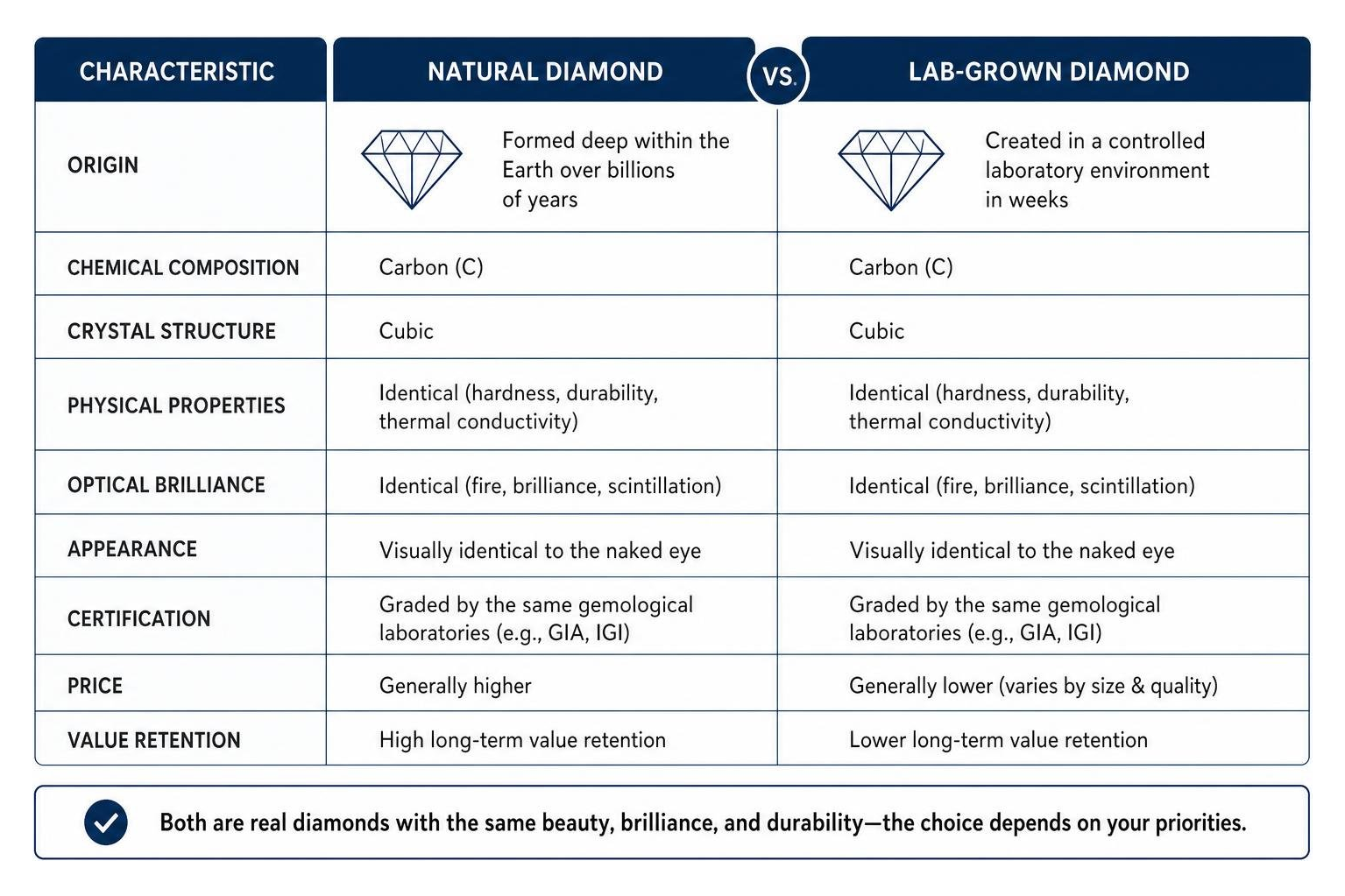
While natural diamonds were forged deep within the earth billions of years ago, lab-grown diamonds are grown in controlled laboratory environments. Both are real, but they carry different price points and value retention profiles. If you are exploring budget-friendly options, our affordable lab grown diamonds complete guide and certified lab diamonds complete guide provide a deep dive into making an informed decision.
How to Distinguish a Real Diamond from Simulants
With the rise of high-quality diamond simulants, it is easier than ever to be fooled by a sparkly stone that is not actually a diamond. Simulants are materials that look like diamonds but do not share their physical or chemical properties.
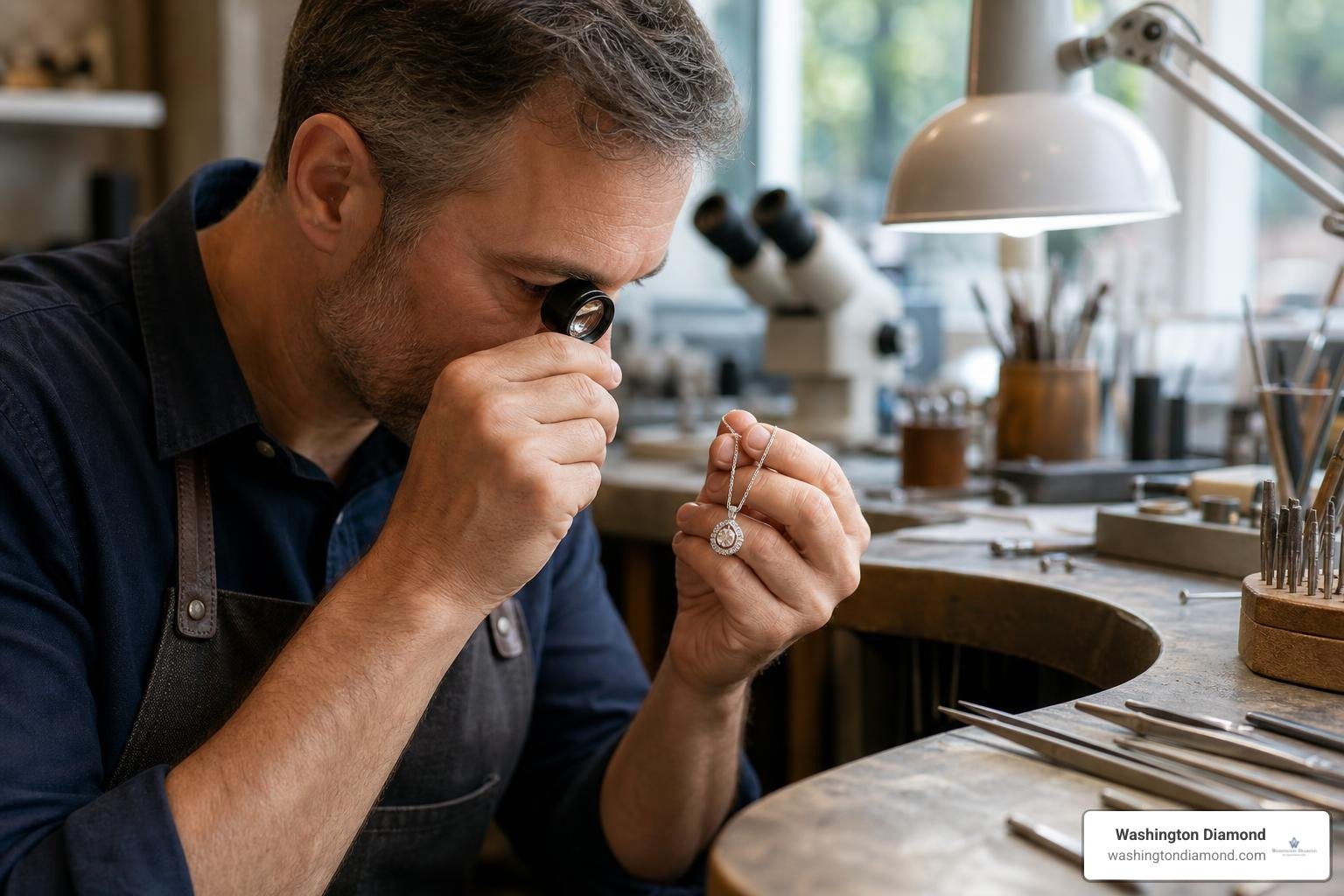
Real Diamonds vs. Moissanite and Cubic Zirconia
The two most common diamond simulants on the market are moissanite and cubic zirconia (CZ). Here is how you can tell them apart from a real diamond pendant necklace:
- Double Refraction: Moissanite is doubly refractive. When you look through the side of a moissanite stone, you might see "doubling" of the facet lines, making it look slightly blurry or giving it a "rainbow disco ball" effect. Diamonds are singly refractive, offering a cleaner, crisper sparkle.
- Thermal Conductivity: Real diamonds are exceptional conductors of heat. Professional jewelers use thermal probes to instantly separate real diamonds from simulants like cubic zirconia, which do not conduct heat well.
- Hardness and Scratch Resistance: Diamonds are the hardest known natural substance, scoring a perfect 10 on the Mohs scale. Cubic zirconia is much softer (around 8 to 8.5) and will easily show scratches and rounded facet edges over time. Moissanite is harder than CZ (9.25) but still falls short of a diamond's ultimate durability.
If you are sourcing a stone to set into a pendant, starting with verified loose diamonds is the safest way to ensure authenticity from the very beginning.
Professional Verification and Appraisal Services
While at-home tests can give you a general idea, they are never 100% foolproof. The only way to have absolute peace of mind is to work with an independent, certified gemological laboratory like the Gemological Institute of America (GIA). A GIA grading report acts as a passport for your diamond, verifying its exact measurements, weight, and quality metrics.
If you have inherited a piece or purchased a vintage necklace, we highly recommend utilizing professional diamond appraisal services to verify its retail replacement value for insurance purposes.
Trending Styles and Designs for Modern Jewelry Lovers
The way we wear diamond pendants has evolved. While the classic single-stone necklace remains a staple, modern jewelry lovers are embracing creative, geometric, and culturally rich designs.
Choosing the Perfect Setting for Your Real Diamond Pendant Necklace
The metal setting you choose does more than hold your diamond in place — it defines the entire aesthetic of your necklace.
- 18k Yellow Gold: Warm, classic, and highly trending in 2026. Yellow gold provides a beautiful contrast against a brilliant white diamond, making it the perfect choice for everyday luxury.
- White Gold & Platinum: These metals offer a seamless, icy look that enhances the colorless appearance of high-grade diamonds.
- Rose Gold: Offers a romantic, vintage, and feminine alternative that looks incredibly soft against the skin.
If you want a timeless look that never goes out of style, a diamond solitaire pendant is your best bet. However, if you have a specific vision in mind, opting for custom jewelry allows you to create a completely unique heirloom.
Popular Cuts and Cultural Designs
Modern styling is all about personal expression. Here are the top design trends dominating the jewelry world in 2026:
- The Pear-Shaped Pendant: This teardrop silhouette is elegant and elongating. It offers a modern, sophisticated alternative to the traditional round cut.
- Baguette Cuts: Known for their clean, step-cut lines, baguette diamonds are being arranged in geometric, minimalist layouts for a sleek, art-deco vibe.
- Duo-Stone Designs: A rising trend involves pairing two different cuts — like a pear and a round-cut diamond — on a single minimalist chain to create a beautiful visual contrast.
- Traditional Indian and Indo-Western Designs: Intricate gold work, floral motifs, and "dancing diamond" settings (where the diamond is suspended to constantly catch the light) are highly sought after by buyers looking for cultural depth and unmatched movement.
Caring for and Styling Your Diamond Jewelry
A real diamond pendant necklace is incredibly durable, but it still requires regular care to keep its fiery brilliance from being clouded by body oils, lotions, and everyday dust.
Best Practices for Cleaning and Maintenance
To keep your diamond sparkling like the day you first put it on, follow these simple care steps:
- Soak: Place your pendant in a small bowl of warm water mixed with a few drops of mild dish soap.
- Brush: Use a clean, extra-soft bristle toothbrush to gently clean behind the setting where dirt accumulates.
- Rinse & Dry: Rinse thoroughly in warm water and dry with a lint-free microfiber cloth.
For a complete breakdown of professional cleaning tips, check out our diamond cleaning care guide and discover the best way to clean diamonds without damaging the metal settings.
How to Style Your Pendant for Any Occasion
The beauty of a diamond pendant is its sheer versatility.
- Everyday Wear: Pair a dainty round solitaire or a light-weight geometric pendant with a casual t-shirt and blazer.
- Formal Events: Choose a larger pear-shaped pendant or a multi-stone halo design.
- Layering: Layer a short, minimalist diamond pendant with longer gold chains of varying textures.
- Bridal Looks & Matching Sets: For a cohesive, elegant look, pair your pendant with matching diamond studs or beautiful diamond bracelets.
If you are building a matching set, sourcing a diamond bracelet hand selected stones ensures that all your diamonds match in color and brilliance.
Frequently Asked Questions About Diamond Pendants
What is the best metal for a real diamond pendant necklace?
For maximum durability and daily wear, we recommend 18k yellow gold, white gold, or platinum. Platinum is naturally hypoallergenic and incredibly secure, making it excellent for holding larger, valuable stones. If you prefer a warm, classic look, 18k yellow gold is highly durable and pairs beautifully with almost any skin tone.
How can I tell if my diamond pendant is real at home?
While not substitutes for a professional appraisal, a few quick tests can help:
- The Fog Test: Breathe on the diamond. A real diamond disperses heat instantly and will clear up immediately. A simulant like glass or CZ will stay fogged for a few seconds.
- The Read-Through Test: If the stone is loose, place it flat-side-down on a piece of newspaper. If you can read the print through the stone, it is likely not a real diamond, as diamonds bend light so sharply you shouldn't be able to see through them clearly.
What is the average price range for a real diamond pendant?
The price varies drastically based on the stone's origin and quality. A 1-carat natural diamond pendant can range from $3,000 to over $10,000 depending on the 4 Cs. Meanwhile, lab-grown alternatives offer significant savings. To compare pricing structures, view our lab diamonds price chart or read about the average cost of a 2 carat lab grown diamond.
Conclusion
Investing in a real diamond pendant necklace is a beautiful way to celebrate a milestone, gift a loved one, or elevate your everyday style. Because this is a purchase meant to last a lifetime, having the guidance of a trusted, non-commissioned expert makes all the difference.
At Washington Diamond, we bypass the traditional, high-pressure retail environment. Our private, appointment-only studio in Northern Virginia is designed to give you undivided attention, education, and access to hand-selected stones at exceptional values. Whether you are looking for a classic solitaire or want to design a custom masterpiece, we are here to bring your vision to life.
Ready to find a piece that truly matches your personal aesthetic? Read our diamond ring complete guide 2026 to learn more about selecting the perfect stones, or schedule your private consultation with us today.
Have a question about your jewelry?
We've been helping clients with diamonds, custom design, repairs, appraisals, and more since 1969. Book a private appointment at our Falls Church studio.
Book an AppointmentTrusted since 1969 · Falls Church, VA · 703-536-3600
From the blog
View all


