

The Best Diamond Solitaire Pendants for Every Occasion
The Timeless Appeal of a Diamond Solitaire Pendant
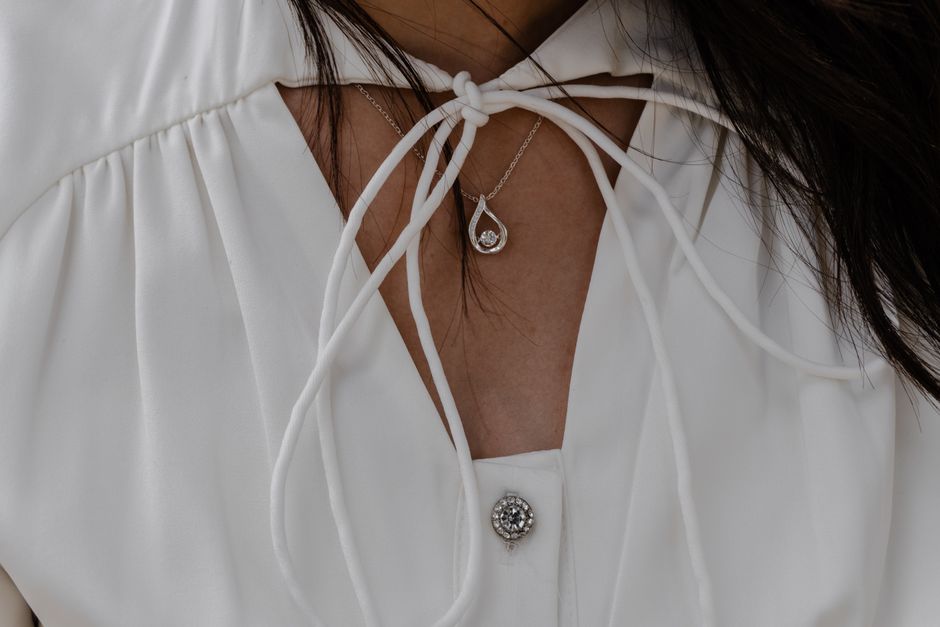
A diamond solitaire pendant is one of the most classic and enduring pieces of jewelry you can own or gift. Whether you're looking for something to wear every day or a meaningful present for a special occasion, a solitaire pendant checks every box.
Quick answer: What is a diamond solitaire pendant?
| Feature | Details |
|---|---|
| What it is | A single diamond set in a pendant, worn on a chain |
| Most popular shapes | Round brilliant, pear, oval, princess |
| Common settings | Prong (4-claw), bezel, hidden halo |
| Metal options | Platinum, white gold, yellow gold, rose gold |
| Typical carat range | 0.20ct to 2.00ct for everyday wear |
| Price range | ~$82 (budget) to $2,750+ (premium) |
| Best for | Anniversaries, birthdays, everyday elegance, gifting |
Its appeal comes from simplicity. One stone. One setting. All the focus on the diamond itself.
Unlike more elaborate necklace styles, the solitaire design never goes out of fashion. It works with casual outfits, formal wear, and everything in between. It layers beautifully with other necklaces or stands alone with quiet confidence.
In April 2026, minimalist fine jewelry is stronger than ever in terms of trend momentum — and the diamond solitaire pendant sits right at the heart of that movement.
I'm Tom Daube, a GIA-certified diamond specialist and jewelry designer with decades of experience helping clients find diamonds priced under wholesale — including guiding countless people to their perfect diamond solitaire pendant. In this guide, I'll walk you through everything you need to make a confident, informed choice.
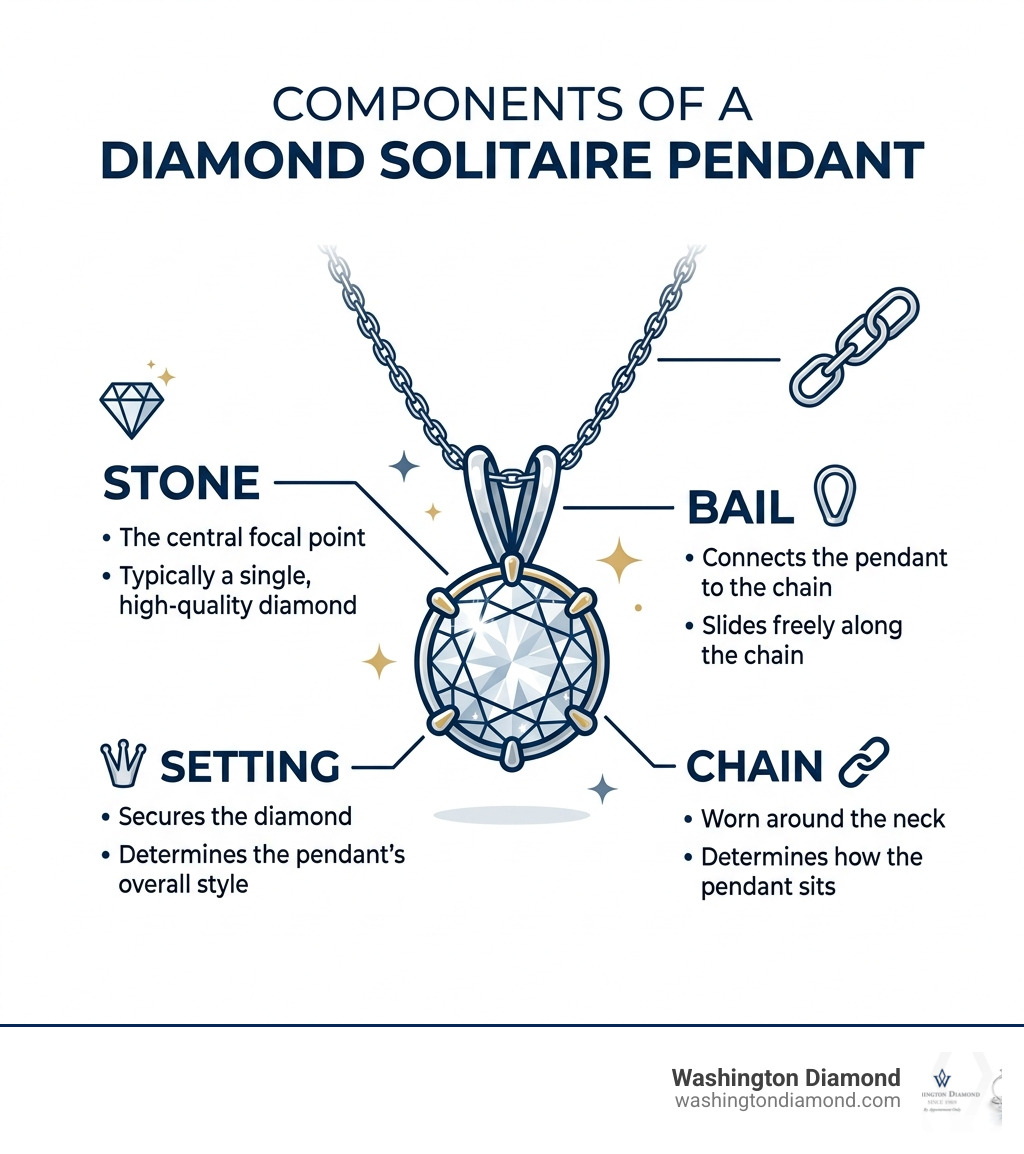
Diamond solitaire pendant vocab explained:
Choosing Your Diamond: The 4Cs and Quality Standards
When you are selecting a diamond solitaire pendant, the diamond is the star of the show. Because there are no side stones to distract the eye, the quality of that single center stone matters immensely. We always recommend starting with the 4Cs: Cut, Color, Clarity, and Carat weight.
Cut: The Engine of Sparkle
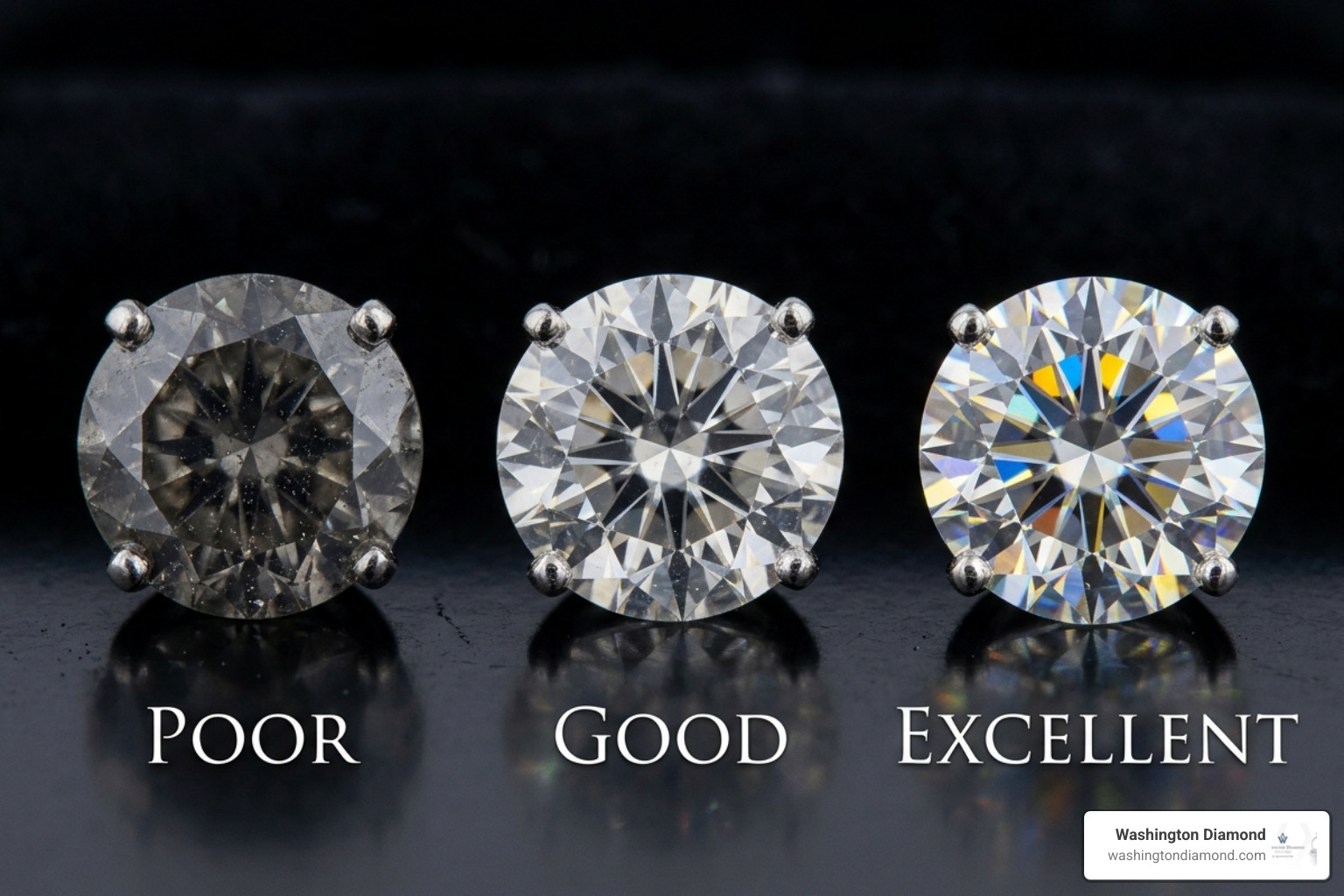
The cut is arguably the most important "C" for a pendant. Since a necklace sits against your skin or clothing, it doesn't always catch the light as easily as a ring on a moving hand. A "Very Good" or "Excellent" cut grade ensures the diamond reflects light back to the viewer, creating that unmistakable "fire." Precision-cut diamonds are designed specifically to maximize scintillation, ensuring your pendant sparkles from across the room.
Color and Clarity
For a diamond solitaire pendant, you have a bit more flexibility with color and clarity than you might with an engagement ring. Because the diamond is viewed from a slight distance, tiny inclusions (clarity) or a slight warm tint (color) are often invisible to the naked eye.
- Color: G-H is a "sweet spot" for white gold or platinum, while J-K can look stunning and offer great value when set in yellow gold.
- Clarity: SI1 or SI2 grades often provide an "eye-clean" look at a much lower price point than VVS grades.
Carat Weight and Pricing
Carat weight is the most significant driver of price. In the current April 2026 market, popular sizes range from 0.50ct for a delicate daily look to 2.00ct or more for a statement piece. It is important to remember that diamond prices don't rise linearly; a 1.00ct diamond will cost significantly more than two 0.50ct diamonds. To understand how these factors influence your investment, we recommend checking out our Gia Certified Diamonds Price Guide and learning Beyond The 4Cs How To Choose Your Perfect Certified Loose Diamond.
Popular Settings and Shapes for a Diamond solitaire pendant
The setting you choose defines the "vibe" of your necklace. It also dictates how much of the diamond is visible and how secure the stone remains over years of wear.
The Classic Prong Setting
The most popular choice is the 4-prong or 4-claw basket setting. This design uses minimal metal, allowing the maximum amount of light to enter the diamond from the sides. It creates a floating effect that is both elegant and timeless. For those who want a bit more security, a 6-prong setting offers extra peace of mind and can make a round diamond appear even more circular.
Bezel Settings for Modern Security
A bezel setting wraps a thin rim of metal entirely around the diamond’s perimeter. This is an excellent choice for active individuals in Northern Virginia who want a sleek, modern look. Bezel settings protect the diamond's edges from chipping and prevent the pendant from catching on sweaters or scarves.
The Brilliant Halo
If you want to amplify the size of your center stone, a halo setting surrounds the solitaire with a circle of smaller "melee" diamonds. This can make a 0.50ct center stone look like a 1.00ct pendant at a fraction of the cost. Some modern designs even feature a "hidden halo," where the extra sparkle is tucked under the center stone, visible only from the side.
Popular Diamond Shapes
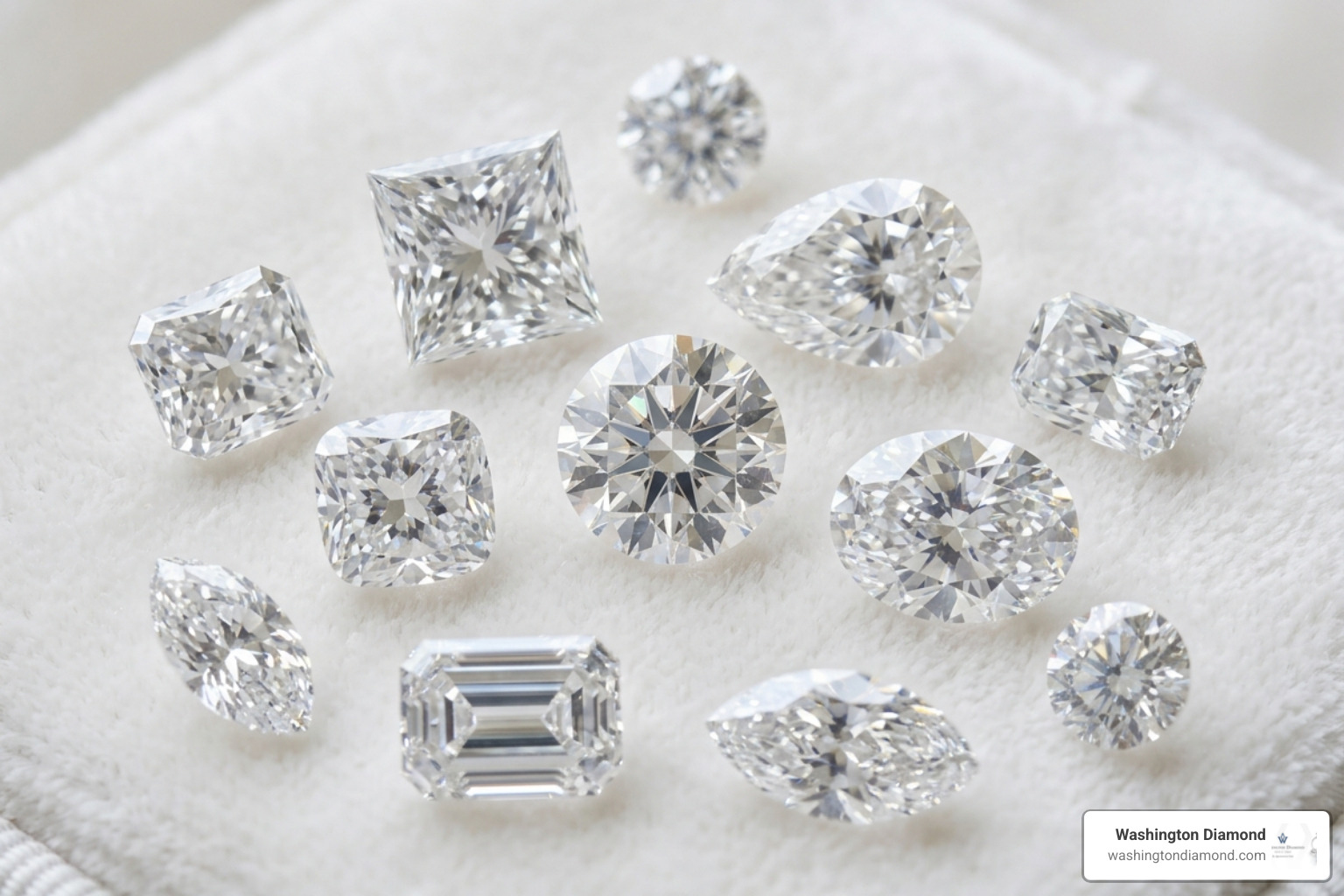
While the round brilliant is the undisputed king of sparkle, other shapes offer unique styles:
- Round Brilliant: Maximum fire and brilliance.
- Princess Cut: Square-shaped with a contemporary, architectural feel.
- Pear and Oval: These elongated shapes can create a flattering, lengthening effect on the neckline.
- Heart Shape: A romantic choice frequently gifted for anniversaries or Valentine’s Day.
For a deeper dive into these styles, see our guide on the Diamond Pendant Necklace.
Selecting the Right Metal and Chain for Longevity
The metal you choose for your diamond solitaire pendant should complement both the stone and the wearer's skin tone. In our Northern Virginia studio, we see a wide variety of preferences.
Metal Options
- 18ct White Gold & Platinum: These are the most popular choices for a "seamless" look. The silver-white hue of the metal blends with the diamond, making the stone appear larger and whiter. Platinum is more durable and hypoallergenic, while 18ct white gold offers a bright, lustrous finish.
- 14k & 18k Yellow Gold: This classic choice provides a warm contrast. Yellow gold is making a massive comeback in 2026, often used to give a vintage or "heirloom" feel to a modern solitaire.
- Rose Gold: A romantic, pinkish hue that looks stunning on all skin tones and pairs beautifully with "warmer" colored diamonds.
Choosing the Best Chain
A pendant is only as good as the chain it hangs on. For a diamond solitaire pendant, we generally recommend a delicate but sturdy chain like a cable chain or a curb chain.
- Length: 16 inches sits at the base of the neck (perfect for V-necks), while 18 inches is the "standard" length that hits just below the collarbone.
- Adjustability: Many of our custom pieces include a jump ring at 16 inches on an 18-inch chain, giving you the versatility to change the length based on your outfit.
- Bail Design: The "bail" is the loop that the chain passes through. An articulated bail allows the pendant to move freely, while a "fixed" or "slider" design keeps the pendant centered at all times.
Lab-Grown vs. Natural Diamonds: Making an Informed Choice
One of the most frequent questions we hear at Washington Diamond is whether to choose a natural or lab-grown diamond for a solitaire pendant. Both are real diamonds with identical chemical and physical properties, but they serve different priorities.
The Comparison
| Feature | Natural Diamond | Lab-Grown Diamond |
|---|---|---|
| Origin | Formed over billions of years deep in the earth | Created in a laboratory over several weeks |
| Price | Higher entry point; holds value as a rare commodity | 30% to 70% less expensive than natural |
| Sustainability | Requires mining; requires ethical oversight | Lower physical footprint; high energy use |
| Rarity | Finite resource | Can be produced on demand |
Why Choose Lab-Grown?
Lab-grown diamonds allow you to get a much larger "look" for your budget. For example, in 2026, a 2.00ct lab-grown diamond solitaire might cost what you would pay for a 0.75ct natural diamond. If your goal is maximum impact and brilliance, lab-grown is a fantastic option. You can use our tools to Calculate The Value Of A Diamond Before You Buy Or Sell and see how the How To Calculate Diamond Price Per Carat differs between the two.
Why Choose Natural?
Natural diamonds carry a sense of history and "earth-made" rarity. For many, the idea that a stone was created by nature billions of years ago adds a layer of sentiment that can't be replicated in a lab.
Frequently Asked Questions about Solitaire Jewelry
What is the ideal carat weight for a Diamond solitaire pendant?
There is no "wrong" answer, but there are a few guidelines:
- Everyday Wear: 0.25ct to 0.75ct is the most common range. These sizes are light, comfortable, and don't feel "too much" for the office or a casual lunch.
- Statement Pieces: 1.00ct to 2.00ct+ are perfect for special occasions or for someone who loves a bold look.
- Pro Tip: If you are between sizes, a 0.90ct diamond often looks identical to a 1.00ct stone but can save you a significant amount of money because it falls just under the "magic" 1-carat mark. For more on sizing, visit our Loose Diamonds Complete Guide.
How to style and layer a Diamond solitaire pendant?
The beauty of the diamond solitaire pendant is its versatility.
- The Solo Look: Let it shine on its own against a simple black dress or a crisp white button-down.
- Layering: Pair your solitaire with a gold paperclip chain or a shorter 14-inch "choker" style necklace. Mixing textures (like a sparkly diamond with a flat gold chain) adds depth to your look.
- Necklines: A solitaire works best with V-necks, scoop necks, and off-the-shoulder tops. If you’re wearing a turtleneck, opt for a longer 20-24 inch chain so the pendant sits over the fabric.
How do I care for and maintain my diamond pendant?
Because a pendant sits against your skin, it can quickly collect oils, lotions, and perfume, which dull the diamond's sparkle.
- Cleaning: Soak your pendant in warm water with a few drops of mild dish soap for 15 minutes. Gently scrub with a very soft toothbrush, rinse, and pat dry with a lint-free cloth.
- Storage: Diamonds are the hardest natural substance, meaning they can scratch your other jewelry (and each other!). Store your pendant in a separate pouch or a dedicated slot in your jewelry box.
- Inspections: We recommend bringing your pendant into our Northern Virginia studio at least once a year. We will check the prongs to ensure they haven't loosened or caught on anything, keeping your diamond safe and secure.
Conclusion
A diamond solitaire pendant is more than just a piece of jewelry; it is a milestone marker, a confidence booster, and a future heirloom. Whether you are celebrating a 10th anniversary, a graduation, or simply treating yourself to a piece of "wear-forever" luxury, the simplicity of a single diamond is always the right choice.
At Washington Diamond, we believe the process of buying a diamond should be as beautiful as the stone itself. Our private, appointment-only studio in Northern Virginia offers a relaxed, pressure-free environment where you can compare stones side-by-side under the guidance of experts. From selecting the perfect Loose Diamonds to choosing a setting that reflects your personality, we are here to help you create something truly special.
Ready to find your perfect spark? We invite you to explore our Custom Jewelry options or book a personalized consultation with us today. Let’s make your jewelry dreams a reality.
Have a question about your jewelry?
We've been helping clients with diamonds, custom design, repairs, appraisals, and more since 1969. Book a private appointment at our Falls Church studio.
Book an AppointmentTrusted since 1969 · Falls Church, VA · 703-536-3600
From the blog
View all


