

Your Ultimate Guide to Buying Ethical Lab Diamonds
Why More Shoppers Are Choosing to Buy Man Made Diamonds in 2026

If you want to buy man made diamonds from a trusted retailer, Washington Diamond offers a personalized, private consultation experience. Our appointment-only studio ensures you receive expert guidance and undivided attention, helping you navigate the selection process with ease.
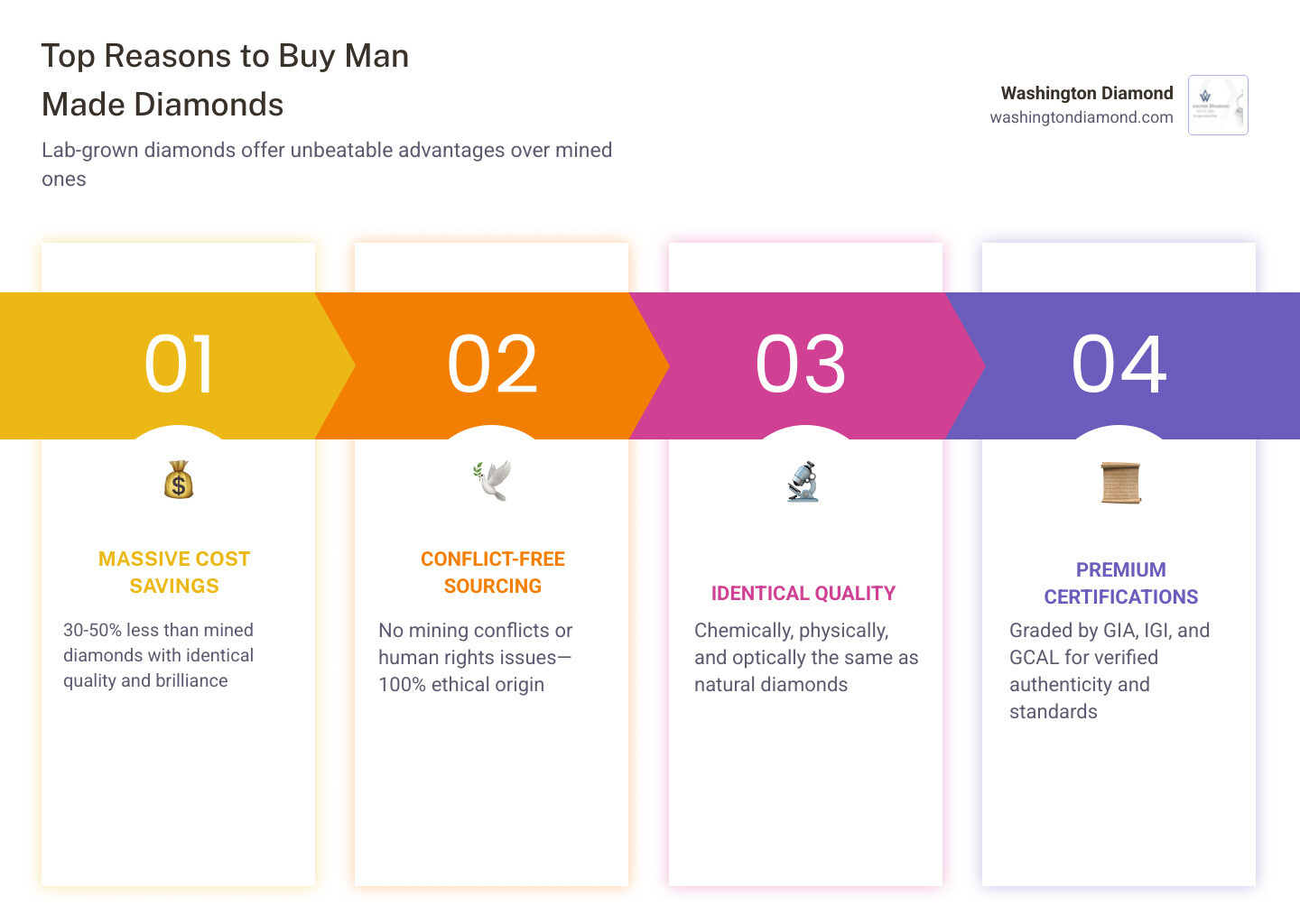
The market for lab-grown diamonds has changed dramatically. A stone that would have cost $5,000 mined can now be purchased as a lab-grown diamond for 30–50% less — without sacrificing a single point of quality, brilliance, or durability.
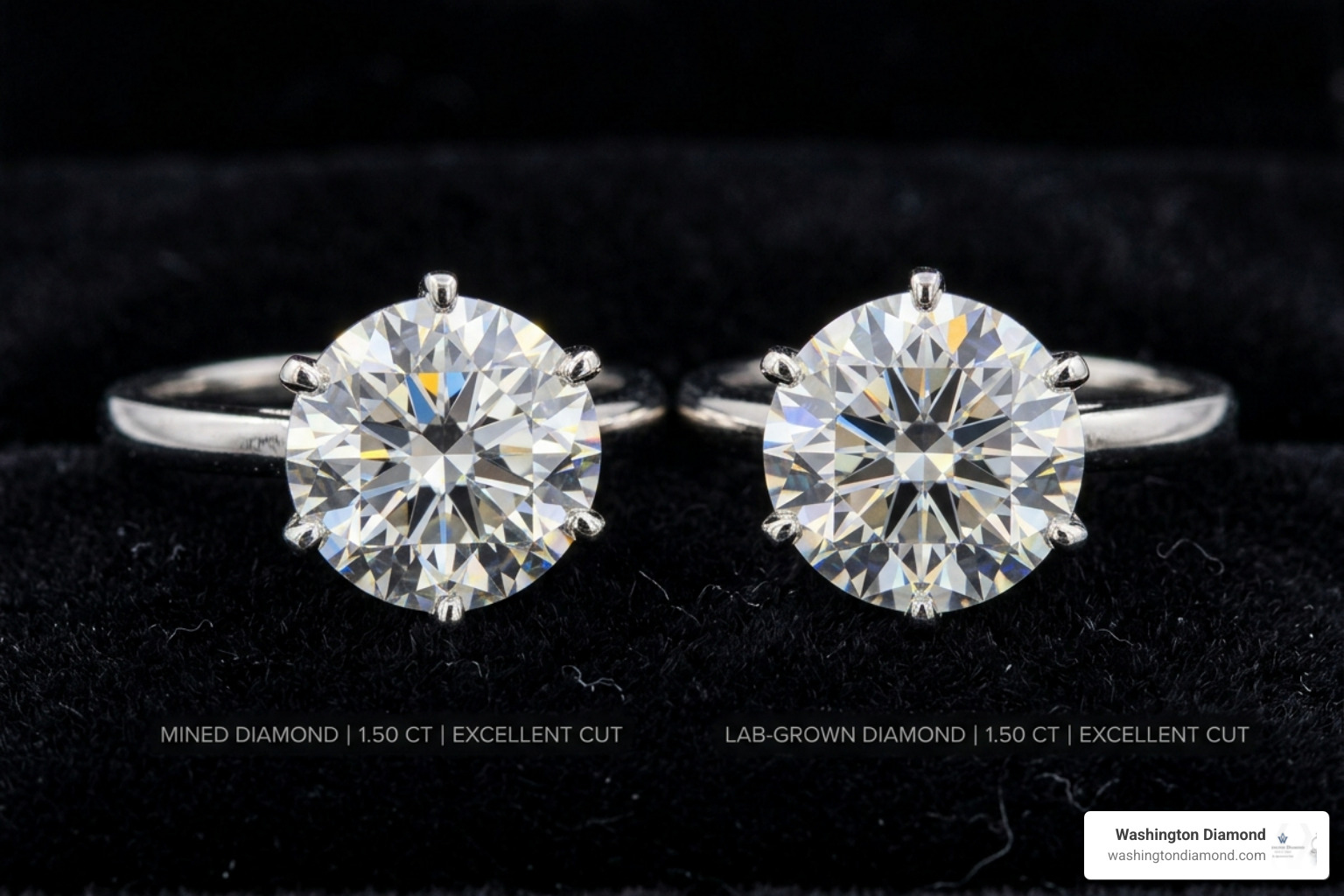
These aren't imitations. Lab-grown diamonds are chemically, physically, and optically identical to mined diamonds. The Federal Trade Commission (FTC) agrees: they are real diamonds.
Whether you're shopping for an engagement ring, an anniversary gift, or a meaningful piece of fine jewelry, finding the right retailer makes all the difference — in price, certification quality, and the overall experience.
I'm Tom Daube, a GIA-certified diamond expert with decades of experience helping buyers navigate the decision to buy man made diamonds with clarity and confidence. I'm ranked in the top 1% of jewelers nationwide, and I'll walk you through exactly what to look for when choosing your stone in 2026.
Buy man made diamonds terms to learn:
Understanding the Science: Are Lab Diamonds Real?
One of the most common questions we hear at our Northern Virginia studio is, "Are these actually real?" The answer is a resounding yes. To understand why, you have to look at the atomic level.
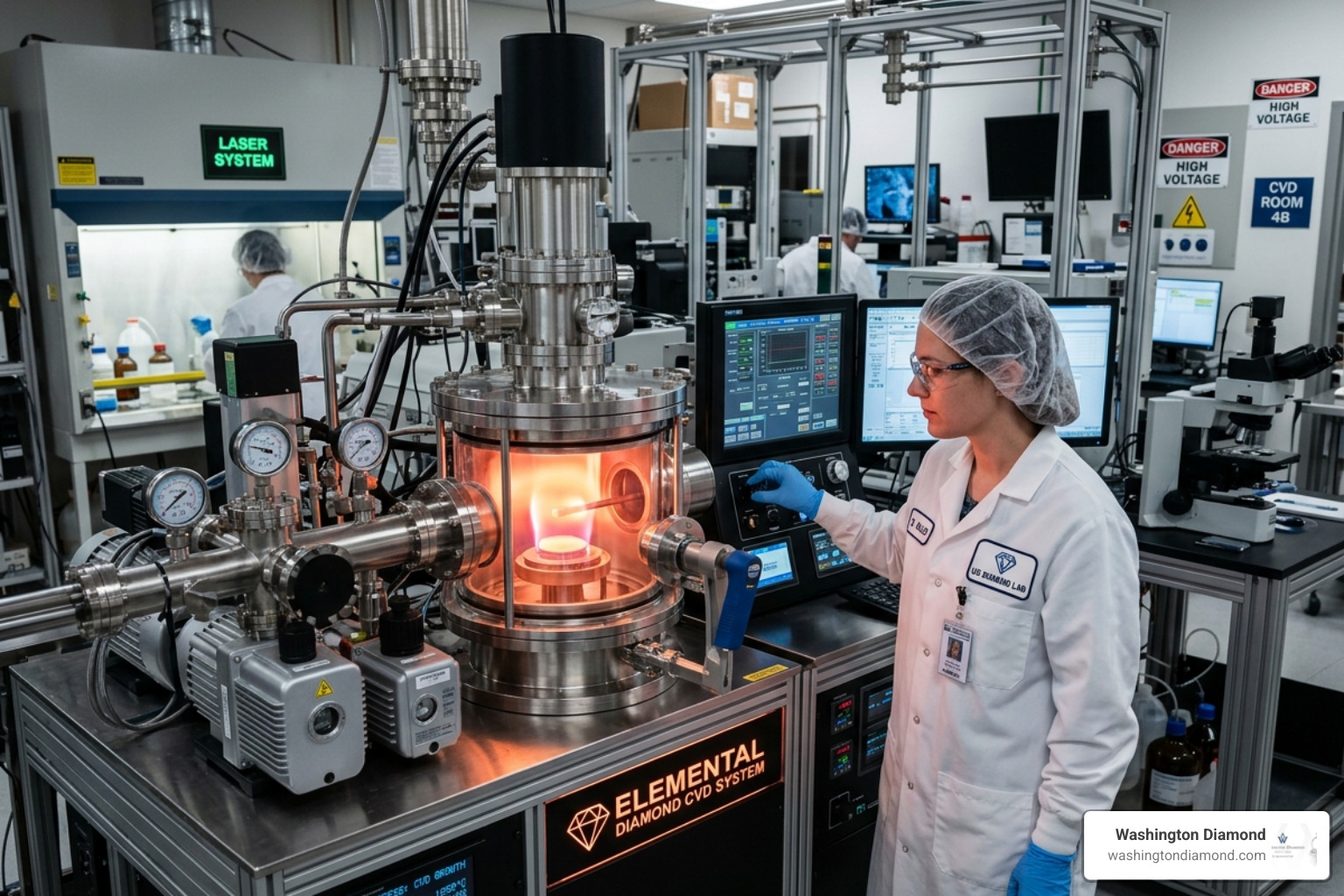
A diamond is essentially a crystal lattice of pure carbon atoms. Whether that lattice formed 100 miles below the Earth's surface a billion years ago or was grown in a specialized lab last month, the result is exactly the same. They share the same chemical composition, physical properties, and optical brilliance. On the Mohs scale of hardness, both rank at a perfect 10—making them the hardest substance known to man and ideal for daily wear in engagement rings.
How They Are Created: HPHT vs. CVD
To buy man made diamonds with confidence, it helps to understand the two primary methods used to grow them:
- High Pressure High Temperature (HPHT): This method replicates the intense pressure and heat found in the Earth's mantle. A small diamond "seed" is placed in carbon and subjected to temperatures over 2,000°C and extreme pressure until the carbon melts and begins to form a diamond structure around the seed.
- Chemical Vapor Deposition (CVD): This is a more modern, "high-tech" approach. A diamond seed is placed in a vacuum chamber filled with carbon-rich gas (like methane). A plasma beam breaks down the gas molecules, and the carbon atoms slowly "rain" down onto the seed, building the diamond layer by layer.
Regardless of the method, the result is a certified lab diamond that is indistinguishable from a mined one without highly specialized laboratory equipment. For more details on the grading of these stones, check out our Certified Lab Diamonds Complete Guide.
Why You Should Buy Man Made Diamonds in 2026
As we move through 2026, the shift toward lab-grown stones has accelerated. The value proposition is simply too strong to ignore. When you choose to buy man made diamonds, you are choosing a product that offers the same "forever" quality as a mined stone but with several modern advantages.
The most immediate benefit is the price. Lab-grown diamonds typically cost 30% to 50% less than mined diamonds. This price gap exists because the supply chain for lab diamonds is significantly shorter and more efficient, avoiding the massive overhead costs of global mining operations. For a look at current market rates, you can browse our Lab Diamonds Price Chart.
Furthermore, lab-grown diamonds are 100% conflict-free. While the mining industry has made strides in ethical sourcing, lab-grown stones provide a guaranteed "clean" origin. Many labs are now even utilizing carbon capture technology—literally pulling CO2 out of the atmosphere to create diamonds—and running their facilities on 100% renewable energy.
Top Benefits When You Buy Man Made Diamonds
- Wholesale Pricing: Because the production is controlled, retailers can often offer wholesale-level pricing directly to the consumer.
- Larger Carat Sizes: With the 30-50% savings, most of our clients find they can afford a significantly larger stone—often jumping from a 1.5-carat to a 2.5-carat diamond without increasing their budget.
- Higher Clarity and Color: Labs offer a controlled environment, meaning there are often fewer impurities. You can frequently find "D" color and "VVS" clarity stones at accessible prices.
- Sustainable Sourcing: Choosing lab-grown helps avoid the environmental impact of traditional mining, such as soil erosion and deforestation.
For a deeper dive into the economics of these stones, see our Affordable Lab Grown Diamonds Complete Guide.
The 4Cs and Certification Standards
Just like mined diamonds, lab-grown stones are graded on the "4Cs": Cut, Color, Clarity, and Carat weight. However, there are some nuances to look for when you buy man made diamonds.
| Feature | GIA Standards | IGI Standards |
|---|---|---|
| Cut | Excellent, Very Good, Good | Ideal, Excellent, Very Good |
| Color | D (Colorless) to Z (Light) | D (Colorless) to Z (Light) |
| Clarity | FL (Flawless) to I3 (Included) | FL (Flawless) to I3 (Included) |
| Inscription | Laser-inscribed "Lab Grown" | Laser-inscribed Report Number |
Cut remains the most important factor. A poorly cut diamond won't sparkle, regardless of its origin. We recommend prioritizing an "Excellent" or "Ideal" cut grade to ensure maximum light return. Color and Clarity are also vital; many buyers find that G-H color and VS1-VS2 clarity provide the best "eye-clean" value.
One unique metric is Visual Carat. Because lab diamonds can be cut to specific proportions, some stones "face up" larger than their actual weight suggests. This allows you to get the look of a larger diamond while paying for a lower carat weight.
If you want a professional eye to help you navigate these grades, we offer expert diamond selection at Washington Diamond through our private, appointment-only studio in Northern Virginia.
How to Buy Man Made Diamonds with Confidence
The key to a confident purchase is independent certification. You should never buy man made diamonds that aren't accompanied by a report from a reputable lab like the International Gemological Institute (IGI), Gemological Institute of America (GIA), or GCAL.
These reports verify the stone's 4Cs and confirm its lab-grown origin. Most lab diamonds also feature a microscopic laser inscription on the girdle that matches the report number, ensuring the stone you bought is the stone you received. For those looking at larger center stones, understanding the 3 Carat Lab Grown Diamond Price can help you set a realistic budget for a high-quality, certified gem.
Frequently Asked Questions about Lab-Grown Diamonds
Do lab-grown diamonds hold their value?
This is a nuanced topic. While lab-grown diamonds do not currently have the same high resale value as rare, natural stones, they are fully insurable and hold "jewelry equity." Most people buy man made diamonds for their beauty and the significant upfront savings rather than as a financial investment. The money you save at the time of purchase (often thousands of dollars) is "value" you keep in your pocket from day one.
Can a jeweler tell the difference between lab and natural diamonds?
To the naked eye? Absolutely not. Even a seasoned gemologist using a standard jeweler's loupe cannot distinguish a high-quality lab diamond from a mined one. It requires specialized equipment that detects minute trace elements (like nitrogen) or growth patterns to tell them apart. On a standard diamond tester (which measures thermal conductivity), a lab diamond will test as a "diamond" every single time.
Do lab-grown diamonds get cloudy over time?
No. Because they are chemically identical to mined diamonds, they do not "age," fade, or become cloudy. If your diamond looks dull, it is likely just surface residue from lotions, soaps, or skin oils. A quick cleaning with warm water, mild dish soap, and a soft toothbrush will restore its permanent brilliance immediately.
Conclusion
The decision to buy man made diamonds is no longer a compromise—it’s a smart, ethical, and stylish choice for the modern buyer. In 2026, the technology has reached a point where you can secure a breathtaking, world-class diamond for a fraction of the traditional cost, all while supporting sustainable practices.
At Washington Diamond, we believe that choosing an engagement ring should be a relaxed, personalized experience. Our appointment-only studio in Northern Virginia offers you the privacy and expert guidance you need to find the perfect stone without the pressure of a traditional retail floor. Whether you are looking for a classic round brilliant or a unique salt and pepper lab diamond, we are here to help you every step of the way.
Ready to find your perfect stone? Browse our collection of loose diamonds or book your private consultation today.
Have a question about your jewelry?
We've been helping clients with diamonds, custom design, repairs, appraisals, and more since 1969. Book a private appointment at our Falls Church studio.
Book an AppointmentTrusted since 1969 · Falls Church, VA · 703-536-3600
From the blog
View all


