

Everything You Need to Know About Diamond Bracelets
What You Need to Know About Diamond Bracelets (Quick Answer)

Diamond bracelets are one of the most versatile and enduring pieces of fine jewelry you can own. Whether you're shopping for a gift or treating yourself, here's a quick overview:
| Feature | What to Know |
|---|---|
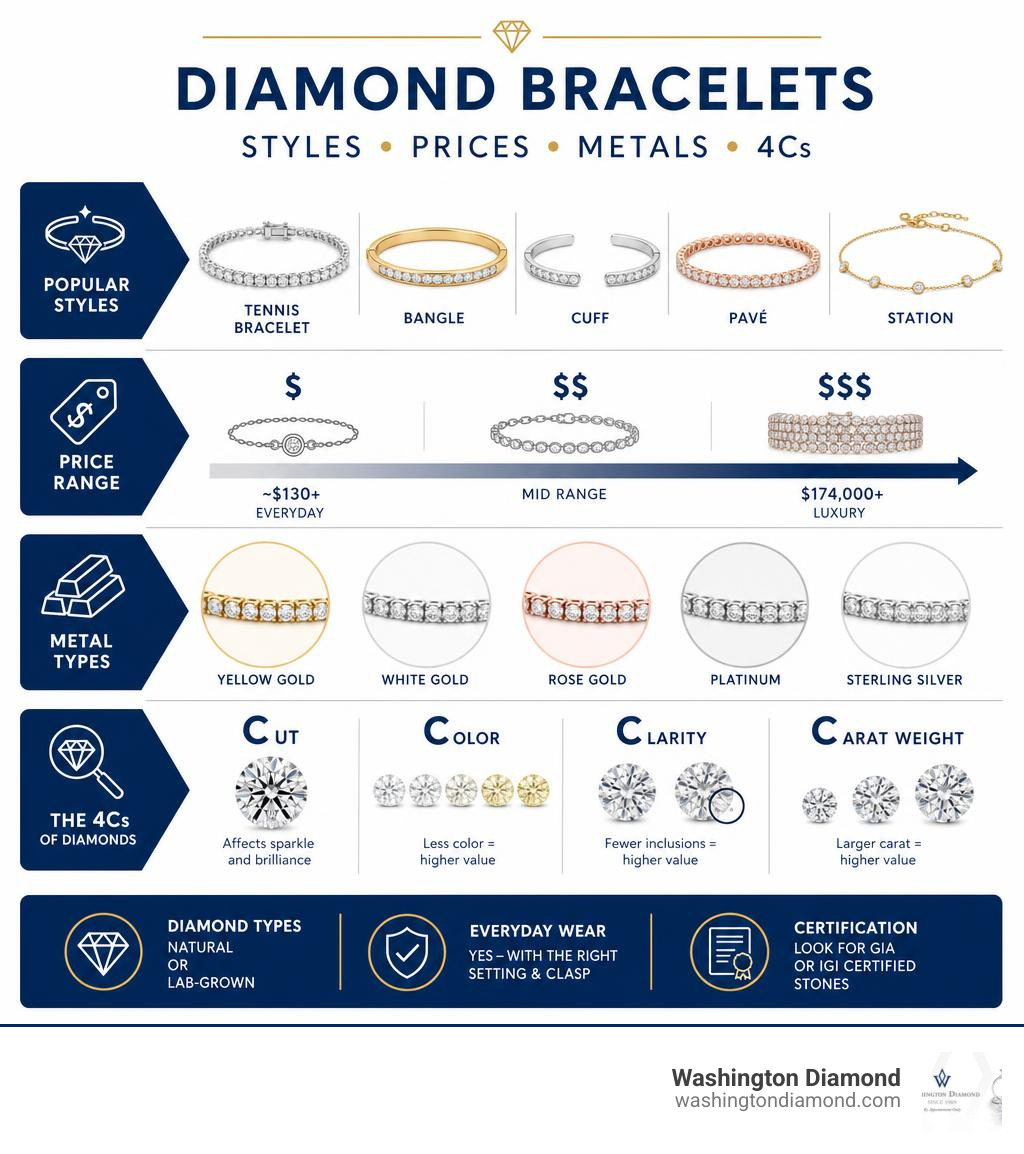
| Popular styles | Tennis bracelets, bangles, cuffs, pave, station |
| Price range | From ~$130 (retail) to $174,000+ (luxury brands) |
| Metal options | Yellow gold, white gold, rose gold, platinum, sterling silver |
| Diamond types | Natural (earth-mined) or lab-grown |
| Key quality factors | Cut, color, clarity, carat weight (the 4Cs) |
| Everyday wear | Yes — with the right setting and clasp style |
| Certification | Look for GIA or IGI certified stones |
Few pieces of jewelry combine lasting beauty with everyday wearability quite like a diamond bracelet. From understated single-stone designs to multi-row tennis bracelets dripping with sparkle, there's a style and price point for nearly every occasion — whether that's a milestone anniversary, an engagement celebration, or simply a meaningful gift.
The market is wide, with retail styles starting under $200 and luxury pieces reaching well into six figures. Knowing what to look for makes all the difference between a piece you'll treasure forever and one that disappoints.
I'm Tom Daube, a GIA-certified diamond expert and jewelry designer with decades of experience helping clients find the perfect diamond bracelets — often at prices well below standard wholesale. In the sections below, I'll walk you through everything you need to know to make a confident, informed choice.
Popular Styles of Diamond Bracelets
When choosing among diamond bracelets, the first step is finding a style that matches your personal aesthetic and lifestyle. Modern jewelry trends celebrate self-expression, meaning you can wear these pieces solo for a minimalist statement or layer them to create a custom stack.
Whether you are seeking inspiration for holiday gifting, such as the ideas found in The 12 Days of Christmas Jewelry Gifts, or looking to elevate your daily wardrobe, there is a design for you.
Classic Tennis Diamond Bracelets
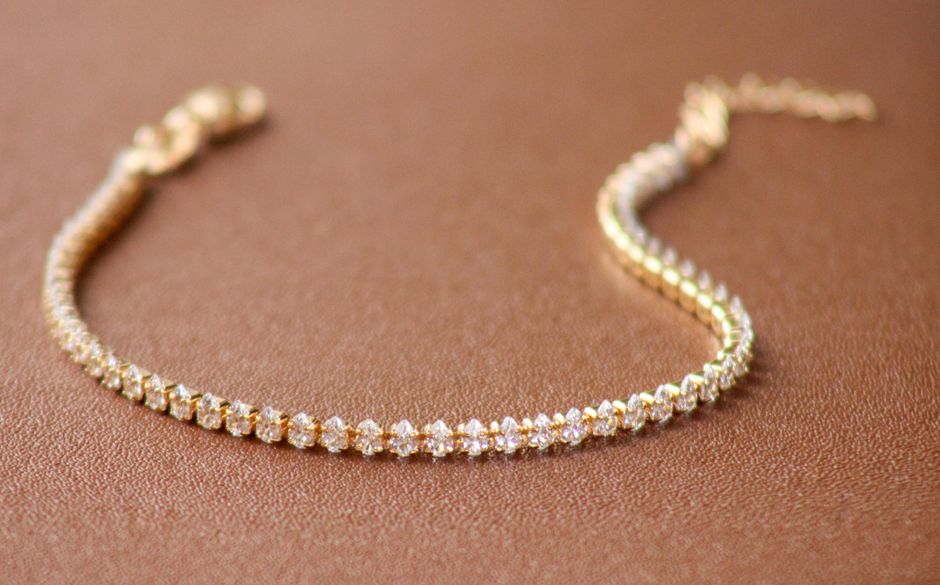
The tennis bracelet is the undisputed king of diamond wristwear. Characterized by a continuous, symmetrical line of diamonds linked together in a flexible metal chain, this design offers unmatched movement and brilliance.
The style earned its famous moniker in 1987 when tennis champion Chris Evert lost her diamond line bracelet during a match at the US Open. She requested that play be suspended until she recovered her jewelry, and the "tennis bracelet" was officially born.
Today, these bracelets are prized for their versatility. They feature highly secure clasps—often a combination of a tongue clasp and fold-over safety latches—making them robust enough for daily wear. When shopping for a tennis bracelet, look for consistent diamond color and clarity across the entire line, as a single off-color stone can disrupt the visual harmony of the piece.
Elegant Bangles and Cuff Diamond Bracelets
For those who prefer a structured look, bangles and cuffs offer a modern, architectural alternative. Unlike flexible chain designs, bangles have a rigid structure. They can be fully circular (requiring you to slip them over your hand) or hinged with a secure clasp for a closer, tailored fit on the wrist.
- Bangles: These are highly stackable and look spectacular when mixed with different metal colors or alternating gemstone designs. Many modern bangles feature delicate pavé settings, where tiny diamonds are set closely together to create a surface that looks paved with light.
- Cuffs: Typically open-ended, cuffs rest snugly against the wrist. They offer a bold, contemporary aesthetic and can range from minimalist metal bands with diamond end-caps to wide, intricate statement pieces.
For shoppers in Northern Virginia exploring their options, finding the right jeweler is key. If you want a truly tailored, high-end experience without the retail markup, a private consultation is always the most rewarding path.
Key Factors and Pricing to Consider
Purchasing a diamond bracelet is a significant investment. Understanding the technical specifications and how they influence both the price and the durability of your piece will help you make a smart decision.
Before committing, it is also highly beneficial to understand how jewelry valuation works by reading Everything You Need to Know About Jewelry Appraisals.
Selecting the Right Metal and Setting
The metal you choose dictates the bracelet's overall durability, weight, and color profile. The most common precious metals used for high-quality diamond bracelets are yellow gold, white gold, rose gold, and platinum.
| Metal Type | Pros | Cons | Best Suited For |
|---|---|---|---|
| 14K / 18K Yellow Gold | Warm, classic look; highly durable; hypoallergenic options. | Can scratch over time; requires occasional polishing. | Vintage and traditional designs; everyday wear. |
| 14K / 18K White Gold | Sleek, modern; enhances diamond brilliance; more affordable than platinum. | Requires rhodium replating every few years to maintain its bright white color. | Contemporary tennis bracelets and modern bangles. |
| Rose Gold | Romantic, unique hue; highly durable due to copper alloy. | Not hypoallergenic (contains copper). | Trendy, stackable fashion pieces. |
| Platinum | Naturally white; extremely durable; hypoallergenic; secure prong retention. | Heavier; more expensive up front; develops a satin "patina" finish over time. | High-carat heirloom pieces and active lifestyles. |
The setting style also plays a crucial role in protecting your diamonds:
- Prong Setting: Typically uses 2, 3, or 4 prongs per stone. This allows maximum light to enter the diamond, yielding the highest amount of sparkle.
- Bezel Setting: A metal rim completely surrounds the perimeter of each diamond. This is the most secure setting, preventing the stones from snagging on clothing or chipping.
- Channel Setting: Diamonds are placed side-by-side between two parallel walls of metal. This creates a smooth, snag-free surface.
Understanding Diamond Quality and Certification
Just like engagement rings, the diamonds in a bracelet are graded using the 4Cs: Cut, Color, Clarity, and Carat Weight.
Because a bracelet contains dozens of stones rather than one large center stone, consistency is key. You want the color (ideally in the F-G or H-I range for excellent value) and clarity (typically VS1 to SI1 for eye-clean stones) to match perfectly across the entire piece.
Always ask for reputable certifications, such as those from the Gemological Institute of America (GIA) or the International Gemological Institute (IGI). These certificates guarantee the authenticity and grading of your stones. Furthermore, ensuring your diamonds are ethically sourced gives you peace of mind.
If you already own a piece or are buying an estate item, it is wise to Get Diamond Appraised to verify its retail replacement value for insurance purposes.
Daily Wear, Care, and Maintenance Guidelines
Many of our clients ask if diamond bracelets can be worn every day. The short answer is yes! Diamonds are the hardest natural substance on Earth, making them incredibly resistant to scratching.
However, the metal settings holding those diamonds can wear down over time. Proper care ensures your heirloom piece remains as brilliant as the day you first wore it.
To protect your jewelry, we recommend reading The Art of Gemstone Jewelry Care and keeping a dedicated Diamond Cleaning Care Guide handy.
Cleaning Your Bracelet Safely at Home
Over time, everyday substances like lotions, soaps, perfumes, and skin oils form a film over your diamonds, blocking light and dulling their sparkle. Fortunately, restoring that brilliant shine at home is simple and safe.
- Soak: Fill a small bowl with warm (not hot) water and add a few drops of mild, degreasing dish soap. Let your bracelet soak for 15 to 20 minutes.
- Brush: Gently brush the diamonds and the metal setting with a new, extra-soft bristle toothbrush. Pay close attention to the underside of the settings where dirt accumulates.
- Rinse: Rinse the bracelet thoroughly under warm running water. (Make sure the sink drain is securely plugged first!)
- Dry: Pat dry with a soft, lint-free microfiber cloth.
For step-by-step instructions on keeping all your fine jewelry pristine, check out our guide on How to Clean Jewelry Even If You've Never Tried It Before. If you want to invest in professional-grade care at home, find out what formulas work best by reading about the Best Jewelry Cleaner for Diamonds.
Professional Repairs and Restorations
Even the sturdiest bracelets require professional attention eventually. Prong wear, stretched links, and worn-out safety clasps are common issues that arise from years of love and wear.
We highly recommend bringing your bracelet in for a professional inspection at least once a year. A jeweler can check for loose stones, polish away surface scratches, and reinforce weak links before they lead to a lost diamond.
If your favorite piece does suffer damage, do not worry. You can easily find a trusted Bracelet Repair Shop to Fix Broken Bracelet issues.
For residents in our local area, our Jewelry Repair McLean VA Guide and our overview of Expert Jewelry Repair Restoration Services in Northern Virginia can connect you with master craftspeople capable of restoring your jewelry to mint condition. For general repair inquiries, consult our resources on Local Jewelry Repair.
Frequently Asked Questions
Is daily wear safe for diamond jewelry?
Yes, daily wear is perfectly safe for high-quality diamond bracelets, provided they are constructed well. To ensure your bracelet can handle the rigors of daily life, look for robust setting styles (like bezels or heavy four-prong settings) and secure double-locking clasps.
It is best to remove your bracelet during high-impact activities, such as working out, heavy gardening, or swimming in chlorinated pools, as chlorine can weaken gold alloys over time.
How do you distinguish natural from lab-grown stones?
Visually, chemically, and physically, natural and lab-grown diamonds are identical. They both exhibit the same fire, scintillation, and hardness.
The only way to distinguish them is by using specialized gemological equipment that detects microscopic growth patterns or by reading the laser inscriptions on the diamond's girdle. Reputable lab-grown diamonds will have a tiny laser inscription indicating their origin, which matches their IGI or GIA certification.
What are the main benefits of wearing diamond jewelry?
Beyond their undeniable beauty, diamond bracelets carry immense emotional and practical value:
- Timeless Elegance: Diamonds never go out of style. A classic design purchased today will look just as sophisticated fifty years from now.
- Versatility: They seamlessly transition from casual daytime wear to formal evening events.
- Emotional Significance: Often gifted to mark major milestones—like anniversaries, births, or graduations—they become cherished physical reminders of life's most beautiful moments.
- Investment Value: High-quality natural diamonds and precious metals hold intrinsic value over time, making them excellent family heirlooms to pass down through generations.
Conclusion
Whether you are drawn to the fluid sparkle of a classic tennis bracelet or the bold, modern geometry of a pavé-set bangle, a diamond bracelet is an investment in beauty, craftsmanship, and personal expression.
If you are celebrating a milestone or looking for the perfect Anniversary Gifts Washington DC, we invite you to experience jewelry shopping the way it was meant to be.
At Washington Diamond, we reject the high-pressure, transactional environment of traditional retail stores. Our private, appointment-only studio in Northern Virginia is designed to offer you our undivided attention, expert guidance, and a completely personalized experience.
Whether you want to browse our curated collection or collaborate with us to design a one-of-a-kind piece through our custom-jewelry service, we are here to help you find a piece you will cherish forever.
Ready to find your perfect sparkle? Schedule your private consultation with Washington Diamond today.
Have a question about your jewelry?
We've been helping clients with diamonds, custom design, repairs, appraisals, and more since 1969. Book a private appointment at our Falls Church studio.
Book an AppointmentTrusted since 1969 · Falls Church, VA · 703-536-3600
From the blog
View all


