

The Ultimate DIY Guide to Bracelet Repair: From Broken Links to Tricky Clasps
Why Repairing Your Broken Bracelet Matters
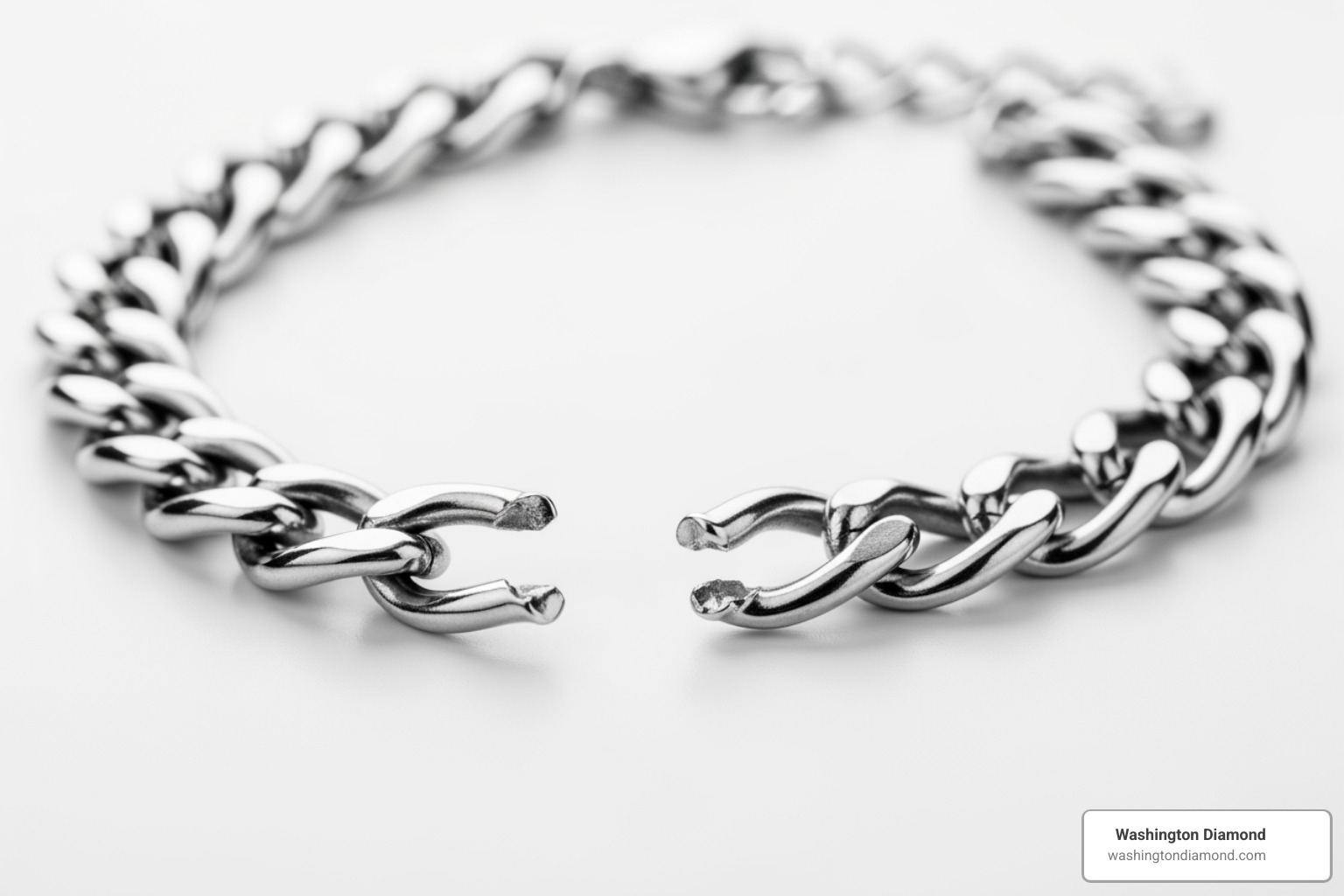
Fix broken bracelet issues quickly with these common solutions:
| Problem | Quick Fix | Tools Needed |
|---|---|---|
| Broken chain link | Open link with pliers, reconnect ends, close securely | Needle-nose pliers |
| Faulty clasp | Remove old clasp, attach new one with jump ring | Pliers, jump ring, new clasp |
| Snapped elastic/string | Restring beads on new elastic, tie square knot, glue | Stretch Magic cord, scissors, super glue |
| Loose beads | Apply jewelry glue to knots or thread | E6000 or jewelry adhesive |
| Leather strap damage | Clean break, apply leather adhesive, clamp until dry | Leather glue, clamps |
Bracelets are more than accessories. They hold memories, milestones, and connections to people we love. When a cherished bracelet breaks, it's not just damaged jewelry—it's a piece of your story at risk.
The good news? Most bracelet damage is fixable at home with basic tools and a few minutes of your time. According to repair guides tracked across jewelry communities, tutorials on fixing broken necklaces have received over 4,200 views, while bracelet clasp replacement guides have reached nearly 5,000 views—proof that thousands of people successfully restore their jewelry without professional help.
Common bracelet problems include:
- Broken or separated chain links
- Worn or malfunctioning clasps (lobster claws, spring rings, toggle clasps)
- Snapped elastic or string on beaded bracelets
- Damaged leather or fabric bands
- Loose or missing gemstones
Whether your bracelet snapped during everyday wear or slowly weakened over time, repair is often cheaper and more meaningful than replacement. Many breaks require only needle-nose pliers and a replacement clasp or jump ring—tools that cost less than $10 combined.
I'm Tom Daube, and I've spent decades helping customers preserve their most meaningful jewelry pieces through expert repair and restoration. Understanding how to fix broken bracelet issues empowers you to save sentimental pieces quickly, though I always recommend professional help for heirloom or high-value items.
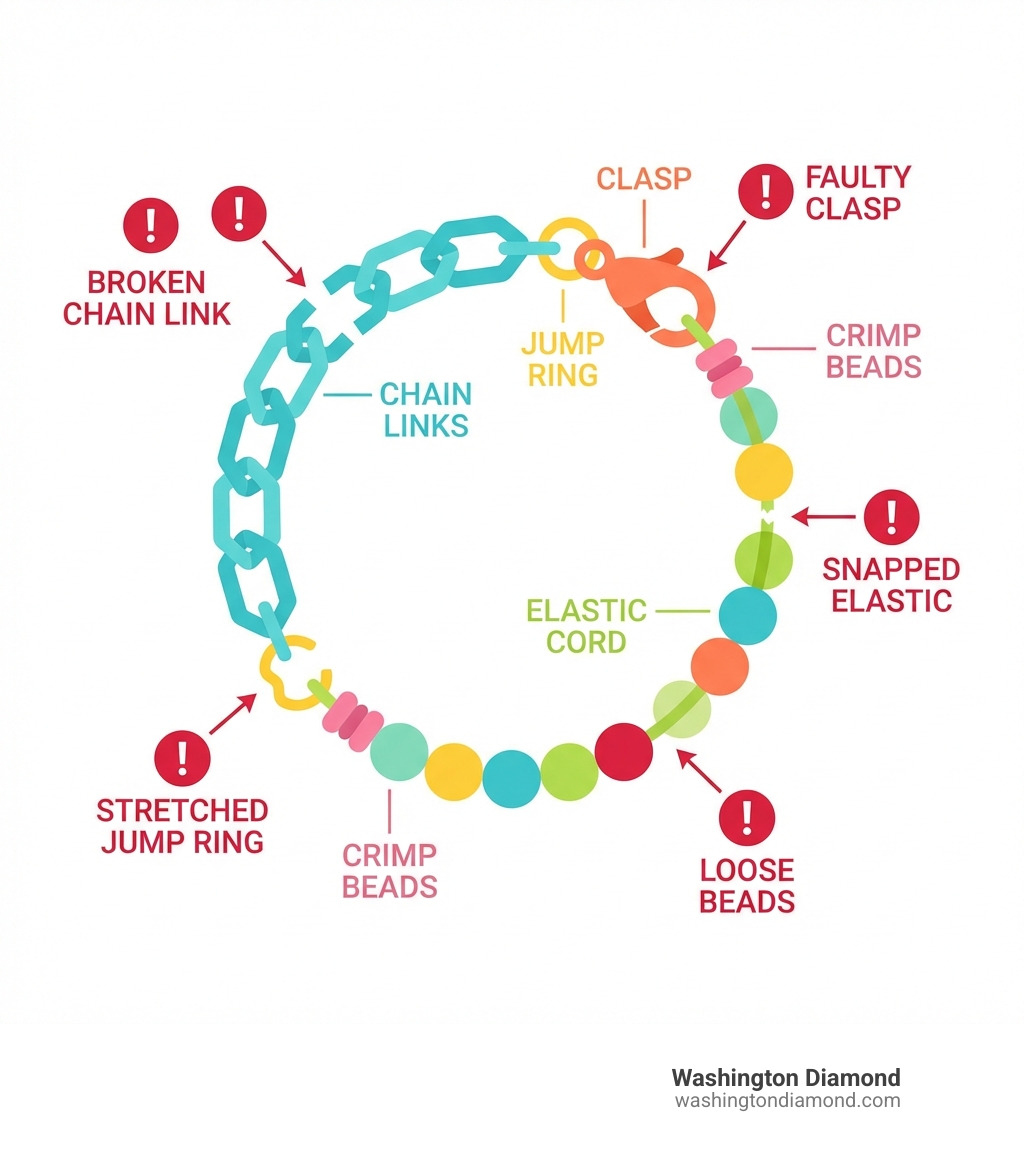
Key Fix broken bracelet vocabulary:
Identifying Damage and Essential Tools to Fix Broken Bracelet
Before you dive into a repair, you need to know what you’re up against. Damage assessment is the first step in any jewelry project. Is the metal actually snapped, or did a jump ring simply pull open? Is the elastic frayed and "hairy," or did it suffer a clean break? Identifying the material and the specific point of failure determines whether you can fix broken bracelet components yourself or if you need to visit our studio in Northern Virginia.
| Tool | Purpose | DIY Necessity |
|---|---|---|
| Needle-nose Pliers | Gripping and bending small metal parts | High |
| Round-nose Pliers | Creating loops in wire | Medium |
| Wire Cutters | Trimming excess metal or cord | High |
| Tweezers | Handling tiny beads or stones | Medium |
| Jeweler's Loupe | Magnifying damage for inspection | Low (but helpful) |
| Bead Reamer | Smoothing the inside of bead holes | Low |
To successfully fix broken bracelet links or clasps, we recommend setting up a clean, well-lit workspace. A bead mat or even a piece of felt can prevent small parts from rolling away. For more specialized guidance on what to have in your kit, check out this Jewelry Repair Guide.
Step-by-Step Guide: Repairing Chains, Links, and Clasps
Metal bracelets often fail at their weakest point: the jump ring. Jump rings are the small, un-soldered metal circles that connect the clasp to the chain. Over time, these can pull open if the bracelet gets snagged.

When you fix broken bracelet links, the key is the "twist." Never pull the ends of a jump ring apart horizontally, as this weakens the metal and ruins the circular shape. Instead, grip each side with pliers and twist one end toward you and the other away from you. This maintains the integrity of the ring. For more tips on simple fixes, see these 7 Jewelry Repairs You Can Do Yourself.
How to Fix a Broken Bracelet Clasp
A broken clasp makes a bracelet unwearable. The most common issues are spring malfunctions in lobster claws or alignment problems in toggle clasps.
- Identify the Clasp Type: If it's a lobster claw or spring ring, check if the internal spring is snapped. If it doesn't "snap" back, it needs replacement.
- Remove the Old Clasp: Use your needle-nose pliers to twist open the jump ring connecting the clasp to the chain. Slide the old clasp off.
- Attach the New Clasp: Slide your new clasp onto the open jump ring.
- Close the Ring: Twist the jump ring back into position until the ends meet perfectly.
- Test Tension: Give it a gentle tug to ensure the connection is secure.
Reconnecting Metal Chain Links
If a link in the middle of the chain has snapped, you can often fix broken bracelet chains by using a spare jump ring to bridge the gap.
- Opening Gaps: Open a jump ring that matches the color and thickness of your chain.
- Hooking Ends: Thread the open ring through the two broken ends of the chain.
- Vertical Squeezing: Use your pliers to bring the ends together.
- Perpendicular Tightening: Give the ring a tiny squeeze from the sides to ensure the ends are flush.
- Flat Surface Workspace: Always work on a flat surface to prevent the chain from tangling while you work.
Restoring Beaded, Leather, and Elastic Bracelets
Non-metal bracelets require a different set of skills. Beaded bracelets usually fail because the internal cord has aged and lost its elasticity. Leather and fabric bracelets often suffer from fraying or the "pulling out" of their end caps.
Restringing to Fix a Broken Bracelet with Elastic
Elastic bracelets are popular but prone to snapping. To fix broken bracelet elastic properly, use a high-quality cord like Stretch Magic.
- The 1.5x Rule: Measure your wrist and cut a piece of elastic that is 1.5 times that length. This gives you plenty of slack to tie a secure knot.
- Stringing: Thread your beads onto the new cord. If you have a "guru bead" (the large decorative bead where the ends meet), use a needle or a piece of folded fishing line to pull the cord through.
- The Square Knot: Tie a classic square knot (right over left, then left over right). Pull it tight so the beads sit flush but aren't under extreme tension.
- Glue Reinforcement: Apply a tiny drop of E6000 or specialized jewelry glue to the knot.
- Hiding the Knot: Once dry, slide a nearby bead over the knot to hide it.
Repairing Leather and Fabric Materials
Leather bracelets often break where the leather meets the clasp. To fix broken bracelet leather components:
- Leather Conditioners: If the leather is brittle, apply a conditioner before attempting a repair to prevent further cracking.
- Fold-over Crimps: If the leather has pulled out of the clasp, you may need a new "fold-over crimp" end. Place the leather end into the metal crimp and squeeze firmly with pliers.
- Specialized Adhesives: For fabric or braided cords, a dab of jewelry glue inside the end cap before crimping provides extra security.
When to Seek Professional Jewelry Repair
While DIY is great for costume jewelry or simple fixes, some situations require a professional touch. At Washington Diamond, we specialize in jewelry repairs and restoration for pieces that carry significant value.
You should seek professional help if:
- The bracelet is made of solid gold or platinum (these often require laser soldering).
- A gemstone is loose or missing.
- The piece is a family heirloom with high sentimental value.
- The break is in a complex, woven metal pattern that pliers cannot fix.
Handling Gemstones and Delicate Components
Gemstones are fragile. If you notice a stone rattling in its setting, the prongs may be worn down. Do not attempt to tighten prongs with household pliers, as you risk cracking the stone.
We also advise caution with cleaning. While a DIY soak in mild soapy water is safe for diamonds and sapphires, porous stones like opals, pearls, or turquoise can be damaged by water or chemicals. For these, a soft, dry cloth is best. If you're looking to preserve a piece for the next generation, read our guide to family heirloom care.
Prevention and Creative Repurposing
The best way to fix broken bracelet issues is to prevent them from happening in the first place.
- Proper Storage: Store bracelets individually in jewelry pouches to prevent them from tangling and scratching each other.
- Avoid Chemicals: Remove bracelets before swimming in chlorinated pools or applying hairspray and perfume.
- Creative Repurposing: If a bracelet is truly beyond repair—perhaps the metal is too thin to solder or too many links are missing—don't throw it away! You can turn the remaining charms into a necklace, or use the beads to create a pair of earrings. This allows you to keep the sentimental value alive in a new form.
Frequently Asked Questions about Bracelet Repair
Can I use regular super glue for jewelry repairs?
While super glue can work in a pinch for non-porous materials, it often dries brittle and can "frost" or cloud gemstones. We recommend using E6000 or a specialized jewelry adhesive that remains slightly flexible when dry, which is better for items that move against your skin.
How do I know if my bracelet is worth a professional fix?
If the cost of the repair exceeds the replacement value of the bracelet, you might choose DIY or repurposing. However, for pieces with sentimental value or those made of precious metals, a professional repair is almost always worth the investment to ensure the fix is permanent and invisible.
What is the best way to prevent my elastic bracelet from snapping?
Roll the bracelet onto your wrist rather than stretching it wide to pull it over your hand. Also, keep elastic away from direct sunlight and harsh lotions, which cause the rubber to degrade and become "hairy" before it eventually snaps.
Conclusion
Whether you are performing a quick DIY fix with a pair of pliers or bringing a treasured heirloom into our Northern Virginia studio, the goal is the same: preserving the pieces that matter most. At Washington Diamond, we believe jewelry is a vessel for memories. Our private, appointment-only studio is designed to give you the undivided attention your jewelry deserves.
If you have a piece that needs more than a simple jump ring fix, we are here to help. From intricate soldering to gemstone replacement, we provide expert jewelry repair and restoration services to ensure your story continues to shine. Don't let a broken clasp keep your favorite memories in a drawer—start your repair journey today.
Have a question about your jewelry?
We've been helping clients with diamonds, custom design, repairs, appraisals, and more since 1969. Book a private appointment at our Falls Church studio.
Book an AppointmentTrusted since 1969 · Falls Church, VA · 703-536-3600
From the blog
View all


