

Everything You Need to Know Before Buying a 3ct 3 Stone Diamond Ring
Understanding the 3ct 3 Stone Diamond Ring: Carat Breakdown and Symbolism
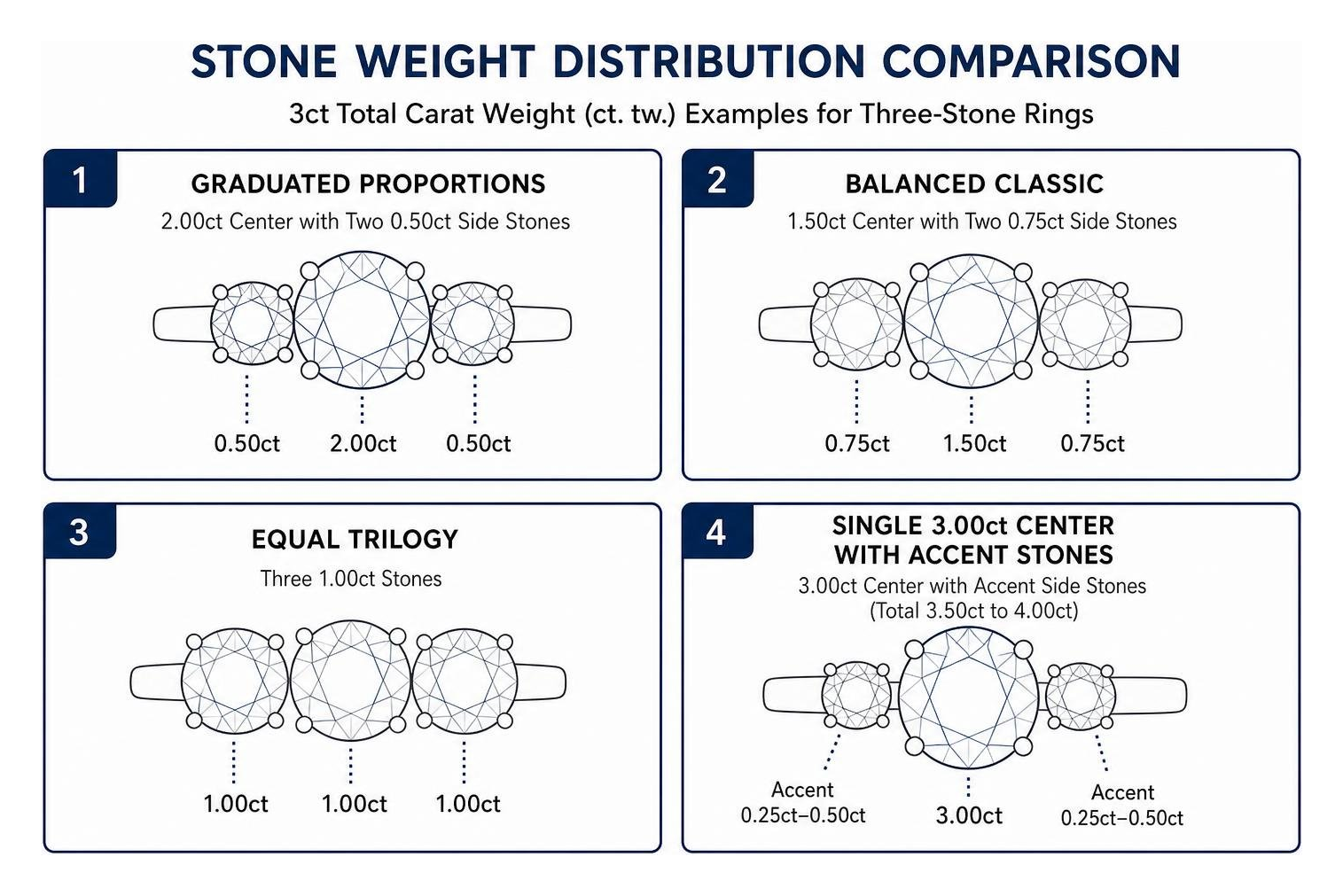
Before buying a 3ct 3 stone diamond ring, verify whether the listing means a 3-carat center stone or 3ct total carat weight, because that distinction changes size, price, and finger coverage. Popular layouts include a 2.00ct center with twin 0.50ct side stones, a 1.50ct center with two 0.75ct side stones, or three equal 1.00ct diamonds. For a cohesive look, keep the three diamonds closely matched in color and clarity, and choose a secure multi-prong or basket setting sized for the ring's wider spread. The three-stone style (frequently referred to as a "trilogy ring") accounts for approximately 15% of all engagement ring choices, offering a wider, more luminous spread across the finger than a traditional solitaire.
Visual balance relies on selecting side stones that complement the centerpiece rather than overwhelm it. The side gems serve as light-directing bookends that guide the eye inward to the center gem, creating brilliance across the entire width of the hand.
Center Stone vs. Total Carat Weight in a 3ct 3 Stone Diamond Ring
A critical distinction to verify before purchasing is whether a ring is labeled as a 3-carat center stone or 3ct total carat weight (ct. tw.). This difference impacts both physical dimensions and price:
- Graduated Proportions (2.00ct Center with Twin 0.50ct Side Stones): The centerpiece remains the undeniable hero, providing dramatic vertical depth, while two 0.50ct flanking gems taper gracefully down the curve of the band.
- Balanced Classic (1.50ct Center with Two 0.75ct Side Stones): A harmonious configuration where the side stones have significant presence, offering a continuous ribbon of sparkle across the finger.
- Equal Trilogy (Three 1.00ct Stones): Three diamonds of identical size represent a balanced, geometric aesthetic. This layout offers wide horizontal coverage across the finger.
- Single 3.00ct Center with Accent Stones: The center gem alone weighs 3 full carats, with flanking side stones adding additional weight to create an overall 3.50ct to 4.00ct total piece.
The Enduring Symbolism of the Trilogy Setting
Beyond its proportions, the three-stone setting is celebrated for its narrative depth:
- Past, Present, and Future: The central diamond represents the present—the moment you find yourselves in today—while the flanking stones honor the memories of your past and the promises of your future together. No time-travel needed!
- Friendship, Love, and Fidelity: In classic Victorian jewelry tradition, each stone stood for one of the three core pillars of a lasting marriage.
- The Holy Trinity: For couples seeking spiritual significance, the trio embodies faith, hope, and divine grace within their union.
- Milestone Celebrations: Beyond engagements, a 3ct trilogy ring is a traditional gift for major anniversaries, marking past accomplishments, present standing, and future dreams.
Lab-Grown vs. Natural Diamonds for a 3-Carat Three-Stone Ring
When selecting three diamonds of substantial size, origin plays a central role in budgeting. Lab-grown diamonds have seen a 30% annual growth rate, making larger total carat weights accessible to a wider variety of budgets.
Chemically, optically, and physically, lab-grown diamonds are identical to earth-mined diamonds. They are made of pure crystallized carbon, register a 10 on the Mohs hardness scale, and produce identical brilliance, scintillation, and fire.
The primary difference lies in their origin: natural diamonds crystallize over billions of years deep within the earth's mantle, whereas lab-created diamonds are grown in controlled laboratory environments using Advanced Chemical Vapor Deposition (CVD) or High Pressure High Temperature (HPHT) techniques.
| Feature | Natural Diamonds (3ct Total Weight) | Lab-Grown Diamonds (3ct Total Weight) |
|---|---|---|
| Origin | Mined from natural geological formations | Created in advanced technological laboratories |
| Chemical Structure | 100% pure crystallized carbon (Type Ia/IIa) | 100% pure crystallized carbon (Type IIa) |
| Optical Properties | Refractive Index: 2.42; Identical fire and sparkle | Refractive Index: 2.42; Identical fire and sparkle |
| Grading Standards | Certified by independent labs (e.g., GIA) | Certified by independent labs (e.g., IGI, GIA) |
| Typical Price Range | $8,000 to $25,000+ (depending on 4Cs) | $2,600 to $6,000+ |
| Value Proposition | Geological rarity; classic heritage value | High finger coverage per dollar spent |
Popular Metal Settings and Design Aesthetics
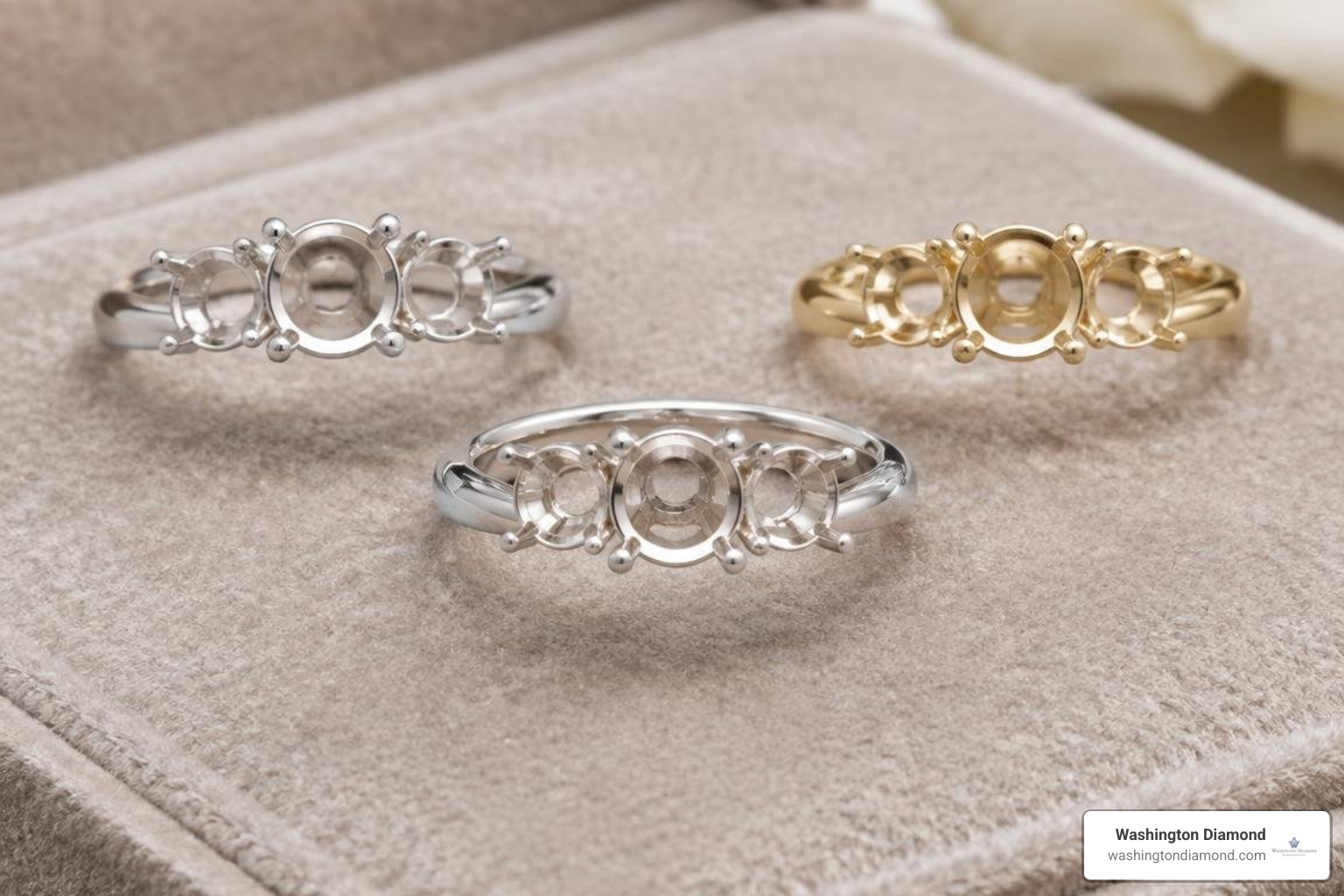
The metal you choose provides the structural foundation for your stones. Because a 3ct setting carries significant gem volume, structural integrity is essential.
- Platinum: The densest and most secure precious metal. Platinum does not wear away over time; instead, metal shifts at a microscopic level, creating a soft patina. Its cool, naturally white surface will never yellow or require rhodium plating, making it a reliable cradle for colorless diamonds.
- 14k White Gold: Offers high tensile strength and rigidity due to its alloy composition, making it durable for multi-prong settings. It is plated with rhodium to achieve a bright, reflective mirror finish.
- 18k Yellow Gold: Rich in warm tones, yellow gold provides high-contrast visual warmth beneath crisp, white diamonds. Many clients prefer 18k yellow gold bands paired with platinum prongs to keep the diamonds looking bright and colorless.
- 18k Rose Gold: Blended with copper alloys to produce a warm, romantic hue that pairs well with vintage-inspired or fancy-cut diamond layouts.
Setting architecture determines both the ring's security and light performance:
- Prong Settings (4-Prong or 6-Prong): Maximize light entry from all angles, optimizing overall brilliance.
- Basket Settings: Lower the center of gravity of larger stones, helping the ring sit closer to the finger to prevent spinning.
- Bezel Settings: Encase the perimeter of each stone in a rim of metal, offering a snag-free design and modern, geometric lines.
Vintage vs. Modern Styles in a 3ct 3 Stone Diamond Ring
The three-stone silhouette spans across multiple design eras:
- Mid-Century & Antique Trilogy Rings: Historic settings often combine mixed-metal craftsmanship, such as an 18ct yellow gold band with white gold collets, securing graduated stones. These designs have maintained enduring appeal across generations.
- Modern Architectural Styles: Contemporary designs often pair large center stones—such as an emerald, oval, or radiant cut—with clean side accents like tapered baguettes, cadillac cuts, or trapezoids. These configurations emphasize clean lines and low-profile gallery baskets for everyday comfort.
Pricing Factors and Budgeting Considerations
The price range for a 3ct total weight three-stone diamond ring spans from $2,600 to upwards of $15,000+, depending on origin, quality, and mounting detail.
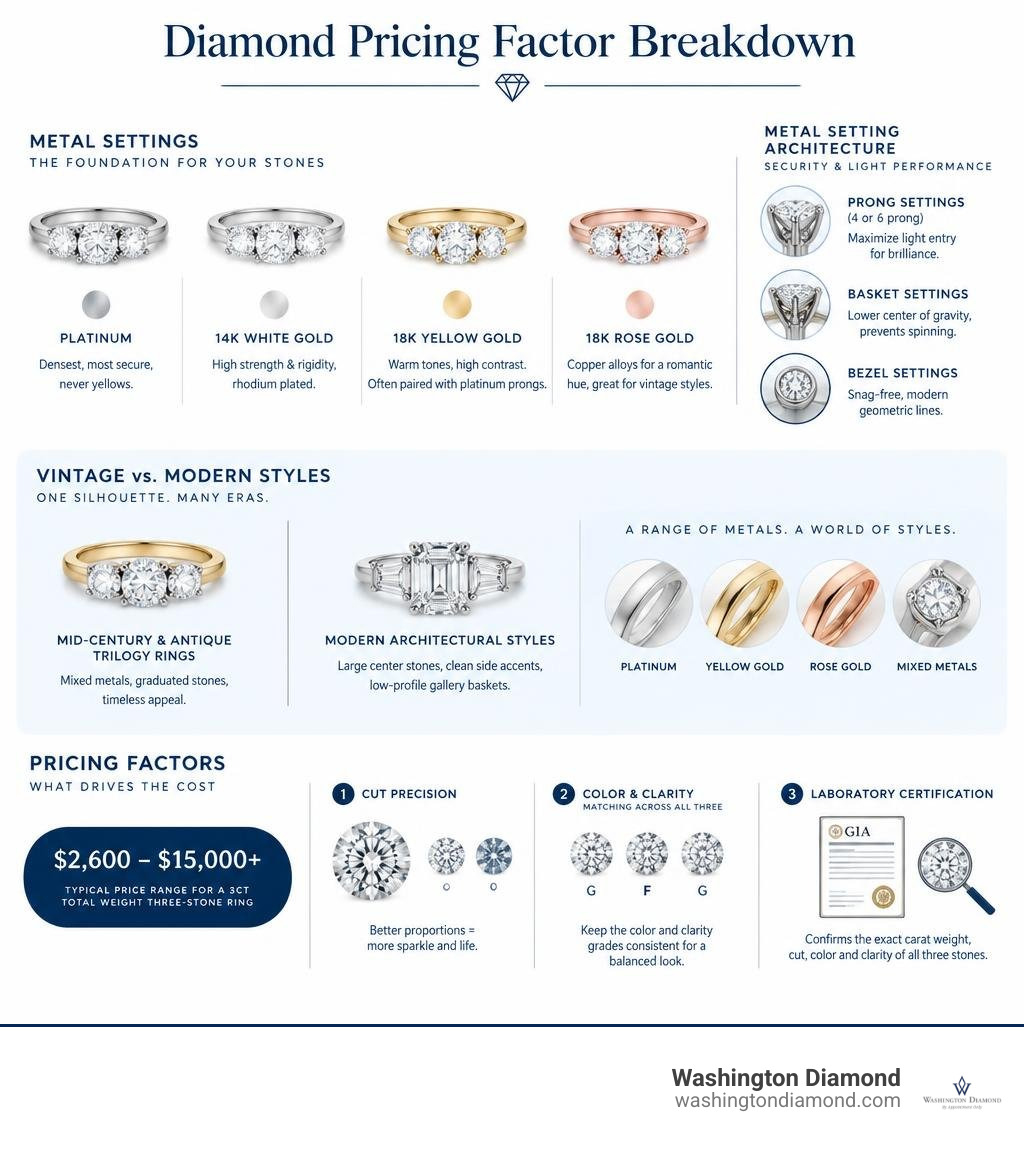
When establishing your budget, consider these primary cost drivers:
- Cut Precision: Cut quality governs sparkle. Well-proportioned cuts allow maximum light return, while poorly proportioned cuts can make stones appear dark or smaller than their actual carat weight.
- Color & Clarity Matching Across All Three Stones: You are purchasing three diamonds that must look visually cohesive side by side. If a center stone is graded at an 'F' color, placing 'I' color side stones next to it will make the side stones look tinted. Selecting stones within one adjacent color grade (e.g., F center with G side stones) ensures a balanced look.
- Independent Laboratory Certification: Ensure all three diamonds are graded by reputable gemological laboratories, such as the Gemological Institute of America (GIA) or the International Gemological Institute (IGI). Certification confirms that you receive the exact carat weight, cut, color, and clarity specified.
- Mounting Craftsmanship: A secure mounting requires precise metalwork to seat three large stones level and tight against one another without structural pinch points.
Sizing, Maintenance, and Warranty Considerations
Multi-stone settings require thoughtful planning regarding sizing and upkeep:
- Band Width and Resizing Limitations: A minimum band width of 1.8mm to 2.2mm is recommended to balance the weight of three stones and prevent structural warping. Because the diamond gallery spans a wide portion of the finger, resizing a three-stone ring more than 1 to 1.5 sizes up or down can pull the outer prongs outward, loosening the side stones. For significant adjustments, sizing beads or a custom-cast shank are safer solutions.
- Prong Inspection Schedules: Multi-stone mountings feature between 8 and 12 individual prongs holding the three gems. Having your ring inspected by a professional jeweler every 6 to 12 months ensures loose prongs are caught early.
- Daily Cleaning Routine: Soak the ring in warm water with mild dish soap for 15 minutes, gently brushing behind each stone's gallery basket with an extra-soft toothbrush to remove trapped oils and restore brilliance.
- Warranties & Fine Jewelry Insurance: Choose a jeweler offering comprehensive care plans—including prong retipping, professional ultrasonic cleaning, and periodic maintenance checks. We recommend insuring your ring through a specialized jewelry insurer or a homeowners policy rider to protect against loss, theft, or damage.
Frequently Asked Questions about Three-Stone Diamond Rings
How is carat weight typically distributed across a 3ct three-stone ring?
Common configurations include a 2.00ct center diamond flanked by two 0.50ct side stones, a 1.50ct center with two 0.75ct side gems, or three equal 1.00ct diamonds. The 2ct-with-twin-0.50ct layout is the most popular choice for buyers wanting a prominent center stone with balanced accents.
Do the three diamonds need identical color and clarity grades?
They do not need to be mathematically identical, but they should be visually matched. For color, keep all three stones within one grade of each other (such as an E center with F side stones). For clarity, choose eye-clean diamonds (typically VS2 or higher, or carefully chosen SI1 diamonds) so no visible inclusions distract from the stones' brightness.
Can a multi-stone trilogy ring be resized easily?
Small adjustments (within one full size) are generally straightforward. However, larger size changes can alter the curvature of the ring's head, putting tension on the shared or outer prongs. If a significant size change is needed, consulting with an experienced bench jeweler is essential to keep the settings secure.
Conclusion
Choosing a 3-carat three-stone ring brings together personal symbolism, brilliant finger coverage, and classic design. Whether you prefer an equal trilogy setting or a prominent center stone framed by tailored side baguettes, focusing on matched diamond grading, durable metals, and a well-engineered mounting ensures your ring will be enjoyed for decades to come.
At Washington Diamond, we believe choosing fine jewelry should be a clear, comfortable, and pressure-free process. From our private, appointment-only studio in Northern Virginia, we provide dedicated, one-on-one guidance to help you examine diamonds in person, review proportions, and create a setting customized to your taste.
Ready to discover your ideal ring? Schedule your private consultation with our team and explore handcrafted three stone engagement rings tailored to your personal story.
Have a question about your jewelry?
We've been helping clients with diamonds, custom design, repairs, appraisals, and more since 1969. Book a private appointment at our Falls Church studio.
Book an AppointmentTrusted since 1969 · Falls Church, VA · 703-536-3600
From the blog
View all


