

A Practical Guide to Comparing Solitaire Engagement Band Options
What Defines a Solitaire Engagement Band?
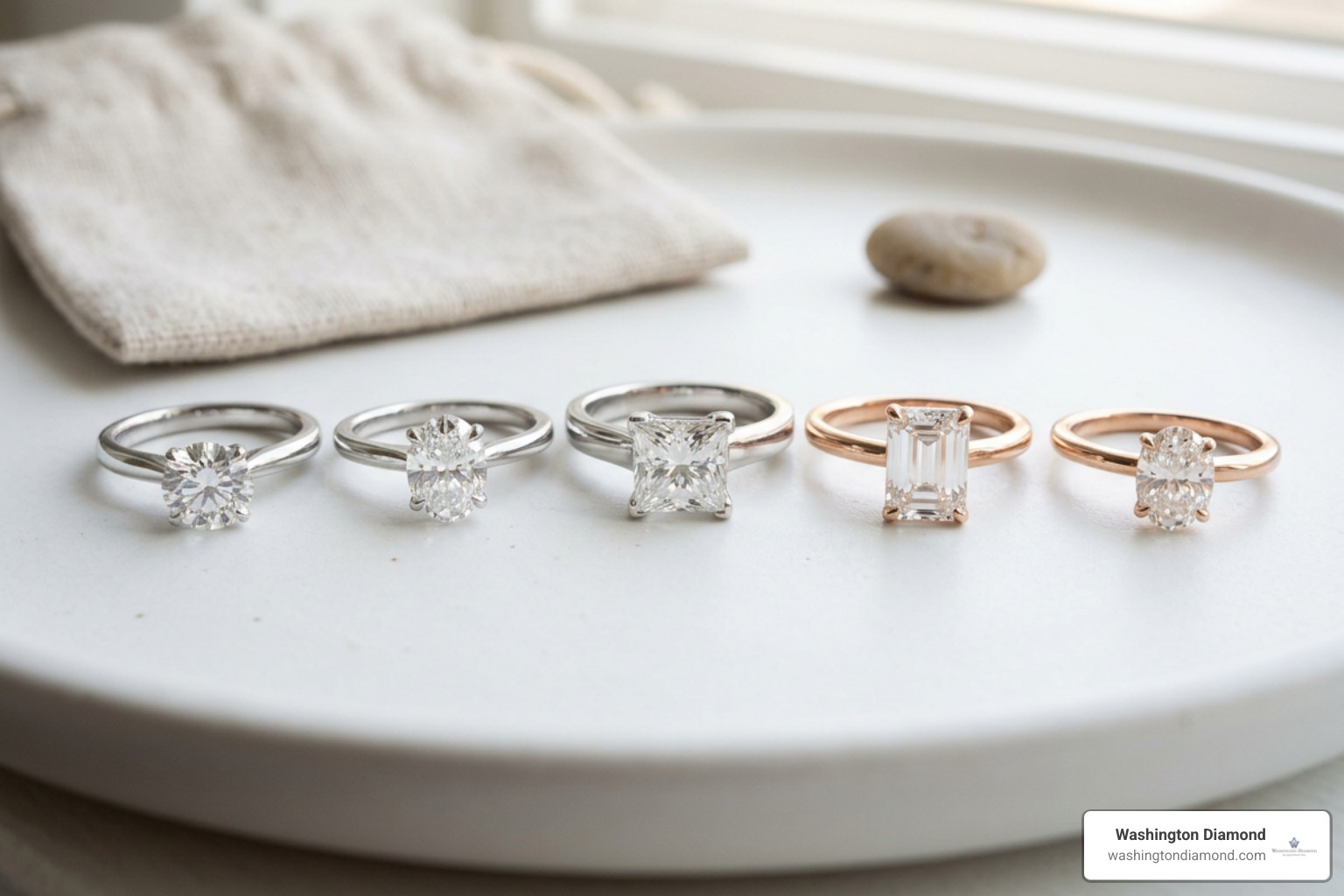
At its core, the design philosophy behind this style is simple: celebrate a single focal stone without visual clutter or distraction. While the terms are sometimes used interchangeably, a solitaire engagement band often shifts the emphasis toward a more integrated, continuous profile between the mounting and the ring shank. Unlike high-set cathedral mounts designed solely to elevate a diamond high above the finger, modern bands integrate the gemstone directly into the metal structure, creating an ergonomic, balanced aesthetic.
For a deeper look into the history and traditional builds of these designs, you can explore our comprehensive solitaire engagement ring guide. When we craft these pieces in our studio, we focus heavily on the relationship between the stone's culet and the interior diameter of the ring. This low-profile architecture creates a piece that feels natural from the moment you slide it on, preventing the top-heavy spinning common with towering traditional mounts.

Band Anatomy vs Traditional Settings
Understanding the anatomy of your ring helps you evaluate how it will perform during daily wear:
- Shank Depth and Width: Traditional rings often taper to delicate, 1.5mm wire shanks to make the center stone look larger. A well-engineered band uses a uniform, substantial shank depth (usually 1.8mm to 2.2mm) to prevent bending and ensure long-term metal integrity.
- Bezel and Flush Integration: Rather than sitting a diamond in a separate peg-head soldered onto a ring, integrated bands sink the stone directly into the metalwork.
- Snag-Free Profiles: By keeping the setting flush or semi-flush with the metal perimeter, the ring avoids catching on knit sweaters, gym equipment, or pockets.
- Ergonomic Balance: The mass of the metal counterbalances the weight of the gemstone, keeping the center stone resting upright on your finger.
For anyone who works with their hands, lives an active lifestyle, or simply prefers a clean silhouette, an integrated band offers exceptional daily durability without sacrificing fine jewelry craftsmanship.
Gender-Inclusive Ring Design
One of the most exciting shifts we see in 2026 is the rising demand for gender-inclusive and unisex ring profiles. Fine jewelry design has expanded beyond rigid conventions. Today, wider shank profiles (ranging from 3mm up to 6mm) paired with flush-set or bezel-set gemstones offer a clean, confident look for anyone seeking understated luxury.
These wider, substantial rings appeal equally to men, women, and non-binary individuals who appreciate minimalist aesthetics. A thick matte platinum band with an embedded emerald-cut or round stone provides a refined, architectural alternative to delicate bridal settings, making it a modern favorite for couples designing complementary rings.
Popular Diamond Cuts and Setting Styles
The gemstone cut dictates the overall geometry and light performance of your piece. While the band provides structure, the cut sets the personality. Solitaire engagement rings account for approximately 25% of all engagement ring sales in the United States, maintaining a steady popularity over the past decade, with 30% of couples choosing this style in 2023. Round brilliant cut diamonds lead the category, representing over 50% of all solitaire ring sales.
Popular Diamond Cuts for a Solitaire Engagement Band
Every diamond shape interacts differently with light and metalwork:
- Round Brilliant Cut: The undisputed classic. With 58 facets mathematically engineered for maximum fire and scintillation, a round brilliant masks minor color and inclusions better than any other shape.
- Oval Cut: Providing a flattering, finger-lengthening silhouette, oval cuts offer substantial surface area per carat weight. To explore length-to-width ratios and avoid harsh bow-tie shadows, review our oval cut diamond proportions guide.
- Emerald Cut: For lovers of Art Deco clean lines and vintage sophistication, step cuts offer an open "hall-of-mirrors" effect. They require higher clarity grades (VS1 or better) because their large, open tables do not conceal internal inclusions.
- Cushion Shape: Blending the brilliance of a round cut with soft, pillow-like corners, cushion cuts bring a romantic, antique feel that looks exceptional in bezel mountings.
When planning your layout, keeping standard diamond size benchmarks in mind helps balance finger coverage against your metal thickness. If you are considering larger proportions, our guide on evaluating a 2 carat diamond covers how carat weight shifts visual dimensions across different cuts.
Bezel, Flush, and Semi-Bezel Mountings
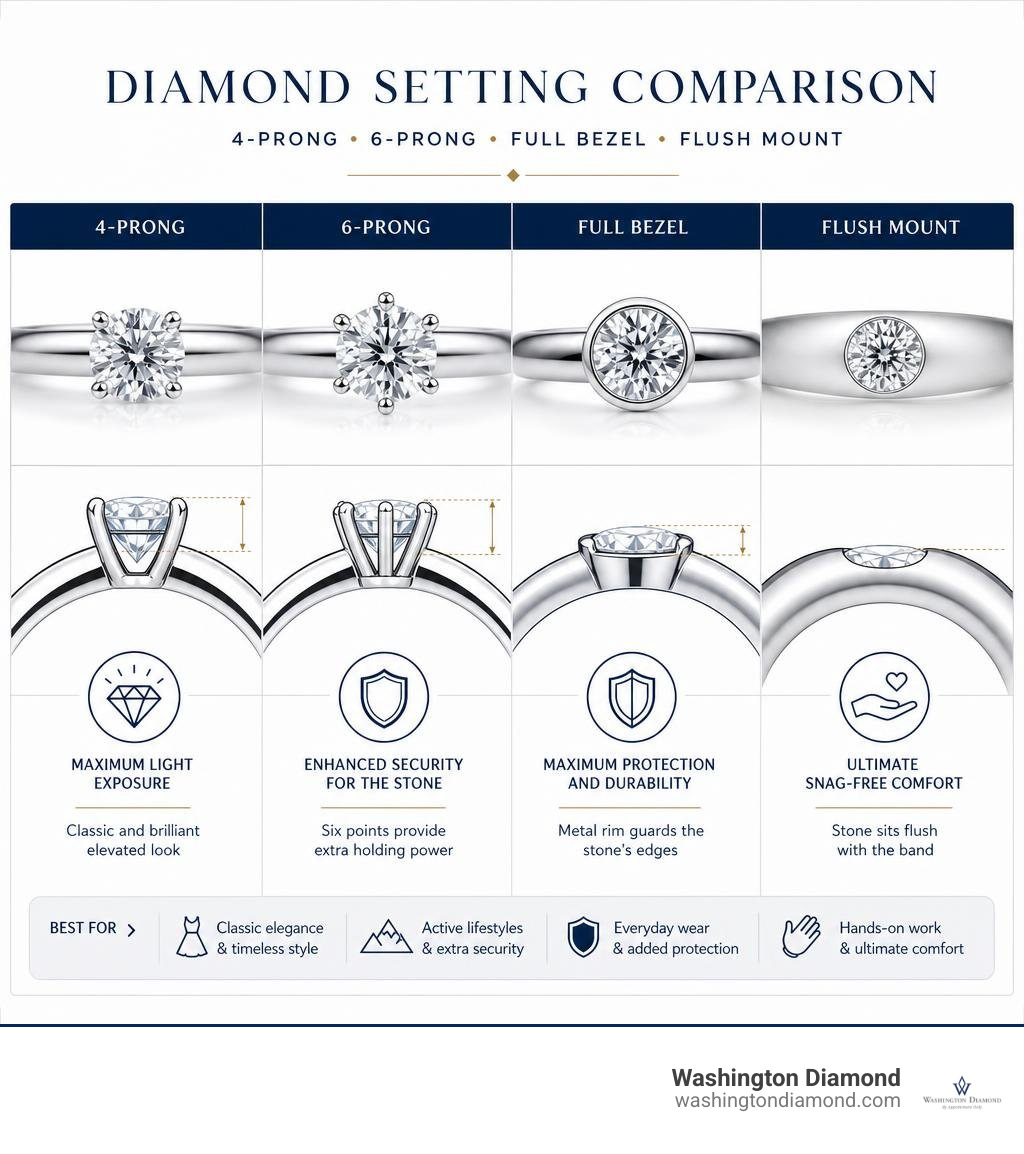
How your gemstone is mounted dictates its safety, maintenance needs, and silhouette:
- Flush (Gypsy) Setting: The stone is pressed into a drilled hole in the band, and metal is burnished over the girdle edge. The top of the diamond sits level with the band's surface, offering total snag resistance.
- Rub-Over Bezel: A continuous collar of precious metal surrounds the diamond's perimeter. It protects the fragile edges (girdle) from chipping while visually enlarging the stone's footprint.
- Semi-Bezel / Half-Bezel: Metal wraps only the top and bottom or sides of the stone, leaving the flanks open to allow ambient light entry while maintaining structural defense.
- 4-Prong vs. 6-Prong: Traditional prongs maximize light entry from all sides. A four-prong basket creates a squarer appearance, while six prongs offer superior diamond retention and create a rounder visual contour.
Comparing Precious Metals and Durability
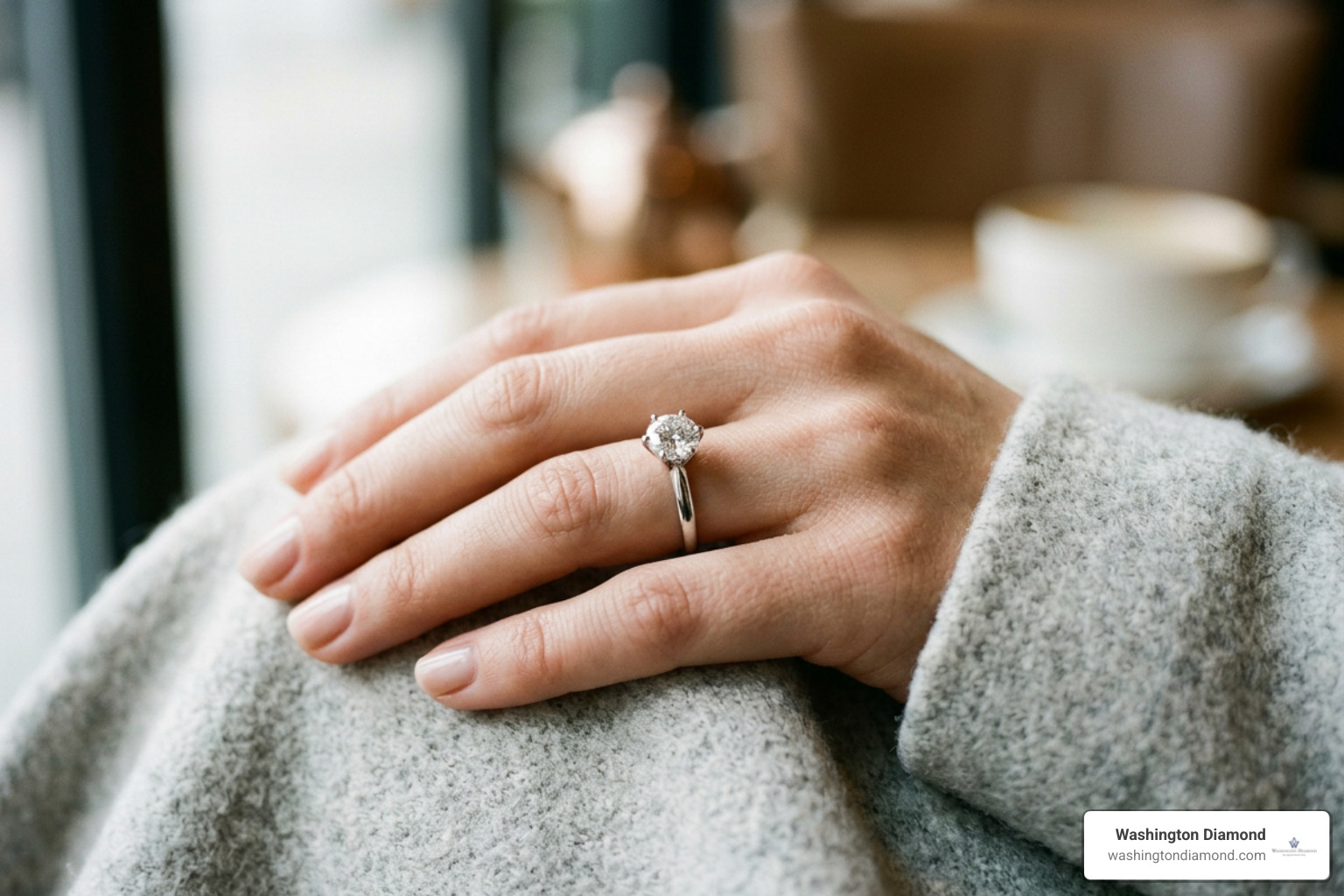
Because a solitaire band relies on minimalist metal surfaces, the chosen alloy plays a leading role in the piece's long-term character.
Choosing the Right Metal for Your Solitaire Engagement Band
- 950 Platinum: The ultimate choice for longevity. Platinum is naturally white, hypoallergenic, and exceptionally dense. When scratched, the metal displaces rather than wearing away, developing a velvety matte patina over decades. It requires no re-plating and holds stones with unmatched security.
- 14k vs. 18k Yellow Gold: 18k gold offers a rich, warm yellow hue with 75% pure gold content, making it luxurious and traditional. 14k gold contains 58.3% gold alloyed with zinc, copper, and silver, offering a slightly softer color but superior scratch resistance for rugged daily use.
- Rose Gold: Created by alloying pure gold with copper, rose gold provides a vintage, romantic tone that complements nearly every skin undertone. It is durable due to copper's natural hardness.
- White Gold: Yellow gold alloyed with nickel or palladium and coated in rhodium for a mirror-bright chrome finish. It requires periodic re-rhodium plating (typically every 18–36 months) to maintain its bright white sheen.
Daily Wear, Sizing, and Long-Term Comfort
A ring should feel as good as it looks. Wide bands interact with the finger differently than thin rings:
- Comfort-Fit Interiors: Rather than sitting flat against the skin, comfort-fit bands feature a slightly domed interior curve. This reduces friction, lets skin breathe, and makes the ring easier to slide over knuckles.
- Band Width and Sizing Adjustments: The wider the band, the tighter it fits. If you choose a band wider than 3.5mm, you may need to increase your standard ring size by a quarter to a half size.
- Seasonal Swelling: Finger sizes fluctuate between humid summer months and cold winter mornings. A properly weighted band stays upright even when slight temperature shifts cause the ring to loosen.
Solitaire Engagement Bands vs Alternative Ring Styles
To help you decide if a streamlined solitaire band fits your lifestyle, here is how it compares to other classic styles:
| Ring Style | Best Suited For | Maintenance Needs | Center Stone Focus | Wedding Band Pairing |
|---|---|---|---|---|
| Solitaire Engagement Band | Active lifestyles, modern minimalists, unisex wear | Very Low (Occasional cleaning) | Maximum (100% focal focus) | Stacks flush with simple and contoured bands |
| Halo Setting | Maximizing visual size on a tighter budget | Moderate to High (Checking micro-pavé prongs) | Moderate (Surrounded by accent stones) | Often requires curved or custom-fitted bands |
| Three-Stone Ring | Symbolic meaning (Past, Present, Future), wide finger coverage | Moderate (Checking side-stone mountings) | Balanced (Shared with side stones) | Requires straight or contour-notch bands |
While halos and multi-stone settings offer intricate sparkle, solitaire bands provide timeless versatility that never goes out of fashion. You can explore modern shifts in our review of exploring 2026 engagement ring styles.
Pricing Factors and Budgeting Guidelines
With the global engagement ring market projected to reach $39 billion by 2026, solitaire styles remain a central category for smart budgeting. The average cost of a solitaire engagement ring sits between $5,500 and $6,000, with the center diamond alone averaging roughly $3,500.
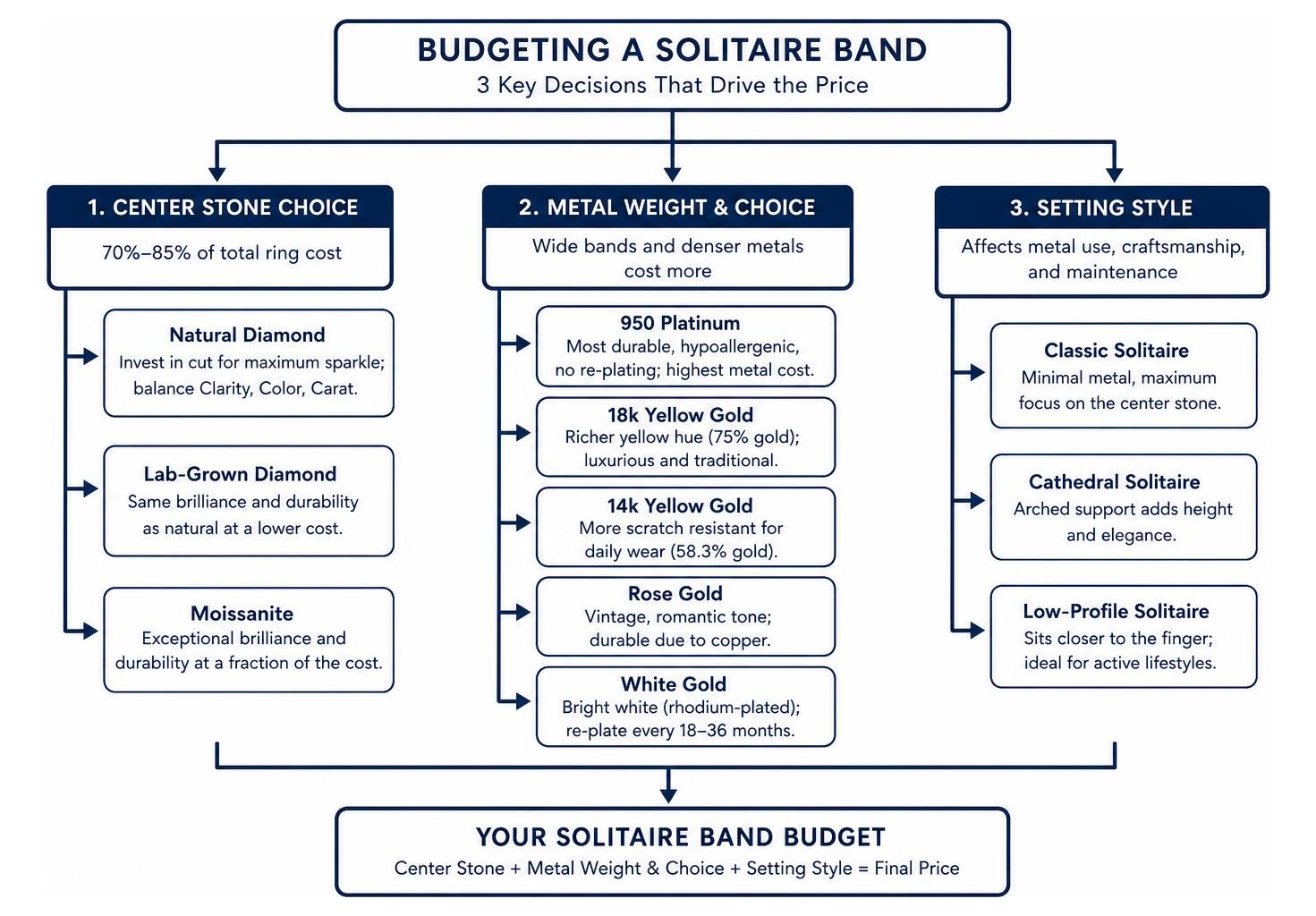
When establishing your investment, three elements drive the final price:
- The Center Gemstone: The 4Cs of diamond quality (Cut, Clarity, Color, and Carat weight) account for 70% to 85% of the total ring cost. Investing in cut quality ensures high sparkle even if you opt for near-colorless (G-H) or eye-clean (VS2-SI1) grades. For broader context on regional and national spending, see our analysis of national average engagement ring costs.
- Metal Weight and Choice: A wide, substantial platinum band requires significantly more precious metal mass than a thin 14k gold wire, directly influencing setting costs.
- Diamond Alternatives: If you want a larger look within a comfortable budget, lab-grown diamonds or alternative 1 carat moissanite options deliver exceptional brilliance and durability at a fraction of the cost.
Frequently Asked Questions About Solitaire Engagement Bands
How do I properly clean and care for a solitaire engagement band?
Keep your ring sparkling at home with basic maintenance:
- Soak the ring for 15 minutes in a bowl of warm water mixed with a few drops of mild, lotion-free dish soap.
- Gently brush behind the center stone and along the metalwork using a clean, extra-soft baby toothbrush.
- Rinse thoroughly under lukewarm running water (ensure the drain is plugged!) and pat dry with a lint-free microfiber cloth.
- Avoid wearing your ring during heavy weightlifting, gardening, or when handling harsh household chemicals like chlorine bleach. Schedule an annual inspection with a jeweler to check prong tightness and metal wear.
What are the most common buying mistakes to avoid?
- Sacrificing Cut for Carat: A poorly cut diamond will appear dull and lifeless regardless of its size. Always prioritize an "Excellent" or "Ideal" cut grade.
- Going Too Thin on the Band: Shanks under 1.5mm wide bend over years of daily pressure. Aim for at least 1.8mm width for long-term stability.
- Overlooking Side Profiles: Many shoppers view rings only from the top down. Pay attention to how high the setting rises off the finger to make sure it matches your lifestyle.
How do I pair a wedding ring with a solitaire band?
Because solitaire bands feature clean profiles, they offer exceptional stacking versatility:
- Flush Stacking: If your solitaire setting is elevated, a straight wedding band can sit right against it without a gap.
- Contoured Bands: For ultra-low-profile flush or bezel mountings, a gentle curved or chevron-shaped band frames the center stone neatly.
- Mixed Metal Stacks: Pairing a white metal engagement band with a yellow or rose gold wedding ring adds personalized contrast.
If you are exploring bridal sets in Northern Virginia, you can view tailored options for custom wedding bands in McLean VA.
Conclusion
Choosing the right engagement piece is an intimate, memorable journey. A solitaire band strips away unnecessary distractions, leaving you with a striking design that highlights your gemstone and personal taste.
At Washington Diamond, we believe shopping for fine jewelry should be transparent, stress-free, and fun. In our private, appointment-only Northern Virginia studio, we provide our undivided attention, working alongside you to compare loose diamonds, explore metal weights, and customize an ergonomic setting tailored to your daily life.
Ready to begin your journey? Schedule a personal consultation with our team or explore solitaire diamond ring collections to discover how refined simplicity can tell your personal story.
Have a question about your jewelry?
We've been helping clients with diamonds, custom design, repairs, appraisals, and more since 1969. Book a private appointment at our Falls Church studio.
Book an AppointmentTrusted since 1969 · Falls Church, VA · 703-536-3600
From the blog
View all


