

How much does a GIA certified diamond actually cost
Understanding What You'll Actually Pay for a GIA Certified Diamond
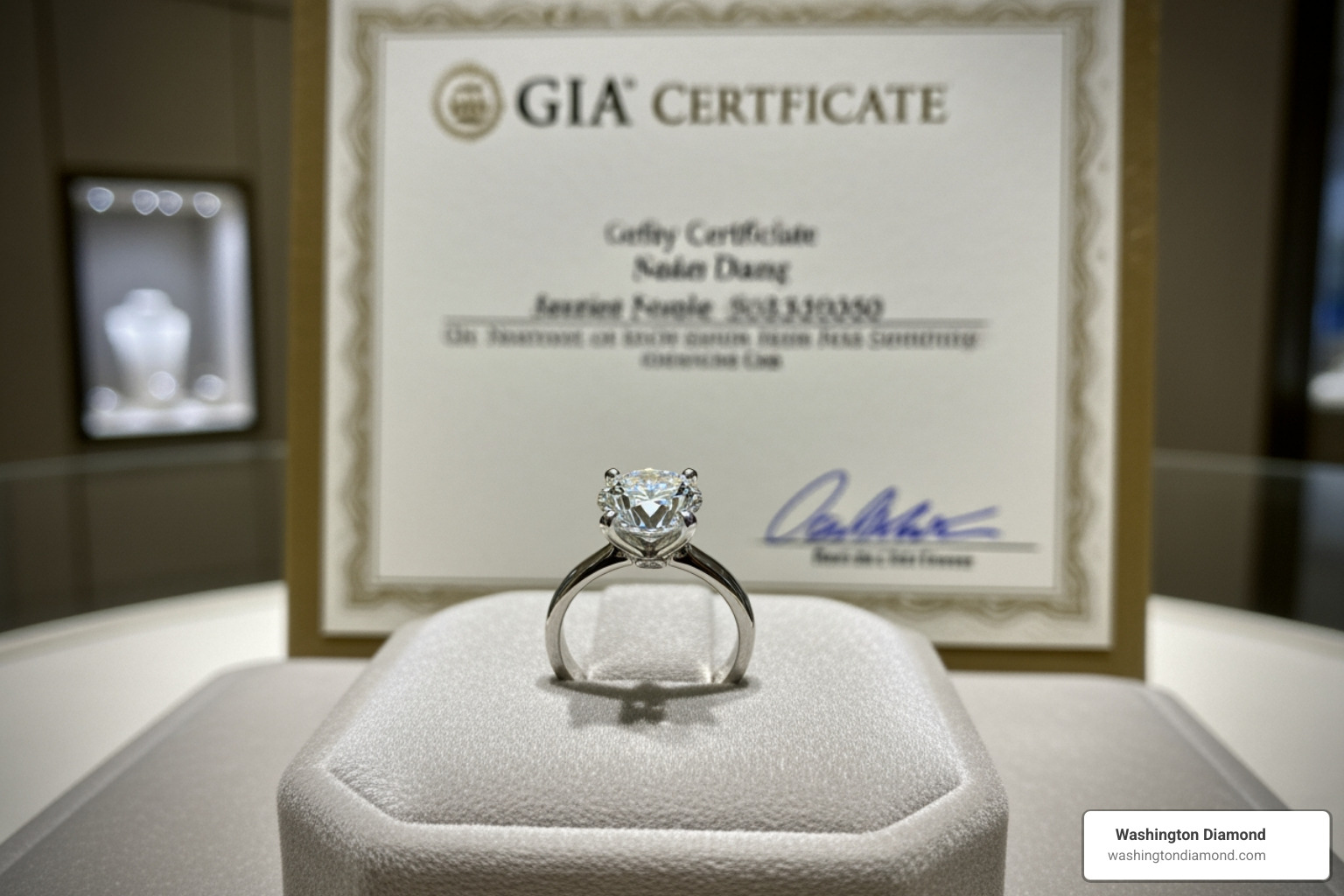
GIA certified diamonds price varies widely based on the 4Cs (Cut, Color, Clarity, and Carat weight), with current market examples ranging from around $829 for a 1.1-carat D VS1 Excellent cut round diamond to $59,738 for a 9.28-carat D VVS1 Excellent cut round diamond. Lab-grown GIA certified diamonds typically cost 50-70% less than natural diamonds with identical quality grades.
Quick Price Overview:
| Diamond Type | Example | Current Price | Notes |
|---|---|---|---|
| Natural 1+ carat | 1.1ct D VS1 EX Round | $829 (30% off) | Entry-level premium quality |
| Natural 6+ carat | 6.08ct D VVS2 EX Princess | $5,865 (30% off) | Rare fancy shape |
| Natural 9+ carat | 9.28ct D VVS1 EX Round | $59,738 (30% off) | Investment-grade stone |
| Lab-Grown 4+ carat | 4.23ct Radiant | $5,999 (50% off) | Same quality, lower cost |
GIA certification matters because it's the most trusted, objective third-party grading system in the diamond industry. As a non-profit organization, GIA has no commercial interest in your purchase—they simply document a diamond's exact characteristics using the International Diamond Grading System based on the 4Cs. This standardization means you can confidently compare diamonds across different retailers and understand exactly what you're paying for.
The price you'll actually pay depends on several factors beyond just the 4Cs. Shape matters significantly—round brilliant diamonds command a premium due to cutting waste and popularity. Market discounts can substantially reduce prices, with many retailers currently offering 30% off original pricing. The choice between natural and lab-grown diamonds represents the largest price differential, with lab-grown stones offering identical physical properties at a fraction of the cost.
Understanding diamond pricing helps you make informed decisions for life's most meaningful moments. Whether you're selecting an engagement ring or anniversary jewelry, knowing what drives GIA certified diamond prices ensures you get exceptional value without compromise.
I'm Tom Daube, and I've spent my career helping clients understand and access GIA certified diamonds at prices almost always under listed wholesale—making me part of the top 1% of jewelers nationwide. My expertise in GIA certified diamonds price evaluation ensures you'll enjoy clearly better diamonds without the confusion or inflated costs common in traditional retail.
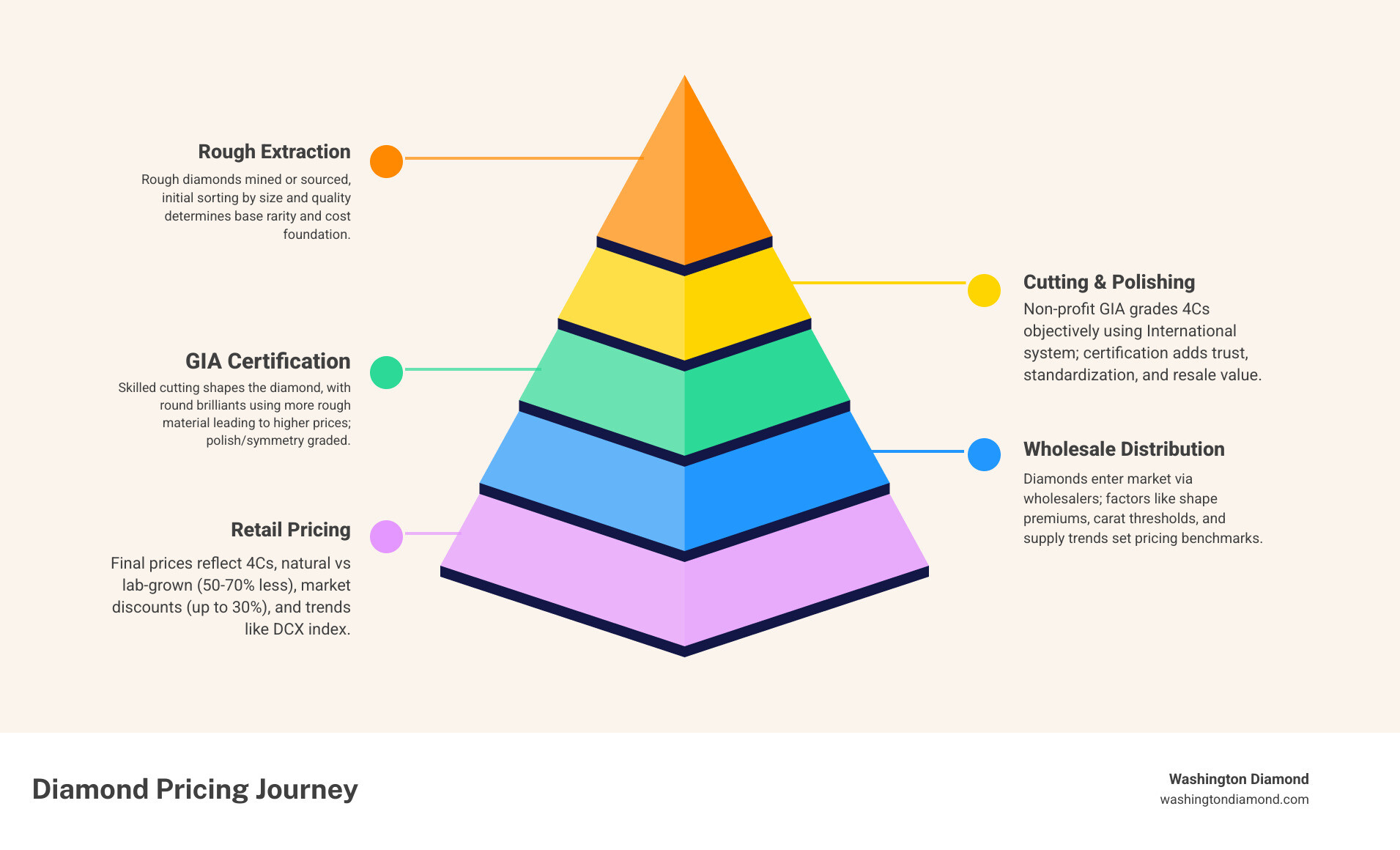
Easy GIA certified diamonds price glossary:
The Role of GIA Certification in Diamond Valuation
When we talk about the value of a diamond, we aren't just talking about its sparkle; we are talking about its pedigree. The Gemological Institute of America (GIA) is a non-profit research institute that serves as the world's most respected authority on diamonds. Because they do not buy or sell diamonds, their grading is entirely objective. When you see a GIA certified diamonds price, you are paying for the peace of mind that the stone’s quality has been verified by the strictest standards in the world.
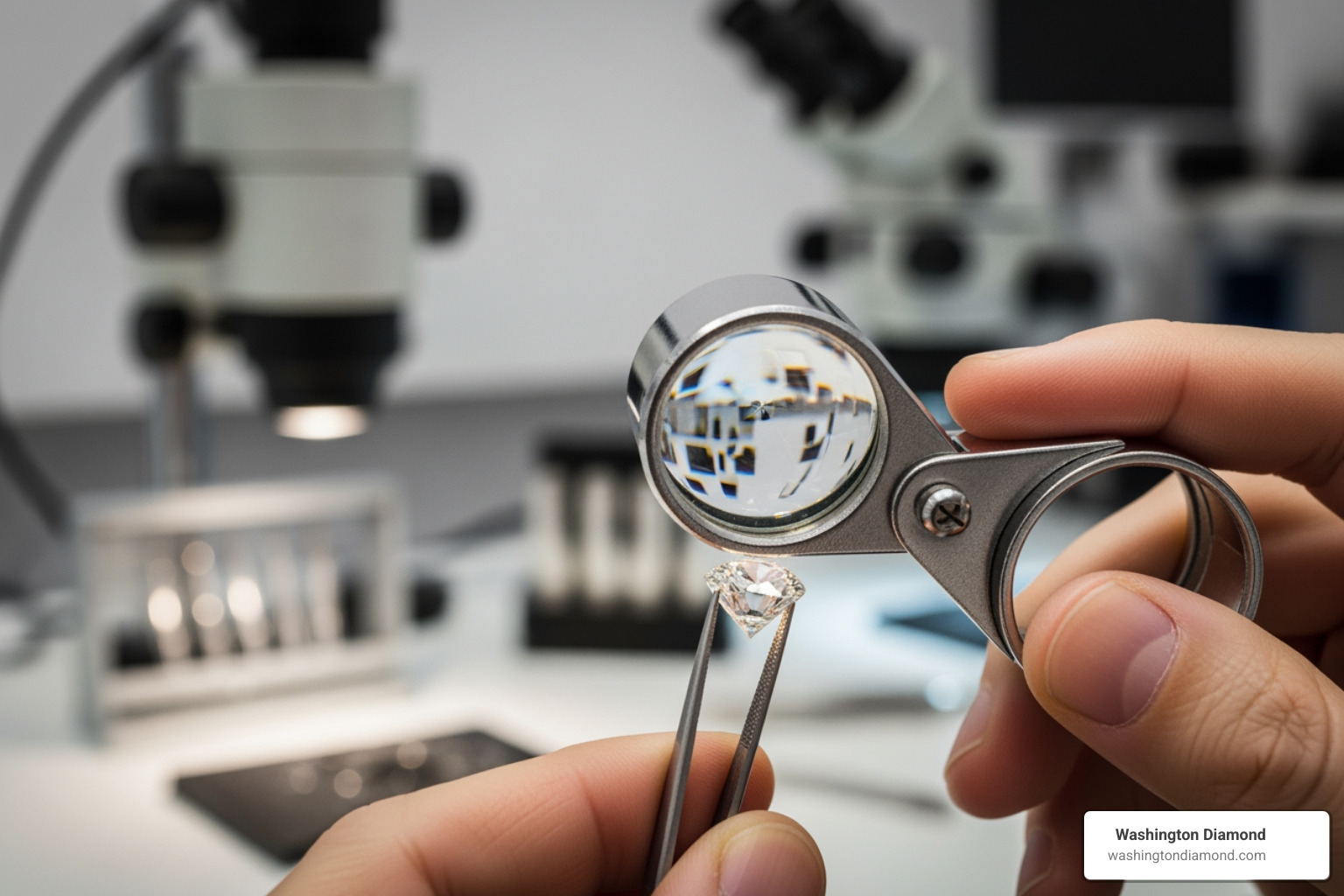
Before GIA established the International Diamond Grading System, there was no universal way to describe a diamond's quality. Today, their reports act as a blueprint for the stone. This transparency is vital for consumer protection, ensuring that you aren't paying "D-color" prices for an "F-color" stone. To truly find the right stone, it helps to look beyond the 4Cs and learn how to choose your perfect certified loose diamond.
How GIA Grades the 4Cs
The GIA certified diamonds price is primarily dictated by the 4Cs: Cut, Color, Clarity, and Carat Weight.
- Cut: Often considered the most important "C," the cut determines how the diamond interacts with light. GIA grades round diamonds from Excellent to Poor. An Excellent cut maximizes sparkle and can even make a diamond appear larger than its actual carat weight.
- Color: GIA uses a D-to-Z scale. D is completely colorless and most expensive, while Z has a noticeable yellow or brown tint.
- Clarity: This measures the presence of inclusions (internal) and blemishes (external). The scale ranges from Flawless (FL) to Included (I3).
- Carat Weight: This is the measurement of how much the diamond weighs. Because larger diamonds are rarer, the price increases exponentially as the weight goes up.
Understanding these metrics allows you to calculate the value of a diamond before you buy or sell.
Why GIA Certified Diamonds Price Reflects Market Authority
GIA certification is the "gold standard" for a reason. Because the grading is so consistent, GIA-certified stones often hold their resale value better than those certified by other labs. When an appraiser looks at your jewelry, a GIA report provides the necessary data to determine an accurate replacement value. This is a key part of everything you need to know about jewelry appraisals.
Key Factors Influencing GIA Certified Diamonds Price
While the 4Cs are the foundation, several other "hidden" factors influence the final cost of a stone. For instance, two diamonds with the exact same 4C grades can have different prices based on their fluorescence, polish, and symmetry.
Fluorescence—the glow a diamond emits under UV light—can sometimes make a slightly yellowish diamond look whiter, or it can make a colorless diamond look "milky." Polish and symmetry affect how light moves through the stone. To get the best deal, you should learn how to calculate diamond price per carat to see how these nuances affect the bottom line. You can also explore more at the GIA's own Diamond Costs and Pricing blog.
Why GIA Certified Diamonds Price Varies by Shape
The round brilliant cut is consistently the most expensive shape. Why? It’s two-fold: high demand and high waste. When cutting a round diamond from a rough stone, more of the original material is lost (often over 50%) compared to "fancy shapes" like emerald or cushion cuts. Fancy shapes can be more affordable while offering a unique aesthetic. For a deeper dive into these options, check out our loose diamonds complete guide.
The Impact of Market Discounts and Trends
The diamond market isn't static. Current data shows significant fluctuations, with some retailers offering flat 30% discounts on GIA-certified stones. We also monitor the Diamond Composite Index (DCX), which tracks public retail listings to provide a benchmark for pricing. Supply chain shifts, such as the Kimberley Process ensuring 99% of diamonds are conflict-free, also play a role in global pricing. You can read more about the shifting sparkle and what drives diamond values through the years to stay ahead of market trends.
Natural vs. Lab-Grown: Understanding the Cost Gap
The most significant choice facing modern buyers is the decision between natural and lab-grown diamonds. Both are chemically, physically, and optically identical, but their origins—and prices—are worlds apart.
| Feature | Natural Diamond | Lab-Grown Diamond |
|---|---|---|
| Origin | Earth-mined over billions of years | Laboratory-grown (CVD or HPHT) |
| Rarity | Only 1 in 1,000 > 1 carat | Mass-producible |
| GIA Certified? | Yes | Yes (since 2007) |
| Price | High (reflects scarcity) | 50% - 70% lower |
Natural diamonds are rare treasures of nature. Lab-grown diamonds, however, provide an incredible opportunity to get a much larger stone for your budget. Whether you prefer the history of the earth or the innovation of science, we have a wide selection of loose diamonds to suit your needs.
Price Differences for GIA Certified Lab Diamonds
Lab-grown diamonds are created using two primary methods: Chemical Vapor Deposition (CVD) and High Pressure High Temperature (HPHT). GIA grades these stones using the same 4C scales as natural diamonds. The price difference is staggering. For example, a 4.23-carat GIA certified radiant cut lab diamond might be priced around $5,999, whereas a natural stone of that size and quality could easily cost ten times as much. Retailers are seeing high demand for 3.67ctw lab-grown engagement rings due to this accessibility. For those interested in the technical side, GIA offers GIA NextGem™ Diamond Training for deeper industry knowledge.
Value Retention and Long-Term Pricing
Natural diamonds have a long history of value retention due to their geological scarcity. Lab-grown diamonds, because they can be produced in unlimited quantities, are expected to see continued price decreases as technology improves. When making a purchase, the diamond value calculator is your secret weapon for smart buying, helping you weigh the long-term value against the upfront cost.
Current Market Price Ranges and Benchmarks
Navigating the GIA certified diamonds price landscape requires looking at real-world examples. Prices are often listed per carat, and weight thresholds (like 1.00ct or 2.00ct) see significant price jumps.
Current market listings show some surprising deals:
- 1.1 carat D VS1 EX Cut: $829 (originally $1,184)
- 6.08 carat D VVS2 EX Cut Princess: $5,865 (originally $8,379)
- 8.05 carat D VVS1 EX Cut Round: $21,998 (originally $31,426)
- 9.28 carat D VVS1 EX Cut Round: $59,738 (originally $85,340)
To understand how these prices are calculated for specific sizes, see our decoding the dollar guide to 2-carat diamond pricing.
Current Market Benchmarks for GIA Certified Diamonds Price
The "Triple Excellent" (3EX) grade—Excellent Cut, Polish, and Symmetry—is the gold standard for round diamonds. When these are also non-fluorescent, they command the highest market prices. Pricing is often smoothed into a model-based benchmark to help consumers understand if they are getting a "Fair Price." If you are looking for something smaller, we have an ultimate pricing breakdown for a .75 carat loose diamond.
Popular Carat Weights and Their Price Points
The 1-carat round brilliant remains the most popular choice for engagement rings. However, many savvy buyers look for "under-sizes"—diamonds that weigh 0.90 to 0.99 carats. These stones look almost identical to a full 1-carat stone but can cost significantly less because they haven't crossed the psychological weight threshold. To see how these weights stack up, check out what a diamond price chart really tells you.
Expert Tips for Buying GIA Certified Diamonds
Buying a diamond should be an exciting experience, not a stressful one. Here is how we recommend approaching the process to ensure you get the most sparkle for your dollar.
- Prioritize Cut: A well-cut diamond can hide inclusions and make a lower color grade look whiter.
- Verify the Report: Always use the GIA Report Check tool.
- Buy Just Under the Carat: As mentioned, a 1.90ct stone is often much cheaper than a 2.00ct stone.
- Consider Fluorescence: In some stones, "Faint" fluorescence can actually improve the appearance of a J or K color diamond, saving you money.
If you already own a stone and want to know its worth, you can get your diamond appraised by a professional.
How to Verify GIA Report Authenticity
Every GIA report comes with security features, including a hologram, security screen, and microprint lines. Most importantly, GIA diamonds usually have a microscopic laser inscription on the girdle that matches the report number. You can verify any report by entering the number on the GIA website or using the resources at the GIA Store.
Advantages of Reputable Retailers vs. Online Marketplaces
While online marketplaces offer vast inventories, they lack the personalized touch of a private studio. At Washington Diamond, we offer an appointment-only experience in Northern Virginia where you get undivided attention from experts. We help you look beyond the paper to see how the diamond performs in person. We also offer tools like a free diamond appraisal calculator guide to help you shop with confidence.
Frequently Asked Questions
Why is GIA certification more expensive than others?
GIA is a non-profit that maintains the strictest and most consistent grading standards. Because their reports are so highly trusted by wholesalers and retailers worldwide, diamonds with GIA certificates often command a premium price—but they also offer higher security and resale value.
Are GIA certified lab diamonds cheaper than natural ones?
Yes, significantly. Lab-grown diamonds are currently priced 50% to 70% lower than natural diamonds of the same quality. GIA has been grading lab diamonds since 2007, providing the same level of rigorous analysis to ensure you are getting exactly what you pay for.
How can I find the best GIA certified diamonds price?
The best way is to compare the 4Cs across different stones while paying close attention to "Excellent" cut grades. Additionally, look for stones with "Faint" fluorescence or those just under popular carat weights to find hidden value.
Conclusion
Finding the perfect GIA certified diamonds price is about balancing the 4Cs with your personal style and budget. Whether you are drawn to the timeless rarity of a natural stone or the impressive scale of a lab-grown diamond, the GIA report is your ultimate safeguard.
At Washington Diamond, we specialize in making this journey memorable and transparent. Our private, appointment-only studio in Northern Virginia ensures you receive a personalized experience tailored to life's most meaningful moments. Before you make your next move, be sure to calculate the value of a diamond before you buy or sell to ensure you're making a smart, informed investment.
From the blog
View all


