

Why Fine Diamond Bracelets Might Be Your Most Stylish Financial Asset
What Makes a Diamond Bracelet Worth Keeping?
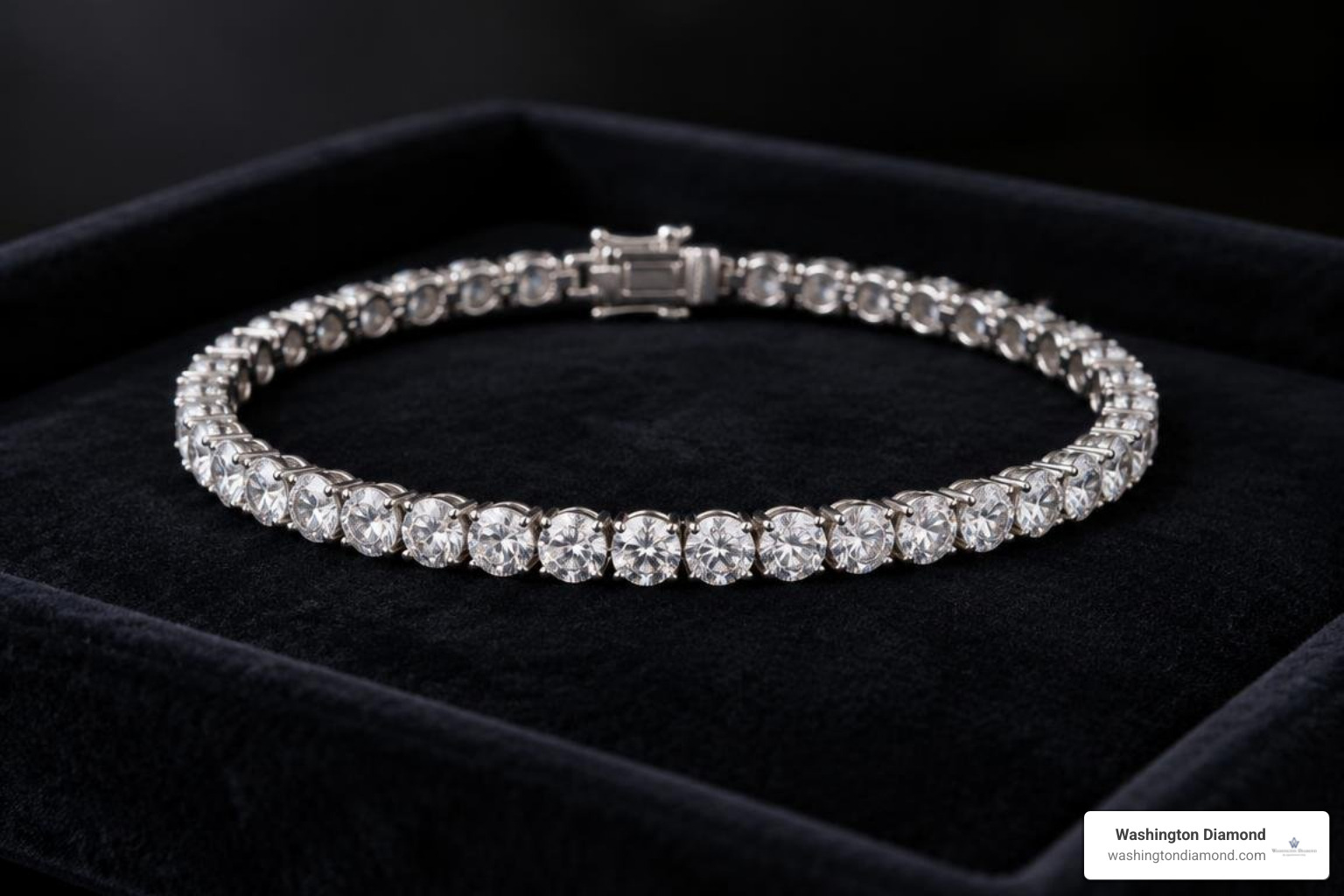
In this diamond bracelet investment value guide, start with resale value, not the price paid at the store. Check the diamonds' cut, color, clarity, and total carat weight. Then look at the metal, condition, and any proof of the maker. Compare recent sales of similar bracelets. A fine bracelet may hold value, but resale is not guaranteed to cover its purchase price.
I'm Tom Daube. My experience with diamond selection, jewelry design, and diamond recutting shapes this diamond bracelet investment value guide and the closer look at resale factors that follows.
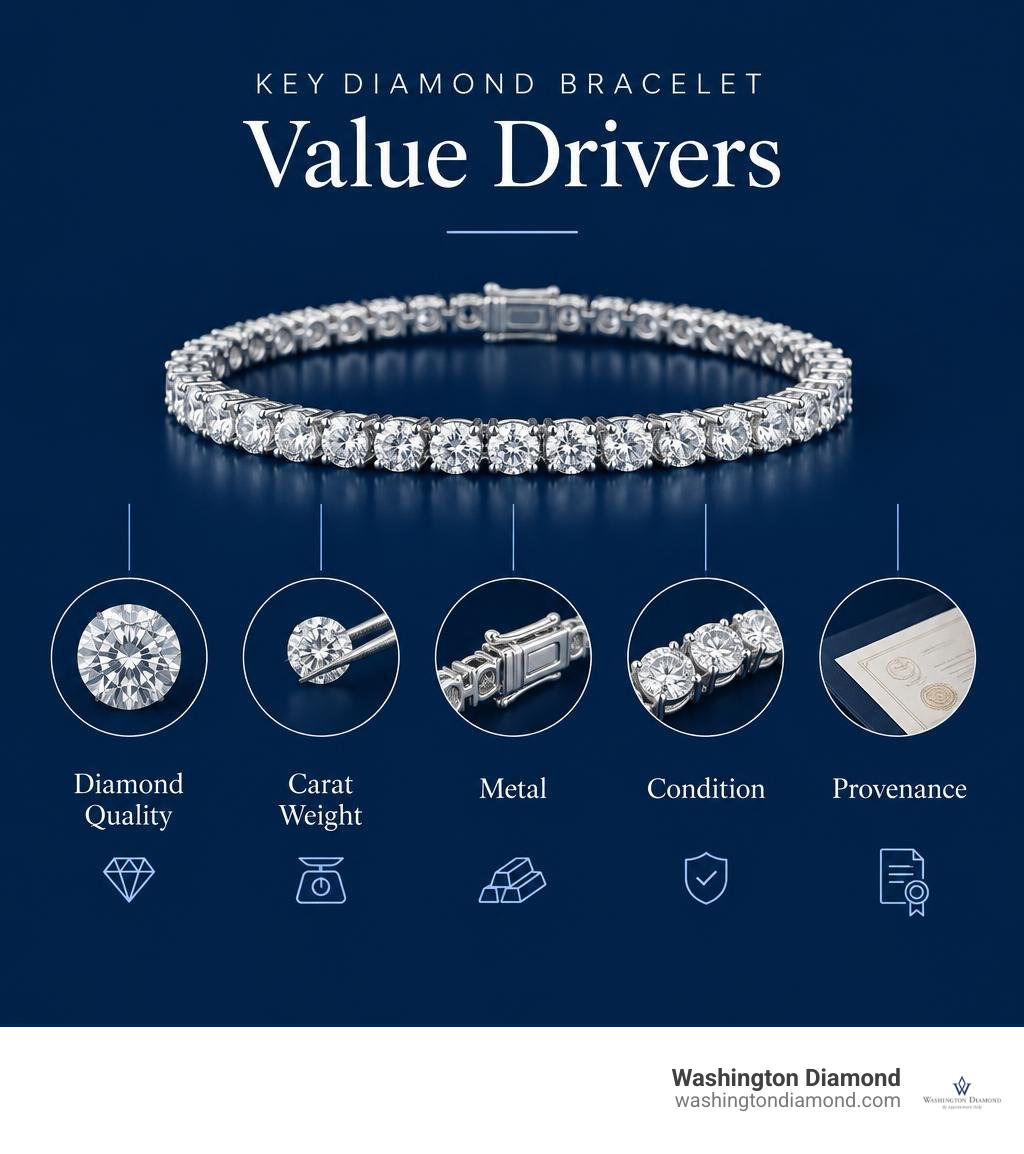
Diamond bracelet investment value guide terms made easy:
Diamond Bracelet Investment Value Guide: Key Factors That Drive Resale Worth
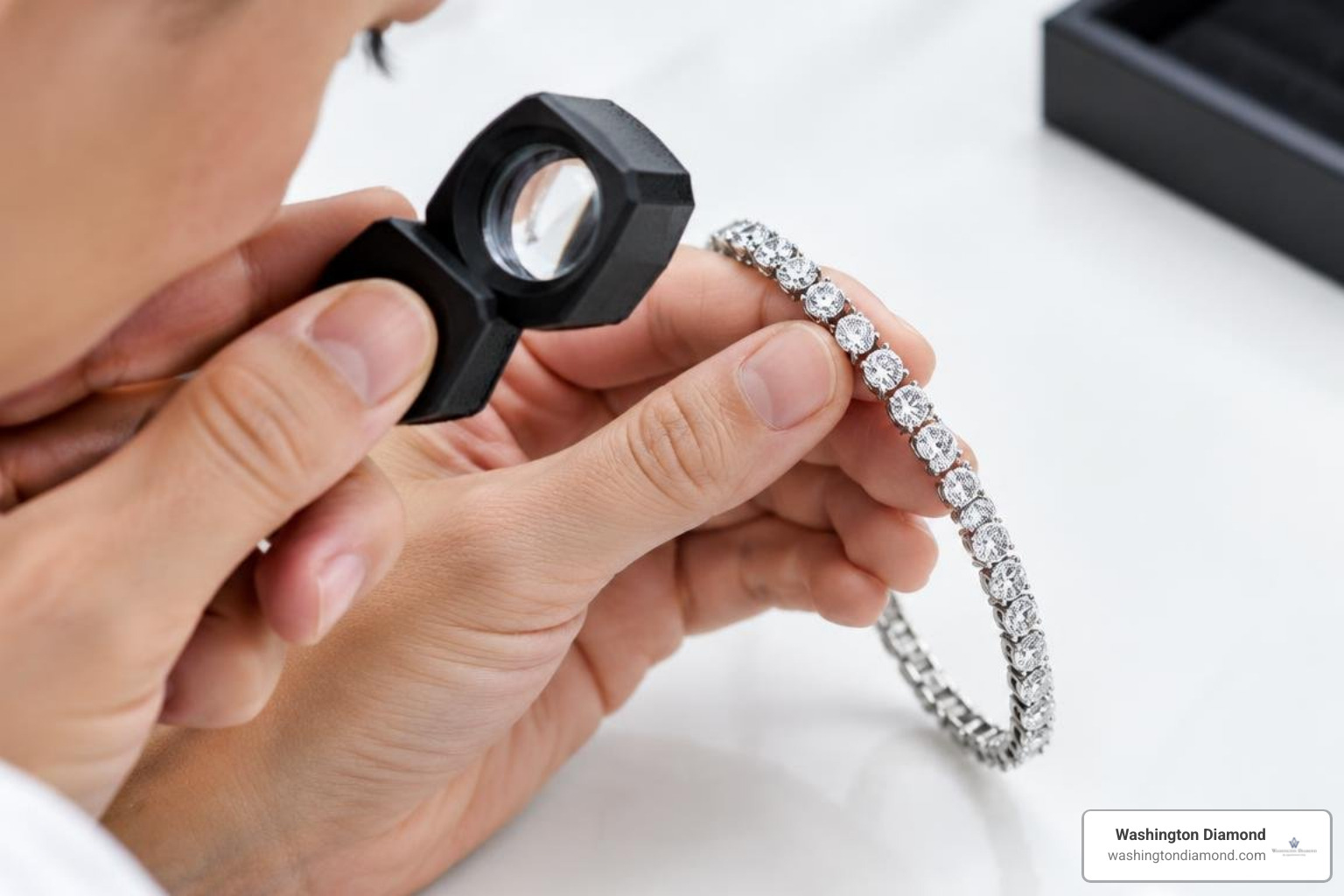
When we look at fine jewelry through an investment lens, a diamond bracelet is unique. Unlike a solitaire ring that features a single hero stone, a diamond bracelet is a symphony of dozens of individually matched gems working in tandem.
Evaluating the secondary market value of these pieces requires understanding several distinct elements:
- The 4Cs Across All Stones: The cut, color, clarity, and carat weight of each individual stone dictate the cumulative diamond value. Consistency matters; a single poorly matched stone can disrupt the piece's harmony and market value.
- Total Carat Weight (TCW): The overall weight of all diamonds combined establishes a baseline volume of gems.
- Precious Metal Purity and Weight: The underlying gold or platinum provides an absolute intrinsic floor based on live commodity spot prices.
- Brand Provenance and Craftsmanship: Historic luxury design houses command strong collector premiums over generic unbranded mountings.
- Structural Integrity and Condition: Link stretch, worn prongs, or replaced clasp mechanisms directly affect what a buyer will pay.
Understanding diamond quality begins with the classic 4Cs. To discover how individual stone attributes impact pricing, explore our loose diamonds complete guide. Beyond technical grades, origin plays a significant role in modern value retention; pieces crafted with ethically sourced diamonds continue to see steady collector demand on the secondary market.
Diamond Bracelet Investment Value Guide by Carat Weight and Clarity
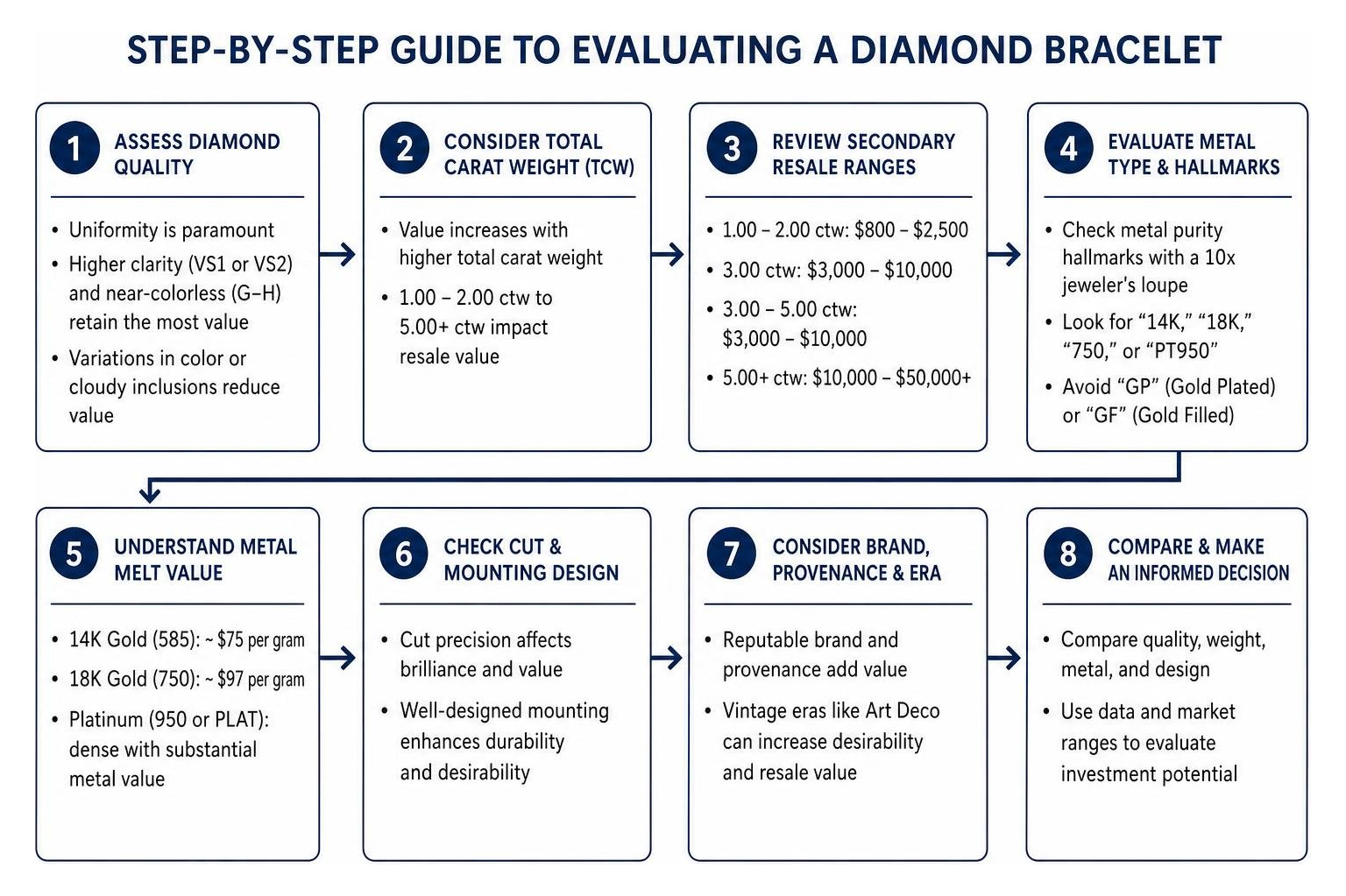
In a classic line or tennis bracelet, diamond uniformity is paramount. When 40 to 60 diamonds sit side by side, variations in color or cloudy inclusions become noticeable. Higher clarity (such as VS1 or VS2) paired with near-colorless grades (G through H) commands the highest percentage of value retention.
Here is how typical secondary market valuations compare across common carat weights and diamond quality tiers:
| Total Carat Weight (TCW) | Diamond Quality Tier | Metal Setting | Typical Secondary Resale Range |
|---|---|---|---|
| 1.00 – 2.00 ctw | SI Clarity, H–J Color | 14K Gold | $800 – $2,500 |
| 3.00 ctw | VS Clarity, G–H Color | 14K Gold | $3,000 – $10,000 |
| 3.00 – 5.00 ctw | VS Clarity, G–H Color | 14K / 18K Gold | $3,000 – $10,000 |
| 5.00+ ctw | High Quality (VS+, F–G Color) | 18K Gold / Platinum | $10,000 – $50,000+ |
A 3-carat total weight bracelet crafted with exceptional VS-clarity diamonds can trade anywhere from $3,000 to $15,000 depending on overall cut precision and mounting design. When evaluating potential additions to your collection, you can easily search for diamonds to understand how individual stone grades influence overall market costs.
Diamond Bracelet Investment Value Guide for Metal Types and Hallmarks
The precious metal foundation does more than hold your gems in place; it provides an immediate melt value floor.
Solid gold and platinum pieces are stamped with purity hallmarks, typically located on the tongue or side of the clasp mechanism:
- 14K Gold (585): Composed of 58.5% pure gold. Highly durable for daily wear. At a spot gold price of $4,030 per troy ounce, 14K gold has a raw melt value of approximately $75 per gram.
- 18K Gold (750): Composed of 75% pure gold, offering rich color saturation and higher metal intrinsic value at roughly $97 per gram under the same spot pricing.
- Platinum (950 or PLAT): 95% pure, dense, and naturally hypoallergenic. Platinum holds significant metal weight, providing a substantial physical heft.
Always check for hallmarks using a 10x jeweler's loupe. Inscriptions like "14K," "18K," "750," or "PT950" confirm solid metal purity, whereas stamps like "GP" (Gold Plated) or "GF" (Gold Filled) indicate base metals with negligible resale worth. For a comprehensive breakdown of identifying markings across estate and modern pieces, review this valuation guide for fine bracelets.
How Brand, Provenance, and Vintage Era Influence Resale Value
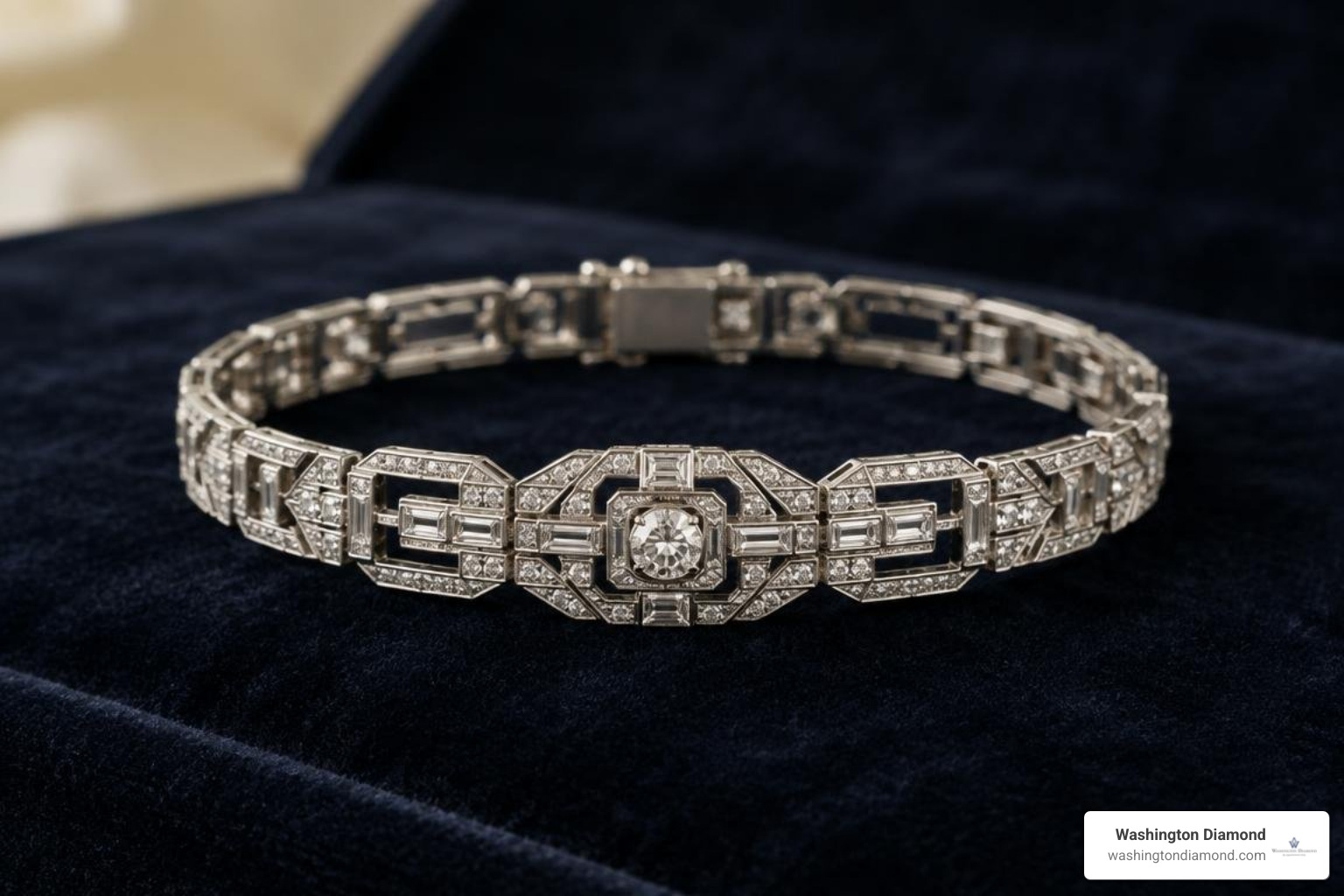
The historical era and the workshop behind a piece can elevate a diamond bracelet from a simple collection of stones into a coveted collector's item. Fine estate pieces often mirror the timeless appeal found in vintage diamond anniversary rings and bands.
- Art Deco (1920s–1930s): Characterized by geometric symmetry, platinum openwork, and calibre-cut accent stones. Authentic Deco bracelets routinely command substantial premiums at auction due to rarity and craftsmanship.
- Mid-Century Modern (1950s–1960s): Featuring textured yellow gold, whimsical organic shapes, and clustered diamond accents.
- Contemporary Classics: Sleek four-prong, bezel, or channel-set inline tennis bracelets designed for everyday wear.
Wear and tear plays a critical role in vintage valuation. Check the articulation of each link; stretched pins or thinned hinges reduce value because extensive restoration may be required to prevent loss.
Designer vs. Unbranded Diamond Bracelets
Brand equity dramatically alters secondary market liquidity:
- Heritage Luxury Houses: These pieces trade at 40% to 70% of original retail on the secondary market. Buyers pay for iconic design, unmistakable signature hallmarks, and prestigious brand heritage.
- Unbranded Fine Jewelry: Generic or unbranded diamond bracelets generally yield 30% to 50% of original retail when sold through private channels or estate buyers.
Retaining original presentation boxes, certificates of authenticity, and sales receipts maximizes resale value when it comes time to consign or sell.
Men's Diamond Bracelets as Growing Modern Assets
The fine jewelry market has seen rapid growth in masculine designs. Men's diamond bracelets—ranging from diamond-encrusted Cuban links to heavy bezel-set bangles—have transitioned from niche fashion into notable modern assets.
Because men's bracelets feature substantial gold weights (often 40 to 100+ grams) paired with flush-set stones, their raw precious metal value provides an exceptionally high intrinsic floor. For an in-depth breakdown of current styling, link weights, and setting choices, consult our diamond bracelets men's guide 2026.
Maximizing Returns: Valuation, Appraisals, and Selling Strategies
When monetizing or insuring a diamond bracelet, your chosen channel determines your financial return:
- Private Sale / Consignment: Yields the highest percentage of market value (typically 60–80% of secondary market value), though it requires patience while waiting for a retail buyer.
- Specialized Estate Jewelry Buyers: Offers immediate payment, typically paying fair secondary wholesale value based on market comparables and diamond grading.
- Pawn Shops and Quick-Sale Outlets: Typically offer 30% to 50% of retail value for complete diamond pieces and 50% to 70% of melt value for metal.
Natural vs. Lab-Grown Diamonds in Resale
Natural diamonds possess geological scarcity, which supports their long-term secondary market value retention. Laboratory-grown diamonds offer identical optical and physical brilliance at accessible price points, making them popular for contemporary wear. However, because production technology continues to scale, lab-grown stones experience steeper secondary market depreciation. You can review current price structures in our lab diamonds price chart or explore modern styles in our curated collection of lab grown jewelry.
Evaluating Online Estimates vs. Professional Appraisals
Online valuation calculators work well for estimating raw precious metal scrap value based on weight and karat purity. However, automated algorithms cannot evaluate cut quality, optical alignment, or historical provenance.
For pieces estimated to exceed $1,000, secure a written appraisal from an independent, credentialed gemologist.
Appraisals serve different purposes:
- Insurance Replacement Value: Reflects the cost to replace the item new at full retail in a jewelry store. This figure is typically the highest estimate and does not represent immediate cash resale value.
- Fair Market Value: Reflects the realistic price agreed upon between a willing buyer and seller in the current secondary market.
If you are expanding your collection or planning an upcoming milestone purchase, our comprehensive engagement ring guide explains how professional grading reports safeguard your investment.
Selling Complete Jewelry vs. Scrapping Stones and Metals
One of the most common dilemmas is whether to sell a piece intact or separate the stones from the metal.
Selling a diamond bracelet as intact jewelry yields 10% to 30% above raw scrap value because it preserves the setting's craftsmanship, stone alignment, and wearable appeal.
Scrapping should be reserved exclusively for items damaged beyond repair—such as bracelets with broken hinges, severe link stretch, or missing settings where repair costs exceed the finished market value. Unsetting small melee diamonds carries labor costs and the risk of chipping stones, which quickly diminishes returns. Similar rules apply when evaluating heirloom engagement rings or bespoke estate pieces.
Frequently Asked Questions About Diamond Bracelet Value
How much is a 3-carat diamond tennis bracelet worth on the resale market?
A 3-carat total weight diamond tennis bracelet typically resells for $3,000 to $10,000 through private sale or estate auctions. Pricing depends heavily on individual stone clarity (VS vs. SI) and color (near-colorless G–H vs. faint yellow I–K), as well as the mounting's metal purity (14K gold vs. 18K gold or platinum).
How do I know if my vintage diamond bracelet is authentic?
Look for stamped metal purity marks (such as 14K, 18K, 750, or PT950) and maker hallmarks on the clasp tongue. A professional gemologist can verify authenticity by conducting thermal conductivity tests on the stones, examining inclusions under 10x magnification, and using electronic testing to confirm precious metal purity.
Should I scrap my gold diamond bracelet or sell it whole?
Always attempt to sell the piece as intact wearable jewelry first. Intact sales reward you for diamond value, design, and artistry, yielding 10% to 30% more than scrap. Only liquidate for metal scrap if the mounting is structurally compromised beyond cost-effective repair.
Conclusion
A fine diamond bracelet is an enduring wearable asset that blends timeless elegance with intrinsic material worth. Whether passing down an Art Deco heirloom or selecting a brilliant modern tennis bracelet, understanding the nuances of diamond quality, precious metal purity, and market demand ensures your collection retains lasting value.
At Washington Diamond, we believe choosing fine jewelry should be an intimate, transparent experience. In our private, appointment-only studio in Northern Virginia, we offer our clients undivided attention and personalized guidance to help select or create exquisite, heirloom-quality pieces. Discover how our master jewelers bring unique visions to life with our bespoke fine jewelry designs.
Have a question about your jewelry?
We've been helping clients with diamonds, custom design, repairs, appraisals, and more since 1969. Book a private appointment at our Falls Church studio.
Book an AppointmentTrusted since 1969 · Falls Church, VA · 703-536-3600
From the blog
View all


