

With Clarity: Lab-Grown vs Natural Diamonds, Which Shines for You?
How to Choose Diamond Clarity for a Ring

To judge the clarity of a diamond inside a ring, first look at the diamond in normal light: can you see any marks without magnification? Then check its grading report and a close-up view for inclusions near the center or breaks that reach the surface. An eye-clean VS or SI diamond can be a practical choice for an engagement ring; larger diamonds often warrant a closer look at VS2 or higher.
Natural and lab-grown diamonds can both have clarity grades. The better choice is not simply the higher grade. It is the diamond that looks good to you, suits your budget, and holds up to the wear you expect.
I'm Tom Daube, and my work in jewelry design and diamond recutting has shaped how I assess the clarity of a diamond inside a ring. Next, we'll compare your options and the details worth checking before you choose.
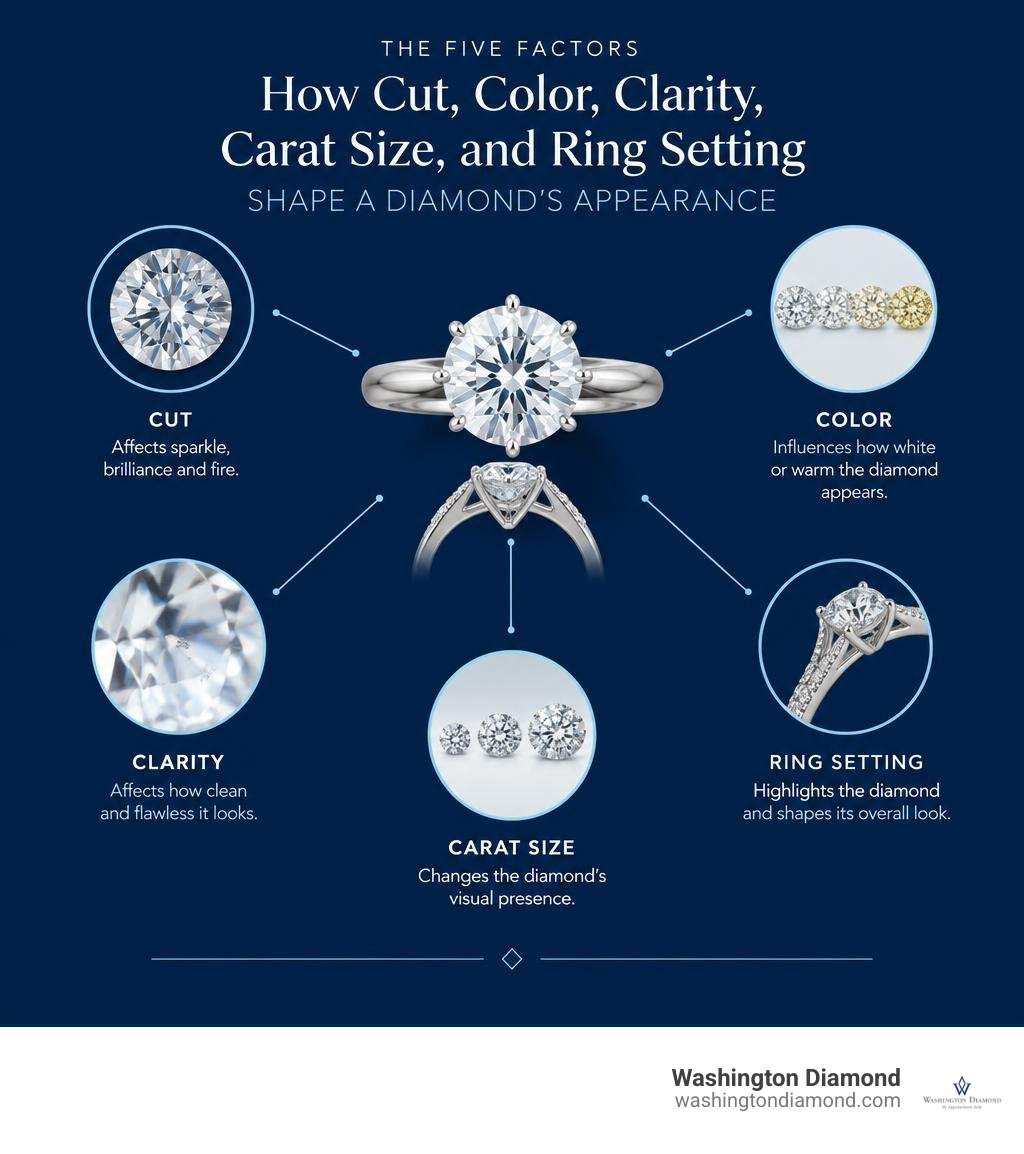
Diamond inside ring clarity vocabulary:
Natural vs. Lab-Grown Diamond Rings: What Are You Choosing?
Natural and lab-grown diamonds are both diamonds, with the same basic chemical composition and optical properties. Their difference is origin: natural diamonds form deep in the Earth over long periods, while lab-grown diamonds are produced using controlled processes that recreate some of the conditions of diamond growth.
Both types can have clarity characteristics, and both can be assessed using the 4Cs: cut, color, clarity, and carat weight. Natural stones may contain mineral crystals formed during geological growth; lab-grown stones can have their own growth features. The specific report and grading terminology depend on the grading organization and report type, so check what the report says rather than assuming every report uses identical language.
| Consideration | Natural diamond | Lab-grown diamond |
|---|---|---|
| Origin | Formed naturally in the Earth | Grown in a laboratory |
| Clarity characteristics | May have inclusions and blemishes formed during natural growth | May have inclusions and growth-related characteristics |
| Grading | Review the grading report and the stated scale | Review the grading report and the stated scale |
| Buying decision | Consider appearance, rarity, report, and budget | Consider appearance, report, and budget |
Explore our diamond selection or view lab-grown diamond options. For either type, compare the individual stone, not just its label.
How diamond inside ring clarity is graded
A trained grader examines a diamond under 10x magnification and considers its internal inclusions and external blemishes. The GIA clarity scale has 11 grades:
- FL, Flawless: No inclusions or blemishes are visible under 10x magnification.
- IF, Internally Flawless: No inclusions are visible, though minor surface blemishes may be present.
- VVS1 and VVS2, Very, Very Slightly Included: Inclusions are extremely difficult to very difficult to see under 10x.
- VS1 and VS2, Very Slightly Included: Minor inclusions are difficult to somewhat easy to see under 10x.
- SI1 and SI2, Slightly Included: Inclusions are easy to very easy to see under 10x.
- I1, I2, and I3, Included: Inclusions are obvious under 10x and may affect transparency, brilliance, or durability.
The grade describes what a grader sees under magnification, not necessarily what you will notice in everyday wear. FL and IF diamonds are rare; one industry estimate puts them at about 2% of gem-grade diamonds. Many diamonds in jewelry stores fall in the VS-to-SI range. Review GIA’s diamond clarity grading to see how the scale is defined.
Do natural and lab-grown diamonds use the same clarity scale?
Clarity is about characteristics in the diamond, whether it was mined or lab-grown. But grading reports can differ by issuing organization and report type. Read the report’s terminology, identify the grading lab, and confirm that the report corresponds to the stone you are considering.
Inclusions are internal features or characteristics that extend into the diamond from its surface. Blemishes are surface features. A report may include a plot diagram showing the position of some clarity characteristics; it is a useful reference, but it may not show every small feature. See GIA’s guide to diamond inclusions for examples and definitions.
Diamond Inside Ring Clarity: What the Grade Reveals
A clarity grade can help you compare diamonds, but it does not tell the whole visual story. Two stones with the same grade can look different because the inclusions may vary in size, contrast, position, and type. A high grade also does not guarantee that a diamond is the best choice for your priorities or budget.
Clarity characteristics can help identify an individual stone, much like a fingerprint. For a broader look at how clarity works alongside the other quality measures, explore diamond quality factors.
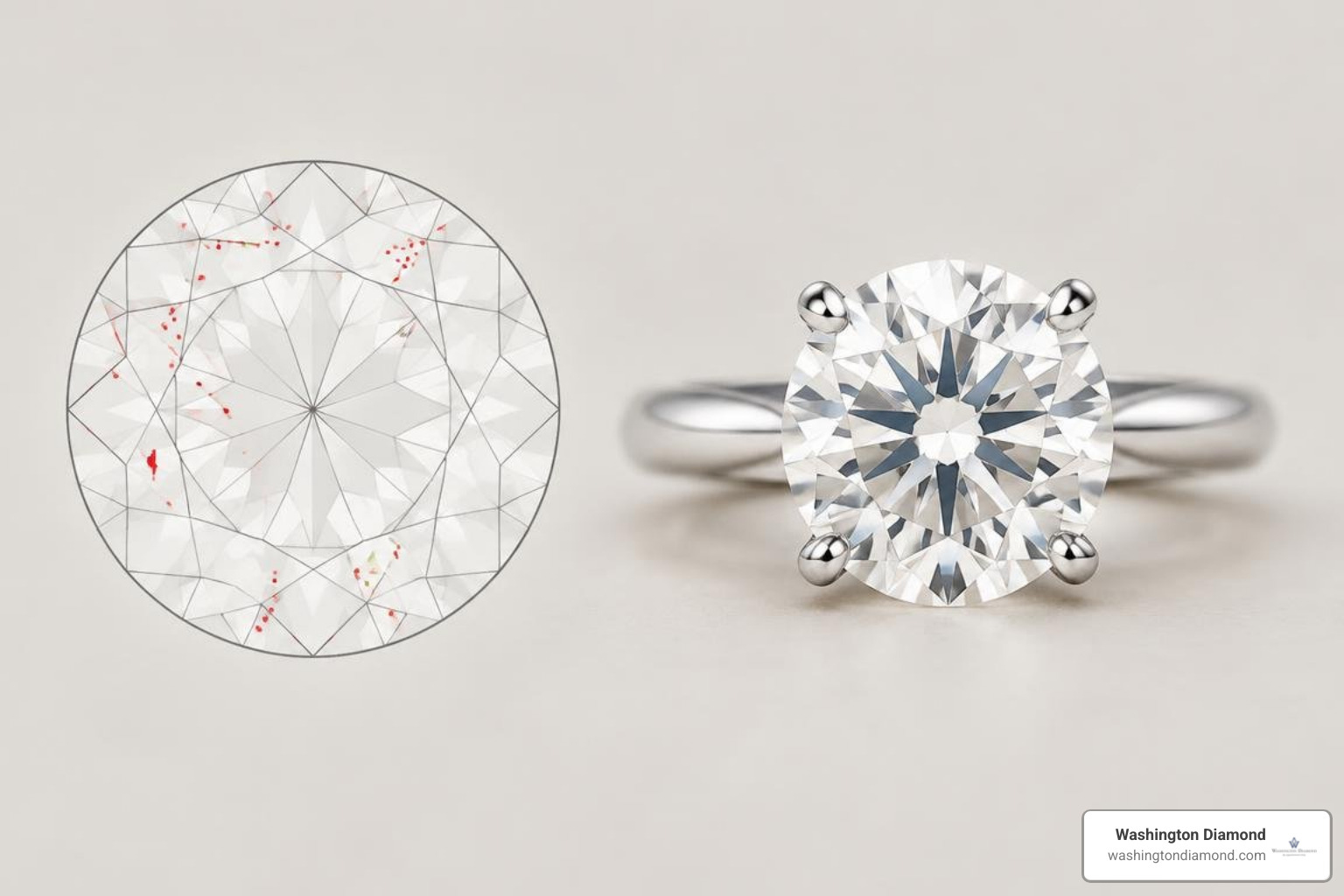
What diamond inside ring clarity looks like in a setting
A diamond’s setting may affect how easy it is to see a particular inclusion, but it does not change the diamond’s clarity grade. A prong setting can leave much of the stone visible. A bezel surrounds the edge with metal, which may protect the girdle and obscure some edge features. A halo adds surrounding diamonds but does not hide inclusions in the center stone.
The table facet, the large facet across the top, is an important area to inspect because a dark or high-contrast inclusion beneath it may be noticeable face-up. An inclusion closer to the girdle may be less conspicuous from above, though it still deserves inspection from the side. Review engagement ring setting styles as you consider how the setting and center diamond will work together.
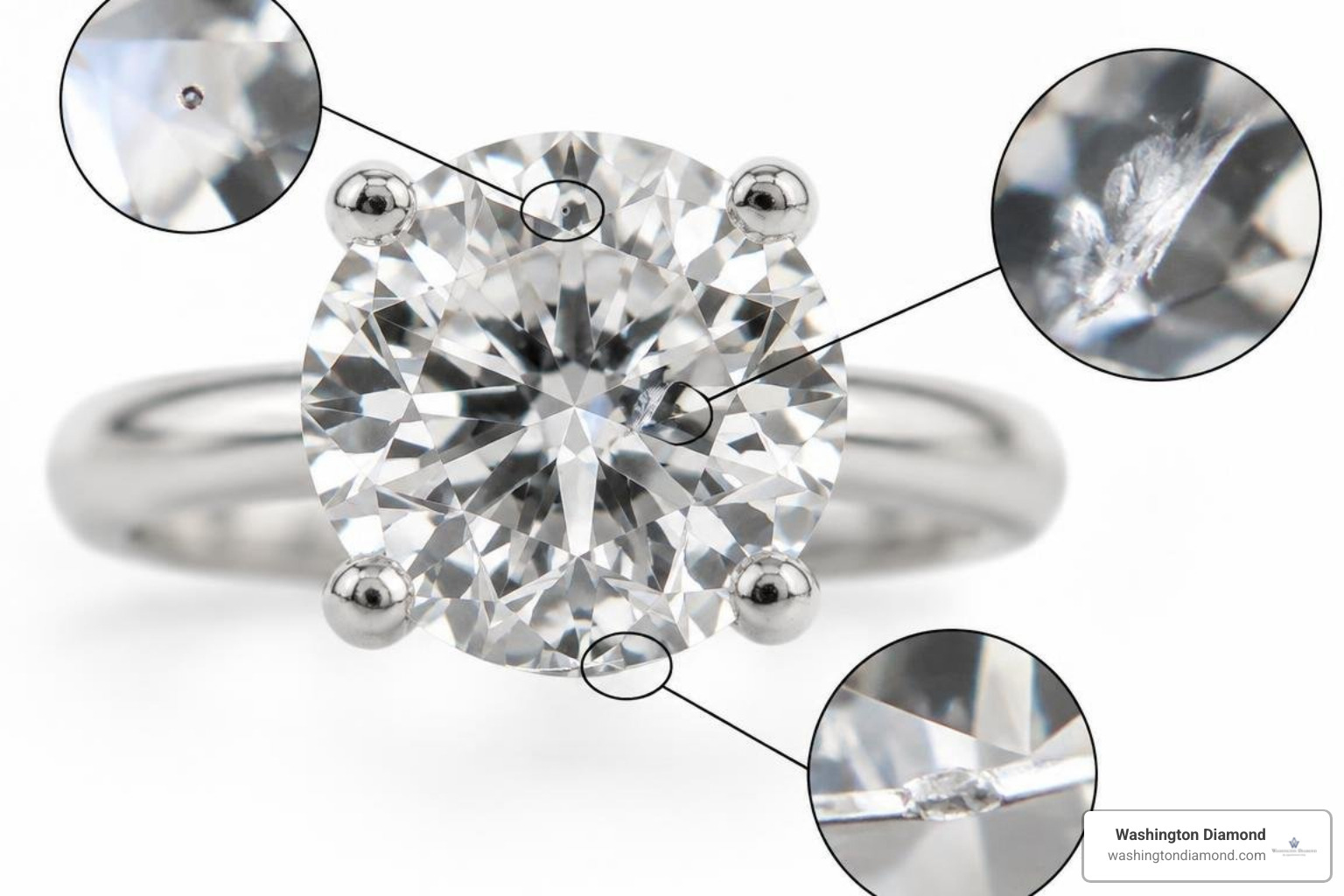
Which inclusions and blemishes should buyers recognize?
Common characteristics include:
- Pinpoint: A tiny crystal that appears as a dot under magnification.
- Crystal: A mineral crystal within the diamond. It may be light or dark.
- Cloud: A cluster of tiny pinpoints that can create a hazy area.
- Needle: A thin, elongated crystal.
- Feather: A trade term for a break in the diamond, often with a feathery appearance.
- Twinning wisp: A group of growth-related features, such as pinpoints or crystals, associated with a change in the diamond’s growth direction.
- Chip: A small surface opening, often near an edge or facet junction.
- Cavity: An angular opening in the surface.
- Laser drill-hole: A tiny channel created during a clarity treatment.
- Polish lines: Fine, parallel surface marks left during polishing.
A name alone does not determine how much a characteristic matters. A small pinpoint may have little effect on appearance, while a dark crystal or surface-reaching feather in a visible position may draw more attention.
How to Choose a Diamond Ring for Your Budget and Everyday Wear
Start with how the diamond looks to you in normal lighting, then decide which qualities matter most. Cut strongly influences brightness, fire, and sparkle. Color and clarity affect the stone’s appearance in different ways, while carat weight describes its weight, not its face-up size.
Clarity and carat can influence price, but price does not rise in a simple, uniform way. Larger diamonds are rarer and can cost more per carat. Prices can also jump at popular weight thresholds, sometimes called magic sizes. For example, two diamonds with nearly identical face-up size may be priced differently if one crosses the one-carat mark. Use our diamond price calculator to explore prices, then compare specific stones and reports.
Fluorescence is another feature you may see on a report. About 35% of gem diamonds emit visible fluorescence under ultraviolet light. Blue fluorescence can sometimes make a yellowish diamond appear less yellow, while strong fluorescence may make some stones look hazy or oily. Judge the individual diamond in ordinary lighting rather than relying on a label alone.
| Center diamond size | Practical clarity priority |
|---|---|
| Smaller stones | Check that the diamond looks appealing face-up; inclusions may be less noticeable, though position and contrast still matter. |
| Around one carat | Compare VS and SI stones in normal light and magnified views; eye-clean examples can offer a useful balance. |
| Larger stones | Inspect carefully for visible inclusions, especially under the table; VS2 or higher is a reasonable starting point for comparison, not a rule. |
What clarity grade is practical for an engagement ring?
There is no single best clarity grade for every engagement ring. An eye-clean diamond has no inclusions you can readily see without magnification when viewed face-up at a normal distance. The term is useful, but it is not a formal GIA clarity grade, and people may differ in eyesight and viewing conditions.
Many VS diamonds appear eye-clean, and some SI diamonds do too. Instead of choosing by grade alone, inspect the individual stone from the top and sides. If you notice a mark right away, consider another stone or decide whether the appearance is acceptable to you. For everyday wear, also ask whether any feature—particularly a surface-reaching feather, chip, or cavity—could raise a durability concern.
How do size, number, location, relief, and nature affect clarity?
Graders weigh five main factors:
- Size: Larger characteristics tend to affect clarity more.
- Number: More characteristics can have a greater combined effect.
- Location: A feature under the table may be more visible than one near the edge. Position can also affect how inclusions reflect within the diamond.
- Relief: This means how much a characteristic contrasts with the surrounding diamond. A dark inclusion often stands out more than a pale one.
- Nature: The type of feature matters. A pinpoint is different from a feather that reaches the surface.
These factors also help explain why a clarity grade cannot predict every stone’s appearance. Inclusions may affect transparency or brilliance when they are large, numerous, or clustered. Surface-reaching features near vulnerable areas can warrant a closer durability assessment.
How to Inspect Diamond Inside Ring Clarity Before You Buy
Start with the grading report, then look at the actual diamond. View it face-up and from the side in normal lighting, and check whether any inclusions are visible without magnification. Clean the diamond first if possible: fingerprints and dust can make a stone look dull or obscure details. A loupe or microscope can help you understand the report, but professional grading is more precise than trying to assign a grade by eye.
What should you check when shopping online?
Ask for clear, close-up video of the specific diamond, not a generic image of a similar stone. If available, compare face-up and side views and watch the stone as it moves. Look for the inclusion locations shown on the grading report, especially features under the table or near the girdle.
Confirm that the report number and details match the stone being offered. Check who issued the report, what grading scale is used, and whether any treatments are disclosed. Review the seller’s return policy so you know your options if the diamond looks different in person. A plotted diagram is helpful, but it is not a substitute for a real-stone view.
How do natural inclusions differ from clarity treatments?
Natural inclusions form as the diamond grows. They are not automatically defects that make a stone unsuitable; their impact depends on visibility, location, and potential effect on durability.
Clarity treatments are different: they alter or disguise the appearance of existing features. Laser drilling can create a tiny channel to reach a dark inclusion, sometimes allowing it to be lightened. A laser drill-hole may be visible under magnification and should be disclosed. Fracture filling is another treatment that fills certain surface-reaching breaks to make them less noticeable. Because treatments can affect care and durability, ask what was done and how the diamond should be handled. Do not assume a characteristic is natural or treated based on appearance alone; use the grading report and request clear disclosure.
Frequently Asked Questions About Diamond Ring Clarity
Can inclusions affect a diamond’s brilliance or durability?
They can. A cluster of inclusions may reduce transparency or make a diamond look hazy, while a dark inclusion can be noticeable without significantly affecting light performance. Included grades I1 to I3 may affect transparency and brilliance. Surface-reaching feathers, chips, or cavities may also need a durability assessment, especially if they are near an exposed edge. A setting can offer some protection, but it cannot correct a structural concern in the diamond.
Do inclusions make a natural diamond more authentic?
No single inclusion proves that a diamond is natural. Clarity characteristics can help gemologists identify and distinguish stones, but natural and lab-grown diamonds can both have inclusions. To verify a diamond’s identity and origin, rely on an appropriate grading report and report verification rather than trying to judge authenticity from an inclusion.
Which of the 4Cs should I prioritize in a ring?
For many buyers, cut is a strong starting point because it affects how brightly a diamond returns light. Then balance color, clarity, and carat according to what you notice and what fits your budget. A larger stone can make inclusions easier to see, while a well-positioned inclusion may be unobtrusive even at a lower clarity grade. Compare the whole diamond, not just its highest grade or carat weight.
Conclusion
The right clarity grade is the one that makes sense for the specific diamond, setting, and kind of wear you expect. We help customers compare those details in a private, appointment-only studio, with undivided attention to the ring they want to choose. To start exploring prices, compare diamond prices with the Diamond Price Calculator, then consider an appointment with Washington Diamond in Northern Virginia to discuss your options.
Have a question about your jewelry?
We've been helping clients with diamonds, custom design, repairs, appraisals, and more since 1969. Book a private appointment at our Falls Church studio.
Book an AppointmentTrusted since 1969 · Falls Church, VA · 703-536-3600
From the blog
View all


