

How to Buy a Stunning 1 Carat Emerald Without Breaking the Bank
How Much Should You Spend on a 1 Carat Emerald?

A 1 carat emerald can cost about $500 to more than $10,000. To find one that looks beautiful without overspending, start with rich, even green color. Then compare stones with similar clarity and cut, and ask for a lab report that discloses any treatment. A Colombian origin can add to the price, but a Zambian emerald may offer the look you want for less. According to the Gemological Institute of America, emerald is the green variety of the mineral beryl, and its value is strongly influenced by color, clarity, and origin.
A 1 carat emerald is often about 6-7 mm across, depending on its shape and cut. For an engagement ring, that makes it easy to notice without needing a large stone or an elaborate setting.
I'm Tom Daube, a jewelry designer with experience in custom pieces and diamond selection. I'll help you use that same eye for detail when choosing a 1 carat emerald.
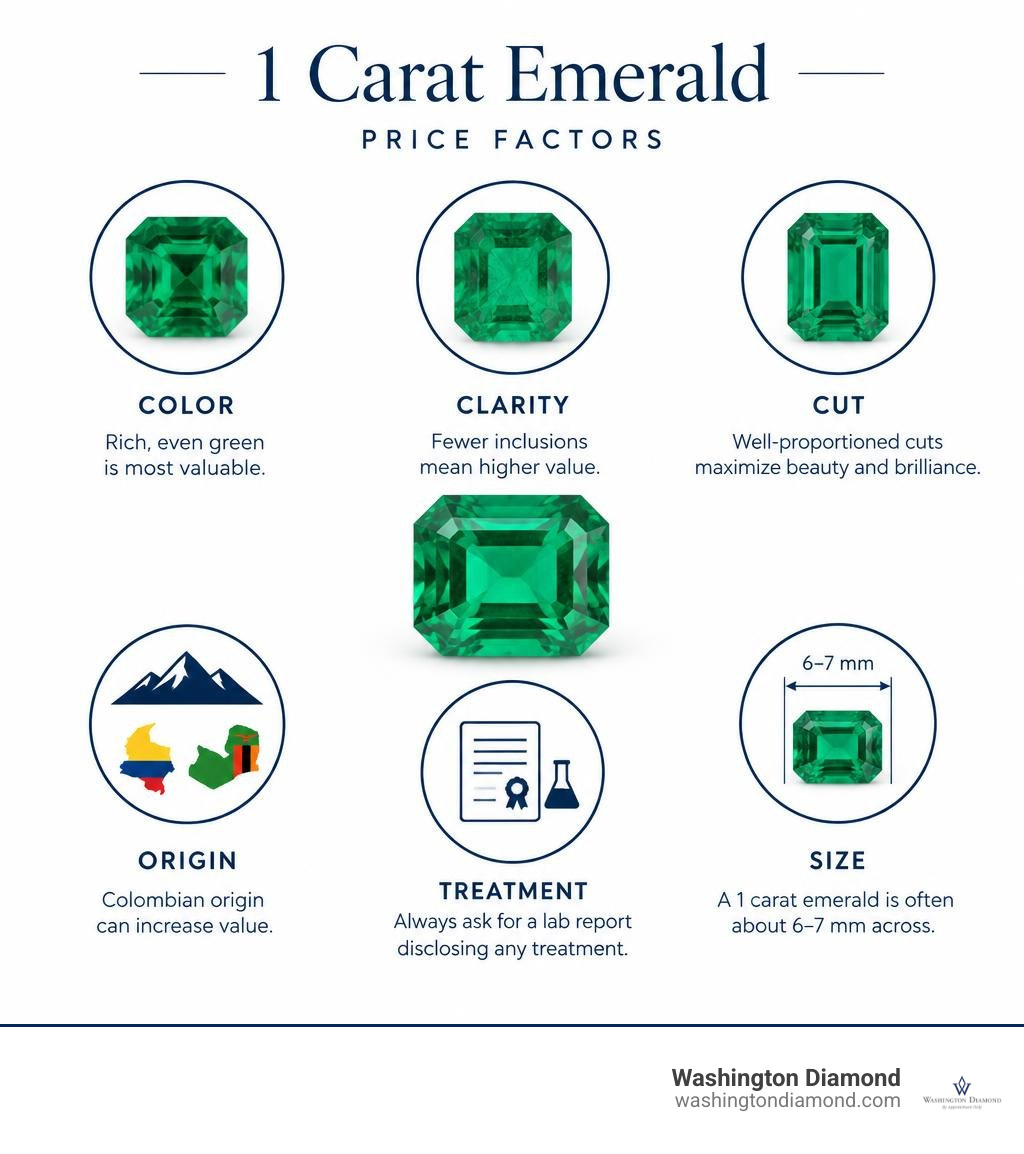
Simple 1 carat emerald glossary:
What Determines the Quality and Price of a 1 Carat Emerald?
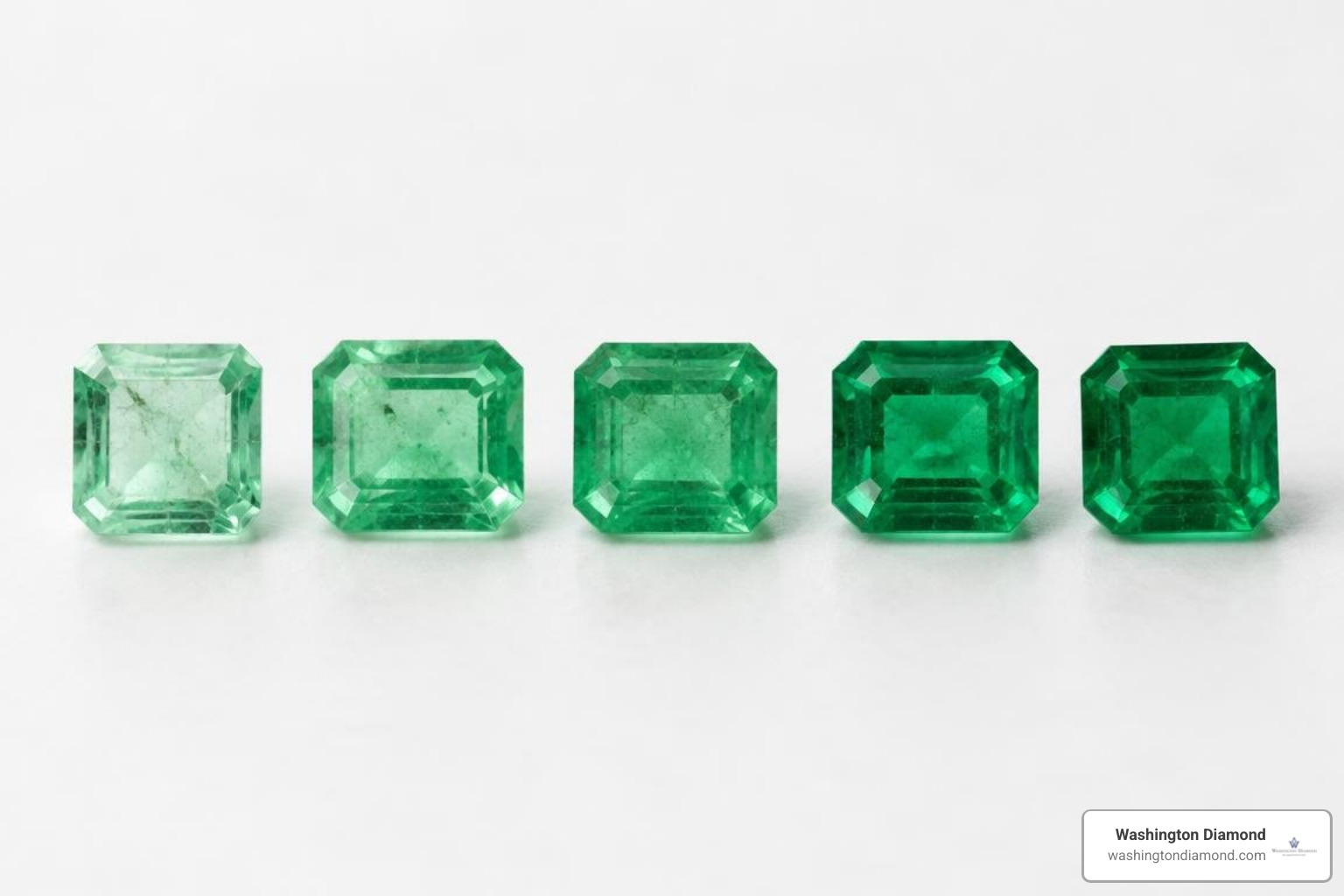
When evaluating green beryl, the traditional 4Cs apply, but colored gemstones play by a slightly different set of rules than diamonds. While diamond grading obsesses over the absence of color and structural flaws, emerald evaluation celebrates the presence of rich color and accepts natural character.
Understanding these quality pillars ensures you allocate your budget where it makes the greatest visual impact. As outlined in our Engagement Ring Prices Guide 2026, colored stones offer remarkable value when you understand how their individual characteristics drive price.
Color: The True Heart of an Emerald
Color is responsible for up to 50–70% of an emerald's market value. Gemologists evaluate color using three distinct metrics:
- Hue: The primary green color, along with any secondary hues. The most desirable emeralds feature a pure, lush green or a slightly bluish-green. Stones with strong yellow or overly gray undertones command lower prices.
- Tone: How light or dark the stone appears. The sweet spot lies between medium and medium-dark (around 60–70% tone). If an emerald is too dark, it appears opaque and lifeless; if it is too light, gemological laboratories classify it merely as green beryl rather than emerald.
- Saturation: The purity and intensity of the color. High saturation yields vivid, velvety greens that seem to glow from within, whereas low saturation leaves a stone looking dull or washed out.
Clarity and the Famous Jardin
Unlike diamonds, where clarity grades like VVS1 or Flawless are common targets, emeralds are Type III gemstones. This classification means they naturally form with inclusions. In the gemological world, these internal characteristics—comprising mineral crystals, liquid pockets, and two- or three-phase gas bubbles—are affectionately called the jardin (French for "garden").
Only about 1 in 1,000 emeralds are considered eye-clean or near-flawless, making a completely clean 1-carat emerald exceptionally rare and prized. Rather than seeking a stone with zero inclusions, your goal should be finding an emerald where the jardin is evenly distributed, does not break the surface dangerously, and does not compromise the gem's transparency or brilliance.
Cut and Symmetry
Emeralds are brittle under directional pressure, which led stonecutters centuries ago to develop the eponymous emerald cut (a stepped rectangular cut with cropped corners). A well-cut emerald balances brilliance, optimizes color depth, and minimizes internal strain. Symmetry and proportions dictate how evenly light returns to your eye without creating dark "extinction" patches or pale "windows" in the center.
| Quality Tier | Color Profile | Clarity & Jardin | Typical 1 Carat Price Range (2026) |
|---|---|---|---|
| Commercial / Entry | Pale green or heavily yellowish; low saturation | Heavy inclusions; reduced transparency | $500 – $1,200 |
| Good / Mid-Grade | Pleasant medium green; moderate saturation | Visible jardin; good transparency | $1,200 – $3,500 |
| Fine Quality | Rich, vivid green; strong saturation | Moderate, dispersed jardin; bright brilliance | $3,500 – $7,000 |
| Extra Fine / Gem | Intensely saturated, velvety bluish-green | Minor inclusions; exceptional life and transparency | $7,000 – $10,000+ |
Geographic Origin and Its Impact on a 1 Carat Emerald
Geographic provenance influences both the aesthetic personality and the market premium of an emerald. Trace elements present during geological formation give stones from different regions distinct visual signatures.
- Colombian Emeralds: Colombia produces approximately 70–90% of the world's gem-quality emeralds. Famed deposits like the Muzo mine produce stones with warm, pure greens colored primarily by chromium, while the Chivor mine yields gems with a coveted bluish-green cast. Due to historical prestige and legendary beauty, Colombian origin often commands a 20% to 50% price premium.
- Zambian Emeralds: Mined predominantly in the Kagem region, Zambian stones owe their color to vanadium and iron alongside chromium. This chemistry imparts a cooler, deeply saturated bluish-green tone. Zambian emeralds typically have fewer fractures and higher clarity than their South American counterparts, making them a fantastic value choice.
- Brazilian Emeralds: Known for lighter tones and slightly yellowish-green hues, Brazil produces beautiful, bright commercial-to-fine gems that are often friendly on modest budgets.
Common Treatments and Value Considerations for a 1 Carat Emerald
Because emeralds naturally develop surface-reaching micro-fissures, the jewelry industry has enhanced their clarity for centuries. Understanding treatment levels is essential when evaluating price tags:
- Traditional Oiling: The industry standard involves immersing the rough or cut gem in colorless natural oils (such as cedarwood oil). The oil fills microscopic fissures, matching the refractive index of the beryl to dramatically improve transparency. This treatment is stable, traditional, and fully accepted.
- Resin and Polymer Infusion: Modern laboratories sometimes use artificial polymers (like Opticon) or epoxy resins. While durable, permanent resins can degrade over decades, and major grading labs heavily penalize stones treated with synthetic polymers compared to traditional oils.
- Untreated (No Oil) Emeralds: Stones showing zero evidence of clarity enhancement are extraordinary rarities. A certified, un-oiled 1-carat emerald with fine color can command prices double or triple that of an otherwise identical oiled stone.
Always insist on independent lab verification (such as GIA or CDTEC) that clearly states the degree of clarity enhancement (None, Minor, Moderate, or Significant).
Size Comparison: How Large Does a 1 Carat Emerald Look?
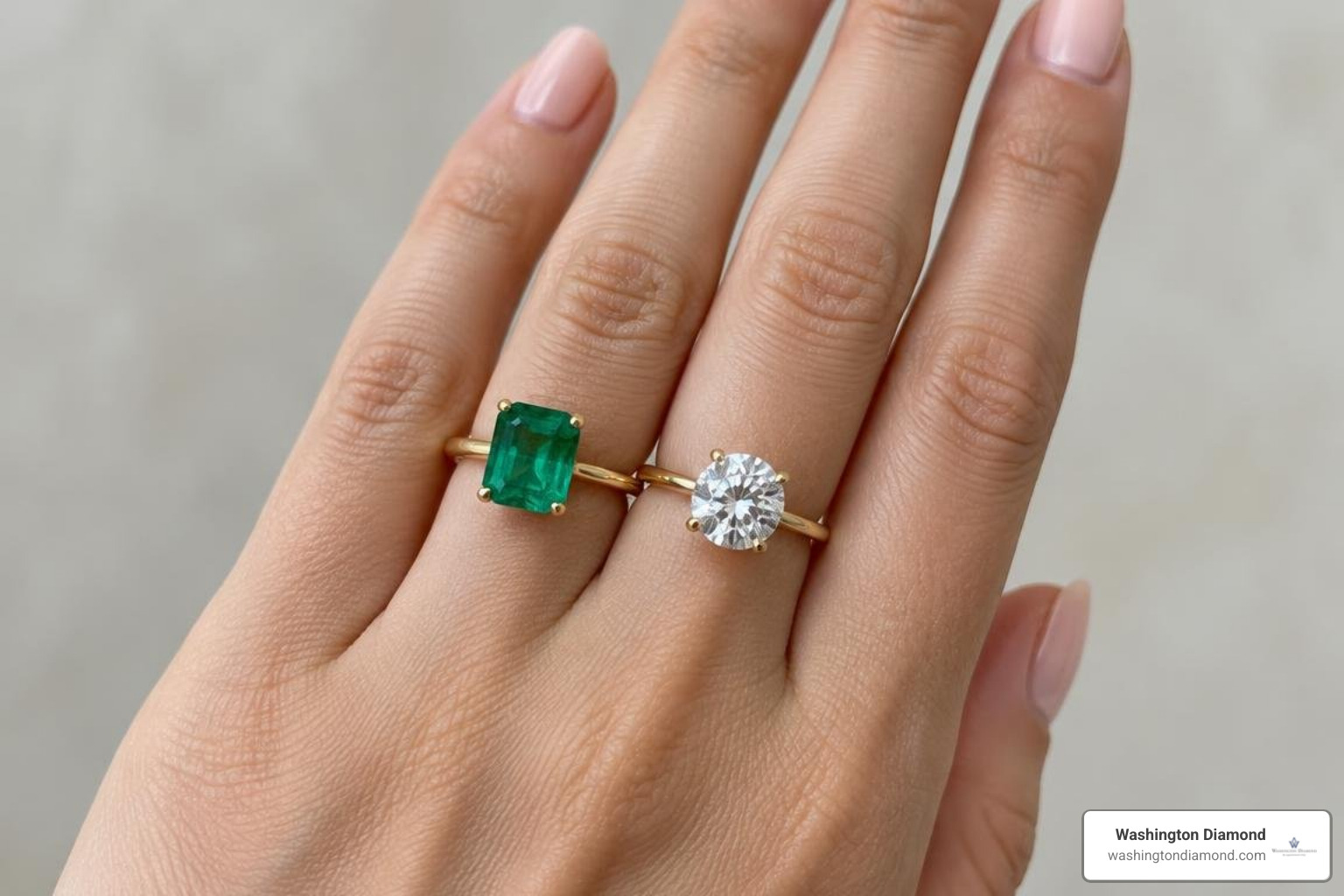
Many buyers are surprised to learn that carat is a measure of weight, not physical size. Because different gemstones possess different mineral densities (specific gravities), a 1-carat stone in one material can look noticeably larger or smaller than another.
Emerald has a low specific gravity of roughly 2.72, whereas diamond has a specific gravity of 3.52. This means emerald is significantly less dense. A 1-carat emerald cut stone typically measures approximately 6 to 7 mm in length, giving it a much larger face-up surface area than a 1-carat standard diamond.
If you enjoy elongated silhouettes that maximize finger coverage, exploring cuts in our Oval Cut Diamond Complete Guide or comparing proportions alongside a graceful Pear Cut Diamond will demonstrate how different gem shapes present their spread across the hand.
Best Settings and Ring Styles for 1 Carat Emerald Jewelry
Emeralds measure between 7.5 and 8 on the Mohs hardness scale. While this makes them durable enough for jewelry, their internal jardin makes them more brittle than sapphires, rubies, or diamonds. Choosing the right mounting protects your investment while highlighting its color.
Bezel and Semi-Bezel Mountings
A full bezel encircles the perimeter of the gemstone in a rim of precious metal, safeguarding the emerald's corners from accidental impacts. For active individuals, a bezel provides optimal security and a sleek, contemporary aesthetic.
Protective Prong Settings
If you prefer open prong settings, look for designs that feature dedicated V-prongs or chevron claws over the four corners of an emerald cut. These shields protect the vulnerable clipped corners against everyday bumps. A minimalist solitaire engagement ring allows maximum light to illuminate the gem's depth.
Diamond Accents and Halos
Surrounding a vivid green center stone with diamonds creates a dazzling visual contrast. White diamonds reflect crisp white light against the rich green beryl, amplifying its color saturation. Explore brilliant Halo Engagement Rings or dynamic Expressive Accented Engagement Rings to see how side stones elevate the centerpiece.
When choosing metals, pairing rich green with cool metals highlighted in our White Gold Engagement Rings Guide creates modern contrast, whereas warm yellow gold enriches traditional Colombian hues.
Essential Care and Maintenance for Emerald Gemstones

Proper care ensures your emerald remains radiant for generations. Because most emeralds feature microscopic internal fissures and traditional oil treatments, their care routine differs from diamond maintenance:
- Avoid Ultrasonic and Steam Cleaners: The intense high-frequency vibrations of ultrasonic tanks and the high heat of steam wands can strip natural oils from the fissures, leaving your emerald looking cloudy and dry.
- Gentle Hand Cleaning Only: Clean your ring using lukewarm water, a mild dish soap, and an extra-soft baby toothbrush. Gently brush behind the mounting to remove lotion and oils, then pat dry with a lint-free microfiber cloth.
- Keep Away from Harsh Chemicals: Remove your ring before using household bleach, sanitizers, acetone, or abrasive cleaning products.
- Store Separately: Store your emerald jewelry in an individual soft fabric pouch or a dedicated compartment in your jewelry box so harder stones, like diamonds or sapphires, cannot scratch its surface.
- Professional Inspection: Periodically have your settings evaluated by a professional jeweler. For deeper insights on nurturing your treasures, consult The Art of Gemstone Jewelry Care and our detailed Ultimate Engagement Ring Care Guide.
Smart Buying Tips to Maximize Your Budget
Securing an eye-catching emerald without overspending requires a strategic balance of color, origin, and design choices.
- Prioritize Color Over Absolute Clarity: Do not pay a steep premium for an unnaturally clean stone if the color is dull. A stone with moderate, well-placed jardin and an electric, vivid green hue will always draw more compliments than a pale, lifeless, inclusion-free gem.
- Explore Zambian Stones for Better Value: If you want top-tier color saturation and superior clarity at a friendlier price point, look closely at Zambian gems. They frequently deliver deeper bluish-green tones and fewer inclusions than similarly priced Colombian stones.
- Choose "Minor" Treatment Over "None": A certified "minor oil" emerald is structurally sound, visually beautiful, and standard across the industry, but costs a fraction of an untreated, un-oiled specimen.
- Embrace Custom Design: Crafting a custom mounting allows you to tailor the metalwork around the exact dimensions of your loose gemstone. Review our Custom Engagement Rings Ultimate Guide and explore helpful resources in our Washington Diamond Buying Guides to see how custom crafting unlocks better value.
Frequently Asked Questions About 1 Carat Emeralds
How much should I expect to pay for a 1 carat emerald in 2026?
Expect to pay between $1,500 and $4,500 for a quality, well-cut 1-carat emerald featuring rich green color, good transparency, and minor traditional oiling. Commercial-grade stones with lighter tones or heavier inclusions can cost as low as $500 to $1,000, while world-class Colombian specimens with exceptional clarity and vivid saturation easily surpass $8,000 to $10,000.
Is a 1 carat emerald suitable for an everyday engagement ring?
Yes, provided you choose a protective setting and exercise sensible care. With a hardness rating of 7.5 to 8 on the Mohs scale, an emerald handles daily wear well when mounted in a bezel, semi-bezel, or sturdy prong setting. Simply remove your ring before high-impact activities like weightlifting, gardening, or cleaning with harsh chemicals.
How can I tell if a 1 carat emerald has been heavily treated?
Always ask for an independent laboratory report from recognized gemological institutes such as GIA, AGL, or CDTEC. These certificates explicitly disclose whether the stone has undergone minor, moderate, or significant clarity enhancement, as well as the type of filler used (traditional oil versus synthetic resin).
Conclusion
A 1 carat emerald represents a timeless, distinctive alternative to traditional center stones, blending vivid color with unmatched character. By focusing on rich color saturation, embracing the natural beauty of the gem's jardin, and selecting a protective setting, you can secure an heirloom piece that balances beauty with your budget.
At Washington Diamond, we believe choosing fine jewelry should be an intimate, stress-free experience. In our private, appointment-only studio in Northern Virginia, we offer undivided attention and bespoke guidance to help you select or design the perfect piece. When you are ready to explore exceptional gemstones in person, schedule your private custom fine jewelry consultation with our dedicated design team.
Have a question about your jewelry?
We've been helping clients with diamonds, custom design, repairs, appraisals, and more since 1969. Book a private appointment at our Falls Church studio.
Book an AppointmentTrusted since 1969 · Falls Church, VA · 703-536-3600
From the blog
View all


