

Sleek and Chic Emerald Cut Wedding Rings for Your Big Day
Sleek, Timeless Emerald Cut Engagement Rings

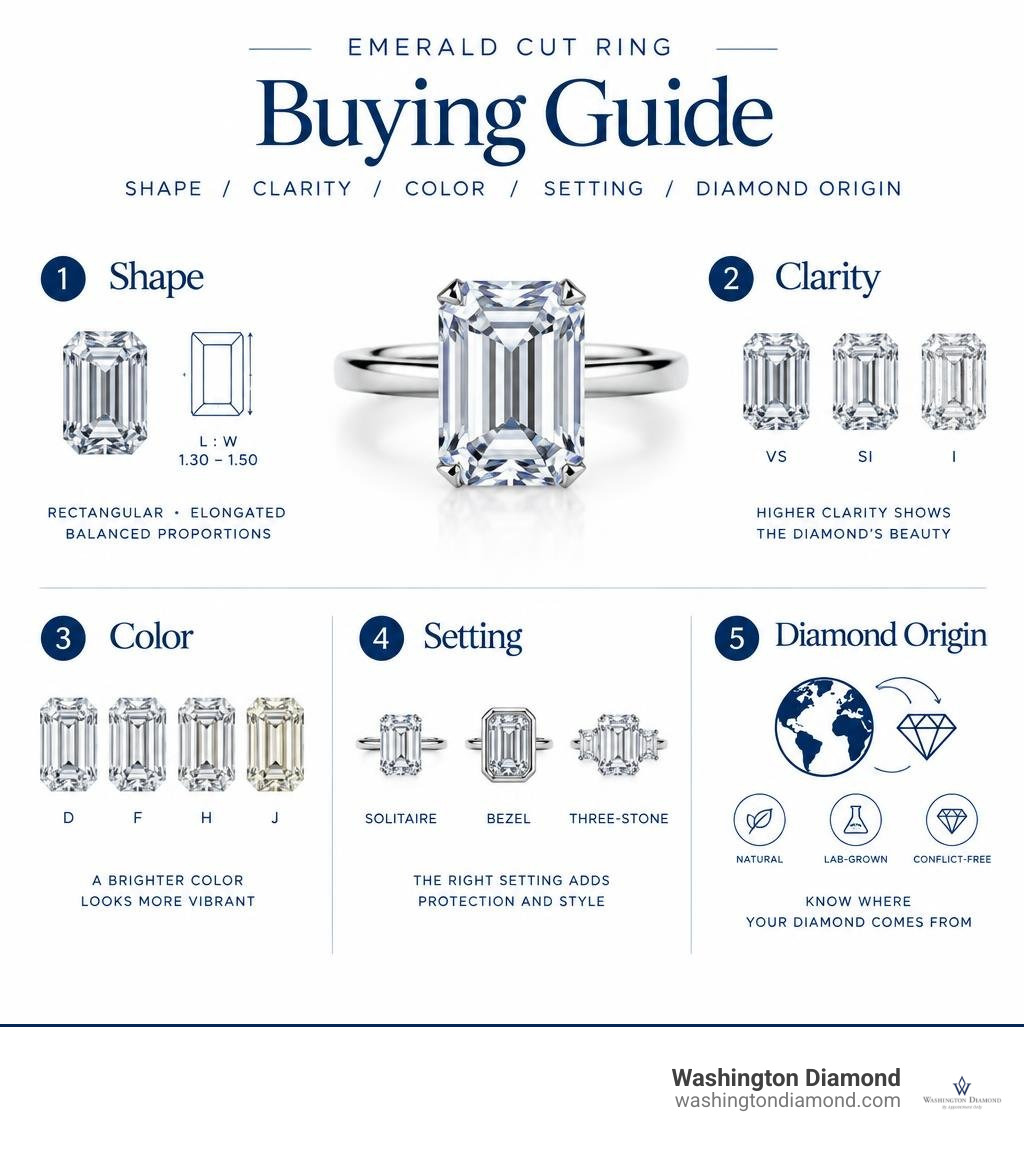
Emerald cut engagement rings are best for buyers who want clean lines, an elongated look on the finger, and elegant flashes of light instead of the intense sparkle of a round diamond. For a classic choice, look for a well-matched rectangular shape, high symmetry, an eye-clean clarity grade, and a protective solitaire, bezel, or three-stone setting.
The emerald cut is a step cut, made with long, parallel facets and a large open table. This creates its signature "hall of mirrors" effect: broad, crisp reflections that show off the diamond's clarity and color. It has vintage Art Deco roots, yet its simple geometry also suits modern bridal style.
Unlike brilliant-cut diamonds, an emerald cut does not hide inclusions or body color as easily. That makes careful selection important. A slightly elongated length-to-width ratio, often around 1.30 to 1.50, gives the familiar graceful outline, while balanced proportions and symmetry help prevent a dull center or uneven light return.
This guide compares the most popular emerald-cut ring styles, from sleek bezel-set solitaires to timeless three-stone designs, so you can choose a ring that fits your budget, lifestyle, and personal taste. The emerald cut itself has a long history in fine jewelry, evolving from early gemstone cutting techniques into the Art Deco icon it is today.
I am Tom Daube, a jewelry designer and GIA-trained diamond professional with experience selecting well-proportioned diamonds and creating custom fine jewelry. I use that background to help buyers compare emerald cut engagement rings with clarity, confidence, and an eye for lasting style.
Helpful diamond and ring guides:
Why Choose Emerald Cut Engagement Rings for Your Bridal Style
The emerald cut brings an unmistakable sense of refinement to bridal jewelry. Originally developed centuries ago for genuine emerald gemstones to prevent chipping during cutting, this shape transitioned seamlessly into diamond jewelry during the Art Deco movement of the 1920s. Today, in 2026, it remains a favorite choice for couples seeking architectural clean lines, understated luxury, and an elongated silhouette on the hand.
An emerald cut diamond features a broad, expansive table—the flat top facet of the stone. This wide surface provides exceptional optical clarity and allows you to look deep into the heart of the gem. Additionally, because much of its carat weight is concentrated across its surface area rather than hidden beneath the girdle, an emerald cut diamond often appears significantly larger face-up than a round brilliant diamond of equivalent carat weight.
Whether you adore vintage heirloom glamour or clean modern minimalism, this silhouette pairs effortlessly with nearly any aesthetic.
Distinctive Step-Cut Symmetry and Hall of Mirrors Effect
Unlike brilliant cuts designed with dozens of triangular and kite-shaped facets to scatter light randomly, the emerald cut belongs to the step-cut family. It features concentric, rectangular facets that run parallel along the length and width of the stone.
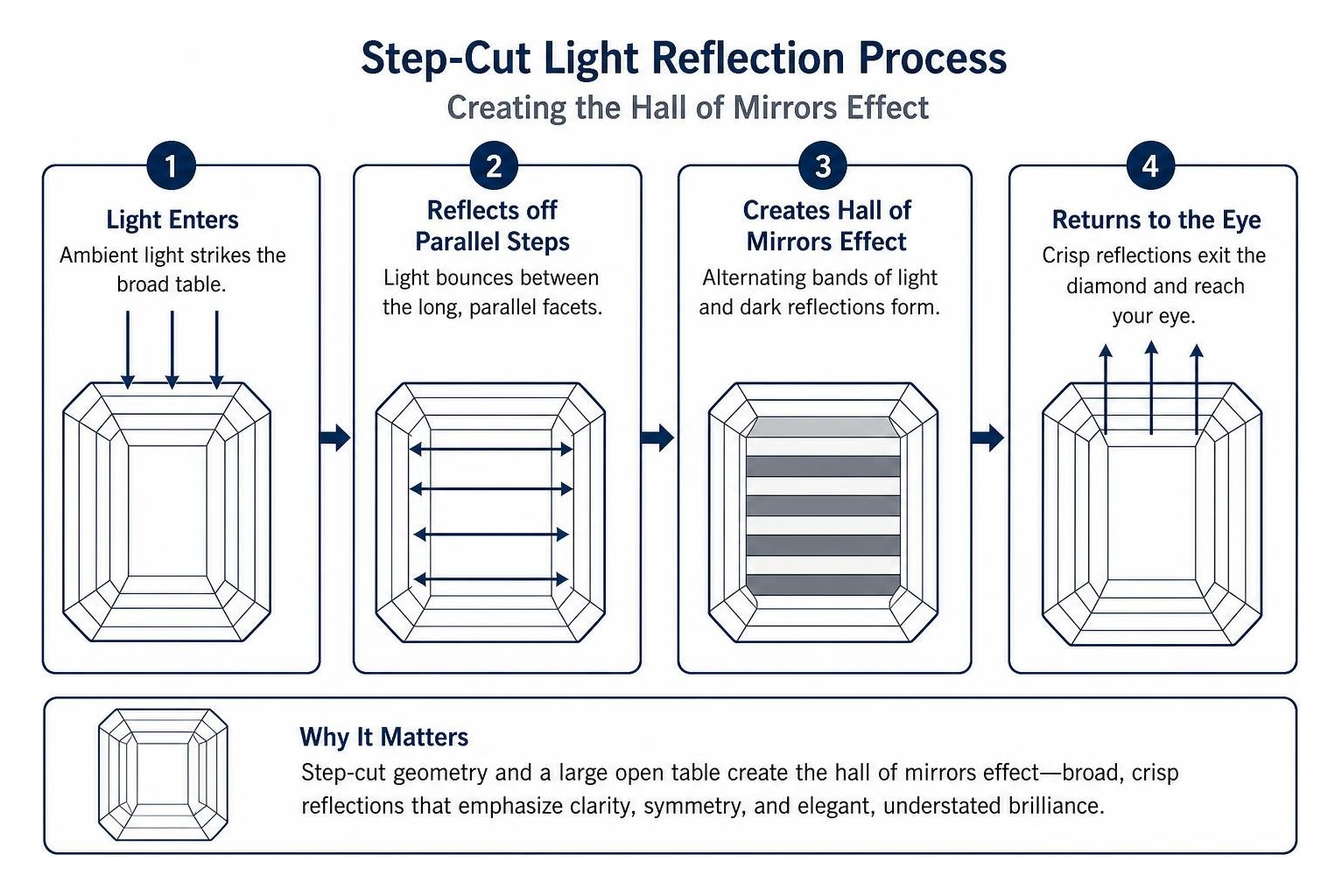
This geometry creates the celebrated "hall of mirrors" optical phenomenon. When ambient light strikes the diamond, alternating flashes of bright white light and deep contrasting shadow reflect across the steps. Rather than a dense sparkle, the stone delivers a dramatic, shimmering luster. The open table acts as a pristine window, drawing the eye into symmetrical rows of light reflection.
Comparing Emerald Cut Diamonds to Round and Princess Shapes
When evaluating diamond shapes for your ring, understanding the aesthetic and structural differences helps you find the right balance between fire, luster, and everyday wearability.
| Feature | Emerald Cut | Round Brilliant Cut | Princess Cut |
|---|---|---|---|
| Faceting Style | Step Cut (Linear Facets) | Brilliant Cut (Cone Facets) | Modified Brilliant Cut (Chevron Facets) |
| Primary Visual Effect | Broad flashes of luster & deep optical contrast | Maximum scintillation, fire, and multi-directional sparkle | High sparkle with modern geometric brilliance |
| Inclusion Concealment | Low (demands higher clarity) | High (masks minor imperfections) | High (masks internal inclusions well) |
| Perceived Size (Spread) | High (looks larger per carat) | Moderate (balanced depth and table) | Moderate to High |
| Corner Durability | High (naturally cropped, beveled corners) | High (continuous rounded girdle) | Requires protection (sharp 90° pointed corners) |
| Relative Price Per Carat | Lower relative price per carat | Higher market premium | Moderate relative price per carat |
While round diamonds deliver unmatched sparkle and princess cuts provide crisp angles with bright fire, an emerald cut offers quiet sophistication. Because step cuts require less raw diamond removal during cutting, they typically carry a lower price per carat than round stones, allowing you to choose a larger center stone within your target budget.
Evaluating the 4Cs for Emerald Cut Diamonds
Selecting an exceptional emerald cut diamond requires a different strategy than picking a brilliant cut. Because the step-cut faceting does not mask internal traits, the traditional 4Cs (Clarity, Color, Cut, and Carat) require careful balancing.
Clarity and Color Priorities in Emerald Cut Engagement Rings
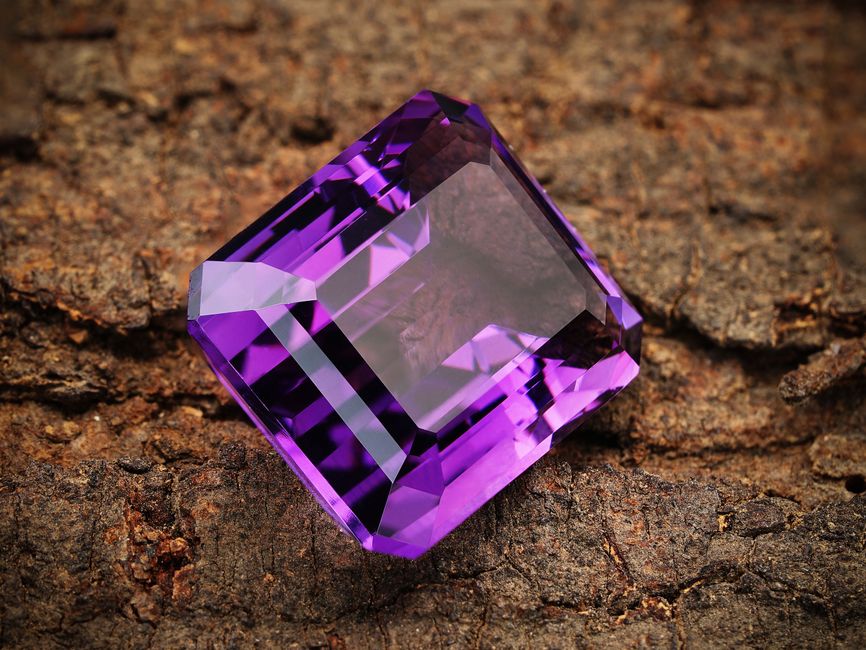
Because of the broad open table and parallel facets, clarity is your top priority when choosing an emerald cut. In brilliant cuts, light bounce can easily disguise small inclusions. In an emerald cut, an internal flaw directly beneath the table acts like a speck of dust on a clear window pane.
- Clarity: We recommend aiming for a clarity grade of VS2 or higher. While a carefully selected SI1 can occasionally be eye-clean, a VS1 or VS2 grade provides absolute confidence that no noticeable inclusions will interrupt the crisp step reflections.
- Color: Step cuts also tend to retain body color more noticeably than round brilliants. If you prefer an icy white appearance in platinum or white gold, focus on color grades between D and F, or consider the versatile G to H range, which looks bright white to the naked eye while offering exceptional value. When setting your stone in yellow gold or rose gold, I or J color diamonds look remarkably warm and complementary.
If you want personalized guidance on finding the perfect balance of color and clarity, explore our selection of diamond engagement rings Washington during an appointment in our private Northern Virginia studio.
Cut Proportions, Symmetry, and Length-to-Width Ratios
Unlike round diamonds, laboratory grading reports do not assign a standardized overall cut grade to fancy shapes like emerald cuts. Therefore, assessing dimensions and ratios is critical:
- Length-to-Width (L/W) Ratio: A classic emerald cut typically features a ratio between 1.30 and 1.50, which gives the stone its timeless rectangular shape. A ratio closer to 1.25 creates a squarer silhouette, while ratios above 1.55 yield an ultra-elongated profile.
- Table Percentage: Look for a table size between 61% and 69%. A table that is too large can flatten the appearance of the crown, while a table that is too small limits the window effect.
- Depth Percentage: Aim for a total depth between 61% and 67%. This range ensures proper light return without causing light leakage through the bottom of the stone.
- Windowing & Symmetry: Ensure the parallel facets align symmetrically from every angle. If a step cut is cut too shallow, light passes straight through the center without reflecting back to your eye—a flaw known as "windowing."
Top Setting Styles and Product Comparisons
The linear silhouette of an emerald cut pairs beautifully with a range of ring settings, from sleek metal frames to brilliant diamond accents.
Modern Bezel Settings for Emerald Cut Engagement Rings
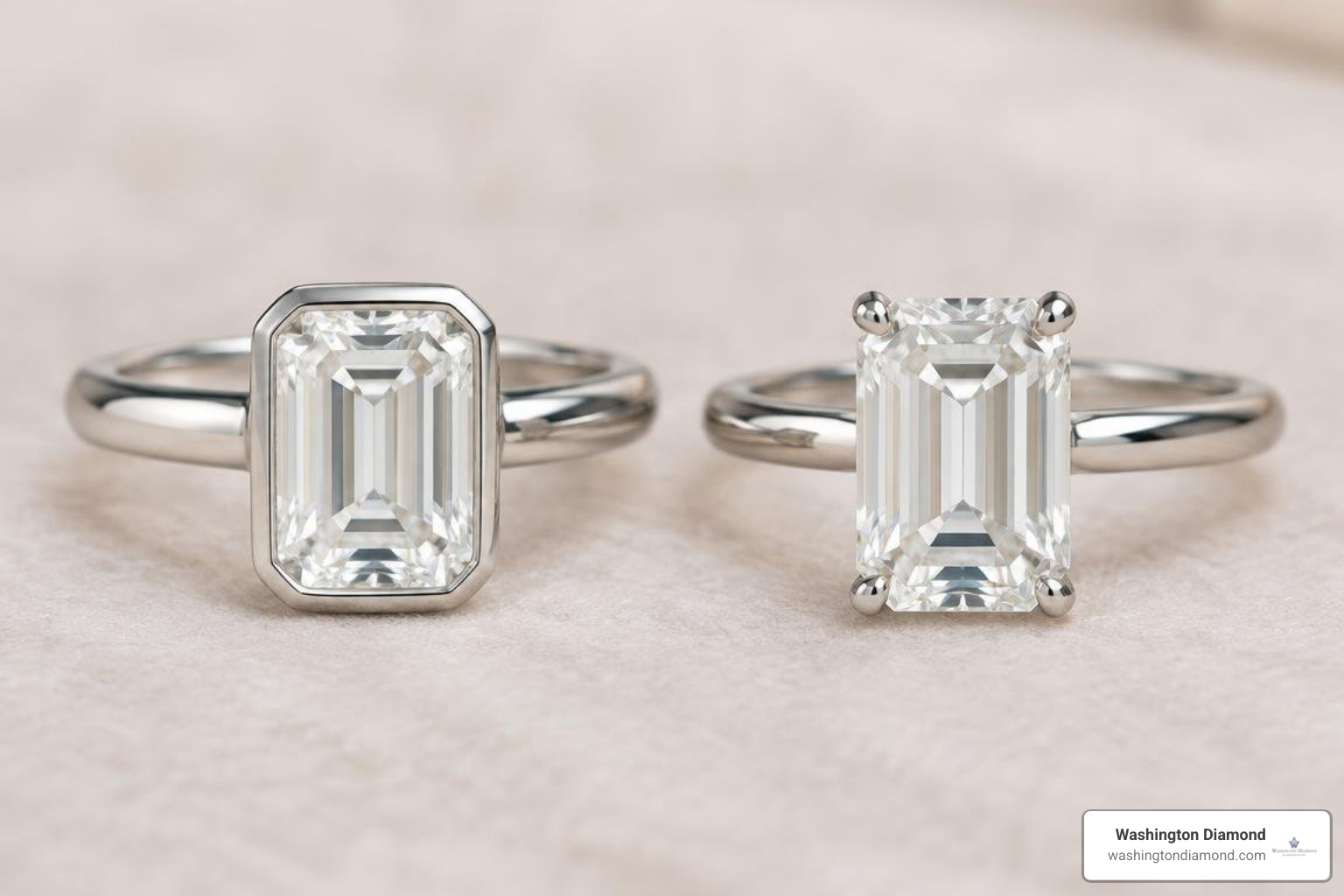
A bezel setting wraps a continuous rim of precious metal around the perimeter of the diamond, following its cropped corners. This style provides unmatched modern elegance while delivering the highest level of physical protection for daily wear.
For a contemporary statement piece, our 2.50ct Lab Grown Emerald Cut Diamond Bezel Set Ring in 18k Yellow Gold showcases a secure, clean profile that sits comfortably against the hand. Pairing a bezel engagement ring with a bezel lab grown emerald cut diamond 14k yellow gold eternity band creates a cohesive, architecturally balanced wedding set with zero exposed edges.
Classic Three-Stone and Solitaire Settings
If you prefer a more traditional look, multi-stone settings offer timeless appeal:
- Tapered Baguettes: Flanking an emerald cut center stone with tapered baguette side diamonds complements the step-cut theme, drawing the eye naturally toward the center stone.
- Trapezoid or Brilliant Accents: Pairing the linear center diamond with brilliant trapezoid or round side diamonds adds extra fire and contrast. Explore our handcrafted three stone engagement rings to see how side stones frame the center gem.
- Classic Solitaires: A delicate four-prong or double-claw prong solitaire allows light to enter the pavilion from all directions, emphasizing the geometric clarity of the diamond. For special occasions or coordinated bridal styling, these rings match effortlessly when paired with 1 carat emerald cut earrings.
Natural vs. Lab-Grown Emerald Cut Diamonds
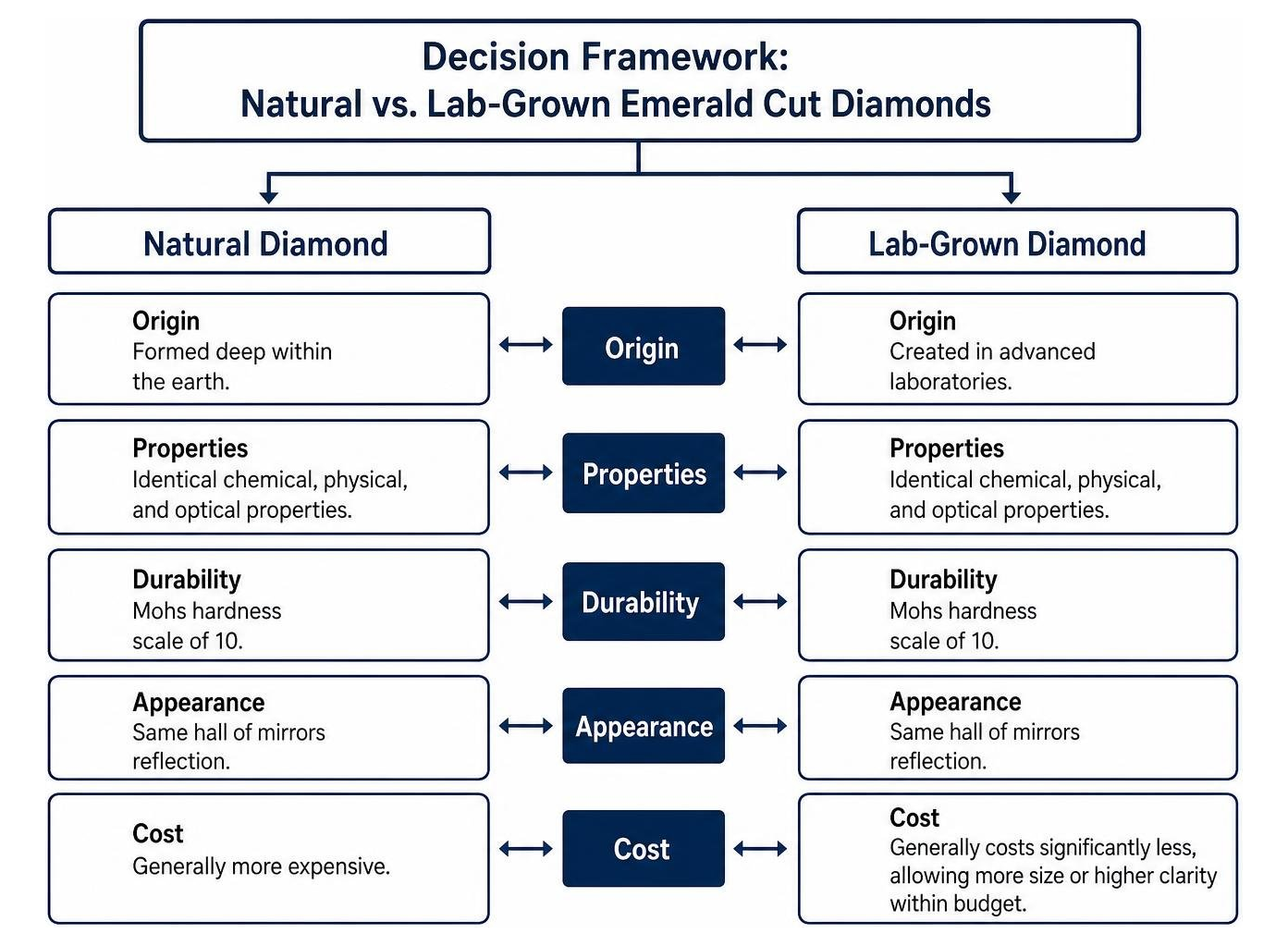
Whether you choose a natural diamond formed deep within the earth or an advanced lab-grown diamond, both options share identical chemical, physical, and optical properties. Both register a 10 on the Mohs hardness scale and display the exact same hall of mirrors reflection.
Cost, Quality, and Sustainability Comparison
The primary distinction between natural and lab-created diamonds comes down to origin, availability, and cost:
- Budget Flexibility: Lab-grown emerald cut diamonds generally cost significantly less than natural diamonds of comparable carat weight, color, and clarity. This allows buyers to maximize carat size or opt for higher clarity grades (such as VVS) within their intended budget.
- Bespoke Creation: Because lab diamonds offer exceptional accessible value, many couples design custom lab grown engagement rings tailored specifically to their desired length-to-width ratio.
- Timeless Natural Rarity: Natural diamonds carry geological rarity and heritage that appeal to collectors and traditionalists who value the natural origin of the gem.
At Washington Diamond, our focus is helping you explore both options side by side so you can select the stone that matches your values and aesthetic goals from our curated selection of engagement rings.
Frequently Asked Questions about Emerald Cut Rings
Are emerald cut diamonds less sparkly than brilliant cuts?
Emerald cut diamonds do not have the fine, scattered sparkle (scintillation) of a round or cushion brilliant diamond. Instead, their step-cut facets create broad, crisp flashes of light and bold optical luster. While they do not display traditional glittery fire, their sophisticated contrast and clean lines offer a distinctive, regal glow.
How do emerald cut diamonds hold up in terms of everyday durability?
Emerald cuts are naturally durable for daily wear. Unlike princess or marquise cuts, which feature sharp pointed tips susceptible to chipping, emerald cuts are engineered with beveled, cropped corners. When set in protective corner prongs or a secure bezel frame, an emerald cut diamond easily withstands everyday activities.
What diamond certification is best for verifying emerald cut quality?
When evaluating an emerald cut diamond, insist on an independent laboratory report from the Gemological Institute of America (GIA) or the International Gemological Institute (IGI). These reports verify the stone's precise millimeter dimensions, length-to-width ratio, polish, symmetry, color, and clarity grades.
Conclusion
Choosing an emerald cut engagement ring is an investment in architectural grace, vintage elegance, and timeless personal style. By paying close attention to clarity grades, balanced length-to-width ratios, and secure setting styles, you can find a diamond ring that will remain captivating for decades to come.
At Washington Diamond, we believe choosing a ring should be as relaxed and memorable as the proposal itself. In our private, appointment-only studio in Northern Virginia, we provide our undivided attention, guiding you through hand-selected natural and lab-grown diamonds in an intimate, pressure-free environment.
Ready to begin your journey? Discover our full collection of engagement rings or schedule your private consultation with us today.
Have a question about your jewelry?
We've been helping clients with diamonds, custom design, repairs, appraisals, and more since 1969. Book a private appointment at our Falls Church studio.
Book an AppointmentTrusted since 1969 · Falls Church, VA · 703-536-3600
From the blog
View all


