

Emerald Cut Elegance: Best 1 Carat Earrings for Any Occasion
Why 1 Carat Emerald Cut Earrings Are Worth Every Penny

1 carat emerald cut earrings sit in a sweet spot — elegant enough for a black-tie dinner, understated enough for everyday wear. The emerald cut's long, rectangular silhouette and step-cut facets create a look that's distinctly different from the sparkle of a round brilliant. Think less disco ball, more polished mirror.
Here's a quick snapshot of what's available in the market:
| Option Type | Diamond Type | Color/Clarity | Price (1 ct tw) |
|---|---|---|---|
| Value Lab-Grown | Lab-grown | E-F / VS1 | $499 |
| Standard Lab-Grown | Lab-grown | F / SI2 | $805 |
| Designer Lab-Grown | Lab-grown | H+ / VS2+ | $1,200 |
| Designer Natural | Natural | H+ / VS2+ | $2,620 |
| Premium Natural | Natural | F / VS2 | ~$2,900 USD |
The short answer for quick shoppers:
- Best value lab-grown: Value Lab-Grown options starting around $499 (E-F, VS1)
- Best everyday natural option: Designer Natural options starting around $2,620 (H+, VS2+)
- Key spec to know: Each earring holds 0.50 ct; total pair = 1.00 ct tw
- Typical dimensions: 5.5mm x 4mm to 6.0mm x 3.7mm per stone
- Most secure backing: Screw-backs for active or everyday wear
The emerald cut's step-cut facets act like a window into the diamond — meaning clarity matters more here than in any other shape. A VS1 or VS2 grade is worth prioritizing.
I'm Tom Daube, a GIA-certified diamond specialist with decades of experience helping clients find the right 1 carat emerald cut earrings for life's most meaningful moments. Let's walk through everything you need to know before you buy.
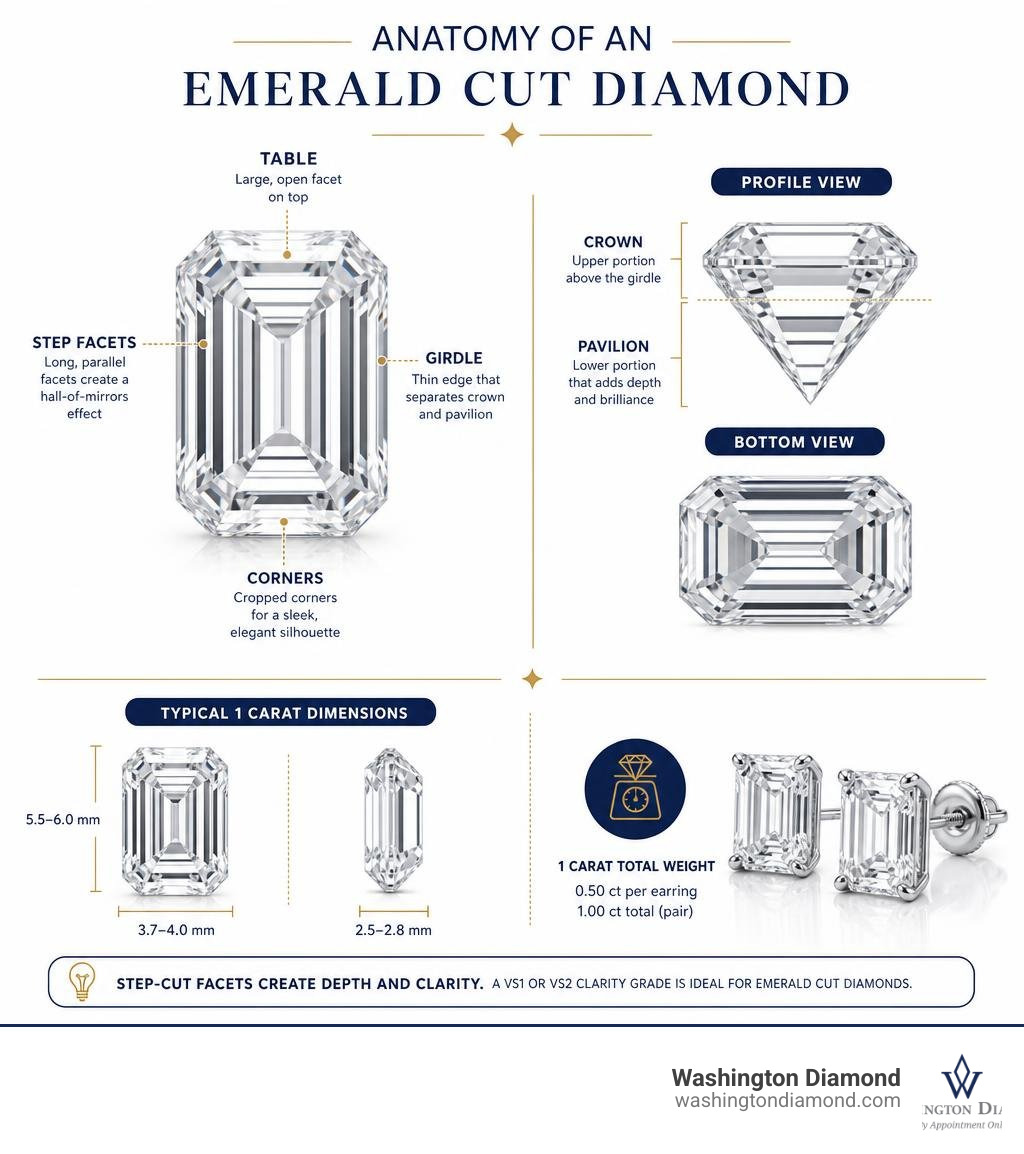
Understanding the Anatomy and Appeal of 1 Carat Emerald Cut Earrings
Unlike brilliant cuts designed to maximize fire and scintillation, the emerald cut is all about depth, structure, and clarity. Originating from the table-cut styles of the Art Deco era, this cut features long, linear facets that run parallel to the girdle. This arrangement is known as step-cut faceting, and it creates a mesmerizing "hall-of-mirrors" effect.
When light hits an emerald-cut diamond, it doesn't scatter into tiny rainbow sparkles. Instead, it produces broad, architectural flashes of pure white light. This unique light performance gives 1 carat emerald cut earrings an incredibly sophisticated, clean, and vintage-inspired look.
Furthermore, because of their elongated rectangular shape and shallow pavilion depth, emerald cuts often boast a larger "face-up" appearance than round brilliant diamonds of the exact same carat weight. They sit flat and broad on the earlobe, making your investment look remarkably prominent.
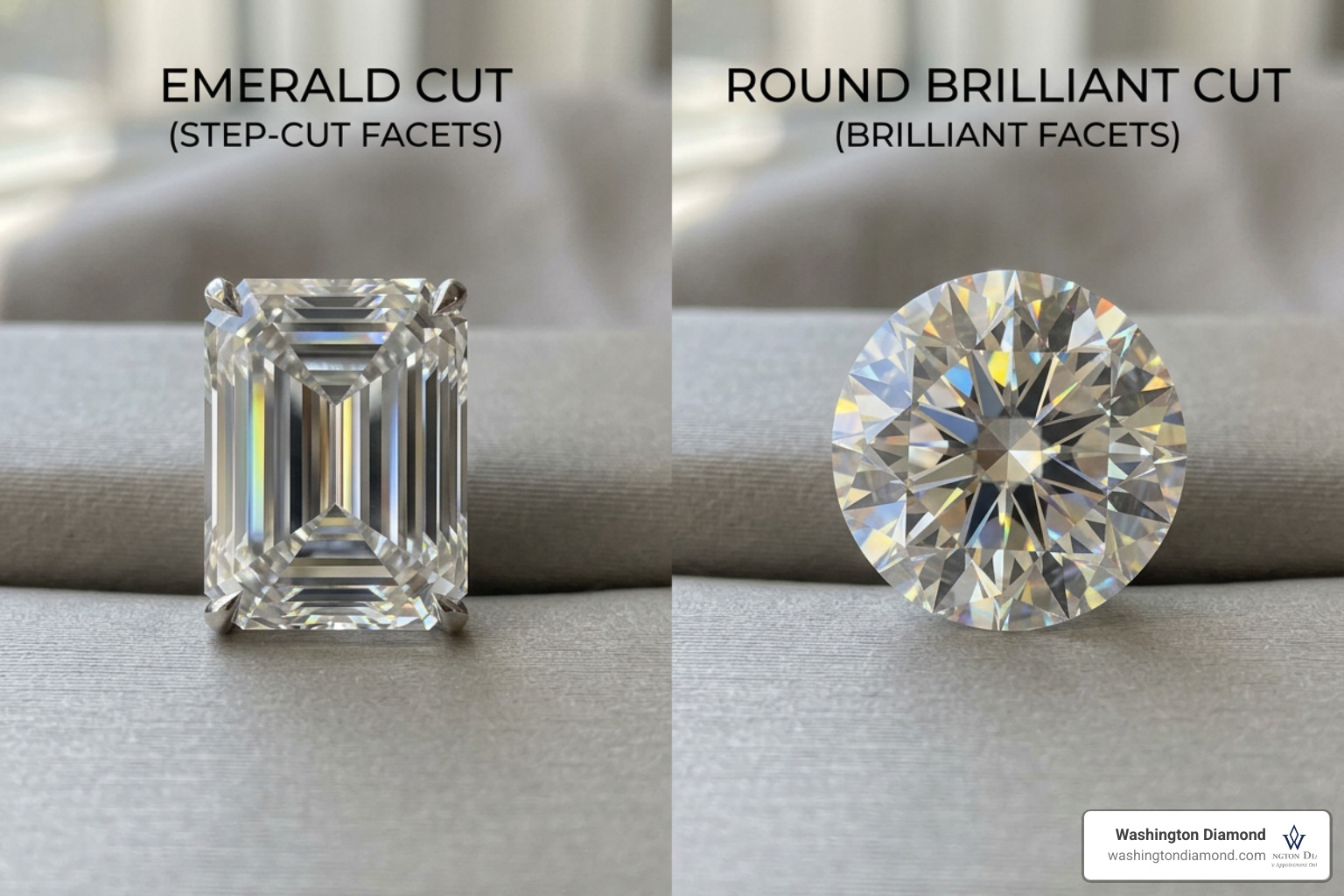
Visual Dimensions of 1 Carat Emerald Cut Earrings
When shopping for 1 carat emerald cut earrings, the first thing to understand is that "1 carat" almost always refers to the total weight (ct tw) of the pair. This means each individual stud features a 0.50-carat diamond.
A standard 0.50-carat emerald-cut diamond typically measures around 5.5mm in length by 4.0mm in width, though some leaner cuts can measure closer to 6.0mm in length by 3.7mm in width. These subtle differences in length-to-width ratio can change the visual presence of the earrings:
- Classic Ratio (1.30 to 1.40): A balanced rectangle that looks highly traditional.
- Elongated Ratio (1.45+): A slender, modern look that beautifully elongates the earlobe.
Step-Cut Faceting vs. Brilliant Cuts
Brilliant cuts (like round, oval, or cushion cuts) feature triangular and kite-shaped facets designed to hide internal imperfections under a flurry of sparkle. The emerald cut does the exact opposite. Its wide, flat top facet—known as the table—acts as an open window.
Because of this window-like transparency, any tiny inclusion or speck of carbon inside the stone will be immediately visible to the naked eye. While you can easily get away with an SI1 or SI2 clarity grade in a round brilliant, we highly recommend choosing at least a VS1 or VS2 clarity grade for emerald-cut studs to ensure they remain completely eye-clean.
Lab-Grown vs. Natural Diamonds for Emerald-Cut Studs
As we look at the market in June 2026, the choice between lab-grown and natural diamonds is one of the most significant decisions you will make.
From a scientific standpoint, lab-grown diamonds are identical to natural, earth-mined diamonds. They share the exact same chemical composition, physical crystal structure, and optical properties. If you test a lab-grown diamond with a professional thermal pen, it will register as a diamond because it is one. Both score a perfect 10 on the Mohs hardness scale, making them exceptionally durable for everyday wear.
The primary difference lies in their origin and price:
| Feature | Lab-Grown 1ctw Studs | Natural 1ctw Studs |
|---|---|---|
| Origin | Controlled laboratory environment | Formed deep within the Earth |
| Price Range | $400 - $1,200 | $2,500 - $4,500 |
| Clarity Sweet Spot | VS1 or higher (highly affordable) | VS2 (best balance of price and beauty) |
| Value Retention | Low resale value | Strong historical value retention |
Because lab-grown diamonds are created in controlled environments, achieving high clarity grades like VVS or VS1 is much more common and far less expensive. For example, you can purchase premium, high-quality lab-grown options or search for budget-friendly alternatives for a fraction of the cost of natural stones.
If you are looking for a delicate, artisanal aesthetic, you might consider threaded studs, which offer secure threaded post options in both lab-grown and natural varieties.
Certification and Laser Inscriptions
No matter which diamond type you choose, verification is key. Reputable 1 carat emerald cut earrings should always come with an independent grading report from recognized authorities like the Gemological Institute of America (GIA) or the International Gemological Institute (IGI).
Most modern certified diamonds feature a microscopic laser inscription on the girdle. These inscriptions, such as Gemscribe serial numbers, match the accompanying certificate perfectly. This allows any jeweler to verify the authenticity of your diamonds in seconds under a microscope, giving you complete peace of mind.
Choosing the Perfect Setting and Metal for Your Studs
The metal and setting style you select will frame your emerald-cut diamonds, heavily influencing both their color appearance and their overall security.
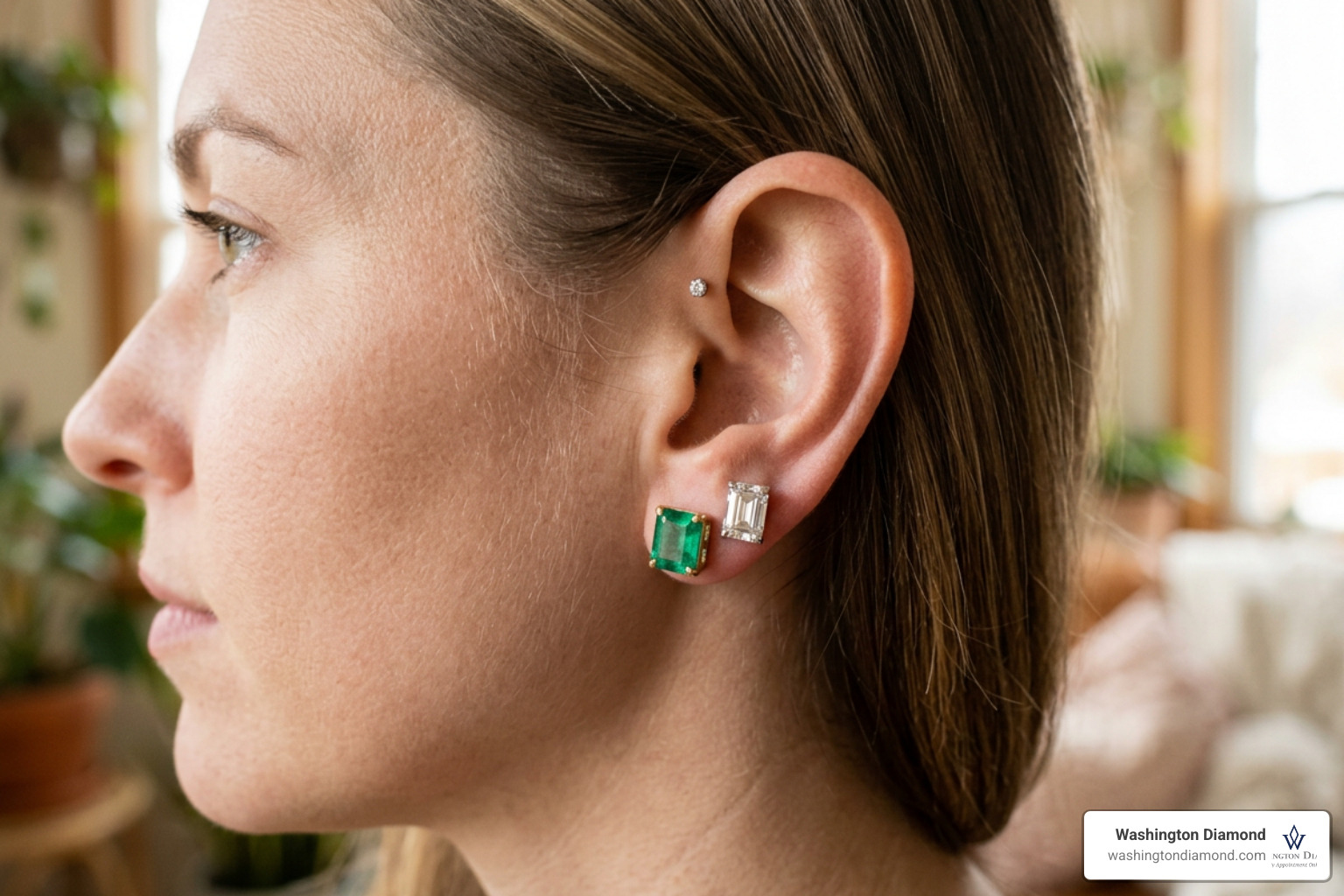
- 14K White Gold & Platinum: These cool metals are the most popular choices for diamond studs. They complement the icy, modern look of high-color diamonds (D-F) and make the stones appear incredibly bright. Platinum is hypoallergenic and heavier, while 14K white gold offers excellent durability and a bright, rhodium-plated finish.
- 14K Yellow Gold: Yellow gold provides a gorgeous, classic contrast. It is also highly forgiving; if your diamonds have a slightly warmer color grade (G-H), setting them in yellow gold makes any slight yellow tint blend in naturally, making the stones look whiter than they are.
- 14K Rose Gold: Perfect for a romantic, vintage feel, rose gold beautifully complements warm skin tones.
When it comes to setting styles, you have several elegant options:
- Four-Prong Setting: This is the timeless standard. Four prongs at the corners protect the vulnerable corners of the rectangular cut while letting in maximum light from the sides.
- Three-Prong (Threaded) Setting: Offers a more minimalist, triangular framing that gives the earrings an organic, stitched appearance.
- Bezel Setting: A sleek collar of metal completely surrounds the diamond. This is the most secure setting option, perfect for active wearers, though it does block side light.
- Halo Setting: If you want to boost the visual footprint of your studs, surrounding your center stones with a halo of smaller diamonds is a brilliant trick. For a unique splash of color, you can even opt for gemstone variations, such as an emerald-cut emerald surrounded by a brilliant diamond halo.
Backing Styles: Screw-Back vs. Push-Back Findings
Your earrings are only as good as the backings keeping them on your ears! For 1 carat emerald cut earrings, you will generally choose between two primary backing styles:
- Push-Backs (Friction Backs): The classic tension-based design. They slide on easily and are highly comfortable for daily wear. However, over time, the tension can loosen, making them less secure if they get caught on a sweater or a scarf.
- Screw-Backs: These feature a threaded post that requires you to spin the backing onto the ear. They take a few extra seconds to put on, but they offer unmatched security. If you live an active lifestyle or plan to wear your studs constantly without taking them off, screw-backs are highly recommended.
Smart Buyer’s Guide: Market Comparison and Policies
Before making your purchase, it is vital to look beyond the diamonds themselves and examine the retailer's underlying policies.
Because earrings are an intimate jewelry item, return policies can vary wildly. Some online brands offer generous 30-day return windows with free return shipping, while boutique designers may treat diamond studs as exchange-only items. Always read the fine print regarding return eligibility.
Additionally, ask about:
- Lifetime Trade-In Policies: Some jewelers allow you to trade in your natural diamond studs down the road for a larger pair, applying 100% of your original purchase price toward the upgrade.
- Warranties: Ensure your purchase includes a warranty against manufacturing defects, and consider third-party jewelry insurance to protect against accidental loss.
What to Look for in 1 Carat Emerald Cut Earrings Quality
To get the absolute best value for your budget, keep these guidelines in mind:
- Color (E-F vs. G-H): If you are setting your earrings in white gold or platinum, aim for E-F color. If you prefer yellow gold, you can easily drop to G-H color to save money without sacrificing visual beauty.
- Clarity (VS1-VS2): Do not skimp here. Avoid SI2 clarity grades in emerald cuts unless you have inspected the stones in person and verified that the inclusions are not positioned directly under the center table.
- Cut Proportions: Look for a depth percentage between 60% and 70% and a table percentage between 61% and 69% for the most balanced light reflection.
Frequently Asked Questions about Emerald Cut Studs
Are 1 carat emerald cut earrings suitable for everyday wear?
Absolutely. At 0.50 carats per ear, these studs are lightweight, incredibly comfortable, and sit flush against the lobe. They are subtle enough for the office but retain enough elegance for formal evening wear.
How do I clean and maintain step-cut diamond earrings?
Because step-cut diamonds have large, flat tables, they easily show fingerprints, hair products, and skin oils, which can make them look cloudy. Clean them weekly by soaking them in warm water with a few drops of mild dish soap, then gently scrub them with a soft-bristled toothbrush and rinse thoroughly.
Why does clarity matter more in an emerald cut than a round cut?
Round brilliant cuts have overlapping triangular facets that bounce light in multiple directions, effectively camouflaging minor internal flaws. Emerald cuts feature broad, flat step facets that act like clear windows, making inclusions highly visible to the naked eye if the clarity grade is too low.
Conclusion
Finding the perfect pair of 1 carat emerald cut earrings is about balancing the clean elegance of step-cut diamonds with a secure, beautiful setting that matches your personal style.
At Washington Diamond, we believe that buying fine jewelry should be as special as the moments you are celebrating. Located in Northern Virginia, our private, appointment-only studio offers you undivided attention, expert guidance, and a completely personalized experience. Whether you want to select the perfect pair of natural diamonds or design a custom-tailored set of lab-grown studs, we are here to bring your vision to life.
Ready to explore your options? Read our Complete Guide to Loose Diamonds to learn more about selecting the perfect stones, or schedule your private consultation with us today.
Have a question about your jewelry?
We've been helping clients with diamonds, custom design, repairs, appraisals, and more since 1969. Book a private appointment at our Falls Church studio.
Book an AppointmentTrusted since 1969 · Falls Church, VA · 703-536-3600
From the blog
View all


