

Ultimate Checklist for Choosing a Diamond Necklace
How to Choose a Diamond Necklace You'll Love Wearing

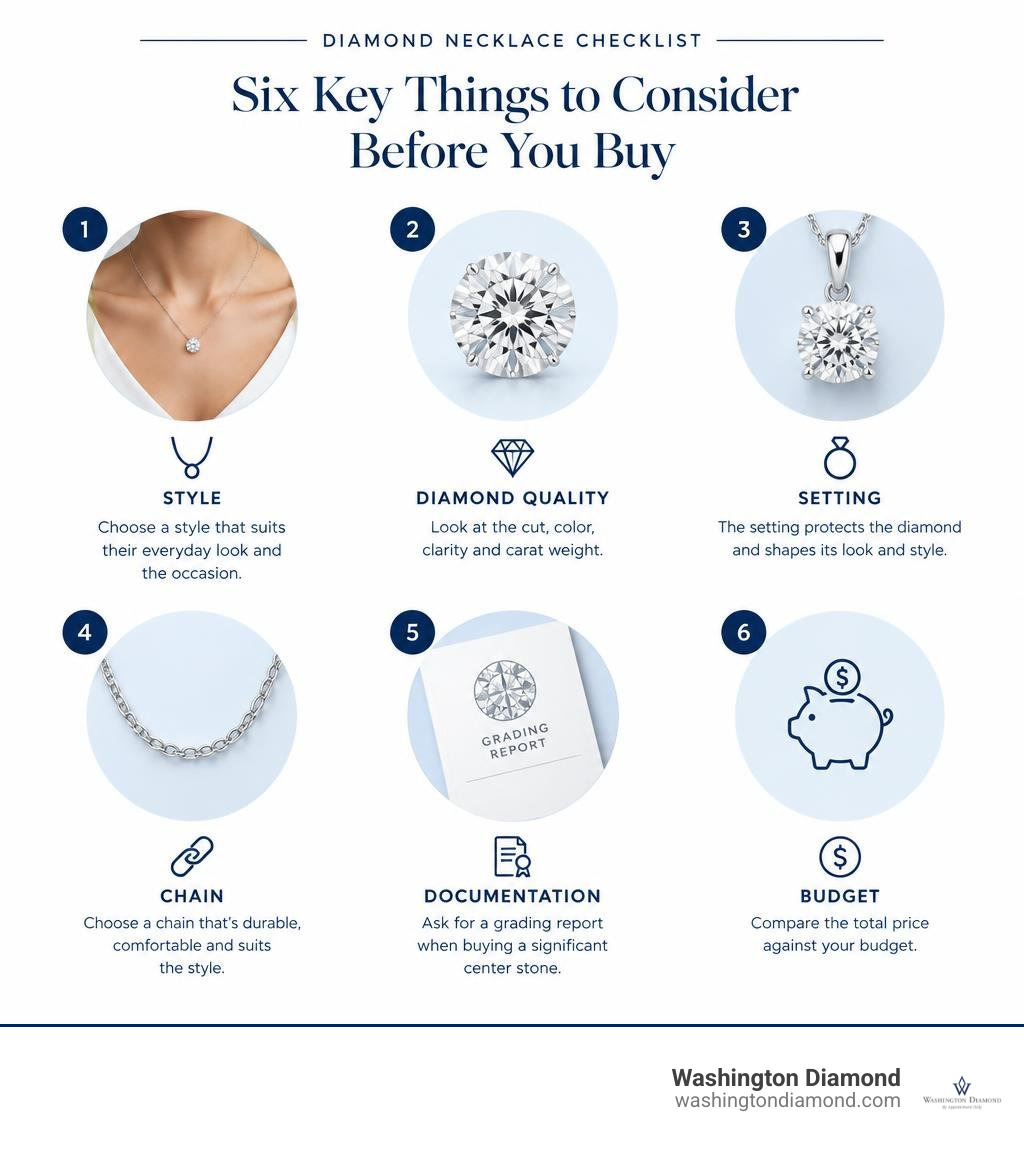
Start with the wearer, not the carat weight. For a diamond necklace, choose a style that suits their everyday look and the occasion. Then check the diamond's cut, color, clarity, and carat weight, along with the setting, chain, and clasp. Ask for a grading report when buying a significant center stone, and compare the total price against your budget. The Gemological Institute of America offers independent guidance on diamond quality factors that can help you evaluate any stone.
A simple pendant can mark an anniversary and still work with a T-shirt. A tennis necklace makes a bigger statement. The best choice is one that feels personal now and will be worn for years.
I'm Tom Daube, a jewelry designer with experience in GIA-graded diamonds, custom jewelry, and diamond recutting. Here's the checklist I use to help make a diamond necklace purchase feel clear, not overwhelming.
Evaluating Diamond Quality: The 4Cs and Certification
When selecting a diamond necklace, understanding how cut, color, clarity, and carat weight interact ensures you invest in brilliance rather than invisible grading metrics. Unlike engagement rings, which undergo close scrutiny from mere inches away, necklaces sit against the chest and are typically viewed from conversational distances.
Carat weight measures a diamond's physical mass (where 1.00 carat equals 200 milligrams). In the United States, the average total carat weight for a diamond necklace is approximately 1.2 carats total weight (ctw). However, visual spread matters far more than raw weight. A well-proportioned cut maximizes diameter and sparkle, making the stone appear larger and brighter.
Independent diamond grading reports provide essential verification for center gems. Legitimate gemological certificates from recognized laboratories verify whether a stone is natural or lab-grown and map out its exact clarity characteristics and optical cut grades.
| Cut Grade | Brilliance & Sparkle | Fire (Rainbow Flashes) | Light Leakage | Best Suited For |
|---|---|---|---|---|
| Excellent / Ideal | Maximum light return; crisp contrast | Vivid, vibrant spectral flashes | Minimal to none | Solitaires, bezel drops, fine centerpieces |
| Very Good | High brightness; slight optical dispersion | Strong light dispersion | Minor edge leakage | Multi-stone station chains, pendants |
| Good | Moderate visual sparkle | Soft, muted flashes | Moderate across pavilion | Geometric accent stones, bar pendants |
| Fair / Poor | Dull or glassy appearance | Minimal to no fire | Severe light leakage | Not recommended for fine jewelry |
Understanding Cut, Color, and Clarity Balance
Cut is the most critical of the 4Cs because it governs how efficiently light bounces through the facets and back to your eyes. An Excellent cut allows you to be flexible with color and clarity grades without sacrificing visual appeal.
For color, diamonds graded in the Near Colorless range (G to J) appear bright white once set against the skin, especially in yellow or rose gold mountings. For platinum and white gold settings, staying within the G to H range ensures a crisp look.
Clarity focuses on internal inclusions and surface blemishes. Because pendants are viewed from a slight distance, choosing an "eye-clean" stone—such as a clean SI1 or VS2 grade—gives you identical visual performance to a Flawless stone at a fraction of the cost. For instance, our 0.90ct round diamond platinum bezel necklace balances an eye-clean center diamond with a secure, bright platinum border to maximize face-up presence.
Natural vs. Lab-Grown Diamond Necklace Options
Both natural and lab-created diamonds share identical physical, chemical, and optical properties. Both score a 10 on the Mohs hardness scale and display the same fire, scintillation, and refractive index.
The difference lies in their origin and pricing:
- Natural Diamonds: Crystallized deep within the Earth over billions of years, natural diamonds represent geological rarity. Over the years, fine natural diamond necklaces tend to retain higher long-term market value.
- Lab-Grown Diamonds: Grown in advanced facilities using High Pressure High Temperature (HPHT) or Chemical Vapor Deposition (CVD) methods, lab diamonds offer the same visual performance at accessible price points.
For modern styling, pieces like our 14k white gold lab grown diamond slide pendant offer an elegant silhouette and brilliant sparkle for everyday wear.
Popular Diamond Necklace Styles and Settings
Finding the right design comes down to matching individual taste, comfort preferences, and daily activities.
Classic Solitaire, Bezel, and Station Designs
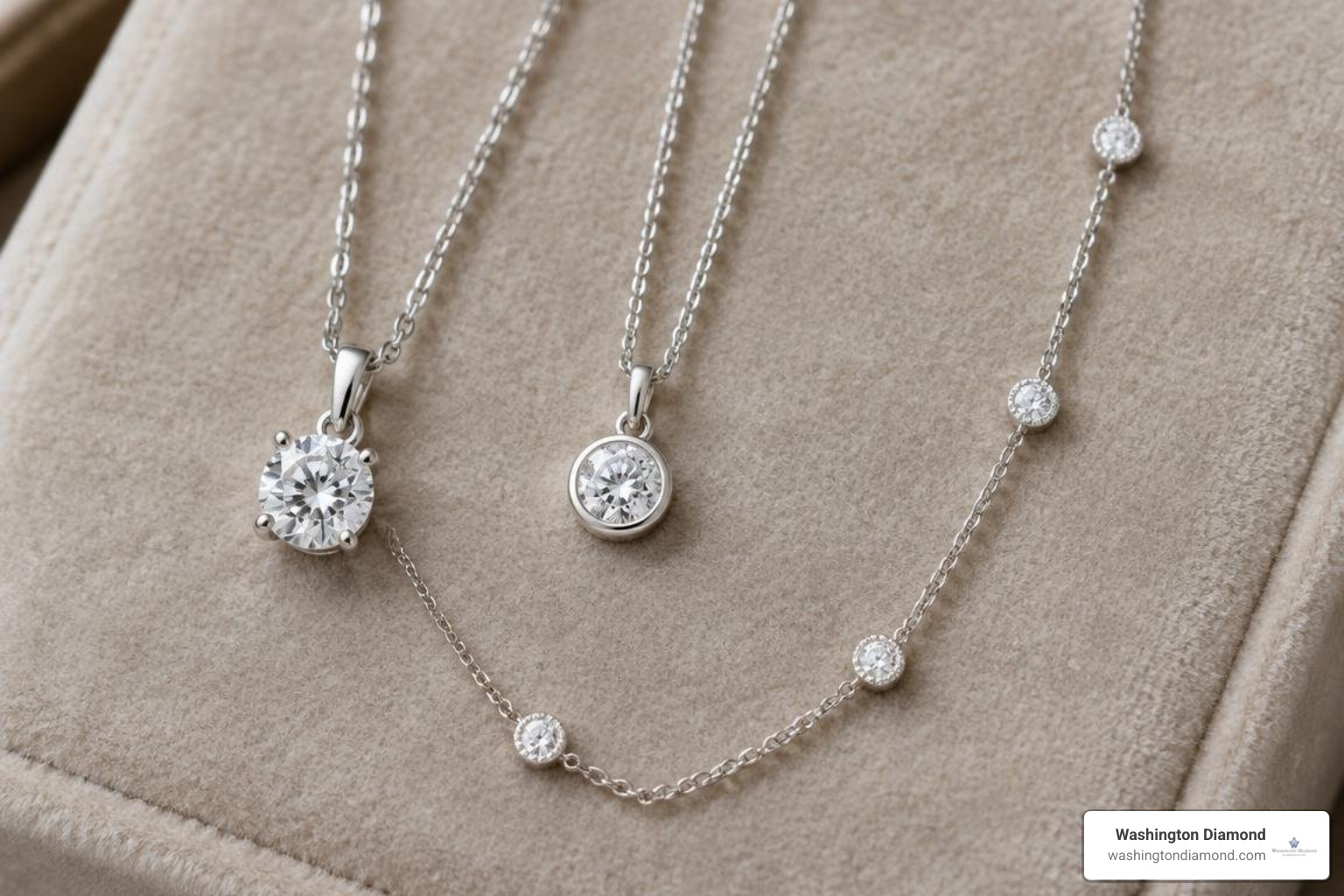
- Solitaire Pendants: Representing roughly 34% of all diamond necklace purchases, the single-stone solitaire remains an enduring favorite. Suspended from prongs or a slide bail, it sits flat and focuses all attention on one dazzling center gem.
- Bezel Settings: A smooth metal rim wraps around the diamond's perimeter. The protective contour of our bezel-set diamond pendant prevents snagging on clothing while subtly exaggerating the stone's apparent diameter.
- Station Necklaces: Diamonds are spaced along a delicate chain at measured intervals. Our 14k gold diamond station necklace drapes light evenly around the collarbone, making it an effortless companion for both casual t-shirts and silk blouses.
Statement Tennis, Floating, and Bar Necklaces
- Tennis Necklaces: A continuous line of individually matched, flexible links set with diamonds around the entire circumference. An heirloom design like our 15.59ct diamond tennis necklace in white gold delivers uninterrupted brilliance for formal galas and bridal milestones.
- Floating and Chevron Pendants: Clean lines create modern geometry along the neckline. The angled architecture of our floating diamond V necklace draws the eye downward with sleek elegance.
- Bar and Bauble Formats: Modern bar motifs align stones horizontally or vertically. For everyday layering with a modern edge, our diamond bar bauble necklace blends linear symmetry with bright sparkle.
Precious Metals, Craftsmanship, and Durability Standards
The structural integrity of a diamond necklace protects your stones from daily knocks and snagged sweaters.
Inspecting Diamond Necklace Craftsmanship and Security
Before acquiring a fine necklace, examine these critical mechanical components:
- Clasp Reliability: Secure lobster claw clasps or integrated tongue-in-groove box locks with double safety latches prevent accidental loss.
- Smooth Prong Finishing: Run your fingertips lightly across the prongs. They should feel rounded and smooth without sharp edges that catch on knitwear.
- Link Articulation: Multi-stone pieces should flow like liquid ribbon. Fluid articulation in designs like our 14k diamond raindrop necklace and 14k gold dangling diamonds necklace prevents twisted links and uneven stress points.
- Bail and Chain Gauge: Ensure the chain's gauge is heavy enough to support the pendant's weight without snapping under tension.
Styling Tips for Every Occasion and Neckline
A diamond necklace should complement your wardrobe seamlessly. Matching necklace lengths to specific necklines creates an aesthetically balanced frame for your face.

Layering and Mixing Chain Lengths
Layering multiple chains adds depth and personality to everyday jewelry. To achieve a polished, balanced look:
- Vary the Lengths: Leave at least two inches between each chain to keep pendants distinct and reduce tangling.
- Mix Textures and Profiles: Pair a smooth solitaire pendant on a whisper-thin cable chain with a station necklace or a diamond bar.
- Anchor with a Focal Point: Let one prominent diamond pendant anchor the lowest tier, letting lighter chains frame it above.
Pricing Factors, Budgeting, and Maintenance Routine
Diamond necklace values reflect total diamond weight, individual stone grades, craftsmanship complexity, and metal choices.
| Necklace Style Category | Typical Carat Range | Estimated Price Spectrum | Primary Cost Drivers |
|---|---|---|---|
| Petite Pendants | 0.10 ctw – 0.40 ctw | $450 – $1,200 | Chain weight, basic casting, small accent diamonds |
| Solitaire Pendants | 0.50 ctw – 1.50+ ctw | $1,500 – $12,000+ | Center stone cut, color, clarity, and certified origin |
| Diamond Station Chains | 0.50 ctw – 2.50 ctw | $1,200 – $4,500 | Multiple matched diamonds, hand-bezeling labor |
| Statement Tennis Necklaces | 3.00 ctw – 20.00+ ctw | $5,000 – $60,000+ | Color/clarity matching across 50+ stones, gold weight |
To keep your piece in pristine condition:
- Gentle Home Soak: Soak your necklace in warm water mixed with mild, lotion-free dish soap for 15 minutes. Use a soft baby toothbrush to dislodge oils and lotions behind the settings.
- Rinse and Dry: Rinse thoroughly in clean water (closing the sink drain first!) and pat dry with a lint-free microfiber cloth.
- Proper Storage: Fasten the clasp before storing your necklace flat in a fabric-lined compartment to avoid knots and scratches.
- Annual Checkups: Have your jeweler inspect the prongs, clasps, and stringing connections once a year to ensure lasting security.
Frequently Asked Questions About Fine Jewelry
How much should I expect to spend on an everyday diamond pendant?
A quality everyday diamond pendant typically ranges from $800 to $3,500. Entry-level pieces around 0.25 to 0.50 carats offer subtle sparkle for daily wear, while larger center stones of 1.00 carat or more fall between $3,000 and $7,500+, depending on cut precision and diamond origin.
What is the most secure setting for active daily wear?
A bezel setting is the most secure choice for daily wear. By wrapping a continuous metal rim around the stone's girdle, it protects the diamond's edges from accidental impacts and won't catch on sweaters, athletic wear, or hair.
How can I verify that my diamonds are ethically sourced?
Look for verified gemological certifications from reputable grading institutions and purchase from transparent jewelers who follow the international Kimberley Process and provide clear chain-of-custody documentation.
Conclusion
Choosing the right diamond necklace comes down to balancing diamond cut, dependable metalwork, and personal comfort. When these elements align, your necklace becomes a cherished piece you'll reach for day after day.
Whether you're shopping for an anniversary gift or a classic everyday staple, we're here to help. Schedule a private consultation through Washington Diamond's personalized appointment experience at our Northern Virginia studio, where you can explore diamond designs with undivided attention and expert guidance.
Have a question about your jewelry?
We've been helping clients with diamonds, custom design, repairs, appraisals, and more since 1969. Book a private appointment at our Falls Church studio.
Book an AppointmentTrusted since 1969 · Falls Church, VA · 703-536-3600
From the blog
View all


