

How to Calculate Used Diamond Value Without Getting Burned
What Is a Used Diamond Worth? (The Quick Answer)
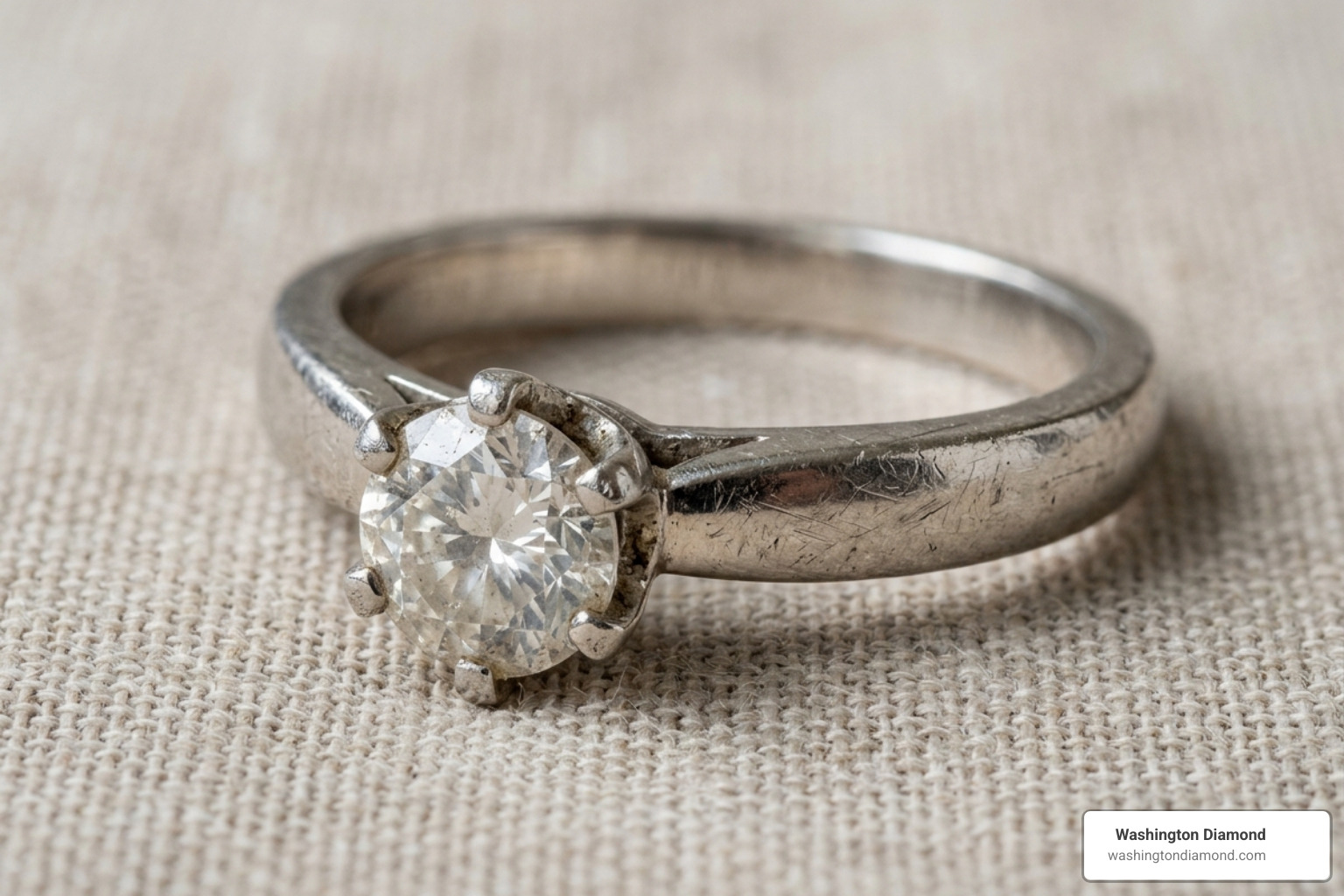
Used diamond value is almost always a surprise — and rarely a pleasant one. Most diamonds resell for a fraction of what was paid at retail.
Here's a fast reference before we dig deeper:
| Selling Channel | Typical Resale Value (% of Retail) |
|---|---|
| Cash offer from jeweler/dealer | 20% - 40% |
| Consignment or online auction | 40% - 60% |
| Peer-to-peer (direct to buyer) | 50% - 70% |
| Pawn shop | 20% - 30% |
A few key numbers to know upfront:
- A 1-carat used diamond typically sells for between $1,036 and $5,946, depending on quality and where you sell it
- Most used diamonds return 20% to 60% of their original retail price
- Natural diamonds retain 30% to 60% of value; lab-grown diamonds retain as little as 1% to 5%
- An insurance appraisal is not the same as resale value — it's often inflated by 100% or more
The gap between what you paid and what you'll get back isn't a scam. It's just how the diamond market works — and understanding it is the first step to not getting burned.
I'm Tom Daube, a GIA-certified diamond specialist with decades of experience helping people buy and sell diamonds at prices close to or under wholesale — and understanding used diamond value is one of the most important things I guide clients through. Let's break down exactly how this market works so you can make a smart, informed decision.
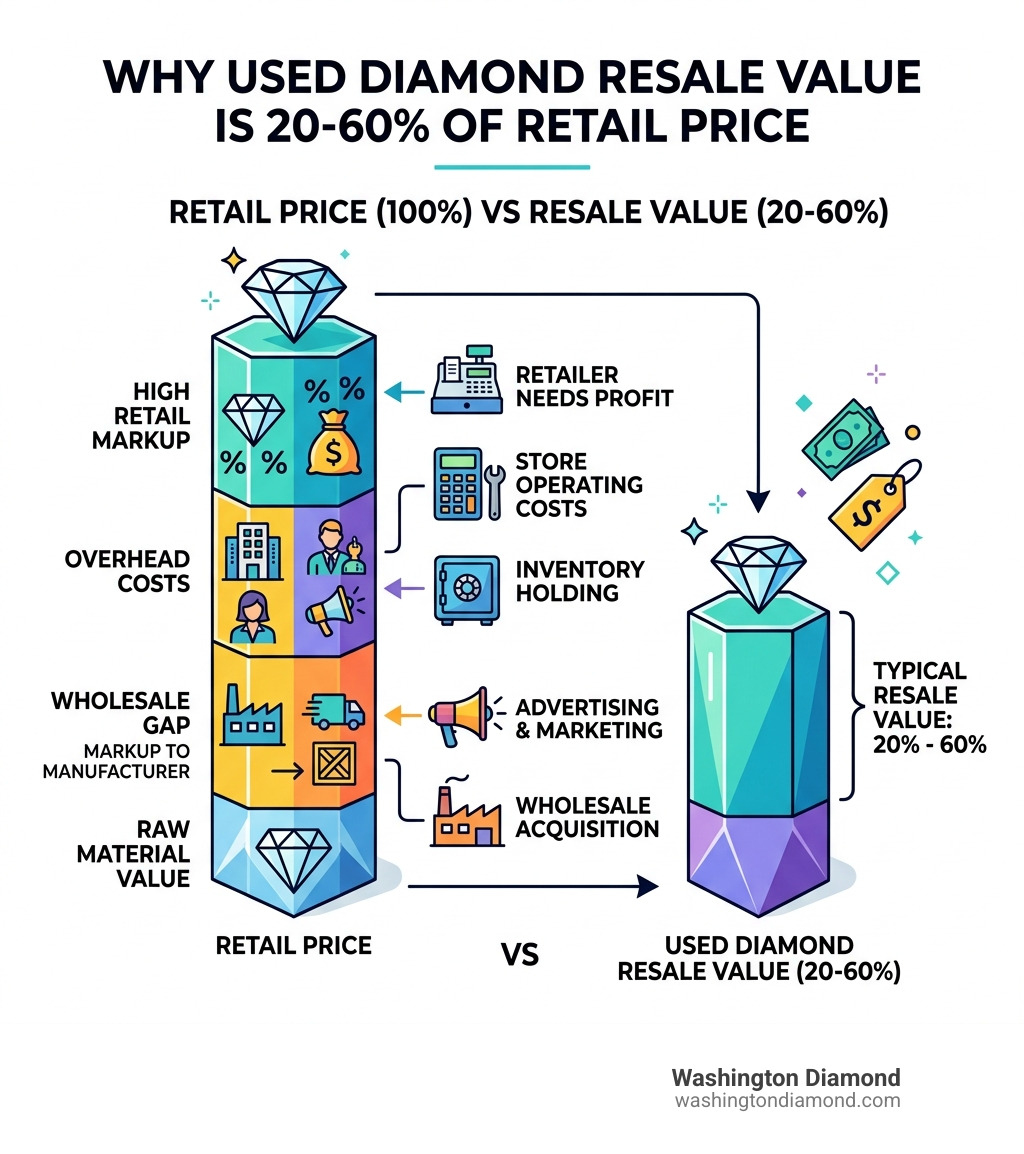
Easy used diamond value word list:
The Core Factors Determining Used Diamond Value
When we look at a diamond on the secondary market, we aren't looking at the sentimental value or the fancy box it came in. We are looking at the raw material's liquid value. To determine used diamond value, the industry relies on several standardized benchmarks.
The most significant benchmark is the Rapaport Report. Often called the "Rap Sheet," this is a weekly price list used by jewelers and dealers worldwide to establish the baseline wholesale price for diamonds. It creates a matrix based on the 4Cs, giving us a "high wholesale" starting point. However, used diamonds almost always sell at a "discount to Rap," meaning a percentage below that listed wholesale price.
Market liquidity also plays a massive role. A round, 1-carat diamond is highly liquid because everyone wants one. A marquise-cut diamond with heavy yellow tint is less liquid, meaning it will likely sit in a jeweler's inventory longer, leading to a lower offer. We often point clients toward Price Guides to help them understand these baseline shifts. For a deeper dive into how these reports function, check out our GIA Certified Diamonds Price Guide.
How the 4Cs Influence Used Diamond Value
The 4Cs (Carat, Color, Clarity, and Cut) are the DNA of your diamond. In the resale market, even a tiny shift in one of these can mean a difference of thousands of dollars.
- Carat Weight: This is the most obvious factor, but it’s not linear. A 1.01-carat diamond is worth significantly more than a 0.99-carat diamond, even if they look identical to the naked eye. This is because "full carats" are major pricing thresholds.
- Color Grading: In natural diamonds, the less color, the higher the value. D, E, and F grades (colorless) command the highest resale prices. Once you get into the J, K, or L range, the used diamond value drops because the demand is lower.
- Clarity Levels: This measures internal flaws (inclusions). While "eye-clean" SI1 diamonds are great for buying, IF (Internally Flawless) or VVS stones hold their value better because of their extreme rarity.
- Cut Precision: This is the most overlooked "C." A poorly cut diamond won't sparkle, and a jeweler will have a hard time reselling it. An "Excellent" or "Ideal" cut grade is essential for maintaining value.
If you are trying to do the math yourself, learning how to calculate diamond price per carat is a vital skill.
The Role of Shape and Secondary Specs in Used Diamond Value
While the 4Cs get all the glory, secondary factors often dictate the final "yes" or "no" from a professional buyer.
- Shape: The Round Brilliant is the king of resale. It requires the most raw material to cut and has the highest demand. Fancy shapes like Ovals and Emerald cuts are currently trendy and hold value well, but shapes like Marquise or Pear can be harder to sell unless the market is specifically looking for them.
- Fluorescence: This is a diamond's tendency to glow under UV light. In many cases, "Strong Blue" fluorescence can make a diamond look hazy or oily, which can slash the used diamond value by 10-25%.
- Polish and Symmetry: These are graded on your GIA report. "Triple Excellent" (Excellent Cut, Polish, and Symmetry) is the gold standard for resale.
For those looking to understand what makes a stone truly premium, we've outlined how to look beyond the 4Cs: how to choose your perfect certified loose diamond.

Why Resale Prices Differ from Retail and Appraisals
This is where most sellers feel "burned." You walk into a store with a diamond you bought for $10,000 and an appraisal that says it’s worth $12,000, only to be offered $3,500. Why?
First, retail markups are significant. When you buy from a traditional jewelry store, you aren't just paying for the diamond. You are paying for the salesperson’s commission, the store’s rent in a high-end mall, the marketing budget, and the sales tax. None of those things add value to the diamond itself.
Second, an appraisal is usually an "Insurance Replacement Value." This is an intentionally high number designed to ensure that if you lose the ring, the insurance company pays enough to buy a brand-new equivalent at full retail price. It has almost nothing to do with the cash price a jeweler will pay you today.
| Metric | Retail Price | Insurance Appraisal | Cash Resale Value |
|---|---|---|---|
| Purpose | Purchase | Insurance Coverage | Liquidation |
| Typical Amount | $10,000 | $12,000 - $14,000 | $3,000 - $5,000 |
| Includes Markup? | Yes | Yes (Double) | No |
Understanding everything you need to know about jewelry appraisals can save you a lot of heartaches when it's time to sell.
Natural vs. Lab-Grown: The Resale Value Divide
The rise of lab-grown diamonds has changed the industry, but it has created a massive trap for resale value.
Natural diamonds are a finite resource. Because they are scarce, they retain a significant portion of their value (usually 30-60%). Lab-grown diamonds, however, are a manufactured technology. Just like a flat-screen TV or an iPhone, the cost to produce them drops every year.
A lab-grown diamond that cost $4,000 five years ago might only cost $500 to produce today. Consequently, most jewelers won't even buy back lab-grown diamonds, and if they do, the used diamond value might only be 1% to 5% of what you paid. If you want to understand the long-term trends, read about the shifting sparkle: what drives diamond values through the years.
Strategies to Maximize Your Diamond's Resale Price
If you want to get the best price for your used diamond, you need to treat it like a professional transaction.
- Clean It Professionally: A dirty diamond can look one or two color grades worse than it actually is. A professional ultrasonic cleaning is often free or very cheap and can add hundreds to your offers.
- Locate Your GIA Report: Selling a diamond without a certificate is like selling a car without a title. Buyers will assume the worst quality to protect themselves, resulting in "lowball" offers. If you don't have one, it might be worth the investment to get the diamond appraised or sent to a lab.
-
Choose the Right Channel:
- Pawn Shops: Only for when you need cash in 15 minutes. You will get the lowest price here.
- Jewelers: Good for a safe, fast transaction. If you are "trading up," many jewelers in Northern Virginia will give you a higher value in store credit than in cash.
- Online Auctions/Consignment: This takes longer but often yields the highest return because you are reaching a larger pool of buyers.
Frequently Asked Questions about Used Diamond Value
Why do diamonds lose value immediately after purchase?
Think of a diamond like a new car. The second you drive it off the lot, the retail markup, sales tax, and "newness" premium vanish. A jeweler can buy the exact same diamond at wholesale prices from their suppliers. To buy yours, they have to offer less than what they could pay a wholesaler, because buying from a consumer carries more risk and zero terms of credit. To better understand the math, see how to calculate the price of a diamond.
Is a 1-carat diamond a good investment?
Generally, no. Diamonds should be viewed as a luxury purchase or an emotional symbol, not a financial hedge like gold or stocks. While high-quality natural diamonds hold value better than almost any other consumer good, you will still likely sell for less than you paid. You can track these trends by looking at what a diamond price chart really tells you.
Can I sell a diamond without a GIA report?
Yes, but expect to be "burned" on the price. Without a reputable lab report, the buyer has to guess the grade. To be safe, they will usually "grade down" (e.g., if it looks like a VS1, they will pay you for an SI1). It is almost always better to get a GIA diamond appraisal complete guide and have the stone properly documented before hitting the market.
Conclusion
Determining used diamond value doesn't have to be a mystery. By focusing on the 4Cs, understanding the difference between retail and wholesale, and recognizing the reality of the lab-grown market, you can set realistic expectations.
At Washington Diamond, we believe in transparency. Our private, appointment-only studio in Northern Virginia is designed to provide you with the undivided attention you need to understand the true worth of your jewelry. Whether you are looking to buy, sell, or upgrade, we are here to ensure you have a memorable and personalized experience.
Before you make a move, use our tools to calculate the value of a diamond before you buy or sell so you can walk into any negotiation with confidence.
Have a question about your jewelry?
We've been helping clients with diamonds, custom design, repairs, appraisals, and more since 1969. Book a private appointment at our Falls Church studio.
Book an AppointmentTrusted since 1969 · Falls Church, VA · 703-536-3600
From the blog
View all


