

What's Your Sparkle Worth? Determining the Value of a 14 Karat Gold Diamond Ring
Why Understanding Your Ring's True Value Matters

14 karat gold ring with diamonds value depends on three main factors:
- Gold Content: A 14K ring is 58.3% pure gold. Calculate melt value by multiplying the ring's weight (in grams) by 0.583, then by the current gold price per gram (typically $60-$86).
- Diamond Quality: The Four Cs (Cut, Color, Clarity, Carat) determine diamond worth. A ring with high-quality, certified diamonds can be worth $2,000-$5,000 or more, while simple bands may range from $200-$400.
- Design & Condition: Designer brands, intricate craftsmanship, and excellent condition add significant value beyond raw materials. Retail markup is typically 100-300% over material cost.
When a client asks, "What's this worth?" the answer is rarely simple. The value of a 14 karat gold ring with diamonds depends on its metal purity, stone quality, craftsmanship, and market conditions. Whether you've inherited an heirloom, are considering a sale, or need an insurance valuation, knowing your ring's true worth is empowering. The value isn't just its gold content—it's every element that contributes to its price.
The difference between retail price and resale value can be surprising. Retail includes significant markup, while resale focuses on material content and desirability. A ring bought for $3,000 might have a gold melt value of $300, but with high-quality diamonds and craftsmanship, its resale value could be $1,500-$2,000.
I'm Tom Daube, a GIA-certified diamond expert. I've helped countless clients understand 14 karat gold ring with diamonds value for buying, selling, and insuring their jewelry. My experience shows that understanding these factors protects your investment and ensures you get fair value.
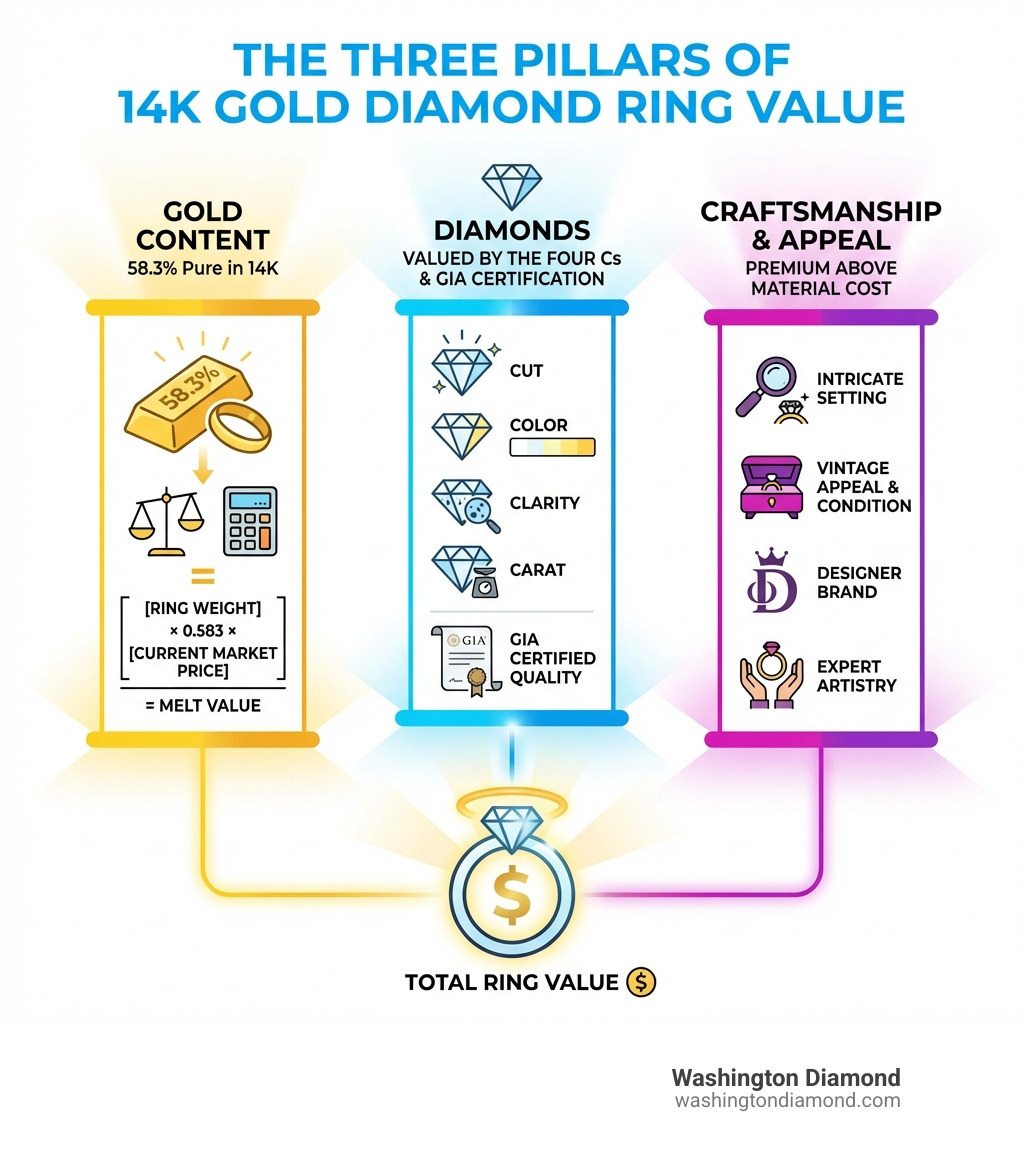
Quick look at 14 karat gold ring with diamonds value:
Deconstructing the Gold: What "14K" Really Means
While diamonds catch the eye, the foundation of your ring's value is the gold. The "14K" stamp is a crucial indicator of gold purity and a major factor in its worth.
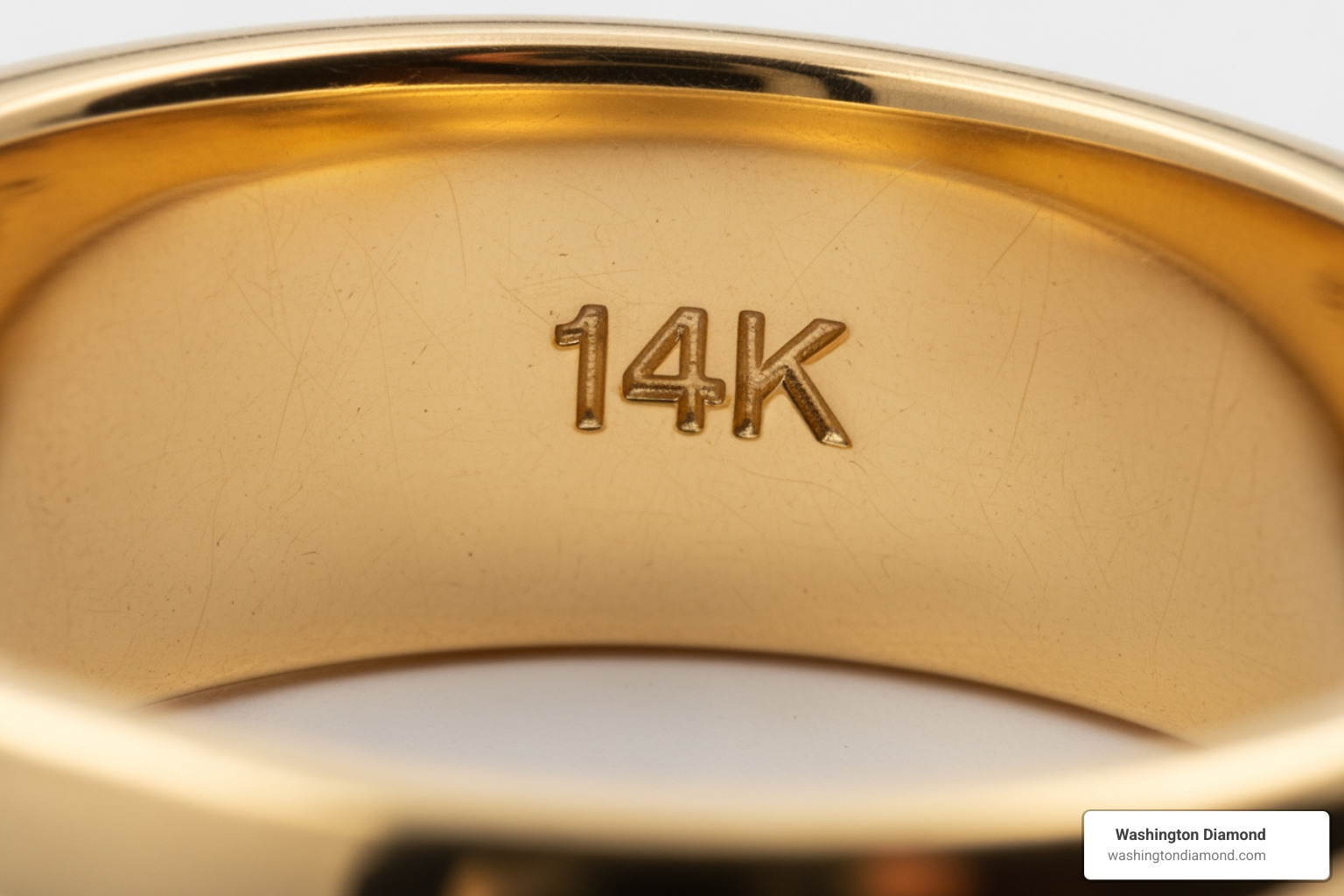
The karat system measures gold purity. Pure gold (24K) is too soft for durable jewelry, so it's mixed (alloyed) with other metals like copper, silver, or zinc for strength. These alloys also create different colors like white or rose gold. For a deeper dive into jewelry terminology, you can explore our guide on Fine Jewelry Terms Demystified.
Understanding Gold Purity and Karats
Here's a breakdown of common gold purities:
- 24K Gold: 99.9% pure gold. Highly valued but too soft for most jewelry, especially rings.
- 18K Gold: 75% pure gold. Offers a rich gold color and good durability, making it a popular choice for fine jewelry.
- 14K Gold: 58.3% pure gold. This is the most popular choice for rings in the U.S., offering an ideal balance of durability, value, and rich color. It's strong enough for daily wear while maintaining a substantial gold content.
- 10K Gold: 41.7% pure gold. The most durable and affordable option, it contains less gold and has a paler color.
The specific blend of metals in 14K gold can vary, influencing its final color. More copper creates a rose gold hue, while a mix with white metals like silver or palladium results in white gold.
Solid Gold vs. Gold-Plated and Gold-Filled
Distinguishing between solid, gold-filled, and gold-plated items is crucial, as the difference in value is significant.
- Solid Gold: The entire ring is made of 14K gold alloy. Look for hallmarks like "14K" or "585" (indicating 58.3% pure gold).
- Gold-Filled: A thick layer of gold is bonded to a base metal. Hallmarks include "14K GF" or "14/20." It contains far less gold than a solid piece.
- Gold-Plated: A microscopic layer of gold is electroplated onto a base metal. This layer wears off and has negligible gold value.
Always check for these hallmarks to ensure you're assessing the right type of gold.
Calculating the Gold's Melt Value
The first step in determining your 14 karat gold ring with diamonds value is to calculate its "melt value"—the intrinsic worth of the gold. This is straightforward:
- Weigh Your Ring: Use a precise digital scale to weigh your ring in grams. Most rings weigh between 2-10 grams.
- Find the Current Gold Price: Look up the current market price of gold per gram. Gold prices fluctuate daily. You can often find live prices, such as on Coinbin.com.
- Calculate the Gold Content: Since 14K gold is 58.3% pure gold, multiply the ring's total weight by 0.583.
- Determine the Melt Value: Multiply your gold content (from step 3) by the current price of pure gold per gram.
Example: A 5-gram 14K ring with gold at $65/gram.
- Gold content: 5 grams * 0.583 = 2.915 grams of pure gold
- Melt value: 2.915 grams * $65/gram = $189.475
This calculation gives you the raw material value of the gold. This is the absolute minimum value and doesn't account for diamonds, design, or craftsmanship.
Decoding the Diamonds: The Four Cs and Beyond
While the gold provides the foundation, the diamonds are often the stars of a 14 karat gold ring with diamonds value. The quality of these gemstones plays a massive role in the ring's total worth. Understanding how diamonds are valued comes down to the "Four Cs": Cut, Color, Clarity, and Carat Weight.
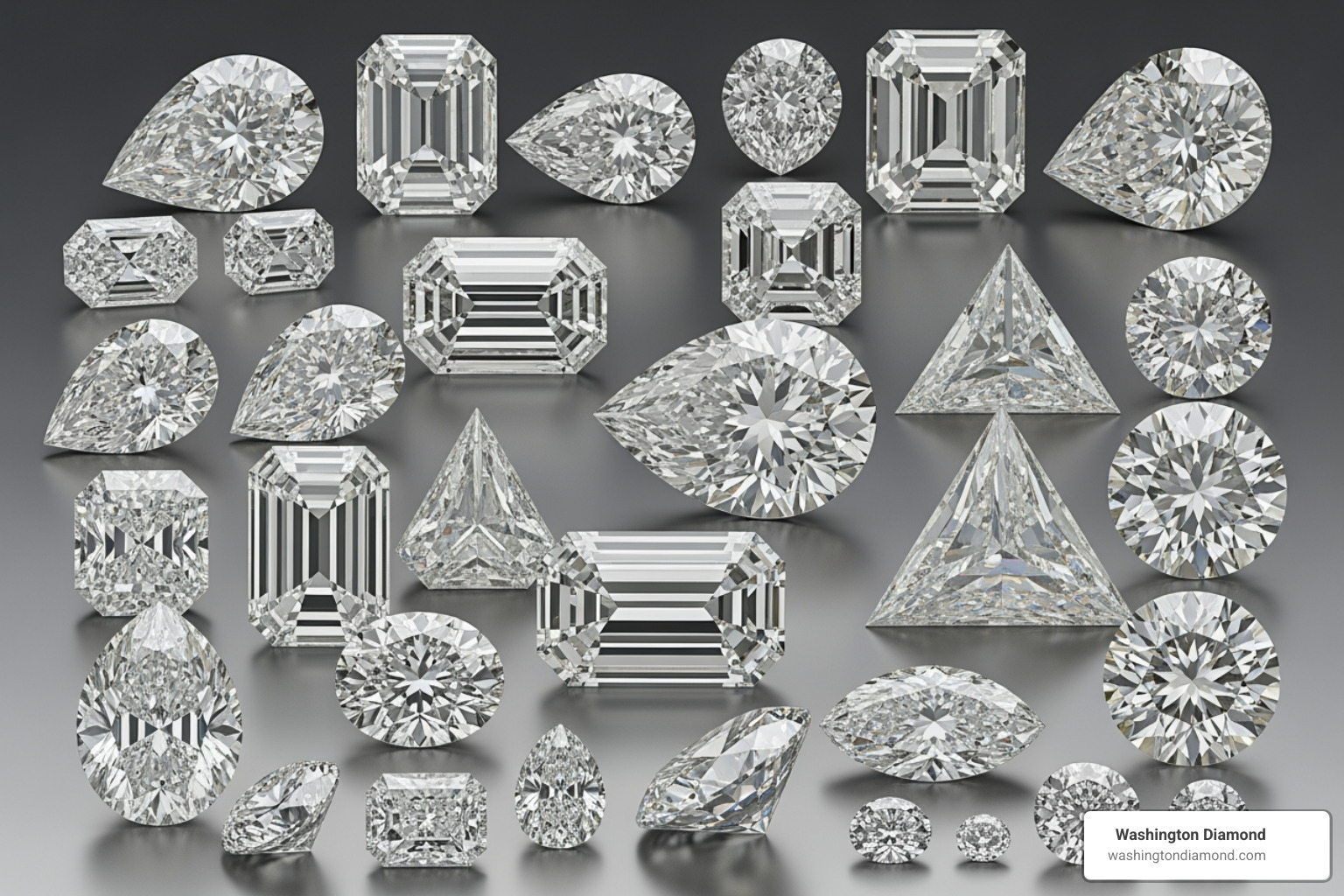
These four factors, assessed by labs like the Gemological Institute of America (GIA), determine a diamond's beauty and rarity. GIA certification is the gold standard for an objective assessment. For more insights, explore our guide on Beyond the 4Cs: How to Choose Your Perfect Certified Loose Diamond.
Carat Weight: Size Matters, But It's Not Everything
Carat is the standard unit of weight for diamonds (one carat = 200 milligrams). While a larger carat weight often means a higher price, it's only one factor. A smaller diamond with exceptional cut, color, and clarity can be more valuable than a larger, lower-quality one.
For rings with multiple diamonds, "Total Carat Weight" (TCW) is the combined weight of all stones. The value of a single large diamond increases exponentially with size, which is different from the combined value of many small diamonds of the same TCW. For pricing insights, see our guide on Decoding the Dollar: Your Guide to 2-Carat Diamond Pricing.
Cut, Color, and Clarity: The Quality Multipliers
These three Cs are powerful value multipliers:
- Cut: Arguably the most important C, cut determines how well a diamond's facets reflect light. An excellent cut maximizes brilliance and sparkle. GIA grades range from Excellent to Poor; a poor cut makes a diamond look dull, regardless of its other qualities.
- Color: Graded from D (colorless) to Z (light yellow/brown). Colorless diamonds are the rarest and most valuable. Near-colorless (G-H) diamonds offer excellent value, while noticeable tints decrease worth.
- Clarity: Measures the absence of internal flaws (inclusions) and external blemishes. The GIA scale runs from Flawless (FL) to Included (I3). Most jewelry diamonds are in the VS (Very Slightly Included) or SI (Slightly Included) range, with flaws invisible to the naked eye.
A ring with high-quality diamonds will be worth significantly more than one with lower-grade stones, even at the same carat weight. For more on how these qualities have shifted over time, check out The Shifting Sparkle: What Drives Diamond Values Through the Years.
Natural vs. Lab-Grown Diamonds
Lab-grown diamonds are a popular alternative to natural ones. They are chemically and optically identical, but their value propositions differ.
- Natural Diamonds: Formed over billions of years, their value is tied to their geological rarity and established resale market.
- Lab-Grown Diamonds: Created in labs, they offer the same sparkle at a lower price point. Their resale market is still evolving, which affects their long-term value retention. This is a key consideration when evaluating a ring with lab-grown stones.
You can learn more about this ethical elegance in our guide to Lab-Grown Diamond Engagement Rings: Ethical Elegance for Your Big Day.
Key Factors Determining the 14 Karat Gold Ring with Diamonds Value
Beyond gold and diamonds, other factors significantly impact a ring's value, differentiating a simple band from a coveted designer piece. Retail prices include a 100-300% markup over material costs to cover design, branding, and overhead. Resale value, however, is based on a different set of metrics. A simple 14K gold band might be worth $200-$400, while a designer ring with quality diamonds could command $2,000-$5,000 or more. To appreciate the full scope of ring valuation, consider our insights on Beyond the Bling: Everything You Need to Know About Valuing Your Wedding Band.
Design, Craftsmanship, and Brand
The artistry invested in a ring can dramatically lift its value:
- Design and Craftsmanship: Intricate, handcrafted designs are more valuable than mass-produced pieces due to the skill and labor involved.
- Brand and Designer Names: A ring from a famous luxury house commands a premium for its prestige, heritage, and exclusive designs.
- Vintage vs. Modern: Antique rings from specific eras (e.g., Art Deco, Edwardian) can be highly sought after by collectors for their rarity and unique style.
- Ring Types: Engagement and wedding rings often have higher perceived value due to their symbolic importance.
We pride ourselves on Custom Jewelry that reflects individual stories and unparalleled artistry.
The Impact of Condition and Wear
A ring's physical condition is paramount for its value. A well-maintained ring is always worth more:
- Surface Condition: Scratches, dents, or scuffs on the gold can reduce its value.
- Prong Security: Loose, bent, or worn prongs pose a risk of losing stones and diminish value.
- Missing Stones: A missing stone will significantly decrease the ring's value.
- Structural Integrity: Any damage, such as a bent band or crack, will impact the final valuation.
We recommend regular cleaning and annual inspections by a professional jeweler in Northern Virginia to preserve your ring's value. If your ring needs care, our Jewelry Repairs & Restoration Guide can help.
Beyond the Raw Materials: What Else Affects the 14 karat gold ring with diamonds value?
Other factors also influence a ring's worth:
- Market Trends: The popularity of certain styles or gold colors fluctuates. A trendy ring may fetch a higher price, while economic conditions can affect gold's base value.
- Provenance: A documented history, especially for antique pieces, can add significant value, turning a ring into a collector's item.
- Sentimental vs. Monetary Value: Sentimental value is priceless to you but does not translate into monetary worth in an appraisal, which is based on objective market factors.
From Estimate to Sale: A Practical Guide
Now that we've explored the factors influencing your 14 karat gold ring with diamonds value, let's discuss practical steps, whether you're curious about its worth or considering a sale.
How to Estimate the 14 karat gold ring with diamonds value at Home
You can get a preliminary estimate at home, but a professional appraisal is best for accuracy. Here's how to start:
- Weigh the Ring: Use a digital scale to weigh your ring in grams.
- Identify Hallmarks: Look for stamps like "14K," "585," or any maker's marks inside the band.
- Assess Diamond Quality Visually: Note the size, general color (clear or yellowish?), and clarity (any visible flaws?).
- Research Comparable Rings Online: Look for similar rings on reputable jewelry marketplaces to get a sense of current market prices.
- Calculate Gold Melt Value: Use the method outlined earlier (Weight in grams x 0.583 x Current Gold Price per gram).
- Use an Online Calculator: Online tools can estimate diamond value, but treat them as rough guides. For a more personalized online estimate, try our Whats Your Bling Worth? Calculate Your Diamond Rings Value Online.
A home estimate provides a baseline but won't capture the nuances of a professional evaluation.
When to Get a Professional Jewelry Appraisal
A professional appraisal provides a precise, authoritative valuation and is indispensable in several situations:
- Insurance Purposes: An appraisal provides the detailed replacement value your insurance company requires for coverage.
- High-Value Items: If your ring has significant diamonds or a designer name, its value is far beyond its raw materials.
- Estate Settlement: An appraisal is crucial for fair distribution of inherited jewelry.
- Selling a Significant Piece: An independent appraisal empowers you to negotiate confidently and receive a fair price.
- Curiosity and Documentation: An appraisal provides a comprehensive document of your ring's characteristics for your records.
A professional appraiser, like a GIA Graduate Gemologist, uses expertise and specialized equipment to evaluate your ring. You'll receive a detailed report covering gold content, precise diamond grading, design specifics, and an estimated value. Learn more in our guide on Everything You Need to Know About Jewelry Appraisals.
Frequently Asked Questions about Ring Valuation
We often get asked various questions about the value of 14K gold diamond rings. Let's address some of the most common ones.
Is a 14K gold diamond ring a good investment?
While a 14K gold diamond ring is a wonderful sentimental investment and a cherished heirloom, it's not typically a strong financial one. Here's why:
- Retail Markup: Jewelry is sold with a significant markup (100-300%) over its material cost to cover design, labor, and retail overhead. You are unlikely to recoup this in a sale.
- Liquidity: Reselling a ring is less straightforward than selling gold bullion. The resale market price is closer to the material value.
For financial investment, gold bullion is a better vehicle as its price is tied directly to the gold market without added jewelry premiums.
How much do jewelers pay for a 14K gold diamond ring?
The amount a jeweler pays for a 14 karat gold ring with diamonds is rarely close to its original retail price and depends on several factors:
- Scrap Value vs. Resale Potential: The offer may be based on the gold's melt value plus a value for the diamonds. If the ring is a desirable style from a known designer with exceptional diamonds, a jeweler may offer more based on its resale potential as a finished piece.
- Payouts Vary: Offers differ based on the buyer's business model. Pawn shops typically offer the lowest prices. A reputable jeweler in Northern Virginia, like us, will provide a transparent assessment. For a fair offer, it's wise to get an independent appraisal first.
Does the color of 14K gold (yellow, white, rose) affect its value?
No, the color of 14K gold does not affect its intrinsic metal value.
- Same Gold Content: All 14K gold—yellow, white, or rose—contains 58.3% pure gold. Two rings of the same weight will have the same gold melt value.
- Alloys Create Color: The color difference comes from the other metals (alloys) mixed with the gold, which have negligible value.
- Market Trends: While intrinsic value is the same, market trends can make one color more fashionable, potentially affecting its resale desirability as a finished piece, but not its scrap value.
- Rhodium Plating for White Gold: White gold is often plated with rhodium for a brighter finish. This plating can wear off and require re-plating, which is a routine maintenance task.
Get a Clear and Confident Valuation
Determining your ring's true worth requires understanding its components: the purity and weight of the gold, the quality of its diamonds, and the artistry of its design. While a home estimate provides a baseline, a professional evaluation is key for accuracy.
At Washington Diamond, we understand that every ring tells a story, and its value is often multifaceted. Our private, appointment-only studio in Northern Virginia ensures you receive our undivided attention and a memorable, personalized experience. We are dedicated to providing transparent and expert assessments, whether you're looking to understand an heirloom, sell a piece, or simply confirm its insurance value.
For a personalized and expert assessment of your jewelry, trust the specialists at Washington Diamond. We're here to help you understand every facet of your 14 karat gold ring with diamonds value so you can make informed decisions with confidence. Calculate the Value of a Diamond Before You Buy or Sell with our expert guidance.
Have a question about your jewelry?
We've been helping clients with diamonds, custom design, repairs, appraisals, and more since 1969. Book a private appointment at our Falls Church studio.
Book an AppointmentTrusted since 1969 · Falls Church, VA · 703-536-3600
From the blog
View all


