

The Ultimate Guide to Engagement Ring Care and Maintenance
Why Proper Engagement Ring Care Matters More Than You Think

Engagement ring care is something every ring owner needs to know — and the basics are simpler than you'd expect. Here's a quick overview of what good care looks like:
| Care Task | How Often |
|---|---|
| Wipe with a soft cloth | Daily |
| Clean at home with mild soap and water | Weekly |
| Remove for workouts, swimming, and chores | Always |
| Professional inspection and cleaning | Every 6–12 months |
| Insurance appraisal update | Every 2–3 years |
Your engagement ring is likely one of the most valuable things you own — both financially and emotionally. But daily life is hard on jewelry. Lotions, soaps, cooking oils, and simple everyday wear all leave a film on your stone that dulls its brilliance over time. More seriously, activities like working out, gardening, or swimming can loosen prongs, erode metal, or even cause you to lose the ring entirely.
The good news? Protecting your ring doesn't take much time or effort. A few simple habits go a long way.
I'm Tom Daube, a GIA-certified diamond expert and jewelry designer who has helped thousands of clients choose and care for their rings — and engagement ring care is one of the topics I'm most passionate about. Let's walk through everything you need to know to keep your ring as brilliant as the day you got it.
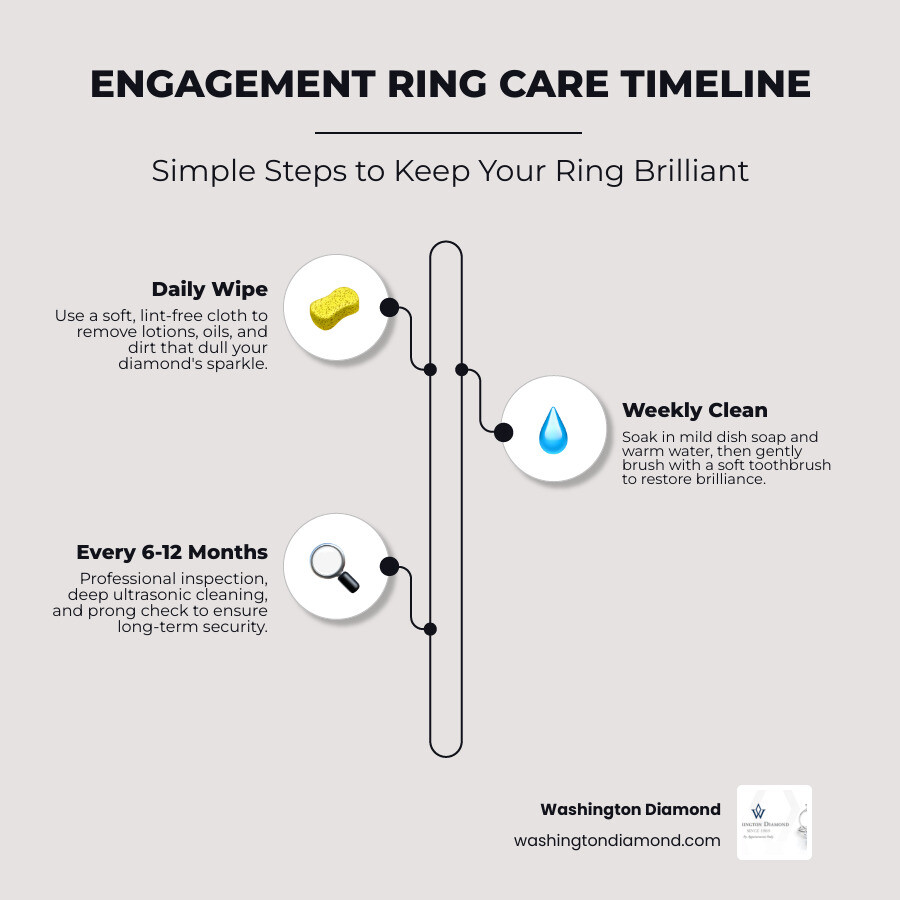
Engagement ring care terms at a glance:
Essential Daily and Weekly Engagement ring care
Maintaining the fire and brilliance of your diamond isn't a one-time event; it’s a series of small, intentional habits. Think of your ring like a luxury vehicle. You wouldn't drive a Ferrari through the mud for a year without a wash, and your diamond deserves the same level of respect.
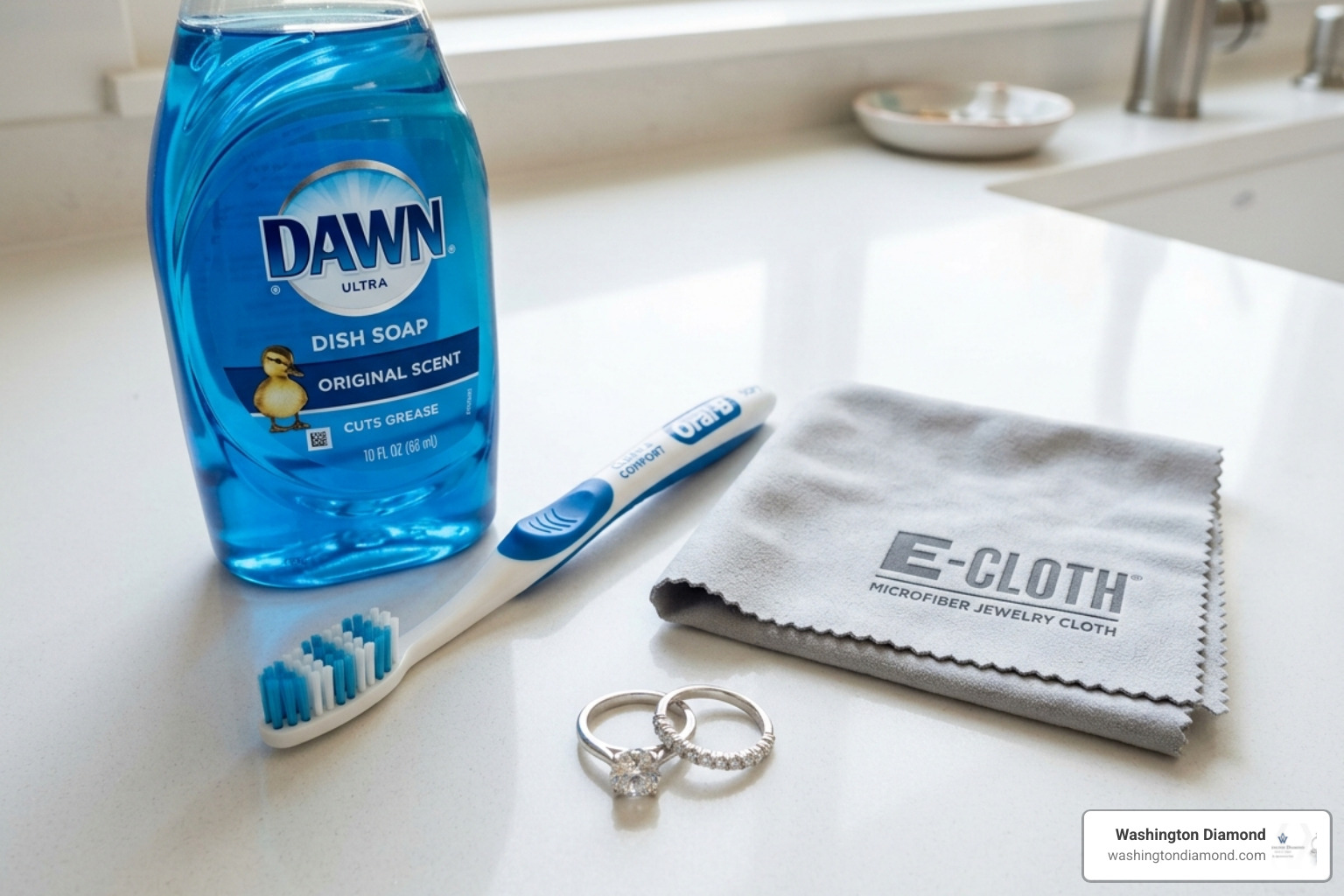
Best Practices for At-Home Engagement ring care
The most effective way to maintain your ring's "just-proposed-to" sparkle is a consistent weekly cleaning. Throughout the week, your ring acts as a magnet for skin oils, hand lotions, hairspray, and kitchen grease. These substances create a cloudy film on the pavilion (the bottom) of the diamond, preventing light from entering and reflecting back to your eye.
To restore that brilliance, we recommend the "Soak and Scrub" method. It’s the best way to clean diamonds without risking damage to the metal or the stone:
- The Soak: Fill a small bowl with lukewarm water and add a few drops of mild, fragrance-free dish soap. Avoid "moisturizing" soaps, as these often contain oils that leave even more residue. Let your ring soak for 20 to 40 minutes.
- The Scrub: Use a new, soft-bristled toothbrush (baby toothbrushes are perfect for this) to gently brush the stone. Pay special attention to the underside of the diamond and the gaps in the setting where dirt loves to hide.
- The Rinse: Rinse your ring under warm running water. Pro tip: Ensure the drain is plugged or use a fine-mesh strainer! There is no heartbreak quite like watching a family heirloom disappear down the pipes of a Northern Virginia home.
- The Dry: Pat the ring dry with a lint-free cloth or use a hairdryer on a cool setting to prevent water spots.
By performing this simple routine once a week, you prevent the long-term buildup of "biofilm" that can eventually require more aggressive professional cleaning.
Common Mistakes in Engagement ring care to Avoid
In our years at Washington Diamond, we’ve seen well-intentioned owners accidentally damage their jewelry by using "old wives' tale" cleaning methods. Here is what you should never do:
- Avoid Bleach and Chlorine: These chemicals can literally break down the alloys in your gold or platinum. Chlorine, in particular, can cause stress corrosion cracking, which makes the metal brittle and can lead to prongs snapping off.
- Skip the Toothpaste: While it’s great for your pearly whites, toothpaste contains abrasives that can scratch the surface of softer metals like gold and even some colored gemstones.
- Don't Use Abrasive Cleaners: Baking soda, powdered cleansers, or even some "jewelry cleaners" sold at big-box stores can be too harsh for delicate settings.
- Stop Picking It Up by the Stone: It’s a natural habit to grab the center diamond when putting the ring on or taking it off. However, the oils from your fingertips immediately smudge the stone, and the pressure can slowly loosen the prongs over time. Always handle your ring by the metal band (the shank).
When to Take Off Your Ring: Protecting Your Investment
One of the hardest lessons for newly engaged couples to learn is that your ring is not indestructible. While diamonds are the hardest natural substance on earth, the metal settings holding them are relatively soft and malleable.

Safe Daily Activities vs. High-Risk Activities
| Activity | Should You Wear Your Ring? | The Risk |
|---|---|---|
| Sleeping | No | Prongs can snag on hair or bedding; fingers swell overnight. |
| Gym/Weightlifting | No | Metal-on-metal contact can bend the band or crush prongs. |
| Gardening | No | Rocks and dirt are abrasive; the ring can slip off in loose soil. |
| Swimming (Pool/Ocean) | No | Chlorine erodes metal; cold water shrinks fingers, causing loss. |
| Cleaning the House | No | Harsh chemicals damage metal; impact with hard surfaces. |
| Showering | No | Soap scum and exfoliating beads dull the stone and clog settings. |
| Applying Makeup/Lotion | No | Product buildup creates a dull, greasy film on the diamond. |
Risks of Water and Chemicals
The bathroom and the beach are two of the most dangerous places for an engagement ring. Many people assume that showering with their ring on helps keep it clean. In reality, the fatty acids in soaps and the silicones in conditioners create a thick film that is difficult to remove.
Furthermore, hand sanitizer has become a daily staple. While it won't hurt a diamond, the high alcohol content can dry out the surface of organic gems like pearls and can eventually dull the finish of certain gold alloys.
When it comes to the ocean or a pool, the danger is twofold. First, cold water causes your blood vessels to constrict, making your fingers thinner. This is why so many rings are lost in the Atlantic—they simply slide off without the wearer noticing. Second, saltwater is corrosive to many jewelry metals, and sand is highly abrasive.
Professional Maintenance and Long-Term Preservation
Even with perfect at-home habits, your ring needs professional "check-ups" to ensure its structural integrity. Over time, the tiny metal claws (prongs) that hold your diamond in place can wear down, snag on clothing, or shift due to accidental bumps.
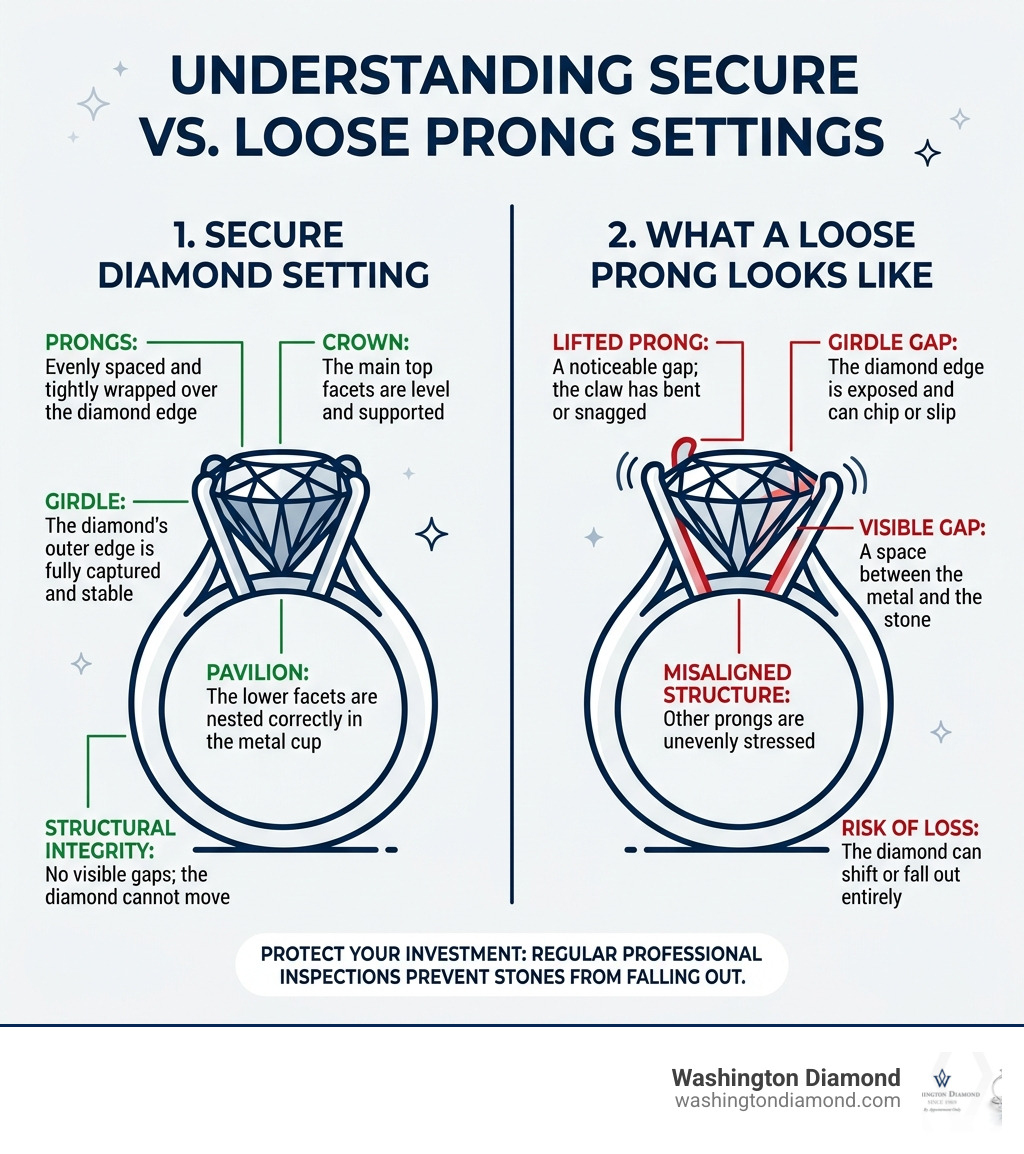
Annual Check-ups and Professional Cleaning
At Washington Diamond, we recommend a professional inspection every six months, or at the very least, once a year. During these visits, a master craftsperson will examine your ring under high magnification to check for:
- Thinning Prongs: Metal wears away over years of friction. We can "re-tip" prongs to ensure they remain strong.
- Loose Stones: Even if the stone isn't rattling yet, a jeweler can detect microscopic movement.
- Structural Integrity: We check for "out-of-round" bands or hairline fractures in the metal.
Professional cleaning also involves tools you don't have at home, such as ultrasonic cleaners and high-pressure steam. An ultrasonic cleaner uses sound waves to create tiny bubbles that reach deep into the intricate parts of a setting to shake loose dirt. However, these machines should be used with caution—specifically for diamonds and hard gemstones. To learn more about the nuances of different stones, see The Art Of Gemstone Jewelry Care.
For those with white gold rings, professional maintenance usually includes "rhodium plating." White gold is naturally a slightly yellowish alloy that is plated with rhodium (a member of the platinum family) to give it that bright, chrome-like finish. This plating wears off every 12 to 24 months, and a professional jeweler can re-apply it to make your ring look brand new. For a deeper dive, check out our Diamond Cleaning Care Guide.
Safe Storage and Insurance Strategies
Where your ring stays when it's not on your finger is just as important as how you wear it. Most jewelry damage occurs when rings are left on the edge of a sink or tossed into a drawer where they can scratch against other pieces.
Safe Storage Solutions
- The "Designated Spot" Rule: Never take your ring off and just set it down. Have a ring dish in the kitchen, one in the bathroom, and one on your nightstand. If it's not on your finger, it’s in a dish.
- Separate Compartments: Diamonds are the hardest material, which means a diamond can easily scratch your other gold, platinum, or even other diamonds. Store your engagement ring in its original box or a velvet-lined jewelry case with separate slots.
- Travel Cases: When traveling through Northern Virginia airports or heading abroad, use a dedicated travel jewelry organizer. Never leave your ring in a checked bag; always keep it in your carry-on or wear it through security.
Insurance and Appraisals in 2026
In April 2026, the market value of precious metals and diamonds can fluctuate significantly from what you paid years ago. This is why insurance is a critical pillar of engagement ring care.
If you haven't already, you should insure your ring immediately. Most people choose a "rider" on their homeowners or renters insurance, but specialized jewelry insurance often provides better coverage for "mysterious disappearance" (losing the ring without knowing how).
To ensure you are fully covered, you need an up-to-date appraisal. We recommend getting a new appraisal every 2–3 years. If your ring was appraised for $10,000 in 2021, but it would cost $14,000 to replace it in 2026, your current insurance policy might leave you with a $4,000 gap in the event of a loss. For a comprehensive look at your options, read Protect Your Precious The Ultimate Guide To Engagement Ring Insurance.
Frequently Asked Questions
How often should you clean your engagement ring?
For the best results, give your ring a quick wipe with a lint-free cloth every night to remove daily oils. Perform a "deep" soak and scrub at home once a week. Finally, visit us for a professional cleaning every six months. If you’re a beginner, our guide on How To Clean Jewelry Even If Youve Never Tried It Before is a great place to start.
Can you shower or sleep with your engagement ring on?
We strongly advise against both. Showering leads to soap scum buildup that is incredibly difficult to clean out of pavé settings. Sleeping with your ring on is a leading cause of bent prongs, as the ring can catch on the loops of a blanket or your own hair as you toss and turn.
Does the type of metal or gemstone affect care?
Absolutely. Platinum is very durable but will develop a "patina" (tiny scratches) over time that some people love and others prefer to have polished out. White gold requires rhodium plating. If your engagement ring features "softer" stones like opals, emeralds, or pearls, you must be much more careful. These stones are porous and can be damaged by heat, chemicals, and even the vibrations of an ultrasonic cleaner.
Conclusion: Partnering with Washington Diamond
Your engagement ring is more than just a piece of jewelry; it is a physical representation of a promise and a future. At Washington Diamond, we believe that the care of such a precious item should be as personalized and attentive as the process of choosing it.
Our private, appointment-only studio in Northern Virginia offers you the undivided attention of experts who are dedicated to preserving the heirloom quality of your ring. Whether you need a routine prong inspection, a professional deep clean, or a new insurance appraisal for 2026, we are here to help your jewelry stand the test of time.
Ready to give your ring the expert attention it deserves? Schedule an appointment with us today and let’s keep that sparkle alive for decades to come.
From the blog
View all


