

Ultimate Guide to Diamond Wedding Bands
The Ring You'll Wear Every Day: What to Know About Diamond Wedding Bands

Diamond wedding bands are one of the most meaningful purchases you'll ever make — a small circle of metal and light that you'll wear every single day for the rest of your life.
Here's a quick overview of what you need to know:
| Topic | Quick Answer |
|---|---|
| What they are | Rings set with diamonds, worn alongside or instead of an engagement ring |
| Popular styles | Eternity, half-eternity, pavé, channel set, bezel, stackable |
| Common metals | Platinum, 14K/18K white, yellow, or rose gold |
| Natural vs. lab-grown | Same look and hardness; lab-grown costs significantly less |
| Price range | Roughly $449 to $20,000+, depending on diamonds and metal |
| Key consideration | Full eternity bands cannot be resized; three-quarter bands can |
Unlike an engagement ring — which is often a statement piece with a large center stone — a wedding band is designed for everyday wear. It's typically simpler, lower-profile, and built to last decades without snagging or discomfort.
Choosing the right one means balancing style, practicality, and budget. This guide covers everything you need to make a confident decision.
I'm Tom Daube, a GIA-certified diamond expert and jewelry designer who has helped thousands of clients find the perfect diamond wedding bands — often at prices below listed wholesale. I'll walk you through every important detail so you can shop with clarity and confidence.
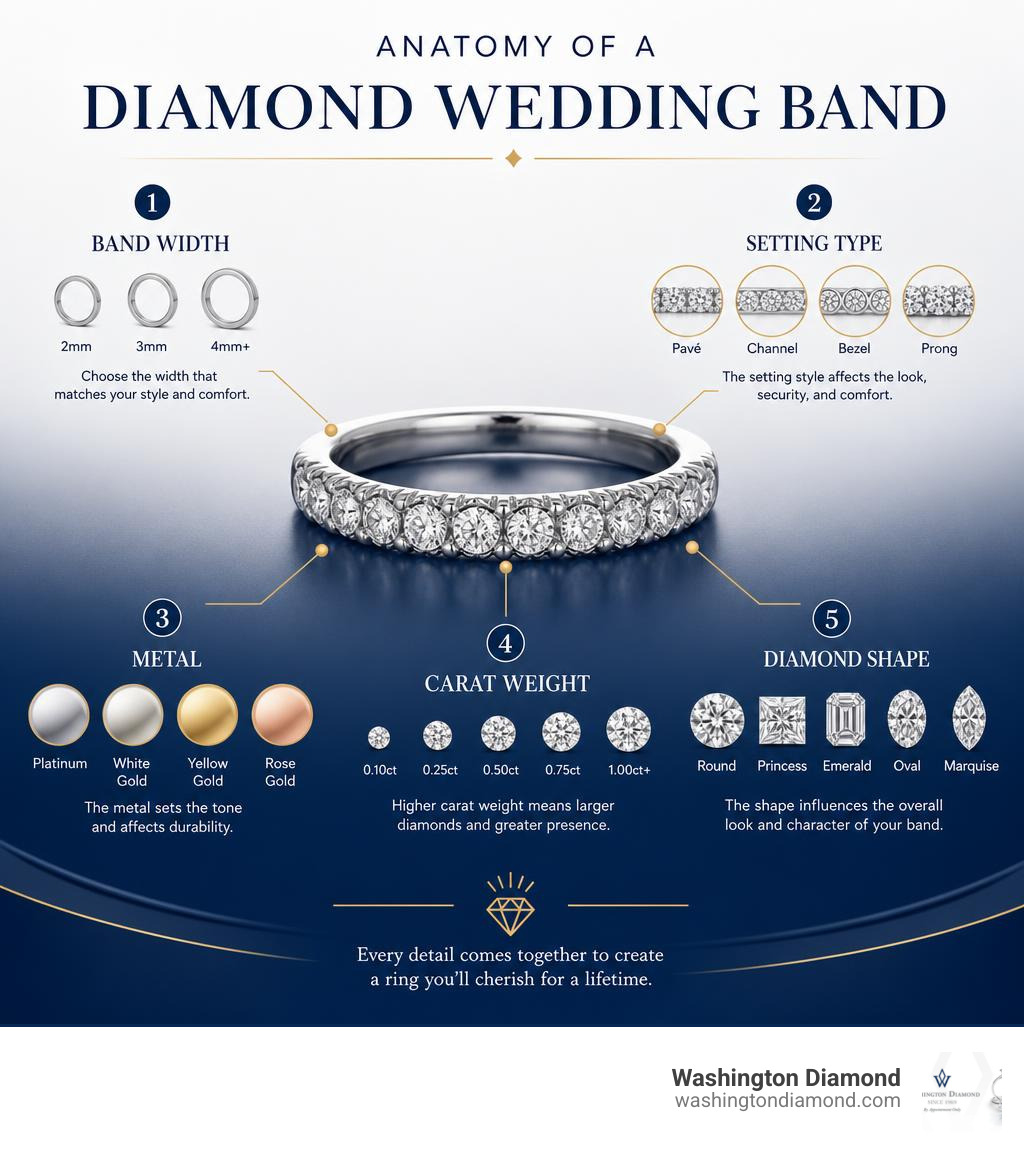
What is a Diamond Wedding Band and How Does It Differ from an Engagement Ring?
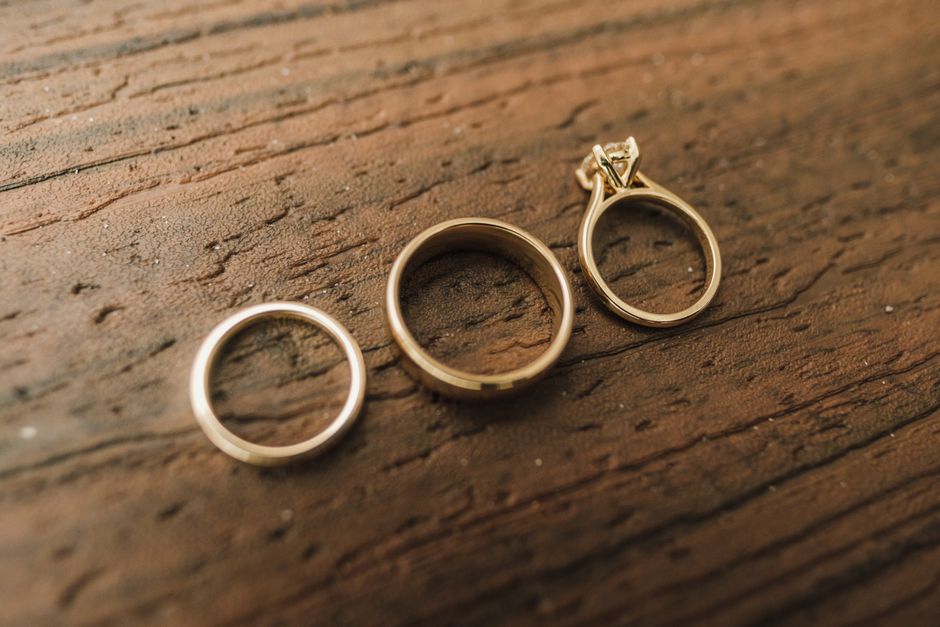
While they both sit proudly on your ring finger, an engagement ring and a wedding band serve two distinct symbolic and functional purposes.
An engagement ring is typically presented during the proposal. It is traditionally the "showstopper" of the pair, featuring a dominant center diamond or gemstone (like a round brilliant, oval, or emerald cut) mounted on a delicate band. It is a declaration of intent to marry.
A wedding band, on the other hand, is exchanged during the marriage ceremony itself. It is the ultimate symbol of the union and the daily promises you make to one another. Historically, wedding bands were simple, unadorned metal rings. However, modern couples in May 2026 are increasingly choosing diamond wedding bands to add continuous brilliance and personality to their bridal stack.
Because wedding bands are intended for continuous, lifetime wear, they are engineered differently than engagement rings. They feature low-profile settings where the diamonds are nestled closer to the metal band. This design reduces the risk of catching on clothing, scratching surfaces, or getting damaged during everyday activities like working, exercising, or gardening.

The Symbolism of Diamond Wedding Bands
The circular shape of a wedding band has represented eternity, wholeness, and infinity since the times of the ancient Egyptians. With no beginning and no end, the ring is a physical manifestation of a love that endures forever.
When you add diamonds to this circle, the symbolism deepens. As the hardest natural substance on Earth, a diamond represents indestructible strength, purity, and constancy. Incorporating diamonds into your wedding band signifies a commitment that is not only beautiful but unbreakable.
To make this enduring symbol even more personal, many couples choose to add custom inscriptions to the inside of the metal shank. Whether it is your wedding date, your partner's initials, or a short, meaningful phrase, exploring Popular Engravings On Wedding Rings is a wonderful way to seal your vows in gold or platinum.
Anniversary Bands and Milestones
As the years pass, the story of your marriage continues to grow, and so can your jewelry. Many couples choose to mark major milestones—such as a 5th, 10th, or 25th anniversary—with a new diamond band.
Anniversary bands are often styled similarly to diamond wedding rings, but they can feature larger diamonds, unique gemstone accents, or distinct designs that represent the journey you have shared. They can be stacked alongside your original wedding set or worn elegantly on the right hand.
Reaching a quarter-century of marriage is an extraordinary achievement that deserves an equally extraordinary tribute. If you are approaching this beautiful milestone, you can explore specialized guides to find the perfect piece, such as our curated list of 25 Year Anniversary Bands Your Top Choices For A Lasting Tribute. For a comprehensive look at the history, etiquette, and options for this occasion, check out our 25Th Wedding Anniversary Rings Guide. To get inspired by gorgeous modern and vintage-inspired aesthetics, take a look at our gallery of 25Th Anniversary Ring Designs.
Popular Styles and Settings for Diamond Wedding Bands
When shopping for diamond wedding bands, you will quickly discover that the way the diamonds are secured to the band changes both the look of the ring and how it feels on your hand. From maximum sparkle to ultimate durability, there is a style for every lifestyle.
Classic Settings for Diamond Wedding Bands
The classic settings have stood the test of time because they protect the diamonds while showcasing their natural fire. Here are the four primary classic settings you will encounter:
- Eternity Bands: These rings feature a continuous, unbroken line of diamonds wrapping all the way around the finger. They offer unmatched sparkle from every angle, though they come with practical trade-offs regarding resizing.
- Half-Eternity Bands: Also known as "semi-eternity" or "five-stone/seven-stone" bands, these feature diamonds across the top half of the band (the part visible when your hand is resting flat). The bottom half is solid metal, which makes the ring much more comfortable to wear and significantly easier to resize in the future.
- Channel Setting: In this design, the diamonds are set side-by-side between two parallel walls of metal. This creates a smooth, snag-free surface that protects the outer edges of the diamonds from chipping. It is an exceptionally durable choice for active individuals.
- Pavé Setting: Derived from the French word for "paved," this style features tiny diamonds set closely together, held by microscopic metal beads. The result is a surface that looks like it is paved with pure light, adding incredible shimmer to delicate, thin bands.
- Bezel Setting: Each diamond is completely enclosed by a thin rim of metal. This is the most secure setting available, offering a sleek, modern, and low-profile look that prevents dirt accumulation and stone loss.
To help you compare these classic options, we've broken down their key attributes below:
| Setting Style | Sparkle Level | Durability | Resizing Ease | Best Suited For |
|---|---|---|---|---|
| Eternity | Maximum | Moderate | Extremely Difficult | Those wanting continuous sparkle and a fixed ring size |
| Channel | Moderate-High | Excellent | Easy | Active lifestyles, healthcare workers, and hands-on professions |
| Pavé | High | Moderate | Moderate | Delicate, vintage, and highly detailed bridal stacks |
| Bezel | Modern-Subdued | Outstanding | Easy | Maximum stone protection and a clean, contemporary look |
Modern and Curved Designs
While straight bands are timeless, modern jewelry design has introduced innovative shapes that accommodate unique engagement rings or stand out as independent art pieces.
- Curved and Contoured Bands: If your engagement ring has a low-profile center stone or an unusual shape (like a pear, marquise, or large oval), a straight wedding band may not sit flush against it. Curved bands are gently bowed to hug the contours of your engagement ring, eliminating awkward gaps.
- Chevron and V-Bands: These bands feature a distinct pointed "V" shape. They look incredibly chic when stacked with pear-shaped or marquise-cut engagement rings, pointing down to frame the center stone beautifully.
- East-West Settings: Instead of mounting fancy-cut diamonds (like emerald, oval, or pear cuts) vertically along the band, an east-west setting mounts them horizontally. This orientation protects the sharp points of pear and marquise cuts while making the individual diamonds appear visually larger.
- Mixed Geometric Cuts: A major trend in May 2026 is the use of alternating diamond shapes within a single band—such as alternating marquise and round brilliant diamonds. This mix-cut geometry creates multi-angle brilliance and a playful, textured silhouette that layers beautifully with simple solitaire rings.
Choosing the Right Metal and Coordinating with Your Engagement Ring
Selecting the metal for your wedding band is about more than just matching colors. You must consider the metal's weight, its long-term durability, its hypoallergenic properties, and how it will wear against your engagement ring over time.
Gold Options: Yellow, White, and Rose
Gold remains the traditional choice for wedding jewelry, loved for its warm luster and versatility. When choosing gold, you will decide between karat weights and colors:
- 14K Gold vs. 18K Gold: Pure gold is too soft for daily wear, so it is alloyed with other metals. 14K gold contains 58.3% pure gold and is highly durable and scratch-resistant. 18K gold contains 75% pure gold, offering a richer, more saturated color, though it is slightly softer and more prone to minor scuffs.
- Yellow Gold: Classic and timeless, yellow gold has made a massive comeback. It provides a stunning contrast to white diamonds. To find out why so many modern couples are returning to this warm metal, check out our guide on Yellow Gold Wedding Bands.
- White Gold: Sleek and modern, white gold is plated with rhodium (a member of the platinum family) to give it a bright, reflective white finish. Over time, this plating can wear down, requiring a quick, inexpensive re-plating every few years to restore its mirror-like shine.
- Rose Gold: Created by mixing gold with copper alloys, rose gold offers a soft, romantic, vintage-inspired pink hue that complements all skin tones beautifully.
Platinum and Alternative Metals
For those seeking the pinnacle of durability and luxury, platinum is the gold standard.
Platinum is naturally white, meaning it will never require rhodium plating to maintain its color. It is also hypoallergenic, making it ideal for individuals with sensitive skin or metal allergies. Because platinum is a dense, heavy metal, it feels substantial on the hand and holds diamonds incredibly securely.
Over time, platinum develops a soft, satiny finish known as a "patina." Many people love this look because it highlights the brilliance of the diamonds, but it can easily be polished back to a high shine at any time. If you want to dive deeper into custom design options with this premium metal, read our Custom Platinum Wedding Band Guide.
For men's bands or those looking for a bold, industrial aesthetic, alternative metals like tantalum have grown rapidly in popularity. Tantalum is highly scratch-resistant, heavy, and features a unique, dark slate-gray color. If you are interested in exploring bold, geometric, or vintage-inspired men's styles, our Art Deco Mens Wedding Band Guide is an excellent resource.
In the Northern Virginia area, couples looking to bring these metal choices to life can work with experienced local designers to create a piece that perfectly matches their vision. Whether you are looking for a classic gold band or a highly customized platinum design, exploring your options with a dedicated specialist ensures your ring will be crafted to last a lifetime.
Key Factors to Consider: Sourcing, Comfort, and Care
Before you make your final selection, it is important to look beyond the initial sparkle and consider how the ring will fit into your daily life, your values, and your long-term maintenance routine.
Natural vs. Lab-Grown Diamonds
One of the most significant decisions modern couples face is choosing between natural and lab-grown diamonds.
Physically, chemically, and optically, natural and lab-grown diamonds are identical. Both are composed of pure carbon crystals, rate a perfect 10 on the Mohs hardness scale, and exhibit the exact same fire and brilliance. The only difference is their origin: natural diamonds were forged deep within the Earth billions of years ago, while lab-grown diamonds are grown in high-tech laboratories that replicate those natural conditions. For a neutral technical overview, the Gemological Institute of America explains how laboratory-grown diamonds compare with natural diamonds in its guide to laboratory-grown diamonds.
- The Price Advantage: Lab-grown diamonds are significantly more affordable than natural diamonds. This price difference allows couples to opt for higher total carat weights, wider bands, or higher-quality diamond grades (such as colorless VS+ clarity) while staying well within their budget.
- Traceability and Ethics: For environmentally and socially conscious shoppers, lab-grown diamonds offer a transparent supply chain. Additionally, technologies like TRACR blockchain tracking are now used to verify the ethical, conflict-free origin of natural diamonds, giving buyers total peace of mind regardless of which path they choose.
Comfort, Sizing, and Long-Term Care
Because your wedding band will rarely leave your finger, comfort is paramount.
- Comfort-Fit Bands: When shopping, ask for a "comfort-fit" band. These rings are slightly domed on the inside metal surface rather than flat. This rounded interior allows the ring to slide over your knuckle more easily and prevents the metal edges from pinching your skin during daily movement.
- The Resizing Trap: It is crucial to remember that full eternity bands cannot be resized. Because the diamonds run continuously around the ring, there is no plain metal section that a jeweler can cut into to expand or contract the size. If your finger size changes over time, you may have to replace the entire ring. To avoid this, we highly recommend choosing a three-quarter eternity band or a band with a small, solid metal "sizing bar" at the back. This gives you the full-diamond look from the top while preserving the ability to resize the ring later.
- Maintenance: To keep your diamonds flashing like new, clean your ring at home once a week using warm water, a few drops of mild dish soap, and a soft-bristled toothbrush to gently sweep away hand lotions and oils. We also recommend bringing your ring to a professional jeweler once a year for a deep ultrasonic cleaning and a safety check to ensure your prongs remain tight and secure.
Frequently Asked Questions
Can full eternity diamond wedding bands be resized?
No, true full eternity bands cannot be resized because there is no plain metal section to work with. Cutting into the band would damage the diamond alignment and compromise the structural integrity of the settings. If you love the look of continuous diamonds but want peace of mind for the future, opt for a three-quarter band or a band designed with a solid metal sizing bar at the bottom.
How do I clean my diamond wedding band at home?
Cleaning your band is simple! Soak your ring in a shallow bowl of warm water mixed with a few drops of standard, mild dish soap (like blue Dawn) for about 15 to 20 minutes. Then, use a clean, soft-bristled toothbrush to gently scrub the diamonds, paying close attention to the hard-to-reach areas underneath the settings where lotion and soap residue tend to build up. Rinse thoroughly under warm running water (make sure the drain is plugged!) and dry with a lint-free cloth.
Should my wedding band match my partner's band?
There is no rule saying your bands must match! While some couples love the tradition of matching metal types or engraving styles, your wedding band is a reflection of your personal style. It is completely normal—and increasingly common—for partners to choose entirely different metals, widths, and styles that suit their individual tastes and daily lifestyles.
Conclusion
Choosing your diamond wedding band is a beautiful, personal journey. It is a piece of jewelry that will witness your daily life, hold your memories, and shine as a constant reminder of the vows you shared.
At Washington Diamond, we believe that finding the perfect ring should be as memorable and joyful as the day you say "I do." We reject the high-pressure, overwhelming environment of traditional retail jewelry stores. Instead, we welcome you into our private, appointment-only studio in Northern Virginia.
Here, you will receive our completely undivided attention. We will sit down with you, listen to your vision, explain the nuances of diamond quality, and help you design or select a custom piece that fits your lifestyle, your engagement ring, and your budget perfectly.
Ready to begin your search? Let us guide you through every step of the process. Explore our Diamond Wedding Rings DC Complete Guide to learn more, or contact us today to schedule your private, personalized design consultation. We can't wait to help you create something beautiful.
Have a question about your jewelry?
We've been helping clients with diamonds, custom design, repairs, appraisals, and more since 1969. Book a private appointment at our Falls Church studio.
Book an AppointmentTrusted since 1969 · Falls Church, VA · 703-536-3600
From the blog
View all


