

The GIA Report: Your Diamond's Independent Quality Check, Not an Appraisal
Understanding the Difference Between GIA Reports and Diamond Appraisals
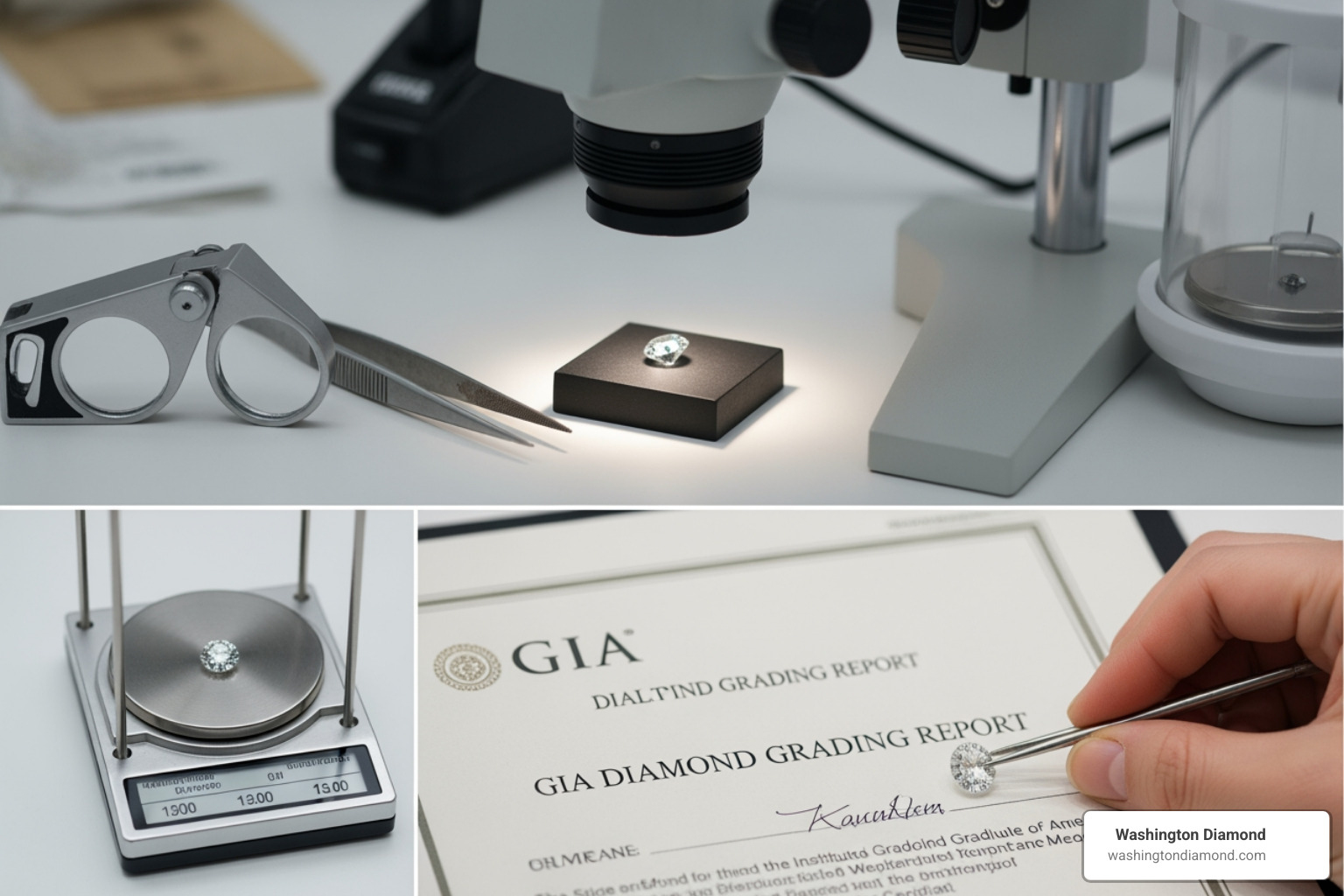
GIA diamond appraisal is a common search term, but here's what you need to know right away: GIA does not perform appraisals. Instead, GIA issues grading reports that assess a diamond's quality characteristics. Here's the key distinction:
Quick Answer:
- GIA Grading Report: Documents a diamond's quality (the 4Cs: cut, color, clarity, carat weight) using scientific criteria
- Diamond Appraisal: Estimates a diamond's monetary value based on current market conditions
- The Connection: Appraisers use GIA reports as the foundation for determining a diamond's worth
- Who Does Appraisals: Independent appraisers, often GIA Graduate Gemologists, not GIA itself
When you're shopping for a diamond for an engagement ring or anniversary gift, you'll likely encounter a GIA report with your purchase. This report is your diamond's "passport"—an objective, scientific assessment of its quality characteristics. It's not an appraisal that tells you what the diamond is worth in dollars.
Think of it this way: a GIA report tells you what you have. An appraisal tells you what it's worth.
The confusion is understandable. GIA established the International Diamond Grading System in the 1950s and issued its first diamond grading report in 1953. Since then, GIA reports have become the gold standard for diamond quality assessment. But GIA remains strictly objective—they confirm quality characteristics that determine value without stating a monetary figure.
I'm Tom Daube, and as a GIA-certified diamond specialist helping clients steer GIA diamond appraisal questions for years, I've seen how understanding this distinction protects buyers and ensures they get exactly what they're paying for. Let me walk you through everything you need to know about GIA reports, how they differ from appraisals, and how both work together to give you confidence in your diamond purchase.
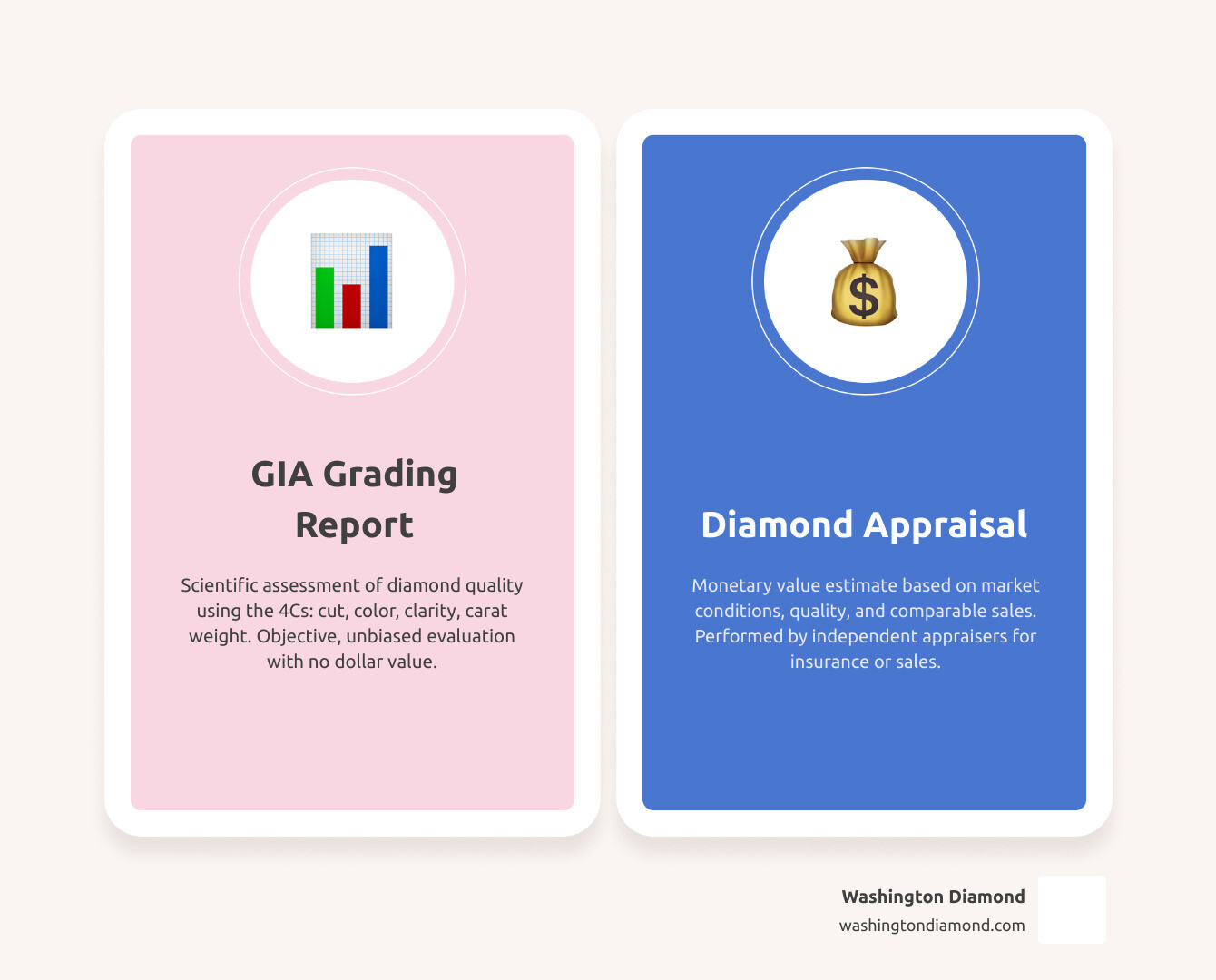
GIA diamond appraisal terms explained:
Does GIA Appraise Diamonds? Understanding the Role of the Gemological Institute of America

To understand why people often search for a GIA diamond appraisal, we first have to look at what the Gemological Institute of America actually is. Established in 1931, GIA is a non-profit institution dedicated to research and education in the field of gemology. They are the world’s foremost authority on diamonds, colored stones, and pearls.
However, a core part of their mission is maintaining absolute objectivity. To keep that objectivity, GIA does not buy, sell, or value diamonds. If they were to tell you a diamond was worth $10,000, they would be entering the commercial marketplace. Instead, they provide the scientific data that leads to that $10,000 valuation.
When you ask, "Will GIA appraise my diamond?," the official answer is no. They provide a Diamond Grading Report. This report is an unbiased, scientific evaluation. Since its first report in 1953, GIA has used the International Diamond Grading System™ to ensure that everyone in the industry—from a diamond cutter in Belgium to our team here in Northern Virginia—speaks the same language.
By focusing on scientific criteria and avoiding monetary value, GIA ensures that their reports are trusted worldwide. They use master stones for color grading and highly precise electronic devices for measurements, ensuring that the data you receive is as accurate as modern science allows.
GIA Diamond Appraisal vs. Grading Report: Key Differences
It is helpful to think of the grading report and the appraisal as two different documents that work together. We often see clients who think they only need one or the other, but they serve very different masters.
A GIA Grading Report is like a birth certificate or a passport. It describes the inherent, unchanging characteristics of the diamond. Unless the diamond is chipped or re-cut, these characteristics stay the same forever.
A Diamond Appraisal, on the other hand, is a snapshot of value in time. Because the price of gold and the market demand for certain diamond shapes fluctuate, an appraisal needs to be updated every few years.
| Feature | GIA Grading Report | Diamond Appraisal |
|---|---|---|
| Purpose | Scientific Quality Assessment | Monetary Valuation |
| Monetary Value Included? | No | Yes |
| Who Performs It? | GIA Laboratory | Independent Appraiser / Gemologist |
| Changes Over Time? | No (Permanent qualities) | Yes (Market-dependent) |
| Main Use | Verification of Authenticity/Quality | Insurance, Estate, Divorce |
| Foundation | The 4Cs & Scientific Analysis | GIA Report + Market Data |
If you want to calculate the value of a diamond before you buy or sell, you must start with the GIA report. Without it, an appraiser is just guessing at the clarity or color grade, which can result in a valuation that is off by thousands of dollars. We recommend reading Everything You Need to Know About Jewelry Appraisals to see how these values are calculated for different purposes, such as replacement value for insurance or fair market value for an estate.
Does a GIA Diamond Appraisal Include a Monetary Value?
Technically, a GIA diamond appraisal doesn't exist, so you won't find a dollar sign anywhere on a GIA document. GIA reports are strictly about the "what." They will tell you the diamond is a 1.02-carat, G-color, VS1-clarity, Excellent-cut round brilliant.
To turn that data into a dollar amount, you or your appraiser might look at a diamond price chart. These charts track what diamonds with those specific specs are currently selling for in the wholesale or retail markets. If you’re curious about how those numbers are crunched, our guide on Beyond the Bling: What a Diamond Price Chart Really Tells You breaks down the complexities of diamond pricing.
While the GIA report doesn't add monetary value in the sense of a surcharge, it protects the value of your investment. A diamond with a GIA report is much easier to sell or insure because its quality is verified by an unbiased third party. It provides the "authenticity verification" that banks and insurance companies require.
Who Performs a GIA Diamond Appraisal if GIA Doesn't?
Since GIA doesn't do it, who does? In Northern Virginia, you should look for an Independent Jewelry Appraiser. Specifically, you want someone who is a GIA Graduate Gemologist (GG).
A Graduate Gemologist has been trained by GIA to identify and grade gemstones but works independently of the lab. These professionals belong to appraisal associations like the American Gem Society (AGS) or the International Society of Appraisers (ISA). They take the technical data from the GIA report and combine it with their knowledge of the current retail market to provide a formal valuation.
These appraisers can serve as expert witnesses in legal cases or provide the necessary documentation for "Retail Replacement Value"—the amount an insurance company would pay to replace your ring with an identical one if it were lost or stolen.
What Information Does a GIA Grading Report Provide?
When you view a sample report, you'll see it is packed with data. It’s more than just the 4Cs. A full GIA Diamond Grading Report includes:
- GIA Report Number: A unique ID number, often laser-inscribed on the diamond’s girdle (the outer edge).
- Shape and Cutting Style: (e.g., Round Brilliant, Pear, Cushion).
- Measurements: Dimensions to the nearest hundredth of a millimeter.
- The 4Cs Assessment: Precise grades for Carat Weight, Color, Clarity, and Cut.
- Finish: Grades for Polish and Symmetry.
- Fluorescence: Whether the diamond glows under UV light.
- Proportions Diagram: A graphic representation of the diamond's angles and percentages.
- Clarity Plot: A map of the diamond's inclusions (internal) and blemishes (external). This is like a fingerprint; no two diamonds have the exact same plot.
Understanding these details helps you go beyond the 4Cs: how to choose your perfect certified loose diamond. For instance, two diamonds might both be "VS2," but one might have an inclusion right under the table (the top), while the other has it hidden near the edge. The GIA report shows you exactly where those "birthmarks" are.
GIA also offers specialized reports like the Diamond Origin Report, which includes geographic origin for diamonds submitted for rough analysis, and the Diamond Dossier, a more compact version for diamonds between 0.15 and 1.99 carats.
How to Use Your GIA Report to Get a Professional Appraisal
If you are looking for unlocking value: expert jewelry appraisal services in DC or Northern Virginia, your GIA report is your best friend. When you walk into an appraiser's office, handing them the GIA report immediately establishes a "foundation of fact."
Here is how the GIA report assists in different appraisal scenarios:
- Insurance Coverage: The insurance company needs to know exactly what they are insuring. If your ring is lost, the GIA report ensures they replace it with a diamond of the same quality, not just "a one-carat diamond."
- Estate Probate: When settling an estate, a professional needs to determine the "Fair Market Value." Having the GIA report prevents the executor from undervalued assets.
- Divorce Settlement: For an equitable division of assets, an accurate valuation is required. The GIA report removes the guesswork and potential for bias.
- Provenance: If you have a Diamond Origin Report, it can add a layer of "story" or ethical assurance to the appraisal, which can be important for certain buyers or collectors.
The Cost and Value of Obtaining a GIA Report
Many people wonder about the cost of getting a diamond graded. If you are buying a diamond from a reputable jeweler like us, the GIA report is usually already included in the price. However, if you have an heirloom stone and want to send it to GIA yourself, there are set fees.
According to GIA's current fee schedule:
- Base Fee: Starts around $48 for very small diamonds (0.15 to 0.22 carats).
- One-Carat Diamond: A full grading report typically costs around $113.
- Additional Services: Laser inscription or origin analysis will add to the total.
That GIA only grades loose natural diamonds weighing 0.15 carats or more. If your diamond is already set in a ring, it must be removed by a jeweler before it can be sent to GIA. This is because the metal of the setting makes it impossible to accurately weigh the stone or see its true color and clarity.
While you can shop the GIA store for gemological tools, the most valuable thing GIA offers is that piece of paper (or digital record) that proves your diamond's identity. For more on the costs of the secondary step—the appraisal—check out Don't Get Ring Ripped Off: Your Guide to Appraisal Costs.
Frequently Asked Questions about GIA Diamond Appraisal
Does a GIA report add monetary value to my diamond?
Not directly. A GIA report is a service fee for information. However, a diamond with a GIA report often sells for more than an uncertified diamond because the buyer has "confidence in the purchase." It eliminates the risk that the diamond was over-graded by a biased seller.
Can GIA appraise a diamond that is already set in a ring?
No. GIA only issues grading reports for unmounted (loose) diamonds. To get a GIA report for an existing ring, we would need to safely remove the stone, send it to the lab, and then reset it once it returns. If you don't want to unset your stone, you should seek a local appraiser who can perform a "mounted appraisal," though this will always be less precise than a loose grading.
How do I verify if my GIA report is authentic?
GIA reports come with several security features, including a hologram, a security screen, and microprint lines. You can also use the GIA Report Check service on their website. By entering the unique report number and the diamond's carat weight, you can see the digital record of the report to ensure it matches the paper copy you have.
Conclusion
Navigating diamonds can feel like learning a new language. At Washington Diamond, we believe that transparency is the key to a beautiful experience. Whether you are looking for loose diamonds or a finished engagement ring, we ensure you have all the facts.
The "GIA diamond appraisal" is a myth, but the GIA Grading Report is a necessity. It is the scientific truth that allows a professional appraiser to give you an accurate dollar value.
If you’re ready to take the next step, our private, appointment-only studio in Northern Virginia offers a personalized environment where you can examine GIA-certified diamonds under the guidance of experts. We can help you calculate the value of a diamond before you buy or sell and ensure your meaningful moment is backed by the highest standards in the industry.
Register Now Join Us at Converge to stay updated on the latest in gemological standards, or contact us today to schedule your private consultation.
From the blog
View all


