

The Best Lab Grown Diamond Necklaces Ranked by Style and Value
How to Choose the Best Lab-Grown Diamond Necklace

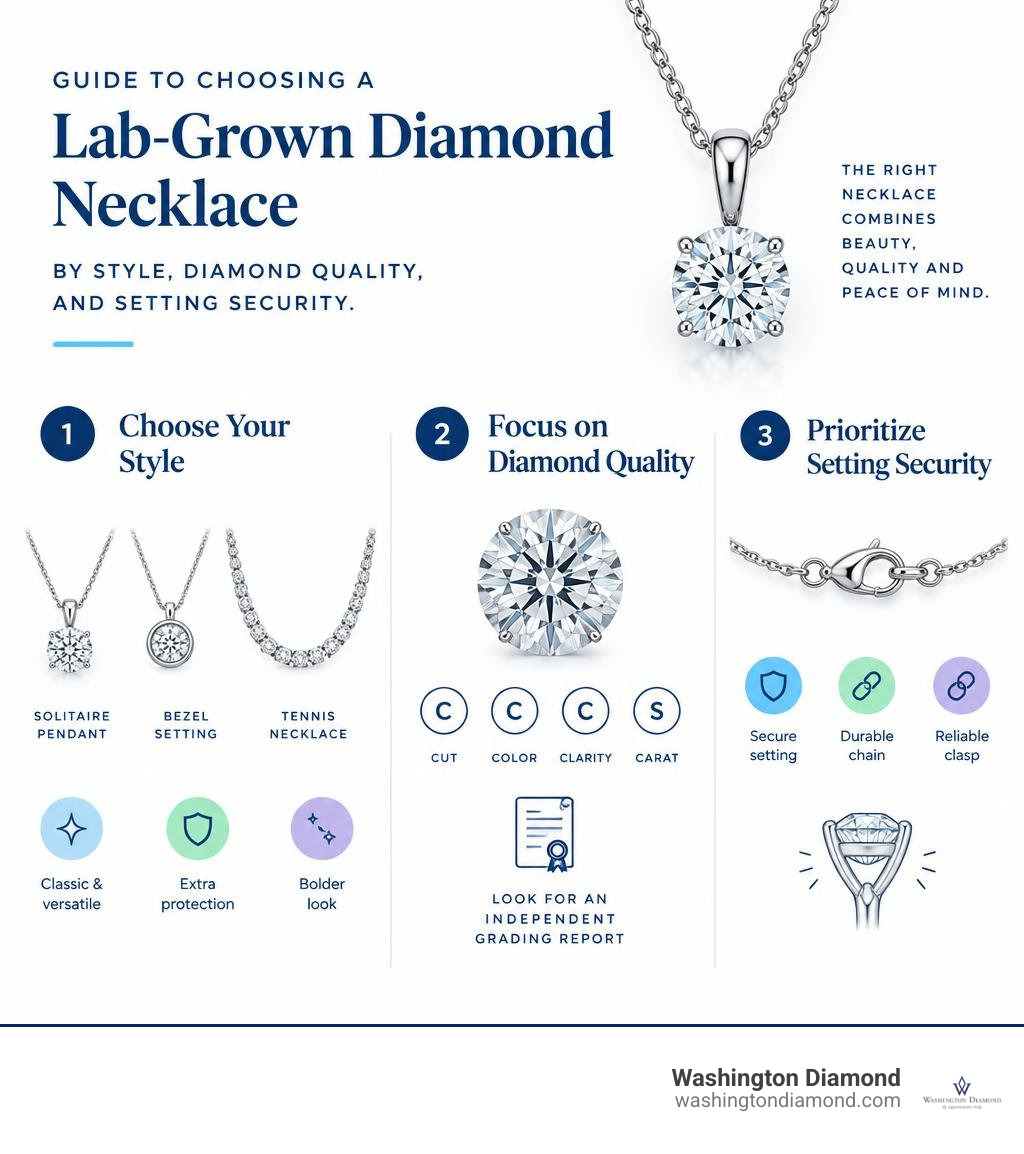
For most buyers, a solitaire pendant is the best lab-grown diamond necklace: it works with everyday clothes and feels right for a special occasion. Choose a bezel setting if you want extra protection around the stone, or a tennis necklace if you want a bolder look. In any style, look for a well-cut diamond, an independent grading report, and a secure chain and clasp.
Lab-grown diamonds have the same chemical makeup as mined diamonds. Both are crystallized carbon arranged in a cubic lattice, which gives them identical hardness, refractive index, and optical brilliance. The choice comes down to the look you love, the quality you can verify, and what feels worth the price.
I'm Tom Daube, a jewelry designer with experience selecting graded diamonds and creating timeless custom jewelry. I'll help you find the best lab grown diamond necklace for the person and occasion you have in mind.
Common best lab grown diamond necklace vocab:
For a broader look at how laboratory-grown stones compare to mined diamonds, the Gemological Institute of America offers a useful overview of lab-grown diamond facts and identification.
Top Styles for the Best Lab Grown Diamond Necklace
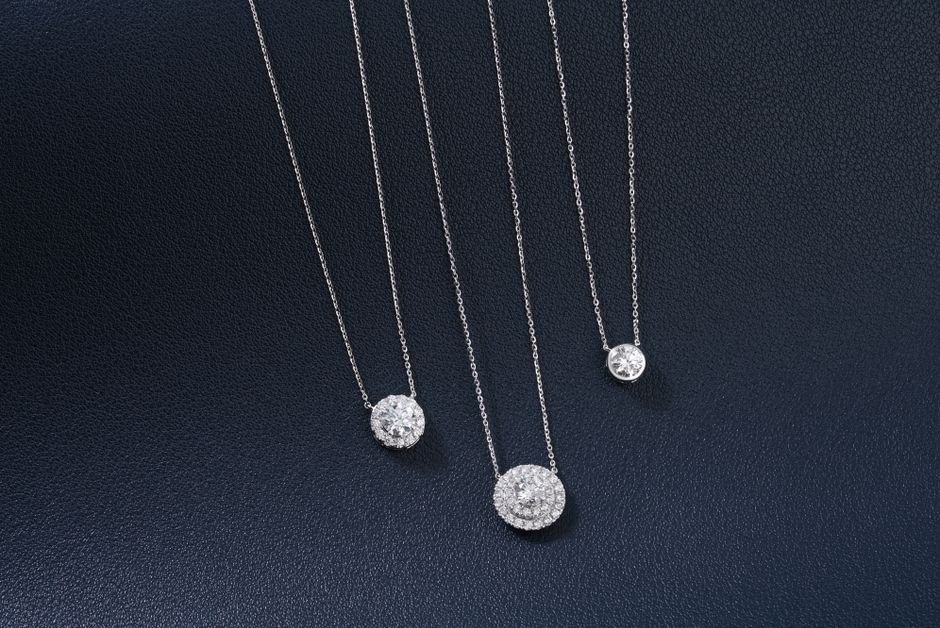
Finding the right necklace starts with matching your design preferences with your lifestyle. Because lab grown diamonds provide exceptional value—delivering the exact same carbon structure, brilliance, and optical performance as mined gems—you can explore a wide variety of settings and diamond sizes within your budget.
| Style | Setting Durability | Best For | Aesthetic Profile |
|---|---|---|---|
| Prong Solitaire | Moderate | Daily wear, layering | Clean, traditional, maximum light return |
| Bezel Pendant | High | Active lifestyles, casual elegance | Sleek, modern, snag-free protection |
| Halo Pendant | Moderate | Special events, bold statement | Vintage appeal, enhanced visual presence |
| Tennis Necklace | Moderate to High | Galas, milestone celebrations | Continuous sparkle, elevated luxury |
Classic Solitaire and Bezel Pendants
If you appreciate refined simplicity, a single-stone pendant remains an unbeatable standard. Solitaire pendants suspended from delicate chains highlight the fire of the central stone without distraction.
- Prong Settings: Traditional three-prong (martini) and four-prong (basket) settings lift the diamond to allow light to enter from every angle. This maximizes sparkle, making them ideal for timeless jewelry collections.
- Bezel Settings: A smooth rim of precious metal encircles the perimeter of the stone. This modern silhouette protects the diamond's girdle from accidental impacts and prevents prongs from catching on knit sweaters.
Whether you opt for an elongated oval, a crisp round brilliant, or a sleek emerald cut, reviewing our affordable lab grown diamond guide will help you identify the diamond shapes that offer the best spread and optical performance for your budget.
Statement Tennis and Multi-Stone Necklaces
For show-stopping sparkle, tennis necklaces and graduated multi-stone designs deliver high-impact elegance. A lab created diamond tennis necklace features a continuous strand of matched diamonds resting comfortably against the collarbone.
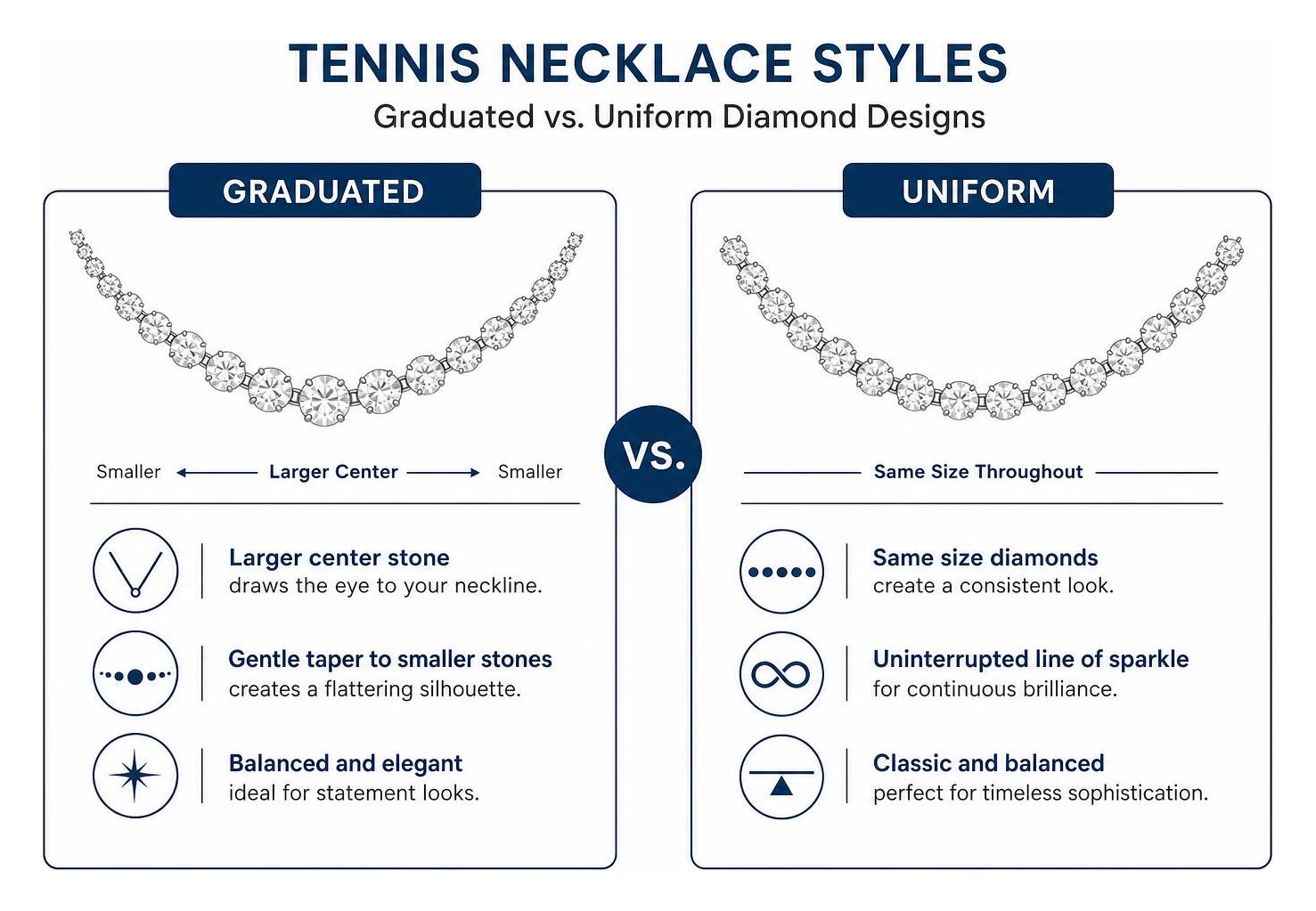
- Graduated Silhouettes: These designs feature a larger center stone that gently tapers into smaller side stones, drawing the eye naturally toward your neckline.
- Uniform Rhythms: Each diamond is calibrated to the exact same millimeter size for a balanced stream of uninterrupted light.
These statement designs pair seamlessly with other fine jewelry essentials, such as a matching 18.82ct lab grown diamond tennis bracelet or sophisticated lab grown diamond hoop earrings for formal gatherings and special celebrations.
Quality Factors and Value Comparison
Evaluating a lab diamond necklace requires assessing the standard 4Cs: Cut, Color, Clarity, and Carat weight. Because lab diamonds share identical physical and optical properties with mined diamonds, every stone receives identical grading standards.
- Cut: This is the most crucial factor determining sparkle. An Ideal or Excellent cut ensures optimal light reflection, brightness, and fire.
- Color: Graded from D (colorless) to Z (light tint). For white gold and platinum settings, choosing stones graded in the D to F colorless range or G to H near-colorless range provides a crisp, bright look.
- Clarity: Graded from Flawless down to Included. In pendants, eye-clean stones (VS1, VS2, or eye-clean SI1) provide stunning beauty without paying a premium for invisible clarity characteristics.
- Carat Weight: Laboratory-grown diamonds allow you to maximize carat size without compromising on cut or clarity.
| Carat Weight | Average Lab Grown Necklace Price | Average Natural Diamond Necklace Price | Typical Savings |
|---|---|---|---|
| 0.50 Carat | $600 – $1,000 | $1,500 – $2,500 | ~60% |
| 1.00 Carat | $1,200 – $2,500 | $4,500 – $8,000 | ~65–70% |
| 2.00 Carat | $2,500 – $4,500 | $12,000 – $22,000 | ~75–80% |
| 3.00 Carat | $4,500 – $7,500 | $28,000 – $45,000+ | ~80%+ |
Choosing the Best Lab Grown Diamond Necklace for Everyday Wear
Everyday wear requires a balance of beauty and structural durability. The metal and chain you choose will keep your diamond secure for years to come:
- 14k Gold (White, Yellow, or Rose): Blends pure gold with durable alloys to resist daily scratching and bending, making it the most practical metal for everyday pendants.
- Platinum: Naturally hypoallergenic, dense, and exceptionally secure. Platinum prongs hold stones firmly in place and develop a soft satin patina over time.
- Chain Integrity: Choose durable links like cable, wheat, or box chains. Avoid delicate snake chains that can easily kink or snap.
- Clasp Security: Lobster clasps and sturdy spring-ring clasps ensure your necklace stays securely fastened during movement.
How to Value the Best Lab Grown Diamond Necklace by Carat and Cut
When reviewing diamond options, cut precision dictates how large and lively the stone looks on your neck. A poorly cut 1.50-carat diamond can appear smaller and duller than a masterfully cut 1.20-carat stone. This is because a well-proportioned cut returns more light to the eye, creating the impression of greater size and brilliance even when the carat weight is lower.
Before selecting a focal piece, review current 3 carat diamond pricing benchmarks to understand how cut proportions and carat brackets influence value across larger carat sizes. For additional context on how laboratory-grown stones are evaluated, the International Gemological Institute provides a helpful guide to understanding lab-grown diamond grading reports.
Certification, Ethics, and Care Guide
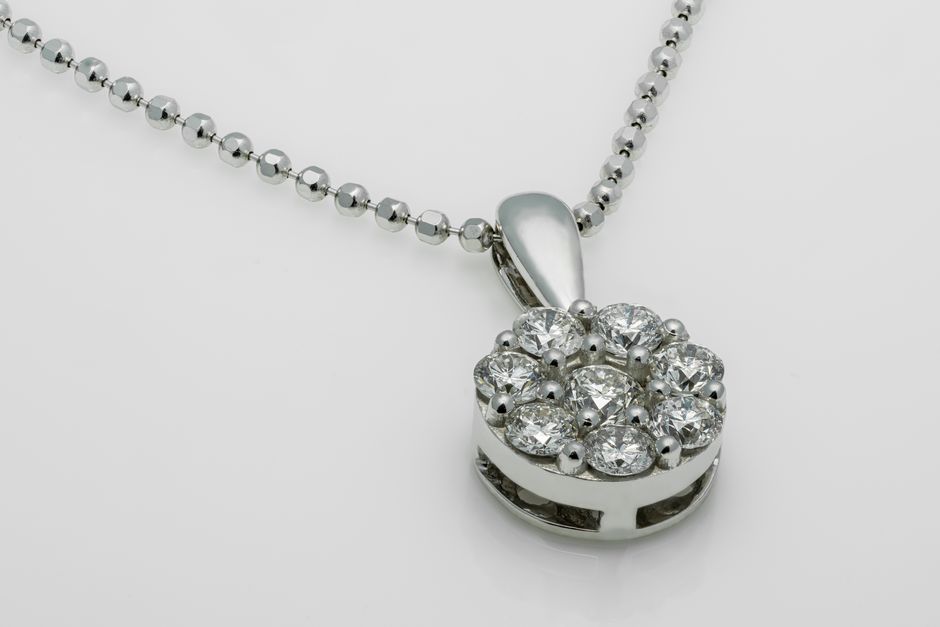
Every diamond necklace you purchase should come accompanied by an independent grading report from an internationally recognized gemological laboratory, such as the International Gemological Institute (IGI) or the Gemological Institute of America (GIA). These reports verify the stone's 4Cs, confirm its laboratory origin, and note any laser inscriptions on the girdle.
Beyond third-party verification, lab diamonds provide transparent supply chains with minimal environmental footprint and no mining-related disruptions.
To keep your diamond necklace sparkling brightly at home:
- Soak the piece in warm water mixed with a few drops of mild dish soap for 10 to 15 minutes.
- Gently scrub behind the diamond and around the setting using a clean, soft-bristled baby toothbrush to remove body oils and lotions.
- Rinse thoroughly under warm running water (ensure the drain is covered).
- Pat dry with a lint-free microfiber cloth.
- Store your necklace flat in a lined jewelry pouch or compartment so the chain doesn't tangle or scratch other gemstones.
Frequently Asked Questions About Lab Grown Diamond Necklaces
How long does a lab grown diamond necklace last?
A lab grown diamond will last indefinitely. Because it consists of crystallized pure carbon arranged in a diamond cubic lattice, it scores a 10 on the Mohs hardness scale—the hardest mineral known. It will never chip, fade, turn cloudy, or degrade over time, making it fully suitable as an heirloom piece passed down through generations.
Will a lab grown diamond necklace pass a diamond tester?
Yes. Standard thermal and electrical conductivity diamond testers will verify a lab grown diamond as an authentic diamond because it possesses the exact same physical, thermal, and optical properties as a mined stone. Distinguishing between lab-grown and mined diamonds requires specialized gemological laboratory spectroscopy equipment.
What is the average price range for a 1-carat lab diamond necklace?
A high-quality 1-carat lab grown diamond necklace typically ranges from $1,200 to $2,500 depending on the metal setting (such as 14k gold or platinum), chain style, and cut quality. This represents a substantial savings compared to an earth-mined diamond necklace of identical specifications.
Conclusion
Choosing a lab grown diamond necklace gives you the freedom to prioritize exquisite cuts, exceptional clarity, and generous carat weights while ensuring complete peace of mind.
At Washington Diamond, we believe fine jewelry shopping should be an intimate, pressure-free journey. In our private Northern Virginia studio, we provide dedicated, appointment-only attention so you can inspect certified diamonds up close, explore custom settings, and design a piece tailored to your taste.
Ready to discover your ideal design? Schedule an appointment at our custom jewelry studio to work directly with our diamond specialists.
Have a question about your jewelry?
We've been helping clients with diamonds, custom design, repairs, appraisals, and more since 1969. Book a private appointment at our Falls Church studio.
Book an AppointmentTrusted since 1969 · Falls Church, VA · 703-536-3600
From the blog
View all


