

Mastering the Perfect 3-Stone Engagement Ring and Wedding Band Stack
How to Pair a 3-Stone Diamond Ring With a Wedding Band
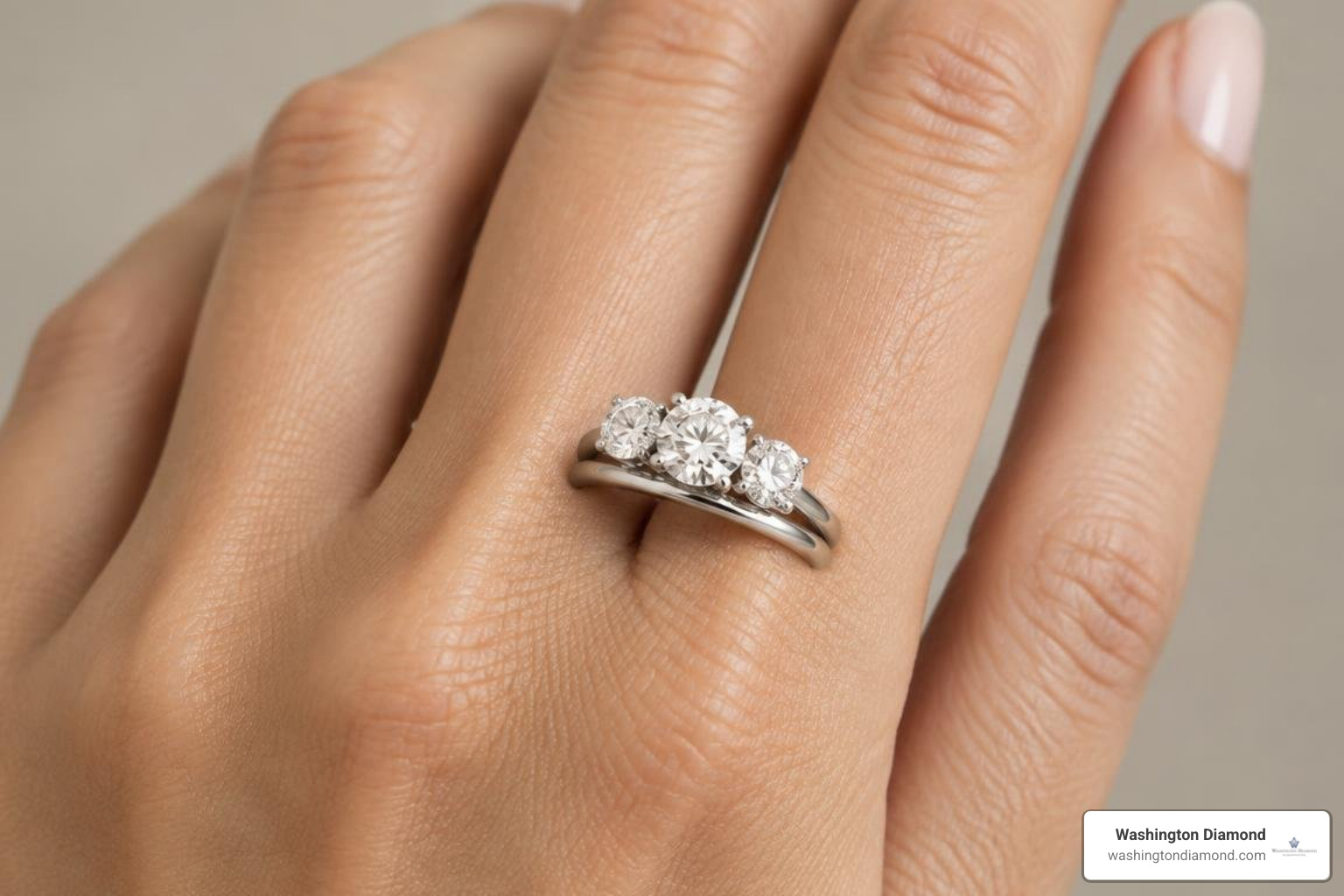
A 3 stone diamond ring with wedding band looks most cohesive when the band follows the engagement ring's shape without pressing against its settings. Check the fit before choosing a band: a straight band may sit flush against a raised setting, while a curved band can fit around lower-set side stones.
The three diamonds often stand for a couple's past, present, and future. The right pairing lets that meaning take center stage without making the rings uncomfortable to wear together.
I'm Tom Daube, a jewelry designer with experience selecting and recutting diamonds. I'll help you see how stone proportions and setting height affect the fit of a 3 stone diamond ring with wedding band.
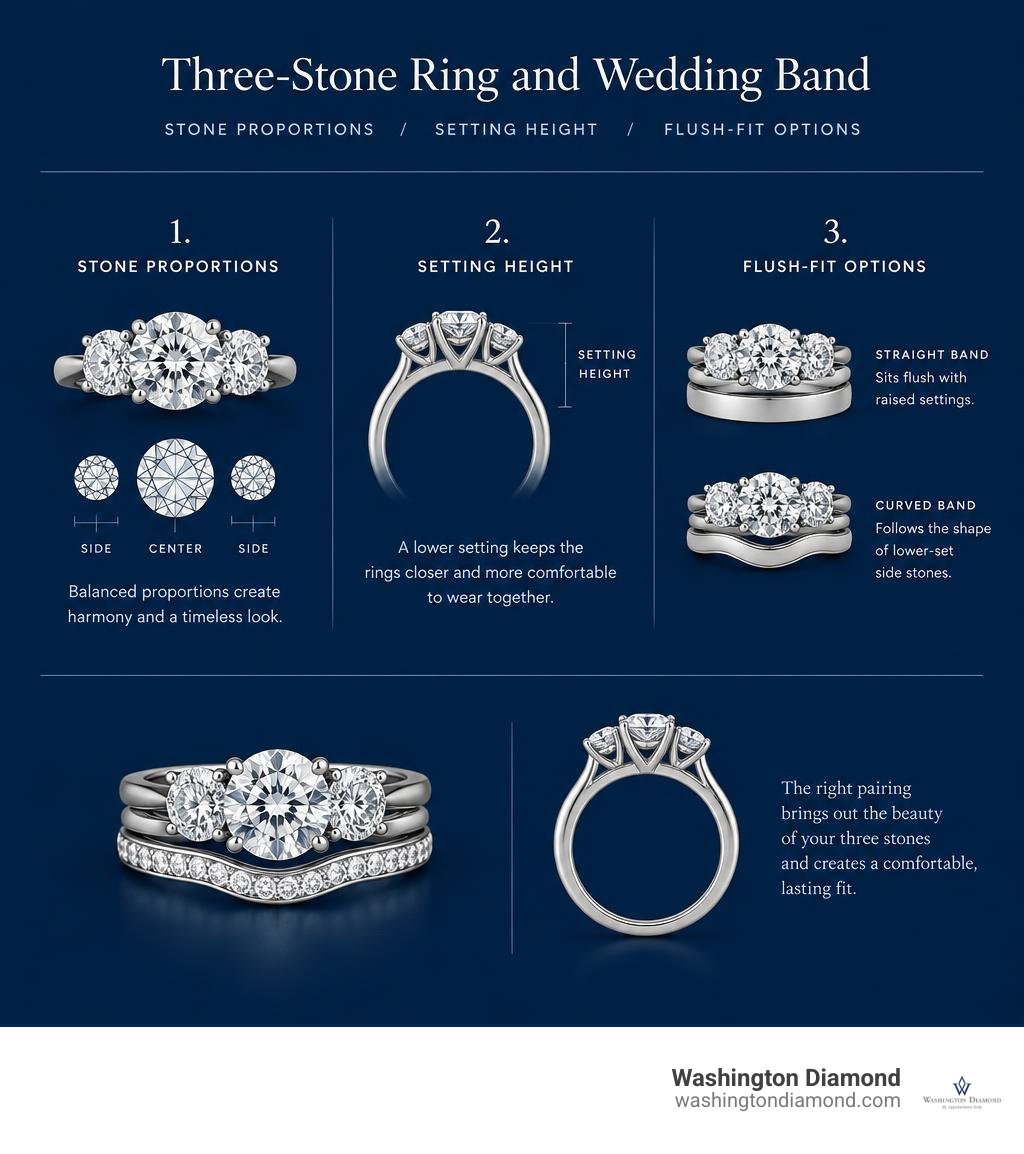
Three-stone engagement rings—often called trilogy or trinity rings—remain one of the most romantic and visually arresting bridal choices available. In fact, approximately 30% of engagement ring purchases in the United States feature this iconic silhouette, securing its position as the second most popular style right behind the classic solitaire. Pairing a three-stone ring with the right wedding band expands its presence, often increasing your total diamond carat weight by 50% to 100% while transforming the ring into a personalized bridal stack.
How to Style a 3 Stone Diamond Ring with Wedding Band
Achieving harmony when styling a three-stone engagement ring alongside a wedding band comes down to understanding ring anatomy: profile height, basket clearance, and band curvature.
A three-stone ring features a wider finger spread than a solitaire because the side gems extend across the top of the hand. If the center and side settings sit low on your finger (a low-profile basket), a traditional straight wedding band will bump into the metal gallery underneath, creating a noticeable gap between the two rings.
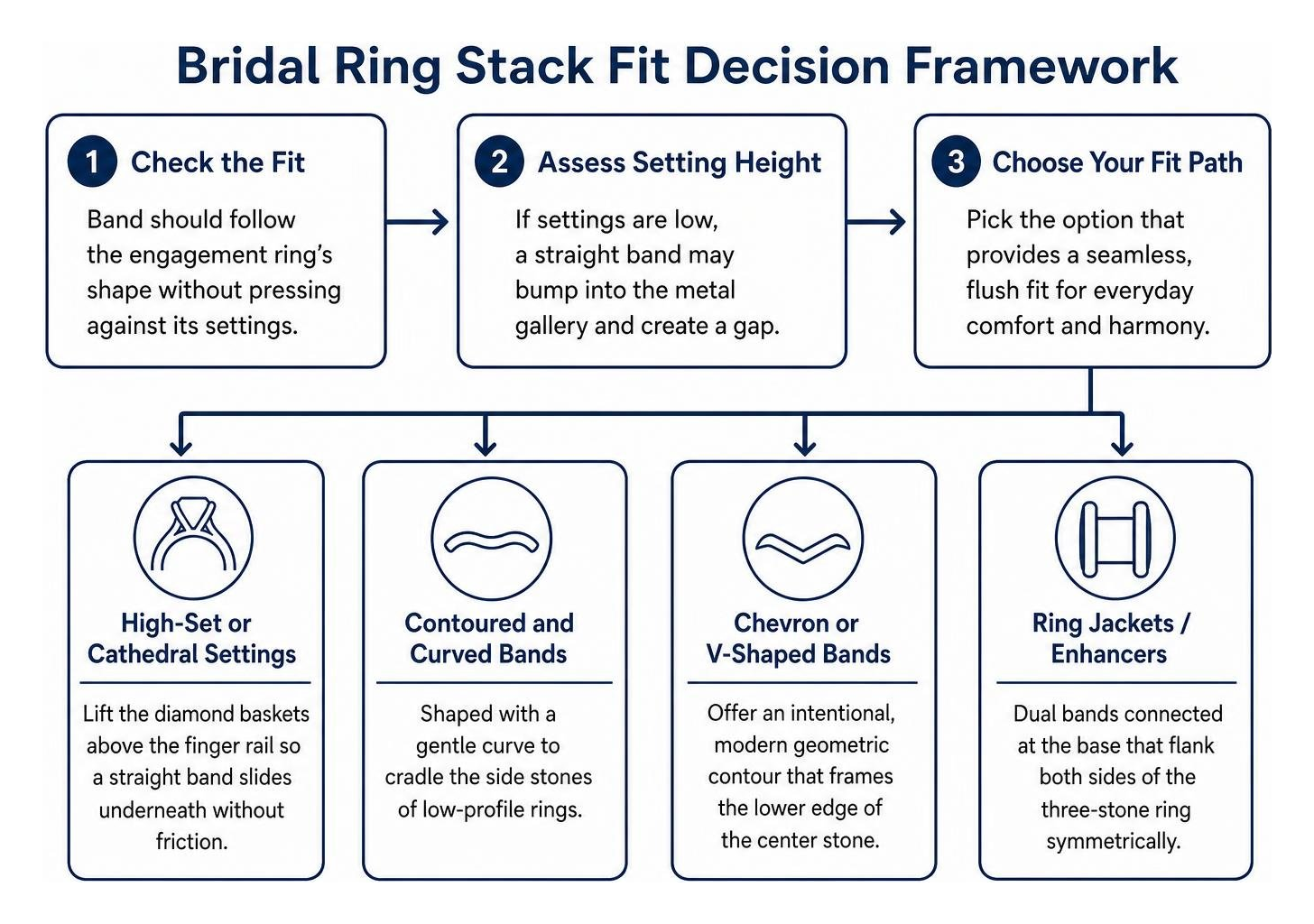
If you love a seamless, flush fit, you have several dynamic options:
- High-Set or Cathedral Settings: These lift the diamond baskets above the finger rail, allowing a straight band to slide neatly underneath without friction.
- Contoured and Curved Bands: Shaped with a gentle curve, these bands gracefully cradle the side stones of low-profile rings.
- Chevron or V-Shaped Bands: These offer an intentional, modern geometric contour that frames the lower edge of the center stone.
- Ring Jackets / Enhancers: Dual bands connected at the base that flank both sides of the three-stone ring symmetrically.
| Band Style | Best Suited Ring Setting | Visual Profile | Pros & Cons |
|---|---|---|---|
| Straight Band | High-set heads, trellis mountings, cathedral shanks | Classic, linear, understated |
Pro: Can be worn effortlessly on its own. Con: May create a gap with low-profile settings. |
| Curved / Contoured Band | Low-profile baskets, wide three-stone layouts | Custom-molded, unified |
Pro: Sits perfectly flush with zero gaps. Con: Can look asymmetrical when worn alone. |
| Chevron (V-Shape) Band | Oval, pear, or marquise three-stone rings | Contemporary, elongating, architectural |
Pro: Highlights pointed stone geometries. Con: Requires precise angle matching. |
| Ring Jacket / Enhancer | Symmetrical round or princess trilogy designs | Dramatic, full-coverage, luxurious |
Pro: Delivers maximum sparkle and symmetry. Con: Creates a wider, bolder ring profile on the finger. |
Best Ring Styles for a 3-Stone Diamond Ring with a Wedding Band Stack
Selecting the diamond setting of your wedding band allows you to balance sparkle and structural durability:
- Shared-Prong Bands: A platinum shared prong diamond wedding band maximizes light return by sharing metal prongs between neighboring stones, blending seamlessly with prong-set trilogy diamonds.
- Channel-Set Bands: If you lead an active lifestyle, a 30ct diamond channel set platinum wedding band embeds diamonds between two walls of metal, protecting the girdle of each accent diamond from daily wear.
- Geometric Chevron Bands: Choosing a platinum in line v diamond band featuring 0.24cttw provides a clean point that directs the eye upward toward your primary center stone.
- Bezel-Set Bands: Clean and snag-free, individual metal rims around each band stone echo vintage details while keeping a low, durable profile.
Matching vs. Mixing Metals for a 3 Stone Diamond Ring with Wedding Band
Bridal styling has evolved beyond the requirement of matching identical metals. While a uniform platinum or 14k white gold set delivers a classic, seamless look, mixing precious metals introduces warmth, depth, and contrast.
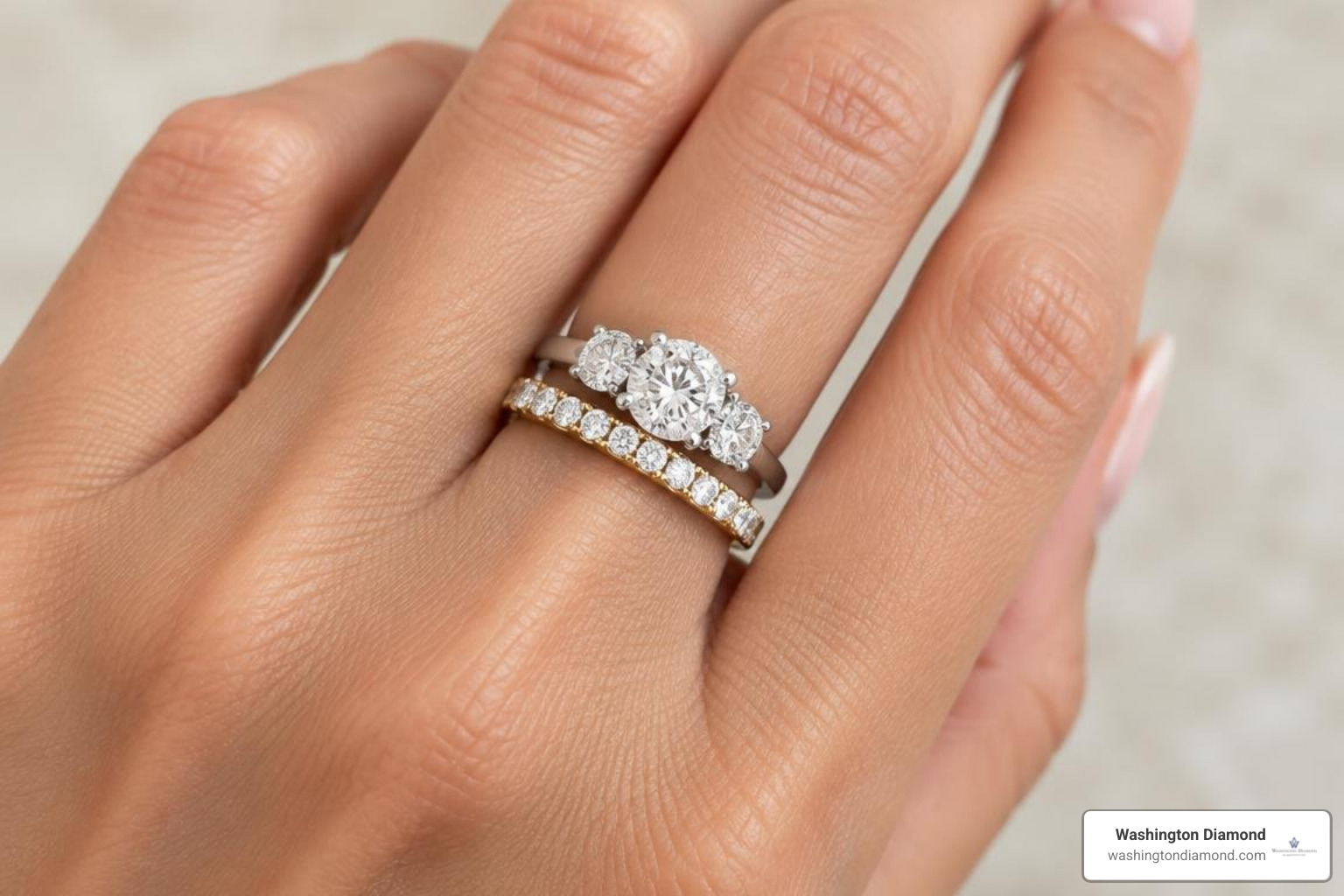
For instance, pairing a platinum or white gold engagement ring with a shared prong 0.88 carat diamond 18k yellow gold eternity band creates a striking two-tone aesthetic that highlights the individual craftsmanship of each piece.
When mixing metals, platinum is naturally denser and harder than gold alloys. Over decades of daily wear, rubbing a platinum band against a gold band can slowly wear down the softer gold surface. To preserve your rings, ensure both pieces fit comfortably together without sliding or abrasive rubbing.
Selecting Settings, Side Stones, and Diamond Proportions
The magic of a three-stone ring lies in proportion. The side stones should complement and highlight the center gem rather than compete with it for attention.
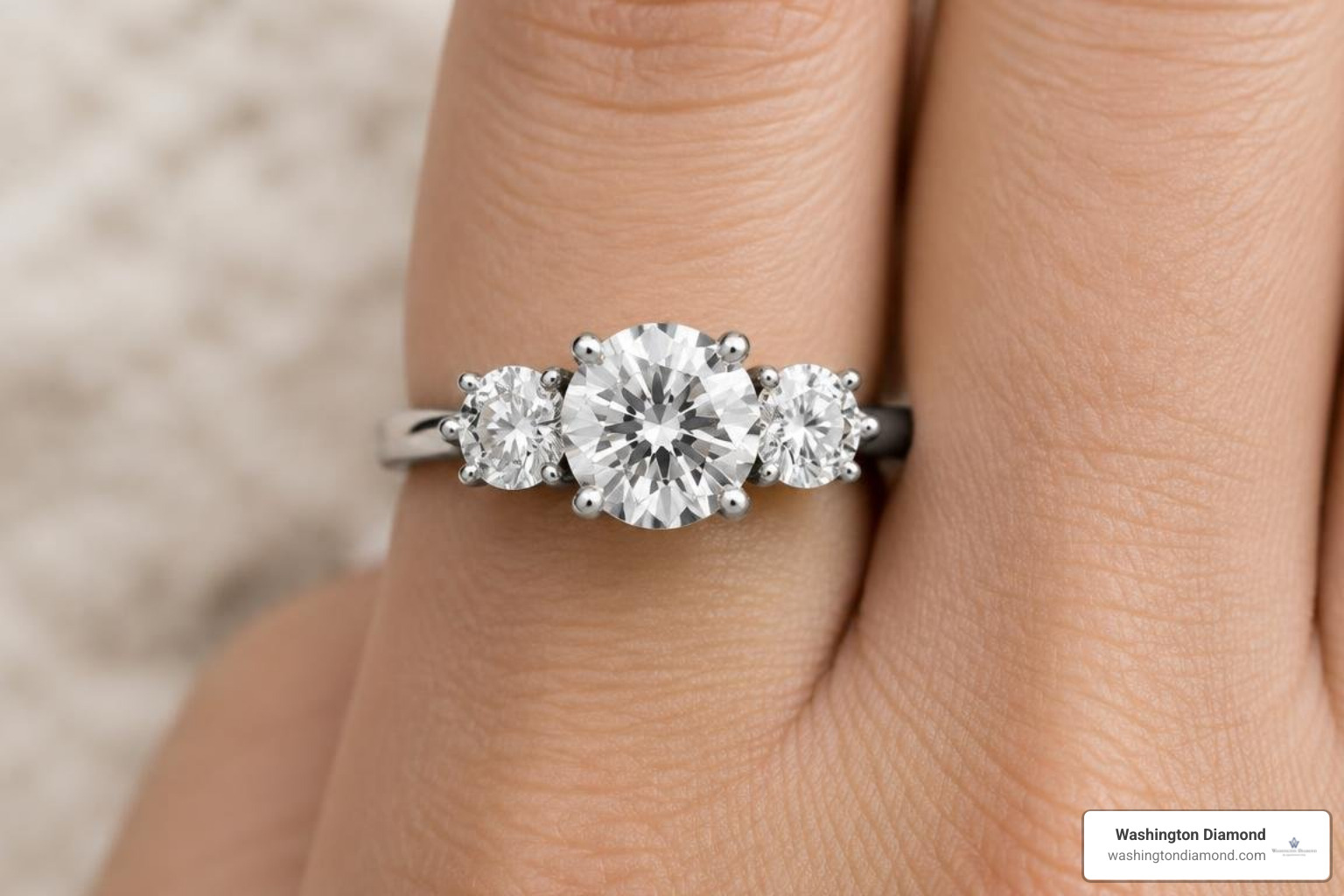
When selecting diamonds, the 4Cs—Cut, Color, Clarity, and Carat—must be coordinated across all three gems:
- Color Harmony: Side diamonds should be within one color grade of the center diamond. A color discrepancy becomes magnified when stones sit side-by-side in white metal mountings.
- Cut Precision: Consistent cut quality ensures all three stones reflect light at matching intensities, preventing one diamond from looking dull next to its neighbors.
- Clarity Balancing: While center stones often receive eye-clean grades (VS1–SI1), side stones can comfortably feature slightly lower clarity since smaller facet patterns conceal minor inclusions naturally.
Balancing Center Diamonds with Proportional Side Gems
A traditional visual guideline suggests that the total carat weight of both side stones combined should equal roughly 30% to 50% of the center diamond's weight.
- Elongated Center Stones: Oval or emerald cuts pair beautifully with trapezoid, epaulette, or tapered baguette side stones. For example, a three stone oval lab grown diamond 14k white gold trellis engagement ring setting uses flanking stones to frame the center gem's elongated curves.
- Round Center Diamonds: Classic round brilliants pair naturally with matching round side gems or pear shapes pointing outward toward the shank, as seen on the gaze split shank three stone diamond 18k white gold engagement ring setting.
Exploring Basket, Trellis, and Bezel Mountings
The architectural framework holding your diamonds plays a vital role in determining which wedding bands will fit flush:
- Trellis Mountings: Featuring interwoven prongs that cross over one another gracefully, trellis designs elevate the stones naturally, offering excellent vertical clearance for straight wedding bands.
- Basket Mountings: A standard basket secures the stones low against the finger with horizontal support rails. This provides outstanding stability and a lower profile, though it often requires a curved or contoured wedding band for a gapless fit.
- Bezel Mountings: A modern three stone bezel diamond 14k white gold semi mount ring encloses each gem in a solid rim of precious metal. Bezels offer maximum snag protection and a sleek contemporary silhouette, pairing exceptionally well with flush-fitting flat bands or channel-set rings.
Cost Considerations, Longevity, and Common Pairing Mistakes
The average investment for a three-stone diamond engagement ring typically ranges from $3,000 to $10,000, depending on diamond provenance (natural vs. lab-grown), total carat weight, and metal choice. Adding a diamond wedding band to complete your bridal stack adds further value, craftsmanship, and visual presence.
Trilogy bridal stacks also boast strong long-term value retention. In the secondary and heirloom markets, the resale value of a three-stone diamond ring with a matching diamond wedding band is typically 20% to 30% higher than a basic solitaire with a plain metal band, thanks to the greater volume of precious metal and multiple matched diamonds.
Pricing Factors and Bridal Set Investment Value
Several key elements influence the overall price of your bridal stack:
- Number of Certified Stones: Because three-stone rings require matched color and clarity across multiple gems, diamond sourcing and precision cutting play a central role in setting cost.
- Precious Metal Choice: Platinum carries a higher initial investment than 14k or 18k gold due to its high purity and density, but it offers unmatched lifetime durability and hypoallergenic peace of mind.
- Bespoke Tailoring: Working with a dedicated studio for custom engagement rings ensures your engagement ring and wedding band are designed together from day one, eliminating costly adjustments down the road.
Long-Term Care, Maintenance, and Buying Pitfalls to Avoid
Because three-stone settings feature more prongs and contact points than single-stone rings, regular maintenance is essential to keep them secure:
- Routine Prong Inspections: Have your prongs checked every six to twelve months by a professional jeweler. Daily contact can shift prongs, particularly on the outer side stones.
- Gentle Cleaning: Keep diamonds sparkling by soaking the rings in warm water with mild dish soap, gently brushing beneath the baskets with a soft baby toothbrush.
- Preventing Side-Stone Friction: Ensure your wedding band's diamonds do not grind directly against the base metal or prongs of your engagement ring head, which can wear down prongs over time.
Frequently Asked Questions About Three-Stone Bridal Stacks
Can a three-stone diamond ring be worn alone without a wedding band?
Yes. Because a three-stone ring naturally offers broad finger coverage and substantial sparkle, many people choose to wear it as a standalone piece. It is also frequently worn as an anniversary piece or right-hand ring.
How do I prevent gaps between my three-stone ring and wedding band?
To avoid gaps, choose an engagement setting with a raised head, cathedral shoulders, or an open trellis gallery that leaves clearance underneath. If your ring has a low-set basket, pairing it with a custom-contoured band or a notched wedding band ensures a seamless, flush fit.
What wedding band style looks best with oval or round three-stone rings?
For round and oval three-stone rings, delicate micro-pavé bands, shared-prong diamond eternity bands, and gentle curved contour bands are the most popular choices. They mirror the soft, rounded lines of the center gems without distracting from the main design.
Conclusion
Finding the ideal wedding band to complement your three-stone engagement ring is a rewarding process that combines personal style with thoughtful ring design. Whether you prefer the clean look of a flush straight platinum band, the tailored contour of a curved diamond ring, or an eclectic mixed-metal stack, the perfect match is one that feels comfortable on your hand and reflects your personal journey together.
At Washington Diamond, we welcome you to our private, appointment-only studio in Northern Virginia for an intimate, personalized consultation with our diamond experts. Explore our complete Washington DC diamond wedding ring guide to discover how we can help you craft the perfect bridal stack.
Have a question about your jewelry?
We've been helping clients with diamonds, custom design, repairs, appraisals, and more since 1969. Book a private appointment at our Falls Church studio.
Book an AppointmentTrusted since 1969 · Falls Church, VA · 703-536-3600
From the blog
View all


