

Affordable Lab Diamonds and Where to Buy Them
Why Affordable Lab Diamonds Are Changing the Way People Buy Fine Jewelry

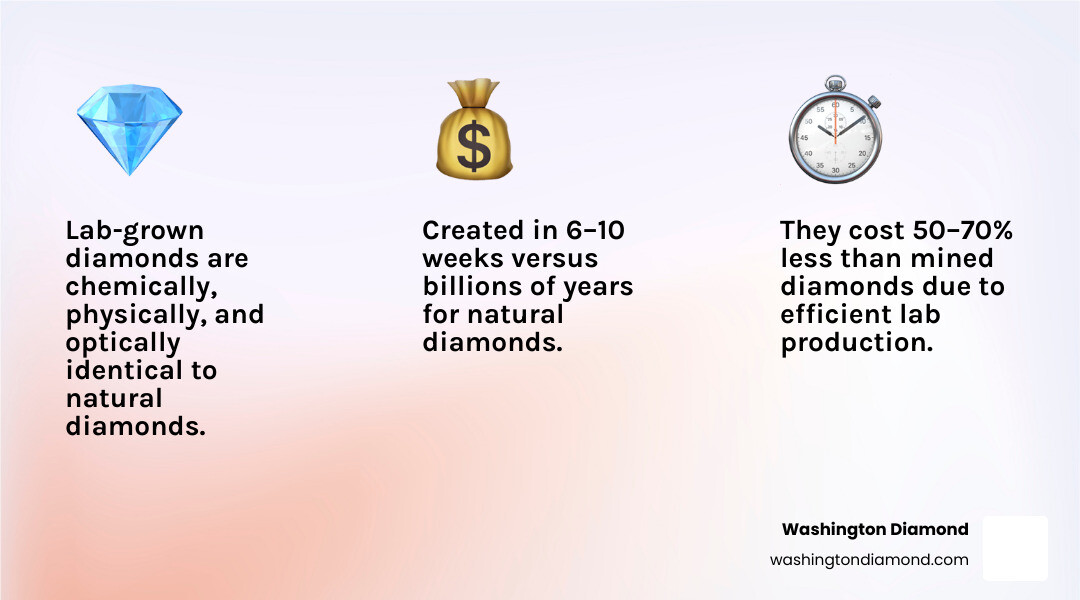
Affordable lab diamonds are real diamonds — chemically, physically, and optically identical to mined ones — but cost 50–70% less. Here's a quick summary of what you need to know:
| Feature | Lab-Grown Diamond |
|---|---|
| Chemical composition | Identical to natural diamond |
| Hardness (Mohs scale) | 10 — same as mined |
| Cost vs. natural | 50–70% less expensive |
| Creation time | 6–10 weeks (vs. billions of years) |
| Certified by | GIA, IGI — same 4Cs grading |
| Starting price (engagement rings) | From ~$280 |
| Distinguishable by naked eye? | No |
| Conflict-free? | Yes |
For a meaningful purchase — an engagement ring, anniversary gift, or something you'll wear every day — that price difference is significant. A budget that might get you a 0.5ct mined diamond could get you a 1.5ct or larger lab-grown stone of the same quality.
Lab diamonds aren't a compromise. They're the same material, just made in a laboratory rather than pulled from the earth. The only real differences are origin, price, and the environmental footprint.
That said, not all lab diamonds are equal — and knowing where to buy, what to look for, and which certifications matter can save you a lot of stress (and money).
I'm Tom Daube, a GIA-certified diamond specialist ranked in the top 1% of jewelers nationwide, with decades of experience helping buyers find affordable lab diamonds without sacrificing quality or craftsmanship. In this guide, I'll walk you through everything you need to make a confident, informed choice.
Affordable lab diamonds terms made easy:
- average cost of a 2 carat lab grown diamond
- best price lab grown diamonds
- salt and pepper lab diamond
What Makes Lab-Grown Diamonds Real and Affordable?
One of the biggest hurdles we encounter when talking to couples in Northern Virginia is the "realness" factor. There is a lingering myth that lab-grown stones are "synthetic" in the same way polyester is synthetic. However, the Federal Trade Commission Diamond Definitions make it very clear: a diamond is a diamond, regardless of whether it grew in the crust of the earth or in a specialized chamber.
The chemical structure of affordable lab diamonds consists of a carbon lattice that is identical to that of a mined stone. Think of it like ice. If you take a cup of water and put it in your freezer, you get ice. If you go to the Antarctic and chip off a piece of a glacier, you also have ice. One was made by a machine in your kitchen, and the other was made by nature over thousands of years, but they are both H2O.
The Science Behind Affordable Lab Diamonds
So, how exactly do we "freeze" carbon into a diamond? It starts with a "diamond seed"—a tiny sliver of an existing diamond. Scientists then use one of two primary methods to grow it:
- High Pressure High Temperature (HPHT): This method mimics the crushing pressure and intense heat found deep within the Earth. By subjecting carbon to these extreme conditions, the atoms begin to bond onto the diamond seed, growing it layer by layer.
- Chemical Vapor Deposition (CVD): This is a newer, highly precise method. The diamond seed is placed in a vacuum chamber filled with carbon-rich gas (like methane). A microwave beam breaks down the gas molecules, and the carbon "rains" down onto the seed, crystallizing into a diamond.
You can learn more about the specifics in this video: How Are Lab-Grown Diamonds Formed?. Both processes result in a stone with identical DNA to a natural diamond. The growth process typically takes between 6 to 10 weeks, which is a blink of an eye compared to the billions of years nature requires.
Why Production Costs Are Lower
The reason we can offer affordable lab diamonds at such a significant discount isn't that they are "cheap" quality; it’s because the supply chain is vastly more efficient.
When you buy a mined diamond, you are paying for the massive overhead of a mining operation: the heavy machinery, the thousands of workers, the environmental remediation, and the complex web of middlemen that move the stone from a pit in the ground to a cutting house to a wholesaler and finally to a retail shelf.
With lab-grown stones, we eliminate the mining process entirely. Laboratory efficiency allows for a shorter, more transparent supply chain. This results in 50-70% savings for the consumer. According to our affordable-lab-grown-diamonds-complete-guide, these savings allow you to prioritize the "Cut" and "Color" of the stone, ensuring you get the most brilliance for your dollar.
Comparing Lab Diamonds to Natural Stones and Simulants
It is important to distinguish between affordable lab diamonds and "simulants" like moissanite or cubic zirconia. While simulants might look like diamonds to the untrained eye, they are entirely different minerals with different physical properties.
| Property | Diamond (Lab or Mined) | Moissanite | Cubic Zirconia |
|---|---|---|---|
| Hardness (Mohs) | 10 | 9.25 | 8.5 |
| Refractive Index | 2.42 | 2.65 - 2.69 | 2.15 |
| Chemical Formula | C (Pure Carbon) | SiC (Silicon Carbide) | ZrO2 (Zirconium Dioxide) |
| Durability | Highest | Very High | Medium (Scratches over time) |
As you can see, diamonds are the hardest substance on Earth. This makes them ideal for engagement rings that will be worn every single day for decades. If you’re curious about the visual differences, check out this comparison: Natural vs Lab Grown Diamond vs Moissanite. Moissanite, for instance, has a "double refraction" that can give it a "disco ball" effect, whereas a diamond has a more balanced, classic sparkle.
Visual Indistinguishability of Affordable Lab Diamonds
To the naked eye, it is impossible to tell the difference between a high-quality lab diamond and a mined one. Even most professional jewelers cannot tell just by looking at the stone through a loupe.
Because lab diamonds are grown in a controlled environment, they often reach a level of purity known as Type IIa. This is the rarest category of diamonds, making up only 1-2% of all natural stones. Type IIa diamonds have almost no nitrogen impurities, which results in incredible transparency and fire.
While some specialized equipment can detect the growth patterns of a lab-grown stone, for all intents and purposes, they are visually identical. Some people even prefer the unique character of salt and pepper lab diamonds, which embrace interesting inclusions for a more "organic" look at an even more accessible price point.
Quality Standards: Grading and Certification
Just because a diamond is grown in a lab doesn't mean it’s perfect. Like natural stones, lab-grown diamonds vary in quality. This is why we insist on using the same 4Cs grading standards: Carat, Cut, Color, and Clarity.
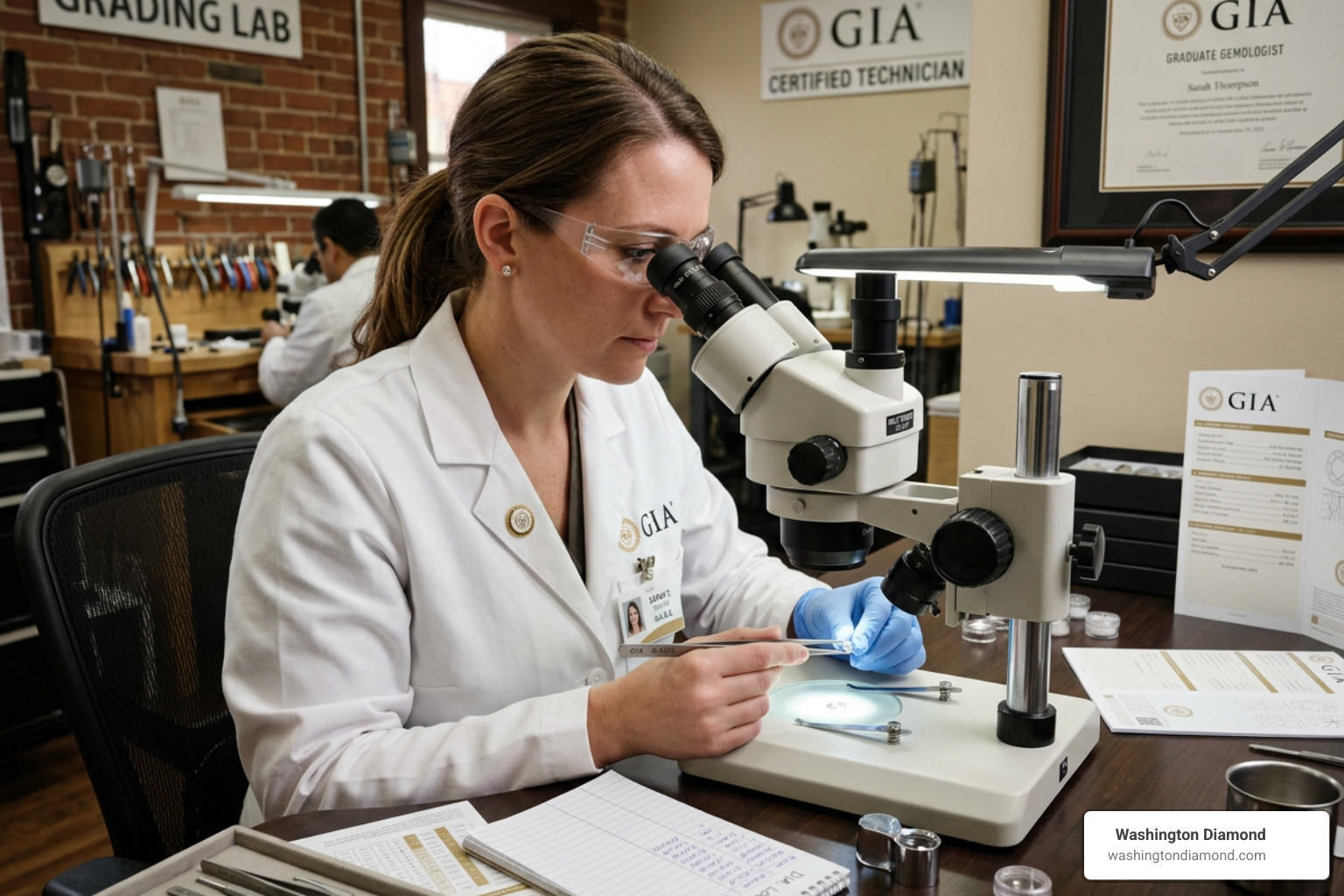
Every serious buyer should look for stones certified by reputable independent laboratories like the GIA (Gemological Institute of America) or the IGI (International Gemological Institute). These certificates provide an unbiased assessment of the stone's quality, ensuring you get exactly what you pay for.
At Washington Diamond, we believe in transparency. When you browse our lab-grown-diamond-engagement-rings-ethical-elegance-for-your-big-day guide, you’ll see that we emphasize the importance of the "Cut" grade above all else. A poorly cut diamond will look dull, regardless of its color or clarity.
Fluorescence and Inclusions in Lab Stones
Do lab diamonds have flaws? Yes. Because they mimic the natural growth process, they can have inclusions (tiny internal "birthmarks"). However, because the environment is controlled, we can often find stones with exceptional clarity at lower prices.
We generally recommend looking for stones with a clarity of SI1 or above. Most VS1 and VS2 diamonds are "eye-clean," meaning you won't see any inclusions without magnification.
Another factor is fluorescence. While some lab diamonds can exhibit fluorescence, we typically source fluorescent-free stones to ensure the diamond doesn't appear "milky" or "hazy" in sunlight. To protect consumers, most lab diamonds also feature a microscopic laser inscription on the girdle (the edge of the stone) that identifies them as lab-grown. You can see how these factors impact the stone's look in this video on The Four C's of Diamonds.
Shopping Guide for Affordable Lab Diamonds
If you are looking for affordable lab diamonds, the market has never been better for the consumer. You can find stunning jewelry at a fraction of what you would have paid a decade ago.
Here is a general idea of the price ranges you might encounter:
- Engagement Rings: Starting as low as $280 for simple settings, with high-quality 1-carat center stones typically ranging from $650 to $1,450.
- Diamond Studs: A pair of 1.5ctw (total carat weight) lab-grown studs can start around $1,298, whereas mined counterparts could easily double or triple that price.
- Loose Diamonds: If you already have a family setting, buying a loose lab diamond is the ultimate way to maximize your budget.
For more detailed pricing, we’ve put together a breakdown of the average cost of a 2 carat lab grown diamond to help you plan your budget. You can also explore our top-picks-where-to-find-the-best-price-lab-grown-diamonds-online for more inspiration.
Choosing Settings for Affordable Lab Diamonds
The beauty of saving money on the stone is that it frees up your budget for a truly spectacular setting. Whether your style is modern or classic, lab diamonds fit perfectly into any design.
- Solitaire: The classic choice that lets the diamond do all the talking.
- Halo and Hidden Halo: These settings use smaller "melee" diamonds to surround the center stone, making it appear even larger and more brilliant.
- Vintage Styles: Intricate metalwork and milgrain detailing can give a lab-grown ring a timeless, heirloom feel.
Many of our clients in Northern Virginia are also opting for recycled precious metals (like 14k or 18k gold and platinum) to complement the eco-friendly nature of the lab diamond. For more tips on getting the best value, check out our guide on affordable-bling-top-tips-for-best-value-engagement-rings.
Benefits and Myths of Lab-Grown Stones
Beyond the price tag, there are several compelling reasons to choose a lab diamond.
- Eco-Friendliness: Lab diamonds require significantly less land disturbance than traditional mining. While they do require a lot of energy to produce, many labs are now moving toward renewable energy sources.
- Conflict-Free: By their very nature, lab diamonds are 100% conflict-free. You don't have to worry about the ethical complexities sometimes associated with the global mining industry.
- Quality: As mentioned, you can often get a higher color and clarity grade for a lower price, resulting in a more beautiful stone.
Investment vs. Personal Value
One of the most common questions we get is: "Are lab diamonds a good investment?"
The honest answer is that most diamonds—mined or lab-grown—should not be viewed as a financial investment like stocks or real estate. Diamonds are a luxury purchase intended for personal enjoyment and sentimental value.
While natural diamonds have a more established resale market, their value also fluctuates. Lab-grown diamonds are newer to the market, and as production technology improves, prices have trended downward. However, for a piece of jewelry you plan to keep forever, the "investment" is in the memories it represents and the 60% you saved upfront.
Regardless of the origin, you can and should get your jewelry appraised and insured. Lab diamonds meet the same standards for insurance coverage as any other fine jewelry. For those in the DC area, we’ve discussed this in our post on Northern Virginia's best kept secret for engagement rings.
Frequently Asked Questions about Lab Diamonds
Do lab-grown diamonds get cloudy over time?
Absolutely not. Because they are chemically identical to natural diamonds, they have the same permanent brilliance. If a diamond looks "cloudy," it’s usually just dirty. We recommend cleaning your jewelry with a soft toothbrush, warm water, and a tiny drop of mild dish soap to keep it sparkling.
Can a jeweler tell the difference without tools?
No. To the eye, they are identical. A professional gemologist would need specialized equipment that detects nitrogen levels or growth patterns to be certain. The microscopic laser inscription on the girdle is the easiest way for a professional to identify it quickly.
Are lab diamonds as durable as mined diamonds?
Yes. They rank a 10 on the Mohs scale of hardness. They are just as scratch-resistant and durable as mined diamonds, making them perfectly suitable for a lifetime of daily wear.
Conclusion
At Washington Diamond, we believe that luxury should be personal and accessible. Whether you are looking for a classic solitaire or a custom-designed masterpiece, affordable lab diamonds offer a way to celebrate life's biggest moments without financial strain.
Our private, appointment-only studio in Northern Virginia is designed to give you our undivided attention. We don't believe in high-pressure sales; we believe in education and helping you find the stone that truly speaks to you. If you're ready to see the brilliance of lab-grown stones for yourself, we invite you to explore our collection of loose-diamonds and start your journey toward a piece of jewelry that is as ethical as it is beautiful.
Have a question about your jewelry?
We've been helping clients with diamonds, custom design, repairs, appraisals, and more since 1969. Book a private appointment at our Falls Church studio.
Book an AppointmentTrusted since 1969 · Falls Church, VA · 703-536-3600
From the blog
View all


