

The Sterling Silver Sizing Saga: What You Need to Know About Resizing
Why Sterling Silver Ring Resizing Matters
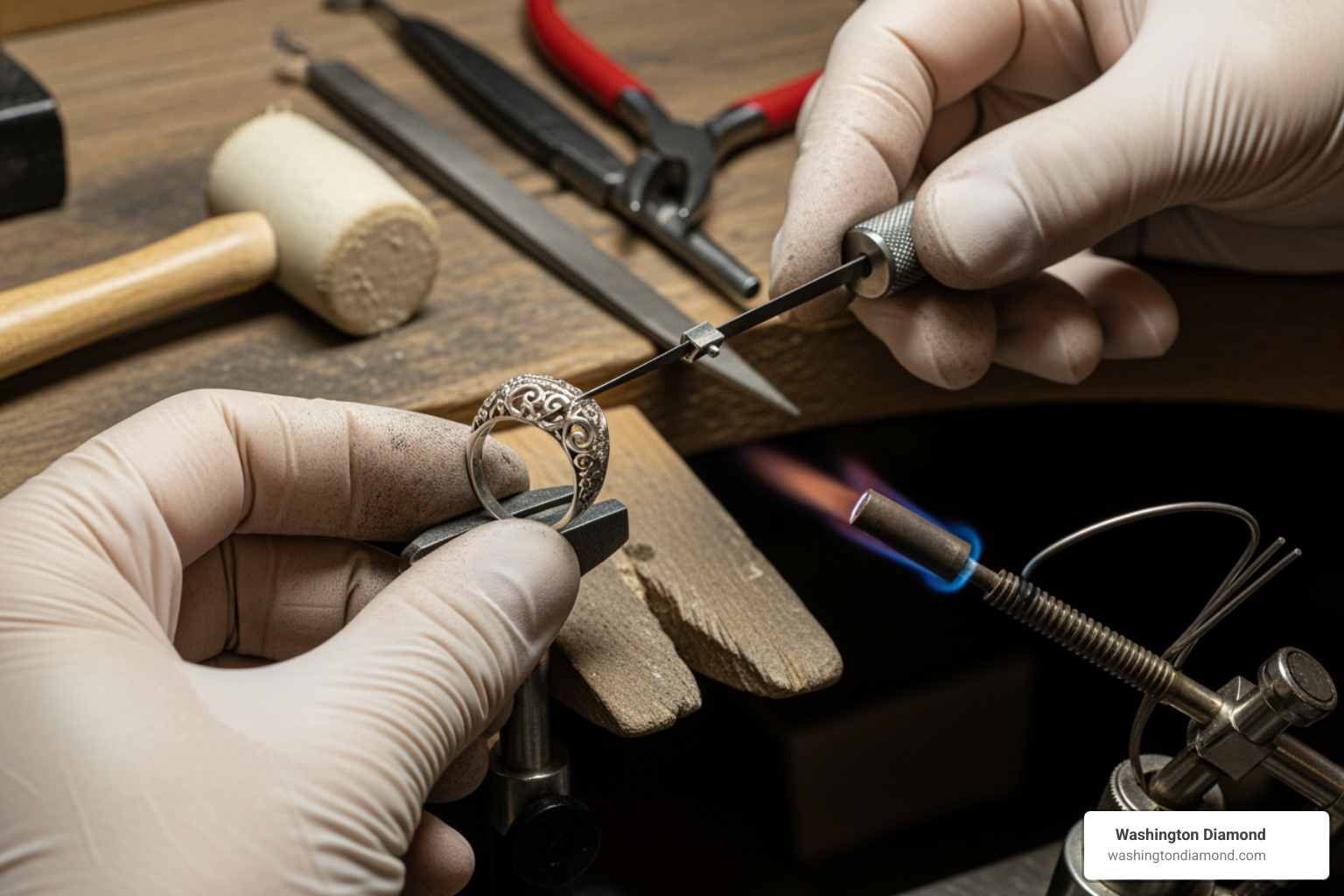
Sterling silver ring resizing is possible for most rings, but success depends on the ring's design, the amount of adjustment needed, and the jeweler's skill. Here's what you need to know:
Quick Answer:
- Yes, most sterling silver rings can be resized by a professional jeweler
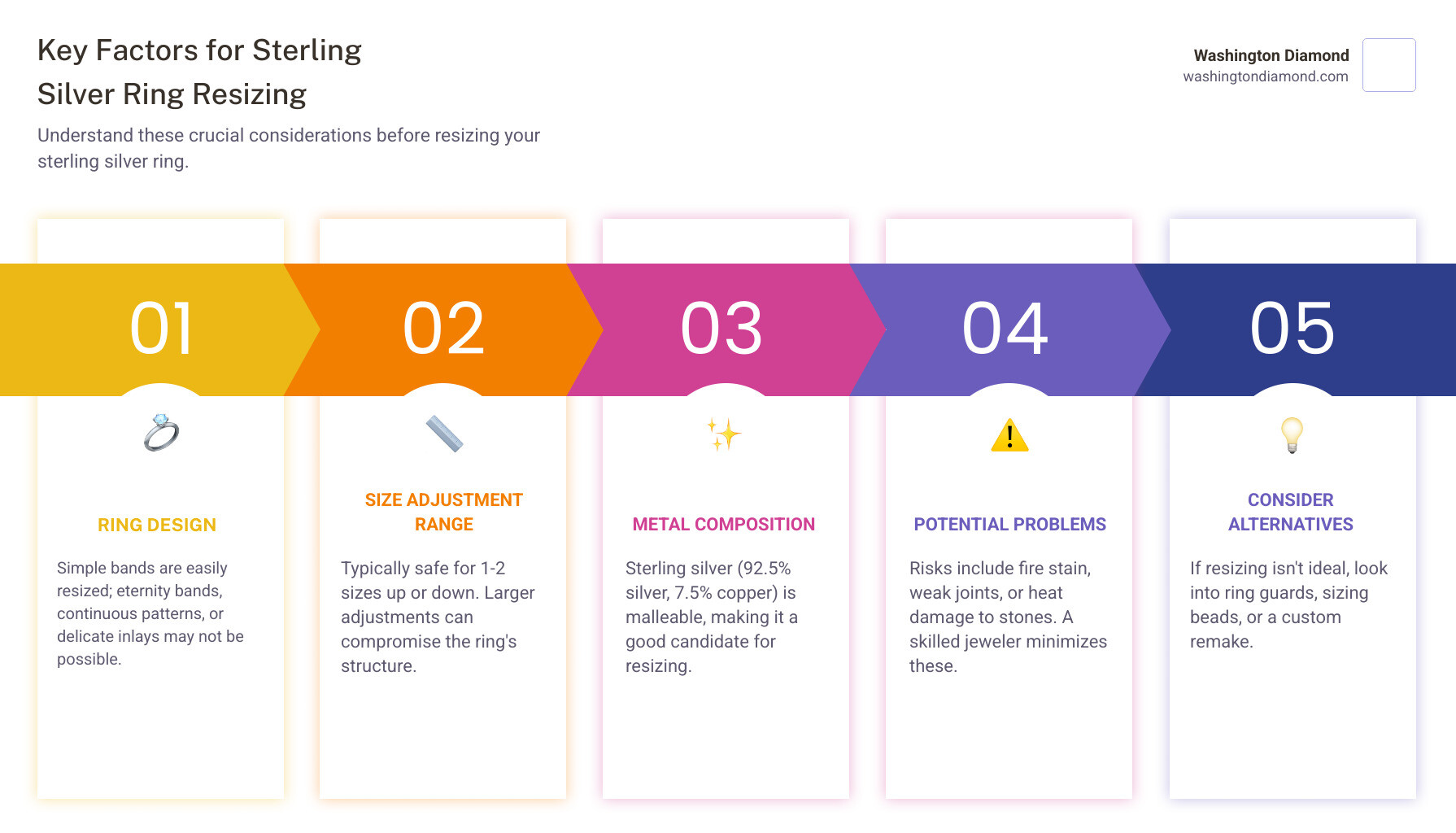
- Safe adjustment range: Typically 1-2 sizes up or down
- Cost: Usually $20-$100, depending on complexity
- Timeline: Anywhere from 1 day to 2 weeks
- Exceptions: Eternity bands, rings with continuous patterns, very thin bands, or delicate inlays may not be resizable
- Best practice: Only resize once to maintain structural integrity
Maybe you've inherited a beautiful sterling silver ring that's just a bit too snug. Or perhaps you bought that perfect band online, only to find it spinning around your finger when it arrives. You're not alone—ring sizing challenges happen all the time, and they can turn what should be a joyful experience into a frustrating one.
The good news? Sterling silver is one of the easiest precious metals to resize. Its natural softness and malleability make it a jeweler's dream for adjustments. But that doesn't mean every sterling silver ring can—or should—be resized.
At Washington Diamond’s private, appointment-only studio in Northern Virginia, our jewelers regularly evaluate sterling silver rings that come with deep sentimental stories: engagement rings, anniversary bands, promise rings, or heirloom pieces that have been tucked away in a jewelry box for years because they simply do not fit. The right resizing can bring those pieces back into your everyday life.
Understanding when resizing makes sense, how the process works, and what risks to watch for will help you make the right choice for your cherished piece. Whether it's an engagement ring, a family heirloom, or a special anniversary gift, you deserve a ring that fits perfectly and feels comfortable every single day.
When you sit down one-on-one with a professional jeweler, you also get help answering key questions:
- Is your ring a good candidate for traditional resizing?
- Will the gemstones or design details be affected by heat or cutting?
- How far can you safely go up or down in size?
- Should you resize now, or try a temporary solution first?
That kind of personalized guidance is especially valuable if the ring has emotional significance. Having an expert walk you through the pros and cons of sterling silver ring resizing can give you confidence that you are making a safe, informed decision.
The Verdict: Can Sterling Silver Rings Be Resized?
The short answer, as we've hinted, is a resounding "Yes!" Most sterling silver rings can indeed be resized. But to truly understand why, we need to dig a little into what sterling silver is and why its properties make it a good candidate for alteration.
Sterling silver is an alloy, meaning it's a mixture of metals. Specifically, it's made up of 92.5% pure silver and 7.5% other metals, typically copper. This composition is why you often see "925" or "S925" stamped on sterling silver jewelry – it signifies its purity. Pure silver (99.9% fine silver) is beautiful but too soft for everyday wear, easily bending and scratching. The addition of copper gives sterling silver its strength and durability while maintaining its lustrous appearance. For a deeper dive into jewelry terminology, check out our guide on Fine Jewelry Terms Demystified.
This blend of metals gives sterling silver a unique balance: it's durable enough for jewelry, yet malleable enough to be worked by a skilled jeweler. This malleability, or softness, is the key to why sterling silver ring resizing is a common and successful practice.
In a private studio setting like Washington Diamond’s, our jewelers can examine your ring under magnification, confirm that it is genuine 925 sterling silver, and check for any prior repairs or weak spots before recommending the best way to resize it. That extra evaluation step helps ensure that your ring responds well to the heat and pressure involved in resizing.
Why Sterling Silver is a Great Candidate for Resizing
Compared to other precious metals, sterling silver's inherent softness makes it quite accommodating for resizing. Its malleability allows our jewelers to manipulate the metal with a delicate touch, stretching or compressing it without it easily cracking or breaking. This makes sterling silver ring resizing a much more straightforward process than with harder metals.
Furthermore, resizing sterling silver is generally more affordable than resizing rings made from gold or platinum. While gold and platinum are also resizable, their higher material cost and the slightly different techniques required can often lead to a higher service price. This makes sterling silver an excellent choice for those who want the flexibility of resizing without the hefty price tag. We pride ourselves on providing expert services for all precious metals, ensuring your cherished pieces are handled with the utmost care, no matter their composition.
When you are trying to decide whether to resize or replace a ring, this cost advantage can play a big role. For many clients at our Northern Virginia studio, resizing a sterling silver ring allows them to:
- Preserve the original metal and any sentimental engravings
- Keep the ring’s overall design intact
- Stay within a comfortable budget while still getting a custom fit
It also means you can comfortably plan a future redesign if your style changes—knowing that your current sterling silver ring resizing can serve as a practical, long-lasting solution in the meantime.
Metals That Are Difficult or Impossible to Resize
While sterling silver plays nicely with resizing, not all metals are so cooperative. Some modern metals used in jewelry are simply too hard or too brittle for traditional resizing methods. These include:
- Tungsten: Known for its extreme hardness and scratch resistance, tungsten carbide rings are virtually impossible to resize. Any attempt to cut or bend them would likely cause them to shatter.
- Titanium: Another incredibly strong and lightweight metal, titanium is very difficult to work with. Resizing titanium rings is usually not feasible due to its high melting point and resistance to manipulation.
- Stainless Steel: While durable and affordable, stainless steel is also a very hard metal. Resizing stainless steel rings is generally not recommended, as it can be incredibly challenging and may compromise the integrity of the piece.
For rings made from these materials, if the size isn't right, the usual solution is to reorder the ring in the correct size or explore alternative sizing solutions, which we'll discuss later. It's a stark contrast to the relative ease of sterling silver ring resizing.
If you are unsure what metal your ring is made from, a professional jeweler can test it for you and explain what options are realistic. At Washington Diamond, that conversation typically happens during a one-on-one consultation, so you have time to ask questions and consider whether a new custom ring, a remake in sterling silver, or a non-permanent sizing solution is the best fit for your needs.
The Jeweler's Craft: How Sterling Silver Ring Resizing Works
When you bring your sterling silver ring to us for resizing, you're entrusting it to a craft that combines artistry with precision. The process, whether making the ring larger or smaller, involves specialized tools and a keen eye. Our jewelers work at a bench, using tools like a jeweler's saw, a torch for heating and soldering, a mandrel for shaping, and various polishing tools to ensure a seamless finish.

The goal is always to adjust the ring's circumference while maintaining its original beauty and structural integrity. Let's look at the two main approaches.
During a private appointment at Washington Diamond, your jeweler will typically start by:
- Measuring your finger carefully (often more than once) to confirm the ideal size.
- Checking whether your knuckle is significantly larger than the base of your finger.
- Examining the ring’s thickness, design, and gemstones to see which method of sterling silver ring resizing will be safest.
- Reviewing any concerns you may have about engraving, patina, or sentimental wear marks you would like to preserve.
This evaluation shapes the strategy they use to size your ring up or down.
Making a Ring Smaller (Sizing Down)
Making a sterling silver ring smaller is a common request and a relatively straightforward process for a skilled jeweler. Here's how it generally works:
- Assessment: First, our jeweler will carefully examine your ring's design, looking for any gemstones, intricate patterns, or engravings that might be affected. They'll also confirm the desired size.
- Cutting the Shank: The jeweler carefully marks the portion of the ring's shank (the bottom part of the band) that needs to be removed. Using a fine jeweler's saw, they precisely cut out this section. The amount removed directly corresponds to how much smaller the ring needs to be.
- Shaping and Soldering: The two cut ends of the ring are then brought together and shaped to form a perfect circle. A small piece of sterling silver solder, which has a lower melting point than the ring itself, is placed at the joint. Using a jeweler's torch, heat is applied until the solder melts and flows, creating a strong, permanent bond between the two ends.
- Finishing Process: After the solder cools, the jeweler files away any excess metal, smooths the joint, and then carefully polishes the entire ring. This final step is crucial to ensure that the resized area is completely invisible, leaving your ring looking as if it was always that size.
In some cases, your jeweler may also:
- Re-tighten stone settings if they have loosened slightly during heating.
- Reapply any darkened antiquing or texture that was removed during polishing.
- Check that the ring still sits straight and comfortably on your finger.
The result is a perfectly sized ring with a seamless look, ready to adorn your finger comfortably.
Making a Ring Larger (Sizing Up)
Making a sterling silver ring larger involves a bit more nuance and typically has two main methods: stretching or adding metal. The choice depends on how many sizes the ring needs to go up and the ring's design.
| Method | Description | Pros | Cons |
|---|---|---|---|
| Stretching | The jeweler heats the ring and carefully hammers it on a tapered steel mandrel to expand it. This method is only suitable for very small adjustments, typically no more than half a size. | - Faster and less expensive. - No visible seam. |
- Can thin and weaken the band. - Not suitable for rings with stones or intricate patterns. - Limited to very small size increases. |
| Adding Metal | The jeweler cuts the shank, inserts a new piece of matching sterling silver, and then solders it into place. This is the preferred method for larger adjustments (up to 2 sizes). | - Maintains the ring's original thickness and strength. - Can be used for larger size increases. - Safer for rings with stones or detailed designs. |
- More time-consuming and costly. - Requires a highly skilled jeweler to create an invisible seam. |
At Washington Diamond, our jewelers generally favor methods that protect the long-term durability of your ring, even if that means a slightly longer turnaround time. During your appointment, we will explain which approach we recommend and why, so you understand exactly what will happen to your ring and how it will be supported for years of wear.
For complex designs or heirloom pieces, we may also suggest complementary services—such as tightening prongs, replacing worn tips, or refreshing the finish—while your ring is already on the bench for sterling silver ring resizing. That way, you leave with a ring that both fits comfortably and looks its best.
Have a question about your jewelry?
We've been helping clients with diamonds, custom design, repairs, appraisals, and more since 1969. Book a private appointment at our Falls Church studio.
Book an AppointmentTrusted since 1969 · Falls Church, VA · 703-536-3600
From the blog
View all


